Where it forms, where it's found
- Geological setting
Halloysite is found in widely varied environments, including as an alteration of basaltic rocks, in hydrothermally altered fissure deposits in monzonites; it is also derived from feldspars, chlorites, micas, rhyolites, granites, volcanic ash, tuffs and pumices. More rarely found in granitic pegmatites, bauxites or laterites, and in some marine and glacial clays.
608recorded occurrences
Varieties
Physical
- Hardness
- 1Talc
- 2Gypsum
- 3Calcite
- 4Fluorite
- 5Apatite
- 6Orthoclase
- 7Quartz
- 8Topaz
- 9Corundum
- 10Diamond
- Transparency
- Translucent · Opaque
- Colour
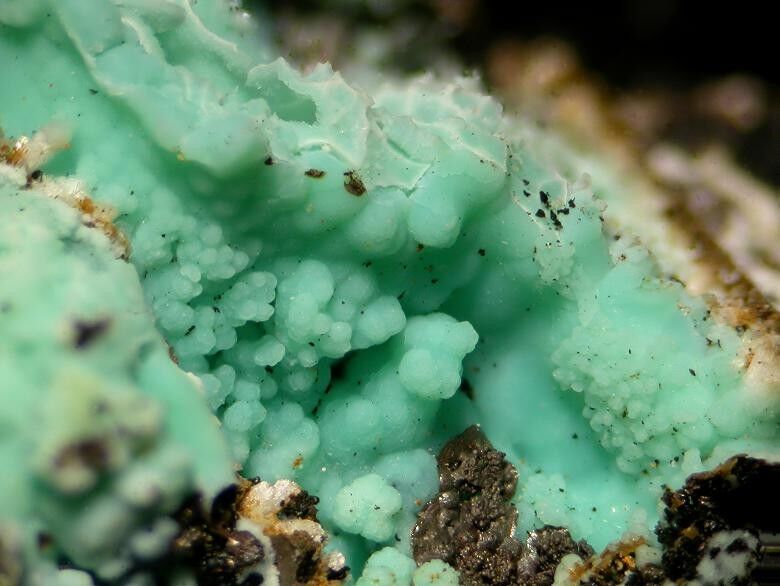
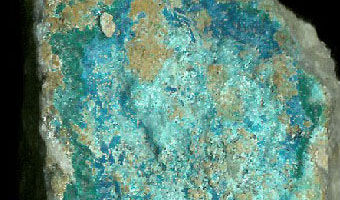
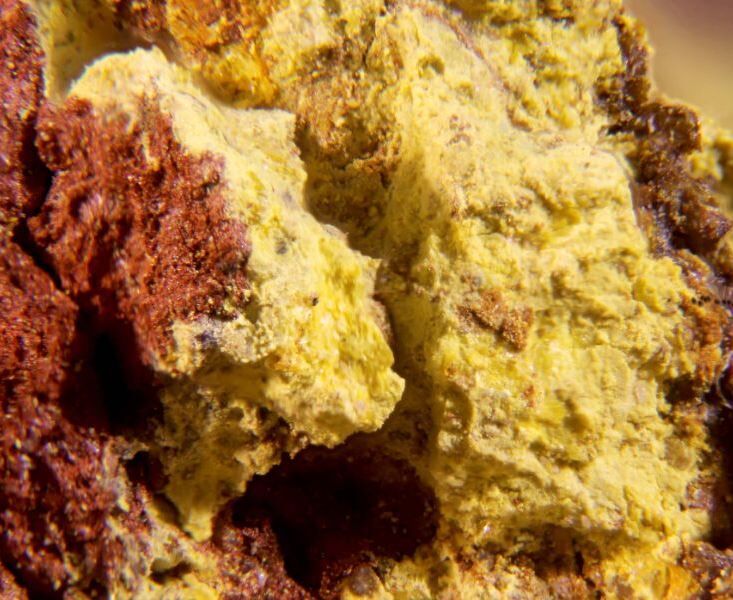
- White to tan · sometimes greenish or bluish · also chocolate brown to reddish.
- Streak
- Paler than the color, or white.
- Cleavage
None certain, but at least a poor cleavage is probably on (001)
- Fracture
- Sub-Conchoidal
- Density
- 2 g/cm³
Optical
- Optical type
- Biaxial
- Refractive index
- 1.553 – 1.57
- Surface relief
- Moderate
- Principal indices
- nα 1.553 – 1.565 · nβ 1.559 – 1.569 · nγ 1.56 – 1.57
- Dispersion
- r < v moderate
Δ = 0Δmax
PPLpleochroism per grain
XPLindependent extinctions · rotate the stage
PPLpleochroism only · colour blends on rotation
XPLinterference colour · extinct every 90°
Retardation60 nm
Order1st order
XPL colour
Crystallography
- Cell parameters
- a = 5.14 Å · b = 8.9 Å · c = 7.214 Å
- Cell angles
- β = 99.7 °
- Ratio a:b:c
- 1 : 1.732 : 1.404
- Z
- 2
- Morphology
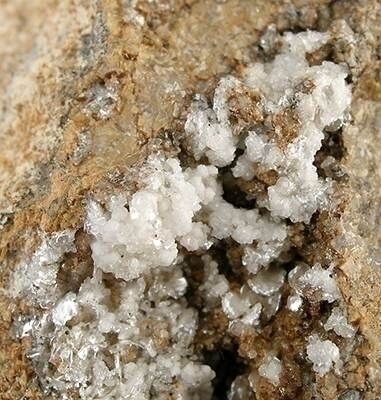
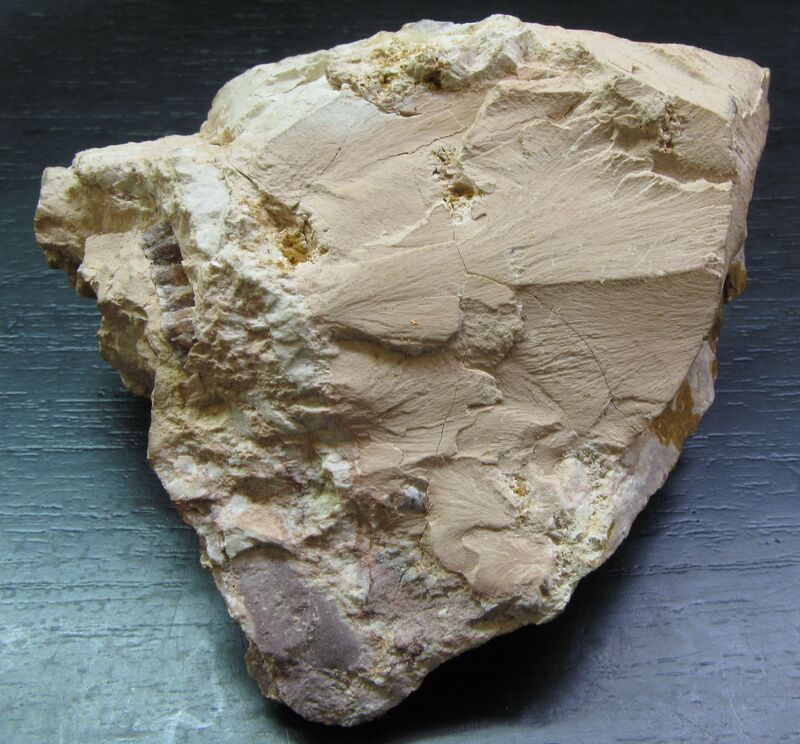
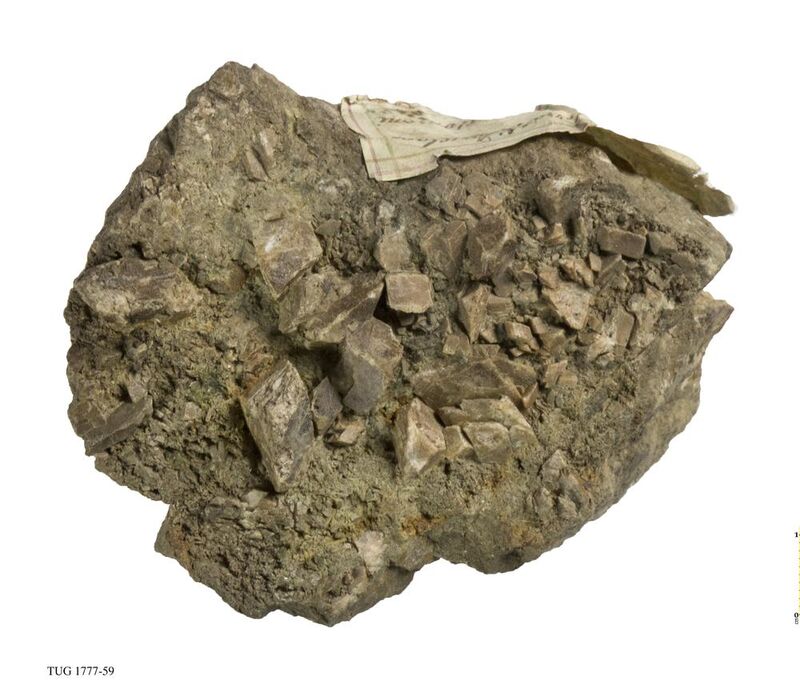
Typically found as extremely fine-grained clayey masses. The two "forms" Halloysite-7Å and Halloysite-10Å are the most common. It has a tubular morphology at the nanometer scale.
Crystal structure
Chemical composition
- Impurities
- Ti
- Ca
- Na
- K
- Fe
- Cr
- Mg
- Ni
- Cu
Synonyms
- Confolensite
- Galapectit
- Galapectita
- Galapectite
- Galapektit
- Glagerit
- Glagerita
- Glagerite
- Glossecollit
- Glossecollita
- Glossecollite
- Gummite (of Breithaupt)
- Halloysite (of Berthier)
- Halojzito
- Hydrokaolin
- Indianait
- Indianaita
- Indianaite
- Lenzinit
- Lenzinita
- Lenzinite
- Mountain Soap
- Smectite (of Salvetat)
In other languages
- French
- Halloysite
- German
- Halloysit · Halloysit-7Å
- Spanish
- Halloysita
- Italian
- Halloysite · Halloysite-7Å
- Japanese
- ハロイサイト · ハロイ石
- Chinese
- 禾乐石 · 禾樂石
- Simplified Chinese
- 禾乐石
- Traditional Chinese
- 禾樂石
- Russian
- галлуазит
Classification
Strunz
10th ed.9.ED.10
- 9SilicatesClass
- 9.EPhyllosilicatesDivision
- 9.EDPhyllosilicates with kaolinite layers composed of tetrahedral and octahedral netsGroup
- 9.ED.10HalloysiteSpecies
Dana
8th ed.71.01.01.04
- 71Phyllosilicates Sheets of Six-membered RingsClass
- 71.01Sheets of 6-membered rings with 1:1 layersType
- 71.01.01Kaolinite groupGroup
- 71.01.01.04HalloysiteSpecies
CIM
—15.10
- 15Silicates of AluminumClass
- 15.10— unnamed intermediate level —Group
- 15.10HalloysiteSpecies
Group, growth & confusion
Literature, links & citation
Citations
- —Daou, I., Mocuta, C., Lecomte-Nana, G.L., Tessier-Doyen, N., Peyratout, C., Guinebretière, R., Thiaudière, D. (2023): Dehydroxylation of Kaolinite and Halloysite-Rich Samples: An In Situ Study of the Texture and Structural Evolutions. Minerals, 13, 1418.
- 1826Berthier, P. (1826) Analyse de l'halloysite. Annales de Chimie et de Physique, Paris, 32, 332.
- 1934Ross, C., Kerr, P. (1934) Halloysite and allophane. U.S. Geological Survey Professional Paper, 185G, 135.
- 1934Hofmann, U., Endell, K., Wilm, D. (1934) Röntgenographische und kolloidchemische untersuchungen über ton. Angewandte Chemie: 47: 539-558.
- 1935Mehmel, M. (1935) Uber die struktur von halloysit und metahalloysit. Zeitschrift für Kristallographie: 90: 35-43.
Cite this entry
Entry last updated
@misc{mineral2026,
  author    = {Mineral Index editorial board},
  title     = {Halloysite — Mineral Index},
  year      = {2026},
  url       = {https://mineralindex.org/minerals/halloysite-1808}
}