History
The name kyanite carries its colour. It comes from the Ancient Greek kyanos — "dark blue" — the same root that gave English the colour word cyan. The German mineralogist Abraham Gottlob Werner formalised the name in 1789, choosing it for the deep blue typical of the species. French mineralogists kept the older spelling Cyanite through much of the 19th and early 20th centuries.
The mineral has carried two other names. Cyanite is the same word in a different transliteration. Disthene is the older French-school name and is still occasionally seen in European literature. Both terms now redirect to kyanite in modern mineralogical usage.
By the 20th century, kyanite had earned a second life as one of three minerals built from the same recipe — aluminium, silicon and oxygen in the formula Al₂SiO₅. Its siblings are andalusite and sillimanite. The three are polymorphs — minerals with identical chemistry but different crystal structures. Each forms under its own slice of pressure and temperature: kyanite at high pressure, andalusite at lower pressure and temperature, sillimanite at higher temperature and lower pressure. The three stability fields meet at a single point near 500 °C and 0.4 GPa.
That tidy phase diagram has made the Al₂SiO₅ trio a workhorse of metamorphic petrology — the study of rocks reshaped by heat and pressure deep in the crust. Finding kyanite in a metamorphic rock signals deep burial under high pressure. Finding andalusite or sillimanite instead points elsewhere on the pressure-temperature map. The three minerals are routinely used as index minerals — markers a petrologist reads to reconstruct the conditions a rock once endured.
Industrial & practical applications
The bulk of mined kyanite never reaches a museum case or a jeweller's tray — it is loaded into a kiln and cooked. Above about 1,100 °C kyanite breaks down into mullite — a tougher aluminium silicate, formula 3Al₂O₃·2SiO₂ — and silica glass. Mullite is the prize. It resists heat, holds its shape, and is the working material of countless industrial linings.
Commercial calcination is run at 1,350 to 1,380 °C, and one tonne of kyanite concentrate yields about 0.88 tonne of mullite. The mullite then goes into refractories — heat-resistant linings used in furnaces, boilers, ladles and kilns across the metallurgical, glass, chemical and cement industries. Wherever very hot material has to be held inside something that does not melt with it, kyanite-derived mullite is a candidate for the wall.
A more visible market is refractory porcelain. Kyanite is the main raw material for the mullite-bearing ceramic at the heart of spark plugs and other porcelain insulators. The same chemistry also makes its way into porcelain plumbing fixtures and dishware, into electronic and electrical insulators, and into abrasives.
Production is concentrated. South Africa, the United States, France and India are the leading suppliers of kyanite to world markets.
Where it forms, where it's found
- Geological setting
In medium to high pressure and low to medium temperature metamorphic rocks.
Metamorphic rocks of moderately high-pressure regional metamorphism.
Varieties
Physical
- Hardness
- 1Talc
- 2Gypsum
- 3Calcite
- 4Fluorite
- 5Apatite
- 6Orthoclase
- 7Quartz
- 8Topaz
- 9Corundum
- 10Diamond
- Lustre
- Vitreous
- Transparency
- Transparent · Translucent
- Colour
- Blue · white · light gray · green · rarely yellow · orange · pink
The chroma C* of <strong>blue</strong> kyanite is predominantly influenced by variations in the color coordinate b*. Based on the analysis of ED-XRF and UV–Vis results, Fe3+, Fe2+, and Ti4+ are confirmed as the primary factors influencing the color of kyanite, with Fe playing a dominant role in determining the color. The hue angle h° and chroma C* of kyanite were found to be strongly positively correlated with the Fe content, whereas the color coordinate b* exhibited a strong negative correlation with the Fe content. An increase in the Fe content led to a rise in the hue angle, which subsequently caused a shift towards a more pronounced blue hue. Additionally, the lightness L* exhibited a negative correlation with Ti content; as the Ti content increased, the lightness decreased, resulting in a darker appearance. Moreover, the influence of Cr on the body color of kyanite cannot be ignored. The UV–Vis spectra of the kyanite samples reveal a prominent absorption band at approximately 600 nm, attributed to Fe3+ and Ti4+. The wavelength corresponding to the first peak significantly correlates with the lightness L* of natural samples; as the wavelength increases, so does the lightness, resulting in a brighter body color. Additionally, an increase in the Fe content leads to a more pronounced absorption peak at 600 nm and is significantly positively correlated with an increase in the hue angle.[[1]] Orange <strong>colour</strong> is caused by Mn3+ ions (Gaft et al., 2011).
- Streak
- Colorless
- Tenacity
- brittle
- Cleavage
- Perfect
Perfect on (100), good on (010)
- Fracture
- Splintery
- Density
- 3.53 g/cm³
Optical
- Optical type
- Biaxial (-) · 2V measured = 82 – 83° · 2V calc = 84°
- Refractive index
- 1.712 – 1.734
- Surface relief
- High
- Principal indices
- nα 1.712 – 1.718 · nβ 1.720 – 1.725 · nγ 1.727 – 1.734
- Birefringence
- 0.015
- Pleochroism
- Not Visible
Pleochroism is not usually observed in kyanite of standard thickness. However, in thick sections, the pleochroism scheme may be: X= colorless Y= violet-blue Z= cobalt blue
- Dispersion
- r > v weak
- Extinction
- Inclined. Z>Y>X; X perpendicular to {100}, Z' ∧ c = 30° on {100}, Z' ∧ c = 7° on {010}.
- UV response
- Not usually fluorescent. Weak pink-red fluorescence under longwave reported at Thomaston Dam, Connecticut (Don Swenson, pers. com., 2017). Robbins (1994) indicated that: "From Pfitsch in the Tyrol, Austria, colorless blades of kyanite fluoresce yellow under short-wave and orange under long-wave ultraviolet. From research done some years ago on certain kyanite from this locality, and also on kyanite from the Transvaal in South Africa, red fluorescence is reported. The fluorescence is due to trivalent chromium in place of aluminum."
Crystallography
- Space group
- P-1
- Cell parameters
- a = 7.1262(12) Å · b = 7.8520(10) Å · c = 5.5724(10) Å
- Cell angles
- α = 89.99(2) ° · β = 101.11(2) ° · γ = 106.03(1) °
- Ratio a:b:c
- 1 : 1.102 : 0.782
- Z
- 4
- Morphology
Crystals bladed or tabular.
- Twinning
Lamellar on (100), common
- Parting
- On (001)
- Comment
Non-standard setting.
Chemical composition
Synonyms
- Cianit
- Cyanit
- Cyanite
- Distena
- Distene
- Disthen
- Dysten
- Munkrudit
- Rhätizit
- Riemenstein
- Saphirspath
- Sappare
In other languages
- French
- 1302-76-7 · Beril feuilleté · Cyanite · Disthène · Kyanite · Rhaëticite · Sappare · Talc bleu · Zéolithe cyanite
- German
- Cyanit · Disthen · Kyanit · Sapparit
- Spanish
- cianita · distena
- Italian
- cianite · distene · kyanite
- Portuguese
- Cianita · cianite · Distena
- Japanese
- カイヤナイト · カヤナイト · 藍晶石
- Chinese
- 蓝晶石 · 藍晶石
- Simplified Chinese
- 蓝晶石
- Traditional Chinese
- 藍晶石
- Russian
- Дистен · Кианит
- Arabic
- كيانيت
- Hindi
- क्यानाइट
Classification
9.AF.15
- 9SilicatesClass
- 9.ANesosilicatesDivision
- 9.AFNesosilicates with additional anions; cations in [4], [5] and/or only [6] coordinationGroup
- 9.AF.15KyaniteSpecies
52.02.2c.01
- 52Nesosilicates Insular Sio4 Groups and O, Oh, F, H2oClass
- 52.02Insular SiO4 Groups and O, OH, F, and H2O with cations in [4] and >[4] coordinationType
- 52.02.2c— unnamed intermediate level —Group
- 52.02.2c.01KyaniteSpecies
15.2
- 15Silicates of AluminumClass
- 15.2— unnamed intermediate level —Group
- 15.2KyaniteSpecies
Group, growth & confusion
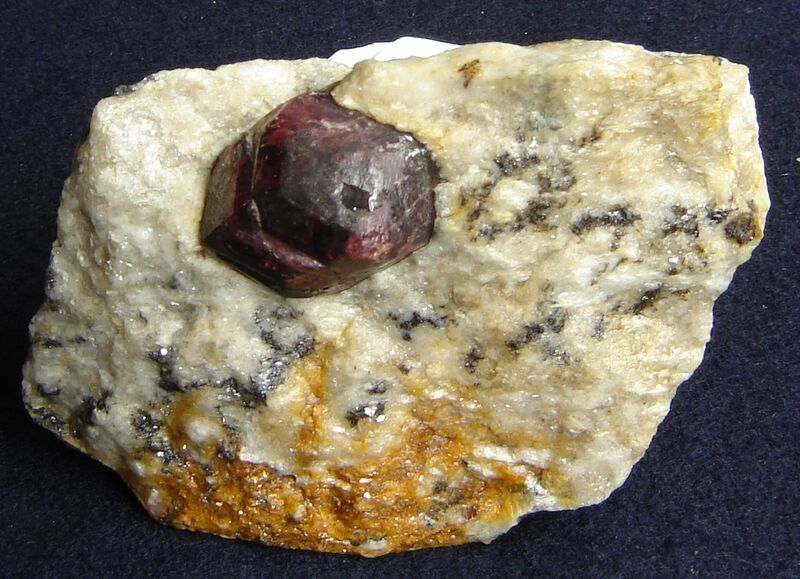 AlmandineFe2+3Al2(SiO4)3Mineral—
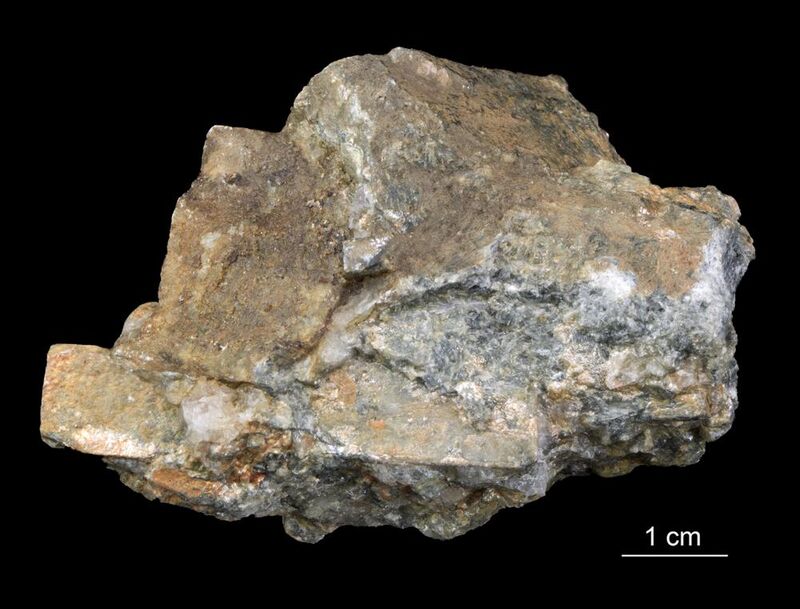 AndalusiteAl2SiO5Mineral—
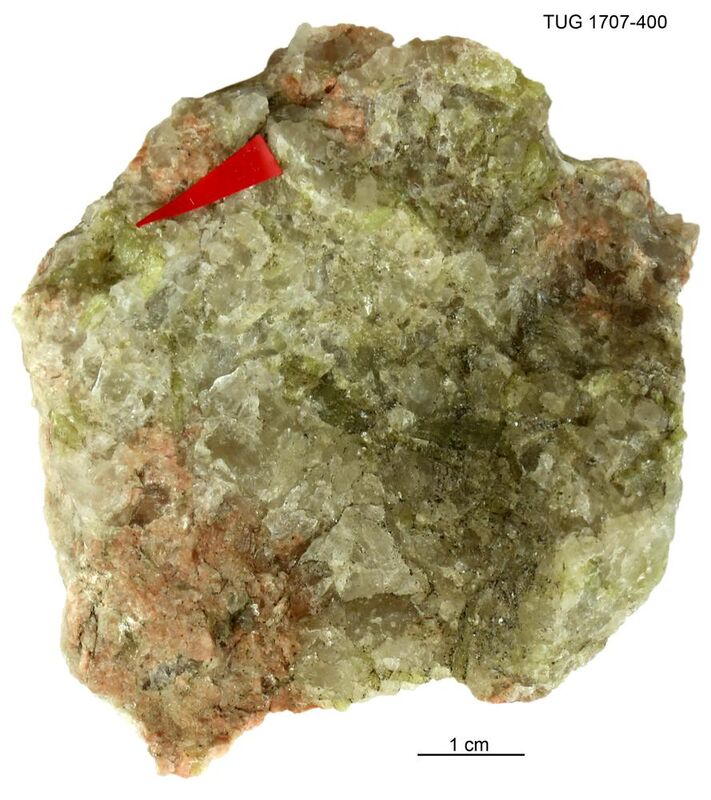 ChrysoberylBeAl2O4Mineral—
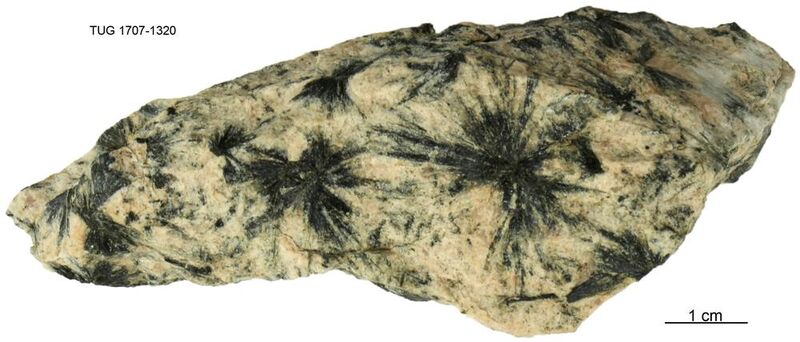 Gedrite◻Mg2(Mg3Al2)(Si6Al2)O22(OH)2Mineral—
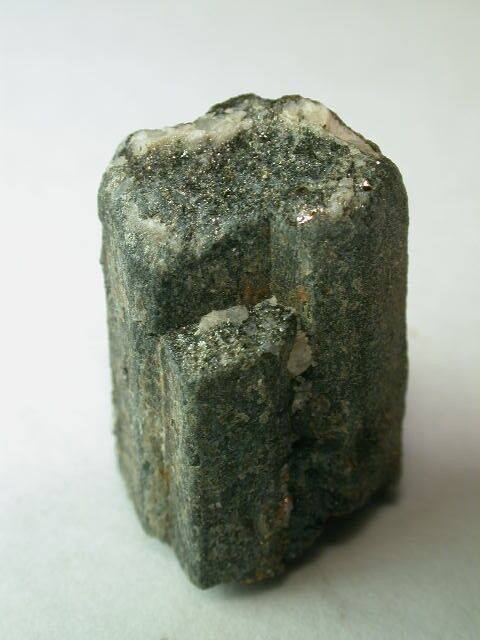 Kornerupine(Mg,Fe2+,Al,◻)10(Si,Al,B)5O21(OH,F)2Mineral—
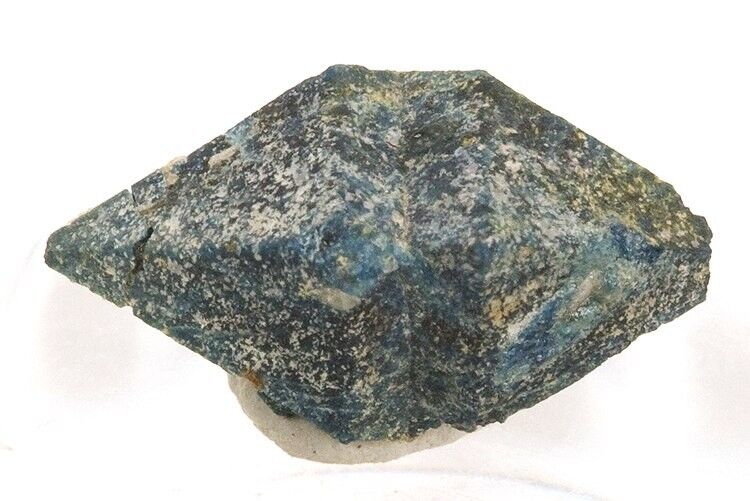 LazuliteMgAl2(PO4)2(OH)2Mineral—
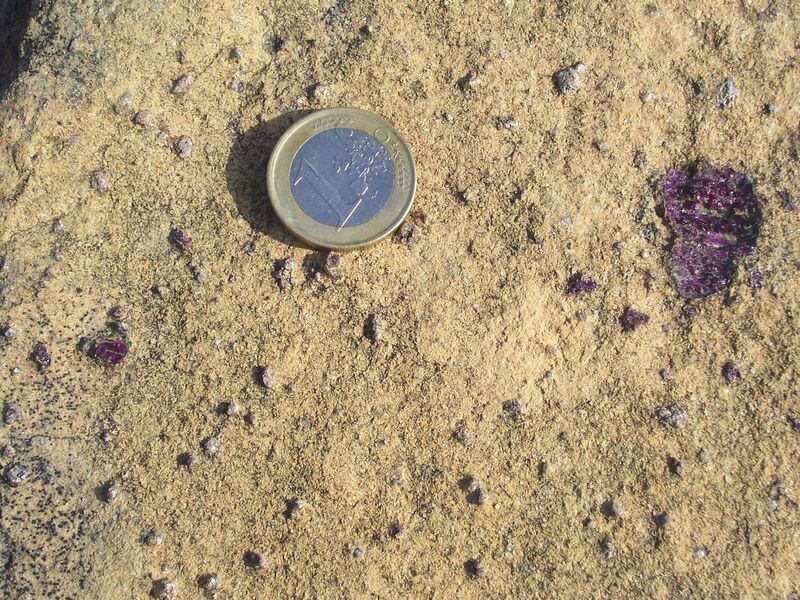 PyropeMg3Al2(SiO4)3Mineral—
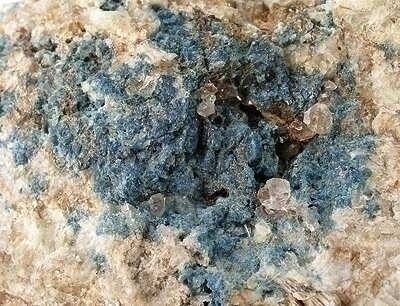 ScorzaliteFe2+Al2(PO4)2(OH)2Mineral—
- Star GarnetFe2+3Al2(SiO4)3Variety—
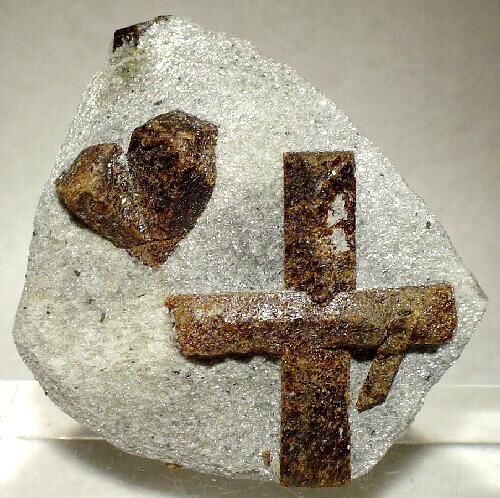 StauroliteFe2+2Al9Si4O23(OH)Mineral—
Literature, links & citation
- 1810Klaproth, M. H. (1810) CLXX. Chemische Untersuchung des Kyanits. In Beiträge zur chemischen Kenntniss der Mineralkörper Vol. 5. Rottmann. p.6-11.
- 1957Clark, S. P., Robertson, E. C., Birch, A. F. (1957) Experimental determination of kyanite-sillimanite equilibrium relations at high temperatures and pressures. American Journal of Science, 255 (9) 628-640 doi:10.2475/ajs.255.9.628DOI: 10.2475/ajs.255.9.628
- 1960Pearson, G. R., Shaw, D. M. (1960) Trace elements in kyanite, sillimanite and andalusite. American Mineralogist, 45 (7-8) 808-817
- 1963Burnham, Charles W. (1963) Refinement of the crystal structure of kyanite. Zeitschrift für Kristallographie - Crystalline Materials, 118 (5) 337-360 doi:10.1524/zkri.1963.118.5-6.337DOI: 10.1524/zkri.1963.118.5-6.337
- 1965Sgarlata, F. (1965) La struttura della cianite. Periodico di Mineralogia – Roma: 241-256.
Entry last updated
@misc{mineral2026,
  author    = {Mineral Index editorial board},
  title     = {Kyanite — Mineral Index},
  year      = {2026},
  url       = {https://mineralindex.org/minerals/kyanite-2303}
}