History
Three different blue minerals carry almost the same name, and they have been muddled for centuries. Lazulite is one of them. It is a blue phosphate of magnesium and aluminium. It is not lazurite, the deep blue of lapis lazuli, and it is not azurite, a blue copper carbonate. The names tangle because they share a root. The Arabic word lazaward gave Europe its word for the colour we now call azure. Several blue stones inherited a version of it.
Lazulite was first described in 1795, from deposits in Styria, a region of what is now Austria. The German chemist Martin Heinrich Klaproth named it, taking the Arabic word for "heaven" in allusion to its sky-blue colour. A competing account traces the name instead to the German lazurstein — "blue stone". Either way, the name is a statement about colour.
The first specimens came from the Freßnitzgraben, a valley near Krieglach in Styria. That remains the type locality — the place a mineral is first found and formally described.
Industrial & practical applications
Lazulite has no industrial use. Its deep blue colour cuts a fine gemstone, but a difficult and rare one. A hardness of 5.5 to 6 makes it a marginal choice for jewellery. It is soft enough that a steel file or a harder stone will scratch it. The few stones that are set go into protective settings to shield them. Most lazulite is faceted with care or cut into cabochons, polished domes with no facets. Even small gems tend to be extremely included — riddled with flaws trapped inside the crystal — which leaves them prone to fracturing during cutting. Faceted stones usually weigh just half a carat to two carats, and a clean stone over five carats is extremely rare. Beyond the lapidary's bench, lazulite is sought mainly by mineral collectors, who prize well-formed blue crystals as specimens.
Where it forms, where it's found
- Geological setting
In metamorphic rocks, border zones of complex granitic pegmatites, alluvial deposits.
- Type locality
- Freßnitzgraben
- Krieglach
- Bruck-Mürzzuschlag District
- Styria
- Austria
47.5208°, 15.5600°
Physical
- Hardness
- 1Talc
- 2Gypsum
- 3Calcite
- 4Fluorite
- 5Apatite
- 6Orthoclase
- 7Quartz
- 8Topaz
- 9Corundum
- 10Diamond
- Transparency
- Transparent · Translucent
- Colour
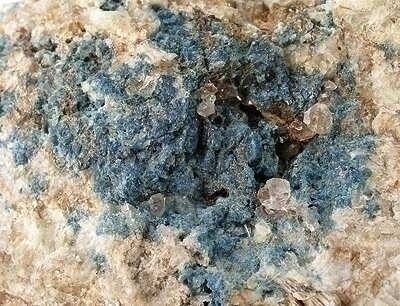
- Blue · sky-blue · bluish white · green
- Streak
- White
- Tenacity
- brittle
- Cleavage
- Poor/Indistinct
Poor to good (110) Indistinct on (101)
- Fracture
- Irregular/Uneven · Splintery
- Density
- 3.122 g/cm³
Optical
- Optical type
- Biaxial (-) · 2V measured = 61 – 70° · 2V calc = 58 – 64°
- Refractive index
- 1.604 – 1.663
- Surface relief
- Moderate
- Principal indices
- nα 1.604 – 1.626 · nβ 1.626 – 1.654 · nγ 1.637 – 1.663
- Birefringence
- 0.035
- Pleochroism
- Strong
X= Colourless Y= Blue Z= Darker blue
- Dispersion
- r < v weak
- Extinction
- Y = b; X ∧ c = 10°.
- UV response
- Not fluorescent in UV
Crystallography
- Space group
- P21/c
- Cell parameters
- a = 7.144(1) Å · b = 7.278(1) Å · c = 7.228(1) Å
- Cell angles
- β = 120.5(1) °
- Ratio a:b:c
- 1 : 1.019 : 1.012
- Z
- 2
- Morphology
Crystals commonly acute to stubby dipyramidal with large (111) and (11), and small (101); also tabular on (_111) or (101). Granular to compact massive.
- Twinning
Common on (100), lamellar or polysynthetic at times, with composition plane (001) or (100) and usually with a re-entrant angle; rare on (223), by reflection on (21). Reported also on (210) and (021).
Chemical composition
- Impurities
- Fe
- Mn
Synonyms
- Azure Spar
- Azurite (of Jameson)
- Berkeleyite
- Berkeyit
- Berkeyita
- Berkeyite
- Berlinerblau
- Blauspat
- Blauspath
- Blue Feldspar
- Blue Zeolite
- Dichter blauer Feldspath
- Gersbyit
- Gersbyita
- Gersbyite
- Himmelblaues Fossil aus Steiermark
- Klaprothin
- Klaprothine
- Klaprothite (of Beudant)
- Lazulith (of Klaproth)
- Lazulith (of Mohs)
- Mollit
- Mollita
- Mollite
- Natürliche Smalt
- Phosphorsaure Thonerde
- Siderite (of Moll, 1799)
- Smalteblaues Fossil von Vorau
- Tetragophosphit
- Tetragophosphite
- Tyrolite (of Delamétherie)
- Voraulit
- Voraulita
- Voraulite (of Delamétherie)
- Wahrscheinlich neues Fossil aus Salzburg
In other languages
- French
- Lazulite
- German
- Blauspat · Klaprothin · Lazulith
- Spanish
- lazulita
- Italian
- Lazulite
- Japanese
- 天藍石
- Chinese
- 天蓝石
- Traditional Chinese
- 天藍石
- Russian
- лазулит
- Arabic
- اللازيوليت · لازوليت
Classification
8.BB.40
- 8Phosphates, Arsenates, VanadatesClass
- 8.BPhosphates, etc., with additional anions, without H2ODivision
- 8.BBWith only medium-sized cations, (OH, etc.):RO4 about 1:1Group
- 8.BB.40LazuliteSpecies
41.10.01.01
- 41Anhydrous Phosphates, Etc.containing Hydroxyl or HalogenClass
- 41.10(AB)3(XO4)2ZqType
- 41.10.01Lazulite GroupGroup
- 41.10.01.01LazuliteSpecies
19.14.29
- 19PhosphatesClass
- 19.14Phosphates of Fe and other metalsGroup
- 19.14.29LazuliteSpecies
Group, growth & confusion
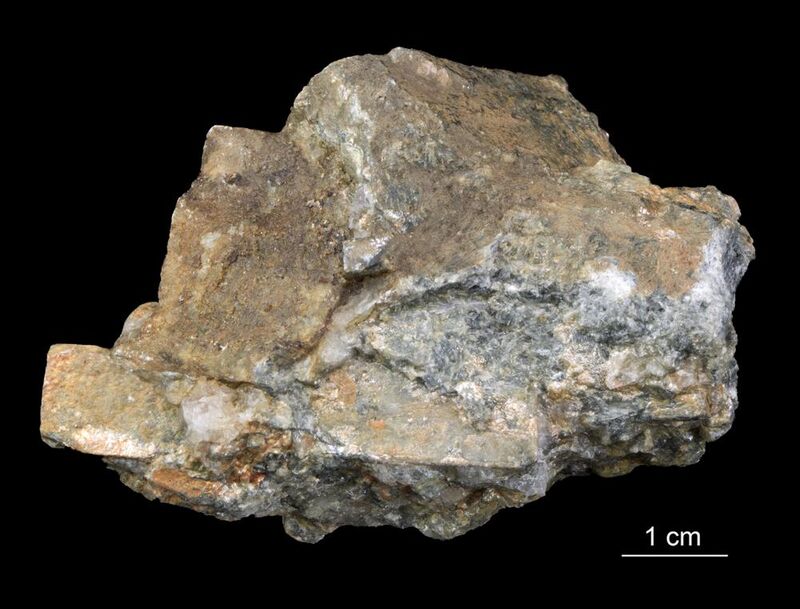
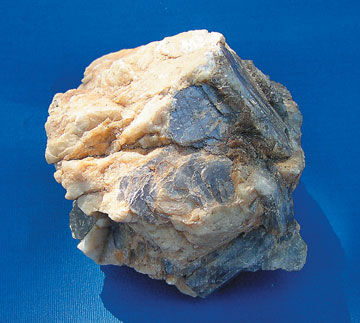
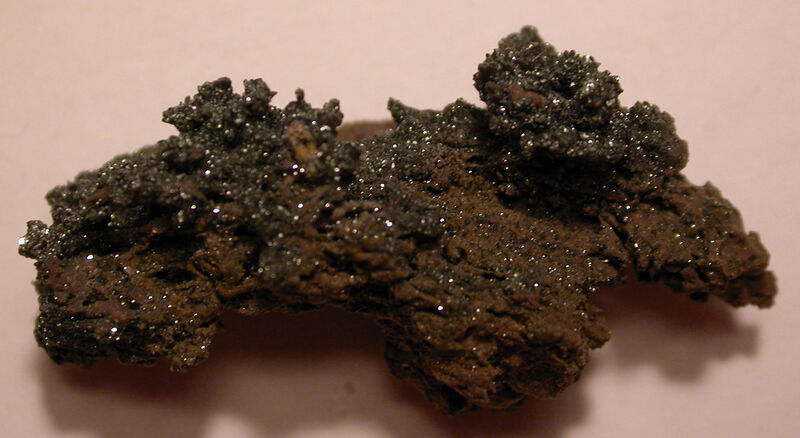
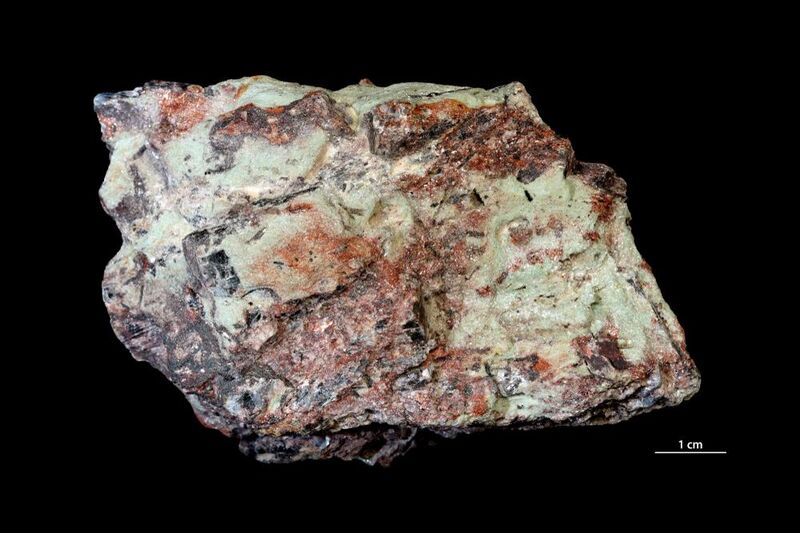
Literature, links & citation
- 1791Widenmann (1791) Bergmaennusches Journal, Freiberg (Neues Bergmannische Journal): 346 (as Himmelblau Fossil von Steiermark).
- 1791Stütz (1791) Schriften der Gesellschaft naturforschender Freunde in Berlin: 9: 352 (as Smalteblaue Fossil von Vorau).
- 1792Klaproth, M.H. (1792) Schriften der Gesellschaft naturforschender Freunde in Berlin: 10: 90 (as Lazulit).
- 1793Stütz (1793) Einricht. Nat. Wien: 49 (as Unächter Lasurstein).
- 1795Klaproth, M. H. (1795) XI. Prüfung eines smalteblauen Fossils von Vorau. In Beiträge zur chemischen Kenntniss der Mineralkörper Vol. 1. Rottmann. p.197-202.
Entry last updated
@misc{mineral2026,
  author    = {Mineral Index editorial board},
  title     = {Lazulite — Mineral Index},
  year      = {2026},
  url       = {https://mineralindex.org/minerals/lazulite-2356}
}