History
Drop a clear crystal of nepheline into strong acid and it clouds over within moments. That small trick of chemistry gave the mineral its name. When René Just Haüy described it in 1801, he reached for the Greek nephele — cloud — to capture exactly this behaviour.
The cloudiness is not a stain but a transformation. Acid dissolves part of the crystal and leaves behind a gel of silica, the milky haze that fogs the once-clear stone. The reaction is reliable enough that mineralogists still use it in the field to tell nepheline apart from look-alikes.
A second name attached itself to a coarser, greasy-looking form. In 1809 the German chemist Martin Heinrich Klaproth called this variety elaeolite, from the Greek words for oil and stone, after its oily sheen and translucence. The two names describe the same species; elaeolite is simply the massive, lustrous habit rather than clear crystals.
Industrial & practical applications
Almost nothing industrial is done with a single crystal of nepheline. The value lies in the rock that carries it — nepheline syenite, a coarse-grained igneous rock rich in nepheline and feldspar but free of quartz. Quarried and ground, that rock is what reaches the factory floor.
Its biggest job is to replace feldspar in glass and ceramics, where it acts as a flux — a material that lowers the melting point of the batch. Nepheline syenite suits this better than ordinary feldspar because it runs higher in alkali and aluminium and lower in iron and silica. Glassmakers prize its high alumina content and demand very little iron — typical specifications call for more than 23 percent alumina and under 0.1 percent iron oxide. The iron-free grade is the one that lets glass stay clear.
The same low-iron, high-alumina chemistry makes the ground rock a useful filler. It is added to paints, plastics, foam rubber and coatings, and finds further use in refractories and pigments.
In Russia the picture differs. Nepheline recovered as a by-product of apatite mining on the Kola Peninsula feeds ceramics, leather, rubber, textiles, wood and the oil industry. Nepheline from the Kiya-Shaltyr deposit in the Kemerovo Region is processed as a raw material for aluminium manufacturing.
Canada and Norway are the largest producers of nepheline syenite. In 1994 they mined 600,000 and 330,000 tonnes respectively.
Where it forms, where it's found
- Geological setting
Characteristic of alkaline igneous rocks.
- Type locality
- Mount Somma
- Metropolitan City of Naples
- Campania
- Italy
Varieties
Physical
- Hardness
- 1Talc
- 2Gypsum
- 3Calcite
- 4Fluorite
- 5Apatite
- 6Orthoclase
- 7Quartz
- 8Topaz
- 9Corundum
- 10Diamond
- Transparency
- Transparent · Opaque
- Colour
- Colourless · white · grey · yellowish
Coloured by inclusions as well.
- Streak
- White
- Tenacity
- brittle
- Cleavage
- Poor/Indistinct
Poor on (100), (0001)
- Fracture
- Sub-Conchoidal
- Density
- 2.55 g/cm³
Optical
- Optical type
- Uniaxial (-)
- Refractive index
- 1.526 – 1.546
- Surface relief
- Moderate
- Principal indices
- nω 1.529 – 1.546 · nε 1.526 – 1.542
Crystallography
- Space group
- #104
- Cell parameters
- a = 9.993(2) Å · c = 8.374(3) Å
- Z
- 8
- Morphology
Stout prisms, granular, compact, massive.
- Twinning
On (100), (335), (112).
Chemical composition
- Impurities
- Mg
- Ca
- H2O
Synonyms
- Beudantina
- Beudantine
- Beudantite (of Covelli)
- Carolinit
- Carolinita
- Carolinite
- Cavolinit
- Cavolinita
- Cavolinite
- Fatstone
- Fettstein
- Gieseckit
- Nephelien
- Nephelit
- Nephelita
- Nephelite
- Oelstein
- Sommite
In other languages
- French
- Na3KAl4Si4O16 · néphéline · néphélite
- German
- Eläolith · Fettstein · Nephelin
- Spanish
- nefelina
- Italian
- nefelina
- Portuguese
- nefelina
- Japanese
- カスミ石 · ネフェリン · 霞石
- Chinese
- 霞石
- Russian
- Нефелин
- Arabic
- نيفليت · نيفيلين
Classification
9.FA.05
- 9SilicatesClass
- 9.FTektosilicates without zeolitic H2ODivision
- 9.FATektosilicates without additional non-tetrahedral anionsGroup
- 9.FA.05NephelineSpecies
76.02.01.02
- 76Tectosilicates Al-si FrameworkClass
- 76.02Al-Si Framework Feldspathoids and related speciesType
- 76.02.01Nepheline groupGroup
- 76.02.01.02NephelineSpecies
16.4.1
- 16Silicates Containing Aluminum and other MetalsClass
- 16.4Aluminosilicates of Na and KGroup
- 16.4.1NephelineSpecies
Group, growth & confusion
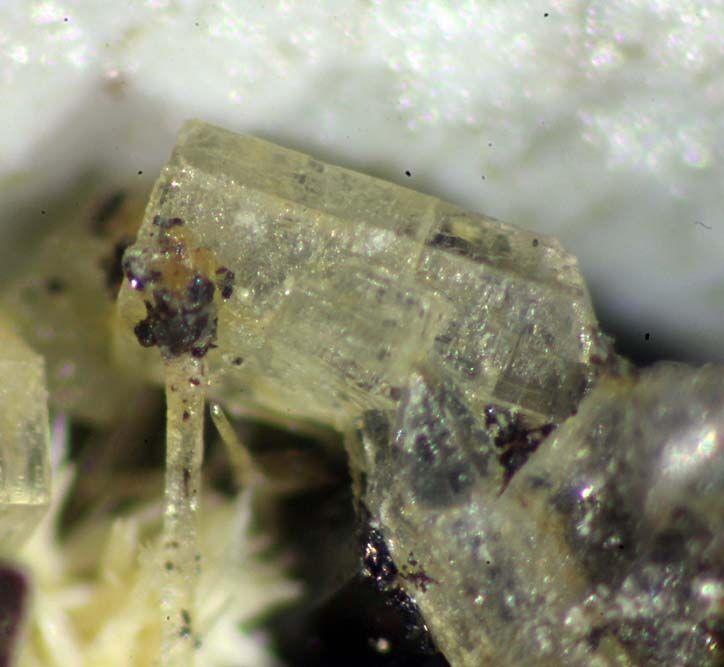
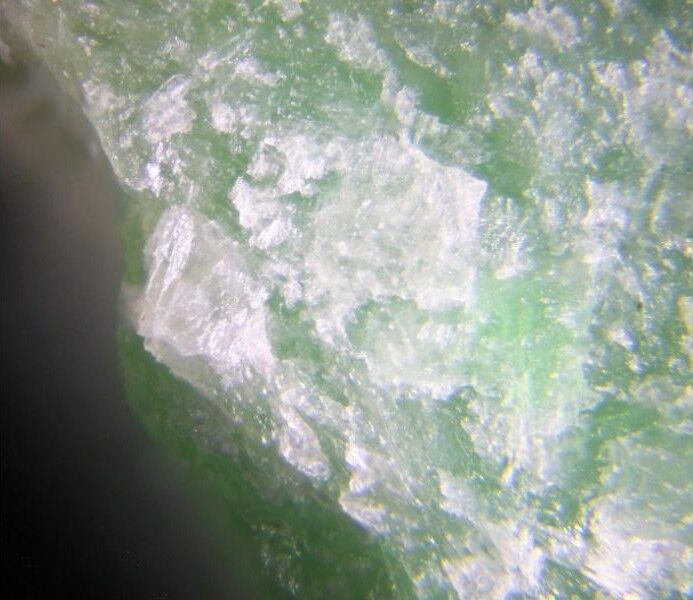
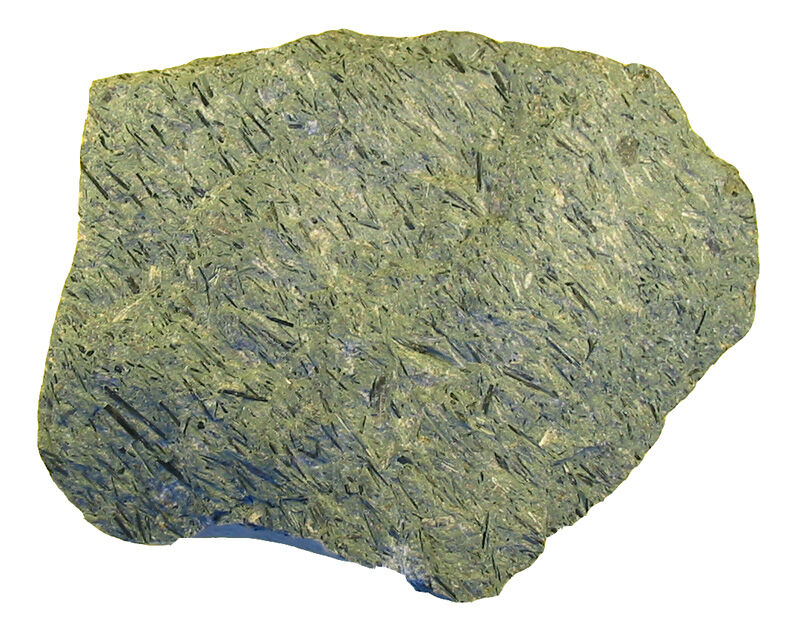 AegirineNaFe3+Si2O6Mineral—
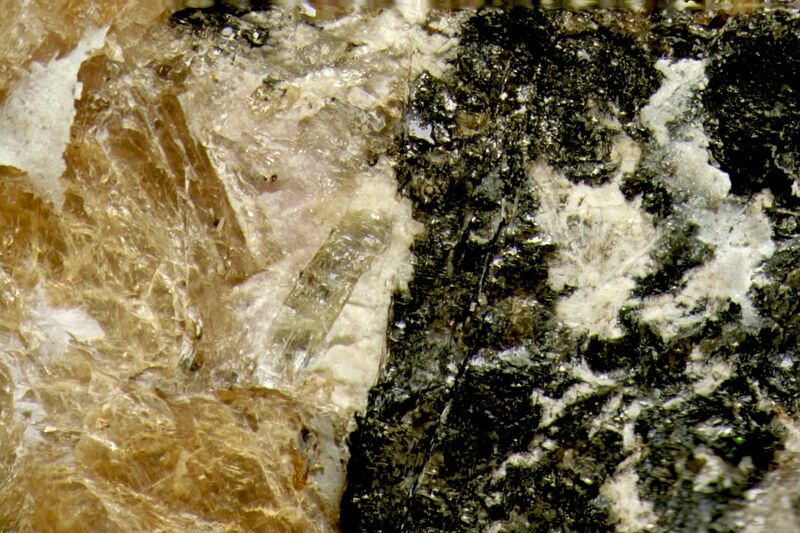 Belovite-(Ce)NaCeSr3(PO4)3FMineral—
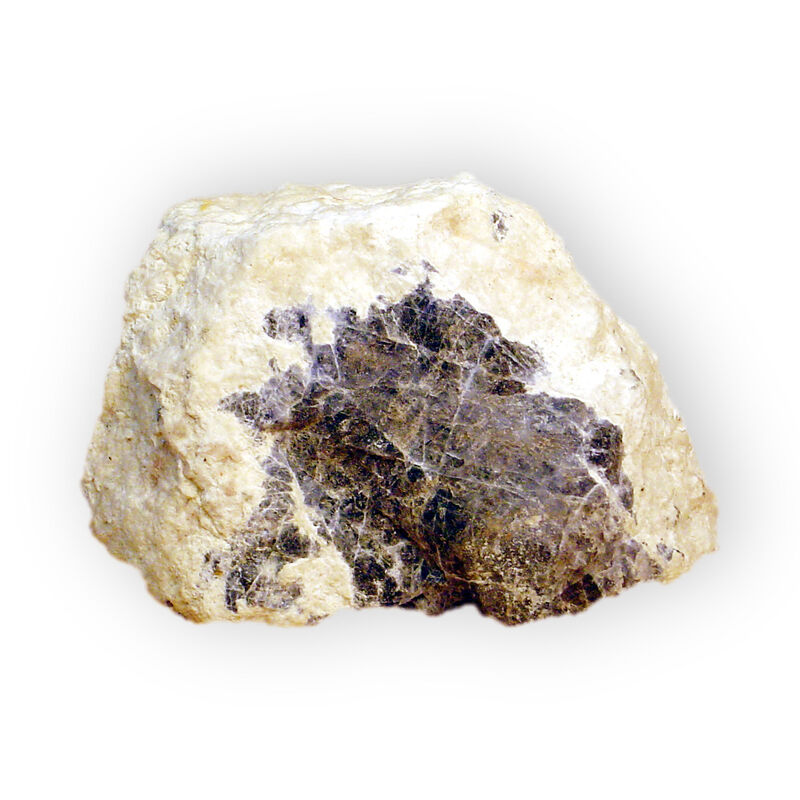 Cancrinite(Na,Ca,◻)8(Al6Si6)O24(CO3,SO4)2 · 2H2OMineral—
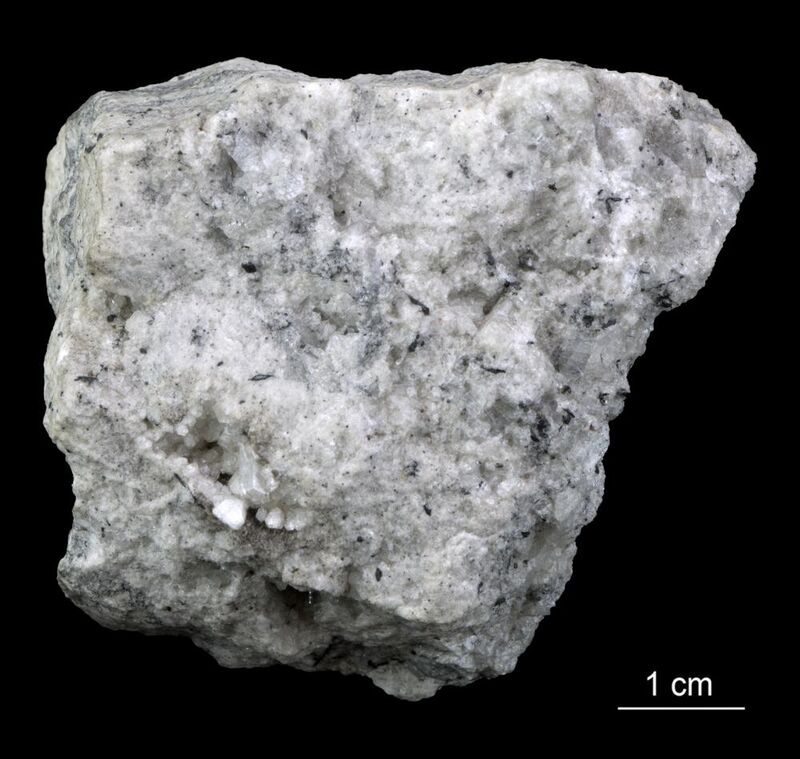 Davyne[(Na,K)6(SO4)0.5Cl][Ca2Cl2][(Si6Al6O24)]Mineral—
- HomiliteCa2Fe2+B2Si2O10Mineral—
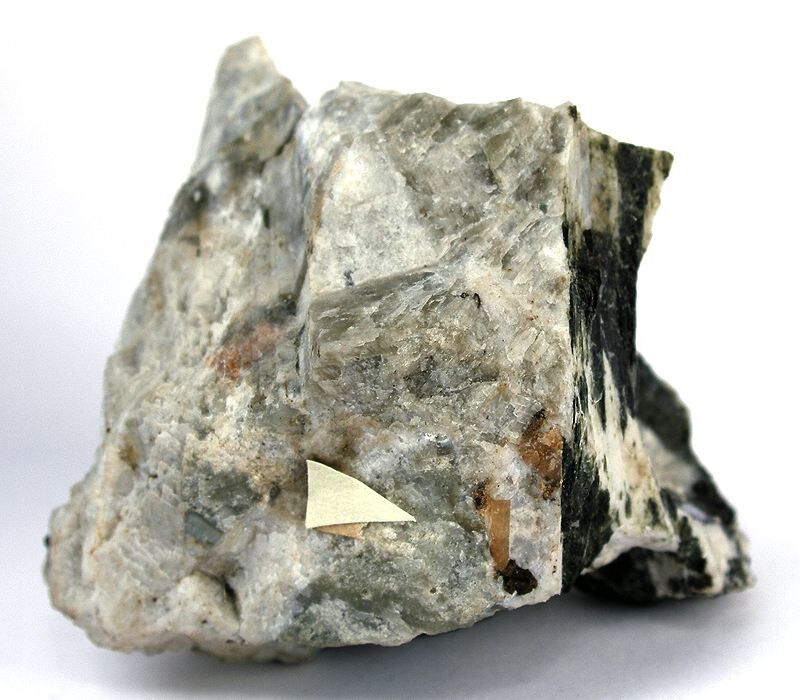 Låvenite(Na,Ca)4(Mn2+,Fe2+)2(Zr,Ti,Nb)2(Si2O7)2(O,F)4Mineral—
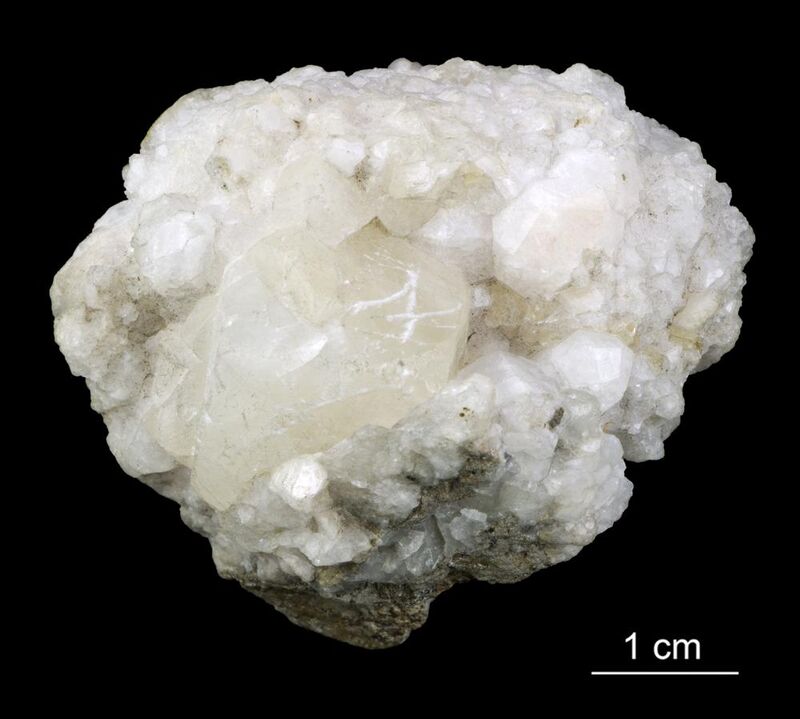 LeuciteK(AlSi2O6)Mineral—
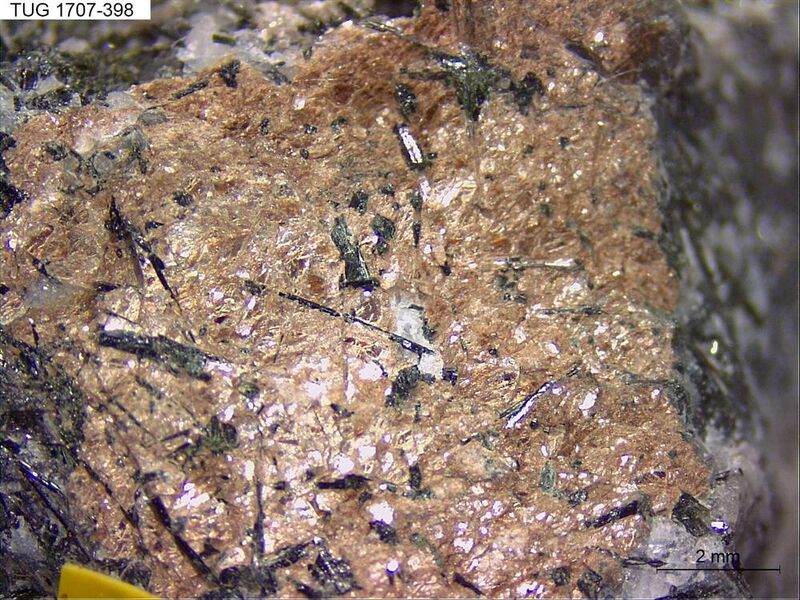 MurmaniteNa2Ti2Na2Ti2(Si2O7)2O4(H2O)4Mineral—
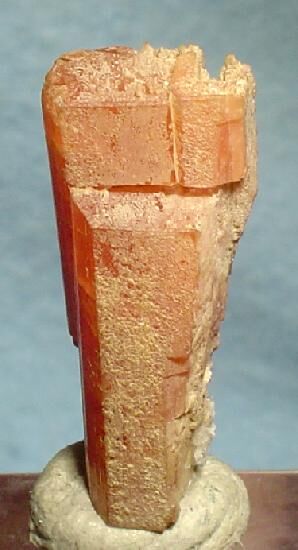 SeranditeNaMn2+2Si3O8(OH)Mineral—
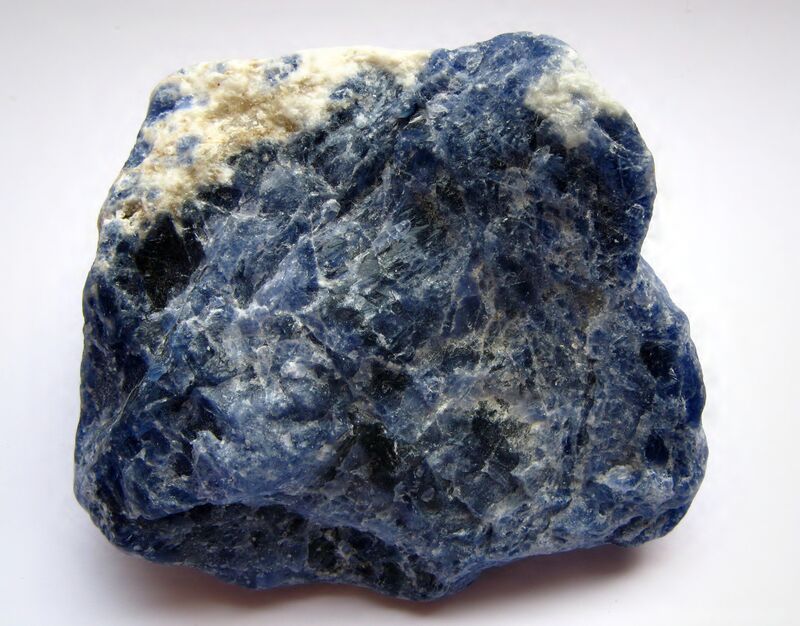 SodaliteNa4(Si3Al3)O12ClMineral—
Literature, links & citation
- —Goychuk, O.F., Lepekha, S.V., Konopleva, N.G., Tsvetov, N.S., Savchenko, Ye.E., Panikorovskii, T.L., Lyalina, L.M. (2023): Incorporation of water into nepheline from rocks of the Khibiny alkaline massif. Atti della sessione scientifica Fersman del GI KSC RAS, 20, 330-335.
- 1801Haüy, René Just (1801) Traité de Minéralogie (1st ed.) Vol. 3. Chez Louis, Paris.
- 1810Klaproth, M. H. (1810) CCI. Chemische Untersuchung des Elaeoliths. In Beiträge zur chemischen Kenntniss der Mineralkörper Vol. 5. Rottmann. p.176-179.
- 1912Schaller, W. T. (1912) Die chemische Zusammensetzung des Nephelins. Zeitschrift für Kristallographie, 50 (1-6). 343-346 doi:10.1524/zkri.1912.50.1.343DOI: 10.1524/zkri.1912.50.1.343
- 1931Bannister, F. A.; Hey, M. H. (1931) A chemical, optical, and X-ray study of nepheline and kaliophilite. Mineralogical Magazine and Journal of the Mineralogical Society, 22 (134). 569-608 doi:10.1180/minmag.1931.02.134.03 DOI: 10.1180/minmag.1931.02.134.03
Entry last updated
@misc{mineral2026,
  author    = {Mineral Index editorial board},
  title     = {Nepheline — Mineral Index},
  year      = {2026},
  url       = {https://mineralindex.org/minerals/nepheline-2880}
}