Where it forms, where it's found
- Geological setting
Fumaroles and a pyrometamorphic rock.
Pyrometamorphic rock. Fumaroles.
- Type locality
- Southern fumarole field
- Mountain 1004
- Tolbachik Volcanic field
- Milkovsky District
- Kamchatka Krai
- Russia
55.6686°, 160.2367°
6recorded occurrences
Physical
- Transparency
- Transparent · Translucent
- Colour
- Colorless or white
- Streak
- White
- Density
- 3.402 g/cm³
Optical
- Optical type
- Uniaxial (-)
- Refractive index
- 1.738 – 1.763
- Surface relief
- High
- Principal indices
- nω 1.763 · nε 1.738
Δ = 0Δmax
PPLpleochroism per grain
XPLindependent extinctions · rotate the stage
PPLpleochroism only · colour blends on rotation
XPLinterference colour · extinct every 90°
Retardation250 nm
Order1st order
XPL colour
Crystallography
- Space group
- #108
- Cell parameters
- a = 9.5777(7) Å · c = 6.9659(5) Å
- Z
- 2
- Morphology
Hexagonal prismatic crystals.
- Type-locality form
Hexagonal prismatic crystals up to 0.3 × 0.1 mm and open-work aggregates up to 2 mm across.
Chemical composition
Synonyms
- IMA2018-031
- Pliniusiet
- Unnamed (V-dominant analogue of Fluorapatite)
In other languages
- German
- IMA 2018-031 · Pliniusit
Classification
Strunz
10th ed.8.BN.05
- 8Phosphates, Arsenates, VanadatesClass
- 8.BPhosphates, etc., with additional anions, without H2ODivision
- 8.BNWith only large cations, (OH, etc.):RO4 = 0.33:1Group
- 8.BN.05PliniusiteSpecies
Group, growth & confusion
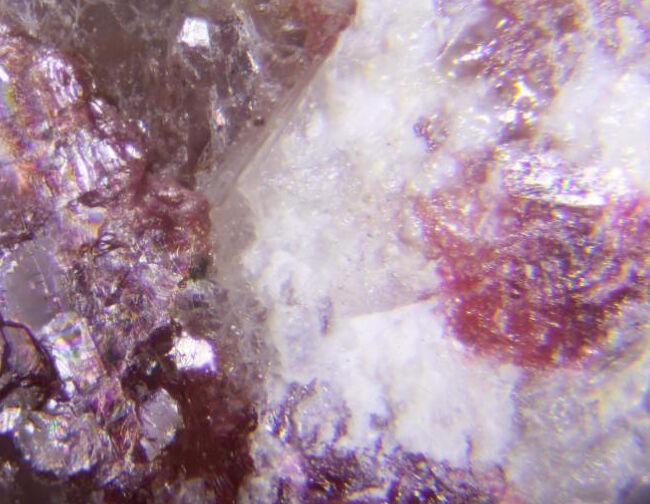 AlforsiteBa5(PO4)3ClMineral—
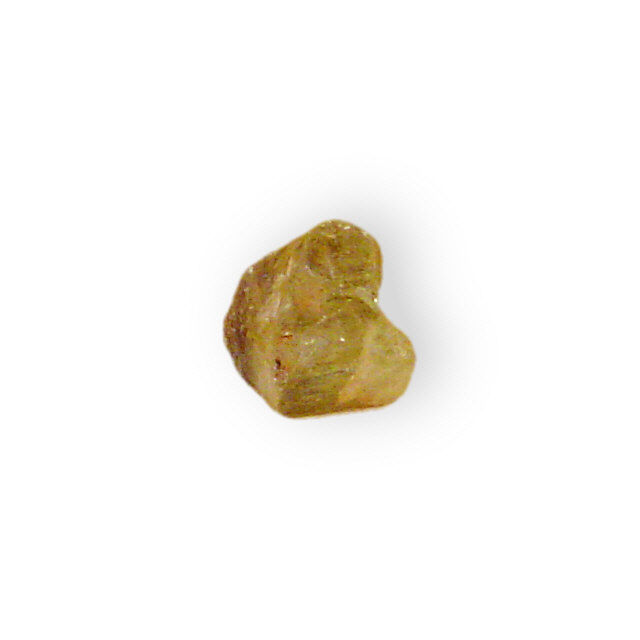 ChlorapatiteCa5(PO4)3ClMineral—
- FluoralforsiteBa5(PO4)3FMineral—
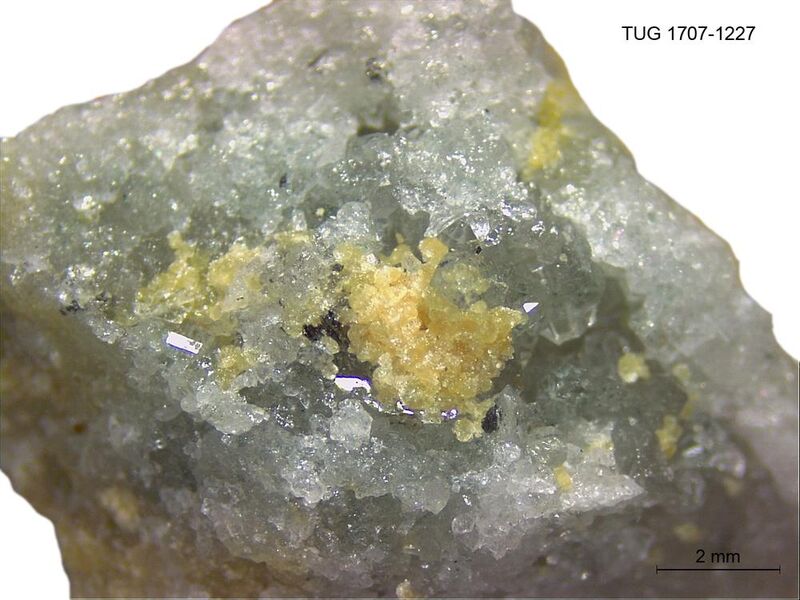 FluorapatiteCa5(PO4)3FMineral—
- FluorpyromorphitePb5(PO4)3FMineral—
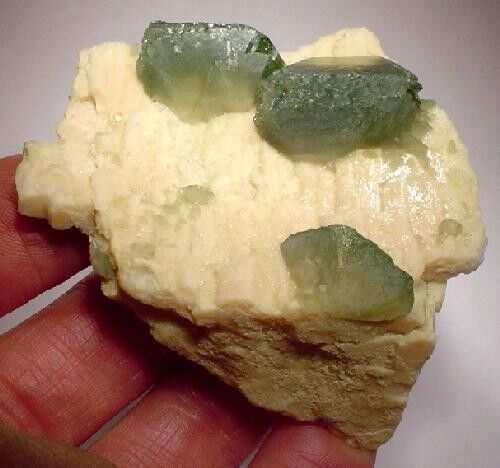 HydroxylapatiteCa5(PO4)3OHMineral—
- HydroxylpyromorphitePb5(PO4)3(OH)Mineral—
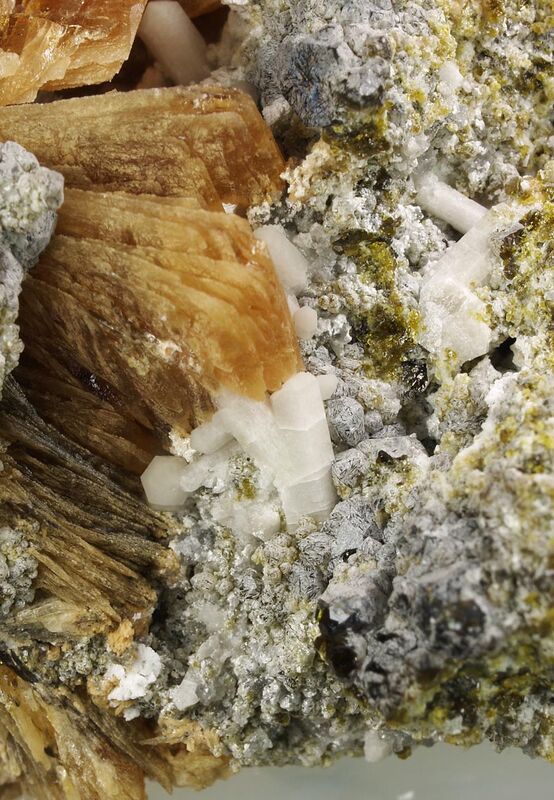 JohnbaumiteCa5(AsO4)3(OH)Mineral—
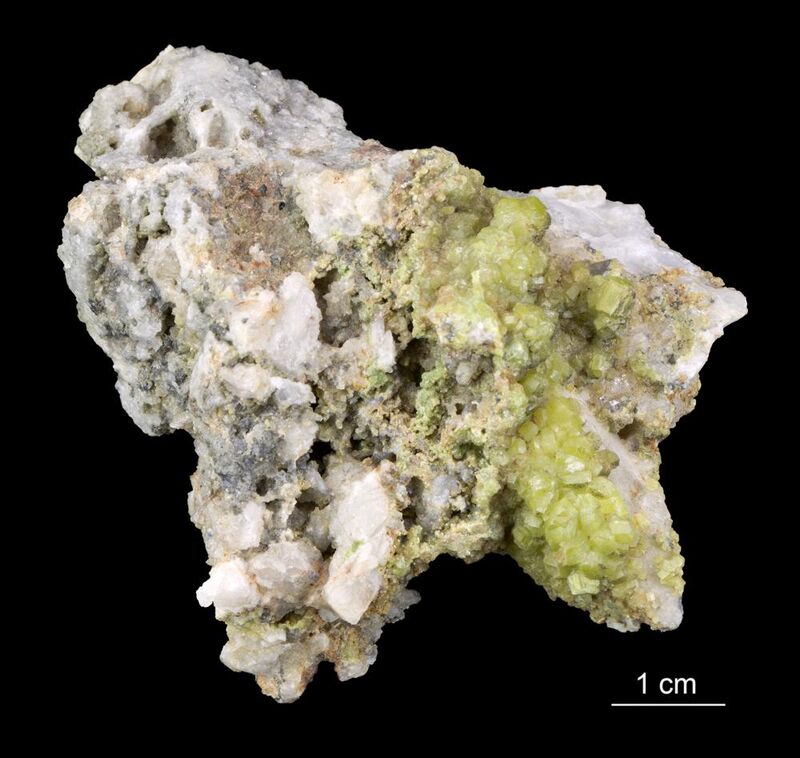 MimetitePb5(AsO4)3ClMineral—
- PieczkaiteMn5(PO4)3ClMineral—
Literature, links & citation
Citations
- —Dong, Z. L.; Wei, B.; White, T. J. (2001): Study of calcium/lead apatite structure type for stabilising heavy metals. Materials Research Society Symposium Proceedings 658 (Solid-State Chemistry of Inorganic Materials III), GG6.33.1-GG6.33.6.
- 2011He, Qiang; Liu, Xi; Hu, Xiaomin; Li, Sicheng; Wang, Hejing (2011) Solid solution between lead fluorapatite and lead fluorvanadate apatite: Mixing behavior, Raman feature and thermal expansivity. Physics and Chemistry of Minerals, 38 (10). 741-752 doi:10.1007/s00269-011-0447-yDOI: 10.1007/s00269-011-0447-y
- 2018Hålenius, U., Hatert, F., Pasero, M., Mills, S. J. (2018) CNMNC Newsletter No. 44, New minerals and nomenclature modifications approved in 2018. Mineralogical Magazine, 82 (4) 1015-1021 doi:10.1180/mgm.2018.148DOI: 10.1180/mgm.2018.148
- 2020Koshlyakova, N.N., Pekov, I.V., Zubkova, N.V., Agakhanov, A.A., Turchkova, A.G., Kartashov, P.M., Sidorov, E.G., Pushcharovsky, D.Yu. (2020): A new solid solution with the garnet structure: the berzeliite–schaferite isomorphous series from Fumarole exhalations of the Tolbachik volcano, Kamchatka. Zapiski RMO (Proceedings of the Russian Mineralogical Society): 149(1): 69-84.
- 2022(2022) Pliniusite. Handbook of Mineralogy. Mineralogical Society of America
Cite this entry
Entry last updated
@misc{mineral2025,
  author    = {Mineral Index editorial board},
  title     = {Pliniusite — Mineral Index},
  year      = {2025},
  url       = {https://mineralindex.org/minerals/pliniusite-53051}
}