History
The name rhodonite comes from the Greek rhódon — rose — chosen for the soft pink to rose-red colour the mineral so reliably shows. The German naturalist Christoph Friedrich Jasche introduced the name in 1819.
The colour the name points to is the work of manganese. Rhodonite is a manganese silicate, and the Mn²⁺ ion at the heart of its structure absorbs light in a way that leaves the eye reading pink. Most specimens carry thin black veins of manganese oxide along fractures, and the contrast of rose and black became the stone's signature.
The mineral reached its widest fame in 19th-century Russia. The main deposits worked as ornamental stone in that period lay near Yekaterinburg, in the Ural Mountains. The Imperial lapidary works there cut the pink-and-black rock into vases, columns, and inlaid panels for the court. The most monumental object of that craft is the sarcophagus of Tsarina Maria Alexandrovna, cut from a single large block of Ural rhodonite. The tomb was completed in 1906 and installed in the Peter and Paul Cathedral in St Petersburg.
Rhodonite has also been worked elsewhere — in Sweden, in New South Wales, in California, and in New Jersey.
Industrial & practical applications
Most rhodonite that leaves the ground ends up in a lapidary shop. The bulk of mined material is cut and polished as ornamental stone. Its rose-pink ground, laced with black veins of manganese oxide, gives the rock its instantly recognisable patterned look. Typical output is cabochons — smooth, domed cuts without facets — along with beads, pendants, and small carvings.
Larger material is worked into decorative slabs and tiles for inlays and architectural ornament. Mixed rhodonite-pyroxmangite stone from the Serrana mine in El Molar, in Tarragona, is one such modern source, extracted specifically for slabs and cabochons.
Rarely, rhodonite forms clean transparent crystals. These are small, recovered from a few specialist localities, and faceted as collector gemstones rather than mainstream jewellery stones. The status of rhodonite as a recognised gem material was formalised when the Commonwealth of Massachusetts adopted it as the official state gemstone.
A separate, indirect economic role belongs to weathered rhodonite. The mineral itself is not mined as a manganese ore — that work belongs to the manganese oxides pyrolusite, psilomelane, and braunite. But where rhodonite-bearing rock weathers at the surface, the manganese it contained can concentrate into oxide deposits worked as ore. Some of the manganese ores of India formed this way.
Where it forms, where it's found
- Geological setting
Manganese deposits formed by hydrothermal, contact or regional metamorphic, and sedimentary processes.
- Type locality
- Kaiser Franz Mine (König Wilhelm Mine)
- Schävenholz
- Elbingerode
- Oberharz am Brocken
- Harz
- Saxony-Anhalt
- Germany
51.7763°, 10.7702°
Varieties
Physical
Optical
- Optical type
- Biaxial (+) · 2V measured = 58 – 73° · 2V calc = 58°
- Refractive index
- 1.711 – 1.751
- Surface relief
- High
- Principal indices
- nα 1.711 – 1.738 · nβ 1.714 – 1.741 · nγ 1.724 – 1.751
- Pleochroism
- Weak
X= yellowish red Y= pinkish red Z= pale yellowish red
- Dispersion
- r < v
- Extinction
- X ∧ a ≃ 5°; Y ∧ b ≃ 20°; Z ∧ c ≃ 25°.
Crystallography
- Cell parameters
- a = 9.758 Å · b = 10.499 Å · c = 12.205 Å
- Cell angles
- α = 108.58 ° · β = 102.92 ° · γ = 82.52 °
- Ratio a:b:c
- 1 : 1.076 : 1.251
- Z
- 20
- Morphology
Crystals rough, typically tabular or elongate.
- Twinning
Lamellar, with (010) as composition plane.
- Epitaxy
(001)[100]mar // (001)[100]rho; Dunn & Leavens (1986) (010)[001]tir // (010)[100]rho; Roth & Meisser (2011)
- Comment
Non-standard space-group setting C-1. Reduced cell is (space group P-1): a = 7.682 Å, b = 11.818 Å, c = 6.707 Å, α = 92.355°, β = 93.948°, γ = 105.665° (Peacor & Niizeki, 1963).
Chemical composition
- Impurities
- Al
- Ca
- Fe
- Zn
Synonyms
- Cummingtonite (of Rammelsberg)
- Hermannit
- Hermannita
- Hermannite
- Hydropit
- Hydropita
- Hydropite
- Kapnikite (of Huot)
- Kieselmangan
- Klipsteinit
- Mangan-Amphibole
- Mangankiesel
- Manganolite (manganolith)
- Manganolith
- Pajsbergit
- Pajsbergita
- Pajsbergite
- Peach Blossom Jade
- Pink Marble
- Rhodoarsenian
- Röd mangankisel
- Rother Braunstein
- Vermilion Jade
In other languages
- French
- Bustamite · Hermannite · Hydropite · Kapnikite · Mangan amphibol · Manganèse lithoïde rose · Manganèse oxydé rose silicifère · Manganèse oxydé silicifère rouge · Manganèse silicaté rose · Manganolite · Paisbergite · Pajsbergite · Rhodonite · Silicate sesquimanganeux
- German
- Pajsbergit · Rhodonit
- Spanish
- rodonita
- Italian
- Rhodonite · rodonite
- Portuguese
- Rodonita · rodonite
- Japanese
- ばら輝石 · ロードナイト · ロドナイト · 薔薇輝石
- Chinese
- 薔薇輝石
- Traditional Chinese
- 薔薇輝石
- Russian
- Расвумит · Родонит
- Arabic
- رودونيت
Classification
9.DK.05
- 9SilicatesClass
- 9.DInosilicatesDivision
- 9.DKInosilicates with 5-periodic single chainsGroup
- 9.DK.05RhodoniteSpecies
65.04.01.01
- 65Inosilicates Single-width, Unbranched Chains, (w=1)Class
- 65.04Single-Width Unbranched Chains, W=1 with chains P=5Type
- 65.04.01Rhodonite groupGroup
- 65.04.01.01RhodoniteSpecies
14.17.1
- 14Silicates not Containing AluminumClass
- 14.17Silicates of MnGroup
- 14.17.1RhodoniteSpecies
Group, growth & confusion
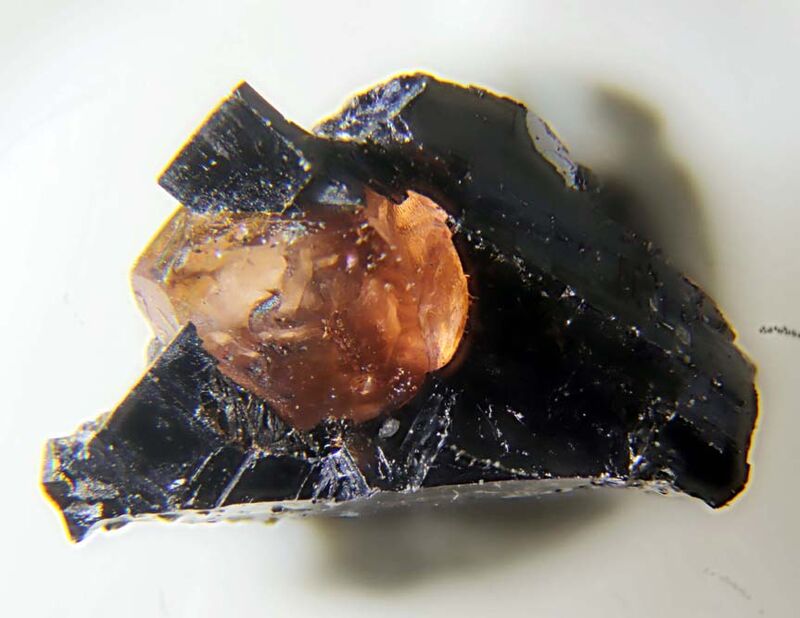
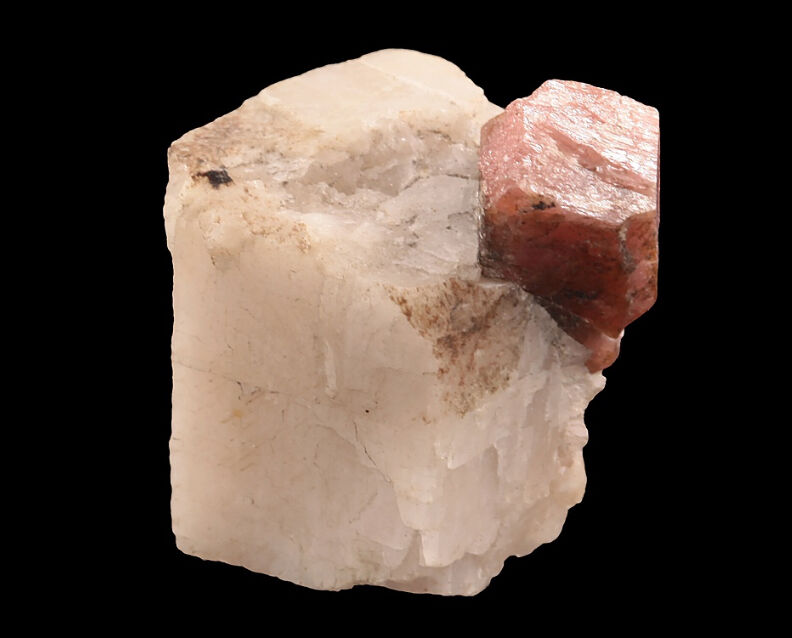
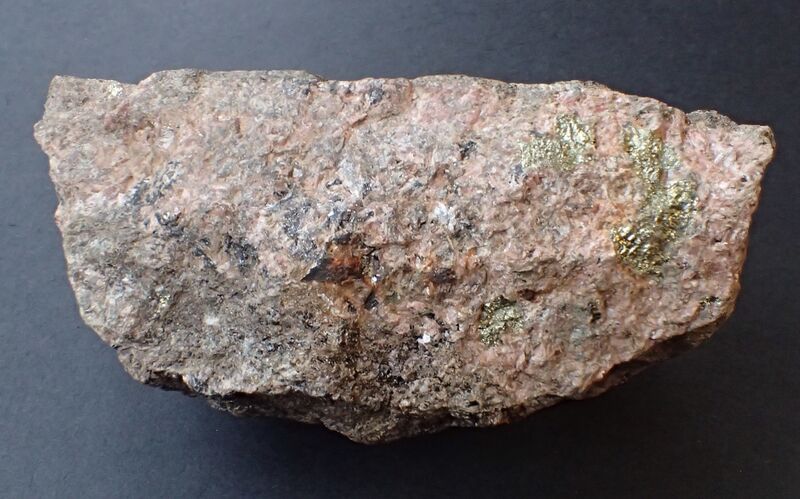
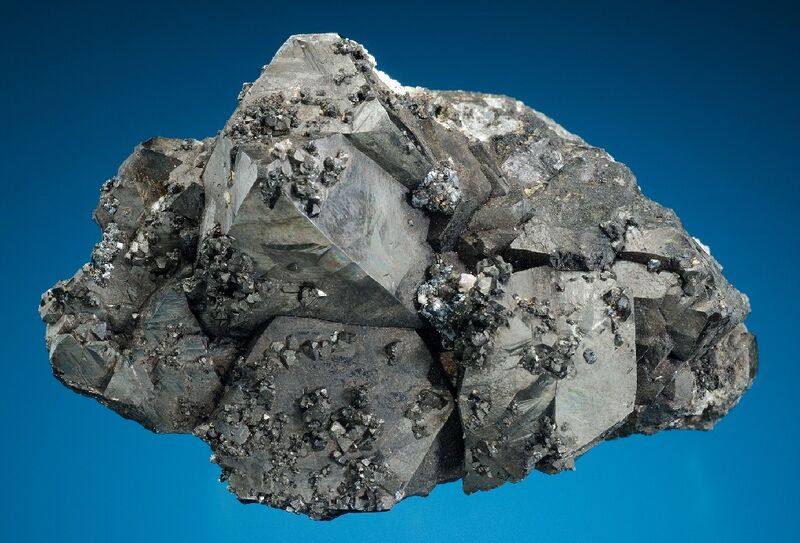 AlabanditeMnSMineral—
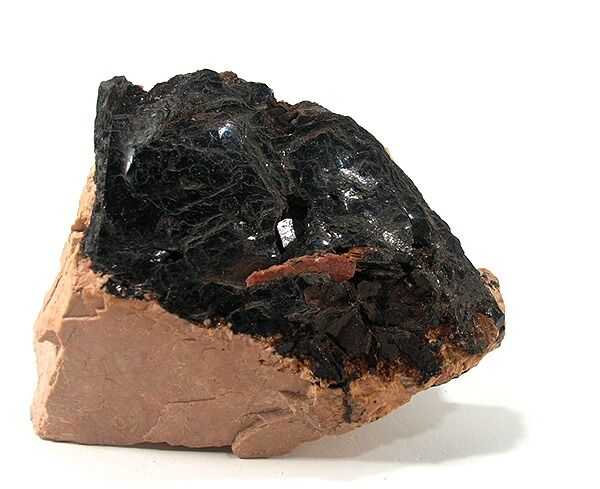 Bannisterite(Ca,K,Na)(Mn2+,Fe2+)10(Si,Al)16O38(OH)8 · nH2OMineral—
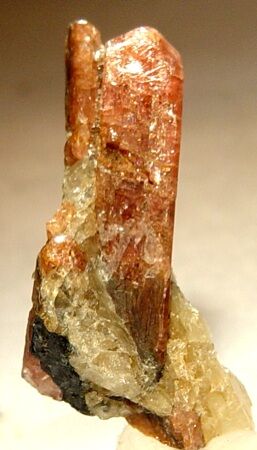 BustamiteMn2Ca2MnCa(Si3O9)2Mineral—
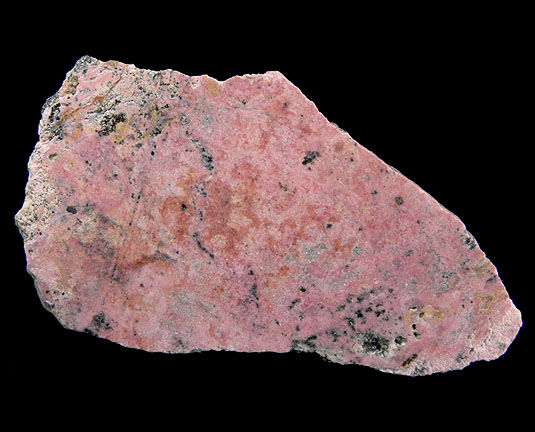 PyroxmangiteMn2+SiO3Mineral—
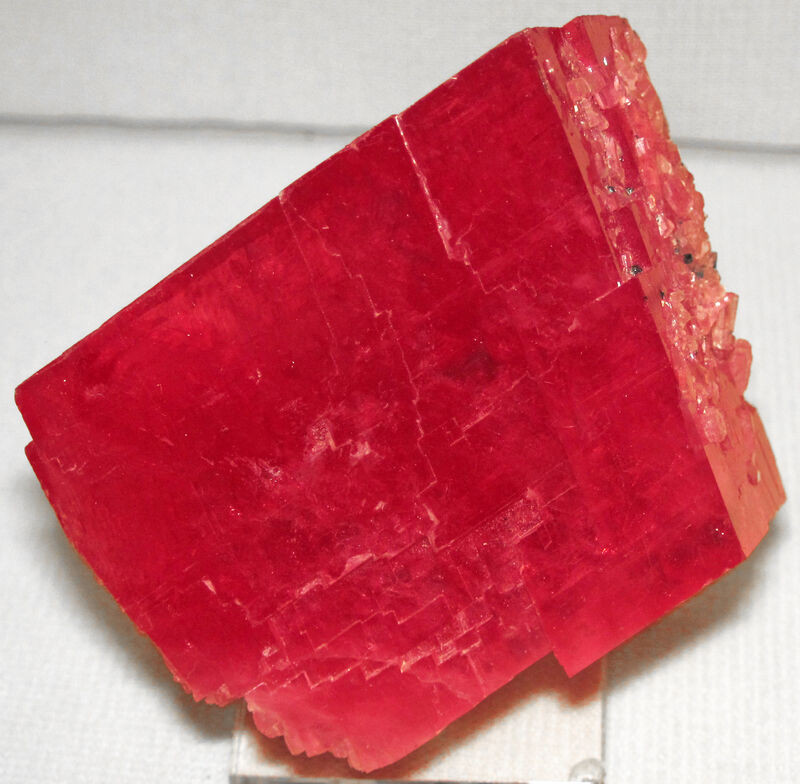 RhodochrositeMn(CO3)Mineral—
- SuzukiiteBaV4+Si2O7Mineral—
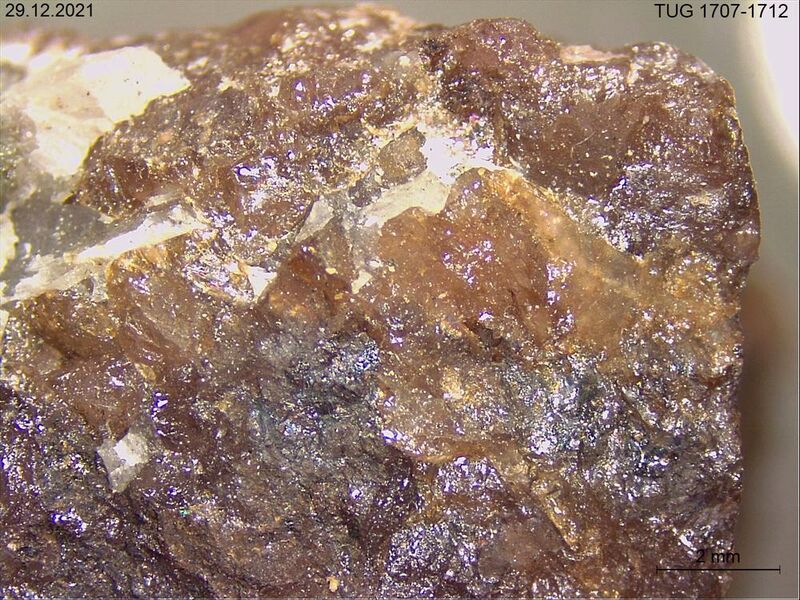 TephroiteMn2+2(SiO4)Mineral—
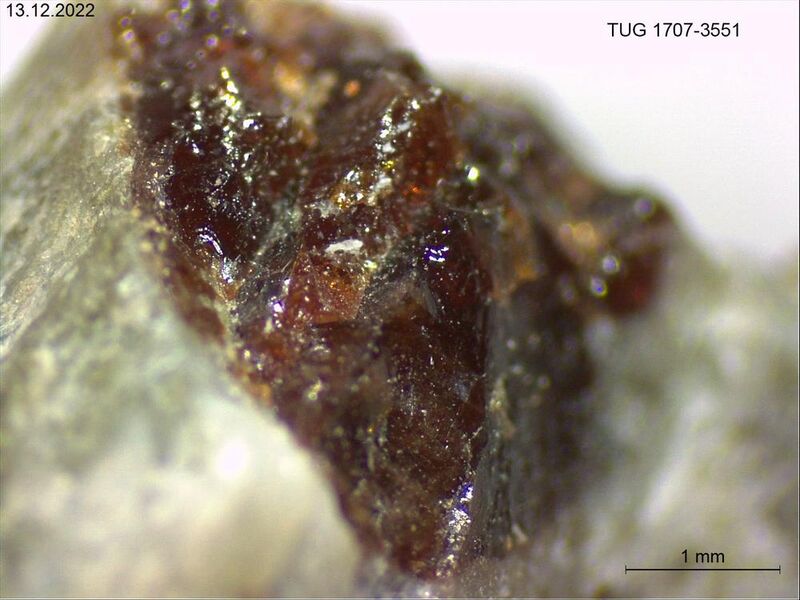 TinzeniteCa2Mn2+4Al4[B2Si8O30](OH)2Mineral—
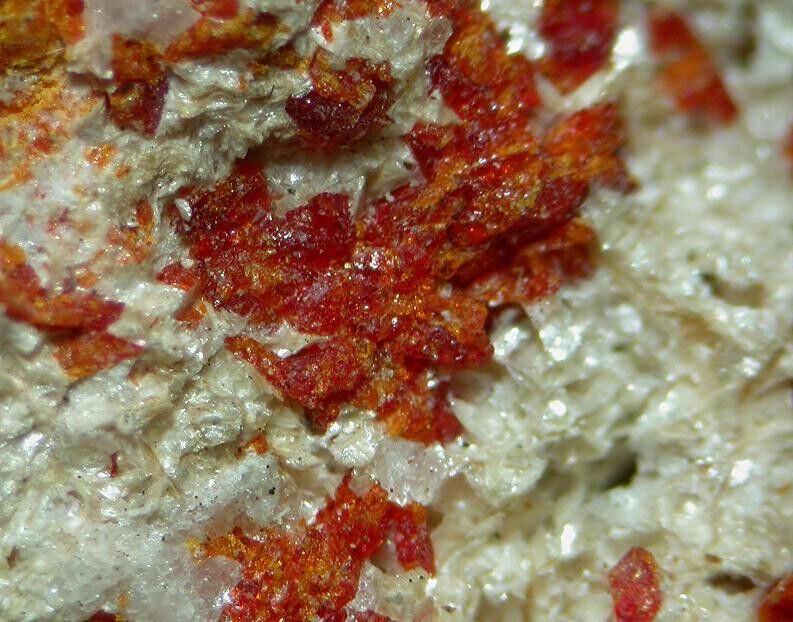 TiragalloiteMn2+4As5+Si3O12(OH)Mineral—
- VistepiteMn4SnB2O2(Si2O7)2(OH)2Mineral—
Literature, links & citation
- 1817Jasche, C.F. (1817) Das Rothmanganerz in der Gegend von Elbingerode am Harz. Kleine Mineralogische Schriften, 1, 1-9.
- 1819Germar, E.F. (1819) Ueber die kohlenstoff - und kieselsauren Manganerze des Unterharzes. Journal für Chemie und Physik, 26, 108-120.
- 1883Bourgeois, Léon (1883) Sur la reproduction artificielle de la rhodonite. Bulletin de Minéralogie, 6 (4) 64-69 doi:10.3406/bulmi.1883.1796DOI: 10.3406/bulmi.1883.1796
- 1922Larsen, Esper S., Shannon, Earl V. (1922) Notes on some new rhodonite specimens from Franklin Furnace, New Jersey. American Mineralogist, 7 (9) 149-152
- 1928Gossner, B., Bruckl, K. (1928) Über strukturelle Beziehungen von Rhodonit zu anderen Silikaten. Centralblatt für Mineralogie, Geologie und Paläontologie, 1928, 316–322.
Entry last updated
@misc{mineral2026,
  author    = {Mineral Index editorial board},
  title     = {Rhodonite — Mineral Index},
  year      = {2026},
  url       = {https://mineralindex.org/minerals/rhodonite-3407}
}