Where it forms, where it's found
- Geological setting
Hydrothermal veins.
- Type locality
- Varislahti deposit
- Outokumpu
- North Karelia
- Finland
62.7368°, 28.7284°
97recorded occurrences
Physical
Optical
- Optical type
- Isotropic
- Optical colour
- Slightly lighter bronze-yellow as compared to pentlandite
- Tropism
- Isotropic
- Reflectance R%
- (36.9) 400, (41.9) 420, (45.9) 440, (49.2) 460, (51.7) 480, (53.8) 500, (55.6) 520, (57.0) 540, (58.2) 560, (59.2) 580, (60.0) 600, (60.5) 620, (61.0) 640, (61.2) 660, (61.4) 680, (61.5) 700
Reflected-light panel
R̄ 54.7 %isotropic · single curve
Specimen
White reference
Crystallography
- Space group
- Fm3m
- Cell parameters
- a = 9.973 Å
- Z
- 4
- Morphology
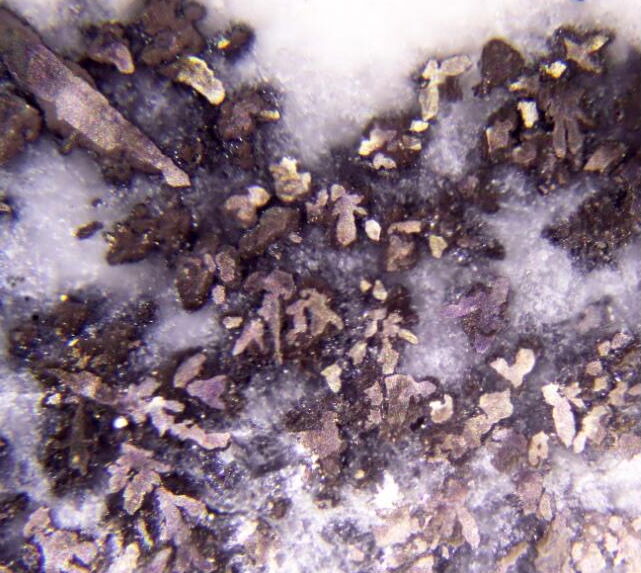
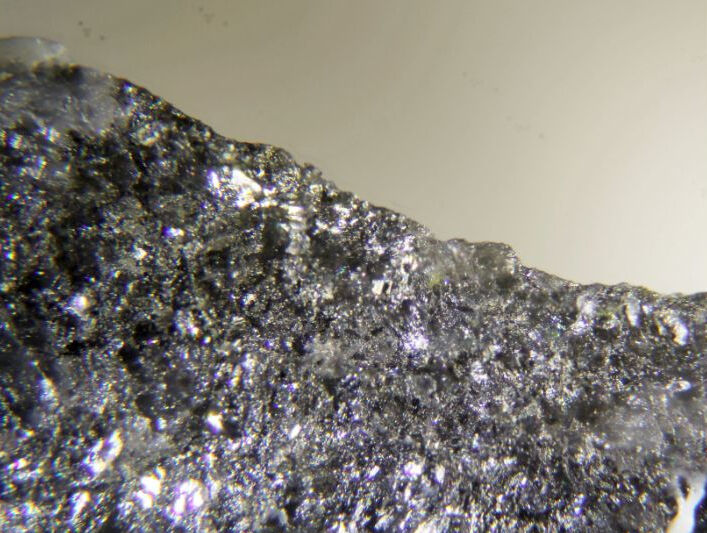
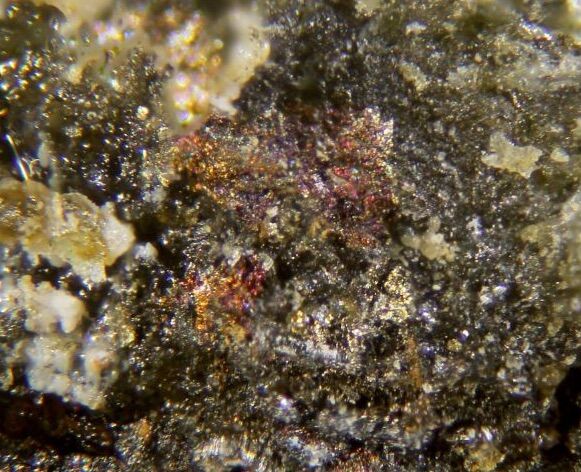
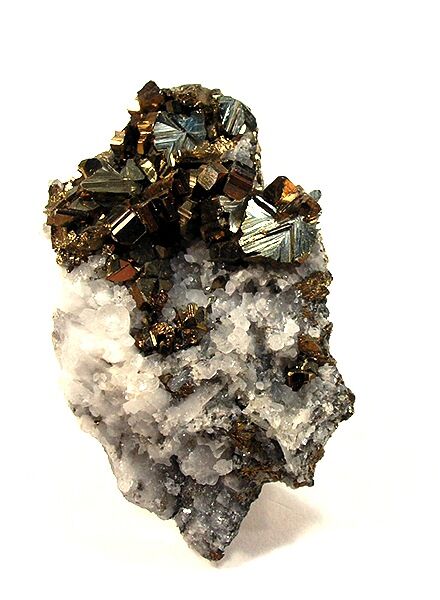
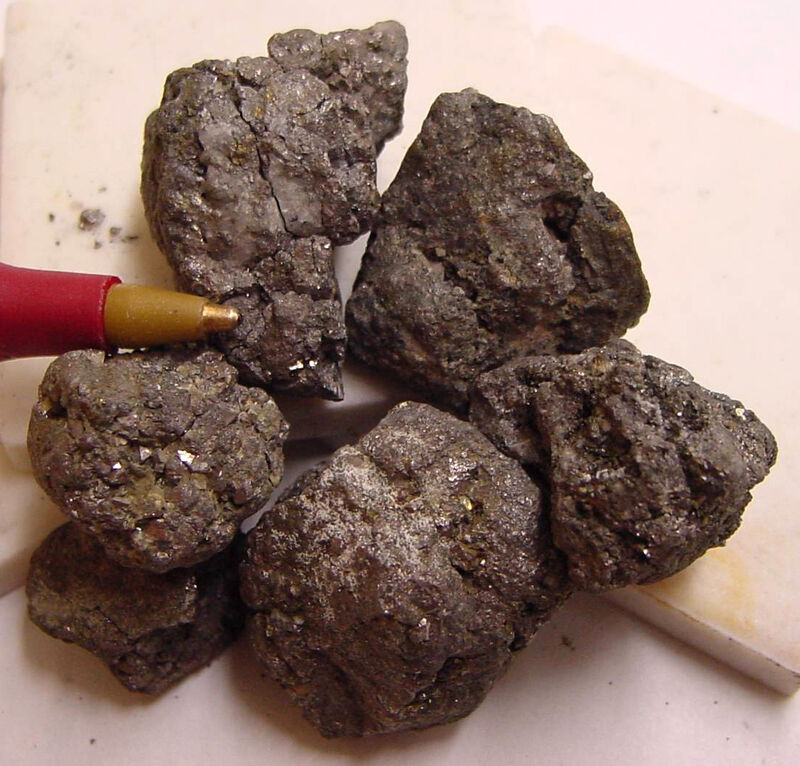
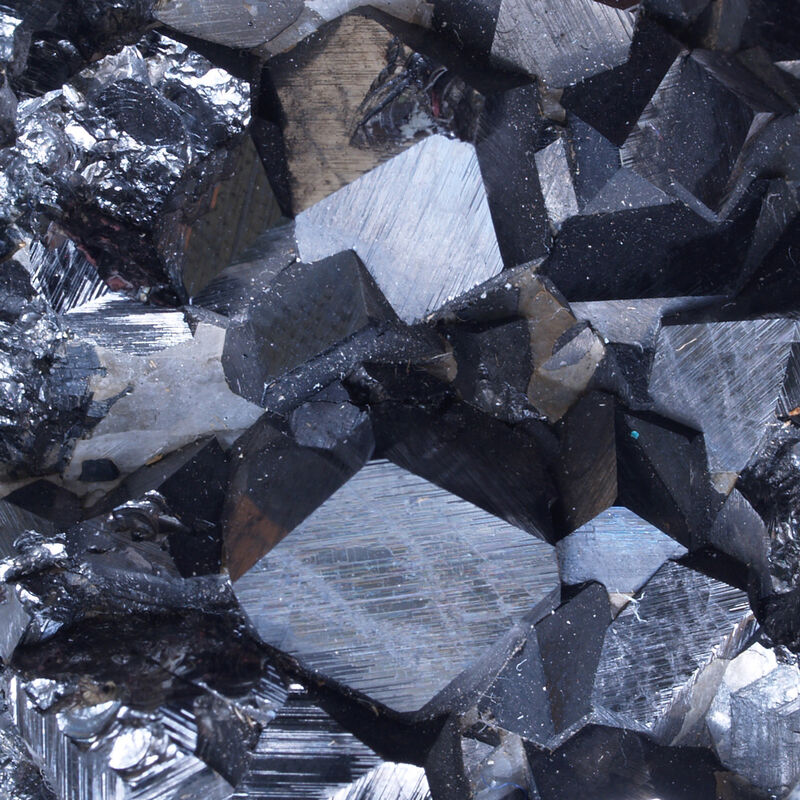
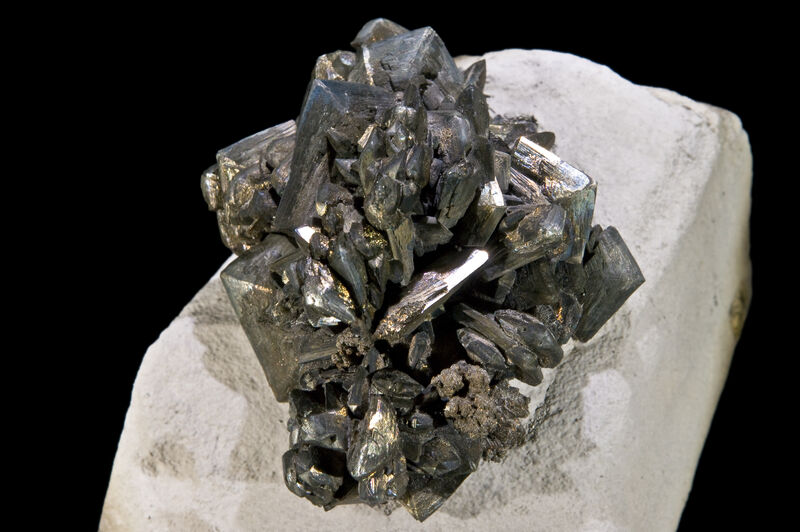
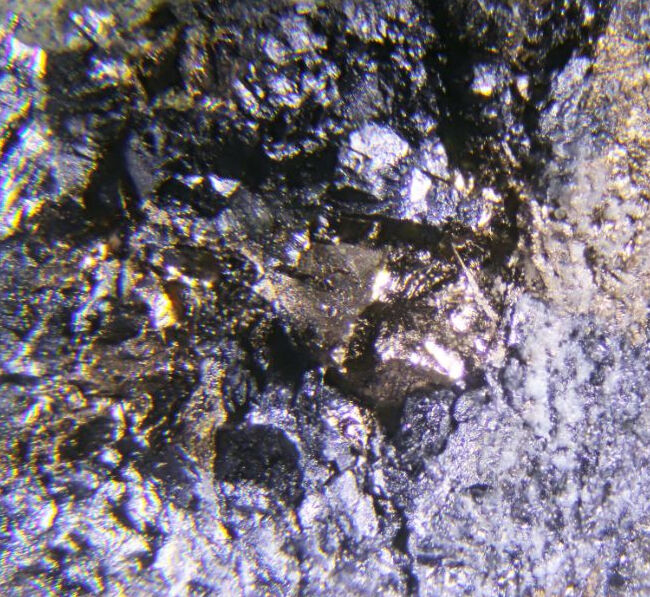
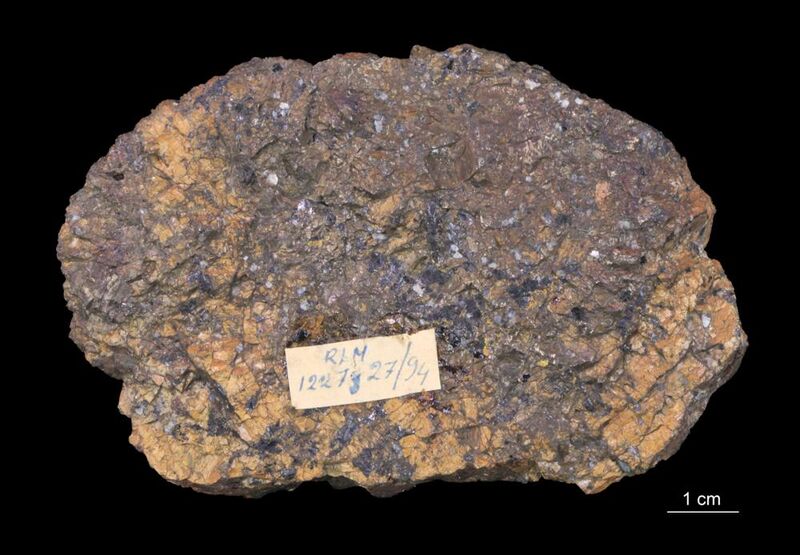
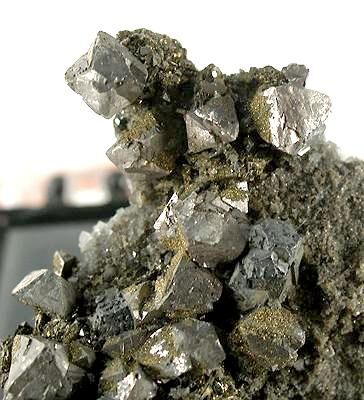
Exolved lammellae, crystals under 4mm.
Crystal structure
Chemical composition
- Impurities
- Fe
- Ni
Synonyms
- Cobaltpentlandiet
- Kobalt-Pentlandit
- Koboltpentlanditt
In other languages
- German
- Cobaltpentlandit · Kobalt-Pentlandit · Kobaltpentlandit
- Italian
- Cobaltopentlandite · Cobaltpentlandite
Classification
Strunz
10th ed.2.BB.15
- 2Sulfides and SulfosaltsClass
- 2.BMetal Sulfides, M: S > 1: 1 (mainly 2: 1)Division
- 2.BBWith NiGroup
- 2.BB.15CobaltpentlanditeSpecies
Dana
8th ed.02.07.01.03
- 02SulfidesClass
- 02.07AmBnXp, with (m+n):p = 9:8Type
- 02.07.01Pentalndite Group (Isometric: Fm3m)Group
- 02.07.01.03CobaltpentlanditeSpecies
CIM
—3.10.1
- 3Sulphides, Selenides, Tellurides, Arsenides and Bismuthides (except the arsenides, antimonides and bismuthides of Cu, Ag and Au, which are included in Section 1)Class
- 3.10Sulphides etc. of CoGroup
- 3.10.1CobaltpentlanditeSpecies
Group, growth & confusion
Literature, links & citation
Citations
- 1959Kouvo, O., Huhma, M., Vuorelainen, Y. (1959) A natural cobalt analogue of pentlandite. American Mineralogist, 44 (7-8) 897-902
- 1962Geller, S. (1962) Refinement of the crystal structure of Co9S8. Acta Crystallographica, 15 (12) 1195-1198 doi:10.1107/s0365110x62003187DOI: 10.1107/s0365110x62003187
- 1964Stumpfl, E.F. and Clark, E.M. (1964) A natural occurrence of Co9S8, identified by X-ray microanalysis. Neues Jahrbuch für Mineralogie, Monatshefte 1964: 240-245.
- 1965Fleischer, Michael (1965) New Mineral Names. American Mineralogist, 50 (11-12) 2096-2111
- 1969Petruk, W., Harris, D. C., Stewart, J. M. (1969) Langisite, a new mineral, and the rare minerals cobalt pentlandite, siegenite, parkerite, and bravoite from the Langis mine, Cobalt-Gowganda area, Ontario, Canada. The Canadian Mineralogist, 9 (5) 597-616
Cite this entry
Entry last updated
@misc{mineral2026,
  author    = {Mineral Index editorial board},
  title     = {Cobaltpentlandite — Mineral Index},
  year      = {2026},
  url       = {https://mineralindex.org/minerals/cobaltpentlandite-1097}
}