History
For most of its written life, the word marcasite did not mean what it means now. It was a catch-all for any pale brassy iron sulfide a miner dug out of the ground. The modern, narrower definition arrived late — only in 1845.
The word itself comes from Arabic. In medieval and early-modern Europe, it was applied indiscriminately to pyrite and other metallic bronze-coloured minerals. Pyrite and marcasite were, for most readers and writers of the time, the same thing under different lights.
The confusion runs through the surviving sources. In 1665, Walter Pope described "marcasites" in the mercury ores of the Idria Mine, in the Julian Alps of what is now Slovenia. The mine did contain both minerals — metallic golden specks of marcasite alongside golden pyrite — but Pope had no way to tell them apart. Over a century later, in 1771, Johnathan Hill was still using marcasite as a loose term for any massive pyrites or mundic.
The split came from Wilhelm Karl von Haidinger, who in 1845 fixed marcasite to one specific mineral: the orthorhombic polymorph of iron disulfide (FeS₂). Orthorhombic means built on three perpendicular axes of unequal length — a different scaffold from pyrite's cube. Same atoms, different shape.
The old meaning never quite died. The Victorian and Edwardian fashion for marcasite jewellery — small faceted stones set in mourning brooches and rings — predates Haidinger's definition. It uses the older sense of the word: the pale brassy gems in those pieces are almost always pyrite. True marcasite is too brittle to cut and too unstable to wear. Specimens in mineral cabinets are notorious for falling apart over time. The sulfur oxidises in damp air and combines with water to produce iron sulfate and sulfuric acid.
Industrial & practical applications
Marcasite has no significant industrial use today. The same instability that makes specimens crumble in mineral cabinets rules it out of any application that requires it to last. In moist air, the sulfur oxidises and combines with water to produce iron sulfate and sulfuric acid. Storage below 60 percent humidity slows the reaction but does not stop it.
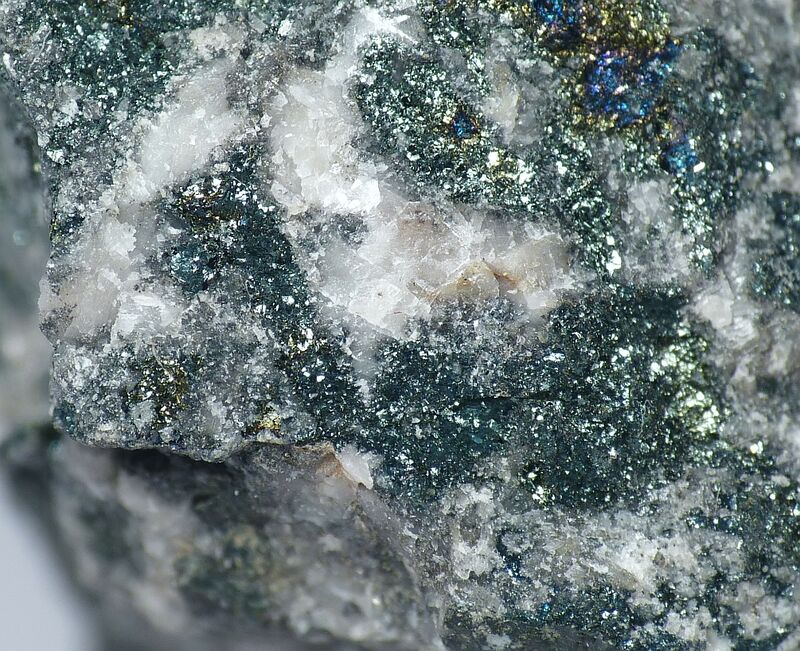
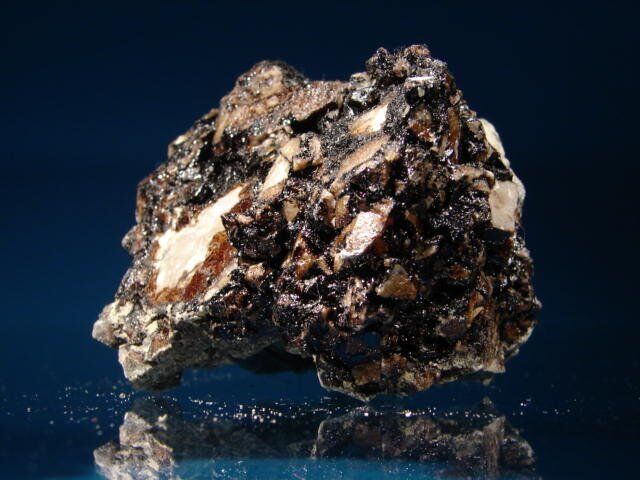
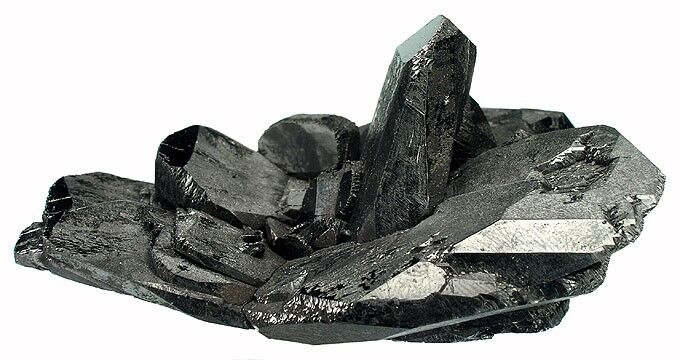
Where pyrite, its cubic cousin with the same FeS₂ formula, finds a handful of niche uses, marcasite stays on the shelf. Demand comes from mineral collectors and museums, drawn to the distinctive cockscomb and spear-shaped crystal habits marcasite produces.
Where it forms, where it's found
- Geological setting
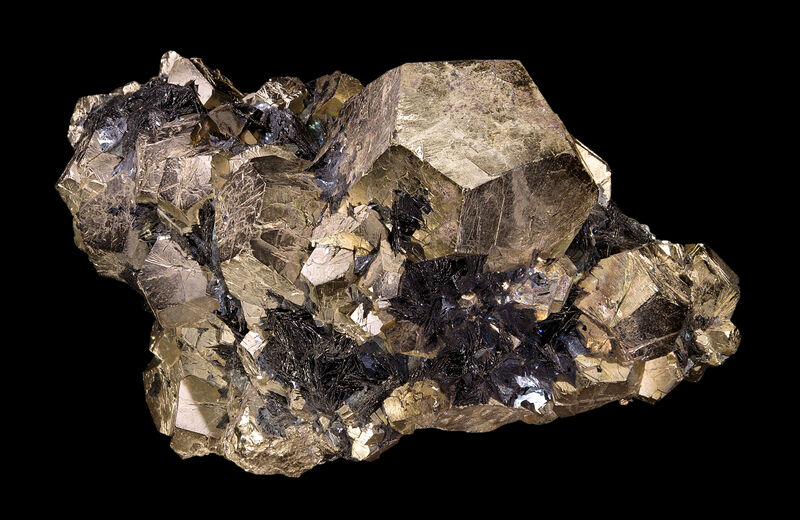
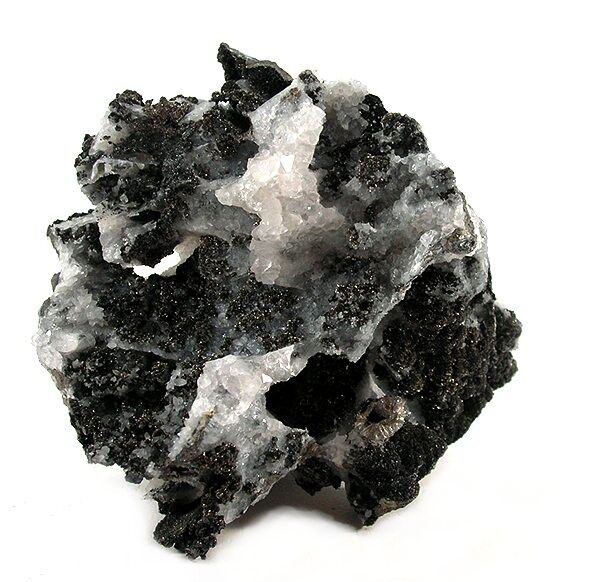
Most frequently found in sedimentary rocks and coal beds, as a replacement mineral forming fossils, it is a mineral of low-temperature, near-surface, environments, forming from acid solutions. Pyrite, the more stable form of FeS2, forms under conditions of higher temperatures and lower acidity or alkaline environments.
Varieties
Physical
- Hardness
- 1Talc
- 2Gypsum
- 3Calcite
- 4Fluorite
- 5Apatite
- 6Orthoclase
- 7Quartz
- 8Topaz
- 9Corundum
- 10Diamond
- Lustre
- Metallic
- Transparency
- Opaque
- Colour
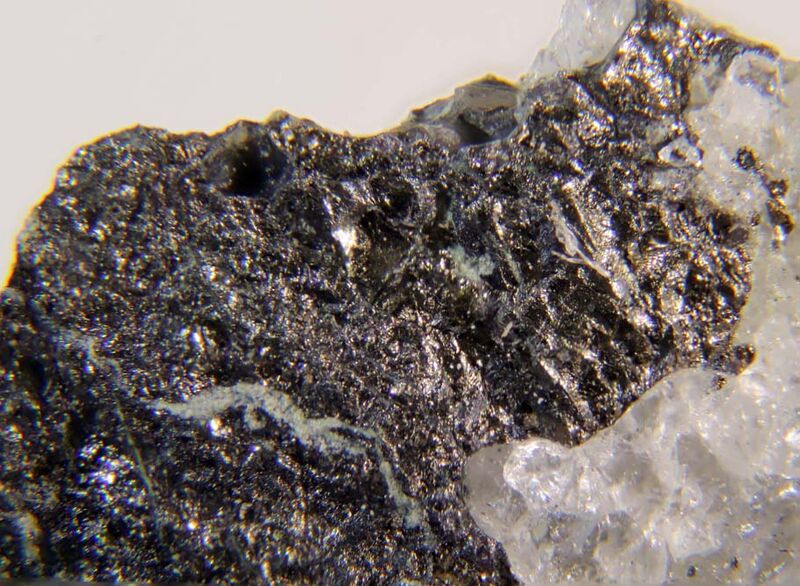
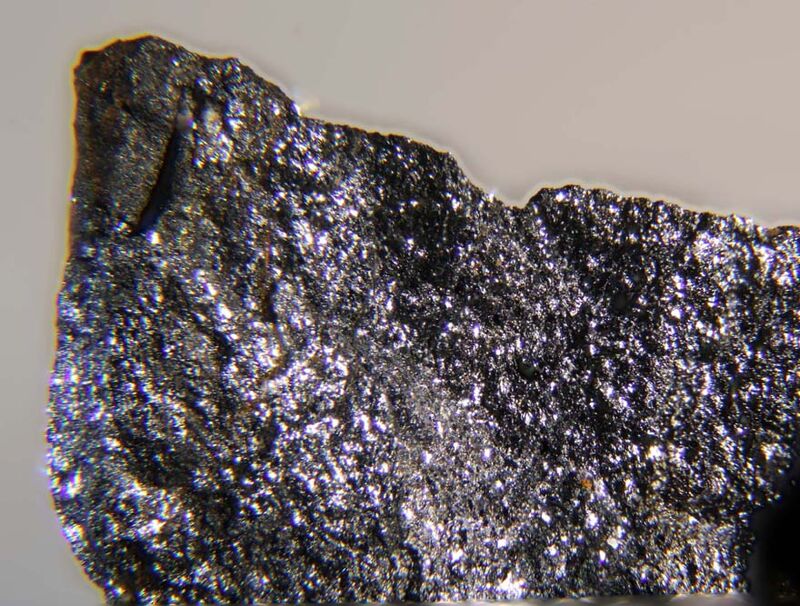
- Pale brass-yellow · tin-white on fresh exposures.
- Streak
- Dark-gray to black.
- Tenacity
- brittle
- Cleavage
- Distinct/Good
Distinct on (101). (110) in traces.
- Fracture
- Conchoidal · Sub-Conchoidal
- Density
- 4.887 g/cm³
Optical
- Pleochroism
- Strong
Creamy white, light yellowish white, white with rose-brown tint.
- Anisotropism
- Strong yellow to light green to dark green
- Tropism
- Anisotropic
- Reflectance R%
- (40.4,44.5) 400, (41.9,45.4) 420, (43.4,47.3) 440, (44.3,50.1) 460, (45.2,52.8) 480, (46.3,54.8) 500, (47.7,56.1) 520, (48.9,56.3) 540, (49.5,55.9) 560, (49.6,55.2) 580, (49.5,54.8) 600, (49.2,54.8) 620, (48.7,53.8) 640, (47.9,52.9) 660, (47.2,51.9) 680, (46.6,51.2) 700
- UV response
- Not fluorescent in ultraviolet light
Crystallography
- Space group
- Pnnm
- Cell parameters
- a = 4.436 Å · b = 5.414 Å · c = 3.381 Å
- Ratio a:b:c
- 1 : 1.220 : 0.762
- Z
- 2
- Morphology
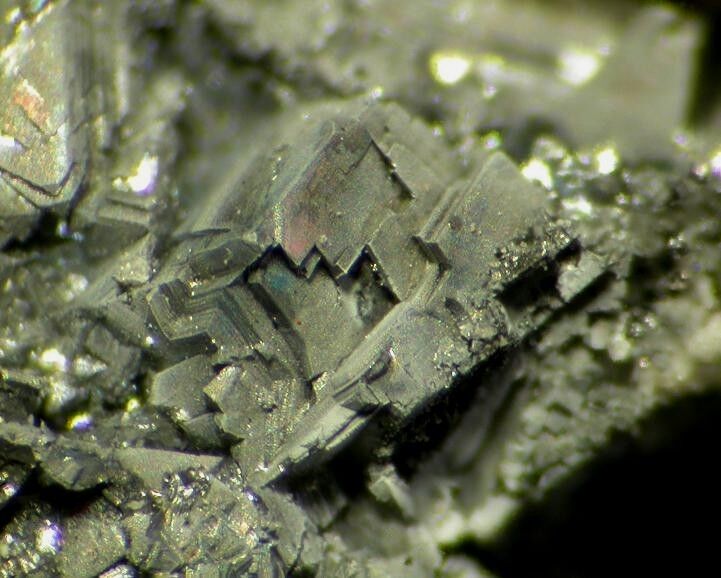
Crystals usually tabular on (010), also pyramidal, faces often curved, frequently twinned; also stalactic, globular, or reniform with radiating internal structure.
- Twinning
Common on (101), forming "swallowtail" contact twins; this may be repeated to form stellate fivelings. Less common on (011).
- Epitaxy
Twinned prismatic marcasite crystals attached along pyrite octahedron edges from Rensselaer, Indiana (Brock and Slater, 1978). See also Rakovan et al. (1995).
Chemical composition
- Impurities
- Cu
- As
Synonyms
- Alasanit
- Alasanita
- Alasanite
- Alazanit
- Alazanita
- Alazanite
- Binarit
- Binarita
- Binarite
- Binärkies
- Hydropyrit
- Hydropyrita
- Hydropyrite
- Kammkies
- Lamellar pyrite
- Lebererz (of Agricola)
- Markasite
- Maxy
- Pirita Blanca
- Poliopyrites
- Prismatic Iron Pyrites
- Radiated Pyrites
- Spear Pyrites
- Speerkies
- Sperchise
- Strahlkies
- Weicheisenkies
- Weisserkies
In other languages
- French
- Alasanite · Binarite · Binarkies · Cyrosite · Hydropyrite · Kausimkies · Kyrosite · Lonchandite · Marcasite · marcassite · Métalonchidite · Poliopyrites · Pyrite blanche · Pyrite crêtée · Pyrite lamelleuse · Pyrite rhomboïdale · Sperkise
- German
- Markasit
- Spanish
- marcasita · margajita · nicoya
- Italian
- marcasite
- Portuguese
- marcassita · Marcassite
- Japanese
- 白鉄鉱
- Chinese
- 白铁矿
- Simplified Chinese
- 白铁矿
- Traditional Chinese
- 白鐵礦
- Russian
- Лучистый колчедан · Марказит
- Arabic
- مرقشيت
Classification
2.EB.10a
- 2Sulfides and SulfosaltsClass
- 2.EMetal Sulfides, M: S <= 1:2Division
- 2.EBM:S = 1:2, with Fe, Co, Ni, PGE, etc.Group
- 2.EB.10aMarcasiteSpecies
02.12.02.01
- 02SulfidesClass
- 02.12AmBnXp, with (m+n):p = 1:2Type
- 02.12.02Marcasite Group (Orthorhombic: Pnnm)Group
- 02.12.02.01MarcasiteSpecies
3.9.4
- 3Sulphides, Selenides, Tellurides, Arsenides and Bismuthides (except the arsenides, antimonides and bismuthides of Cu, Ag and Au, which are included in Section 1)Class
- 3.9Sulphides etc. of FeGroup
- 3.9.4MarcasiteSpecies
Group, growth & confusion
Literature, links & citation
- 1665Pope, Walter (1665) Extract of a letter, lately written from Venice by the learned Doctor Walter Pope, to the Reverend Dean of Rippon, Doctor John Wilkins, concerning the mines of mercury in Friuli; and a way of producing wind by the fall of water: Philosophical Transactions: May 30, 1665: 1(2): 21-26.
- 1931Buerger, M. J. (1931) The crystal structure of marcasite. American Mineralogist, 16 (9) 361-395
- 1932Bannister, F. A. (1932) The distinction of pyrite from marcasite in nodular growths. Mineralogical Magazine and Journal of the Mineralogical Society, 23 (138) 179-187 doi:10.1180/minmag.1932.023.138.04 DOI: 10.1180/minmag.1932.023.138.04
- 1934Buerger, M. J. (1934) The pyrite-marcasite relation. American Mineralogist, 19 (2) 37-61
- 1937Buerger, M. J. (1937) A common orientation and a classification for crystals based upon a marcasite-like packing. American Mineralogist, 22 (1) 48-56
Entry last updated
@misc{mineral2026,
  author    = {Mineral Index editorial board},
  title     = {Marcasite — Mineral Index},
  year      = {2026},
  url       = {https://mineralindex.org/minerals/marcasite-2571}
}