Where it forms, where it's found
- Geological setting
As a pegmatitic body in a granite stock intruded into gneiss.
Late stage mineral in granitic pegmatites, vapor phase mineral in rhyolites.
- Type locality
- Ivigtut Mine
- Ivigtut stock
- Arsuk Fjord
- Sermersooq
- Greenland
61.2061°, -48.1756°
Physical
- Hardness
- 1Talc
- 2Gypsum
- 3Calcite
- 4Fluorite
- 5Apatite
- 6Orthoclase
- 7Quartz
- 8Topaz
- 9Corundum
- 10Diamond
- Lustre
- Vitreous · Greasy
- Transparency
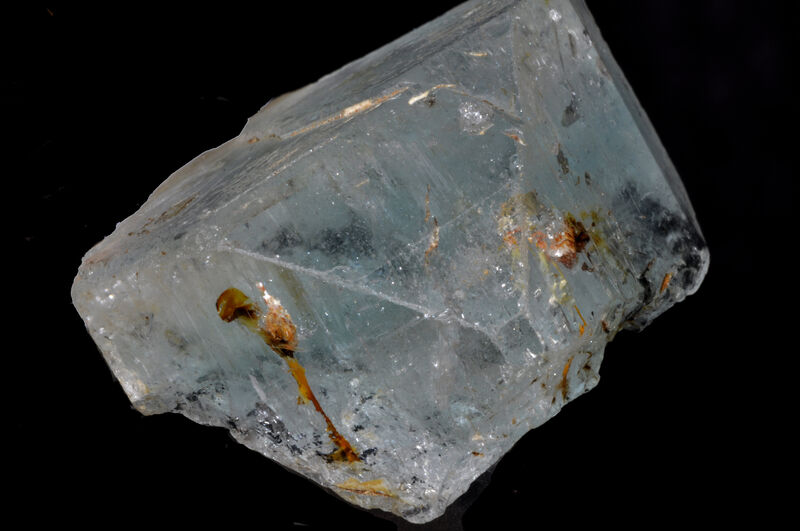
- Transparent · Translucent
- Colour
- Colourless · white · brown · grey · black · colourless in transmitted light.
- Streak
- White
- Tenacity
- brittle
- Cleavage
- None Observed
- Fracture
- Irregular/Uneven
- Density
- 2.96 g/cm³
Optical
- Optical type
- Biaxial (+) · 2V measured = 43° · 2V calc = 76°
- Refractive index
- 1.3385 – 1.34
- Principal indices
- nα 1.3385 – 1.339 · nβ 1.3389 – 1.339 · nγ 1.3396 – 1.34
- Dispersion
- r < v
- Extinction
- X = b; Z ∧ c = −44°.
Crystallography
- Cell parameters
- a = 7.7564(3) Å · b = 5.5959(2) Å · c = 5.4024(2) Å
- Cell angles
- β = 90.18 °
- Ratio a:b:c
- 1 : 0.721 : 0.697
- Z
- 2
- Morphology
Crystals usually cuboidal with c, , or modified by r, v, k; also short prismatic [001]. (110) faces striated [1_11], [1_1_1], or [1_10]. Massive, coarsely granular.
- Twinning
Very common. Often repeated or polysynthetic with simultaneous occurrence of several twin laws, and reflecting the pseudo-orthorhombic symmetry of the unit cell. 1. By a 90° or 270° rotation on [110], penetration, common. 2. By a 180° rotation on [110], rhombic section (11_0), repeated, less common. 3. By a 120° rotation on [021], composition surface irregular; common, especially in granular material, as fine lamellae and probably always secondary. 4. By a 180° rotation on [1_11], rhombic section near (110), repeated; rare (not in granular material). 5. On (001) or by a 180° rotation on [100], composition plane (001). 6. On (100) or by a 180° rotation on [001], composition plane (100). 7. On (112), composition plane (112). 8. On (1_12), composition plane (112). 9. On (110), composition plane (110). 10. By a 180° rotation on [111], rhombic section near (11_0). 11. On (211). (Palache et al (1951), Dana's System of Mineralogy, 7th. ed., vol. 2: 111).
- Parting
- On (001) and (110), producing cuboidal forms.
- Epitaxy
Oriented growths (artificial material).
- Type-locality form
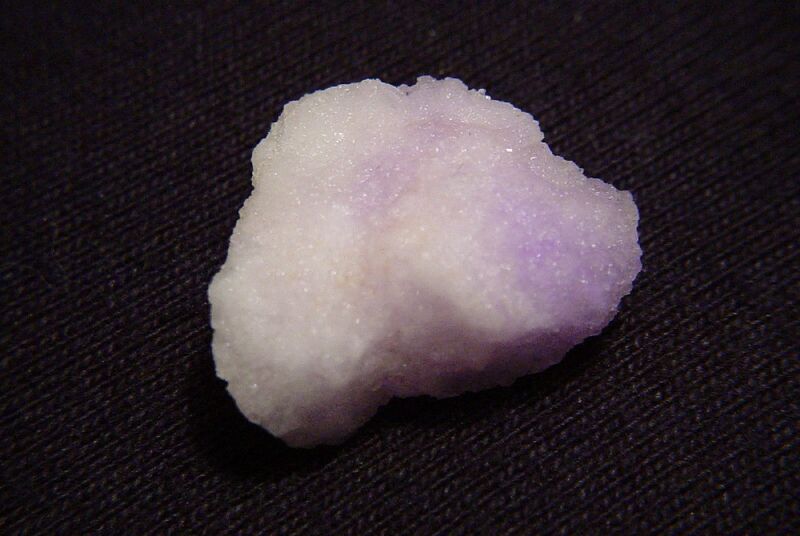
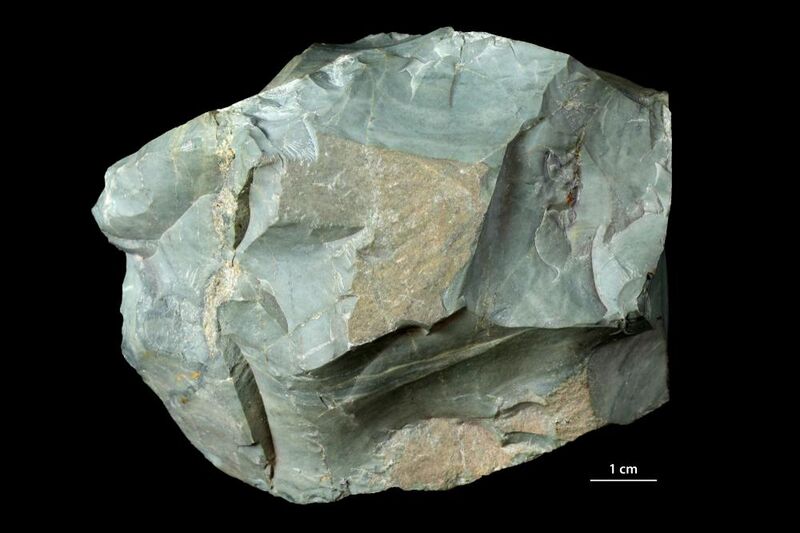
Massive white transparent to translucent.
- Comment
Spacegroup: P21/n (Mitchell et al. 2016); at 5K, the structure is the same as that at RT
Chemical composition
- Impurities
- Fe
- Ca
Synonyms
- Alumine fluatée alkaline
- Chryolith
- Cryoliet
- Cryolithe
- Eisstein
- Thonerde mit Flussäure
In other languages
- French
- alumine fluatée alkaline · cryolite · cryolithe
- German
- Eisstein · Kryolith
- Spanish
- criolita
- Italian
- criolite · Cryolite
- Portuguese
- criolita · criolite · criolito
- Japanese
- 氷晶石
- Chinese
- 冰晶石
- Simplified Chinese
- 冰晶石
- Traditional Chinese
- 冰晶石
- Russian
- криолит
- Arabic
- كريوليت
Classification
3.CB.15
- 3HalidesClass
- 3.CComplex halidesDivision
- 3.CBNeso-aluminofluoridesGroup
- 3.CB.15CryoliteSpecies
11.06.01.01
- 11Halide ComplexesClass
- 11.06Aluminofluorides - Isolated OctahedraType
- 11.06.01Cryolite GroupGroup
- 11.06.01.01CryoliteSpecies
8.6.5
- 8Halides - Fluorides, Chlorides, Bromides and Iodides; also Fluoborates and FluosilicatesClass
- 8.6Halides of AlGroup
- 8.6.5CryoliteSpecies
Group, growth & confusion
Literature, links & citation
- 1799Abildgaard, Nicolay Abraham (1799) Norwegische Titanerze und andre neue Fossilien [Norwegian titanium ores and other new fossils]. Allgemeines Journal der Chemie, S. 1 Vol. 2 (10). 502
- 1799Abildgaard, P. C. (1799) Sur plusieurs pierres nouvelles envoyées de Norwége; sur la désoxidation de l'oxide sur le gaz extrait de l'eau bouille [On several new stones sent from Norway; on the deoxidation of oxide on the gas extracted from boiled water]. Annales de Chimie ou Recueil de mémoires concernant la chimie et les arts qui en dependent, 32. 193-196
- 1800Karsten, D.L.G. (1800) Mineralogische Tabellen, Berlin. First edition (1800): 28: 73 (as Kryolith).
- 1800Klaproth (1800) Journal Phys.: 51: 473.
- 1800d' Andrada [e Silva], [José Bonifácio] (1800) Kurze Angabe der Eigenschaften und Kennzeichen einiger neuen Fossilien aus Schweden und Norwegen : nebst einigen chemischen Bemerkungen über dieselben [A brief description of the properties and characteristics of some new fossils from Sweden and Norway : together with some chemical remarks on the same]. Allgemeines Journal der Chemie, S. 1 Vol. 4 (19). 28-39
Entry last updated
@misc{mineral2026,
  author    = {Mineral Index editorial board},
  title     = {Cryolite — Mineral Index},
  year      = {2026},
  url       = {https://mineralindex.org/minerals/cryolite-1161}
}