History
For most of its history, topaz was not the mineral we now call by that name. Pliny the Elder used the word for a yellow stone from an island in the Red Sea. That stone almost certainly was not the aluminium fluorosilicate sold today.
The name comes through Latin Topazius and Old French Topace from the Greek Topázios. Pliny placed the source on Topazos, a hard-to-find island in the Red Sea from which a yellow gemstone was mined in antiquity. That island is known today as Zabargad, or St. John's Island. The stone Pliny described was almost certainly chrysolite — the gem-quality yellowish form of olivine now sold as peridot. The Romans gave the gem protective powers; travellers wore it as a charm against danger on the road.
The confusion deepened in the Septuagint Greek translation of the Hebrew Bible. There the word topazi[os] names a yellow stone — again likely chrysolite, not what we now call topaz. Through the Middle Ages, the name settled into a generic label: any yellow gemstone could be called topaz.
The modern definition arrived in 1737, when the name was first applied to the silicate mineral Al₂(SiO₄)(F,OH)₂. Eighteenth-century mineralogy was sorting through the bag of yellow stones one by one, separating species by hardness, crystal form and chemistry. Topaz was given to the silicate; everything else kept its own name.
One of the most famous early specimens has a confused identity of its own. The Braganza stone of Portugal — a very large jewel long described as a diamond — is now thought to be a topaz instead.
Industrial & practical applications
Topaz is a gemstone first and almost nothing else. Cut and polished, it ranks among the second tier of gemstones — semiprecious, accompanying aquamarine, morganite and tourmaline. That single use absorbs nearly all the commercial demand for the mineral.
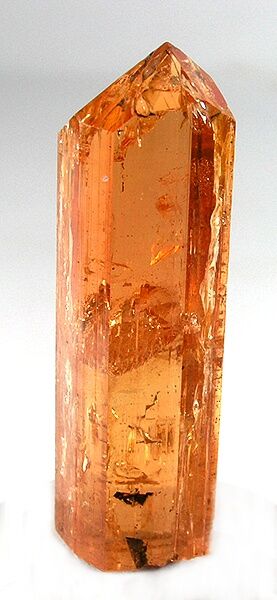
The gem trade sorts topaz by colour, and the most prized colours have their own names. Imperial topaz is yellow, pink-orange, or — more rarely — pink or violet. The Brazilian material can run from a bright yellow to a deep golden brown. Blue topaz is almost entirely a manufactured colour. Naturally blue stones are rare. Most of what reaches jewellery shops starts as colourless, grey or pale yellow rough, then is heat-treated and irradiated to a darker blue. Mystic topaz is colourless topaz coated by vapor deposition — a thin film that gives the stone a rainbow effect on its surface.
Two American states have made topaz their official gemstone. Orange topaz — also called precious topaz — is the November birthstone and a symbol of friendship. It is the state gemstone of Utah; blue topaz is the state gemstone of Texas. The Texas designation rests on colourless and light-blue crystals found in the Precambrian granite of Mason County, within the Llano Uplift.
Industrial use of topaz is modest. Lower-quality rough — the material that does not meet gem standards — is used as an abrasive on account of its hardness. The same material also feeds into refractory products for high-temperature environments.
Where it forms, where it's found
- Geological setting
Saxony
As a rock-forming mineral in igneous rocks, pegmatites, and rhyolites, hydrothermal veins, metamorphic rocks, and greisens.
Varieties
Physical
- Hardness
- 1Talc
- 2Gypsum
- 3Calcite
- 4Fluorite
- 5Apatite
- 6Orthoclase
- 7Quartz
- 8Topaz
- 9Corundum
- 10Diamond
- Lustre
- Vitreous
- Transparency
- Transparent · Translucent
- Colour
- Colourless · white · pale blue · light green · yellow · yellowish brown · or red
Predominantly colorless in natural crystals. Hence, the trade relies almost entirely on irradiated blue topaz with an unstable color center, which has been shown to fade over time. The cobalt (Co) diffusion treatment is a stable alternative process for converting colorless topaz to blue by a solid-state diffusion mechanism. [[1]]
- Streak
- White
- Tenacity
- brittle
- Cleavage
- Perfect
(001)
- Fracture
- Irregular/Uneven · Sub-Conchoidal
- Density
- 3.4 g/cm³
Optical
- Optical type
- Biaxial (+) · 2V measured = 48 – 68° · 2V calc = 58 – 68°
- Refractive index
- 1.606 – 1.638
- Surface relief
- Moderate
- Principal indices
- nα 1.606 – 1.629 · nβ 1.609 – 1.631 · nγ 1.616 – 1.638
- Pleochroism
- Weak
In thick sections: X = yellow Y = yellow, violet, reddish Z = violet, bluish, yellow, pink
- Dispersion
- noticable r > v
- Extinction
- X = a; Y = b; Z = c.
- Luminescence
- Fluorescent, Short UV=golden yellow, Long UV=cream.
- UV response
- Rarely yellow, white, orange, greenish-yellow
Crystallography
- Cell parameters
- a = 4.65 Å · b = 8.8 Å · c = 8.4 Å
- Ratio a:b:c
- 1 : 1.892 : 1.806
- Morphology
Long to short prismatic.
- Comment
Crystallography (orthorhombic or triclinic) depends upon the ratio of F and OH in the mineral.
Chemical composition
Synonyms
- Chrysolithos
- Colorado Topaz
- Gouttes d'eau
- Physalite
- Pyrofysalit
- Pyrophysalite
- Silver Topaz
- White Topaz
In other languages
- French
- 12305-55-4 · 1302-59-6 · 67479-89-4 · Al2SiO4(F,OH)2 · topaze
- German
- Pyknit · Sächsischer Diamant · Schneckentopas · Topas
- Spanish
- topacio
- Italian
- topazio
- Portuguese
- Al2SiO4(F, OH)2 · topázio
- Japanese
- トパーズ · トパズ · 黄玉
- Chinese
- 托帕石 · 黃寶石 · 黄宝石 · 黄玉
- Simplified Chinese
- 黄玉
- Traditional Chinese
- 黃玉
- Russian
- топаз · Топазы
- Arabic
- توباز
- Hindi
- पुखराज · पुष्पराग
Classification
9.AF.35
- 9SilicatesClass
- 9.ANesosilicatesDivision
- 9.AFNesosilicates with additional anions; cations in [4], [5] and/or only [6] coordinationGroup
- 9.AF.35TopazSpecies
52.03.01.01
- 52Nesosilicates Insular Sio4 Groups and O, Oh, F, H2oClass
- 52.03Insular SiO4 Groups and O, OH, F, and H2O with cations in [6] coordination onlyType
- 52.03.01Topaz GroupGroup
- 52.03.01.01TopazSpecies
17.2.1
- 17Silicates Containing other AnionsClass
- 17.2Silicates with fluorideGroup
- 17.2.1TopazSpecies
Group, growth & confusion
 AlthausiteMg4(PO4)2(OH,O)(F,◻)Mineral—
 AmblygoniteLiAl(PO4)FMineral—
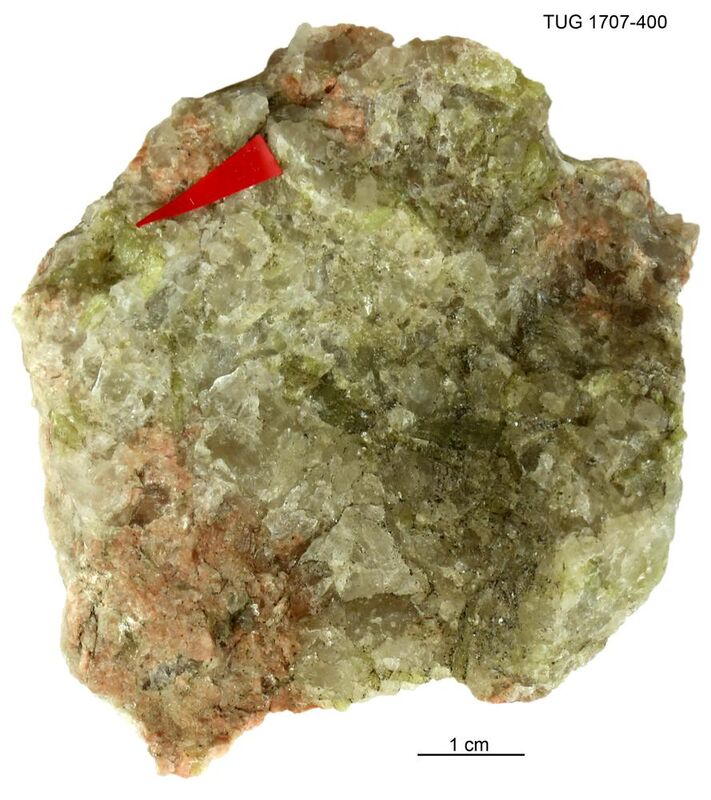 ChrysoberylBeAl2O4Mineral—
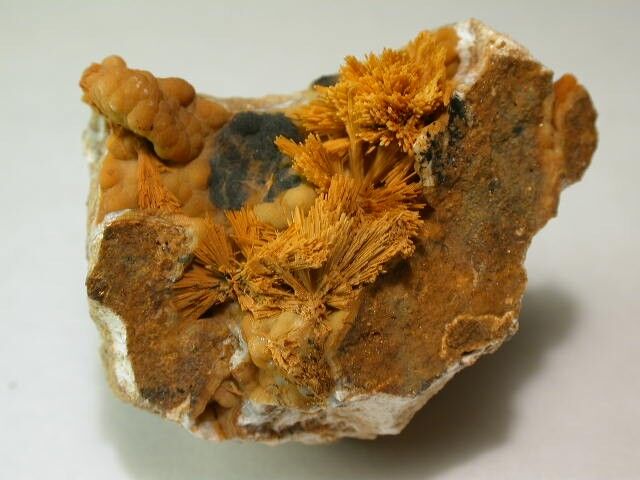 CrandalliteCaAl3(PO4)(PO3OH)(OH)6Mineral—
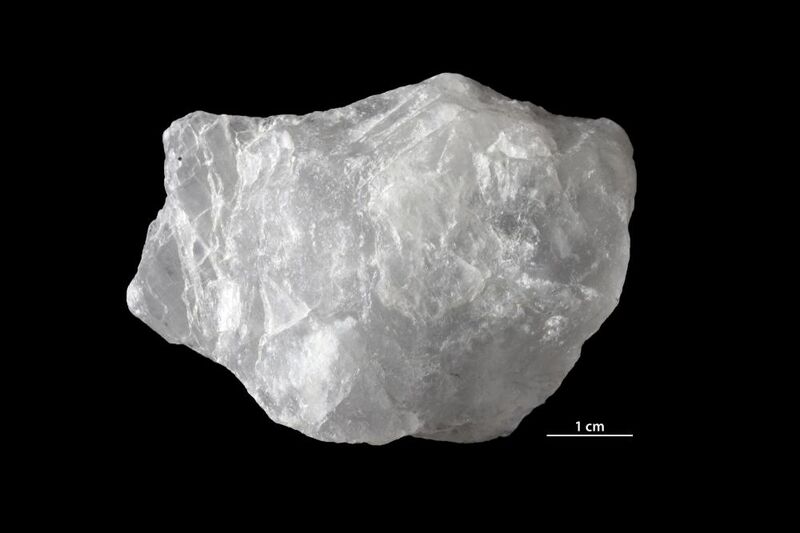 CryoliteNa2NaAlF6Mineral—
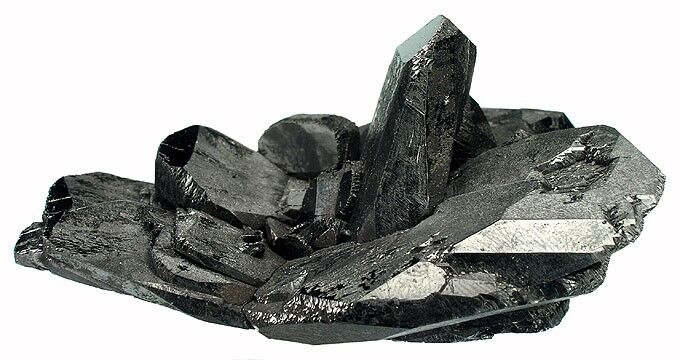 FerberiteFe2+(WO4)Mineral—
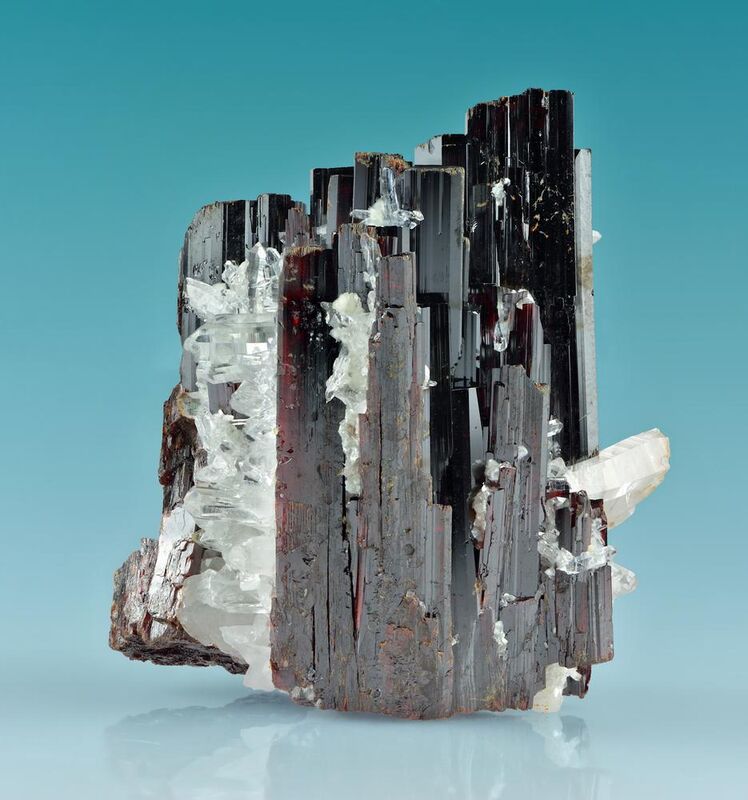 HübneriteMn2+(WO4)Mineral—
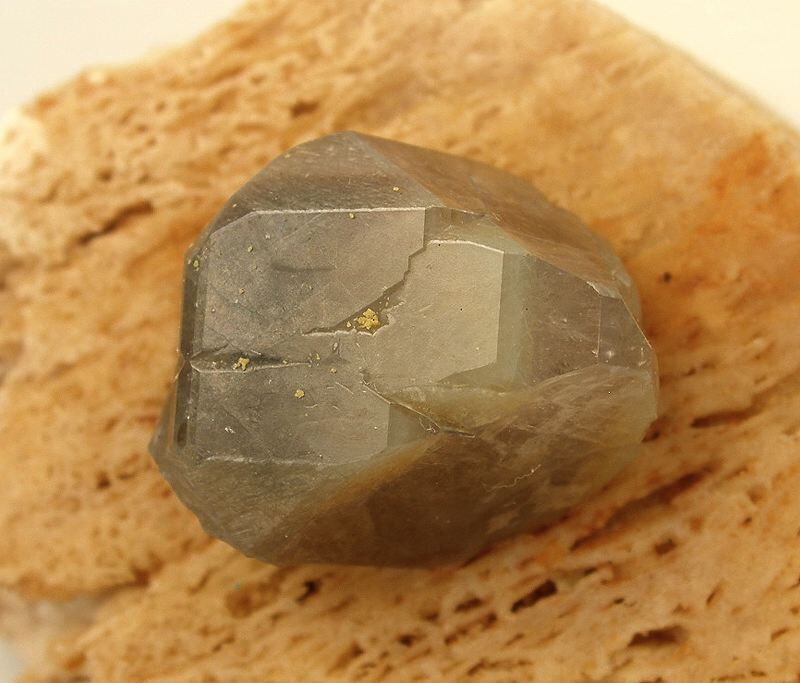 HydroxylherderiteCaBe(PO4)(OH)Mineral—
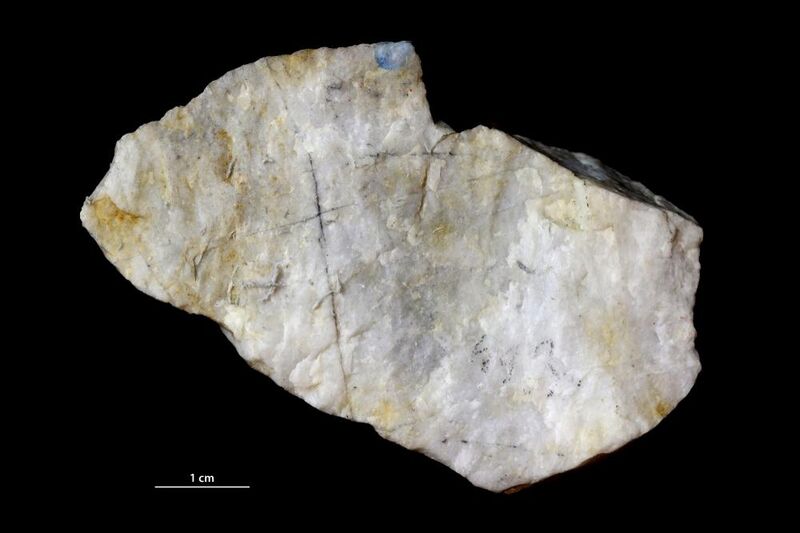 MontebrasiteLiAl(PO4)(OH)Mineral—
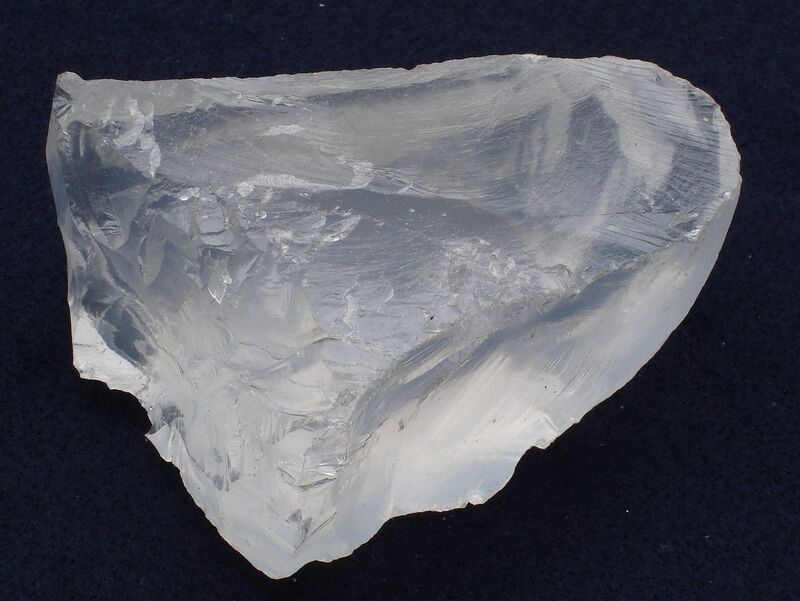 PetaliteLiAlSi4O10Mineral—
Literature, links & citation
- —Gaius Plinius Secundus (77–79) Naturalis Historiae.
- 1565Gesner, C. (1565) Gemmis, quae erant in veste Aaronis, Liber Graecus, & e regione Latinus, Iola Hierotarantino interprete: cum Corollario Conradi Gesneri. in Sancti Patris Epiphanii Episcopi Cypri ad Diodorum Tyri episcopum, De XII, 1-29.
- 1737Henkel, J.F. (1737) De topasio vera Saxonum, orientali non inferiore. Acta Physico-medica Academiae Caesareae Leopoldino-Carolinae Naturae Curiosorum: 4, 316-320.
- 1810Klaproth, M. H. (1810) CLXXX. Chemische Untersuchung des Pycnits. In Beiträge zur chemischen Kenntniss der Mineralkörper Vol. 5. Rottmann. p.50-57.
- 1937Pardee, J. T., Glass, Jewell J., Stevens, R. E. (1937) Massive low-fluorine topaz from the Brewer Mine, South Carolina. American Mineralogist, 22 (10) 1058-1064
Entry last updated
@misc{mineral2026,
  author    = {Mineral Index editorial board},
  title     = {Topaz — Mineral Index},
  year      = {2026},
  url       = {https://mineralindex.org/minerals/topaz-3996}
}