History
The word fluorescence exists because this mineral does. The naming came late — the mineral's story starts much earlier.
Pliny the Elder describes the stone in book 37 of his Naturalis Historia. He calls it a precious material with purple and white mottling, prized by the Romans for carved objects.
In 1529, the mining scholar Georgius Agricola gave fluorite its first written technical name: Flussspat. The compound joined German Fluss (smelting flux) and Spat (a crystalline mineral). Latinised as fluorspar, the name reflected what miners did with the stone. Its low melting point turned it into a flux that helped harder ores give up their metals.
The Castleton mines in Derbyshire later produced a famously banded purple-blue variety known as Blue John, used for ornamental vases and other objects.
In 1797, the Italian mineralogist Carlo Antonio Galeani Napione coined the modern name fluorite from the Latin fluere — to flow. The name kept the same flux-related sense.
In 1852, the physicist George Gabriel Stokes named the phenomenon of fluorescence after fluorite. The element fluorine, too, takes its name from the mineral.
Industrial & practical applications
Fluorite gives the steel industry its flux and the chemical industry its fluorine source. Dissolved in sulfuric acid, the mineral releases hydrogen fluoride — a commodity chemical at the start of the fluorine supply chain. Crushed into metallurgical grade — 60 to 85 percent CaF₂ — it goes into steel furnaces as a flux. There it lowers the melting point of the raw materials.
The aluminium industry uses fluorite for the same flux purpose. The mineral also becomes aluminium fluoride and synthetic cryolite for aluminium smelting.
Fluorite feeds opalescent glass — the milky, decorative glassware — and the enamel coatings on iron and steel enamelware.
Optical-quality fluorite has a small but specialised role. Its anomalous partial dispersion of light suits it to apochromatic lenses — high-grade camera and microscope optics designed to eliminate colour fringing.
China and Mexico are the world's leading producers; substantial deposits also lie in Russia, Brazil, and Spain.
Where it forms, where it's found
- Geological setting
Hydrothermal veins; cavities in sedimentary rocks; as a cementing material in sandstones; as hot springs deposits.
- Type locality
- Jáchymov
- Karlovy Vary District
- Karlovy Vary Region
- Czech Republic
50.3661°, 12.9233°
Varieties
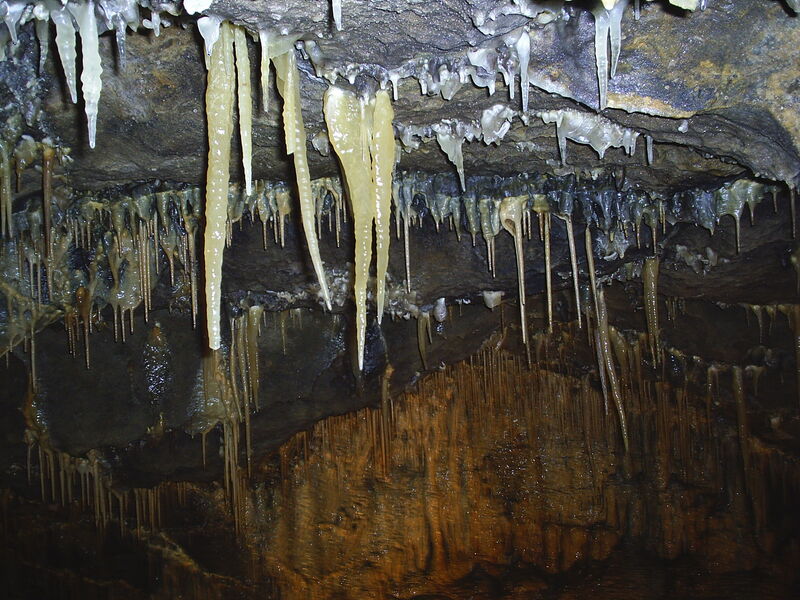
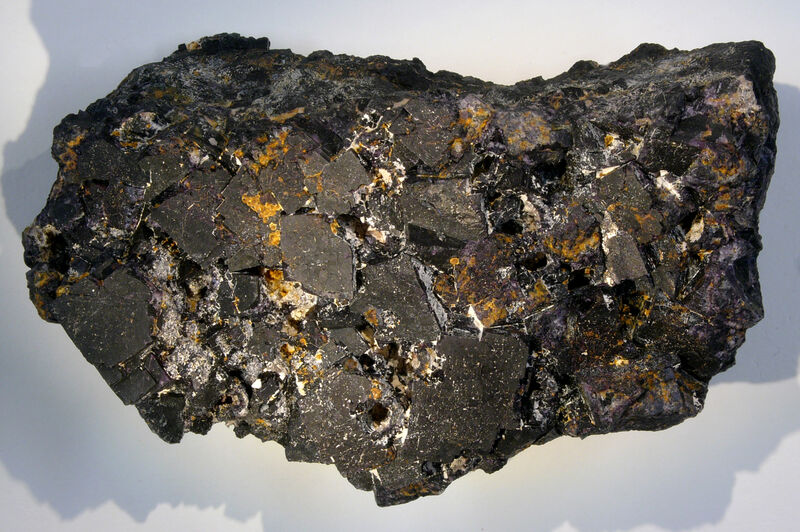
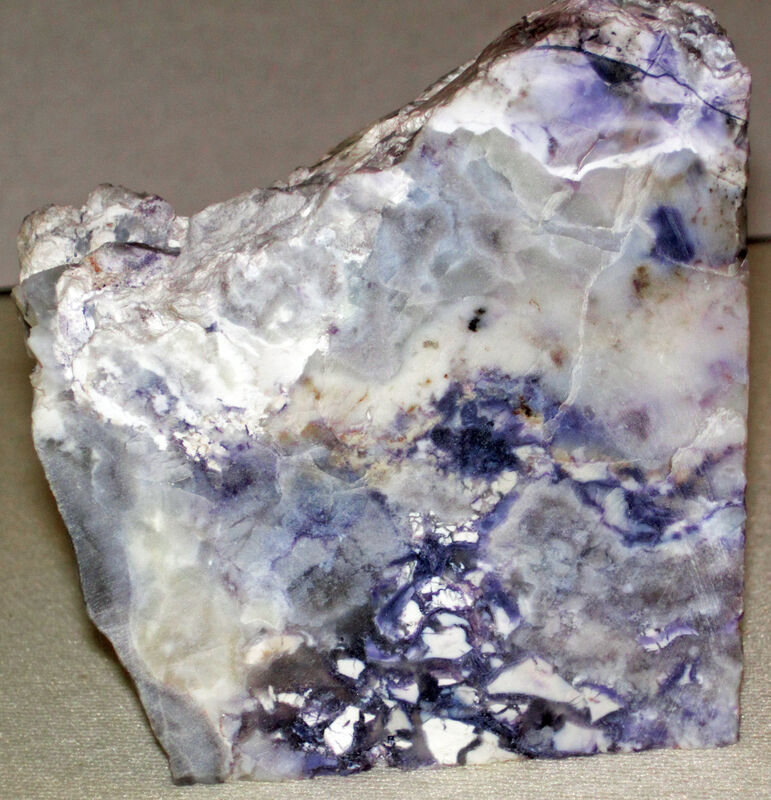
Physical
- Hardness
- 1Talc
- 2Gypsum
- 3Calcite
- 4Fluorite
- 5Apatite
- 6Orthoclase
- 7Quartz
- 8Topaz
- 9Corundum
- 10Diamond
- Lustre
- Vitreous
- Transparency
- Transparent
- Colour
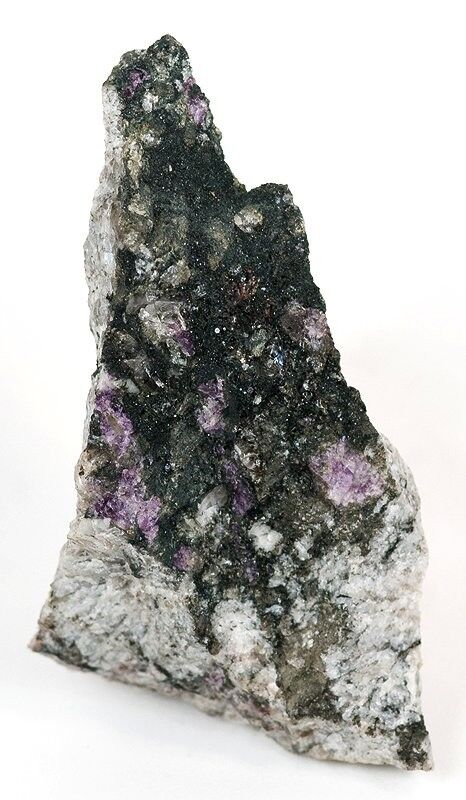
- Fluorite displays a wide variety of colour including (but not exclusively): purple · lilac · golden-yellow · green · colourless · blue · pink · champagne · brown · red and black.
Colour depends on impurity ions and irradiation.
- Streak
- White
- Tenacity
- brittle
- Cleavage
- Perfect
Perfect on (111), very easy.
- Fracture
- Splintery · Sub-Conchoidal
- Density
- 3.175 g/cm³
Optical
- Optical type
- Isotropic
- Principal indices
- n 1.433 – 1.448
- Birefringence
- None
- Dispersion
- None
- Luminescence
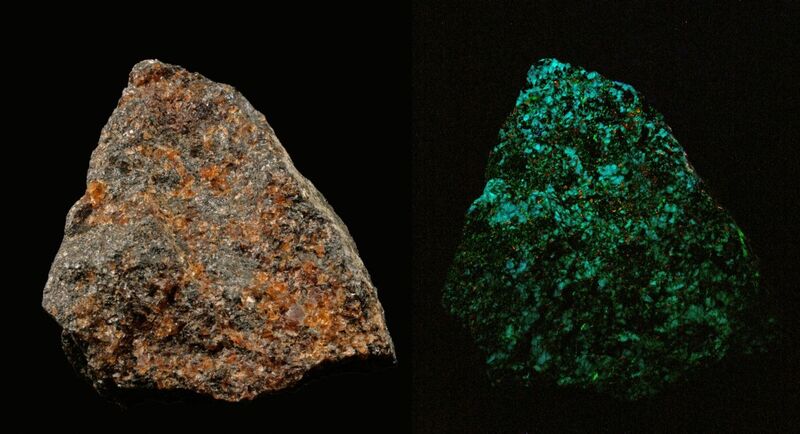
- Fluorescent, Short UV=blue, Long UV=blue.
- UV response
- Blue under LW-UV, due to Eu<sup>2+</sup>; other colors caused by different activators (white & cream - organic matter). Red (Mapimi, Mexico), pink (Doña Ana claims, AZ), white (Sterling Hill, NJ). Green response points to ytterbium (Siddike et al. 2003). May also be phosphorescent.
- Notes
Frequently exhibits very weak anomalous birefringence, especially in cleaved, cut or pressed crystals. The birefringence is usually distributed in lamellae parallel to [001]. May show alexandrite effect.
- Single index
- n = 1.441
Crystallography
- Space group
- #224
- Cell parameters
- a = 5.4626 Å
- Z
- 4
- Morphology
Fluorite has seven main crystal forms: the most common Are the cube (100), octahedron (111) and dodecahedron (110); these forms having fixed Miller indices); and the tetrahexahedron {hk0}, trapezohedron {h11}, trisoctahedron {hhl} and hexoctahedron {hkl} (less common to quite rare crystal forms, having variable Miller indices). Combinations of two or more of these forms are common. The cuboctahedron (combined cube and octahedron) is less common than the combination of a cube and a docecahedron, the cubododecahedron. The faces of some crystal forms are more easily etched by nature than other faces, although this also depends on other parameters, and so none of the forms will always be smooth. Not all crystal faces will always be present, and sometimes certain faces are more developed than others, even within the same crystal form. Consequently, elongated crystals of fluorite have been observed. Crystals distorted at times by unequal development of faces, as of (013). Often markedly composite; minute cubes aggregated to form an octahedron at times or as an overgrowth of crystals upon the corners of an earlier formed crystal of differing habit. Massive; compact; earthy, columnar (rare), or in globular aggregates; botryoidal (rare). For the Goldschmidt images we currently show the following habits with the crystallographic forms denoted here: no. 1 : a cube (100) no. 2 : an octahedron (111) no. 3 : a dodecahedron (110) no. 12: a cube (100), modified by a hexoctahedron (421) no. 45: a cube (100), highly modified by a dodecahedron (110), two tetrahexahedrons: (210) and (310), and a trapezohedron (211) no. 66: an octahedron (111), modified by a dodecahedron (110) and a trisoctahedron (221)
- Twinning
On (111), usually as interpenetrating cubes (e.g., Strzegom, Poland), but also as contact spinel twins (e.g. Naica, Mexico and Chumar Bakhoor, Pakistan).
- Parting
- Indistinct parting or cleavage on (011) at times.
- Epitaxy
Siderite upon fluorite with siderite [0001] parallel to fluorite [111]. Pyrite upon fluorite with parallel axes. Quartz upon fluorite. Discrete crystals of fluorite on ferberite from <l id=4549>Yaogangxian mine, China</l> (White and Richards, 2010). Discrete crystals of fluorite on the (111) face of scheelite from the <l id=2235>Tae Hwa mine, Korea</l> (So et al. 1983).
Chemical composition
- Impurities
- Y
- Ce
- Si
- Al
- Fe
- Mg
- Eu
- Sm
- O
- Cl
- organics
Synonyms
- Androdamant
- Bruiachit
- Bruiachite
- Calx fluorata
- Cam
- Cand
- Chaux fluatée
- Chrome-Fluorite
- Crimson Night Stone
- Derbyshire Spar
- Espato fluor
- Flourite
- Fluate of Lime
- Fluor
- Fluor mineralis Stolbergicus
- Fluor Spar
- Fluorbaryt
- Fluorbaryte
- Fluores
- Fluoride of Calcium
- Fluorspar
- Fluspat
- Fluss
- Flusse
- Flusssaurer Kalk
- Flussspat
- Flußspat
- Flußspath
- Fluszspat
- Glas-Spat
- Kand
- Liparite (of Glocker)
- Lithophosphorus Suhlensis
- Lysspat
- Murrhina
- Spath fusible
- Spath vitreux
- Spato fluore
- Spatum vitreum
- Tanzanite fluorite
In other languages
- French
- 7789-75-5 · androdamant · bruiachite · chaux fluatée · chrome-fluorite · fluores · fluorine · fluorite · liparite · spath fluor · spath fusible
- German
- Fluorit · Flussspat
- Spanish
- fluorita
- Italian
- fluorite
- Portuguese
- Antifluorita · Espatoflúor · fluorita · Fluorite
- Japanese
- ブルージョン · フローライト · ほたる石 · 蛍石 · 螢石
- Chinese
- 氟石 · 萤石 · 螢石
- Simplified Chinese
- 萤石
- Traditional Chinese
- 螢石
- Russian
- CaF2 · плавик · плавиковый шпат · флюорит
- Arabic
- Fluorite · فلورايت · فلورسبار · فلوريت
- Hindi
- फ्लोरस्पार · फ्लोराइट
Classification
3.AB.25
- 3HalidesClass
- 3.ASimple halides, without H2ODivision
- 3.ABM:X = 1:2Group
- 3.AB.25FluoriteSpecies
09.02.01.01
- 09Normal HalidesClass
- 09.02AX2Type
- 09.02.01Fluorite GroupGroup
- 09.02.01.01FluoriteSpecies
8.4.7
- 8Halides - Fluorides, Chlorides, Bromides and Iodides; also Fluoborates and FluosilicatesClass
- 8.4Halides of the alkaline earths and MgGroup
- 8.4.7FluoriteSpecies
Group, growth & confusion
 Aeschynite-(Nd)Nd(TiNb)O6Mineral—
 Agardite-(La)LaCu2+6(AsO4)3(OH)6 · 3H2OMineral—
 AllactiteMn2+7(AsO4)2(OH)8Mineral—
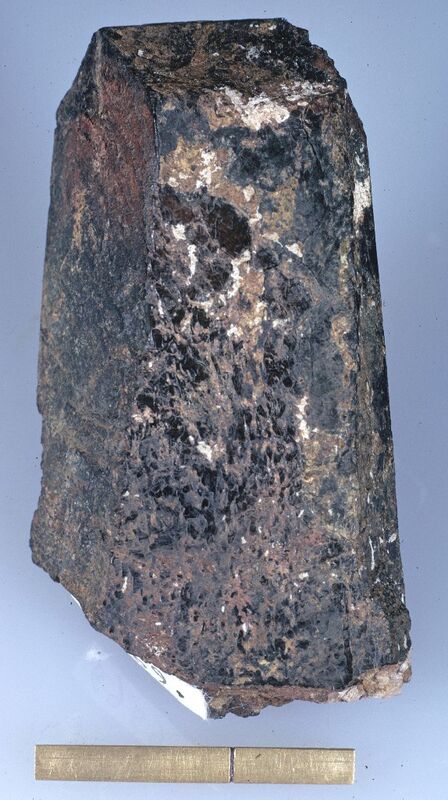 Allanite-(Ce)CaCe(Al2Fe2+)[Si2O7][SiO4]O(OH)Mineral—
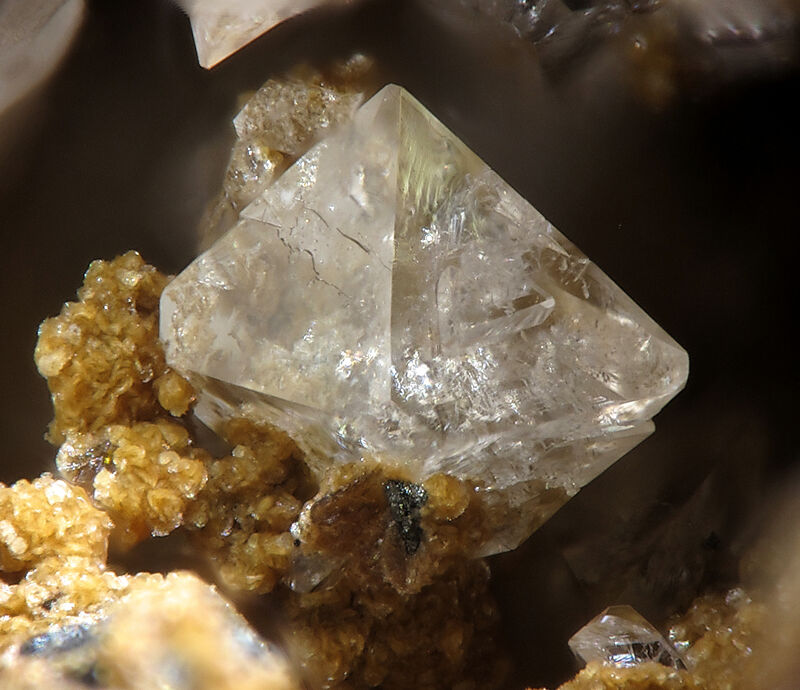 AminoffiteCa3(BeOH)2Si3O10Mineral—
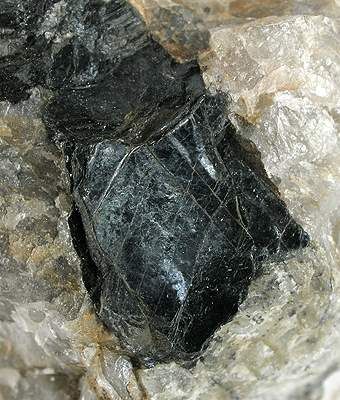 AnniteKFe2+3(AlSi3O10)(OH)2Mineral—
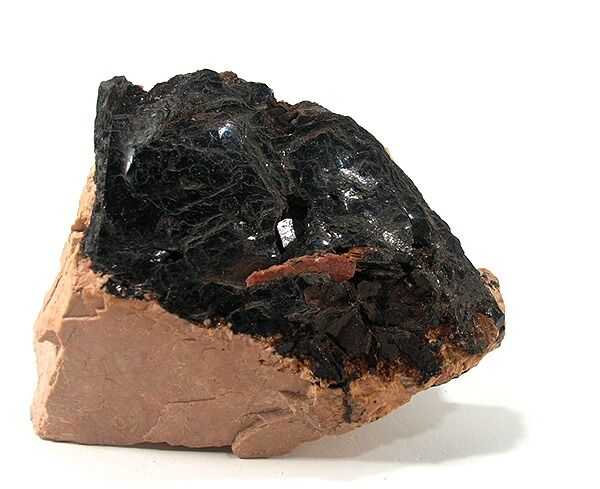 Bannisterite(Ca,K,Na)(Mn2+,Fe2+)10(Si,Al)16O38(OH)8 · nH2OMineral—
 BaryteBa(SO4)Mineral—
 CalciteCa(CO3)Mineral—
 CelestineSr(SO4)Mineral—
Literature, links & citation
- —Leckebusch, R. (1973) Farbursachen der Fluorite. Zeitschrift der Deutschen Gemmologischen Gesellschaft: 22: 123-126.
- —Waychunas, G. (2023) Deep-red fluorescent fluorite from Mapimi, Mexico (and elsewhere): a case of an "electronic defect" as an activator. UV Waves (Fluorescent Mineral Society): 53(4).
- —Haberlandt, H. and Köhler, A. (1934/1935): Fluoreszenzanalyse von Skapolithen. Chemie der Erde 9, 139-144.
- —Haberlandt, H. (1949): Neue Luminiszenzuntersuchungen an Fluoriten und anderen Mineralien IV. Sitz.-Ber. österr. Akad. Wiss., math.-naturwiss. Kl. I, 158, 609-646.
- 1873Exner (1873) Härte an Krystallflächen, Wien, 31, 34.
Entry last updated
@misc{mineral2026,
  author    = {Mineral Index editorial board},
  title     = {Fluorite — Mineral Index},
  year      = {2026},
  url       = {https://mineralindex.org/minerals/fluorite-1576}
}