Where it forms, where it's found
- Geological setting
Commonly occurs in medium-grade regionally metamorphosed rocks; characteristic of metamorphosed iron formations; also as a late-stage mineral in some gabbros and norites; rarely in silicic volcanic rocks.
318recorded occurrences
Physical
Optical
- Optical type
- Biaxial (+) · 2V measured = 65 – 90° · 2V calc = 70 – 90°
- Refractive index
- 1.639 – 1.708
- Surface relief
- High
- Principal indices
- nα 1.639 – 1.671 · nβ 1.647 – 1.689 · nγ 1.664 – 1.708
- Pleochroism
- Weak
X = Y = colorless; Z = pale green.
- Dispersion
- r > v or r < v
- Luminescence
- Nonfluorescent
Δ = 0Δmax
PPLpleochroism per grain
XPLindependent extinctions · rotate the stage
PPLpleochroism only · colour blends on rotation
XPLinterference colour · extinct every 90°
Retardation310 nm
Order1st order
XPL colour
Crystallography
- Space group
- C2/m
- Cell parameters
- a = 9.53 Å · b = 18.23 Å · c = 5.32 Å
- Cell angles
- β = 101.97 °
- Ratio a:b:c
- 1 : 1.913 : 0.558
- Z
- 2
- Twinning
Simple or multiple twinning parallel to (100)
Crystal structure
Chemical composition
- Impurities
- Mn
- Ca
- Al
- Ti
- Na
- K
Synonyms
- Amphibole-anthophyllite
- Antholit
- Antholita
- Antholite
- Kievit
- Kievita
- Kievite
- Magnesiocummingtonit
- Magnesiocummingtonita
- Magnesiocummingtonite
In other languages
- French
- Cummingtonite
- German
- Cummingtonit
- Spanish
- Cummingtonita
- Italian
- cummingtonite · magnesiocummingtonite
- Japanese
- カミントン閃石
- Chinese
- 褐闪石 · 鎂鐵閃石 · 镁铁闪石
- Simplified Chinese
- 镁铁闪石
- Traditional Chinese
- 鎂鐵閃石
- Russian
- Куммингтонит
- Arabic
- كومينغتونيت
Classification
Strunz
10th ed.9.DE.05
- 9SilicatesClass
- 9.DInosilicatesDivision
- 9.DEInosilicates with 2-periodic double chains, Si4O11; ClinoamphibolesGroup
- 9.DE.05CummingtoniteSpecies
Dana
8th ed.66.01.01.01
- 66Inosilicates Double-width, Unbranched Chains, (w=2)Class
- 66.01Amphiboles - Mg-Fe-Mn-Li subgroupType
- 66.01.01Group 1, the Mg-Fe-Mn-Li amphiboles (Monoclinic)Group
- 66.01.01.01CummingtoniteSpecies
CIM
—14.21.6
- 14Silicates not Containing AluminumClass
- 14.21Silicates of Fe and MgGroup
- 14.21.6CummingtoniteSpecies
Group, growth & confusion
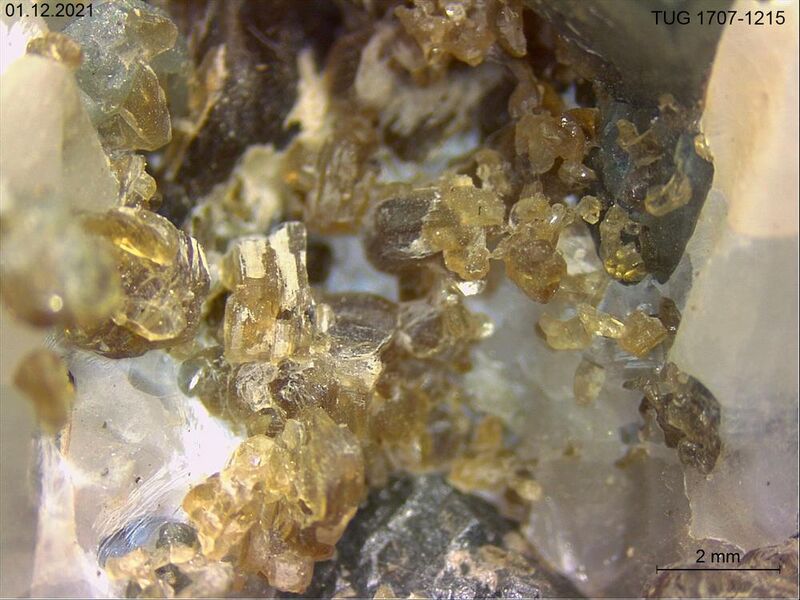
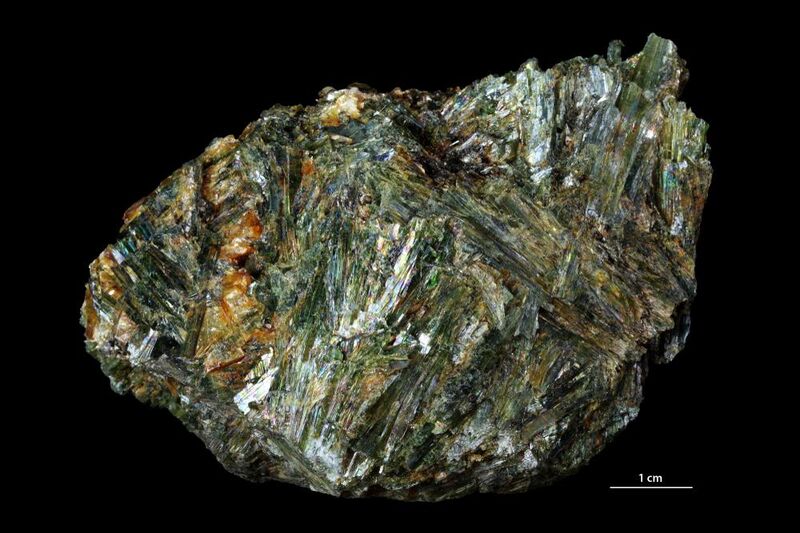 Actinolite◻Ca2(Mg4.5-2.5Fe2+0.5-2.5)Si8O22(OH)2Mineral—
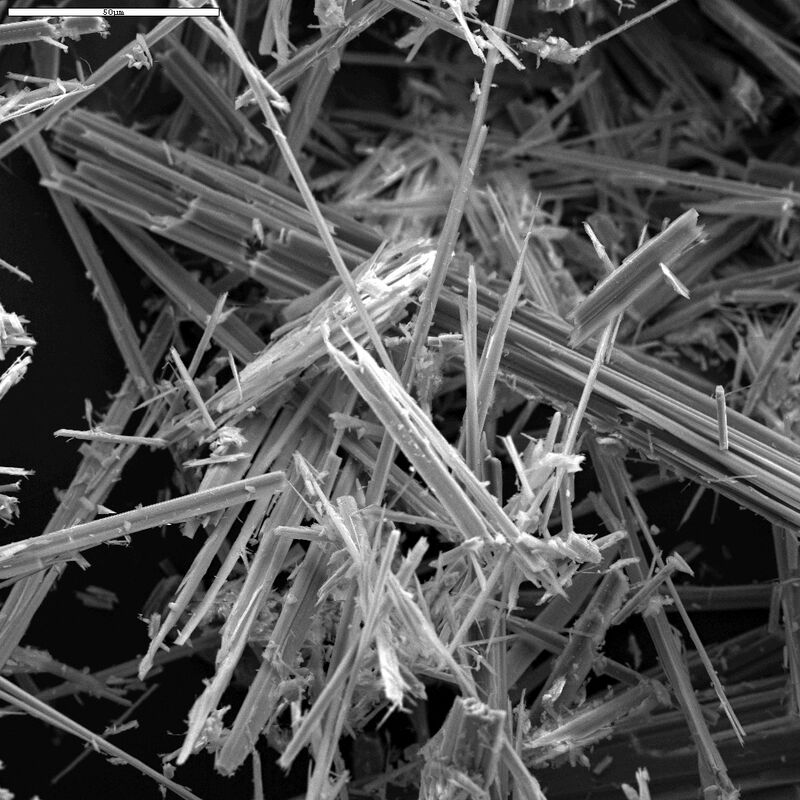 Anthophyllite◻Mg2Mg5Si8O22(OH)2Mineral—
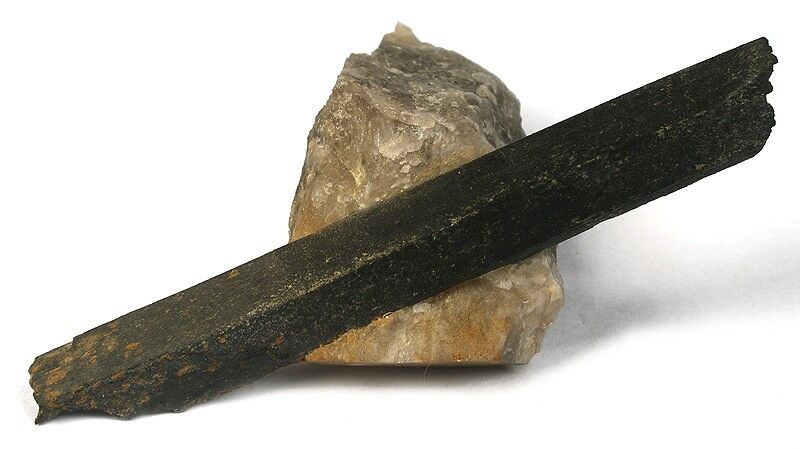 ArfvedsoniteNaNa2(Fe2+4Fe3+)Si8O22(OH)2Mineral—
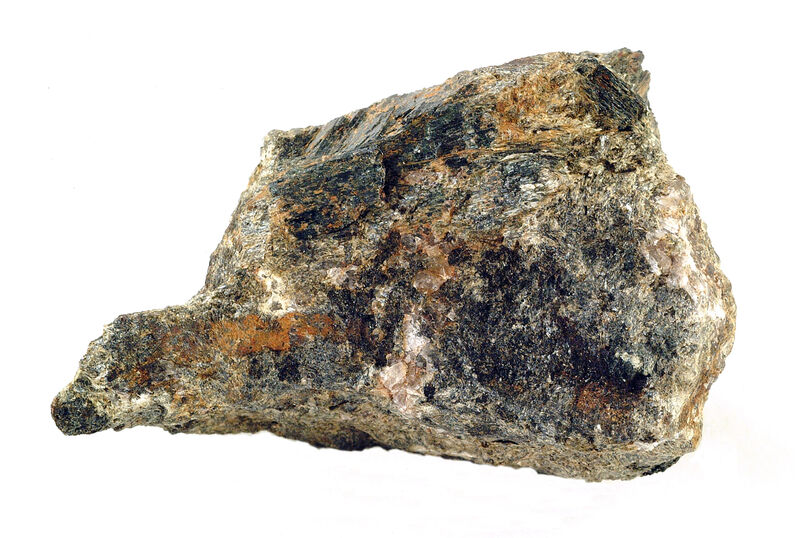 Ferro-actinolite◻Ca2(Mg2.5-0.0Fe2+2.5-5.0)Si8O22(OH)2Mineral—
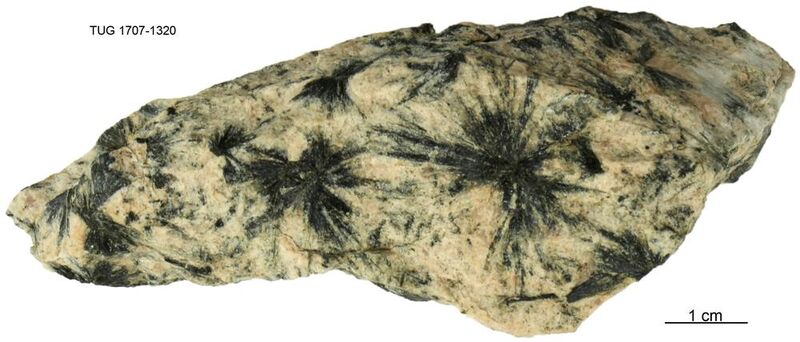 Gedrite◻Mg2(Mg3Al2)(Si6Al2)O22(OH)2Mineral—
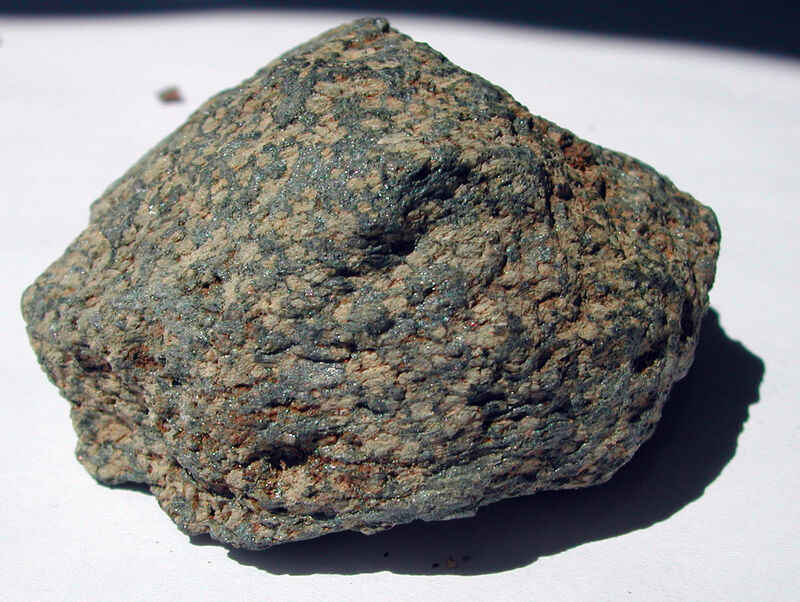 Glaucophane◻Na2(Mg3Al2)Si8O22(OH)2Mineral—
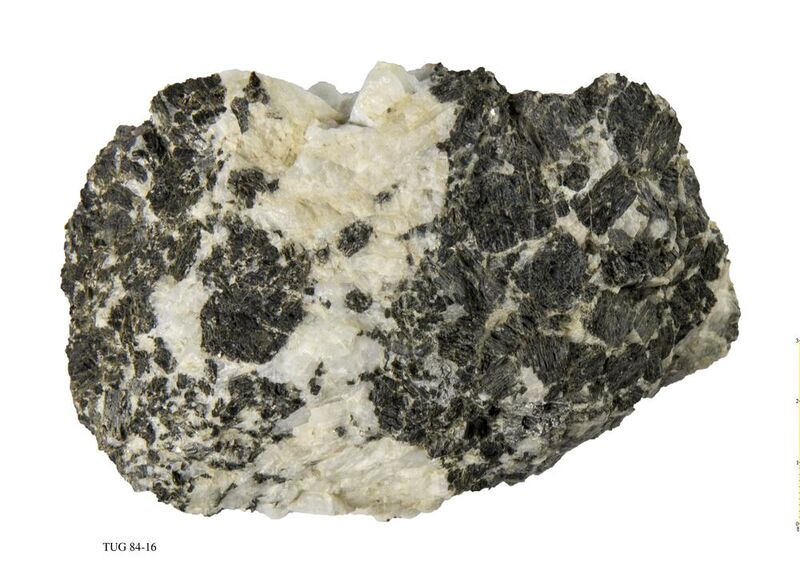 HornblendeAnCa2(Z2+5-mZ3+m)(Si8-(n+m)Al(n+m))(OH,F,Cl)2Variety—
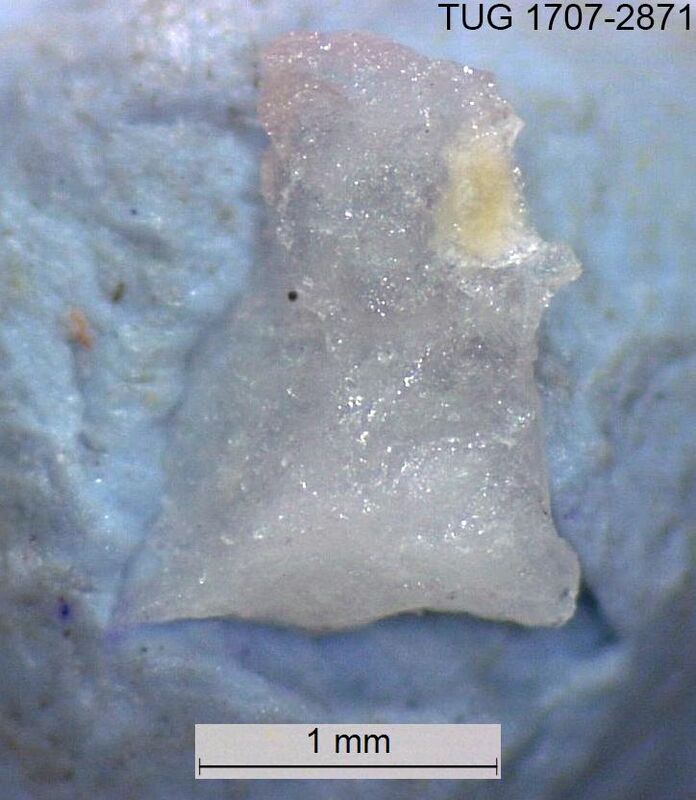 Magnesio-arfvedsoniteNaNa2(Mg4Fe3+)Si8O22(OH)2Mineral—
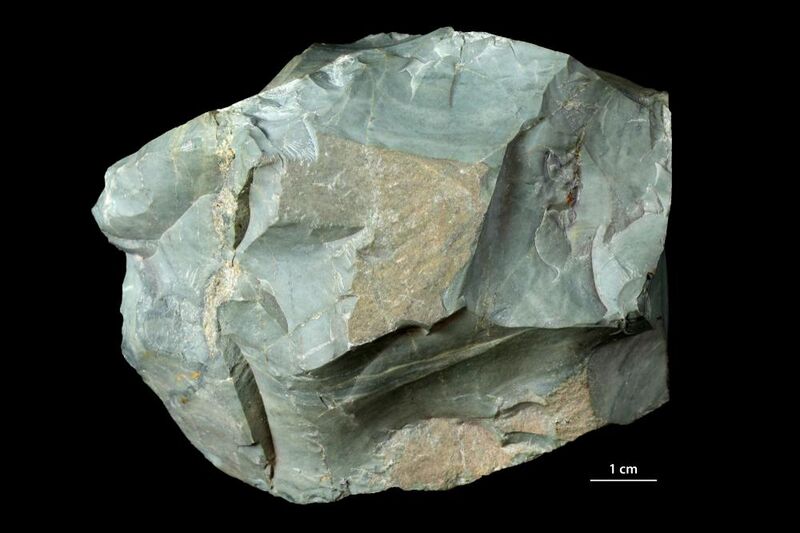 QuartzSiO2Mineral—
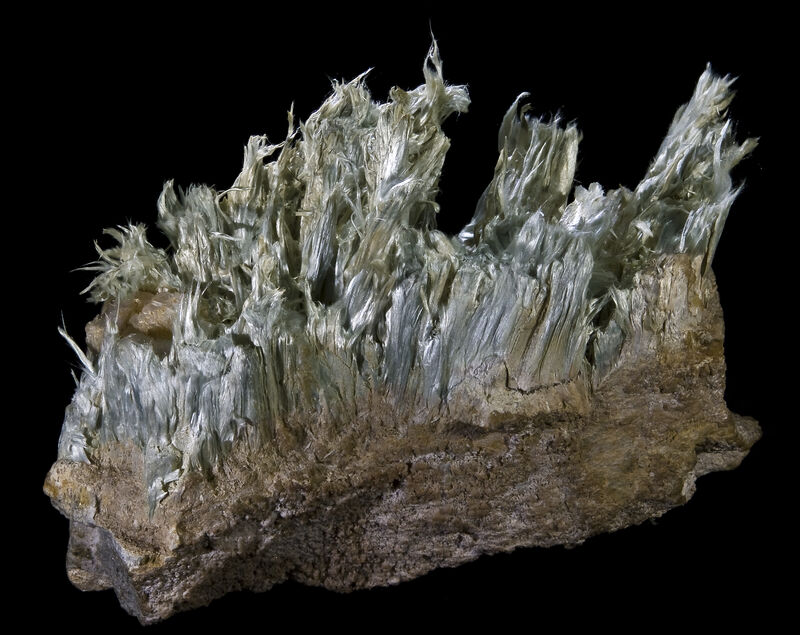 Tremolite◻Ca2(Mg5.0-4.5Fe2+0.0-0.5)Si8O22(OH)2Mineral—
Literature, links & citation
Citations
- 1824Dewey, C. (1824) A Sketch of the Geology and Mineralogy of the Western Part of Massachusetts, and a Small Part of Adjoining States. American Journal of Science, first series: 8, 1-60.
- 1831Thomson, T. (1831) (paper read March 17, 1828) Account of the Constituents of various Minerals. 2. Cummingtonite. Transactions of the Royal Society of Edinburgh: 11: 244-248.
- 1853Smith, J.L. Brush, G.J. (1853) Re-examination of American Minerals... 20. Cummingtonite – a Hornblende. American Journal of Science, second series: 16: 48-49.
- 1942Larsen, E.S. (1942) Alkalic Rocks of Iron Hill, Gunnison County, Colorado. USGS Professional Paper 197-A: 12-13.
- 1964Klein, Cornelis (1964) Cummingtonite-grunerite series: A chemical, optical and x-ray study. American Mineralogist, 49 (7-8) 963-982
Cite this entry
Entry last updated
@misc{mineral2026,
  author    = {Mineral Index editorial board},
  title     = {Cummingtonite — Mineral Index},
  year      = {2026},
  url       = {https://mineralindex.org/minerals/cummingtonite-1170}
}