History
The story of ilmenite begins not in Russia but in a Cornish stream. In 1791, the English clergyman and amateur chemist William Gregor sifted a deposit of black sand from the valley south of the village of Manaccan and identified an unknown metal in it — the element we now call titanium. He named the mineral manaccanite, after the village where the sand had collected.
The link between Gregor's Cornish find and the species we now call ilmenite was made some three decades later. In 1827, the chemist Adolph Theodor Kupffer described the same mineral from the Ilmen Mountains, near Miass in the southern Urals. He named it ilmenite after that locality. Mineralogy ultimately kept Kupffer's name and quietly retired Gregor's.
Industrial & practical applications
The white in white paint is, more often than not, ilmenite. Crushed, chemically processed and turned into titanium dioxide, the mineral supplies the dominant white pigment of the modern world. Around 95 percent of all titanium consumed today leaves the refinery as TiO₂ rather than as the metal.
Two competing routes turn the ore into pigment. In the sulfate process, ilmenite is dissolved in sulfuric acid and the iron is stripped out as iron(II) sulfate. What remains is purified into white TiO₂ powder. The chloride process passes the ore through chlorine gas at high temperature to produce titanium tetrachloride, which is then oxidised back to TiO₂. The chloride route accounts for around 60 percent of global pigment production, the sulfate route for the remaining 40.
The pigment itself reaches the consumer in many guises. It is the opacifier — the agent that makes a film opaque — in architectural paint, the brightener in printer paper, and the whitener in plastics. It also appears in toothpaste, in sunscreen, and as a food colouring.
A much smaller share of mined ilmenite is converted into metallic titanium, but the metal carries far more value per tonne than the pigment. The route runs through the Kroll process, in which titanium tetrachloride is reduced by liquid magnesium to a porous titanium sponge. William Justin Kroll first produced titanium metal outside the laboratory in 1932, using calcium as the reductant. Eight years later he refined the method with magnesium, and that magnesium version is still the industrial standard. About two thirds of all titanium metal produced goes into aircraft frames and engines. There, the metal's high strength-to-weight ratio and corrosion resistance justify the price. The same biocompatibility — the body's tolerance of the metal as a foreign material — supports the use of titanium in prostheses, orthopedic implants, dental implants, and surgical instruments.
Most of the ore itself is not blasted from hard rock. It is dredged from heavy mineral sands — coastal placer deposits, where rivers and waves concentrate dense, weathering-resistant grains into workable beach layers. China dominates current supply at about 35 percent of world ilmenite production, with South Africa contributing 13 percent and Mozambique another 12.
Where it forms, where it's found
- Geological setting
Common accessory mineral in igneous rocks. Also occurs in placer deposits.
- Type locality
- Pit No. 3
- Ilmen Mountains
- Chelyabinsk Oblast
- Russia
Varieties
Physical
Optical
- Optical type
- Uniaxial (-)
- Pleochroism
- Weak
- Optical colour
- Greyish white with brown tint
- Anisotropism
- Strong in shades of gray
- Bireflectance
- Strong O=pinkish brown E= dark brown
- Tropism
- Anisotropic
- Reflectance R%
- (20.0,21.2) 400, (19.5,20.8) 420, (19.0,20.4) 440, (18.5,20.1) 460, (18.1,20.0) 480, (18.0,19.8) 500, (18.0,19.8) 520, (18.0,19.7) 540, (18.0,19.6) 560, (18.0,19.8) 580, (18.1,19.9) 600, (18.2,19.9) 620, (18.3,19.9) 640, (18.4,20.0) 660, (18.5,20.1) 680, (18.6,20.4) 700
- Luminescence
- None
Crystallography
- Space group
- #80
- Cell parameters
- a = 5.08854(7) Å · c = 14.0924(3) Å
- Z
- 6
- Morphology
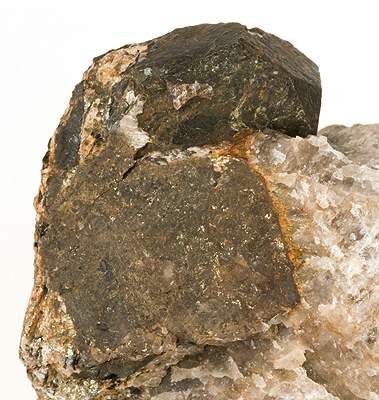
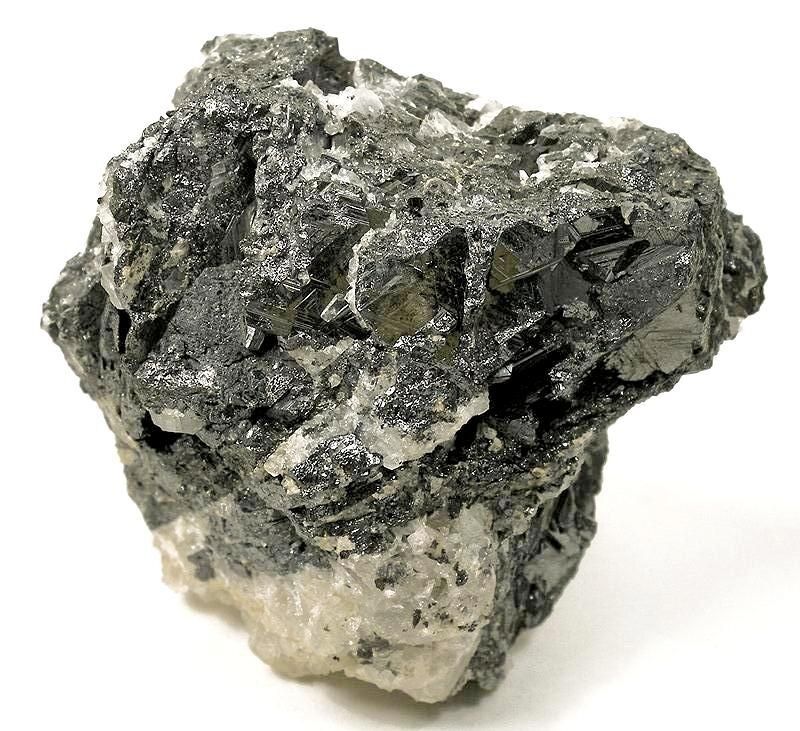
Commonly thick tabular (0001). Sometimes in thin laminae; also acute rhombohedral. Compact massive; as embedded grains.
- Twinning
1. On (0001); 2. On (101), lamellar.
- Parting
- On (0001), (101) due to twinning (?).
Chemical composition
- Impurities
- Mn
- Mg
- V
Synonyms
- Axotomous Eisenerz
- Cibdelophane
- Eisenhaltiges Titanerz
- Eisentitan
- Haplotypite
- Hystatisches Eisenerz
- Ilmenitcsoport
- Ilmenite (of Kupffer)
- Mänaken
- Mohsite (of Levy)
- Para-ilmenite
- Titane oxydé ferrifère
- Titaneisen
- Titaneisenerz
- Titaneisenstein
- Titanic Iron
- Titanioferrite
In other languages
- French
- 98072-94-7 · Ferro-ilménite · Ferroilménite · FeTiO3 · Guadarramite · Hystatite · ilménite · Isérine · Kibdelophane · Magnéto-ilménite · Manaccanite · Ménachanite · Picrocrichtonite · Picroilménite · Picrotitanite · Silico-ilménite · Washingtonite
- German
- Ilmenit · Menaccanit · Titaneisen · Titaneisenerz
- Spanish
- ilmenita
- Italian
- Ilmenite
- Portuguese
- ilmenita · Ilmenite
- Japanese
- イルメナイト · チタン鉄鉱
- Chinese
- 钛铁矿
- Simplified Chinese
- 钛铁矿
- Traditional Chinese
- 鈦鐵礦
- Russian
- Ильменит · Критчонит
- Arabic
- إلمينيت · إليمنيت · إيلمنيت
- Hindi
- इल्मेनाइट
Classification
4.CB.05
- 4OxidesClass
- 4.CMetal: Oxygen = 2: 3,3: 5, and similarDivision
- 4.CBWith medium-sized cationsGroup
- 4.CB.05IlmeniteSpecies
04.03.05.01
- 04Simple OxidesClass
- 04.03A2X3Type
- 04.03.05Ilmenite GroupGroup
- 04.03.05.01IlmeniteSpecies
7.9.15
- 7Oxides and HydroxidesClass
- 7.9Oxides of TiGroup
- 7.9.15IlmeniteSpecies
Group, growth & confusion
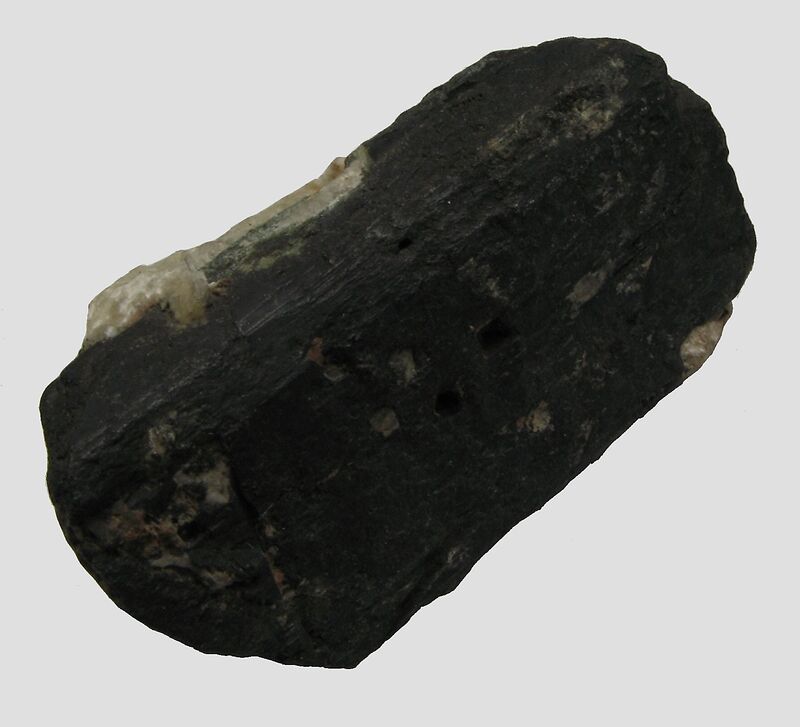 AenigmatiteNa4[Fe2+10Ti2]O4[Si12O36]Mineral—
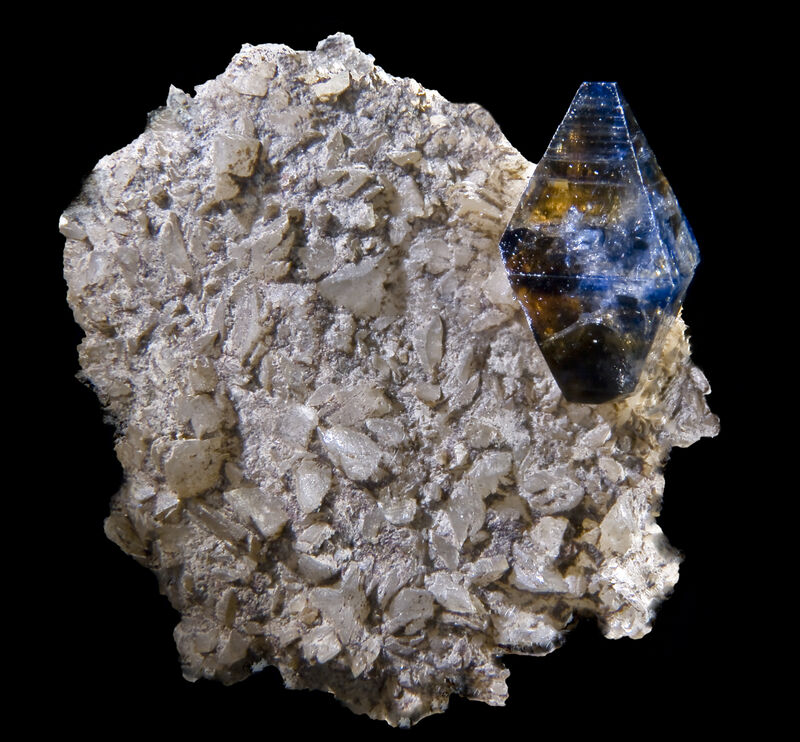 AnataseTiO2Mineral—
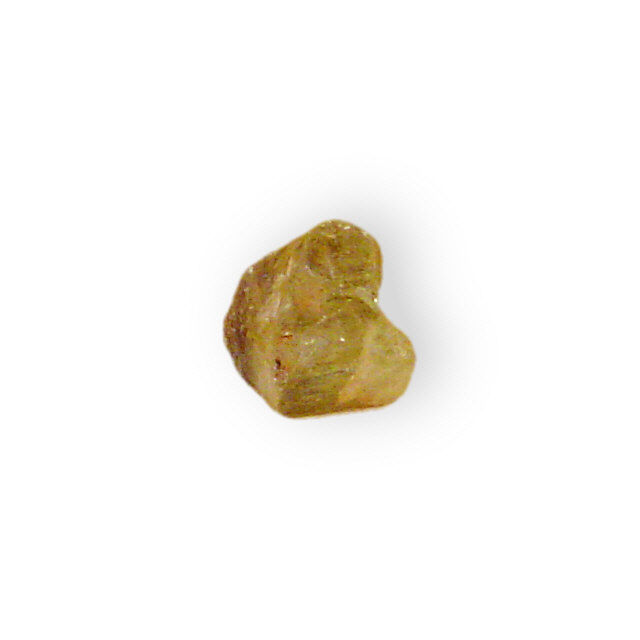 ChlorapatiteCa5(PO4)3ClMineral—
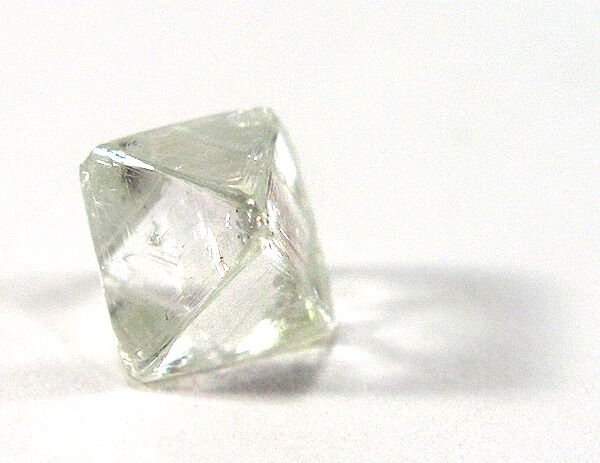 DiamondCMineral—
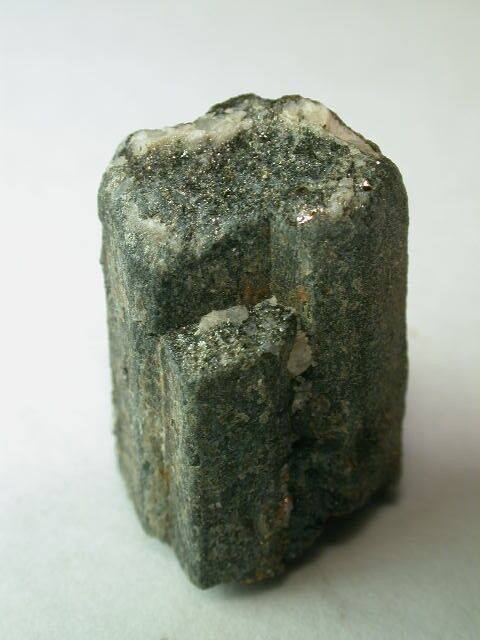 Kornerupine(Mg,Fe2+,Al,◻)10(Si,Al,B)5O21(OH,F)2Mineral—
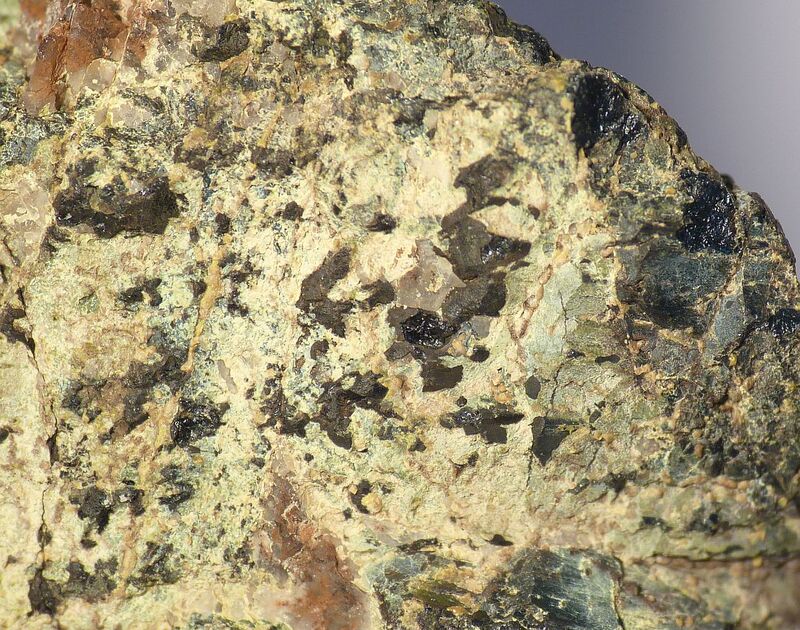 LiandratiteU6+Nb2O8Mineral—
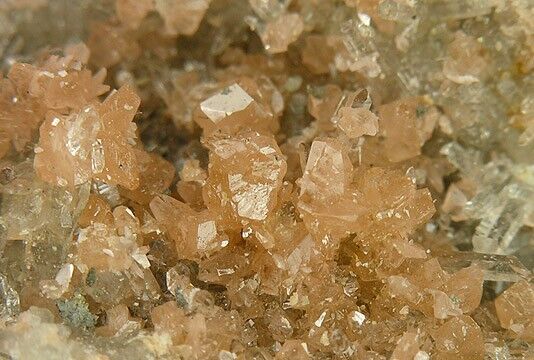 Monazite-(Ce)Ce(PO4)Mineral—
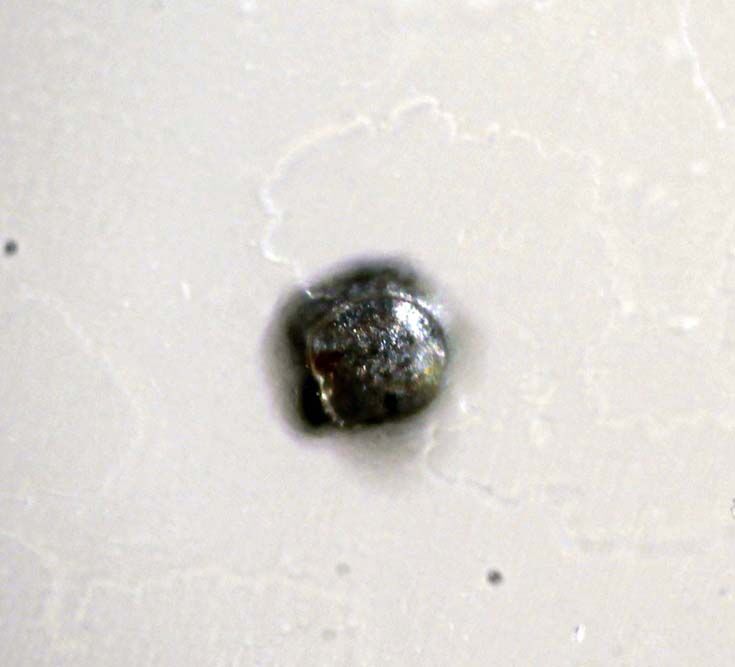 Native AluminiumAlMineral—
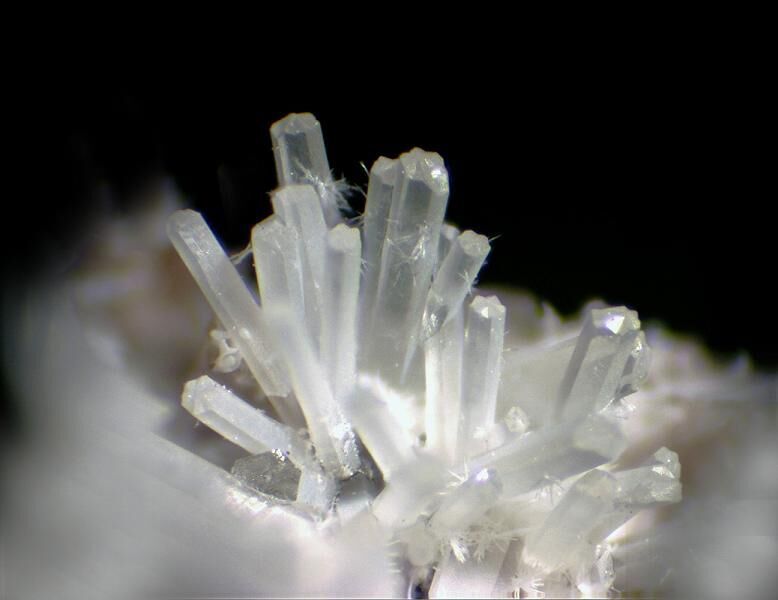 NoseanNa8(Si6Al6)O24(SO4) · H2OMineral—
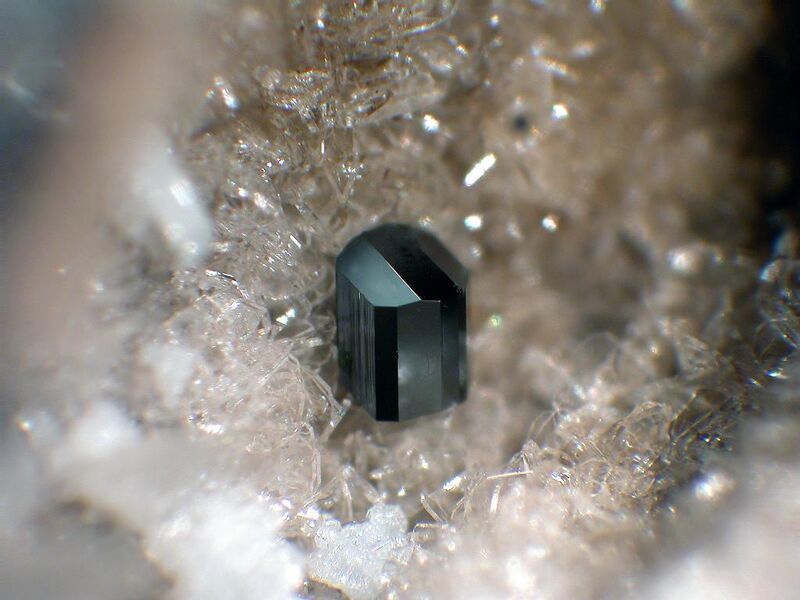 Pseudobrookite(Fe3+2Ti)O5Mineral—
Literature, links & citation
- 1827Kupffer, A.T. (1827) Ilmenit, ein neues fossil (Sammt neuen spielarten des zirkon und gadolinit) aus Sibirien; beschrieben. Archiv für die Gesammte Naturlehre: 10: 1-13.
- 1884Lasaulx, A. von (1884) Ueber Mikrostructur, optisches Verhalten und Umwandlung des Rutil in Titaneisen. Zeitschrift für Krystallographie und Mineralogie, 8 (1). 54-75 doi:10.1524/zkri.1884.8.1.54DOI: 10.1524/zkri.1884.8.1.54
- 1897Penfleld, S. L.; Poote, H. W. (1897) Notiz über die Zusammensetzung des Ilmenits. Zeitschrift für Kristallographie, 28 (1-6). 596-597 doi:10.1524/zkri.1897.28.1.596DOI: 10.1524/zkri.1897.28.1.596
- 1939Moore, E. S. (1939) Alteration of ilmenite; discussion. Economic Geology, 34 (8) 931 doi:10.2113/gsecongeo.34.8.931DOI: 10.2113/gsecongeo.34.8.931
- 1944Palache, Charles, Berman, Harry, Frondel, Clifford (1944) The System of Mineralogy (7th ed.) Vol. 1 - Elements, Sulfides, Sulfosalts, Oxides. John Wiley and Sons, New York.
Entry last updated
@misc{mineral2026,
  author    = {Mineral Index editorial board},
  title     = {Ilmenite — Mineral Index},
  year      = {2026},
  url       = {https://mineralindex.org/minerals/ilmenite-2013}
}