History
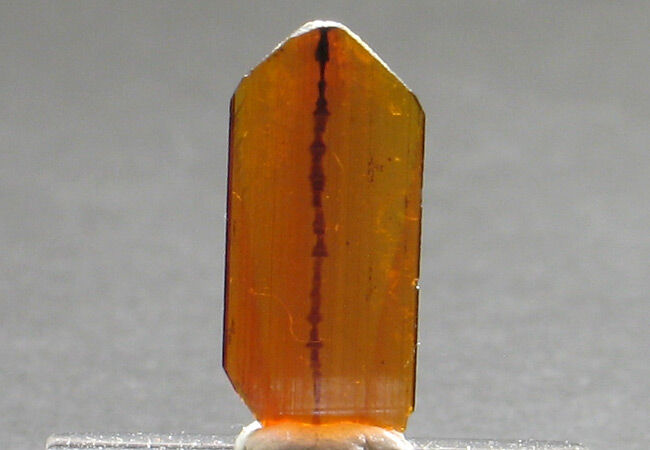
Anatase wears a name built from a Greek word for stretching. The mineral's crystals end in two steep, narrow pyramids — sharper and taller than the flatter pyramids most tetragonal minerals show — and that elongation is what early observers noticed first.
The modern name was given in 1801 by the French crystallographer René Just Haüy. He drew on the Greek anatasis, meaning extension or stretching out. The allusion is to the unusual length of the pyramidal faces relative to their bases. The mineral was already known to mineralogists before Haüy fixed the name. The Swiss naturalist Horace Bénédict de Saussure had earlier called the same species octahedrite, after the acute octahedron its crystals appear to form. Two other older names — oisanite and dauphinite — refer to the district of Le Bourg-d'Oisans in the French Dauphiné, the locality from which the species takes its type description.
Anatase is one of three natural forms — or polymorphs — of titanium dioxide (TiO₂), alongside rutile and brookite. The three share a chemical formula but crystallise differently. Anatase occurs as hard, brilliant tetragonal crystals in vein deposits of the Alps. It also turns up as a detrital mineral in placer deposits, notably in Minas Gerais and Bahia in Brazil.
Industrial & practical applications
Anatase the mineral has almost no direct industrial role. The titanium dioxide (TiO₂) that fills paint cans, sunscreens and food coatings is produced synthetically from rutile or ilmenite ores. Anatase as a polymorph — a distinct crystal form of TiO₂ — still matters to industry. But the form is made in a reactor, not mined.
In pigment manufacture, the anatase form serves a narrower role than its sibling rutile. Anatase is softer than rutile and is used in fibre and paper applications, where the lower abrasiveness is an advantage. The mineral is metastable: heat above roughly 600 to 800 °C and the anatase phase converts irreversibly to rutile. That conversion is why most outdoor and high-durability pigments use the rutile form directly.
Anatase has found a second life in photocatalysis — the use of a solid to drive a chemical reaction under light. Nanosized titanium dioxide in the anatase form shows photocatalytic activity under ultraviolet light. The most active surface of the crystal, the (001) plane, is where the reactive chemistry concentrates. Films of anatase deposited on glass become self-cleaning and anti-fogging when exposed to sunlight. The effect was first identified by Fujishima and colleagues in 1995. The same photoactive form is also used in dye-sensitized solar cells, where it carries photo-excited electrons from the dye to the external circuit.
Synthetic anatase is typically prepared by controlled hydrolysis of titanium tetrachloride (TiCl₄) or titanium ethoxide. Dopants are added to tune the surface chemistry and electronic structure for the target application.
Where it forms, where it's found
- Geological setting
Alpine veins, derived from the enclosing gneisses or schists by hydrothermal solutions.
Usually secondary, derived from other titanium-bearing minerals. In alpine veins, derived from the enclosing gneisses or schists by hydrothermal solutions. In igneous and metamorphic rocks; in pegmatites; from a carbonatite. A common detrital mineral.
- Type locality
- Saint-Christophe-en-Oisans
- Grenoble
- Isère
- Auvergne-Rhône-Alpes
- France
Varieties
Physical
- Hardness
- 1Talc
- 2Gypsum
- 3Calcite
- 4Fluorite
- 5Apatite
- 6Orthoclase
- 7Quartz
- 8Topaz
- 9Corundum
- 10Diamond
- Lustre
- Adamantine to metallic-adamantine in darker colored specimens.
- Transparency
- Transparent · Translucent
- Colour
- Brown · pale yellow or reddish brown · indigo · black · pale green · pale lilac · grey · rarely nearly colourless · brown · yellow-brown · pale green · blue in transmitted light.
Transparent when light coloured, to nearly opaque when deeply colored. Pyramidal crystals may appear opaque because of total reflection.
- Streak
- White to pale yellow
- Tenacity
- brittle
- Cleavage
- Perfect
on (001) and (011)
- Fracture
- Sub-Conchoidal
- Density
- 3.79 g/cm³
Optical
- Optical type
- Uniaxial (-)
- Refractive index
- 2.488 – 2.5612
- Surface relief
- Very high
- Principal indices
- nω 2.5612 · nε 2.488
- Pleochroism
- Weak
stronger in deeply coloured crystals
- Reflectance R%
- (23.7, 23.8) 400 nm, (22.4, 22.5) 420 nm, (21.7, 21.6) 440 nm, (21.1, 21.0) 460 nm, (20.7, 20.4) 480 nm, (20.2, 20.0) 500 nm, (19.9, 19.6) 520 nm, (19.6, 19.3) 540 nm, (19.4, 19.0) 560 nm, (19.2, 18.8) 580 nm, (19.0, 18.5) 600 nm, (18.8, 18.4) 620 nm, (18.7, 18.2) 640 nm, (18.6, 18.1) 660 nm, (18.5, 18.0) 680 nm, (18.4, 17.8) 700 nm
- Luminescence
- None
- UV response
- Not fluorescent.
- Notes
Deeply coloured crystals may be anomalously biaxial
Crystallography
- Space group
- #178
- Cell parameters
- a = 3.7845 Å · c = 9.5143 Å
- Z
- 4
- Morphology
Crystals typically acute dipyramidal (011), often highly modified; obtuse pyramidal or tabular on (001); less commonly prismatic on [001], with (110), (010)
- Twinning
Rare, on (112)
Chemical composition
- Impurities
- Fe
- Sn
- V
- Nb
Synonyms
- Dauphinite
- Hydrotitanite
- Octaèdrit
- Octaèdrita
- Octaèdrite
- Octahedrit
- Octahedrita
- Octahedrite (of Werner)
- Oisanite
- Oktaedrit
- Schorl bleu indigo
- Schorl octaedre rectanglaire
- Wiserine
- Xanthotitane
- Xanthotitanit
In other languages
- French
- Anatase · Dauphinite · Hydrotitanite · Schorl bleu indigo · Schorl octaédre rectanglaire · Schorl octaédre rectangulaire · Wisérine · Xanthitane · Xanthotitane
- German
- Anatas · oktaedrischer Schörl · Oktaedrit
- Spanish
- Anatasa · Octaedrita · Octahedrita
- Italian
- anatase · anatasio
- Portuguese
- anatase · Anatásio
- Japanese
- アナタース · アナテース · 鋭錐石
- Chinese
- 锐钛矿
- Simplified Chinese
- 锐钛矿
- Traditional Chinese
- 銳鈦礦
- Russian
- анатаз
- Arabic
- أناتاز
Classification
4.DD.05
- 4OxidesClass
- 4.DMetal: Oxygen = 1:2 and similarDivision
- 4.DDWith medium-sized cations; frameworks of edge-sharing octahedraGroup
- 4.DD.05AnataseSpecies
04.04.04.01
- 04Simple OxidesClass
- 04.04AX2Type
- 04.04.04— unnamed intermediate level —Group
- 04.04.04.01AnataseSpecies
7.9.3
- 7Oxides and HydroxidesClass
- 7.9Oxides of TiGroup
- 7.9.3AnataseSpecies
Group, growth & confusion
- BraithwaiteiteNaCu2+5(Sb5+Ti4+)O2(AsO4)4[AsO3(OH)]2 · 8H2OMineral—
 BrookiteTiO2Mineral—
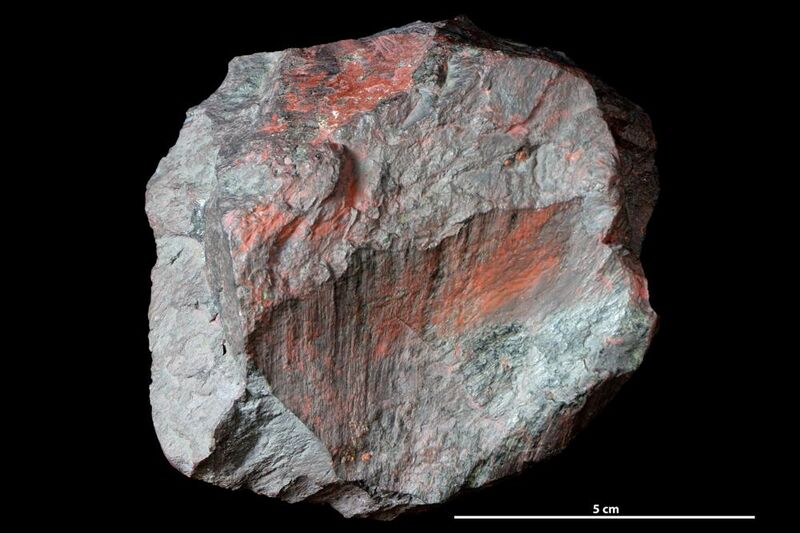 HematiteFe2O3Mineral—
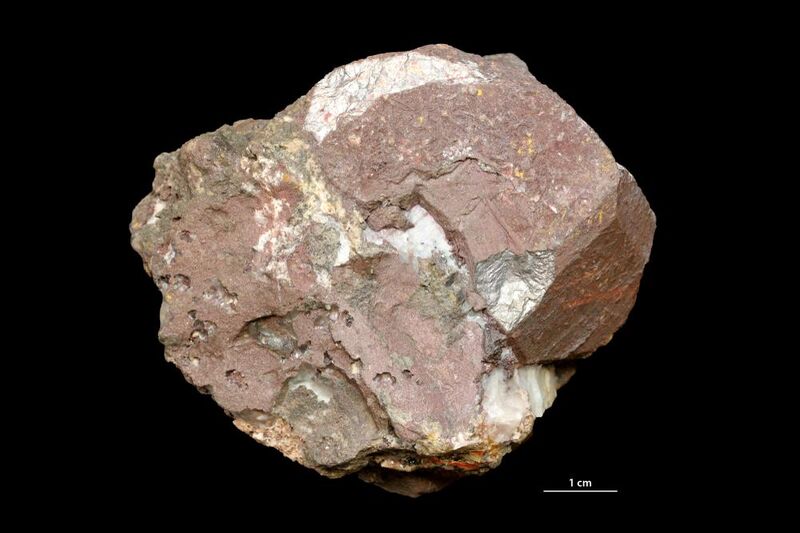 IlmeniteFe2+Ti4+O3Mineral—
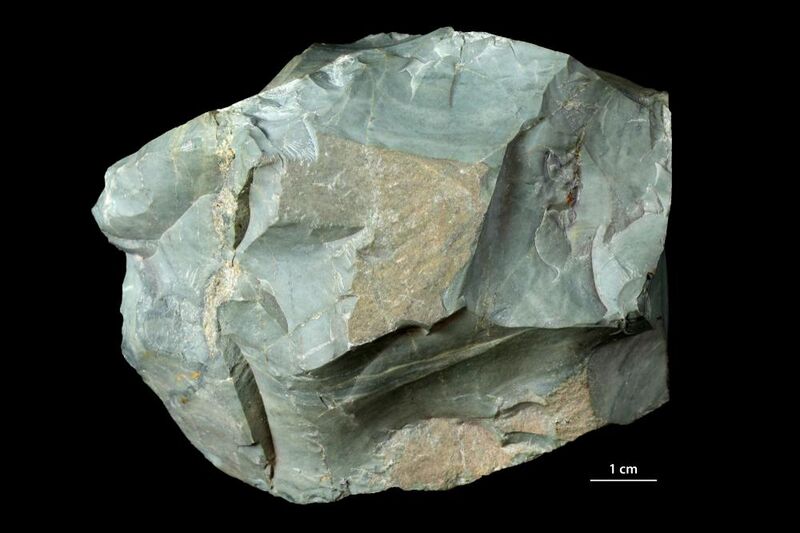 QuartzSiO2Mineral—
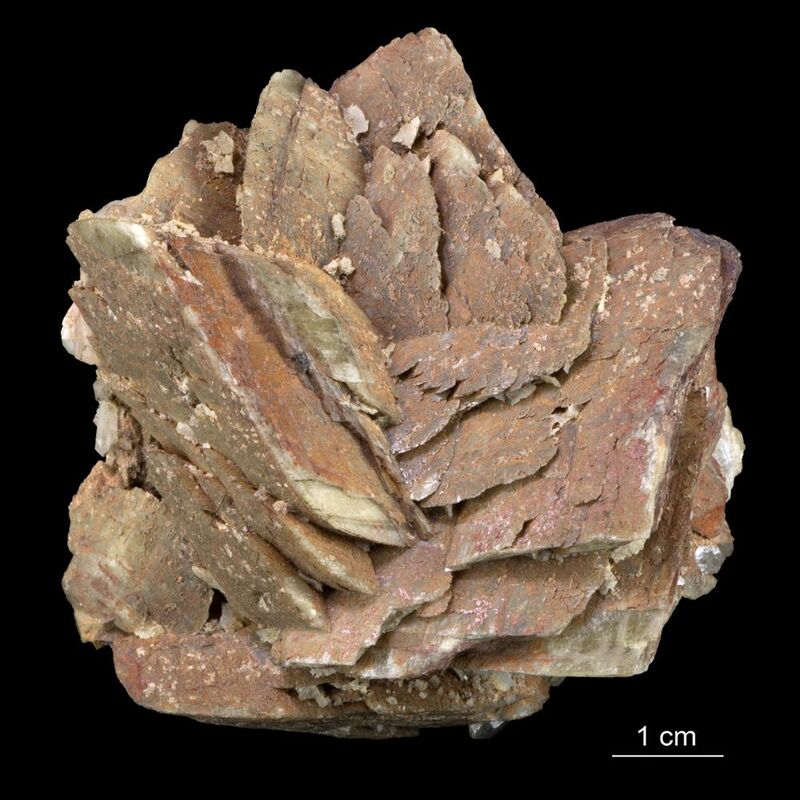 RutileTiO2Mineral—
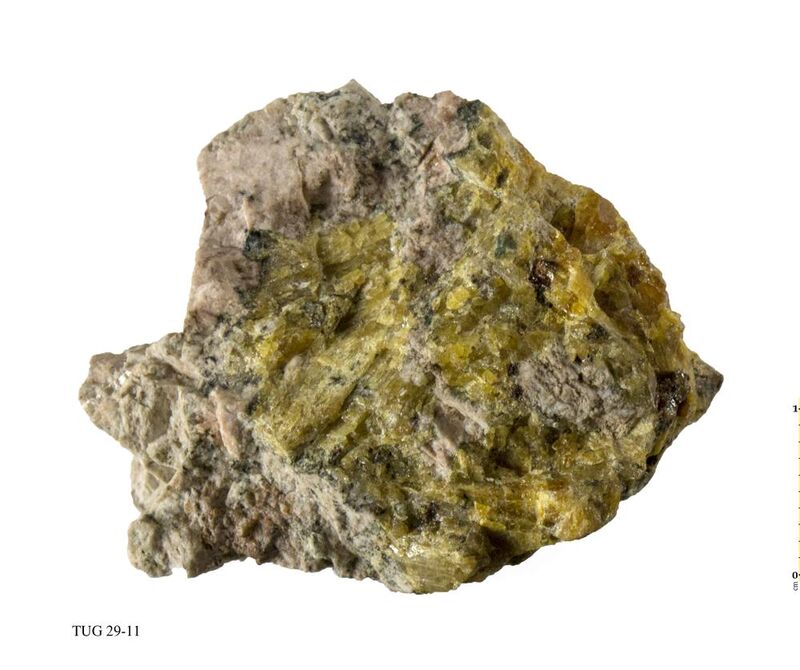 TitaniteCaTi(SiO4)OMineral—
- Titanium-bearing MagnetiteFe2+(Fe3+,Ti)2O4Variety—
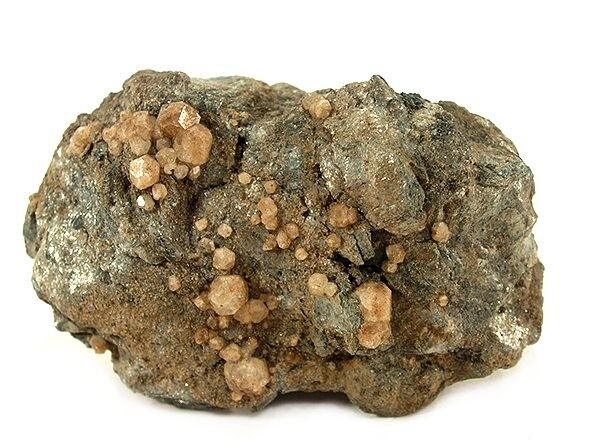 TsaregorodtseviteN(CH3)4Si4(SiAl)O12Mineral—
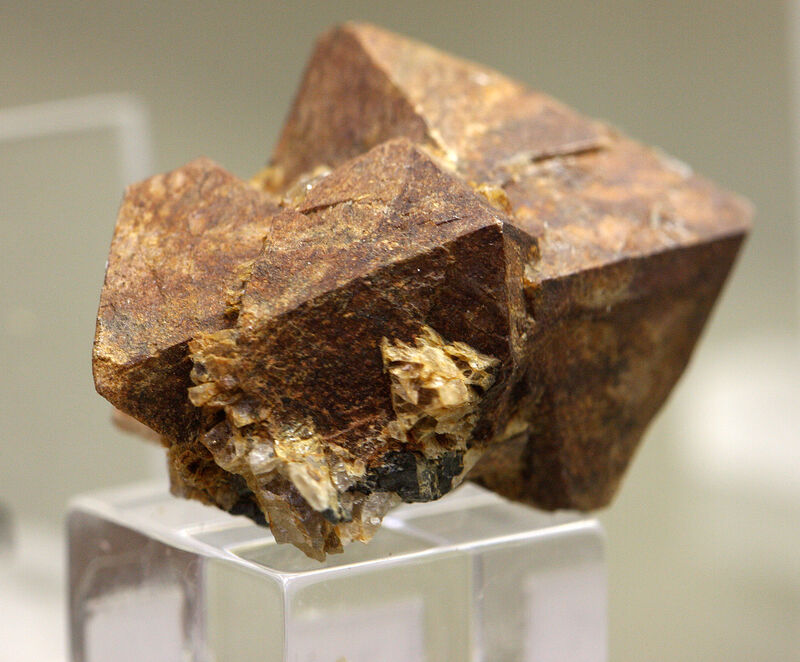 Xenotime-(Y)Y(PO4)Mineral—
Literature, links & citation
- 1801Haüy, René Just (1801) Traité de Minéralogie (1st ed.) Vol. 3. Chez Louis, Paris.
- 1852Brooke, Henry J., Phillips, William (1852) An Elementary Introduction to Mineralogy (6th ed.)
- 1872Brezina, A. (1872) Mineralogische Mittheilungen, 2, 7.
- 1906Palache, C. (1906) On actahedrite, brookite, and titanite from Somerville, Massachusetts, U.S.A.. Festchrift Harry Rosenbusch, 311-321. (as octahedrite)
- 1911Warren, C.H., Palache, C. (1911) The Pegmatites of the Riebeckite-Aegirite Granite of Quincy, Mass., U.S.A.; Their Structure, Minerals, and Origin. Proceedings of the American Academy of Arts and Sciences, 47(4), 125-168. (as octahedrite)
Entry last updated
@misc{mineral2026,
  author    = {Mineral Index editorial board},
  title     = {Anatase — Mineral Index},
  year      = {2026},
  url       = {https://mineralindex.org/minerals/anatase-213}
}