History
Löllingite carries the name of a place rather than a person. It was first described in 1845, from a mining district called Lölling in Carinthia, a region of southern Austria, and took its name straight from that ground. The mineralogist credited with the description is Wilhelm Karl von Haidinger, and the original specimens came from the Wolfbau Mine in the Lölling district.
The mineral had a second name in its early years. Mineralogists once called it leucopyrite, a term now treated as an old synonym for löllingite.
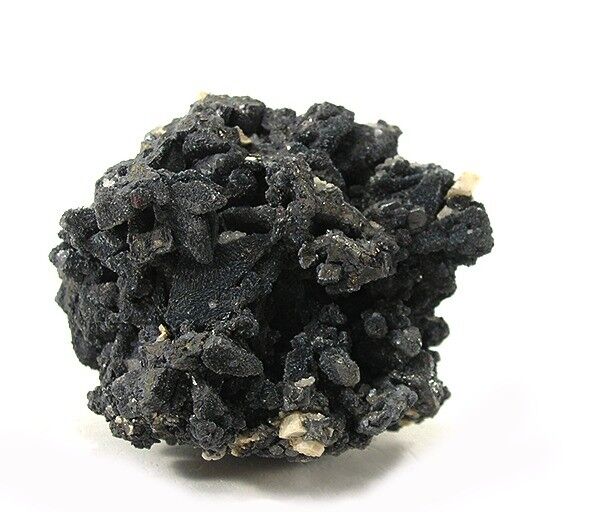
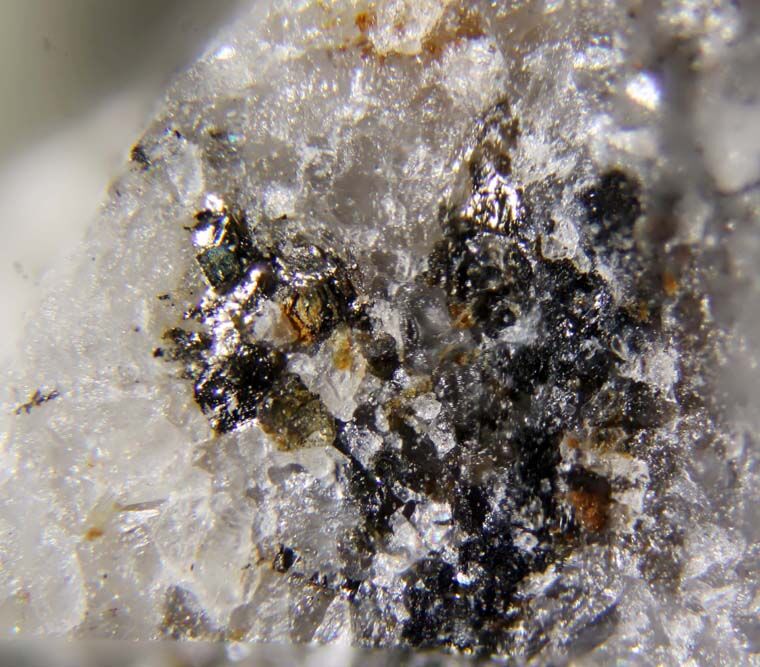
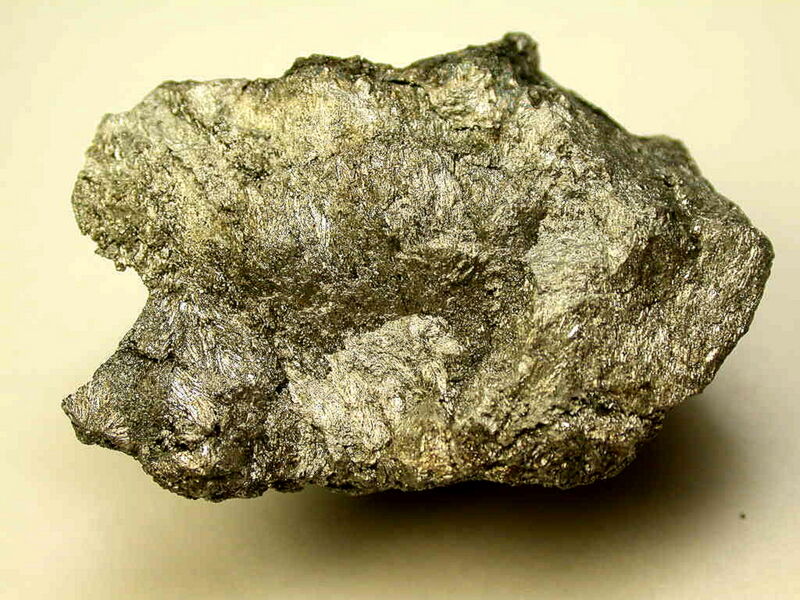
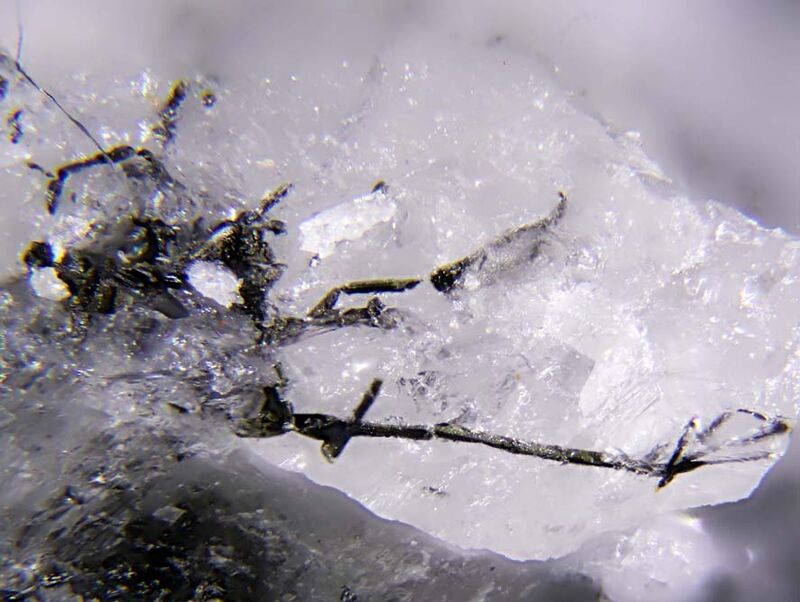
Telling löllingite apart from another mineral has shaped its story from the start. It often sits alongside arsenopyrite — an iron mineral that also contains sulfur — and the two are hard to distinguish by eye. Both are steel-grey and metallic. The difference is chemical: löllingite is an iron arsenide, iron bonded to arsenic with no sulfur, while arsenopyrite carries sulfur as well. That hidden distinction is why a careful chemical test, rather than a glance, settled which mineral a given specimen actually was.
Industrial & practical applications
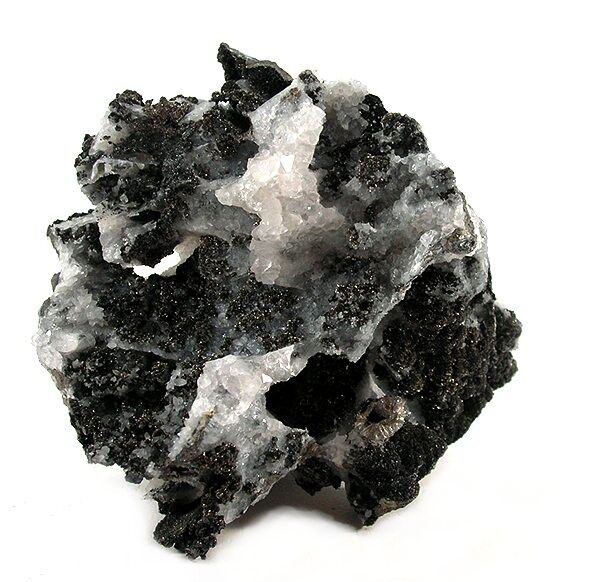
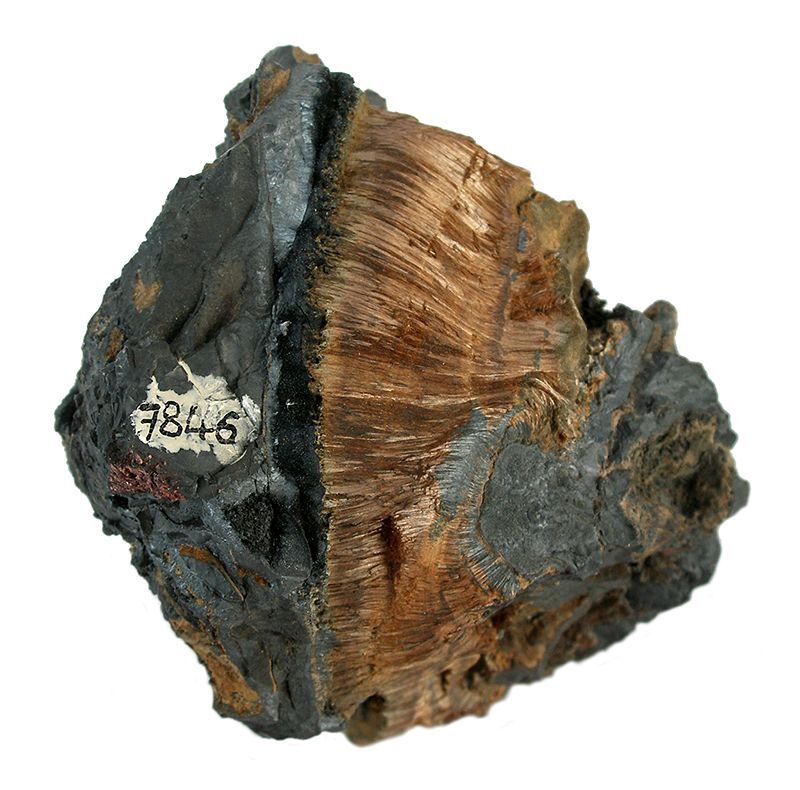
Löllingite is mostly a mineral for the cabinet and the laboratory, not the factory. Collectors prize its bright steel-grey crystals, and mineralogists study it as a textbook iron arsenide. No major industrial use is recorded for it on its own.
Where it does earn attention is underground, in complex cobalt-nickel-arsenic ore deposits. There it keeps company with the metals miners actually want. Such deposits are worked in Sweden, Ontario, Morocco, Norway and Germany. When minerals of the löllingite group form from hot mineral-laden water, they can take up traces of other metals — including so-called "invisible" gold. That is gold spread so finely through the crystal that no glint reveals it.
One practical note outweighs all of this for anyone handling a specimen. Löllingite is an arsenide, built around arsenic, so its dust and any residue should be treated with care and the hands washed after contact.
Where it forms, where it's found
- Type locality
- Wolf mine
- Lölling mining district
- Hüttenberger Erzberg
- Hüttenberg
- Sankt Veit an der Glan District
- Carinthia
- Austria
Varieties
Safety & handling
Physical
Optical
- Anisotropism
- Strong
- Tropism
- Anisotropic
- Reflectance R%
- (51.6,59.7) 400, (52.0,59.9) 420, (52.6,59.8) 440, (53.1,58.8) 460, (53.7,57.6) 480, (54.2,56.2) 500, (54.8,54.9) 520, (55.4,53.7) 540, (55.9,52.7) 560, (56.3,51.8) 580, (56.3,51.1) 600, (55.9,50.4) 620, (55.2,49.8) 640, (54.5,49.3) 660, (53.6,48.7) 680, (53.1,48.4) 700
- UV response
- Not fluorescent in ultraviolet light
Crystallography
- Space group
- #73
- Cell parameters
- a = 5.300 Å · b = 5.983 Å · c = 2.882 Å
- Ratio a:b:c
- 1 : 1.129 : 0.544
- Z
- 2
- Morphology
Prismatic, may be very similar to arsenopyrite.
- Twinning
On (001), possibly trillings, polysynthetic on (101)
Chemical composition
Synonyms
- Arseneisen
- Arsenikeisen
- Arsenosiderit
- Arsenosiderite
- Asenosiderit
- Asenosiderite
- Axotomer Arsenikkies
- Hüttenbergit
- Hüttenbergite
- Leucopurit
- Leucopyrit
- Leucopyrite
- Leukopyrit
- Loellingit
- Loellingite
- Mohsin
- Mohsine
- Pharmakopyrit
- Pharmakopyrite
- Prismatischer Arsenikalkies
- Saetersbergit
- Saetersbergite
- Sätersbergit
- Sätersbergite
In other languages
- French
- Arsenokrokit · Arsénosidérite · Geyérite · Guerite · Hüttenbergite · Leucopurite · Loellingite · Löllingite · Pharmakopyrite · Saetersbergite · Sätersbergite
- German
- Arseneisen · Eisenarsenid · Glaukopyrit · Löllingit
- Spanish
- Lollingita
- Italian
- Löllingite
- Japanese
- 砒鉄鉱
- Chinese
- 斜方砷铁矿
- Russian
- Лёллингит · Мышьяковистый колчедан
- Arabic
- لولينغيت
Classification
2.EB.15a
- 2Sulfides and SulfosaltsClass
- 2.EMetal Sulfides, M: S <= 1:2Division
- 2.EBM:S = 1:2, with Fe, Co, Ni, PGE, etc.Group
- 2.EB.15aLöllingiteSpecies
02.12.02.09
- 02SulfidesClass
- 02.12AmBnXp, with (m+n):p = 1:2Type
- 02.12.02Marcasite Group (Orthorhombic: Pnnm)Group
- 02.12.02.09LöllingiteSpecies
3.9.11
- 3Sulphides, Selenides, Tellurides, Arsenides and Bismuthides (except the arsenides, antimonides and bismuthides of Cu, Ag and Au, which are included in Section 1)Class
- 3.9Sulphides etc. of FeGroup
- 3.9.11LöllingiteSpecies
Group, growth & confusion
Literature, links & citation
- —Zeitschrift für Kristallographie: 32: 165-187.
- 1845Haidinger, W. (1845) Zweite Klasse: Geogenide. XIII. Ordnung. Kiese II. Arsenikkies. Lölingit.. in Handbuch der Bestimmenden Mineralogie, Bei Braumüller and Seidel (Wien): 559-562.
- 1884Hillebrand, W.F. (1884) On an interesting variety of löllingite and other minerals. American Journal of Science: 27: 343-358.
- 1944Palache, Charles, Berman, Harry, Frondel, Clifford (1944) The System of Mineralogy (7th ed.) Vol. 1 - Elements, Sulfides, Sulfosalts, Oxides. John Wiley and Sons, New York.
- 1962Clark, Lloyd A. (1962) X-ray method for rapid determination of sulphur and cobalt in loellingite. The Canadian Mineralogist, 7 (2). 306-311
Entry last updated
@misc{mineral2026,
  author    = {Mineral Index editorial board},
  title     = {Löllingite — Mineral Index},
  year      = {2026},
  url       = {https://mineralindex.org/minerals/lollingite-2426}
}