History
The mountains came after the mineral. The Dolomite Mountains in northern Italy take their name from a pale carbonate rock first described in 1791. The rock was named after the man who studied it: the French geologist Déodat de Dolomieu.
A study of the Alps in 1789 and 1790 brought him to the carbonate stone that would carry his name. He had encountered it first in the buildings of old Rome, and later as samples collected in the Tyrolean Alps. The Genevan chemist Nicolas-Théodore de Saussure formally named it dolomite the following year. Some accounts place the formal naming a few months later, in March 1792.
Industrial & practical applications
In construction, dolomite is cut into ornamental stone and crushed into concrete aggregate. Where calcite limestone is uncommon or too costly, dolomite is sometimes used in its place. It serves there as a flux — material that helps the metal melt cleanly — for the smelting of iron and steel.
Industrial chemistry takes dolomite for the magnesium inside it. Calcined — heated until its carbonates break down — dolomite yields magnesium oxide. The same calcined ore feeds the Pidgeon process for the production of magnesium. It is also a source of magnesium for pharmaceutical applications. Large quantities of processed dolomite go into the production of float glass. That is the smooth, planar window glass made by floating molten glass on a bath of tin.
Agriculture and environmental care turn to dolomite for its slow release of magnesium and its buffering effect on acid soils. Dolomite and dolomitic limestone are added to soils and soilless potting mixes as a pH buffer and as a magnesium source. Pastures can be limed with dolomitic lime to raise their pH and to remedy magnesium deficiency. The same lime is used in environmental restoration and soil regeneration, raising pH in soils acidified by mining. Marine aquaria use dolomite gravel as a substrate that buffers the water against pH swings.
Two more roles round the list out. As a host rock, dolomite is an important petroleum reservoir. It also hosts the strata-bound Mississippi Valley-Type ore deposits — layered seams of lead, zinc, and copper inside carbonate rocks. As a high-temperature catalyst, calcined dolomite destroys tar in the gasification of biomass. That is the heating of wood, agricultural waste, or other plant matter to extract a fuel gas.
Where it forms, where it's found
- Geological setting
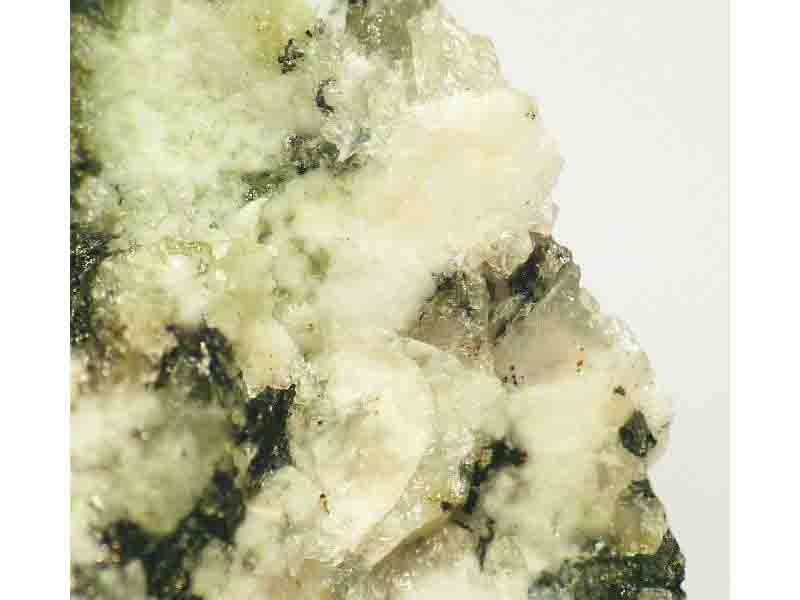
An important sedimentary and metamorphic mineral found as the principal mineral in dolostones and metadolostones, and as an important mineral in limestones and marbles where calcite is the principal mineral present. Also found as a hydrothermal vein mineral, forming crystals in cavities; and found in serpentinites and similar rocks.
Varieties
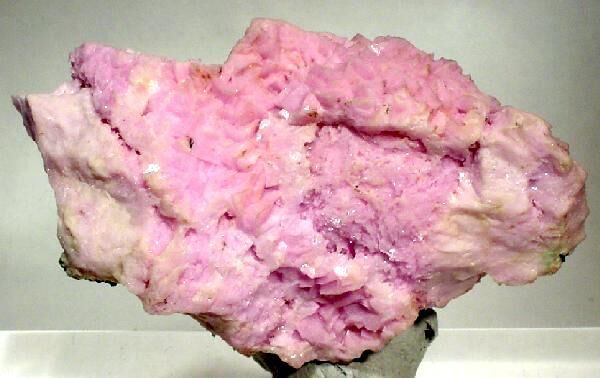
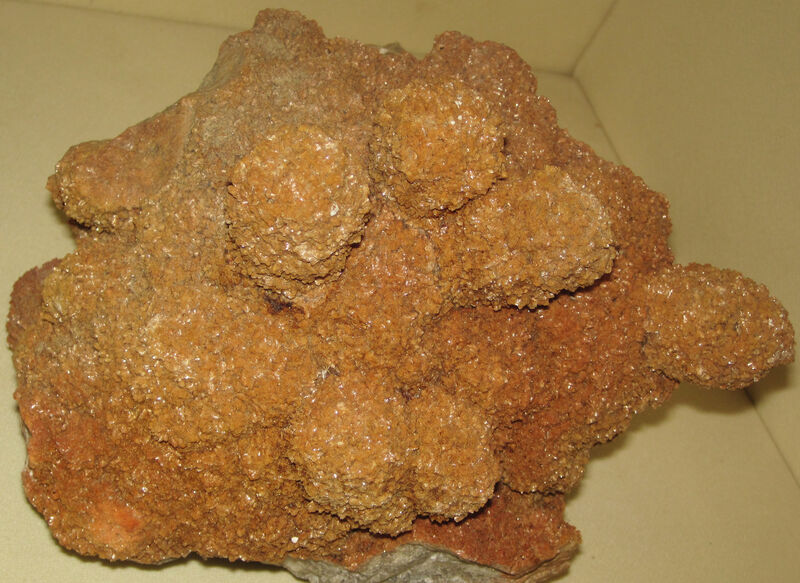
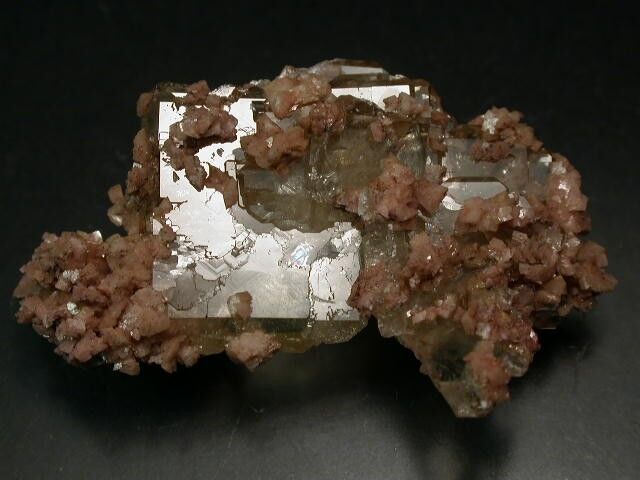
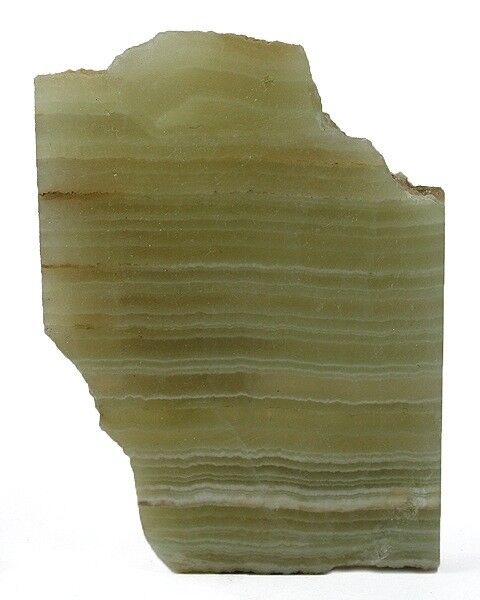
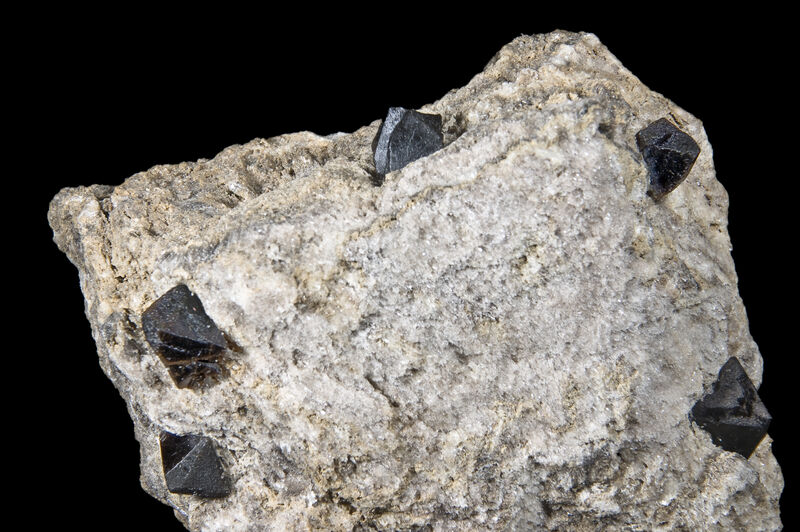
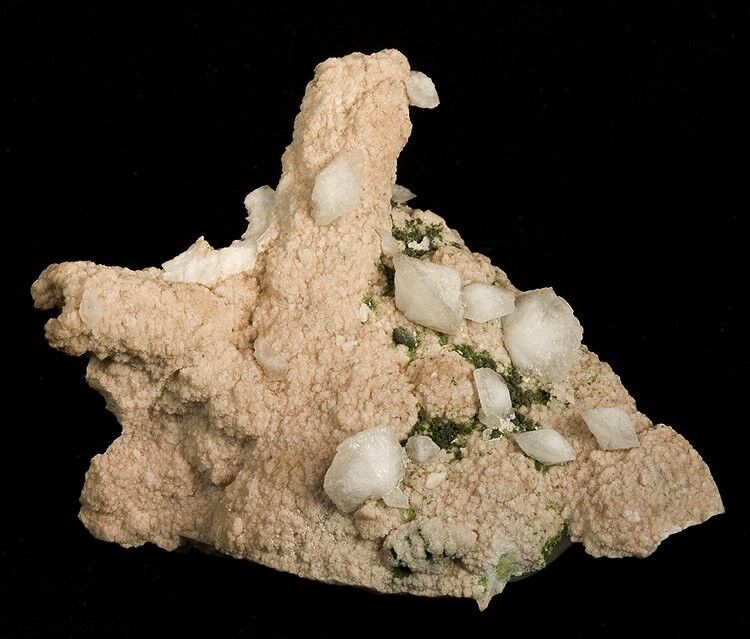
Physical
- Hardness
- 1Talc
- 2Gypsum
- 3Calcite
- 4Fluorite
- 5Apatite
- 6Orthoclase
- 7Quartz
- 8Topaz
- 9Corundum
- 10Diamond
- Lustre
- Vitreous
- Transparency
- Transparent · Translucent
- Colour
- Colourless · white · gray · reddish-white · brownish-white · green (rarely) · or pink · colourless in transmitted light
- Streak
- White
- Tenacity
- brittle
- Cleavage
- Perfect
On (101).
- Fracture
- Sub-Conchoidal
- Density
- 2.84 g/cm³
Optical
- Optical type
- Uniaxial (-)
- Refractive index
- 1.5 – 1.681
- Surface relief
- Moderate
- Principal indices
- nω 1.679 – 1.681 · nε 1.500 – 1.503
- Birefringence
- 0.179
- Extinction
- Parallel
- Luminescence
- None
- UV response
- Some types fluoresce white, blue white, creamy yellow, etc. in either SW or LW UV. Manganoan varieties may fluoresce pale pink through intense red, but weaker in long wave.
- Notes
Anomalously biaxial.
Crystallography
- Space group
- R-3
- Cell parameters
- a = 4.8012(1) Å · c = 16.002 Å
- Z
- 3
- Morphology
Crystals typically rhombohedral with (101) or (401) dominant, may also be prismatic (110) terminated by rhombohedral faces; tabular (0001) with (110); (101) often striated horizontally or curved - "saddle" or "fingernail" habit. Also massive, coarse to fine granular, fibrous or pisolitic.
- Twinning
On (0001), common with re-entrant angles around the middle edges; on (100) common; on (110), common, as complementary twins simulating holohedral symmetry; also as double twins by combination of this law and twins on (100) or (0001). On (101), rare. On (021) as lamellae, especially in grains of dolomite marble.
- Parting
- Noted in lamellar twins on (021). Twin gliding on (021);
- Translation gliding
- translation gliding with T(0001), t[10_10].
- Epitaxy
Growths of dolomite on calcite or vice versa, with parallel axes; also dolomite on rhodochrosite or siderite. Also occurs in oriented growths with antigorite (uncertain), and with chlorite [(0001) and (001) parallel].
Chemical composition
- Impurities
- Fe
- Mn
- Co
- Pb
- Zn
Synonyms
- Bitterkalk
- Bittersalzerde
- Bitterspat (of Klaproth)
- Chaux carbonatée aluminifère
- Compound Spar
- Dolomie
- Kalktalkspath
- Kohlensauere Kalkerde
- Magnesio-Calcite
- Magnesiocalcit
- Magnesiodolomit
- Magnesiodolomita
- Magnesiodolomite
- Miemit
- Miemita
- Miemite
- Muricalcit
- Muricalcita
- Muricalcite
- Paratomes Kalk-Haloid
- Pearl Spar
- Perlspath
- Picrite (of Brogniart)
- Rauhkalk
- Rautenspath
- Rhomb Spar
- Rhombenspat
- Rhomboidalspath
- Ridolfit
- Ridolphite
- Spath magnésien
- Spath perlé
- Taraspit
- Taraspita
- Tharandite
- Wandstein
In other languages
- French
- brossite · CaMg(CO3)2 · chaux carbonatée magnésifère · dolomite · dolomite zincifère · magnésiodolomite · manganodolomite · miémite · plumbodolomite · protodolomite · sidérocalcite · spath magnésien · spath perlé · tharandite
- German
- Dolomit · Dolomitspat · Perlspat · Rautenspat
- Spanish
- dolomita
- Italian
- dolomite
- Portuguese
- dolomita · Dolomite
- Japanese
- ドロマイト · 白雲石 · 苦灰石
- Chinese
- 白云石
- Simplified Chinese
- 白云石
- Traditional Chinese
- 白雲石
- Russian
- доломит · доломиты
- Arabic
- دولومايت · دولوميت · صخر الدولومايت · صخور الدولوميت
- Hindi
- डोलोमाइट
Classification
5.AB.10
- 5CarbonatesClass
- 5.ACarbonates without additional anions, without H2ODivision
- 5.ABAlkali-earth (and other M2+) carbonatesGroup
- 5.AB.10DolomiteSpecies
14.02.01.01
- 14Anhydrous Normal CarbonatesClass
- 14.02AB(XO3)2Type
- 14.02.01Dolomite Group (Trigonal: R-3)Group
- 14.02.01.01DolomiteSpecies
11.4.6
- 11CarbonatesClass
- 11.4Carbonates of CaGroup
- 11.4.6DolomiteSpecies
Group, growth & confusion
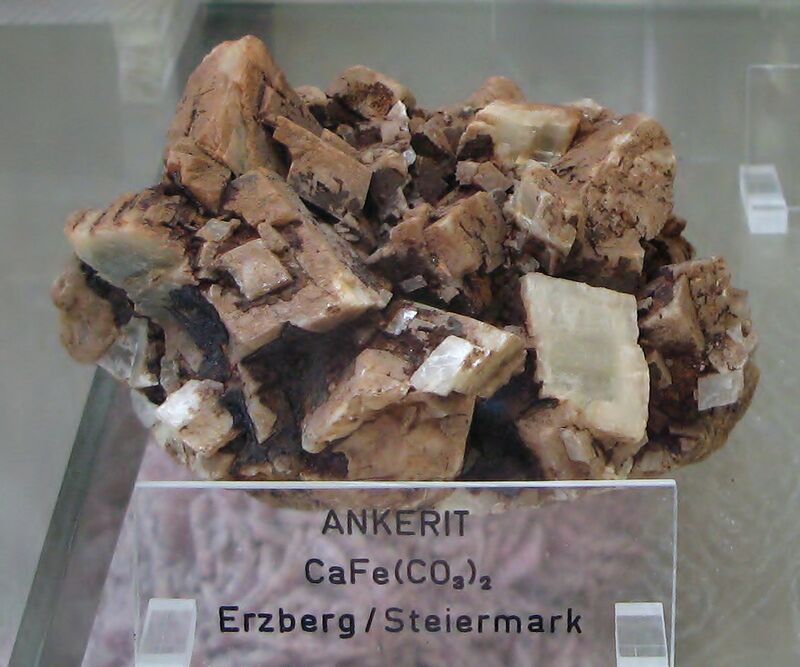
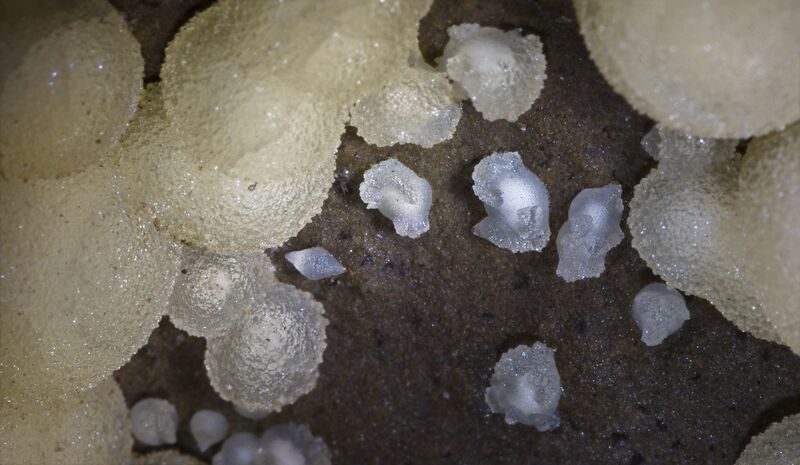
 AbelsoniteNiC31H32N4Mineral—
 AluminiteAl2(SO4)(OH)4 · 7H2OMineral—
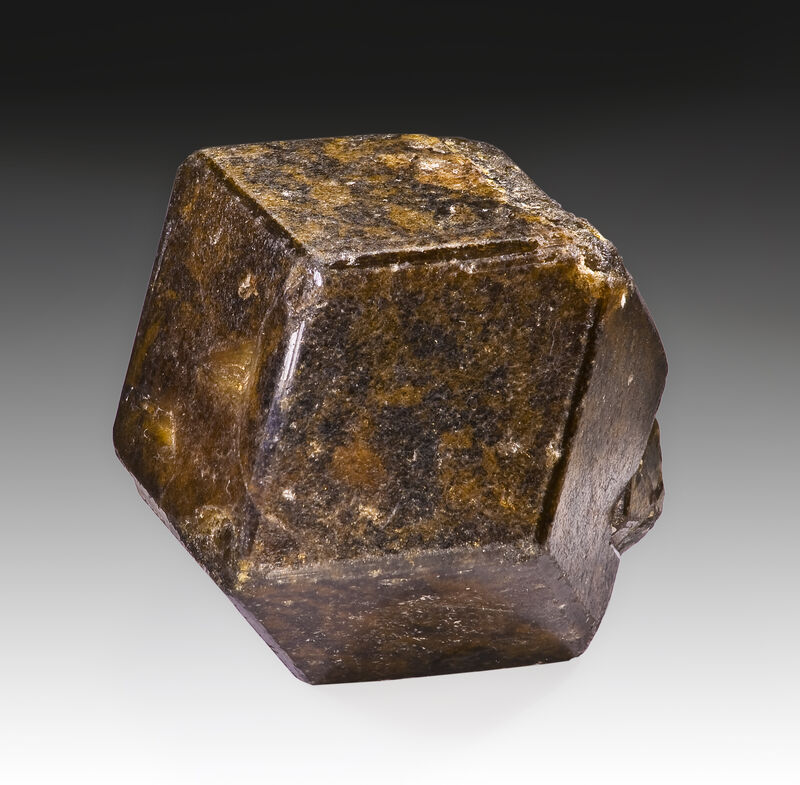 AndraditeCa3Fe3+2(SiO4)3Mineral—
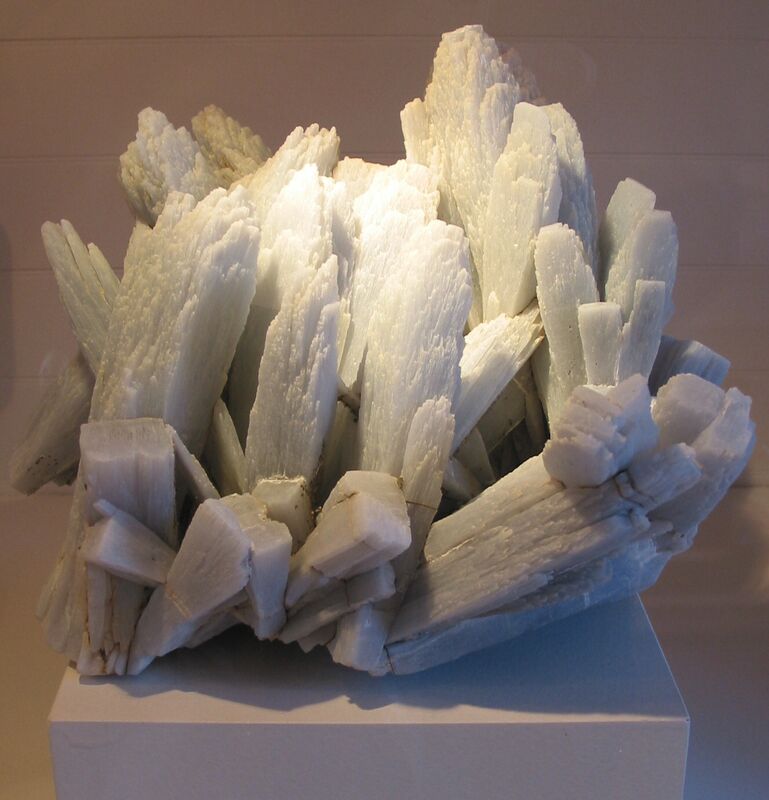 AnhydriteCa(SO4)Mineral—
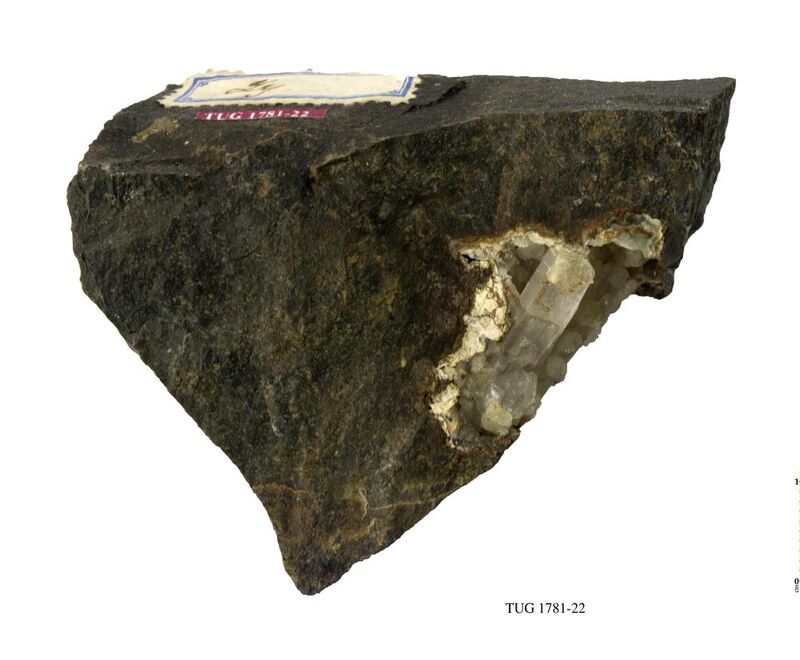 AragoniteCa(CO3)Mineral—
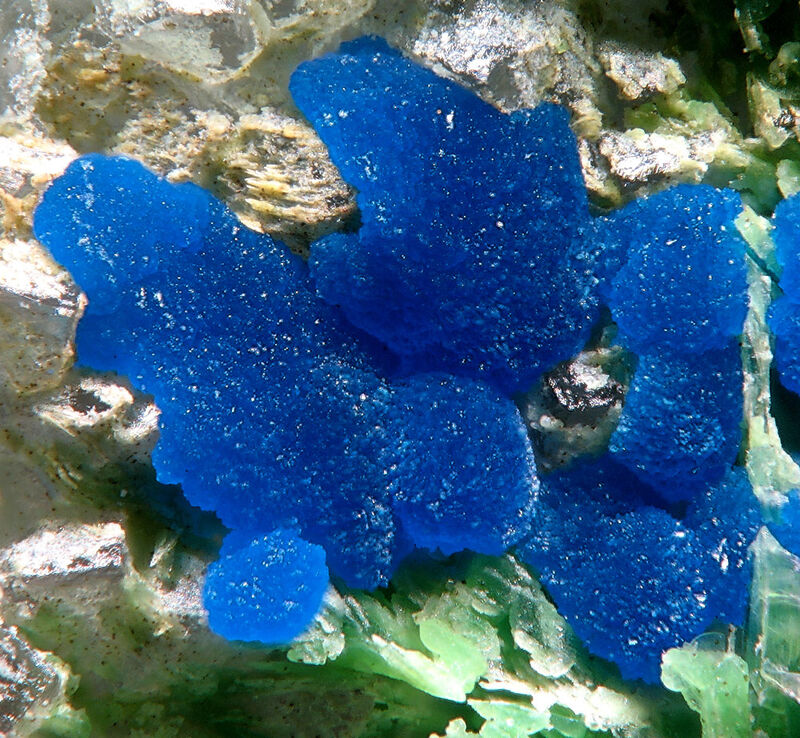 ArhbariteCu2Mg(AsO4)(OH)3Mineral—
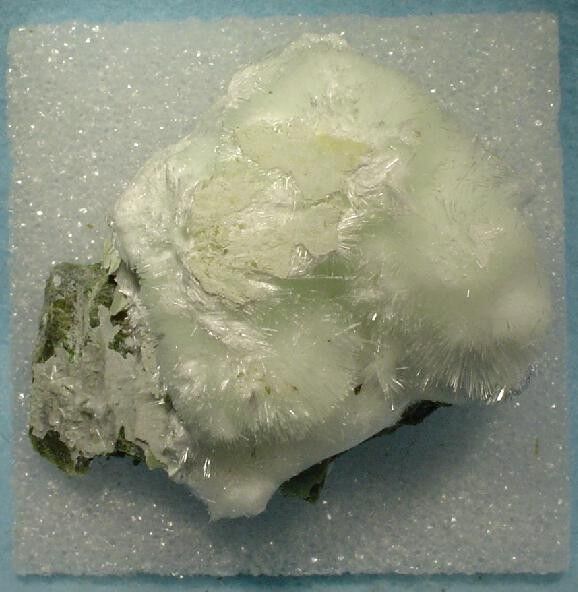 ArtiniteMg2(CO3)(OH)2 · 3H2OMineral—
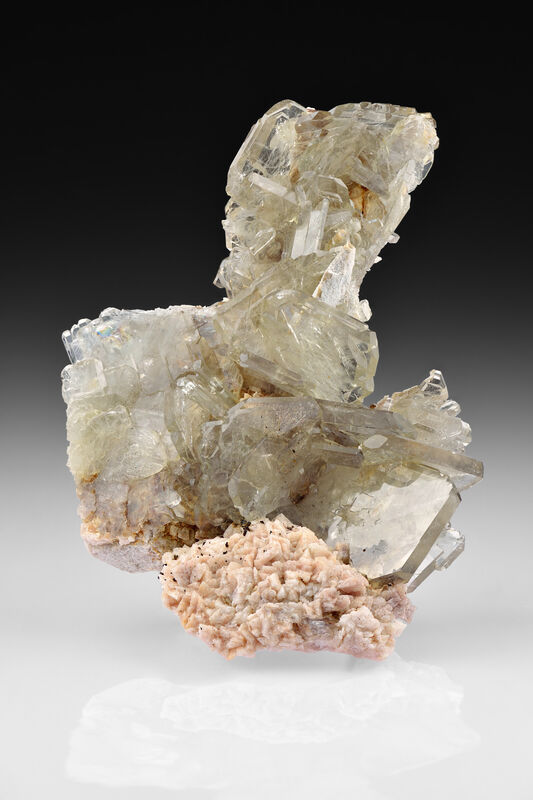 BaryteBa(SO4)Mineral—
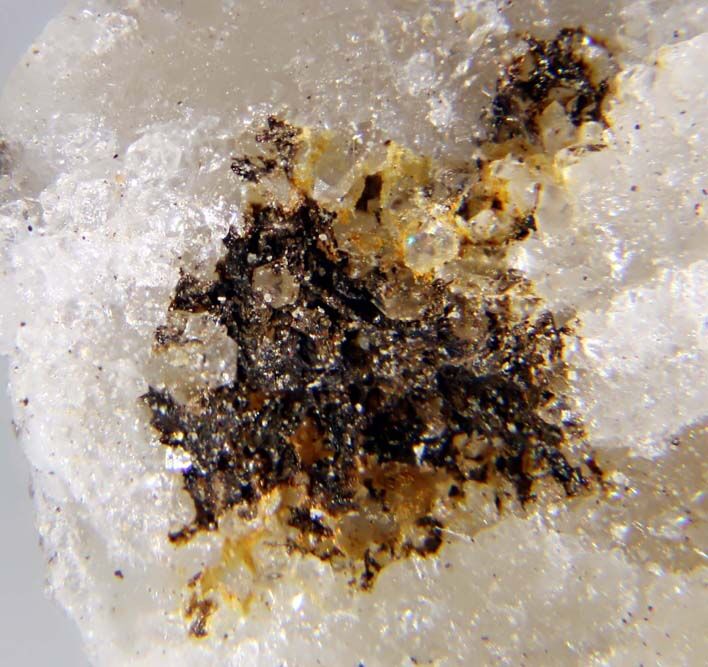 BenleonarditeAg15Cu(Sb,As)2S7Te4Mineral—
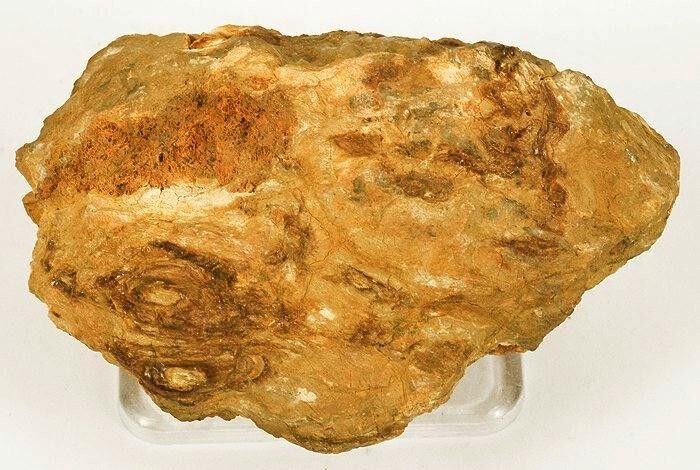 BindheimitePb2Sb2O6OMineral—
Literature, links & citation
- 1792Delamétherie, J.C. (1792) New Edition of Mongez’s Sciagraphie (French translation of Bergmann’s Sciagraphia, with additions). 2 volumes, Paris: 1: 207 (as Spath magnésien).
- 1792Saussure, H. B. (1792, March) Observations et Mémoires sur la Physique, sur l'Histoire Naturelle et sur les Arts Vol. 40. Académie royale des sciences p.161-173.
- 1794Richard Kirwan (1794) Elements of Mineralogy - second edition Vol. 1. P. Elmsly, The Strand.
- 1802Klaproth, M. H. (1802) CX. Untenuchung des Miemits. In Beiträge zur chemischen Kenntniss der Mineralkörper Vol. 3. Rottmann. p.292-296.
- 1812William Hyde Wollaston (1812) VIII. On the primitive crystals of carbonate of lime, bitter-spar, and iron-spar. Philosophical Transactions Of The Royal Society Of London, 102. 159-162 doi:10.1098/rstl.1812.0010DOI: 10.1098/rstl.1812.0010
Entry last updated
@misc{mineral2026,
  author    = {Mineral Index editorial board},
  title     = {Dolomite — Mineral Index},
  year      = {2026},
  url       = {https://mineralindex.org/minerals/dolomite-1304}
}