History
Metatorbernite owes its name to a mineral it is born from, and to a man who never saw it. The "meta" simply marks it as the drier sibling of torbernite — the same green crystal after it has lost some of its water.
That parent mineral came first. A green, mica-like crystal was noted in 1772 by Ignaz von Born, who called it mica viridis crystallina — green crystalline mica. The first specimens came from the Georg Wagsfort Mine near Johanngeorgenstadt, in the Ore Mountains of Saxony. In 1780 the German mineralogist Abraham Gottlob Werner gave it a proper name, torbernite, in honour of the Swedish chemist Torbern Olof Bergman (1735–1784).
The drier form had to wait more than a century for its own name. In 1916 the British mineralogist Arthur Francis Hallimond described it and called it metatorbernite. He kept Bergman's name and added the prefix meta to mark its lower water content and its kinship to torbernite.
The naming reflects a real change the crystals undergo. Torbernite holds twelve water molecules; as it dries out it sheds four, becoming metatorbernite with eight. This happens as torbernite slowly withers in air, and can be forced by warming it above 75 °C. Much metatorbernite in collections began life as torbernite and lost its water along the way.
Industrial & practical applications
Metatorbernite is not what feeds a uranium mine. It is a secondary mineral, formed when primary uranium ores — chiefly uraninite and pitchblende — break down and re-form near the surface. The primary ores carry far more uranium and are the real targets of extraction. Metatorbernite, at best, is a minor contributor where it happens to occur.
Its more useful job is as a signpost. A bright green crust of it in the field tells a geologist that uranium has been on the move here. Its presence serves as an indicator of past or present uranium mineralization in a rock formation, guiding exploration toward richer ground.
Beyond the field, its main demand is from collectors. The mineral is valued for its striking green colour, its distinctive crystal habit, and its association with uranium deposits.
Owning a piece comes with a warning. Metatorbernite is radioactive because of its uranium, emitting alpha and beta particles together with gamma radiation. Specimens should be kept in secure, sealed containers — air-tight glass jars are the usual choice — both to limit exposure and to prevent contamination. Anyone handling it should avoid prolonged exposure, wear gloves and a dust mask, and never let the dust be inhaled or ingested.
Where it forms, where it's found
- Geological setting
Found at two polymetallic deposits containing uranium mineralization: Redruth, Cornwall, England, United Kingdom and at Schneeberg, Saxony, Germany.
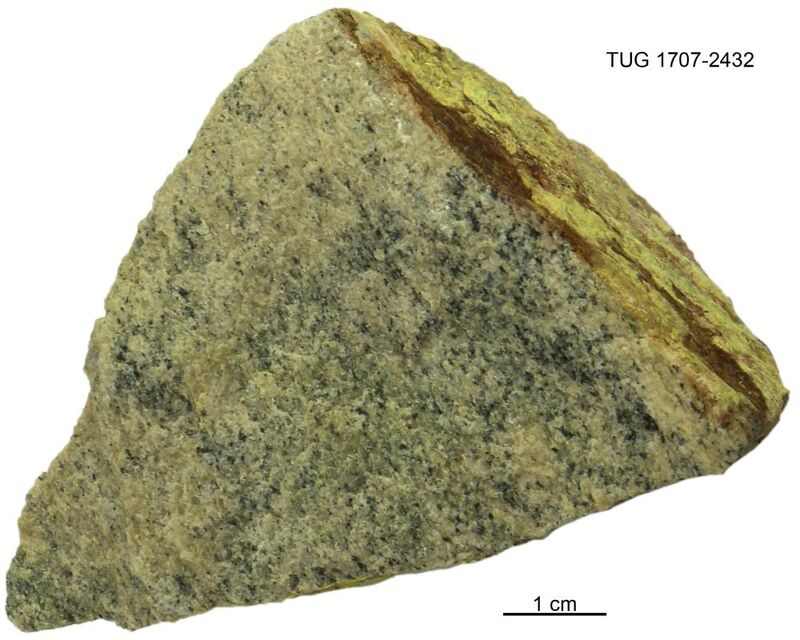
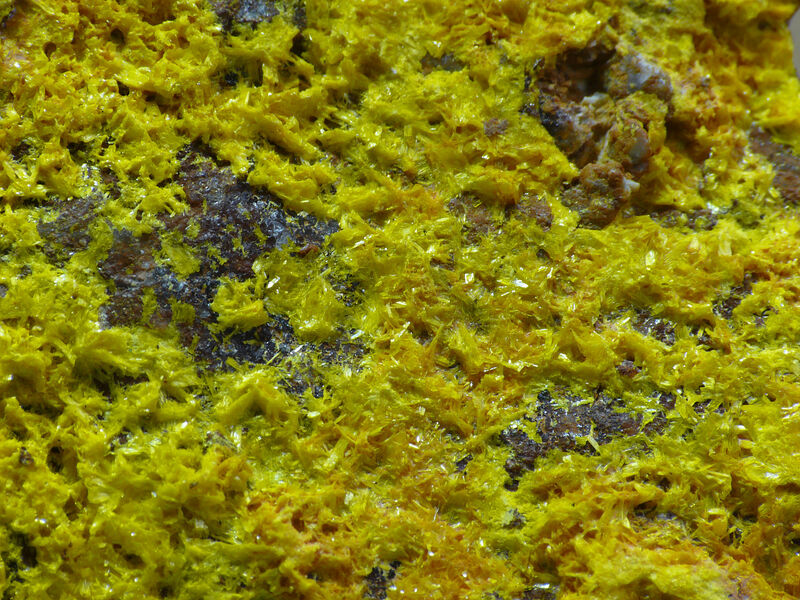
Secondary mineral in weathering uranium-bearing deposits.
- Type locality
- Schneeberg
- Erzgebirgskreis
- Saxony
- Germany
Radioactivity
Physical
Optical
- Optical type
- Uniaxial (+/-)
- Refractive index
- 1.618 – 1.631
- Surface relief
- Moderate
- Principal indices
- nω 1.618 – 1.631 · nε 1.622 – 1.628
- Birefringence
- 0.004
- Pleochroism
- Weak
O = Green E = Pale green to blue
- Dispersion
- r > v extreme
- UV response
- Not fluorescent. (Epitaxial intergrowths with other uranyl "micas" may fluoresce, however.)
- Notes
Anomalously biaxial in sectors.
Crystallography
- Space group
- P4/n
- Cell parameters
- a = 6.9756(5) Å · c = 17.349(2) Å
- Unit cell volume
- 844.2 ų
- Z
- 2
- Morphology
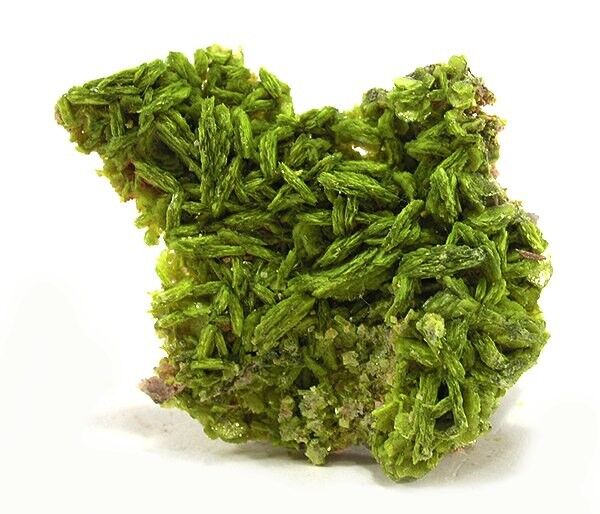
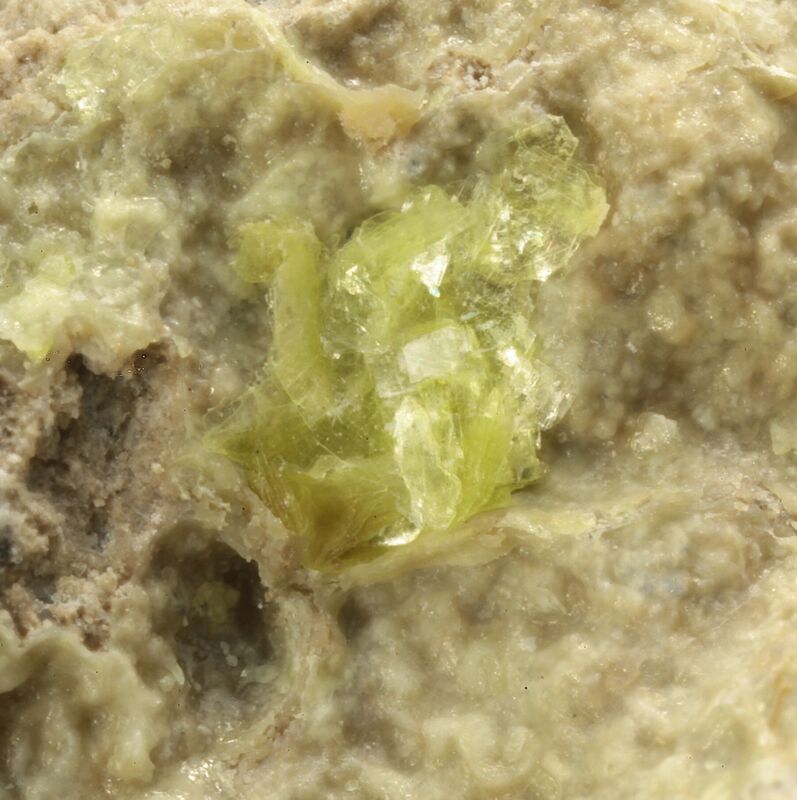
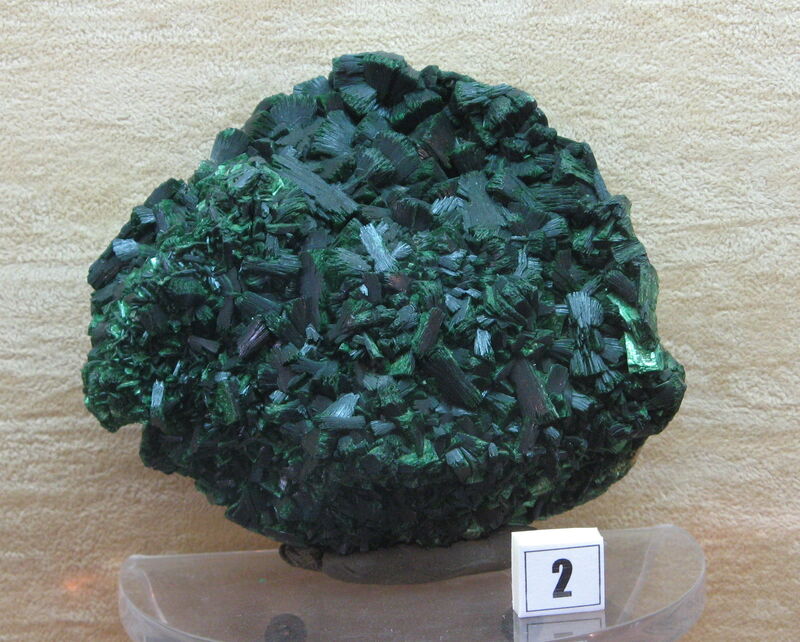
Commonly as paramorphs after torbernite, square tabular crystals, flattened on (001) and modified by (011), in lamellar or subparallel to sheaflike aggregates, rosettes.
- Twinning
Merohedral twinning.
- Type-locality form
Deep green blocky tetragonal crystals
- Comment
Data for synthetic crystal.
Chemical composition
- Impurities
- Ca
- Ba
- Mg
Synonyms
- Meta-chalcolite
- Meta-torbernite I
- Metakupferuranit
In other languages
- French
- metatorbernite
- German
- Metatorbernit
- Spanish
- Metatorbernita
- Italian
- Metatorbernite
Classification
8.EB.10
- 8Phosphates, Arsenates, VanadatesClass
- 8.EUranyl phosphates and arsenatesDivision
- 8.EBUO2:RO4 = 1:1Group
- 8.EB.10MetatorberniteSpecies
40.2a.13.02
- 40Hydrated Normal Phosphates, Arsenates and VanadatesClass
- 40.2aAB2(XO4)2·xH2O, containing (UO2)2+Type
- 40.2a.13— unnamed intermediate level —Group
- 40.2a.13.02MetatorberniteSpecies
19.11.11
- 19PhosphatesClass
- 19.11Phosphates of UGroup
- 19.11.11MetatorberniteSpecies
Group, growth & confusion
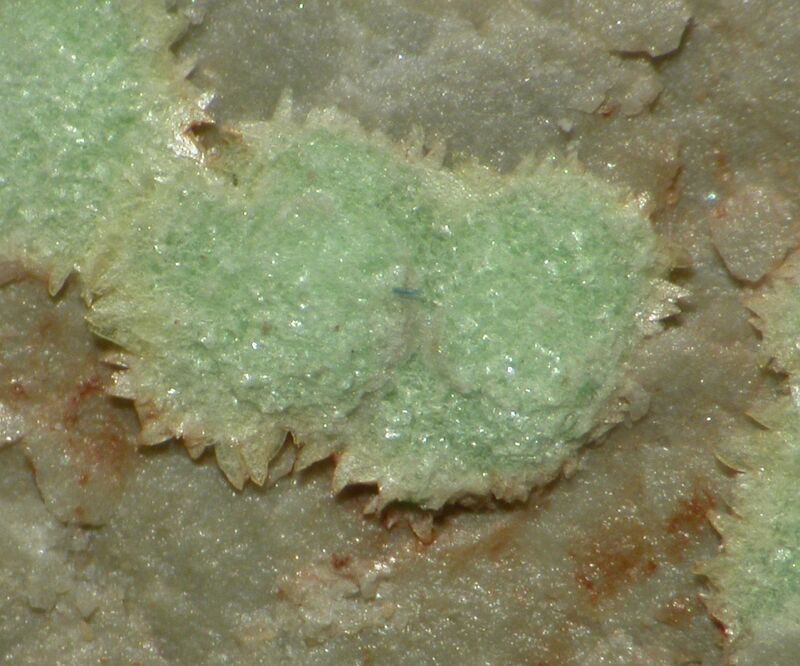 AbernathyiteK(UO2)(AsO4) · 3H2OMineral—
- ArsenosabugaliteH0.5Al0.5(UO2)2(AsO4)2·8H2OMineral—
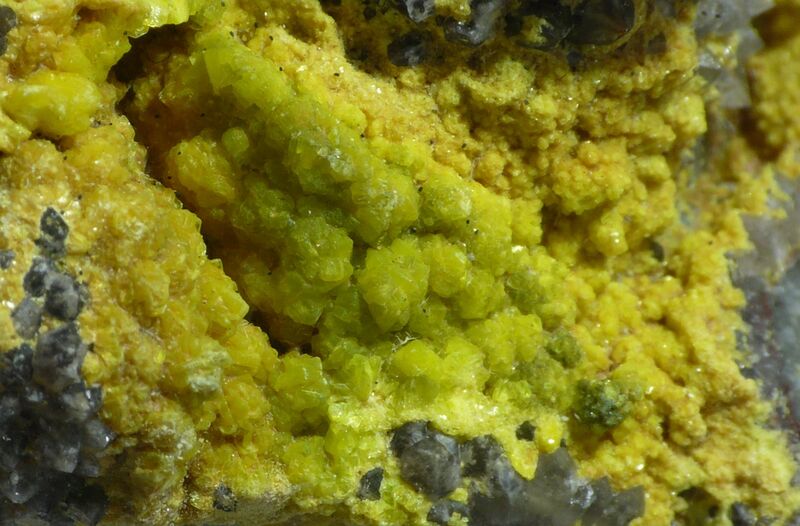 Chernikovite(H3O)(UO2)(PO4) · 3H2OMineral—
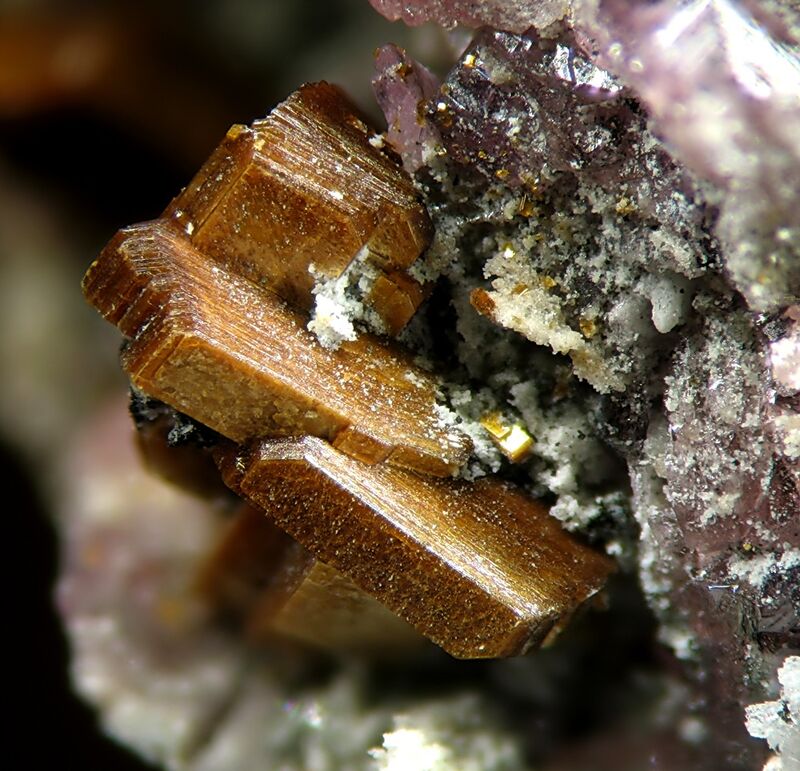 LehneriteMn2+(UO2)2(PO4)2 · 8H2OMineral—
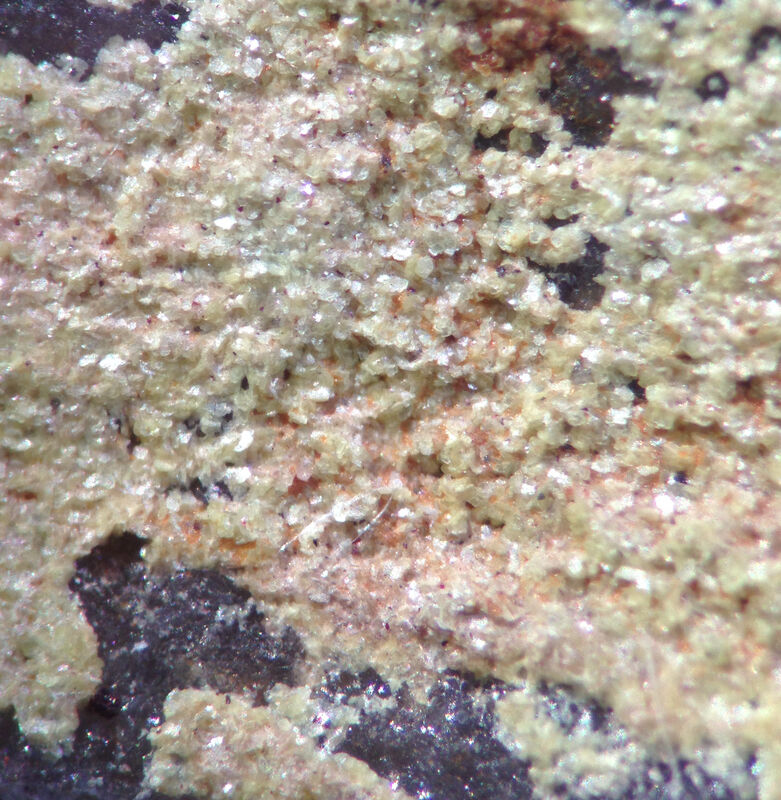 Meta-ankoleiteK(UO2)(PO4) · 3H2OMineral—
 Meta-autuniteCa(UO2)2(PO4)2 · 6H2OMineral—
 MetaheinrichiteBa(UO2)2(AsO4)2 · 8H2OMineral—
- MetakahleriteFe2+(UO2)2(AsO4)2 · 8H2OMineral—
- MetakirchheimeriteCo(UO2)2(AsO4)2 · 8H2OMineral—
- MetalodèviteZn(UO2)2(AsO4)2 · 10H2OMineral—
Literature, links & citation
- —Bollettino della Societa dei Naturalisti in Napoli: 53: 99-104.
- —Zeitschrift für Kristallographie: 211: 701-702.
- —Atti della Societa Italiana di Scienze Naturali e del Museo Civico di Storia Naturale di Milano: 84: 134-138.
- 1861Pisani (1861) Comptes rendu de l’Académie des sciences de Paris: 52: 817.
- 1901Rinne (1901) Centralblatt für Mineralogie, Geologie und Paleontologie, Stuttgart: 618 (as Metakupferuranit).
Entry last updated
@misc{mineral2026,
  author    = {Mineral Index editorial board},
  title     = {Metatorbernite — Mineral Index},
  year      = {2026},
  url       = {https://mineralindex.org/minerals/metatorbernite-2689}
}