History
The mineral was found and named twice. It was first picked up in 1772 by the Bohemian mineralogist Ignaz von Born. He listed it in his catalogue Lythophylacium Bornianum as mica viridis crystallina — green crystalline mica from Johanngeorgenstadt, in the Saxon Ore Mountains. The name was a placeholder. Green tabular crystals do look superficially like green mica, and 18th-century mineralogy had not yet sorted the uranium phosphates from anything else that flaked.
Eight years later, in 1780, the German mineralogist Abraham Gottlob Werner returned to the same material. He described it more carefully but still called it grüner Glimmer — green mica. Werner settled on a proper name in 1793, christening it torbernite in honour of the Swedish chemist Torbern Olof Bergman (1735–1784).
Bergman held the chair of chemistry and physics at the University of Uppsala. He was one of the leading chemists and mineralogists of the eighteenth century. He published on mineralogical classification, most notably the Sciagraphia Regni Mineralis, and worked on quantitative chemical analysis and the chemical affinity of the elements. The affinity work was an early step toward the modern table of reactivity. His students included Carl Wilhelm Scheele and Johan Gadolin, the chemist after whom gadolinium was later named. Another student was Juan José de Elhuyar, co-discoverer of tungsten. Bergman died nine years before the mineral got his name.
The type material came from the Georg Wagsfort Mine near Johanngeorgenstadt, in the Ore Mountains of Saxony.
Industrial & practical applications
Torbernite is not a uranium ore. The mineral is too rare and too hydrated to be worked at scale. Primary uranium production runs through uraninite and its concentrates, not through these emerald-green plates.
Where torbernite earns its keep is in prospecting. Its uranium content sits at around 48 % by mass, which makes a fresh crust strongly radioactive. The bright apple- to emerald-green colour is hard to miss on a weathered rock face. Geologists treat it as an indicator mineral — a surface clue that a uranium body sits below — alongside its sister phosphates autunite and metatorbernite. A patch of green on an outcrop tells the prospector to bring out the gamma-ray spectrometer. The spectrometer tells them whether to keep digging.
The other steady demand comes from collectors and museums. Sharp tabular crystals change hands as specimens of one of the few minerals whose colour rivals dioptase. Uranium decay makes the mineral measurably radioactive, with a specific activity of about 86 kilobecquerels per gram according to its formula. For that reason, well-curated specimens live in air-tight glass jars rather than open trays. The same dehydration that turns torbernite into the slightly drier metatorbernite happens slowly at room temperature, and faster above 75 °C. Collectors lose crystals to the change if they keep them warm and dry.
Where it forms, where it's found
- Geological setting
Uncommon mineral in the secondary zone of copper bearing uranium deposits.
- Type locality
- Johanngeorgenstadt
- Erzgebirgskreis
- Saxony
- Germany
50.4358°, 12.7069°
Radioactivity
Physical
- Hardness
- 1Talc
- 2Gypsum
- 3Calcite
- 4Fluorite
- 5Apatite
- 6Orthoclase
- 7Quartz
- 8Topaz
- 9Corundum
- 10Diamond
- Lustre
- Vitreous
- Transparency
- Transparent · Translucent
- Colour
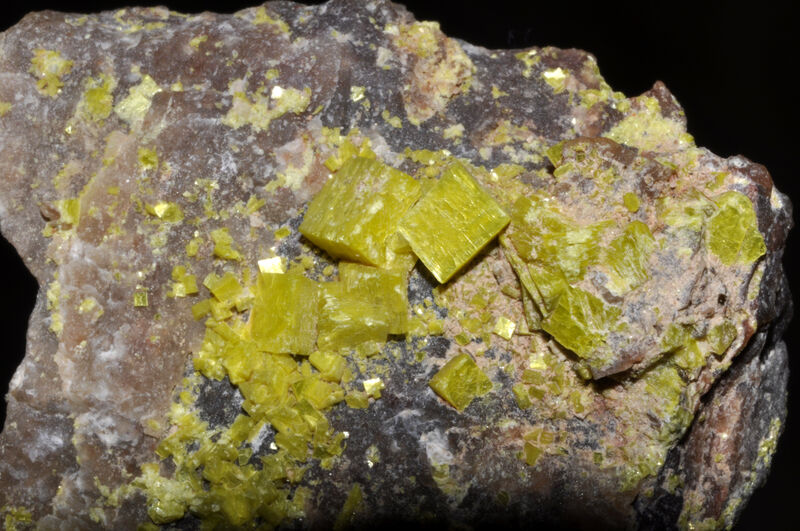
- Emerald-green · grass-green. leek green · siskin green · apple green
- Streak
- Pale green
- Tenacity
- brittle
- Cleavage
- Perfect
Perfect on (001) micaceous, indistinct on (100)
- Density
- 3.22 g/cm³
Optical
- Optical type
- Uniaxial (-)
- Refractive index
- 1.581 – 1.592
- Surface relief
- Moderate
- Principal indices
- nω 1.590 – 1.592 · nε 1.581 – 1.582
- Birefringence
- 0.010
- Pleochroism
- Visible
O = Dark green to sky blue E = Green
- Extinction
- Parallel
- UV response
- Not fluorescent. (Epitaxial intergrowths with other uranyl mica may fluoresce, however.)
Crystallography
- Space group
- #176
- Cell parameters
- a = 7.0267(4) Å · c = 20.807(2) Å
- Unit cell volume
- 1027.3 ų
- Z
- 2
- Morphology
Crystals thin to thick tabular, square or octagonal, with prominent (001), (011), (110); rarely pyramidal (111). Commonly forms subparallel aggregates, foliated, micaceous, scaly.
- Twinning
Rare on (110).
- Epitaxy
Parallel growths with autunite are common. Parallel growths with uranospinite, zeunerite and bassetite are documented.
- Comment
Data for synthetic crystal. Other cell data reported: 7.025, 20.63 A.
Chemical composition
- Impurities
- Ca
- Ba
- Mg
Synonyms
- Chalcolite
- Chalkolite
- Chalkolith
- Copper Uranite
- Cuprouranit
- Cuprouranite
- Grüner Glimmer
- Kupfer-Uranit
- Kupferautunit
- Kupferphosphoruranit
- Mica viridis cryst.
- Orthotorbernit
- Orthotorbernita
- Orthotorbernite
- Phosphate of Uranium and Copper
- Phosphate of Uranium containing Phosphate of Copper
- Tobairnít
- Torberit
- Torberite
- Uran-mica
- Urane oxydé
- Uranites spathosus
- Urankalk durch Kupfer gefärbt
- Uranphyllit
- Uranphyllite
In other languages
- French
- Calcholite · Chalcolite · Chalkolite · Cuprouranite · Orthotorbernite · Torberite · torbernite · Uran-mica · Urane oxydé
- German
- Kupferautunit · Kupferphosphoruranit · Kupferuranglimmer · Orthotorbernit · Torbernit
- Spanish
- Torbernita
- Italian
- torbernite
- Portuguese
- Torbernita · torbernite
- Japanese
- 燐銅ウラン石
- Chinese
- 銅鈾雲母 · 铜铀云母
- Simplified Chinese
- 铜铀云母
- Traditional Chinese
- 銅鈾雲母
- Russian
- Медноурановая слюдка · Медный уранит · Торбернит
- Arabic
- توربرنيت
Classification
8.EB.05
- 8Phosphates, Arsenates, VanadatesClass
- 8.EUranyl phosphates and arsenatesDivision
- 8.EBUO2:RO4 = 1:1Group
- 8.EB.05TorberniteSpecies
40.2a.13.01
- 40Hydrated Normal Phosphates, Arsenates and VanadatesClass
- 40.2aAB2(XO4)2·xH2O, containing (UO2)2+Type
- 40.2a.13— unnamed intermediate level —Group
- 40.2a.13.01TorberniteSpecies
19.11.10
- 19PhosphatesClass
- 19.11Phosphates of UGroup
- 19.11.10TorberniteSpecies
Group, growth & confusion
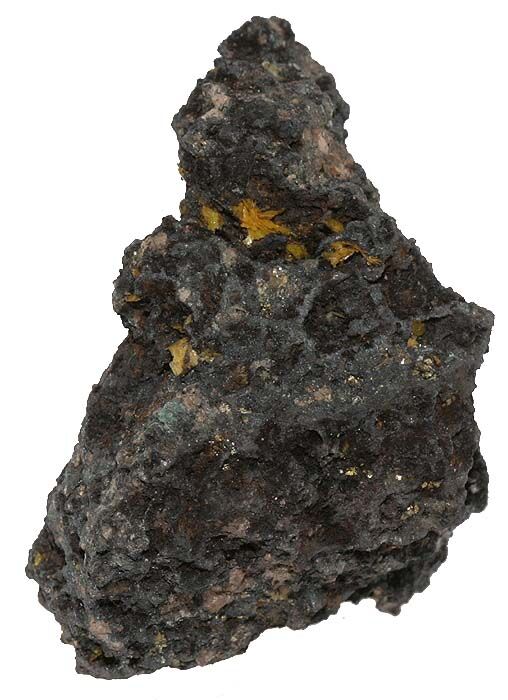
 AutuniteCa(UO2)2(PO4)2 · 10-12H2OMineral—
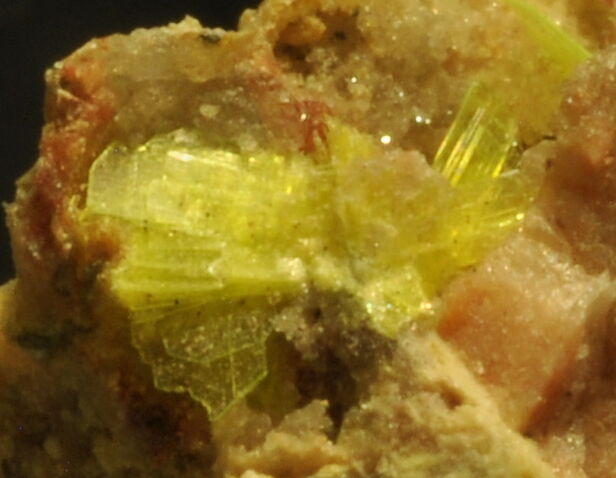
 BassetiteFe2+(UO2)2(PO4)2(H2O)10Mineral—
 HeinrichiteBa(UO2)2(AsO4)2 · 10H2OMineral—
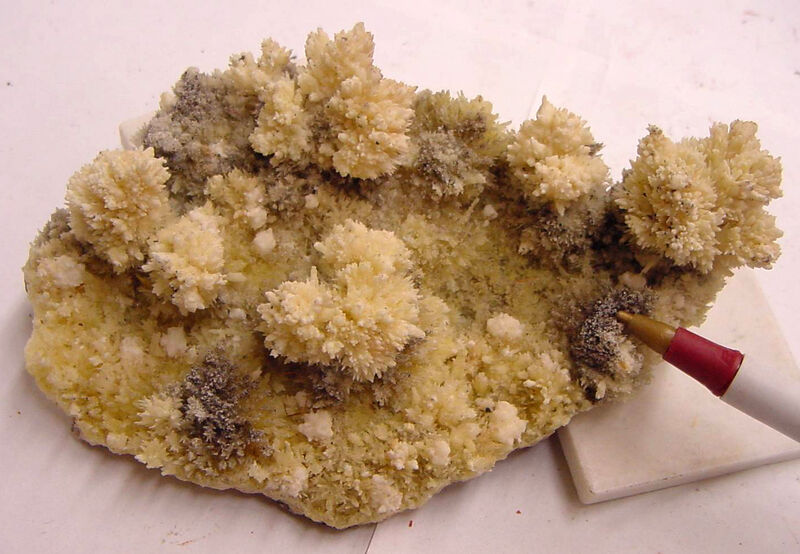 HydronováčekiteMg(UO2)2(AsO4)2 · 12H2OMineral—
- KahleriteFe2+(UO2)2(AsO4)2 · 12H2OMineral—
- NováčekiteMg(UO2)2(AsO4)2 · 10H2OMineral—
- RauchiteNi(UO2)2(AsO4)2 · 10H2OMineral—
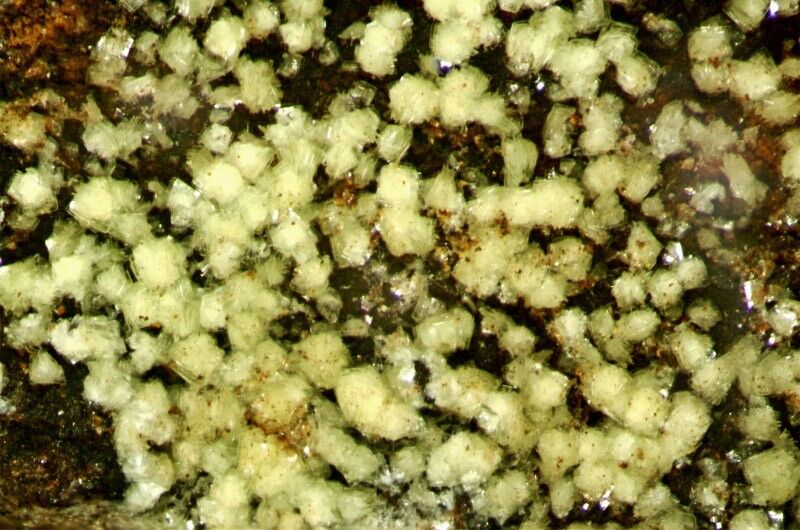 SabugaliteHAl(UO2)4(PO4)4 · 16H2OMineral—
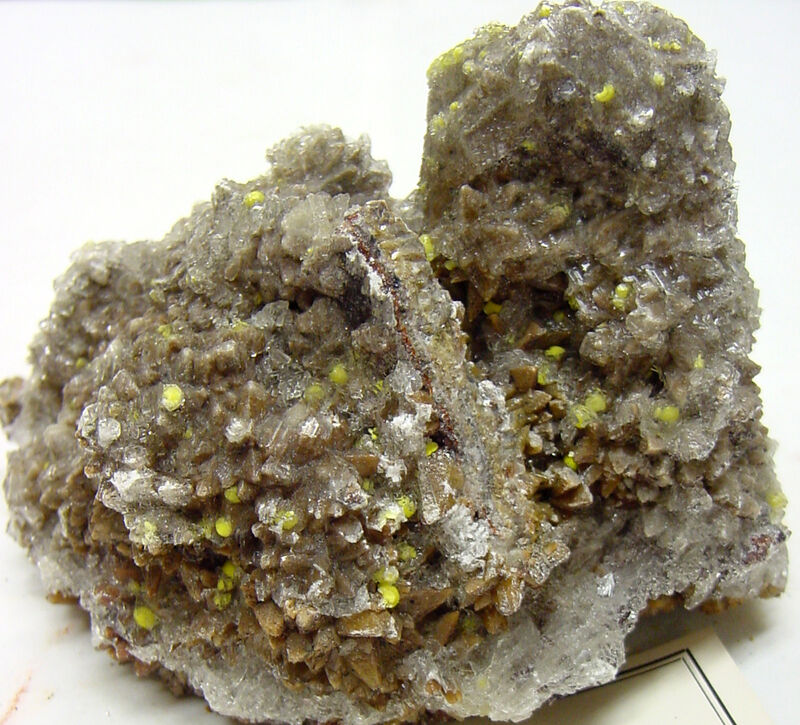 SaléeiteMg(UO2)2(PO4)2(H2O)10Mineral—
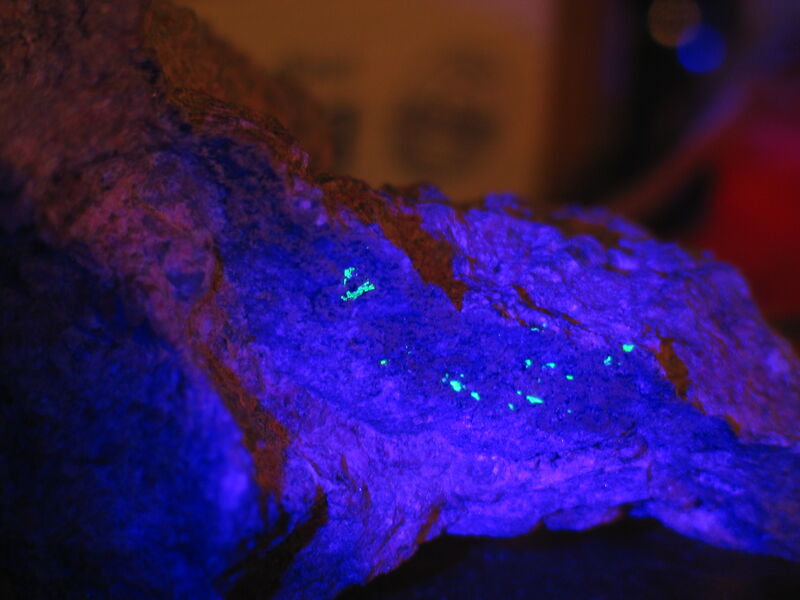 UranocirciteBa(UO2)2(PO4)2 · 10H2OMineral—
- AutuniteCa(UO2)2(PO4)2 · 10-12H2OMineral—
- BassetiteFe2+(UO2)2(PO4)2(H2O)10Mineral—
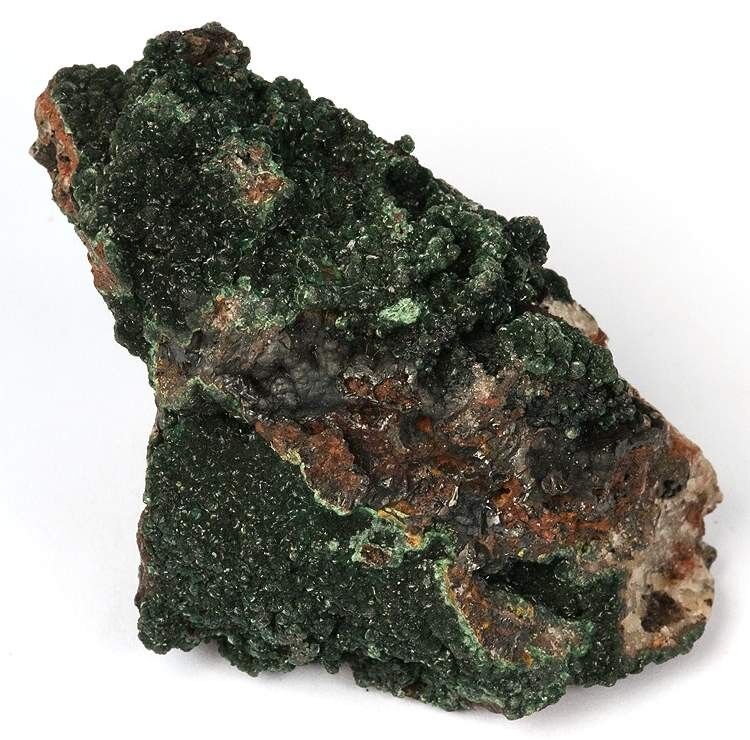 ChalcosideriteCuFe3+6(PO4)4(OH)8 · 4H2OMineral—
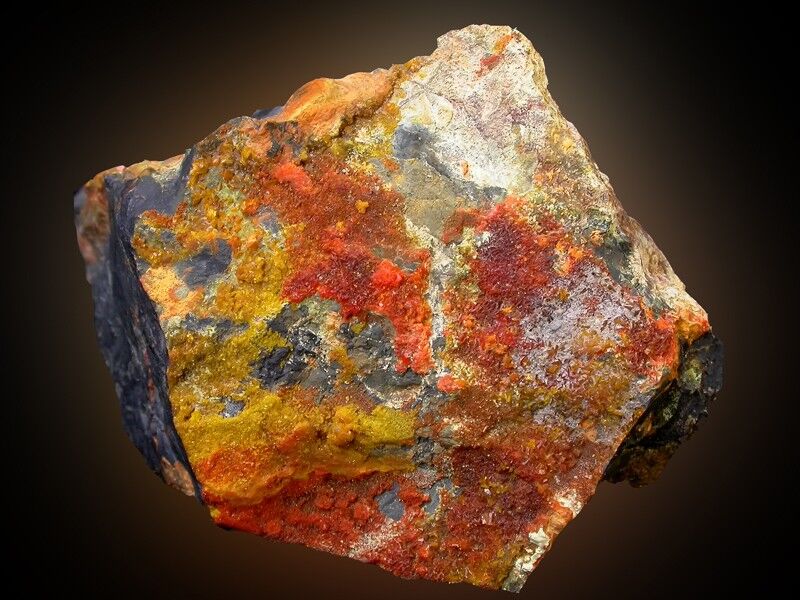 FourmarieritePb1-xO3-2x(UO2)4(OH)4+2x · 4H2OMineral—
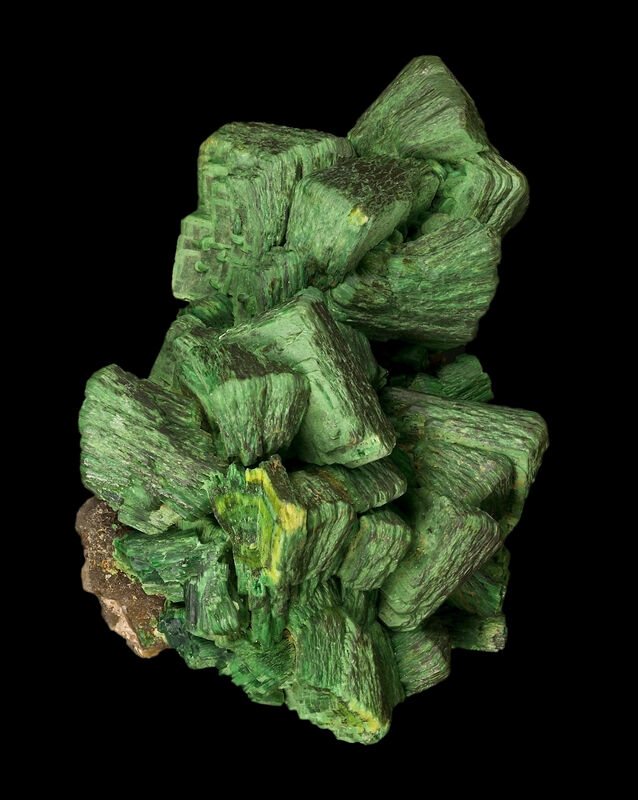 MetatorberniteCu(UO2)2(PO4)2 · 8H2OMineral—
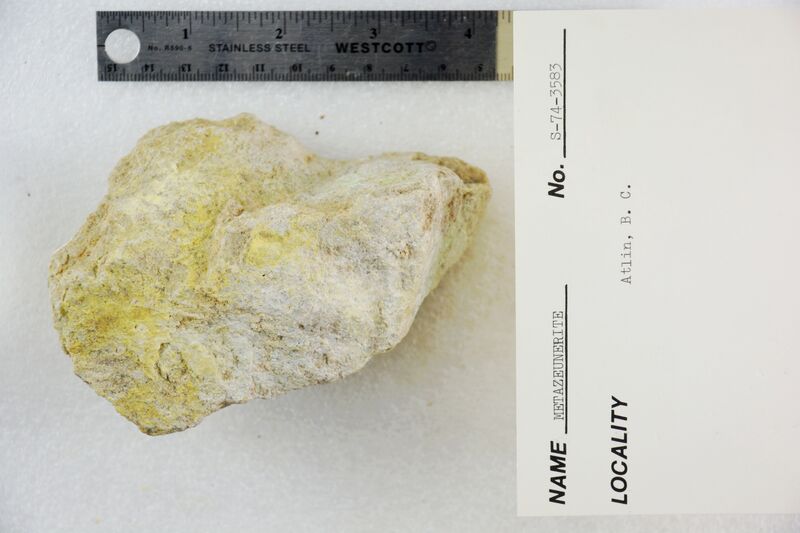 MetazeuneriteCu(UO2)2(AsO4)2 · 8H2OMineral—
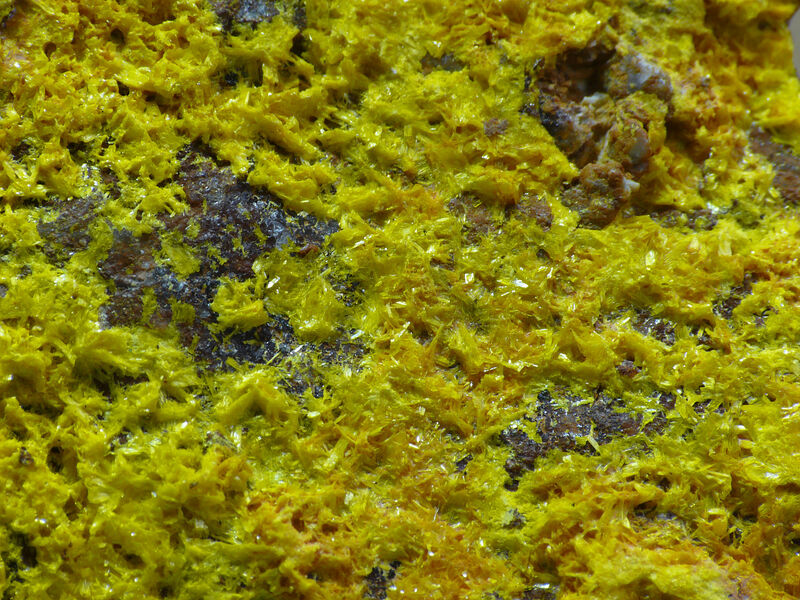 PhosphuranyliteKCa(H3O)3(UO2)7(PO4)4O4 · 8H2OMineral—
- SaléeiteMg(UO2)2(PO4)2(H2O)10Mineral—
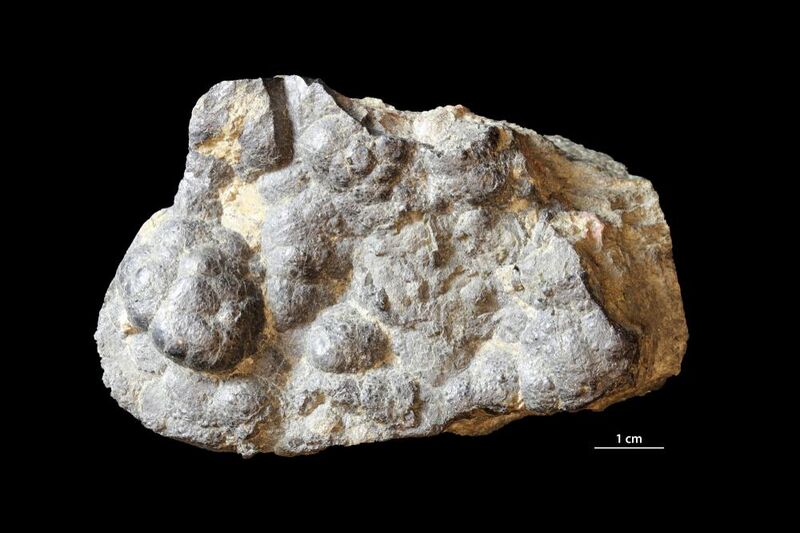 UraniniteUO2Mineral—
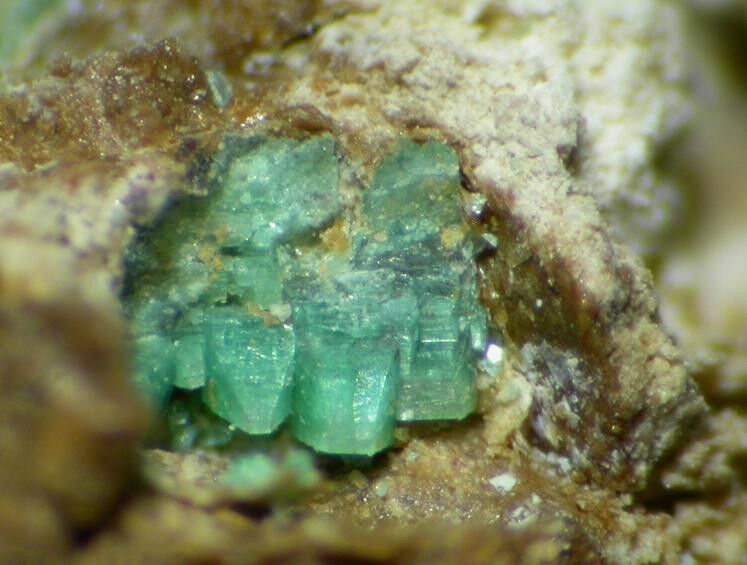 ZeuneriteCu(UO2)2(AsO4)2 · 12H2OMineral—
Literature, links & citation
- 1772Born, Ignatz Edler von (1772) Index Fossilium, quae collegit, et in Classes ac Ordines disposuit Ignatius Eques a Born (Lithophylacium Bornianum).- Prag, Wolfgang Gerle, p. 42 (as viridis cryst.).
- 1780Werner, Abraham Gottlob (1780) Axel von Kronstedts Versuch einer Mineralogie. Aufs neue aus dem Schwedischen übersetzt und nächst verschiedenen Anmerkungen vorzüglich mit äussern Beschreibungen der Fossilien vermehrt.. Siegfried Leberecht Crusius, Leiåzig.
- 1789Hoffmann, C.A.S. (1789) Mineralsystem des Herrn Inspektor Werners mit dessen Erlaubnis herausgegeben von C.A.S. Hoffmann. Bergmännisches Journal, 2 (1) 369-398
- 1789Klaproth (1789) Schrift. Ges. Nat. Berlin: 9: 273 (as Urankalk durch Kupfer gefärbt).
- 1793Karsten, D.L.G. (1793) Über Herrn Werners Verbesserungen in der Mineralogie auf veranlassung der freimüthigen Gedanken, etc., des Herrn Abbé Estner. 80pp., Berlin: 43 (as Torberit).
Entry last updated
@misc{mineral2026,
  author    = {Mineral Index editorial board},
  title     = {Torbernite — Mineral Index},
  year      = {2026},
  url       = {https://mineralindex.org/minerals/torbernite-3997}
}