History
Heat a small crystal of natrolite and a wisp of steam rises from the stone. That trick gave the whole family its name half a century before natrolite got its own.
In 1756 the Swedish mineralogist Axel Fredrik Cronstedt found that a fibrous mineral he was studying released a surprising amount of water when heated. He coined the term zeolite from the Greek roots for to boil and stone — a stone that boils. Natrolite is the textbook example of that behaviour: water sits loosely inside its open crystal framework and leaves when the temperature rises.
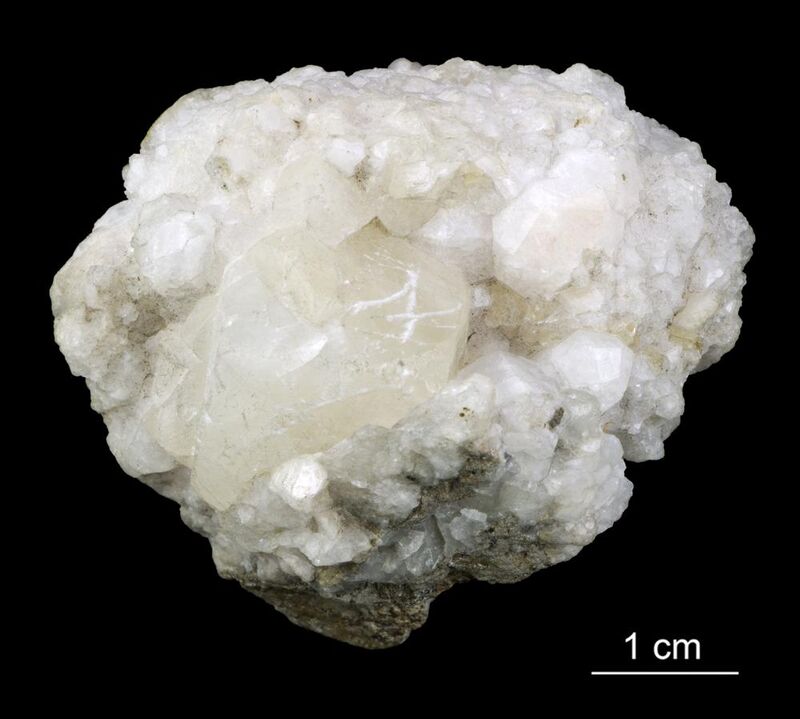
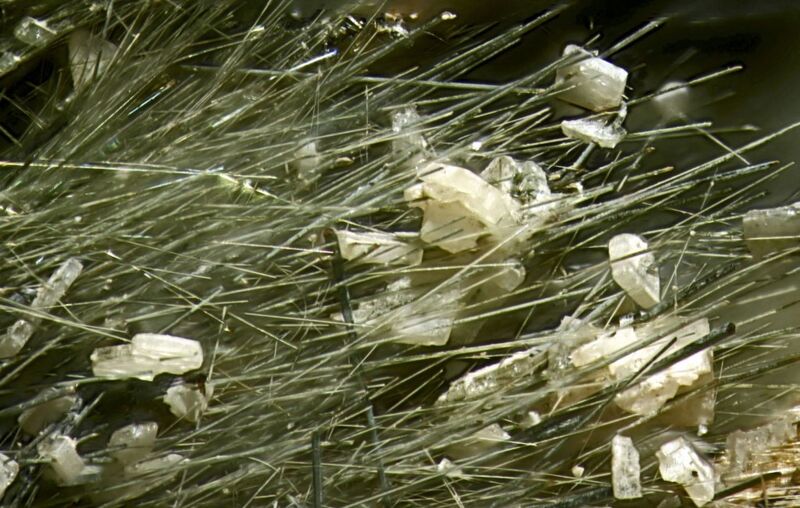
The mineral itself was named in 1803 by the German chemist Martin Heinrich Klaproth. He noticed the high sodium content of a sample from Hohentwiel, in the Hegau region of southern Germany, and built the name from natron — the old word for soda — and the same Greek lithos for stone. Mineralogists sometimes also call it needle stone or needle-zeolite, after the long slender form the crystals usually take.
One footnote of confusion: in 1812 the English chemist William Hyde Wollaston used the same name natrolite for a soda-bearing variety of scapolite. That second usage did not stick, and the name now belongs to Klaproth's zeolite alone.
Industrial & practical applications
Most of the world's zeolite work happens inside synthetic crystals grown in factories, not in mined natural ones. Natrolite is no exception. Its main modern footprint is in laboratories and in collectors' cabinets, not on production lines.
Its standout contribution sits in the history of chemistry. Natrolite was one of the first zeolites in which cation exchange was observed — the ability of the crystal to swap one sodium ion in its framework for a calcium or potassium ion from a passing solution, and back again. That property is the basis of every modern water softener and of much of industrial catalysis. The mineral does also see direct use as a softener, removing the calcium and magnesium that make water hard.
Beyond that the picture thins. Most commercially available natural zeolites belong to the mordenite, clinoptilolite or analcime families — not to natrolite. The mineral is mined in no notable quantity. Demand for it comes mainly from collectors, who prize the slender radiating sprays that grow inside basalt cavities, and from researchers who use its open structure as a model system for studying how cations move through silicate frameworks.
Where it forms, where it's found
- Geological setting
Cavities in amygdaloidal basalts
- Type locality
- Hohentwiel
- Singen
- Konstanz
- Freiburg Region
- Baden-Württemberg
- Germany
47.7656°, 8.8194°
Varieties
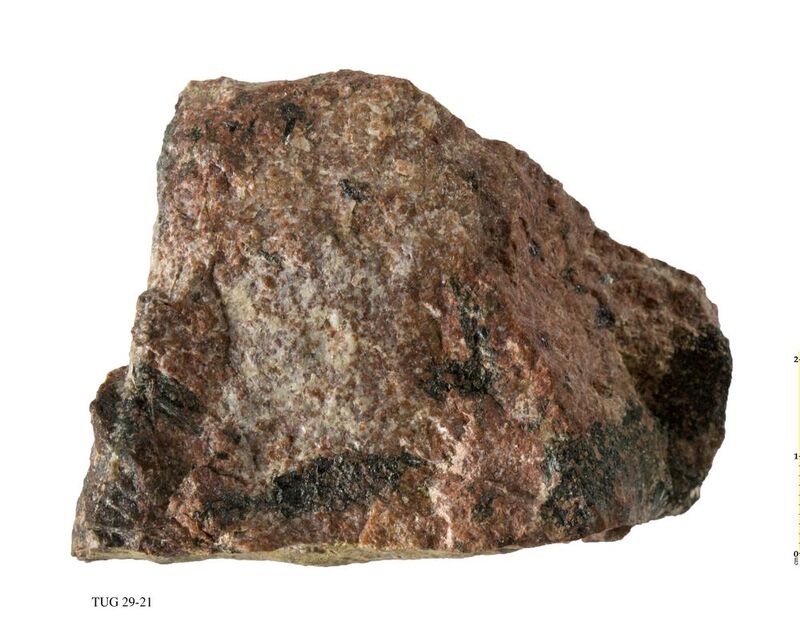
Physical
Optical
- Optical type
- Biaxial (+) · 2V measured = 58 – 64° · 2V calc = 48 – 62°
- Refractive index
- 1.473 – 1.496
- Principal indices
- nα 1.473 – 1.483 · nβ 1.476 – 1.486 · nγ 1.485 – 1.496
- Dispersion
- r < v weak
- Extinction
- X = a; Y = b; Z = c.
- UV response
- Commonly orange to yellow.
Crystallography
- Space group
- #23
- Cell parameters
- a = 18.2930(2) Å · b = 18.6430(5) Å · c = 6.5860(5) Å
- Ratio a:b:c
- 1 : 1.019 : 0.360
- Z
- 8
- Morphology
Crystals short to long prismatic. From hairlike up to 1 meter in length and 10 cm wide. Common forms: (110), (100), (010), (111), (101), (331), (551) Other forms: (001), (610), (310), (740), (590), (120), (301), (601), (031), (221), (511), (311), (131), (391) and more.
- Twinning
On (110), (011), (031).
- Parting
- on (010)
- Comment
Data for chemically pure natrolite.
Chemical composition
- Impurities
- Ca
- K
Synonyms
- Ædelite (of Kirwan)
- Apoanalcit
- Apoanalcite
- Brevicit
- Cockalit
- Cockalite
- Crocalit
- Crocalita
- Crocalite
- Epinatrolita
- Epinatrolite
- Epinatrolith
- Höganit
- Laubanite
- Laubannite
- Lehuntit
- Lehuntite
- Natrium-Mesotyp
- Natronite (of ?)
- Needlestone
- Paleo-natrolith
- Pink Larimar
- Portite
- Radiolite
- Radyolith
- Rhodatrolite
In other languages
- French
- Apoanalcite · Brevicite · Chondrikite · Crocalite · Édelite · Épimatrolite · Hösruite · Lehuntite · Mésotype · Mooraboolite · Natrolite · Savite · Zéolithe farineuse
- German
- Laubanit · Natrolith
- Spanish
- natrolita
- Italian
- natrolite
- Japanese
- ソーダ沸石
- Chinese
- 鈉沸石 · 钠沸石
- Simplified Chinese
- 钠沸石
- Russian
- Бергманит · Бергманнит · Мезотип · Натролит · Фаргит
Classification
9.GA.05
- 9SilicatesClass
- 9.GTektosilicates with zeolitic H2O; zeolite familyDivision
- 9.GAZeolites with T5O10 Units – The Fibrous ZeolitesGroup
- 9.GA.05NatroliteSpecies
77.01.05.01
- 77Tectosilicates ZeolitesClass
- 77.01Zeolite group - True zeolitesType
- 77.01.05Natrolite and related speciesGroup
- 77.01.05.01NatroliteSpecies
16.2.5
- 16Silicates Containing Aluminum and other MetalsClass
- 16.2Aluminosilicates of NaGroup
- 16.2.5NatroliteSpecies
Group, growth & confusion
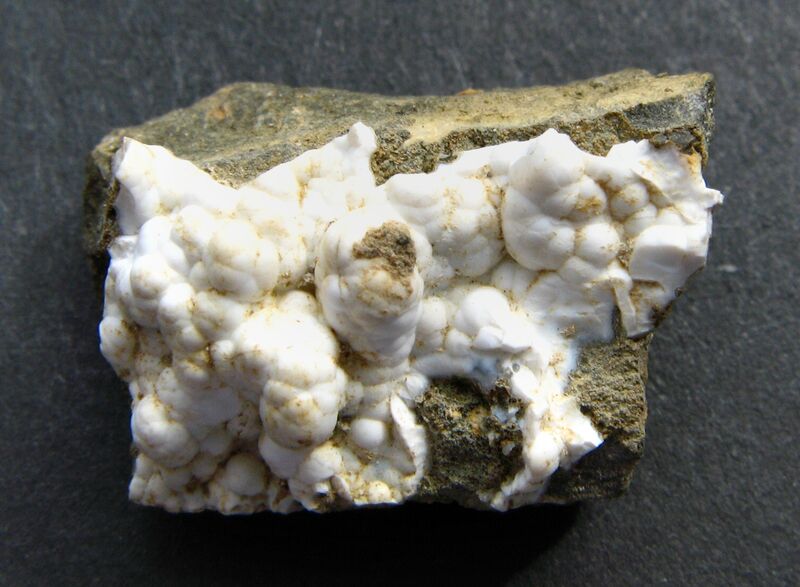
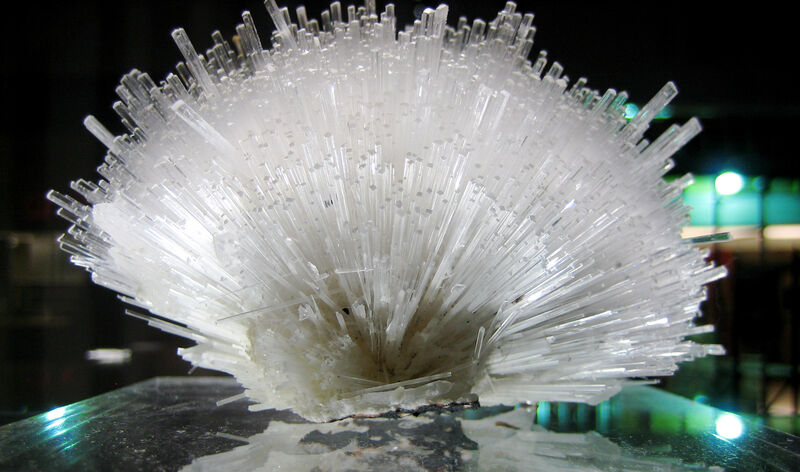
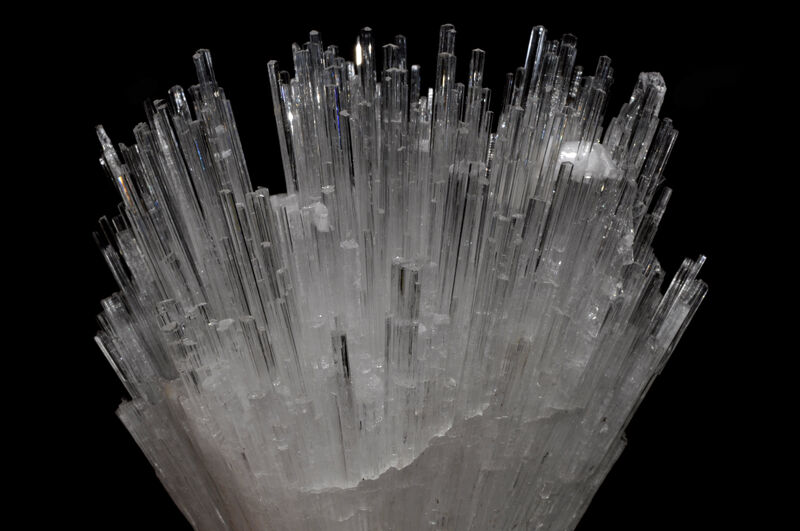
 AmiciteK2Na2(Al4Si4O16) · 5H2OMineral—
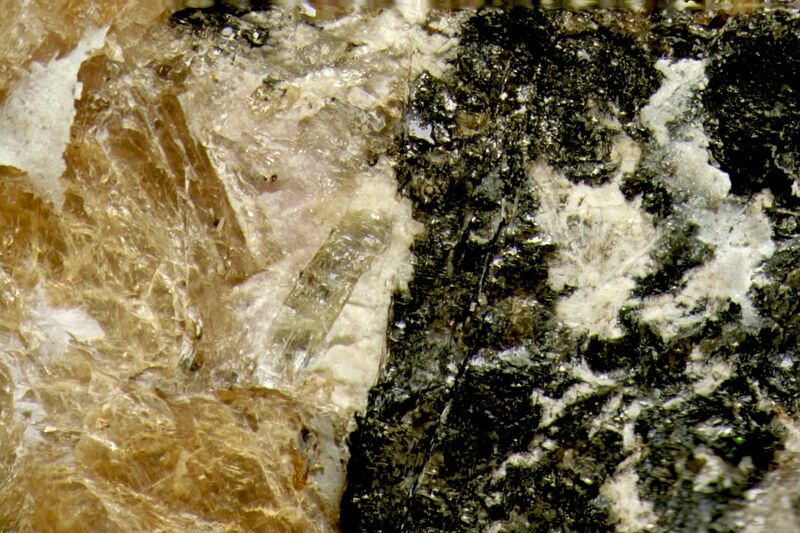 Belovite-(Ce)NaCeSr3(PO4)3FMineral—
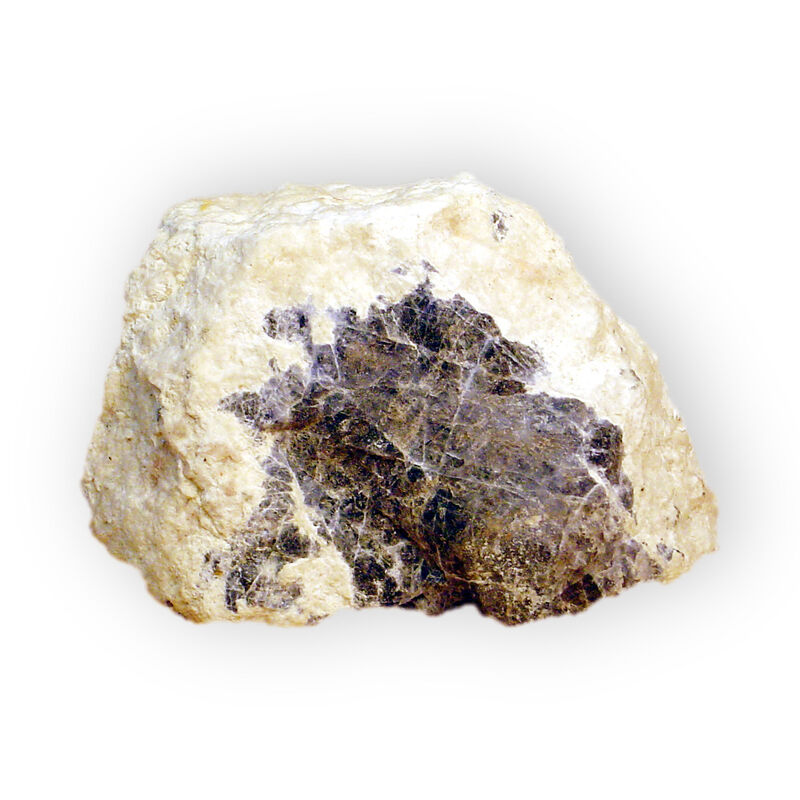 Cancrinite(Na,Ca,◻)8(Al6Si6)O24(CO3,SO4)2 · 2H2OMineral—
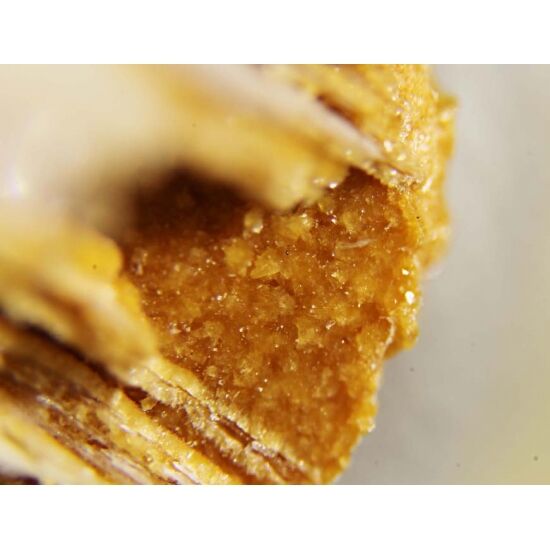 ChiavenniteCaMn2+(BeOH)2Si5O13 · 2H2OMineral—
 LeuciteK(AlSi2O6)Mineral—
 LeucophaniteNaCaBeSi2O6FMineral—
 MurmaniteNa2Ti2Na2Ti2(Si2O7)2O4(H2O)4Mineral—
 ReyeriteNa2Ca14Al2Si22O58(OH)8 · 6H2OMineral—
Literature, links & citation
- 1810Klaproth, M. H. (1810) CLXXIX. Chemische Untersuchung des Natroliths. In Beiträge zur chemischen Kenntniss der Mineralkörper Vol. 5. Rottmann. p.44-49.
- 1916Phillips, Alexander H. (1916) Some new forms of natrolite. American Journal Of Science, S. 4 Vol. 42. 472-474
- 1932Hey, Max H. (1932) Studies on the zeolites. Part III. Natrolite and metanatrolite. Mineralogical Magazine, 23 (139) 243-289 doi:10.1180/minmag.1932.023.139.04 DOI: 10.1180/minmag.1932.023.139.04
- 1942Murdoch, Joseph (1942) Crystallographic notes: cristobalite, stephanite, natrolite. American Mineralogist, 27 (7) 500-506
- 1955Peng, C. J. (1955) Thermal analysis study of the natrolite group. American Mineralogist, 40 (9-10) 834-856
Entry last updated
@misc{mineral2026,
  author    = {Mineral Index editorial board},
  title     = {Natrolite — Mineral Index},
  year      = {2026},
  url       = {https://mineralindex.org/minerals/natrolite-2947}
}