Where it forms, where it's found
- Type locality
- Bond zone
- Oka
- Deux-Montagnes RCM
- Laurentides
- Québec
- Canada
45.5000°, -74.0469°
12recorded occurrences
Physical
Optical
- Optical type
- Biaxial (-) · 2V measured = 56° · 2V calc = 64 – 66°
- Refractive index
- 1.7 – 1.73
- Surface relief
- High
- Principal indices
- nα 1.700 – 1.701 · nβ 1.714 – 1.721 · nγ 1.72 – 1.73
- Dispersion
- r > v strong
Δ = 0Δmax
PPLpleochroism per grain
XPLindependent extinctions · rotate the stage
PPLpleochroism only · colour blends on rotation
XPLinterference colour · extinct every 90°
Retardation245 nm
Order1st order
XPL colour
Crystallography
- Cell parameters
- a = 10.863(3) Å · b = 10.431(3) Å · c = 7.370(2) Å
- Cell angles
- β = 110.1(1) °
- Ratio a:b:c
- 1 : 0.960 : 0.678
- Z
- 2
- Morphology
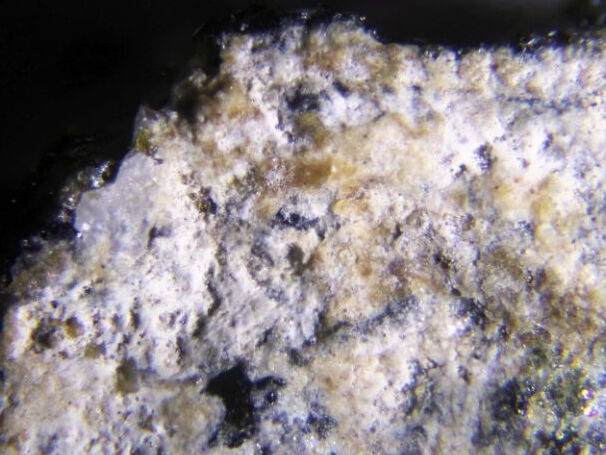
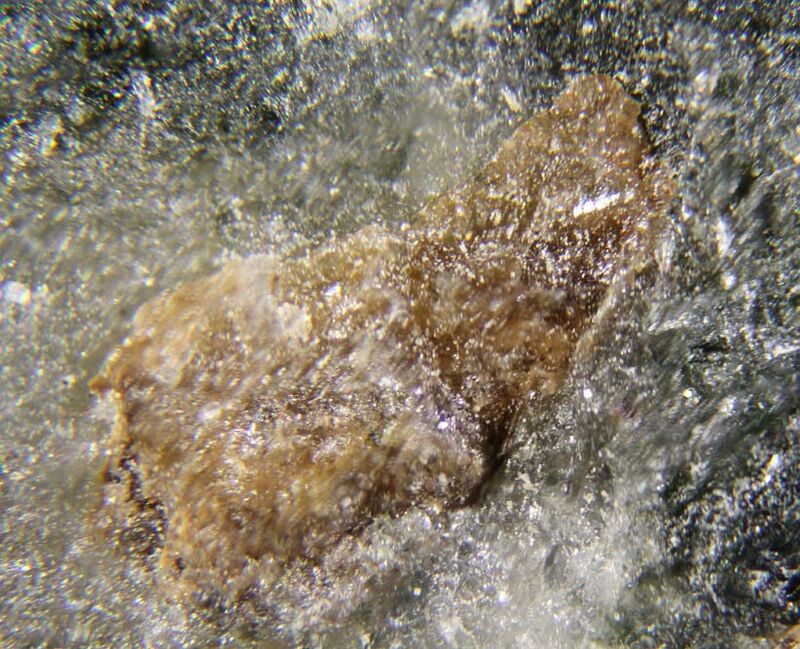
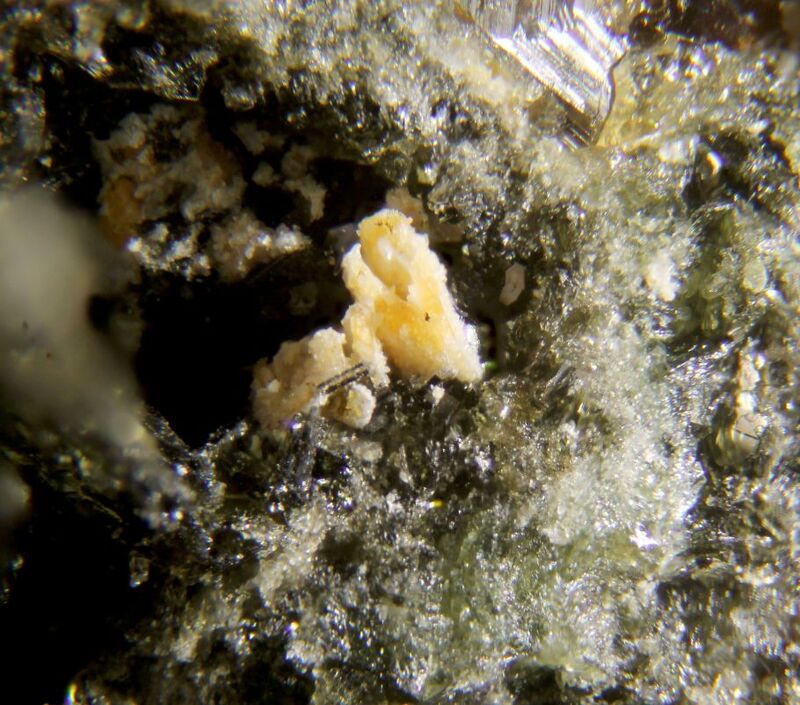
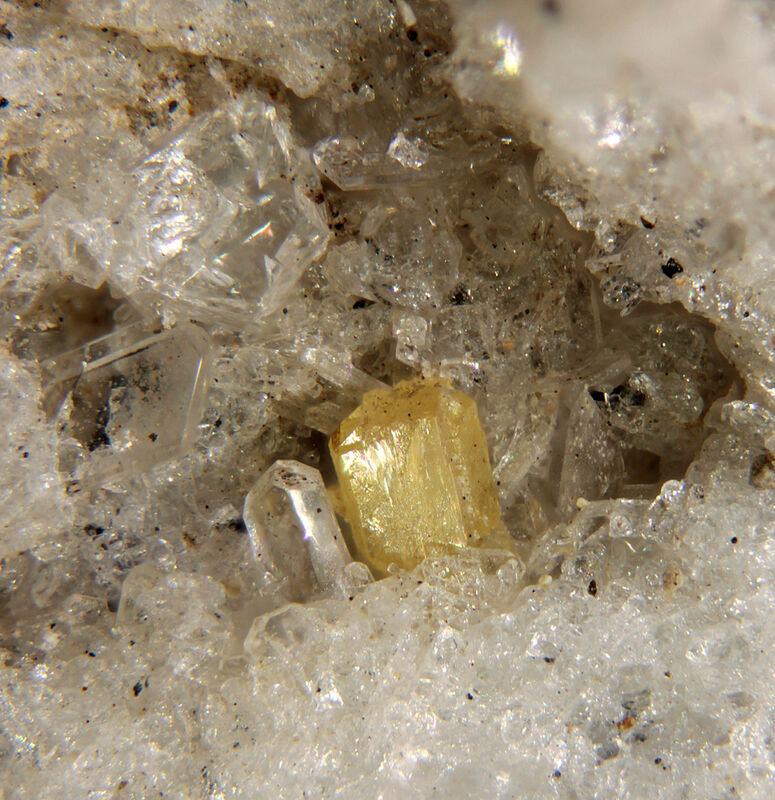
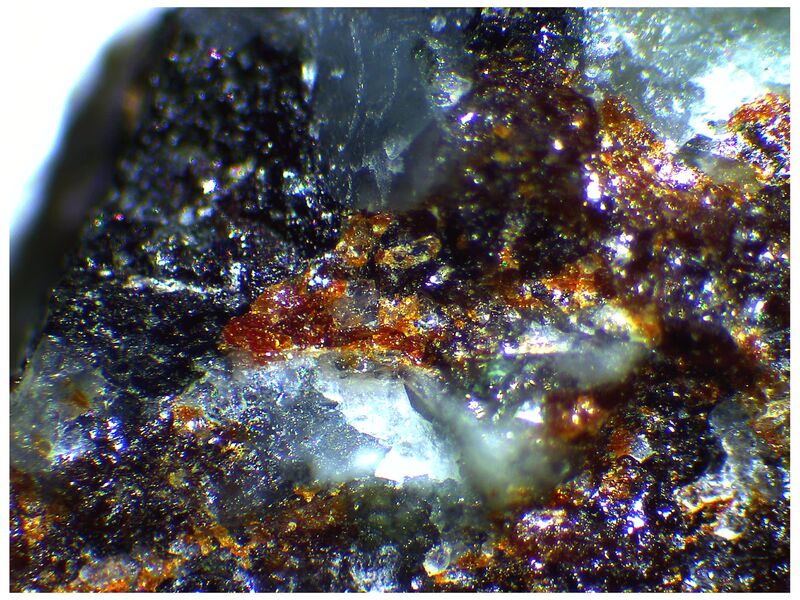
Crystals prismatic with square cross sections and curved faces. Larger crystals are tapered at both ends.
- Twinning
Twinning fine, with (001) as the composition plane.
- Type-locality form
Coarse-grained strontian carbonatite.
- Comment
Space Group: Pa:
Crystal structure
Chemical composition
- Impurities
- Ti
- Zr
- Al
- Y
- Fe
- Ta
- Mn
- MgNa
- K
- P
- H2O
In other languages
- German
- Niocalit
- Italian
- Niocalite
Classification
Strunz
10th ed.9.BE.17
- 9SilicatesClass
- 9.BSorosilicatesDivision
- 9.BESi2O7 groups, with additional anions; cations in octahedral [6] and greater coordinationGroup
- 9.BE.17NiocaliteSpecies
Dana
8th ed.56.02.04.06
- 56Sorosilicates Si2o7 Groups, with Additional O, Oh, F and H2oClass
- 56.02Si2O7 Groups and O, OH, F, and H2O with cations in [4] and/or >[4] coordinationType
- 56.02.04Cuspidine - Wohlerite groupGroup
- 56.02.04.06NiocaliteSpecies
CIM
—17.8.4
- 17Silicates Containing other AnionsClass
- 17.8Silicates with niobate or tantalateGroup
- 17.8.4NiocaliteSpecies
Group, growth & confusion
 BaghdaditeCa6Zr2(Si2O7)2O4Mineral—
 BurpaliteNa4Ca2Zr2(Si2O7)2F4Mineral—
 CuspidineCa8(Si2O7)2F4Mineral—
 HiortdahliteNa2Ca4(Ca0.5Zr0.5)Zr(Si2O7)2OF3Mineral—
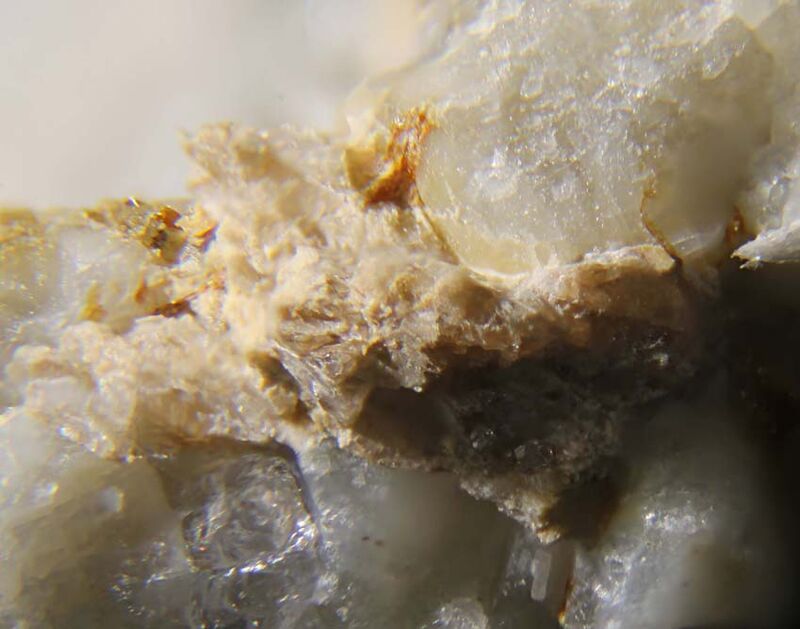 JanhaugiteNa3Mn2+3Ti2(Si2O7)2(O,OH,F)4Mineral—
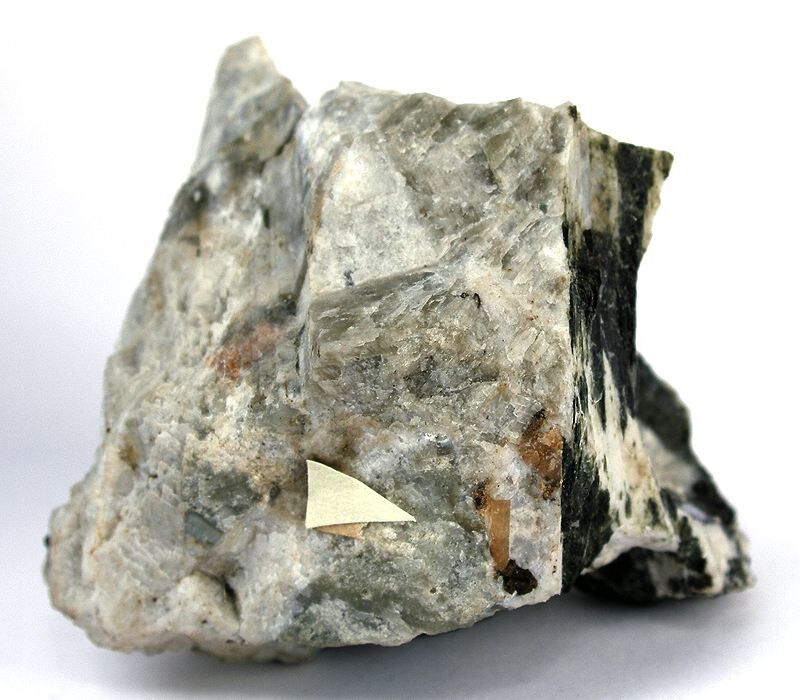 Låvenite(Na,Ca)4(Mn2+,Fe2+)2(Zr,Ti,Nb)2(Si2O7)2(O,F)4Mineral—
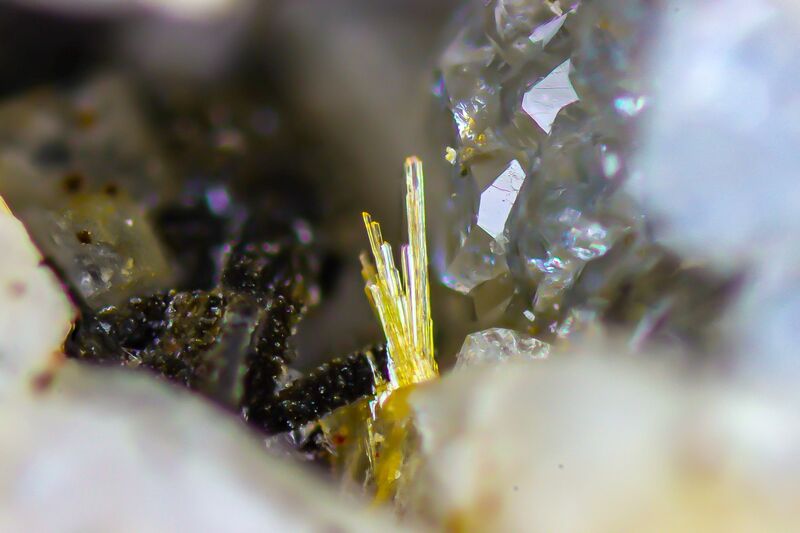 MadeiraiteNa2Ca2Fe2Zr2(Si2O7)2O2F2Mineral—
- MoxuanxueiteNaCa6Zr(Si2O7)2OF3Mineral—
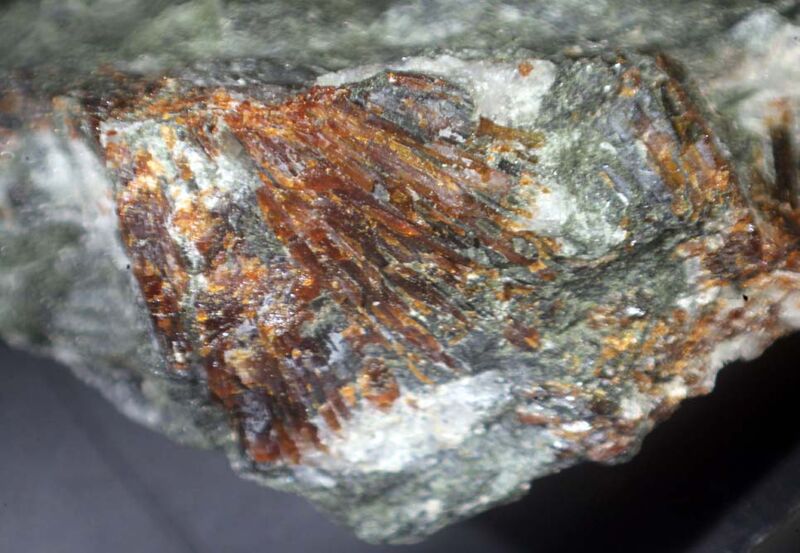 NormanditeNa2Ca2(Mn,Fe)2(Ti,Nb,Zr)2(Si2O7)2O2F2Mineral—
 PilanesbergiteNa2Ca2Fe2Ti2(Si2O7)2O2F2Mineral—
Literature, links & citation
Citations
- 1956Nickel, E. H. (1956) Niocalite; a new calcium niobium silicate mineral. American Mineralogist, 41 (9-10). 785-786
- 1958Nickel, E. H., Rowland, J. F., Maxwell, J. A. (1958) The composition and crystallography of niocalite. The Canadian Mineralogist, 6 (2) 264-272
- 1982Mellini, M. (1982) Niocalite revised: Twinning and crystal structure. TMPM Tschermaks Mineralogische und Petrographische Mitteilungen, 30 (4). 249-266 doi:10.1007/bf01087171DOI: 10.1007/bf01087171
- 2001(2001) Niocalite. Handbook of Mineralogy. Mineralogical Society of America
- 2004Mitchell, R. H., Belton, F. (2004) Niocalite-cuspidine solid solution and manganoan monticellite from natrocarbonatite, Oldoinyo Lengai, Tanzania. Mineralogical Magazine, 68 (5) 787-799 doi:10.1180/0026461046850219DOI: 10.1180/0026461046850219
Cite this entry
Entry last updated
@misc{mineral2025,
  author    = {Mineral Index editorial board},
  title     = {Niocalite — Mineral Index},
  year      = {2025},
  url       = {https://mineralindex.org/minerals/niocalite-2913}
}