History
The name prehnite honours a man, not a place or a property. In 1788, that was a small revolution. It has been claimed that prehnite was the first mineral ever named after a person. Whether the title is strictly true is debated. The honour fits all the same.
The story begins at the Cape of Good Hope, where the Dutch East India Company kept its post for ships rounding southern Africa. Hendrik von Prehn (1733–1785) was a colonel in the company's service. He commanded the colony's military forces from 1768 onwards, and was also a naturalist and mineral collector. In 1774, during his time at the Cape, he found the pale green crystals that would later carry his name. He brought the first specimens back to Europe. He went on to serve briefly as governor of the colony in 1779–1780, before being dismissed.
Fourteen years later, in 1788, the Saxon mineralogist Abraham Gottlieb Werner published a description of the new mineral and named it for Von Prehn. Werner's nomenclature ruled European mineralogy for a generation. How the specimens reached his hands is unrecorded. The type material came from the Karoo dolerites of Cradock, in what is today the Eastern Cape Province of South Africa — a basalt-rich landscape where the mineral fills cavities in dark volcanic rock.
The naming did not pass without dissent. In 1813 the Anglo-Irish chemist Richard Chenevix published a long article — more than a hundred pages — arguing against the practice of naming minerals after people. The polemic landed too late. The convention had already taken hold, and prehnite was joined within decades by hundreds of -ites honouring chemists, collectors and patrons.
Industrial & practical applications
Prehnite has no industrial use of consequence. The mineral is not mined for bulk extraction, refined into a feedstock, or processed in chemical chains. It surfaces in the modern world along two narrow paths instead — one decorative, one scientific.
The decorative path is lapidary. Clear, pale-green stones of good colour are cut into cabochons and the occasional faceted gem, sold under the trade name Cape emerald. Extensive deposits of gem-quality material occur in the basalt tableland surrounding Wave Hill Station, in the central Northern Territory of Australia. The market is small. Prehnite is a collector's gemstone — sought for its glassy, slightly translucent green by jewellers and amateur lapidaries, not for high-end fine jewellery.
The scientific path is petrologic indication. Prehnite is the indicator mineral of the prehnite–pumpellyite facies, a low-grade metamorphic regime that takes its name from it. The facies records temperatures of 250–350 °C and pressures of roughly two to seven kilobars. When a geologist finds prehnite growing in a metabasalt — a low-grade altered basalt — the rock has been heated and squeezed within that specific window. The regime sits between the zeolite facies that precedes it and the greenschist facies that follows. The facies is typical of the sub-seafloor alteration of oceanic crust around mid-ocean ridge spreading centres.
Where it forms, where it's found
- Geological setting
A secondary mineral in mafic volcanic rocks, low-grade metamorphic mineral.
- Type locality
- Karoo dolerites
- Cradock
- Inxuba Yethemba Local Municipality
- Chris Hani District Municipality
- Eastern Cape
- South Africa
-32.2479°, 25.8611°
Physical
- Hardness
- 1Talc
- 2Gypsum
- 3Calcite
- 4Fluorite
- 5Apatite
- 6Orthoclase
- 7Quartz
- 8Topaz
- 9Corundum
- 10Diamond
- Lustre
- Vitreous to Pearly
- Transparency
- Translucent
- Colour
- Colourless to gray to yellow · yellow-green or white · pale brownish · very rarely pale bluish
- Streak
- White
- Tenacity
- brittle
- Cleavage
- Distinct/Good
Good on (001), poor on (110)
- Fracture
- Irregular/Uneven
- Density
- 2.8 g/cm³
Optical
- Optical type
- Biaxial (+) · 2V measured = 64 – 70° · 2V calc = 58 – 68°
- Refractive index
- 1.611 – 1.665
- Surface relief
- Moderate
- Principal indices
- nα 1.611 – 1.632 · nβ 1.615 – 1.642 · nγ 1.632 – 1.665
- Dispersion
- weak r > v
- Extinction
- X = a; Y = b; Z = c.
- Luminescence
- None
- UV response
- Rarely fluorescent. Some prehnite from Franklin, New Jersey fluoresces orange in shortwave UV. LW UV: blue: https://www.mindat.org/photo-1250607.html
Crystallography
- Cell parameters
- a = 4.63309(9) Å · b = 5.4839(1) Å · c = 18.5100(3) Å
- Ratio a:b:c
- 1 : 1.184 : 3.995
- Z
- 2
- Morphology
Uncommon crystals (blocky to thin tabular); aggregates are fanlike, reniform, globular, stalactitic, granular, compact.
- Twinning
Fine lamellar
- Comment
Space group P2cn (non-standard setting). Note that prehnite may consist of orthorhombic domains (Pc2m, twinned to simulate Pncm) as well as monoclinic domains (P2/n) (Aumento, 1968; Akizuki, 1987; Detrie et al., 2008). Cell parameters from Sugiyama et al. (2021)
Chemical composition
- Impurities
- Ti
- Fe
- Mg
- Na
- K
- H2O
Synonyms
- Adelite (of de Fourestier)
- Adilit
- Adilita
- Adilite
- Ædelforsit (of Walmstedt)
- Aedelit
- Aedelita
- Aedelite
- Ædelite (of Walmstedt)
- Aedilit
- Aedilita
- Aedilite
- Bostrichites
- Chiltonit
- Chiltonita
- Chiltonite
- Chrysolite (of Sage)
- Chrysolite du Cap
- Coupholit
- Coupholita
- Coupholite
- Edelit
- Edelita
- Prehnitoid (of Bechi)
In other languages
- French
- Bostrichite · Chiltonite · Chrysolite du Cap · Coupholite · Koupholite · Prehnite · Zéolithe cuivreuse · Zéolithe étincelante · Zéolithe jaunâtre radiée · Zéolithe rayonnée · Zéolithe verte · Zéolithe vitreuse verdâtre du Cap
- German
- Prehnit
- Spanish
- Prehnita
- Italian
- Prehnite
- Portuguese
- prehnita · Prehnite
- Japanese
- プレーナイト · プレナイト · 葡萄石
- Chinese
- 葡萄石
- Traditional Chinese
- 葡萄石
- Russian
- пренит
Classification
9.DP.20
- 9SilicatesClass
- 9.DInosilicatesDivision
- 9.DPTransitional ino-phyllosilicate structuresGroup
- 9.DP.20PrehniteSpecies
72.01.03.01
- 72Phyllosilicates Two-dimensional Infinite Sheets with Other Than Six-membered RingsClass
- 72.01Two-Dimensional Infinite Sheets with Other Than Six-Membered Rings with 4-membered ringsType
- 72.01.03— unnamed intermediate level —Group
- 72.01.03.01PrehniteSpecies
16.9.10
- 16Silicates Containing Aluminum and other MetalsClass
- 16.9Aluminosilicates of CaGroup
- 16.9.10PrehniteSpecies
Group, growth & confusion
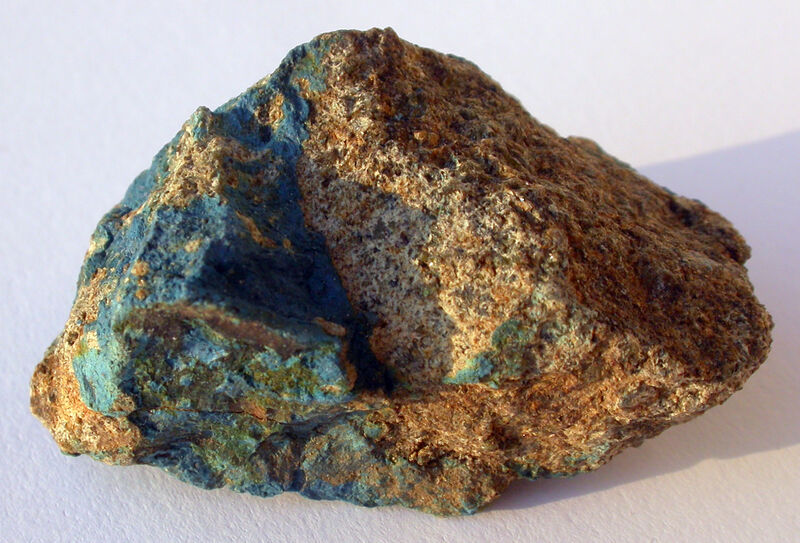 Aerinite(Ca,Na)6(Fe3+,Fe2+,Mg,Al)4(Al,Mg)6Si12O36(OH)12(CO3) · 12H2OMineral—
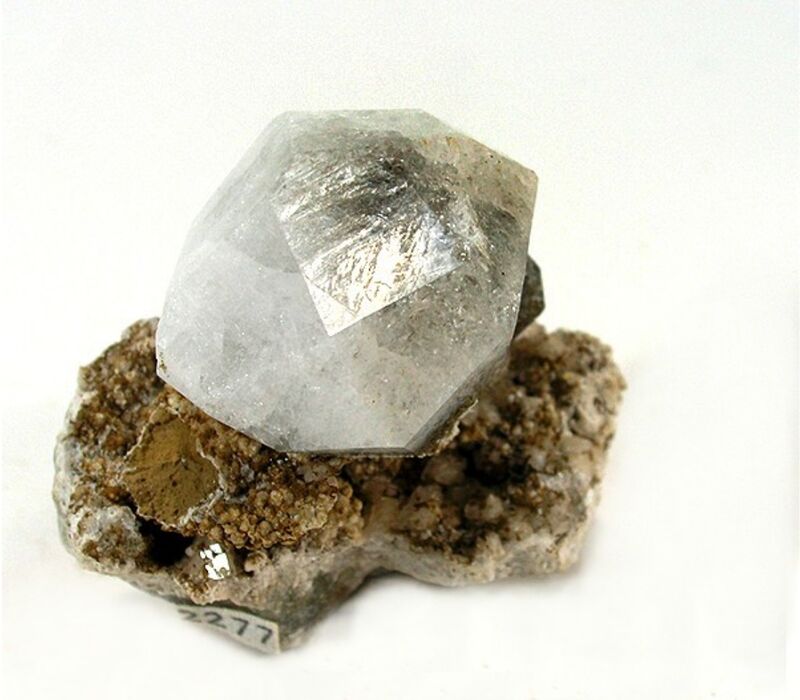 AnalcimeNa(AlSi2O6) · H2OMineral—
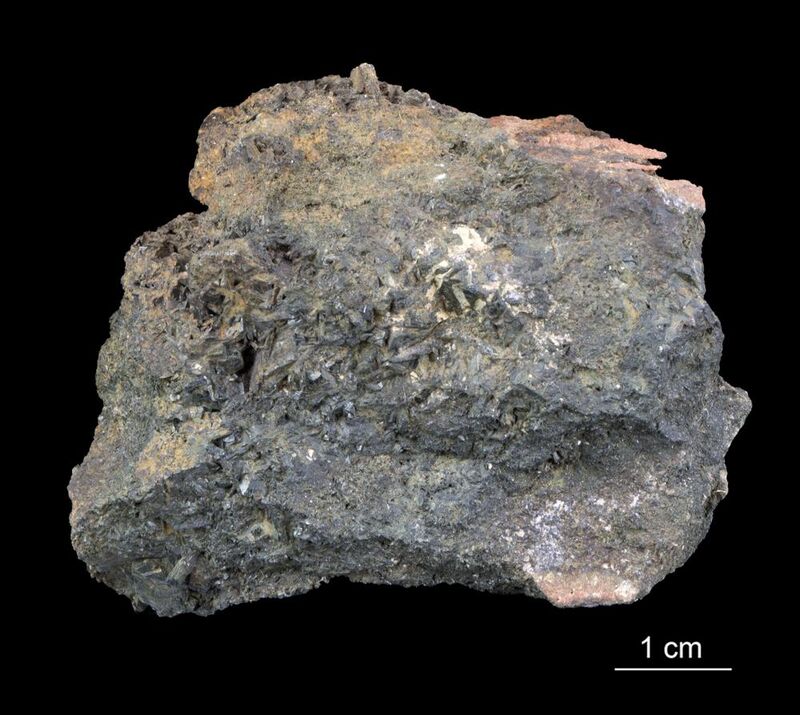 BabingtoniteCa2Fe2+Fe3+Si5O14(OH)Mineral—
 CalciteCa(CO3)Mineral—
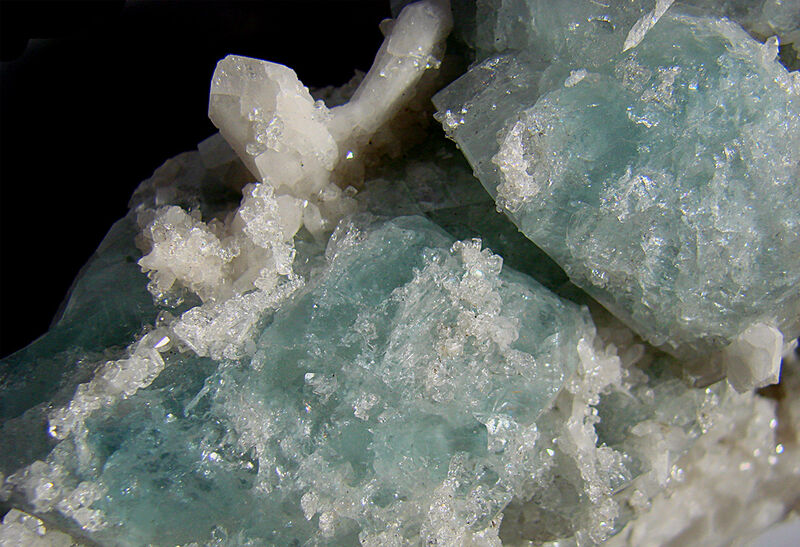 DatoliteCaB(SiO4)(OH)Mineral—
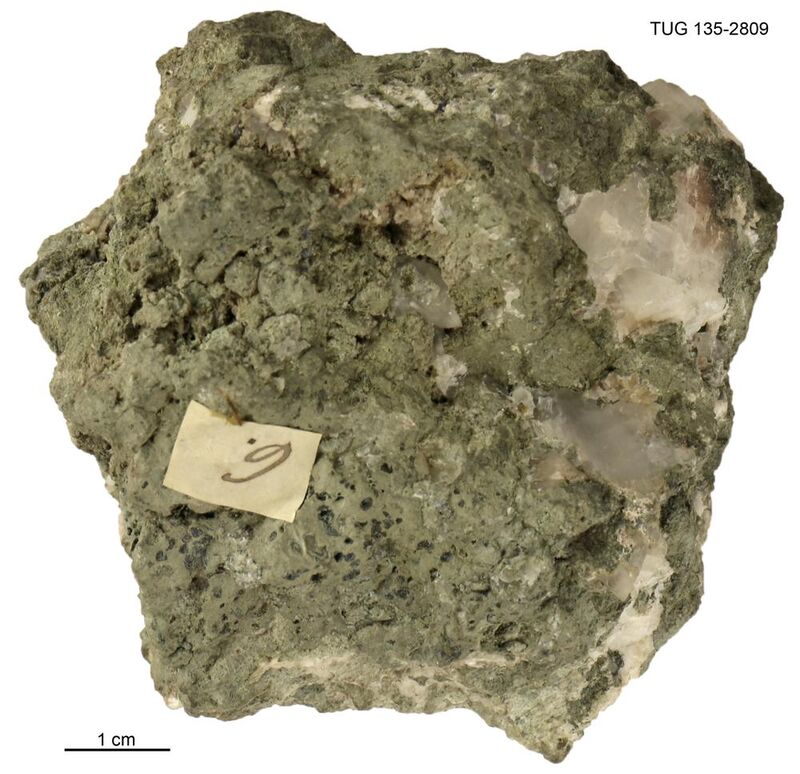 GreenockiteCdSMineral—
- PennantiteMn2+5Al(Si3Al)O10(OH)8Mineral—
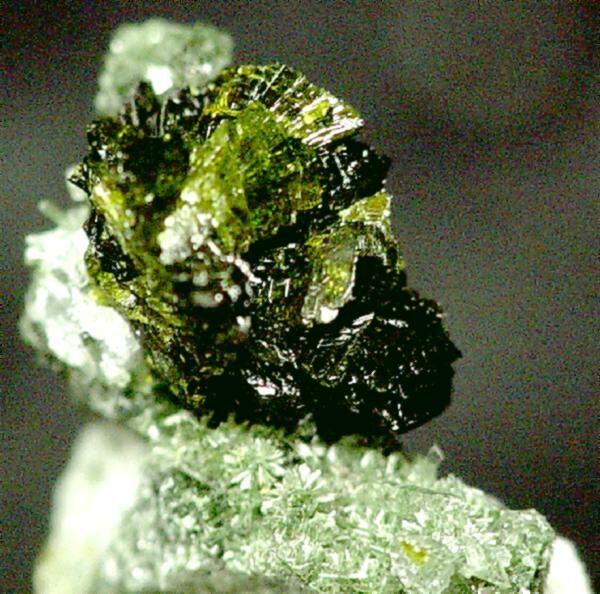 Pumpellyite-(Mg)Ca2MgAl2(Si2O7)(SiO4)(OH)2 · H2OMineral—
Literature, links & citation
- 1788Klaproth, M.H. (1788) Chemische Zergliederung der Prehnits. Schriften der Gesellschaft naturforschender Freunde zu Berlin, 8. 211-223
- 1894Traube, H. (1894) Über die pyroelecktrischen Eigenschaften und die Krystallform des Prehnits. Neues Jahrbuch für Mineralogie, 9, 134-146.
- 1943Nuffield, E.W. (1943) Prehnite from Ashcroft, British Columbia. University of Toronto Studies, 48, 49-64.
- 1959Peng, S.-T., Chou, K.-D. and Tang, Y.-C. (1959) The structure of prehnite. Acta Chemistry Sinica, 25, 56-63.
- 1964Mitsuo HASHIMOTO (1964) The Chemistry and Optics of Prehnite. The Journal of the Geological Society of Japan, 70 (822). 180-183 doi:10.5575/geosoc.70.180 DOI: 10.5575/geosoc.70.180
Entry last updated
@misc{mineral2026,
  author    = {Mineral Index editorial board},
  title     = {Prehnite — Mineral Index},
  year      = {2026},
  url       = {https://mineralindex.org/minerals/prehnite-3277}
}