History
The name pyrolusite is a small piece of glassmaker's shop-talk frozen into mineralogy. It comes from two Greek roots — pyr, fire, and a verb meaning to wash — because the mineral was used to "wash" tints out of molten glass. The Austrian mineralogist Wilhelm Haidinger coined the name in 1827.
Long before it had a scientific name, pyrolusite was simply a useful black stone. Blocks of it turn up at Neanderthal sites, where it may have served as a pigment or, powdered and mixed with tinder fungus, as a fire-starter. As umber — a brown earth coloured by manganese dioxide — the same substance was among the earliest pigments human ancestors put to work, reaching back to the Middle Paleolithic.
The Greeks called it Magnes lithos, the stone of Magnesia, after the region in Asia Minor it was traded from. In the sixteenth century European mineralogists called it manganesum, and also Alabandicus, after the town of Alabanda, and Braunstein in German. Manganesum eventually became the name of the element, manganese. Magnesia drifted onto a different substance — magnesium oxide — and stayed there.
Glassmakers, meanwhile, had been using the mineral for what its modern name describes. Stirred into molten glass, pyrolusite oxidises iron impurities and discharges the green and brown tints they cause, leaving the glass clear. That long-standing practice is what Haidinger's coinage preserves.
Pyrolusite earned a different kind of fame in 1774, when the Swedish chemist Carl Wilhelm Scheele reacted it with hydrochloric acid and obtained a sharp yellow-green gas. He had just produced chlorine for the first time.
Industrial & practical applications
Almost every kilogram of pyrolusite mined ends up in steel. The mineral is the most important ore of manganese, and roughly 85 to 90 percent of manganese demand is absorbed by steelmaking. Manganese does three things in the steel furnace that little else does as cheaply: it fixes sulfur, deoxidises the melt, and alloys with iron to harden the final product. The metal is delivered to the furnace in two alloy forms, ferromanganese and silicomanganese. Manganese also goes into aluminium alloys and into manganese bronze, an alloy used where strength and corrosion resistance matter.
Outside metallurgy, the largest single use is in dry-cell batteries. Manganese dioxide is the cathode material in the disposable zinc-carbon and alkaline cells that power flashlights, remotes and toys. Natural pyrolusite is used in some of these, but high-quality cells rely on synthetic manganese dioxide.
Pyrolusite also serves directly as a chemical reagent. As an oxidising agent it is used in the preparation of chlorine from hydrochloric acid, and it is the starting material for permanganates — purple manganese salts used as laboratory oxidants and as disinfectants.
The mineral's old role in glassmaking continues in two opposite directions. Stirred into molten glass in small amounts, it oxidises iron impurities and discharges the green and brown tints they cause, leaving the glass clear. In larger amounts the same mineral acts as a pigment. It tints glass, pottery and bricks in violet, amber and black, and colours calico printing and dyeing as well as green and violet paints. Further non-metallurgical uses include plant fertilisers, animal-feed supplements, and brick colorants.
Pyrolusite is mined in Germany, Brazil, India, the United States, Cuba, Morocco, Ghana, and South Africa. Downstream, the end-product sectors that absorb most of the metal are construction, machinery and transportation.
Where it forms, where it's found
- Geological setting
A common Mn mineral, although difficult to distinguish from similar Mn minerals, pyrolusite forms under oxidizing conditions and high pH. Mainly a mineral of lacustrine, shallow marine, and bog deposits, it is also found in the oxidized zones of manganiferous ore deposits and as deposits formed by circulating meteoric water. Both colloidal processes and bacterial action are important in its formation.
Varieties
Physical
Optical
- Pleochroism
- Weak
Very weak. Yellow to yellow-gray.
- Optical colour
- Cream-white
- Anisotropism
- Strong, in yellows
- Tropism
- Anisotropic
- Reflectance R%
- (18.4,29.4) 400, (18.6,30.0) 420, (18.8,30.6) 440, (18.9,31.2) 460, (19.0,31.6) 480, (19.0,31.7) 500, (18.9,31.6) 520, (18.8,31.4) 540, (18.6,31.2) 560, (18.5,30.8) 580, (18.4,30.4) 600, (18.3,30.0) 620, (18.2,29.5) 640, (18.2,28.9) 660, (18.1,28.4) 680, (18.1,28.0) 700
- UV response
- None.
Crystallography
- Space group
- #190
- Cell parameters
- a = 4.4041(1) Å · c = 2.8765(1) Å
- Z
- 2
- Morphology
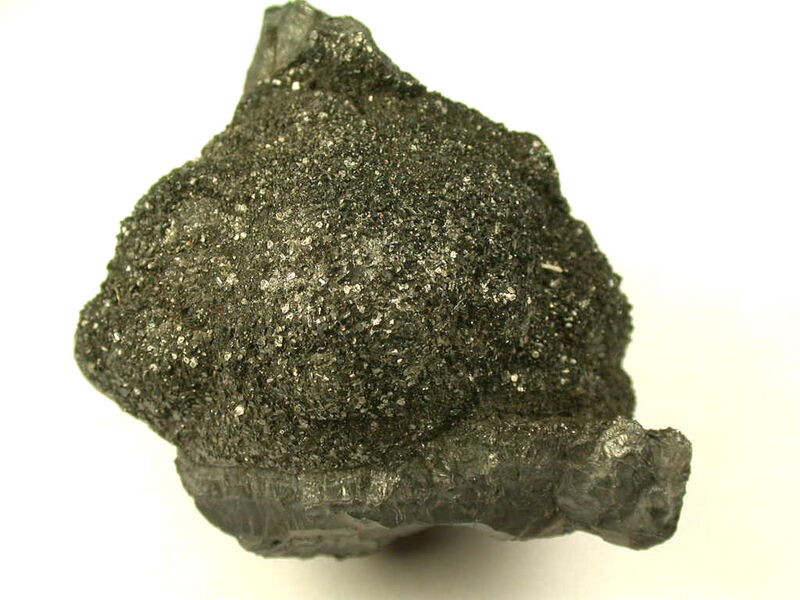
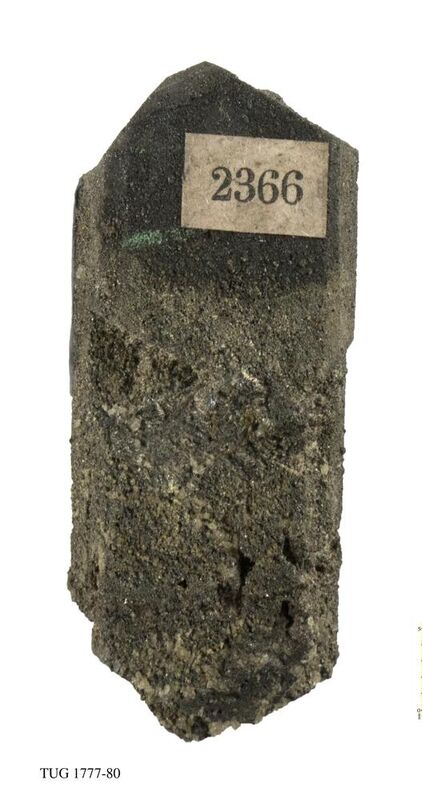
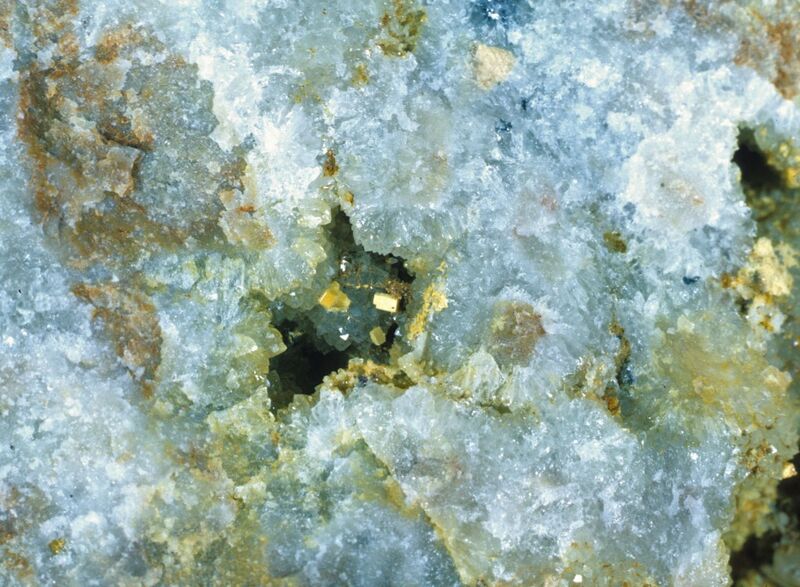
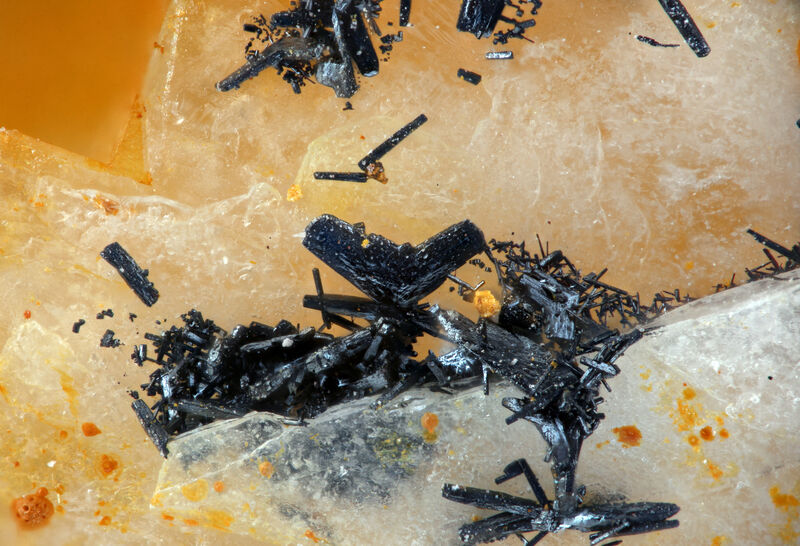
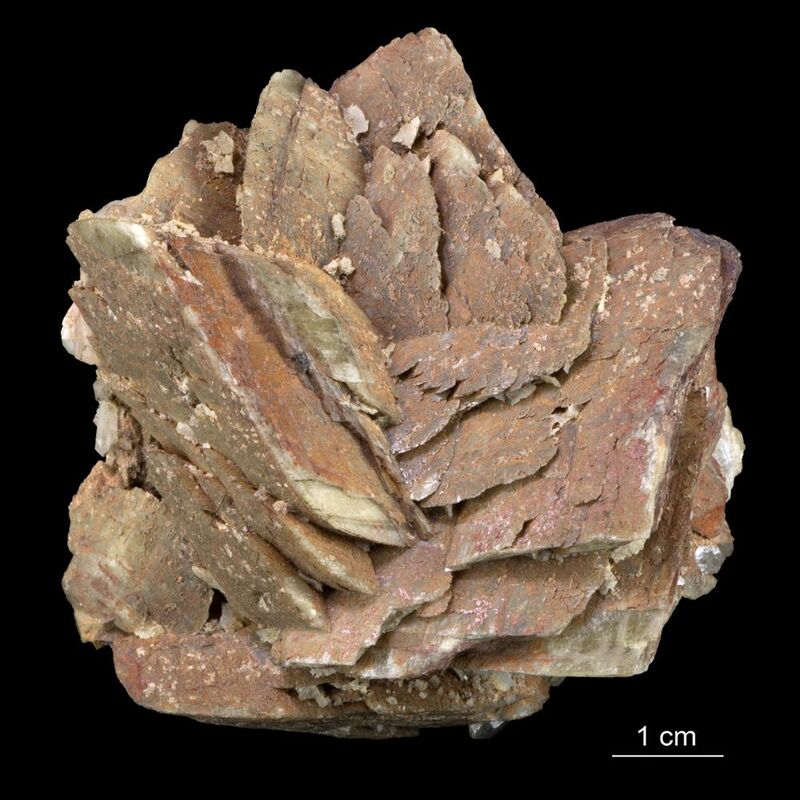
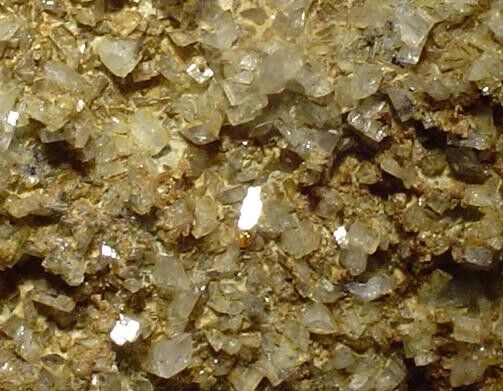
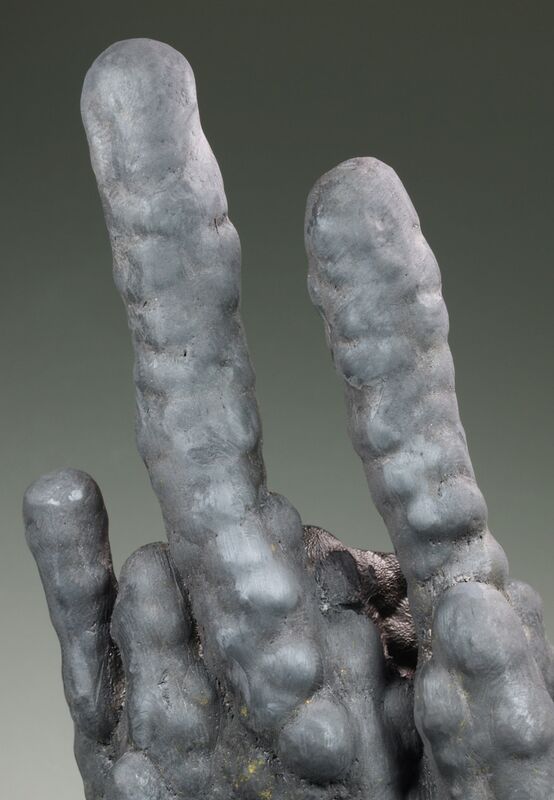
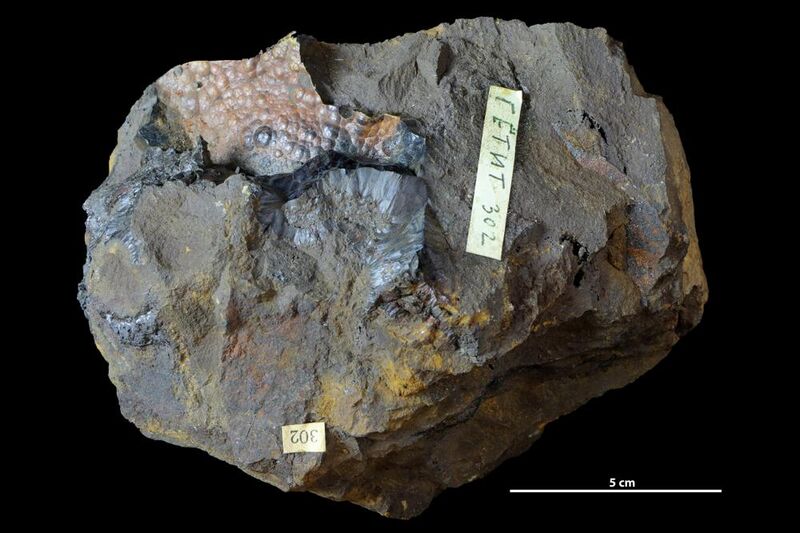
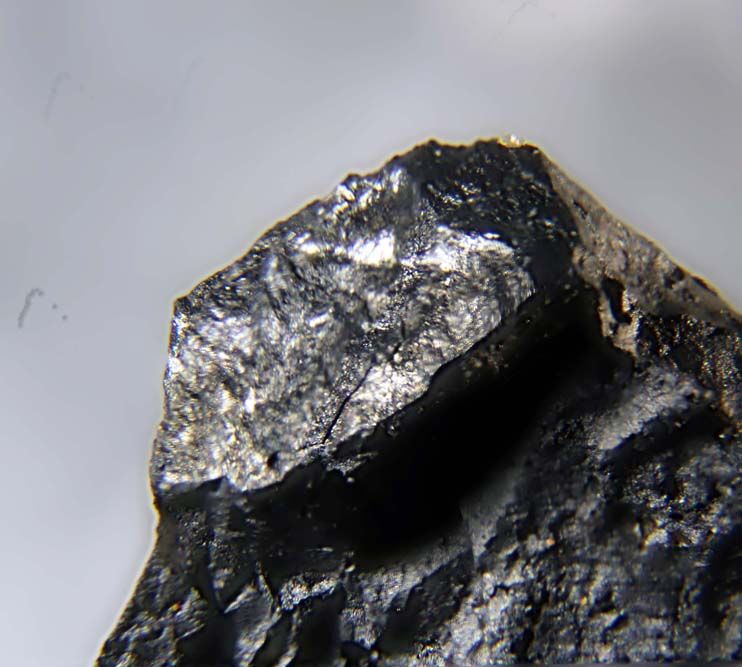
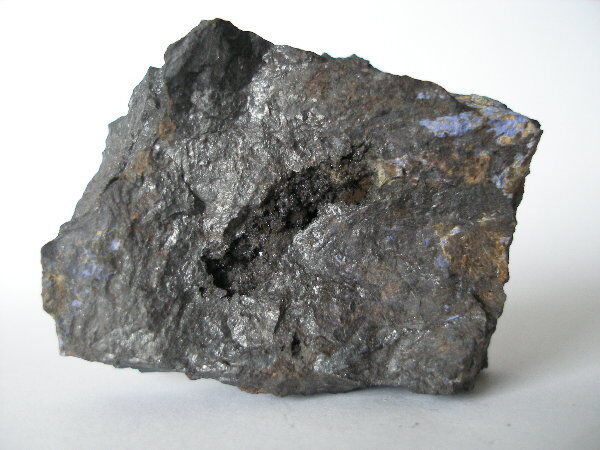
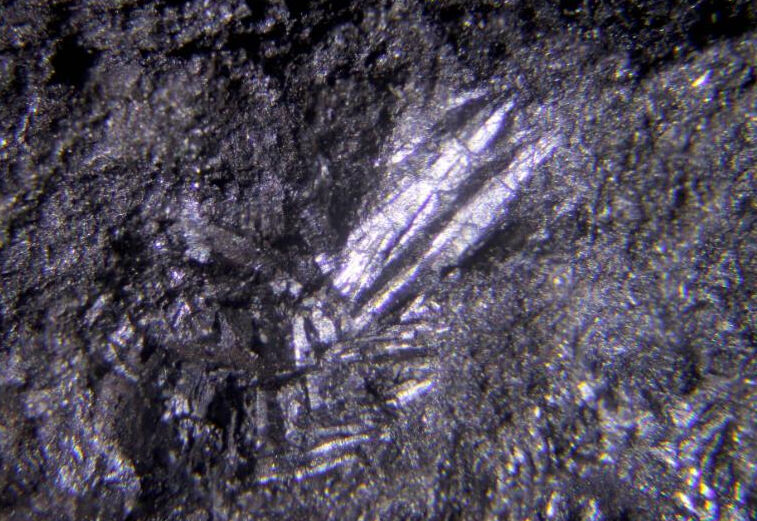
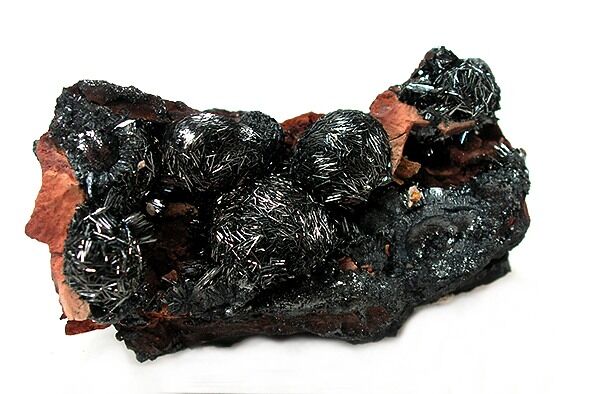
Crystals are uncommon, either long or short prismatic parallel to [001] or equant; more typically found as earthy powder or fibrous aggregates as crusts on rocks; sometimes as botryoidal aggregates, more rarely as druses of microscopic crystals. Never found as dendrites despite old literature. [The obsolete term "polianite" was once used to refer to crystalline pyrolusite, which was assumed to be a different species than earthy to crusty pyrolusite.]
- Twinning
Twinning rare. Repeated twins with twin planes (031) and (032). Polysynthetic twinning observed in polished sections.
Chemical composition
Synonyms
- Acerdèse fibreuse
- Anhydrous Binoxyd of Manganese
- Fusa
- Grau Braunstein
- Gray Oxyd of Manganese
- Lapis manganensis
- Lichtes Graumanganerz
- Mangan Hyperoxyd
- Manganaise grise
- Manganesa
- Manganese Dioxide
- Peroxide of manganese
- Polianit
- Prismatic Manganese-Ore
- Prismatisches Manganerz
- Pseudomanganite
- Varvicit
- Varvicite
- Weichbraunstein
- Weichmangan
In other languages
- French
- pyrolusite
- German
- Pyrolusit
- Spanish
- Pirolusita
- Italian
- Pirolusite
- Portuguese
- pirolusita · Pirolusite
- Japanese
- パイロルース鉱 · 軟マンガン鉱
- Chinese
- 軟錳礦 · 软锰矿
- Russian
- пиролюзит
- Arabic
- بيرولوسيت
Classification
4.DB.05
- 4OxidesClass
- 4.DMetal: Oxygen = 1:2 and similarDivision
- 4.DBWith medium-sized cations; chains of edge-sharing octahedraGroup
- 4.DB.05PyrolusiteSpecies
04.04.01.04
- 04Simple OxidesClass
- 04.04AX2Type
- 04.04.01Rutile group (Tetragonal: P4/mnm)Group
- 04.04.01.04PyrolusiteSpecies
7.18.3
- 7Oxides and HydroxidesClass
- 7.18Oxides of MnGroup
- 7.18.3PyrolusiteSpecies
Group, growth & confusion
Literature, links & citation
- 1827Haidinger, W. (1827) Description of pyrolusite, or prismatic manganese ore. The Edinburgh Journal of Science: 9: 304-309.
- 1828Turner, E. (1828) Chemical examination of the oxides of manganese. Part II. On the composition of the ores of manganese described by Mr. Haidinger. The Philosophical Magazine: 4: 96-104.
- 1866How, H. (1866) Contributions to the Mineralogy of Nova Scotia, Pt. I, Manganite, Pyrolusite, Wad. Philosophical Magazine, Series 4: 31(208): 165-170.
- 1888Dana, E.S., Penfield, S.L. (1888) On the crystalline form of polianite. American Journal of Science: 35: 243-247.
- 1888Dana, Edward S.; Penfleld, S. L. (1888) Ueber die Krystallform des Polianit. Zeitschrift für Kristallographie, 14 (1-6). 166-172 doi:10.1524/zkri.1888.14.1.166DOI: 10.1524/zkri.1888.14.1.166
Entry last updated
@misc{mineral2026,
  author    = {Mineral Index editorial board},
  title     = {Pyrolusite — Mineral Index},
  year      = {2026},
  url       = {https://mineralindex.org/minerals/pyrolusite-3318}
}