History
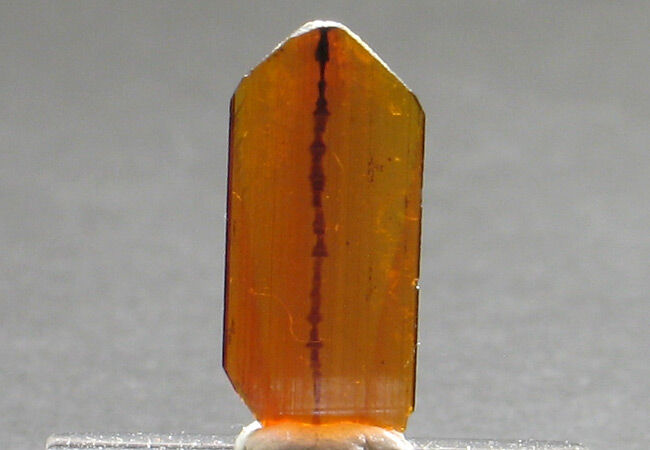
The name rutile comes from the Latin rutilus — reddish or golden-red — for the deep red glow some crystals show when light passes through them.
Long before the species had a single name, eighteenth-century mineralogists were circling it under different labels. In 1772, Ignaz von Born catalogued specimens from Murán, near Revúca in present-day Slovakia, as Basaltes crystallisatus ruber — red crystalline schorl, the older catch-all term for dark, prismatic crystals. Romé de L'Isle in 1783 wrote of schorl rouge ou purpre found as needle-like inclusions in quartz from Madagascar. Saussure in 1796 described slender bundles of crystals from St. Gothard, in Switzerland, under the name sagenite, now recognised as a variety of rutile.
Quartz threaded with those same delicate red needles has its own ornamental afterlife. Stones of this kind are called rutilated quartz, or Venus's-hairstone, and have been worked as ornamental material for centuries.
The mineral mattered to chemistry before it had a settled mineralogical name. In 1795, Martin Heinrich Klaproth analysed a specimen of Hungarian red schorl — the same red-schorl material from what is today Slovakia — and identified the new element titanium inside it. Richard Kirwan called the mineral titanite in 1796, and Haüy in 1801 used the name titane oxydé.
The name we use today was put forward by the German geologist Abraham Gottlob Werner. Werner first proposed it around 1800, and the formal description is generally dated to 1803. The type locality is given as Horcajuelo de la Sierra, near Madrid, Spain.
Rutile is one of three natural forms of titanium dioxide. The others — anatase and brookite — share the same chemistry, TiO₂, but pack their atoms differently and so behave as separate mineral species. Rutile is the most stable of the three at every temperature, which is why it dominates the natural occurrences of TiO₂.
Industrial & practical applications
Rutile is the densest and most stable natural form of titanium dioxide, and that simple fact carries most of its modern industrial weight. The mineral feeds three main streams of manufacture: titanium dioxide pigment, titanium metal, and refractory ceramics.
The dominant use, by a wide margin, is white pigment. Finely powdered rutile is a brilliant white pigment used in paints, plastics, paper, and foods. Roughly 95% of all titanium consumed worldwide ends up in this form — titanium dioxide pigment for everyday surfaces. Titanium dioxide pigment is the single greatest use of titanium worldwide.
A much smaller but high-value share of rutile feeds the production of titanium metal, prized in aerospace components, marine hardware, and medical implants for its strength-to-weight ratio and corrosion resistance. Rutile and ilmenite are the two main mineral feedstocks that enter the chemistry leading to metallic titanium. In the global picture, however, ilmenite accounts for about 90% of titanium-mineral consumption — rutile is the higher-grade, lower-volume partner.
Rutile also coats welding rods. The mineral serves as an electrode covering, where it stabilises the arc and shapes the protective slag layer that forms over the weld. Smaller industrial roles include colouring porcelain and glass and producing certain steel and copper alloys.
In gemmology, rutile shows up not as the cut stone but as the inclusion. Tiny needles of rutile inside a host gem scatter incoming light along their crystallographic axes and produce the star-shaped reflections known as asterism — the optical signature of star sapphires and star rubies.
Supply of natural rutile is concentrated in a handful of countries. South Africa (53%), Australia (29%), Kenya (8%), and Ukraine (8%) were the leading sources of natural rutile imported by the United States in recent years.
All United States imports of synthetic rutile — a manufactured upgrade of ilmenite to a higher TiO₂ grade — came from China. Global reserves of anatase, ilmenite, and rutile combined exceed two billion tons.
Where it forms, where it's found
- Geological setting
As an accessory mineral in high-pressure, high-temperature igneous rocks, in placers.
- Type locality
- Rutile type locality
- Horcajuelo de la Sierra
- Community of Madrid
- Spain
Varieties
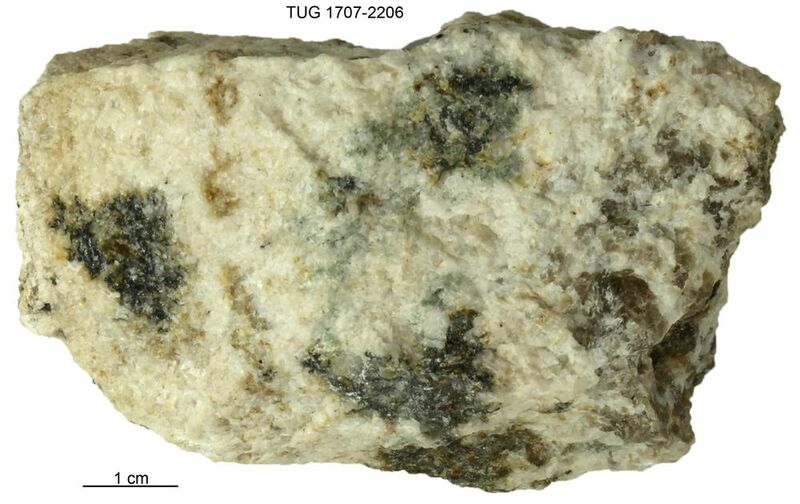
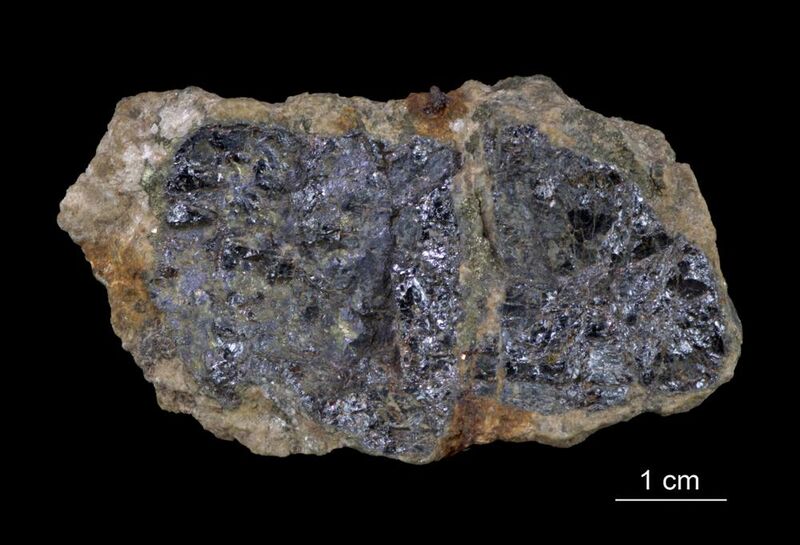
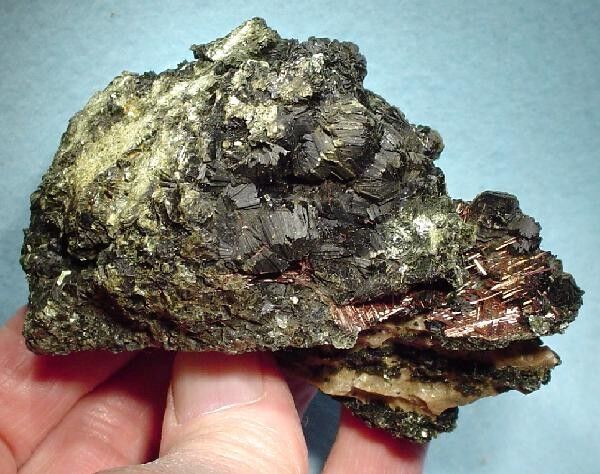
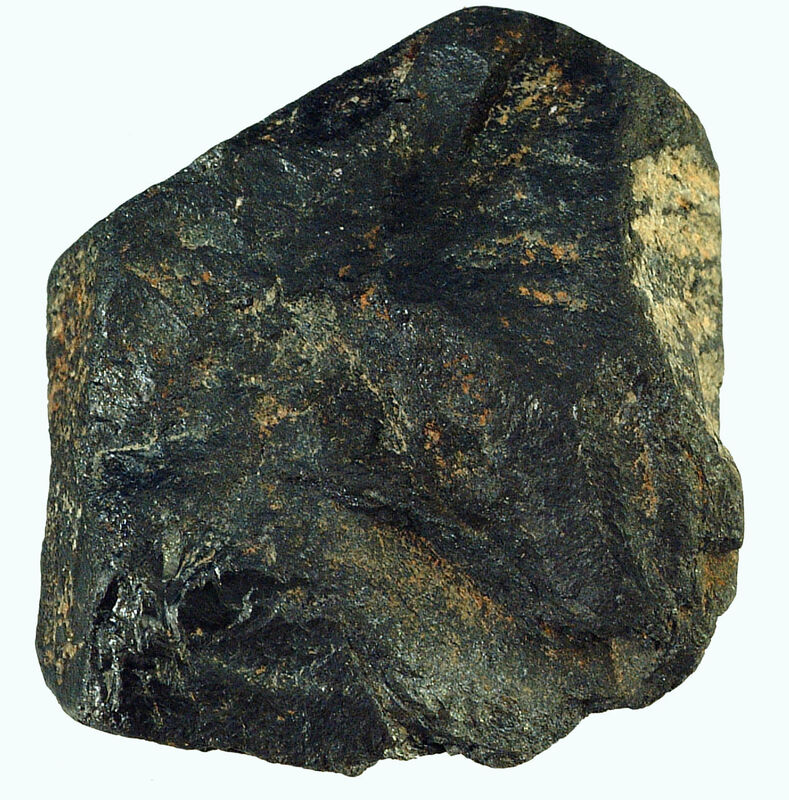
Physical
- Hardness
- 1Talc
- 2Gypsum
- 3Calcite
- 4Fluorite
- 5Apatite
- 6Orthoclase
- 7Quartz
- 8Topaz
- 9Corundum
- 10Diamond
- Lustre
- Adamantine
- Transparency
- Transparent
- Colour
- Blood red · brownish yellow · brown-red · yellow · greyish-black · black · brown · bluish or violet
- Streak
- Greyish black, pale brown, light yellow
- Tenacity
- brittle
- Cleavage
- Distinct/Good
(110) distinct, (100) less distinct; and, (111) in traces.
- Fracture
- Irregular/Uneven · Conchoidal · Sub-Conchoidal
- Density
- 4.23 g/cm³
Optical
- Optical type
- Uniaxial (+)
- Refractive index
- 2.605 – 2.901
- Surface relief
- Very high
- Principal indices
- nω 2.605 – 2.613 · nε 2.899 – 2.901
- Pleochroism
- Visible
Shades of red, brown, yellow and green.
- Dispersion
- Strong
- Anisotropism
- Strong
- Tropism
- Anisotropic
- Reflectance R%
- (23.7,27.0) 400, (23.2,26.5) 420, (22.7,26.0) 440, (22.2,25.5) 460, (21.7,25.1) 480, (21.3,24.7) 500, (20.9,24.3) 520, (20.6,24.0) 540, (20.2,23.6) 560, (20.0,23.4) 580, (19.7,23.1) 600, (19.5,22.9) 620, (19.2,22.8) 640, (19.1,22.6) 660, (19.0,22.5) 680, (18.9,22.5) 700
- Luminescence
- None
Crystallography
- Space group
- #190
- Cell parameters
- a = 4.5937 Å · c = 2.9587 Å
- Z
- 2
- Morphology
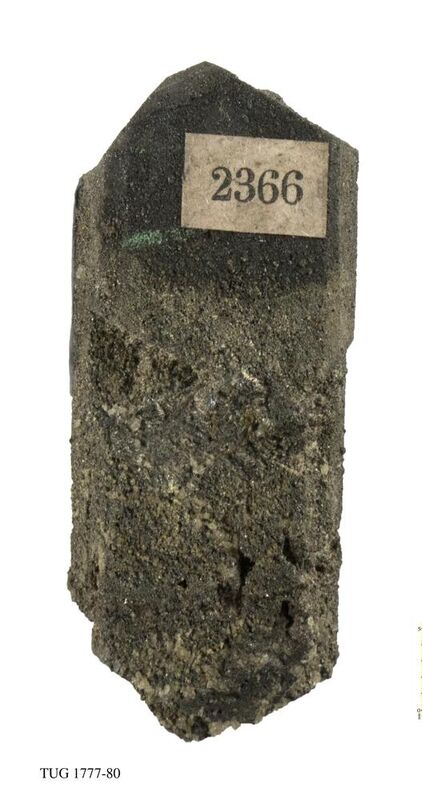
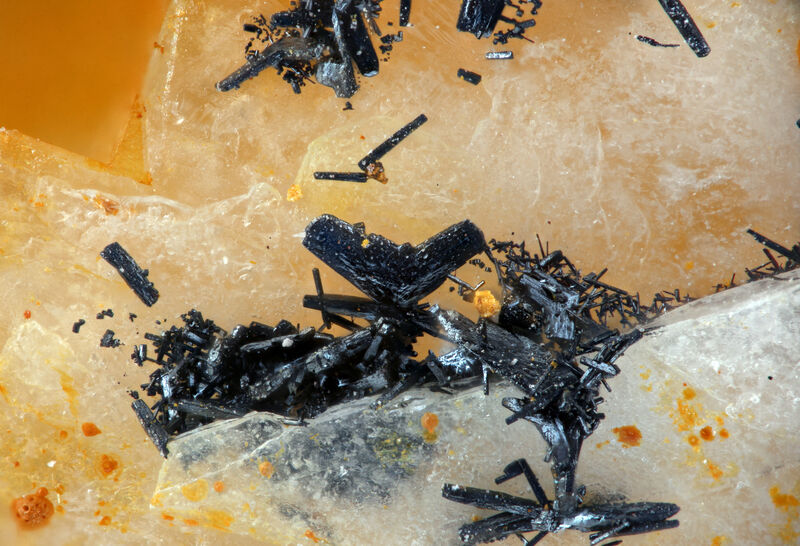
Commonly prismatic, often slender to acicular [001]. Prism zone vertically striated or furrowed. Usually terminated by (101) or (111); (001) rare. Rarely pyramidal. Granular massive.
- Twinning
On (011) common. Often geniculated; also contact twins of very varied habit. Sixlings and eightlings at times, occasionally polysynthetic. The twins are sometimes distorted by extension of a pair of faces on (011). Twin gliding observed on this plane as well. Also on (031), rare. On (092), as twin gliding plane.
- Parting
- On (092) due to twin gliding; also on (011).
- Epitaxy
Oriented microscopic needles of rutile are frequently observed in corundum, pseudobrookite, phlogopite, and quartz.
Chemical composition
- Impurities
- Fe
- Ta
- Nb
- Cr
- V
- Sn
- W
- Sb
Synonyms
- Acerillo
- Cajuelit
- Cajuelita
- Cajuelite
- Chorlo Rojo
- Crispite
- Dicksbergit
- Dicksbergite
- Edisonit
- Flèches d'amour
- Gallitzinit
- Gallitzinite
- Love Arrows
- Naumannite (of Koksharov)
- Paraedrit
- Paraedrite
- Red Schorl
- Rother Schorl
- Rutilit
- Schorl Rouge
- Titane oxydé
- Titane oxydé chromifère
- Titanite (of Kirwan)
- Titankalk
- Titanschorl
In other languages
- French
- cajuélite · crispite · dicksbergite · édisonite · lustérite · paraédrite · rutile · titane oxydé
- German
- Diamonit · Rutil · Rutil-Struktur
- Spanish
- rutilo
- Italian
- rutilo
- Portuguese
- rutilo
- Japanese
- ルチル · 金紅石
- Chinese
- 金红石
- Simplified Chinese
- 金红石
- Traditional Chinese
- 金紅石
- Russian
- рутил
- Arabic
- الروتيل · روتيل
Classification
4.DB.05
- 4OxidesClass
- 4.DMetal: Oxygen = 1:2 and similarDivision
- 4.DBWith medium-sized cations; chains of edge-sharing octahedraGroup
- 4.DB.05RutileSpecies
04.04.01.01
- 04Simple OxidesClass
- 04.04AX2Type
- 04.04.01Rutile group (Tetragonal: P4/mnm)Group
- 04.04.01.01RutileSpecies
7.9.2
- 7Oxides and HydroxidesClass
- 7.9Oxides of TiGroup
- 7.9.2RutileSpecies
Group, growth & confusion
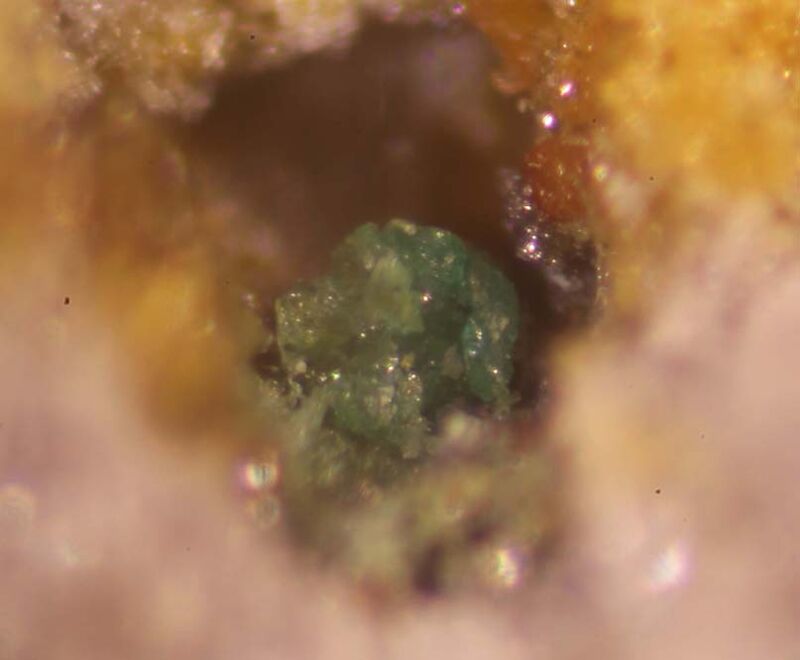
- AbswurmbachiteCu2+Mn3+6O8(SiO4)Mineral—
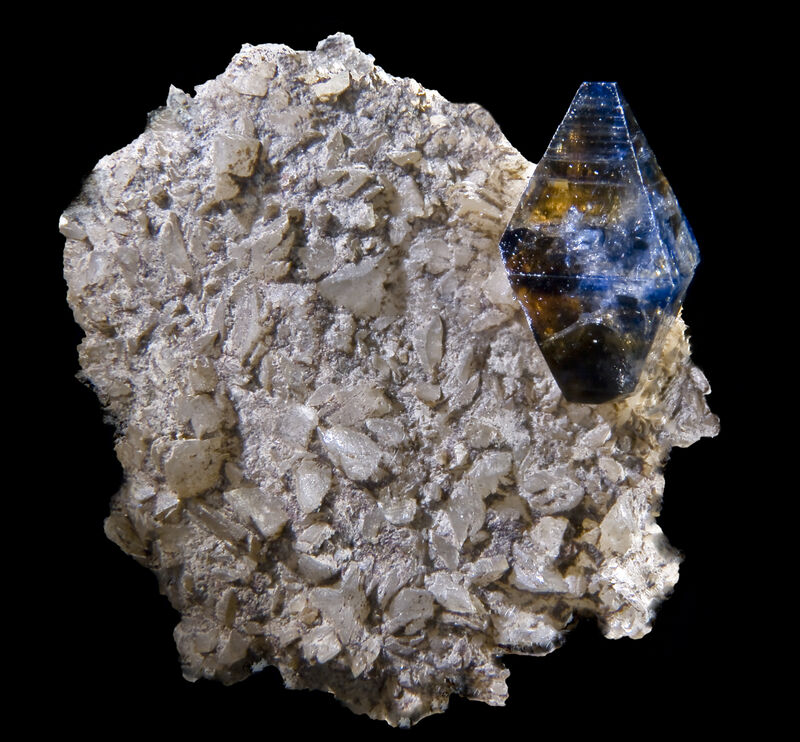 AnataseTiO2Mineral—
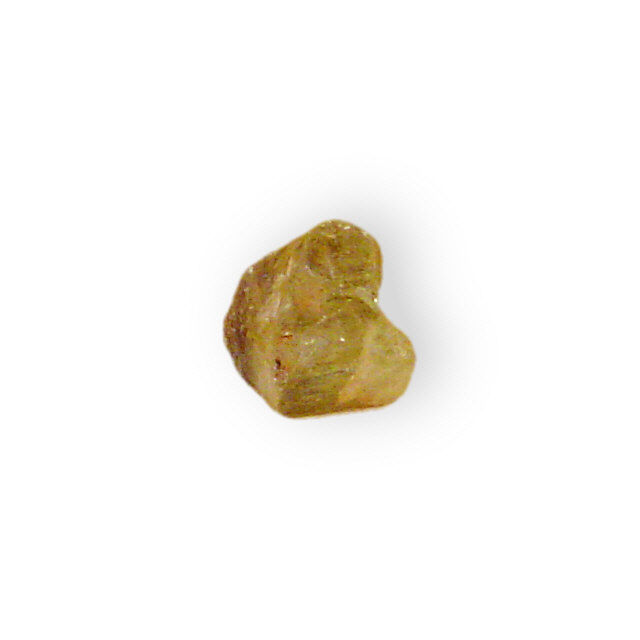 ChlorapatiteCa5(PO4)3ClMineral—
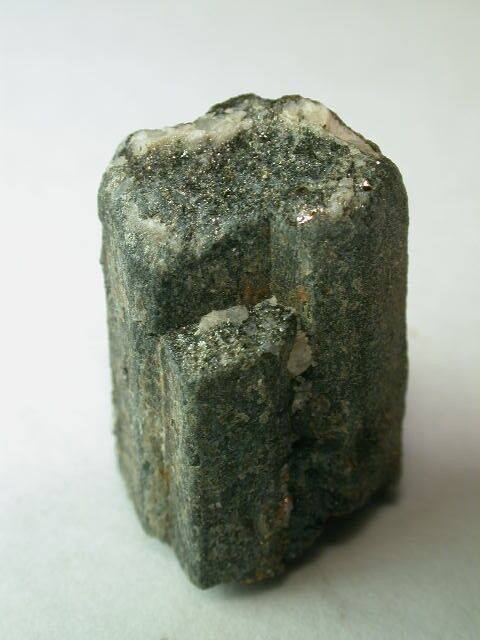 Kornerupine(Mg,Fe2+,Al,◻)10(Si,Al,B)5O21(OH,F)2Mineral—
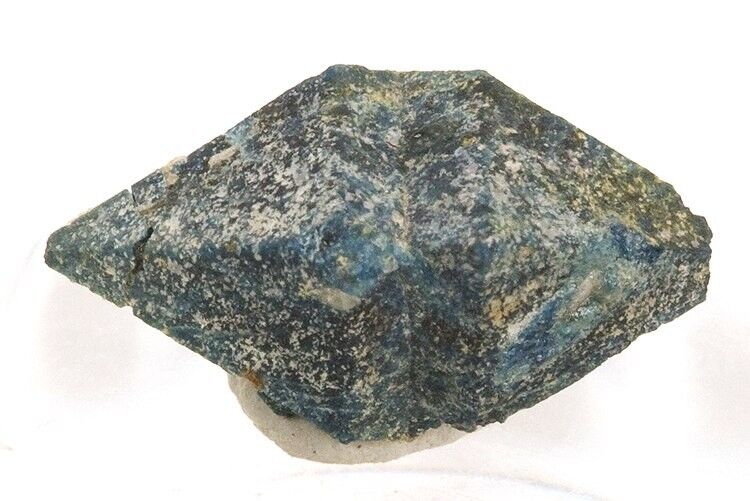 LazuliteMgAl2(PO4)2(OH)2Mineral—
- Oxy-chromium-draviteNaCr3(Cr4Mg2)(Si6O18)(BO3)3(OH)3OMineral—
- PretuliteSc(PO4)Mineral—
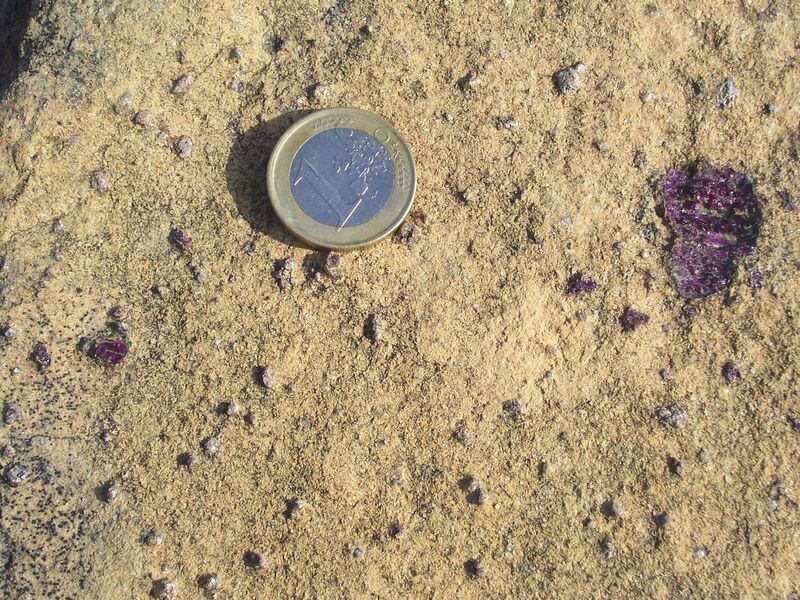 PyropeMg3Al2(SiO4)3Mineral—
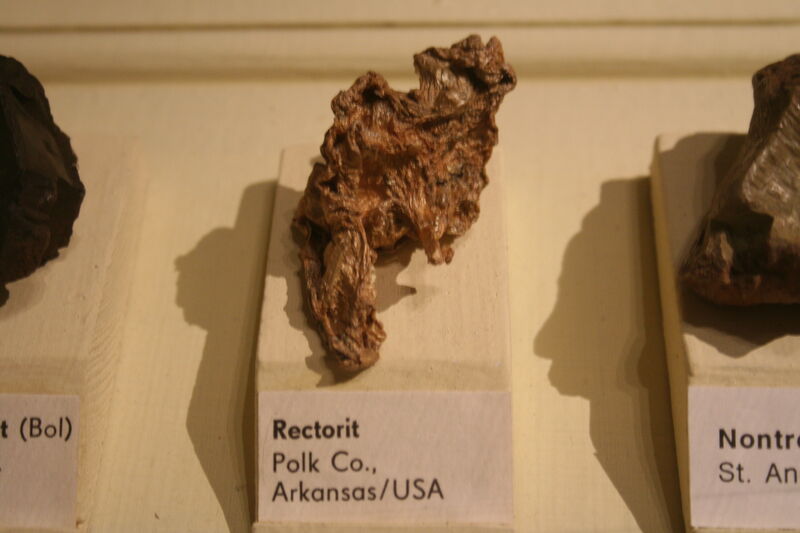 Rectorite(Na,Ca)Al4(Si,Al)8O20(OH)4 · 2H2OMineral—
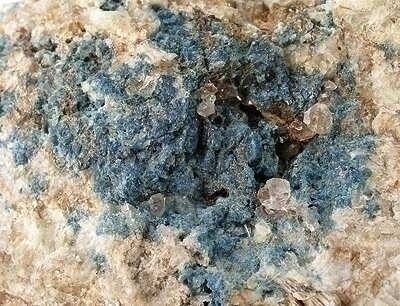 ScorzaliteFe2+Al2(PO4)2(OH)2Mineral—
Literature, links & citation
- 1772Born, I. von (1772) Lithophylacium Bornianum, seu Index Fossilium. Vol. I: 34 [as Basaltes crystallisatus ruber, cited in Papp 2004]
- 1783Lisle, Jean-Baptiste-Louis Romé de, Romé de L'Isle, Jean-Baptiste Louis de (1783) Cristallographie, ou Description des formes propres à tous les corps du règne minéral dans l'état de combinaison saline, pierreuse ou métallique [Crystallography, or Description of the forms specific to all bodies of the mineral kingdom in the state of saline, stony or metallic combination] (2nd ed.). L'Imprimerie de Monsieur.
- 1795Delamétherie, J.C. (1795) Théorie de la Terre. Paris 1795, Tome 2, p. 402-403 (2nd ed. 1797: 2: 333)[as sagenite]
- 1800Lampadius, W. A. (1800) Noch ein Paar Bemertungen über den Uran- und Titangehalt einiger Fossilien. Der rothe schörl (Rutil, nach herrn Bergrath Werner), in Sammlung practisch-chemischer Abhandlungen und vermischter Bemerkungen, Volume 3, Walther Dresden
- 1801Haüy, René Just (1801) Traité de Minéralogie (1st ed.) Chez Louis, Paris.
Entry last updated
@misc{mineral2026,
  author    = {Mineral Index editorial board},
  title     = {Rutile — Mineral Index},
  year      = {2026},
  url       = {https://mineralindex.org/minerals/rutile-3486}
}