History
The name spessartine points to a low range of forested hills in central Germany — the Spessart Mountains — where the mineral was first found.
The earliest description came from the German chemist Martin Klaproth in 1797. Working on a specimen from the Spessart range, he gave it the cumbersome German label granatförmiges Braunsteinerz — literally "garnet-shaped brownstone ore". The name captured two things at once: the crystal habit of a garnet, and the manganese content that gives the mineral its colour. Braunstein — brownstone — was the German term of the day for manganese ore.
A clearer chemical identity arrived in 1823. The American chemist Henry Seybert examined a specimen from Haddam, Connecticut, and recognised it as a manganese-bearing member of the garnet family — a "manganesian" garnet in the language of the period.
The modern name was coined nine years later. In 1832 the French mineralogist François Sulpice Beudant renamed the species spessartine, after the Spessart type locality where Klaproth's specimen had come from.
For more than a century afterwards, spessartine remained a curiosity for mineralogists and a quiet name in collector cabinets. That changed in 1991, when prospectors working the bush country along the Kunene River in northwestern Namibia uncovered an iron-free, brilliant orange variety embedded in mica schist — fine-grained metamorphic rock made largely of mica flakes. Marketed under several short-lived names — including hollandine and Kunene spessartine — the stone settled in the trade as mandarin garnet. A second deposit surfaced in southwestern Nigeria in April 1994, in a riverbed near the border with Benin.
Industrial & practical applications
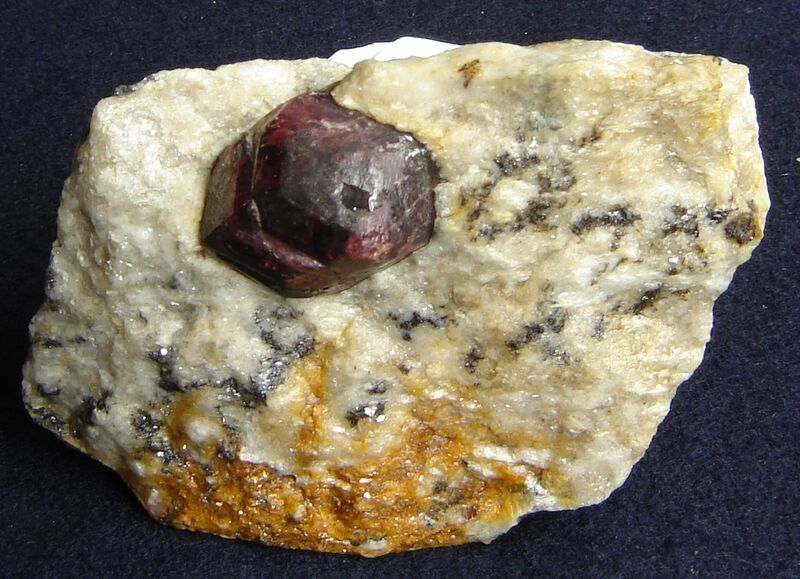
Spessartine's role today is almost entirely as a gemstone. When the crystal is clear, it cuts a semiprecious stone, prized above all for the saturated orange variety the trade calls mandarin garnet.
That orange variety — iron-free and almost luminous in colour — is the version most jewellers and collectors actually pursue. Top-quality stones are extremely rare, and the supply moves with whichever deposit happens to be producing. The principal modern sources are pegmatite-hosted finds in Madagascar, the 1991 Kunene-River occurrence in northwestern Namibia, and the southwestern Nigerian riverbed discovered in 1994. Violet-red spessartines turn up in the volcanic rhyolites of Colorado and Maine, and pale yellow-orange to deep red material has long been collected from granites and pegmatites in central India, Madagascar, and Silver Cliff, Colorado.
Beyond the gem trade, spessartine has no significant industrial role. The mineral is rare enough that, even within jewellery, it sees less use than other members of the garnet family. Its value rests almost entirely on its colour.
Where it forms, where it's found
- Type locality
- Spessartine occurrence
- Stengerts
- Gailbach
- Aschaffenburg
- Lower Franconia
- Bavaria
- Germany
49.9447°, 9.1961°
Varieties
Physical
- Hardness
- 1Talc
- 2Gypsum
- 3Calcite
- 4Fluorite
- 5Apatite
- 6Orthoclase
- 7Quartz
- 8Topaz
- 9Corundum
- 10Diamond
- Lustre
- Vitreous - Resinous
- Transparency
- Transparent · Translucent
- Colour
- Red · reddish orange · yellowish brown · reddish brown · or brown
The “alexandrite effect” is when its colour changes from green in the presence of daylight to purplish red under incandescent light. The UV-Vis spectra show two zones of transmittance, in the red region at 650–700 nm and the blue-green region at 460–510 nm. The absorption bands of Cr3+ and V3+ at 574 nm in the UV-Vis spectra are the main cause of the change in colour.[[2]] <br><br> There are transition metal elements in garnet, and the main theory of its color formation is crystal field theory. Fe2+ and Mn2+ are the main color-causing ions in purple pyrope–almandines, for Mg2+ is insignificant for the color of the samples. As an island silicate mineral, peridot’s beautiful color is also caused by Fe2+. However, it is worth noting that the almandine–skiagite’s brownish yellow color is caused by the charge transfer between element ions. Spessartine’s color is vivid orange. There are many research studies on the color causes and spectrum about spessartines; we find that the reason why spessartines appear a beautiful orange is not only the Mn2+ d-d electron transition, but also the valence charge transfer transition between Fe2+and Fe3+. They obviously absorb in the area of the blue-purple region, which makes the spessartines appear a bright color. As one of the most promising colored gemstones on the market, spessartine is becoming increasingly popular. According to the CIE 1976 L*a*b*, the relationship between chroma C*, the h° and colorate coordinates a* and b* was analyzed. The chemical composition was analyzed according to ED-XRF, then we quantitatively analyzed the impact of the elements FeOtot and MnO and the ratio FeOtot/MnO on color parameters L*, h°. By analyzing the UV-visible spectrum of spessartines, we find the color mechanism of the samples. It is worth noting that this article is the first to studied the relationship between the peaks’ position in the infrared spectrum and the color parameters of spessartines. With the increase in MnO content, the A, C and D peaks in the infrared spectrum shifted from the region of high frequency to low frequency, the color parameters L* and h° both increased, and the spessartines’ color also changed from dark orange-red to bright orange. [[1]]
- Streak
- White
- Tenacity
- brittle
- Cleavage
Distinct
- Fracture
- Sub-Conchoidal
- Density
- 4.12 g/cm³
Optical
- Optical type
- Isotropic
- Surface relief
- Very high
- Principal indices
- n 1.800
- Luminescence
- Non-fluorescent
- Single index
- n = 1.800
Crystallography
- Space group
- Ia3d
- Cell parameters
- a = 11.621 Å
- Z
- 8
- Morphology
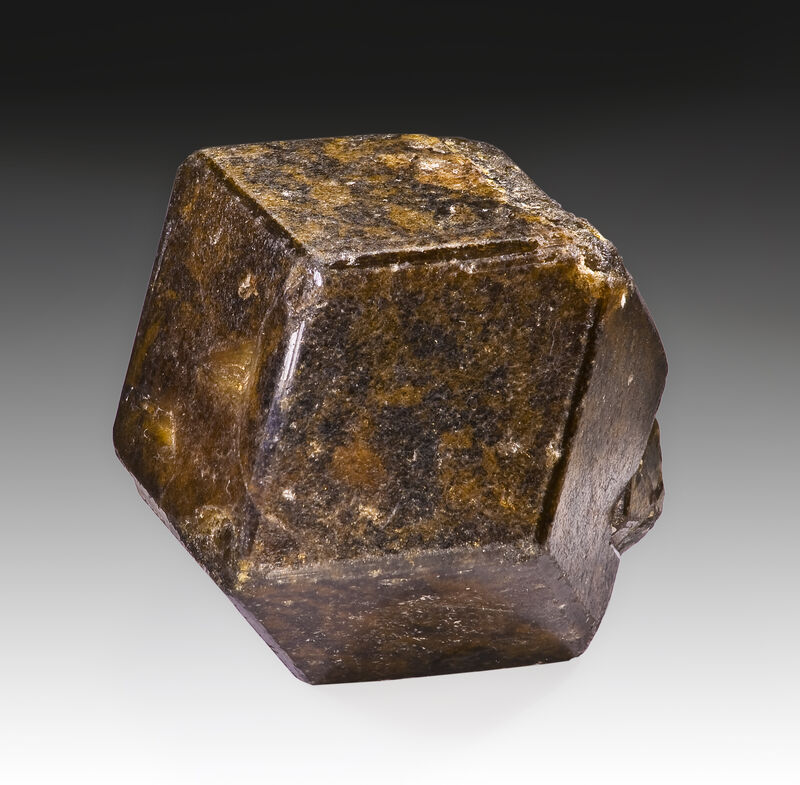
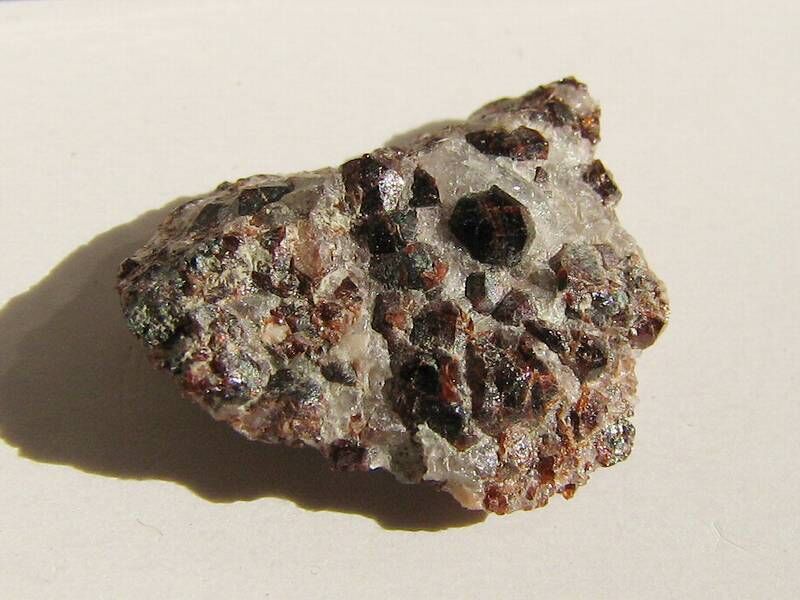
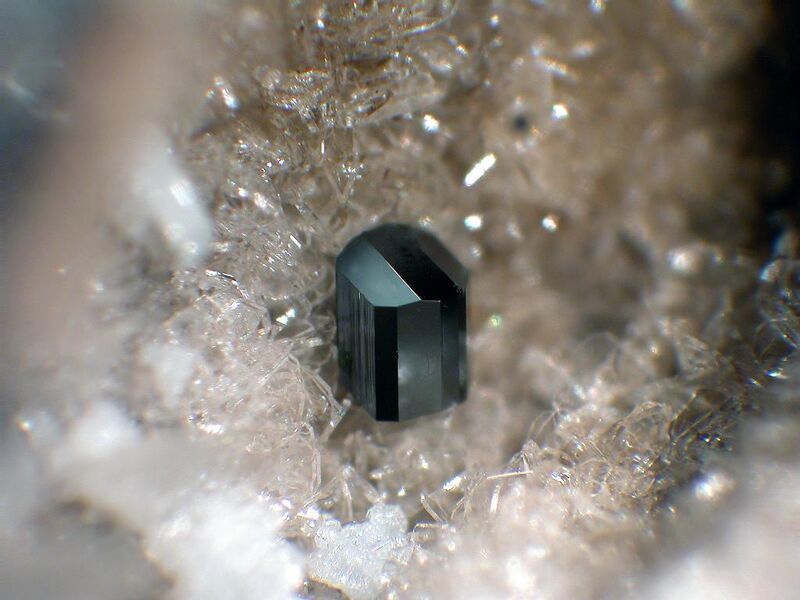
euhedral crystals, dodecahedra or trapezohedra, or in combination with other cubic forms, to 10 cm.
Chemical composition
- Impurities
- Ti
- Fe
- Mg
- Ca
- H2O
- Y
Synonyms
- Erinite (of van der Lingen)
- Kashmirine
- Mandarin Garnet
- Mandarin Granat
- Partschinite
- Spessartine Garnet
- Spessartit
- Spessartite
- Spessartite garnet
In other languages
- French
- spessartine
- German
- Spessartin
- Spanish
- Espesartina · Spessartina
- Italian
- spessartina
- Japanese
- 満礬柘榴石
- Chinese
- 巴西錳鋁石榴石 · 鈣錳鋁榴石 · 錳鋁榴石
- Russian
- спессартин
- Arabic
- سبيسارتين
Classification
9.AD.25
- 9SilicatesClass
- 9.ANesosilicatesDivision
- 9.ADNesosilicates without additional anions; cations in [6] and/or greater coordinationGroup
- 9.AD.25SpessartineSpecies
51.04.3a.03
- 51Nesosilicates Insular Sio4 Groups OnlyClass
- 51.04Insular SiO4 Groups Only with cations in [6] and >[6] coordinationType
- 51.04.3a— unnamed intermediate level —Group
- 51.04.3a.03SpessartineSpecies
16.16.2
- 16Silicates Containing Aluminum and other MetalsClass
- 16.16Aluminosilicates of MnGroup
- 16.16.2SpessartineSpecies
Group, growth & confusion
 AlmandineFe2+3Al2(SiO4)3Mineral—
 AndraditeCa3Fe3+2(SiO4)3Mineral—
 CalderiteMn2+3Fe3+2(SiO4)3Mineral—
- EringaiteCa3Sc2(SiO4)3Mineral—
 GoldmaniteCa3V3+2(SiO4)3Mineral—
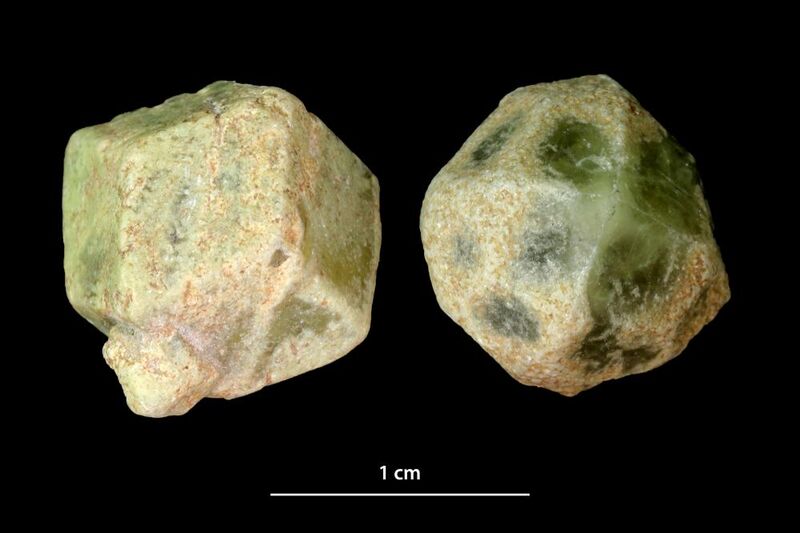 GrossularCa3Al2(SiO4)3Mineral—
- KnorringiteMg3Cr2(SiO4)3Mineral—
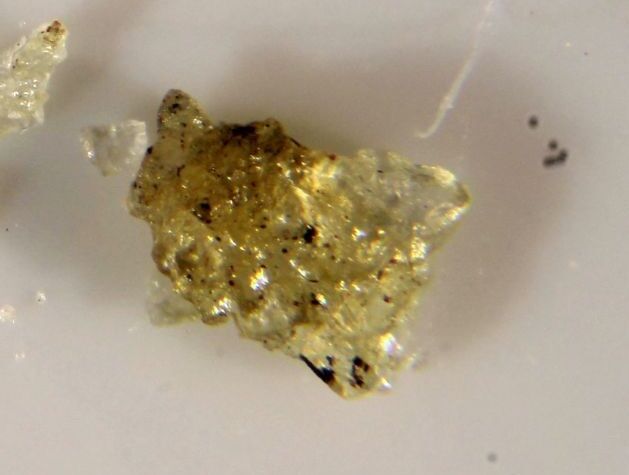 MajoriteMg3(MgSi)(SiO4)3Mineral—
- Menzerite-(Y)(CaY2)Mg2(SiO4)3Mineral—
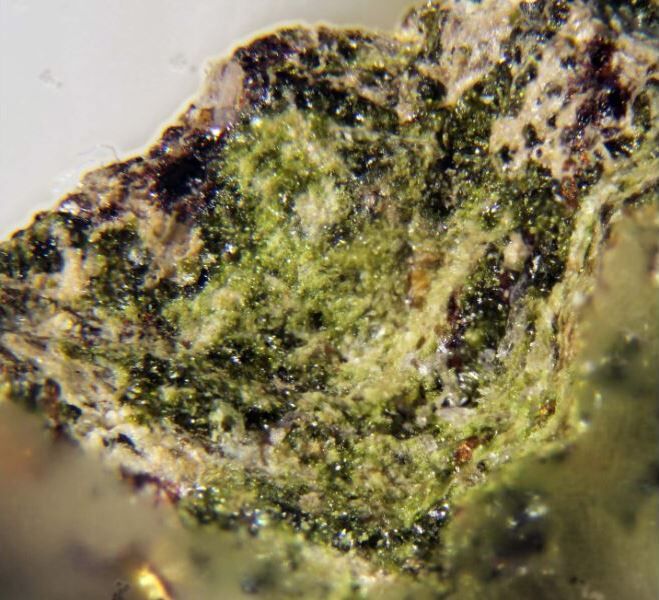 MomoiiteMn2+3V3+2(SiO4)3Mineral—
Literature, links & citation
- 1883Gorgeu, Alex. (1883) Sur la production artificielle de la Spessartine. Bulletin de Minéralogie, 6 (8) 283-284 doi:10.3406/bulmi.1883.1829DOI: 10.3406/bulmi.1883.1829
- 1959Geller, S., Miller, C. E. (1959) Substitution of Fe3+ for Al3+ in synthetic spessartite. American Mineralogist, 44 (5-6) 665-666
- 1971Novak, G. A., Gibbs, G. V. (1971) The crystal chemistry of the silicate garnets. American Mineralogist, 56 (5-6) 791-825
- 1988Rossman, G.R., Rauch, F., Livi, R., Tombrello, T.A., Shi, C.R., Zhoi, Z.Y. (1988) Nuclear reaction analysis of hydrogen in almandine, pyrope and spessartine garnets. Neues Jahrbuch für Mineralogie Monatshefte: 4: 172-178.
- 1990Smyth, Joseph R., Madel, Robin E., Mccormick, Tamsin C., Munoz, James L., Rossman, George R. (1990) Crystal structure refinement of a F-bearing spessartine garnet. American Mineralogist, 75 (3-4) 314-318
Entry last updated
@misc{mineral2026,
  author    = {Mineral Index editorial board},
  title     = {Spessartine — Mineral Index},
  year      = {2026},
  url       = {https://mineralindex.org/minerals/spessartine-3725}
}