History
Andradite carries the name of a Brazilian statesman who never knew the mineral would be his namesake. He died in 1838; the species took his name thirty years later.
The story begins in 1800, in the iron country of southern Norway. A Brazilian mineralogist was examining a yellowish-grey mineral from a mine near Drammen. His name was José Bonifácio de Andrada e Silva, born in Santos in 1763. He held the sample in the flame of a blowpipe — the brass tube mineralogists used to direct a candle flame onto a specimen. The substance changed colour as it cooled. Andrada named it allochroite, from the Greek allos — another — and chroia — colour.
Demantoid and the Russian gem trade
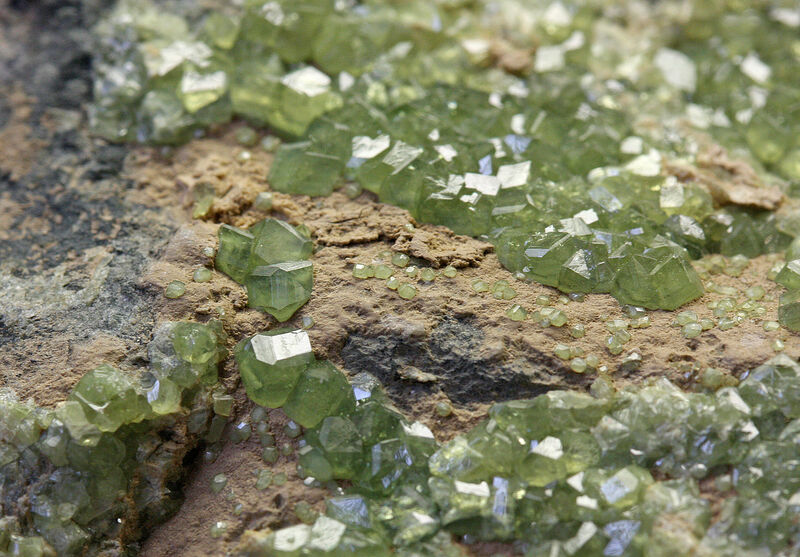
While allochroite sat quietly in the literature, prospectors in the central Urals stumbled on the variety that would make the species famous. In 1851, vivid green crystals were recovered from an alluvial deposit about 110 kilometres north-northwest of Ekaterinburg, along the Bobrovka River. The stones combined the brilliance of diamond with a saturated grass-green colour, and they were named demantoid — diamond-like — for the resemblance. Russian demantoid carries a signature no later deposit has reproduced. Inside the stone, golden feathery fibres of chrysotile — a serpentine-group asbestos mineral — radiate from a tiny central crystal of chromite. Chromite is the chromium-iron oxide that gives the variety its colour. Cutters call the inclusions horsetails.
Andradite gets its modern name
The reclassification came in 1868. The American mineralogist James Dwight Dana was then assembling the System of Mineralogy — the comprehensive treatise that would standardise much of the field. He regrouped the calcium-iron garnets under a single name and honoured Andrada's early work by calling the species andradite. Andrada's allochroite became a subvariety of the new name.
From the 1880s through the Russian Revolution, demantoid moved through the workshops of Peter Carl Fabergé and the jewellers of imperial Saint Petersburg. The trade collapsed with the empire that supported it. Demantoid all but disappeared from the market until late in the 20th century, when two finds reopened the supply. A deposit at the Green Dragon mine in Namibia was located in 1996, and a second, larger find followed in Madagascar around 2009.
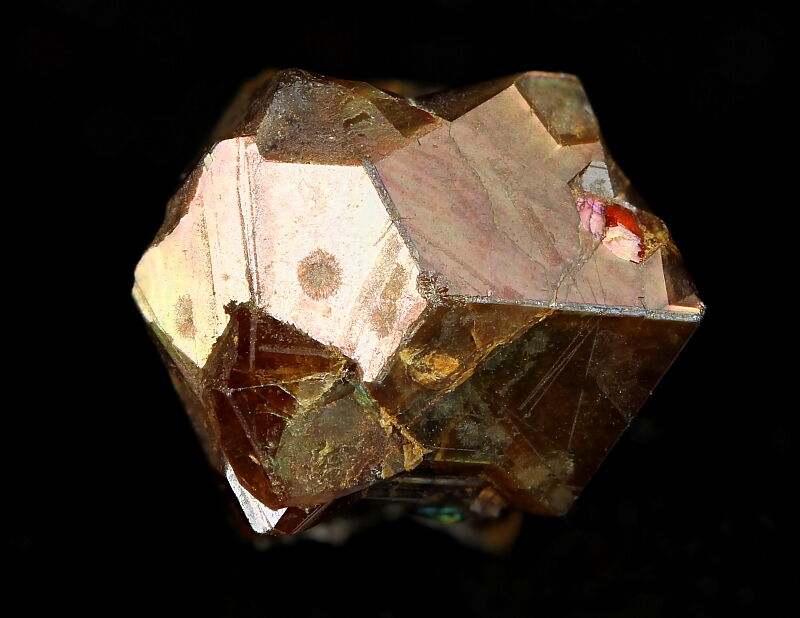
Two further varieties carry older names. Melanite — from the Greek melas, black — is the opaque, titanium-bearing form. Limited substitution of titanium for iron darkens the crystal to coal-black. Topazolite is the yellow to greenish-yellow variety, rarer than demantoid and occasionally cut into faceted gems. A historical varietal name, colophonite, was given to coarse, resin-coloured masses from Scandinavian skarns.
Industrial & practical applications
Andradite's working life today is almost entirely a gem story. The industrial garnet trade — sandblasting grit, waterjet powder, coated abrasive paper — runs on almandine, the harder, iron-rich garnet of the same family. Andradite has no significant share of that market. Its place is on a jeweller's bench and in a collector's cabinet.
The defining gem variety is demantoid — the chromium-bearing, vivid-green form. Its name points to its diamond-like dispersion: the optical property that makes a faceted stone throw rainbow flashes of light. Demantoid is among the most prized of all garnet varieties. Russian material is sought specifically for its horsetail inclusions of chrysotile fibres. Here a flaw is part of the value — the horsetails identify the Ural origin. Younger sources in Namibia and Madagascar supply most of the contemporary trade. Smaller deposits in Iran's Kerman and West Azerbaijan provinces add to the market.
Topazolite, the yellow to greenish-yellow variety, is occasionally cut into faceted gems but is rarer than demantoid and rarely seen at the counter. Melanite, the opaque black titanium-bearing variety, is cut and polished mainly as a collector and ornamental stone rather than as a mainstream jewel.
Beyond the gem trade, well-crystallised specimens are sought by museums and private collectors as representative material of the calcium-iron garnet end-member. Demand concentrates on the classic localities: Drammen, the Bobrovka placers of the Urals, and the Green Dragon mine in Namibia.
Where it forms, where it's found
- Geological setting
Contact metamorphosed impure limestone
In skarns from contact metamorphosed impure limestones or calcic igneous rocks; in chlorite schists and serpentinites; in alkalic igneous rocks, then typically titaniferous.
- Type locality
- Drammen
- Buskerud
- Norway
Varieties
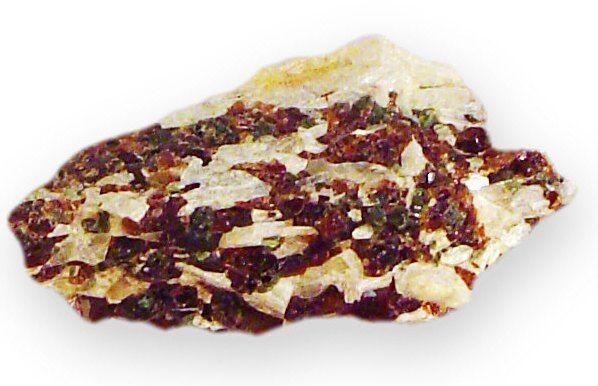
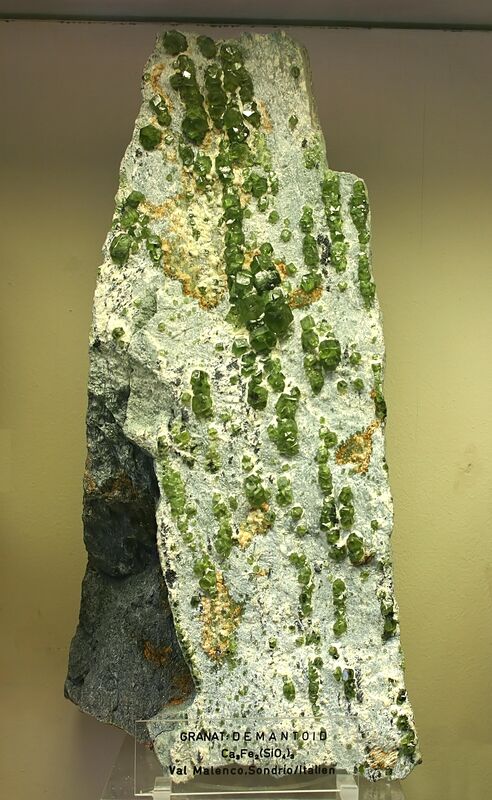
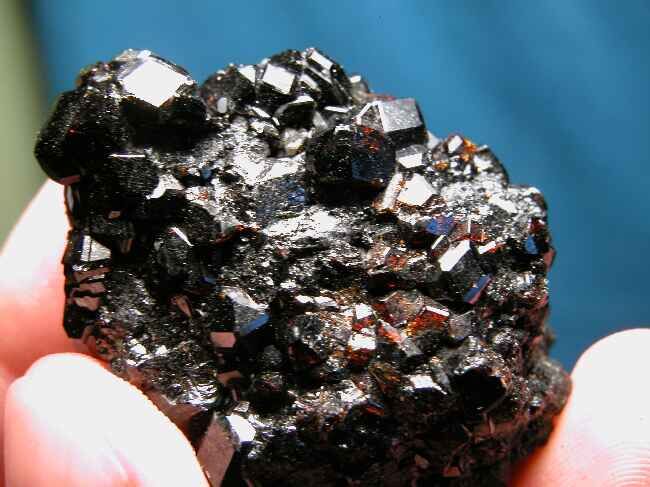
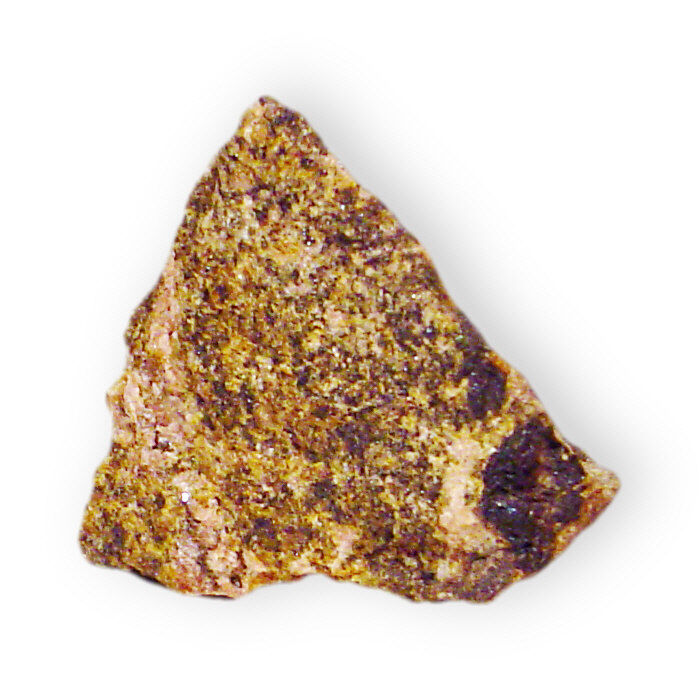
Physical
- Hardness
- 1Talc
- 2Gypsum
- 3Calcite
- 4Fluorite
- 5Apatite
- 6Orthoclase
- 7Quartz
- 8Topaz
- 9Corundum
- 10Diamond
- Lustre
- Vitreous · Resinous
- Transparency
- Transparent · Translucent
- Colour
- Yellow · greenish yellow to emerald-green · dark green · brown · brownish red · brownish yellow · grayish black · black · may be sectored
One color changes from green in the presence of daylight to brown under incandescent light; the other color changes from yellow–green to orange. According to the chemical compositional analysis, unlike common andradite garnets, color-changing garnets have a high content of Fe2+, and their contents of Cr and/or V (common elements leading to the alexandrite-like effect) and Ce + Nd are very low. In the UV–Vis–NIR spectra, the wide absorption band near 575 nm is produced by the spin-forbidden transition (5Eg → 3T1g and 5Eg → 3E1g) of eightfold-coordinated high-spin Fe2+, leading to the emergence of transmission windows in the green (centered at 525 nm) and red (above 650 nm) regions, which is the main reason for the alexandrite-like effect of the color-changing andradite. Appears to be from a skarn deposit.[[1]]
- Streak
- White
- Tenacity
- brittle
- Fracture
- Irregular/Uneven · Conchoidal
- Density
- 3.8 g/cm³
Optical
- Optical type
- Isotropic
- Surface relief
- Very high
- Principal indices
- n 1.887
- Anisotropism
- Typically weak
- Tropism
- Anisotropic
- Single index
- n = 1.887
Crystallography
- Space group
- #225
- Cell parameters
- a = 12.056 Å
- Z
- 8
- Morphology
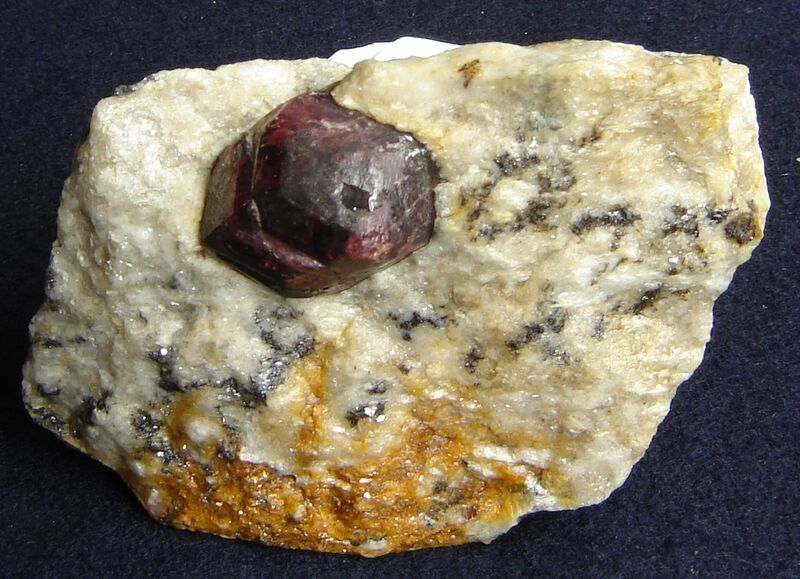
Commonly well-crystallized dodecahedra, trapezohedra, or combinations, to 5 cm. Also granular to massive.
- Type-locality form
A yellowish-grey to dark straw-yellowish, vitrous mineral with an uneven fracture (From the description of d'Andrada 1800).
- Comment
Al-Fe ordered variants may show space groups I-1 (subgroup of Ia3d) or Fddd (Kingma & Downs, 1989).
Chemical composition
- Impurities
- Ti
- Cr
- Al
- Mg
Synonyms
- Allochroit
- Allochroite
- Andradite Garnet
- Aplom
- Aplome
- Calcium-Ferrigranat
- Jellelite
- Jellesite
- Jelletite
- Kalkeisengranat
- Kalkeisentongranat
- Polyadelphine
- Polyadelphit
- Rothoffite
In other languages
- French
- andradite
- German
- Andradit · Calcium-Eisen-Granat · Kalkeisengranat
- Spanish
- andradita
- Italian
- andradite
- Portuguese
- andradita
- Japanese
- 灰鉄柘榴石
- Chinese
- 钙铁榴石
- Russian
- андрадит
- Arabic
- أندرديت
Classification
9.AD.25
- 9SilicatesClass
- 9.ANesosilicatesDivision
- 9.ADNesosilicates without additional anions; cations in [6] and/or greater coordinationGroup
- 9.AD.25AndraditeSpecies
51.04.3b.01
- 51Nesosilicates Insular Sio4 Groups OnlyClass
- 51.04Insular SiO4 Groups Only with cations in [6] and >[6] coordinationType
- 51.04.3b— unnamed intermediate level —Group
- 51.04.3b.01AndraditeSpecies
14.22.9
- 14Silicates not Containing AluminumClass
- 14.22Silicates of Fe and CaGroup
- 14.22.9AndraditeSpecies
Group, growth & confusion
 AlmandineFe2+3Al2(SiO4)3Mineral—
 CalderiteMn2+3Fe3+2(SiO4)3Mineral—
- EringaiteCa3Sc2(SiO4)3Mineral—
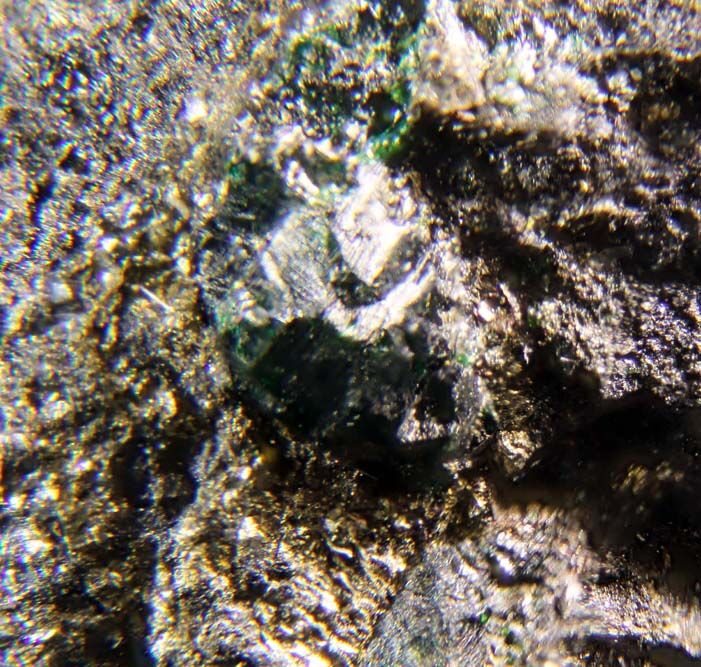 GoldmaniteCa3V3+2(SiO4)3Mineral—
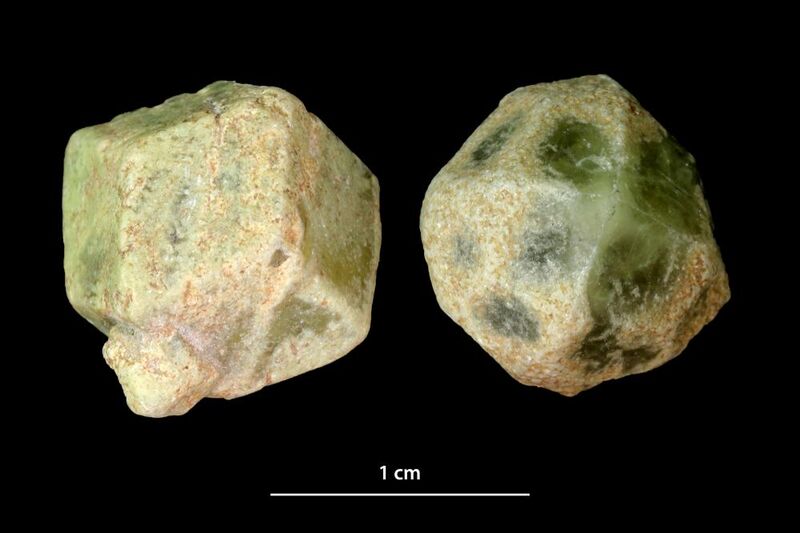 GrossularCa3Al2(SiO4)3Mineral—
- KnorringiteMg3Cr2(SiO4)3Mineral—
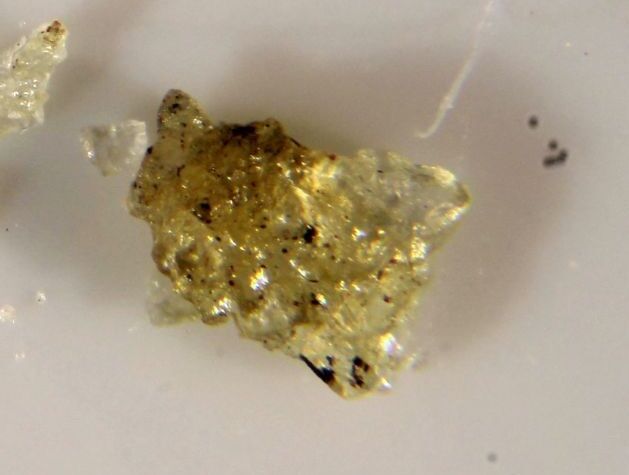 MajoriteMg3(MgSi)(SiO4)3Mineral—
- Menzerite-(Y)(CaY2)Mg2(SiO4)3Mineral—
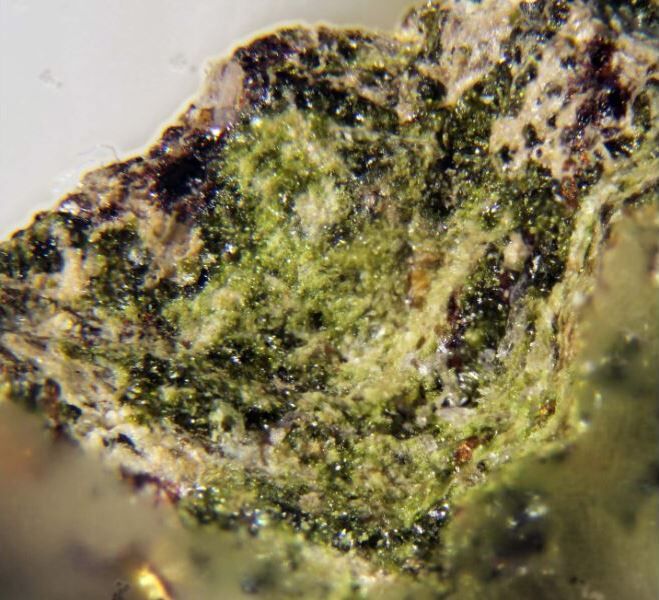 MomoiiteMn2+3V3+2(SiO4)3Mineral—
- MorimotoiteCa3(TiFe2+)(SiO4)3Mineral—
 CalciteCa(CO3)Mineral—
 Cancrinite(Na,Ca,◻)8(Al6Si6)O24(CO3,SO4)2 · 2H2OMineral—
 DolomiteCaMg(CO3)2Mineral—
 EpidoteCa2(Al2Fe3+)[Si2O7][SiO4]O(OH)Mineral—
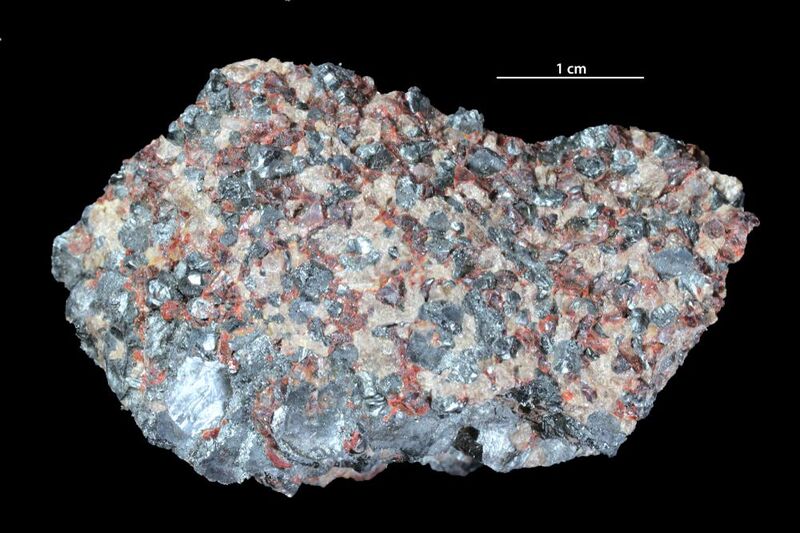 FrankliniteZnFe3+2O4Mineral—
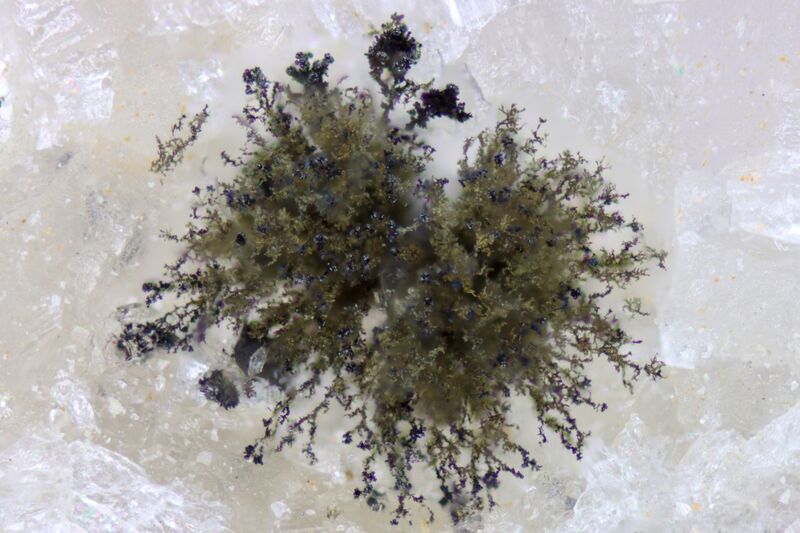 GeeriteCu8S5Mineral—
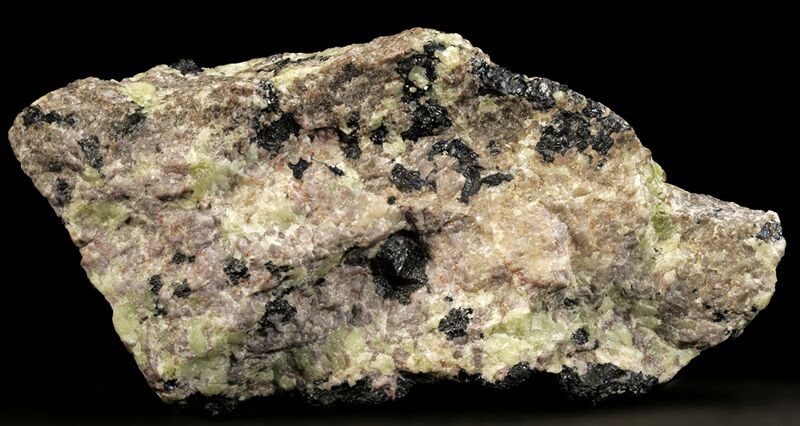 GlaucochroiteCaMn2+(SiO4)Mineral—
- GrossularCa3Al2(SiO4)3Mineral—
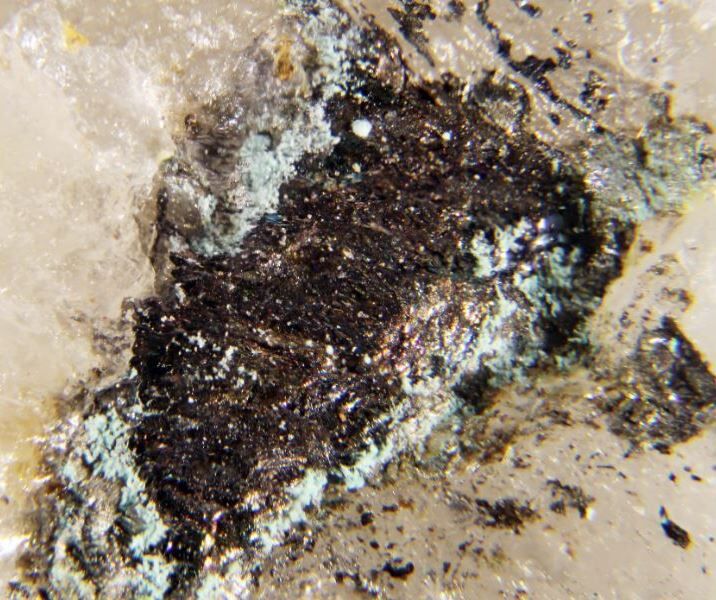 HammariteCu2Pb2Bi4S9Mineral—
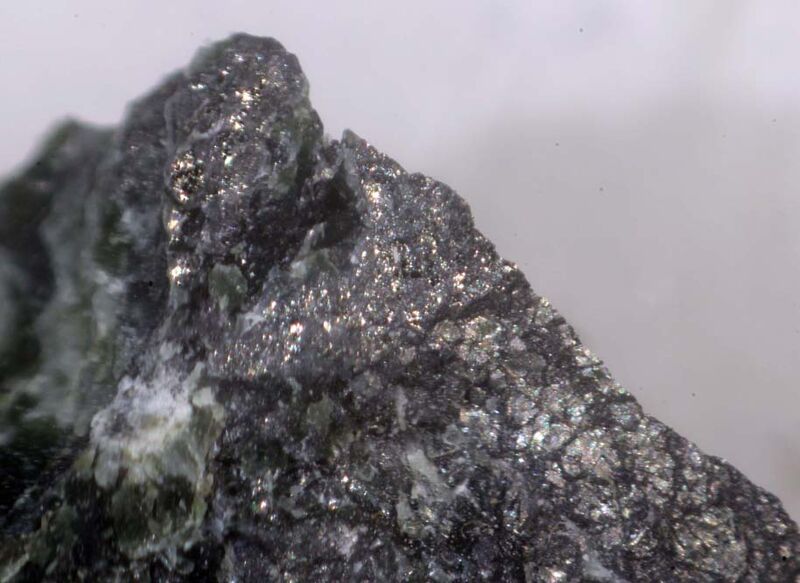 HeazlewooditeNi3S2Mineral—
Literature, links & citation
- 1800d' Andrada [e Silva], [José Bonifácio] (1800) Kurze Angabe der Eigenschaften und Kennzeichen einiger neuen Fossilien aus Schweden und Norwegen : nebst einigen chemischen Bemerkungen über dieselben [A brief description of the properties and characteristics of some new fossils from Sweden and Norway : together with some chemical remarks on the same]. Allgemeines Journal der Chemie, S. 1 Vol. 4 (19). 28-39
- 1868Dana, James D., Brush, George Jarvis (1868) A System of Mineralogy (5th ed.). p.882
- 1967Manning, P.G. (1967) The optical absorption spectra of some andradites and the identification of 6A, → 4A, 4E(G) transition in octahedrally bonded Fe+3. Canadian Journal of Earth Sciences: 4: 1039-1047.
- 1968Isaacs, T. (1968) Titanium substitution in andradites. Chemical Geology: 3: 219-222.
- 1968Howie, R. A., Woolley, A. R. (1968) The role of titanium and the effect of TiO2 on the cell-size, refractive index, and specific gravity in the andradite-melanite-schorlomite series. Mineralogical Magazine and Journal of the Mineralogical Society, 36 (282) 775-790 doi:10.1180/minmag.1968.036.282.04 DOI: 10.1180/minmag.1968.036.282.04
Entry last updated
@misc{mineral2026,
  author    = {Mineral Index editorial board},
  title     = {Andradite — Mineral Index},
  year      = {2026},
  url       = {https://mineralindex.org/minerals/andradite-223}
}