History
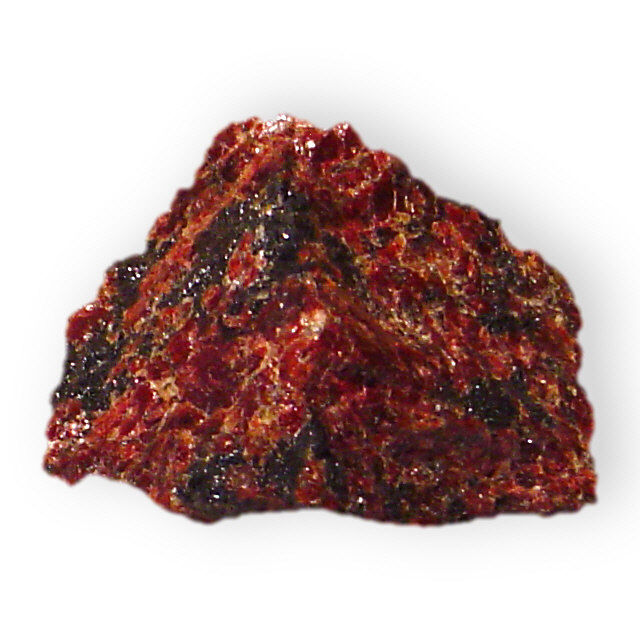
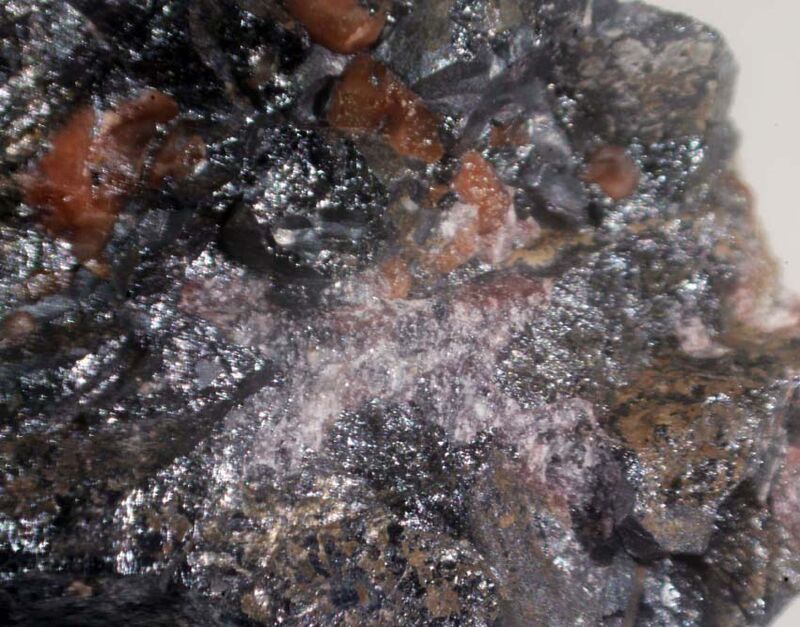
Mining at Sterling Hill, in Sussex County, New Jersey, began in the 1630s — and started with a mistake. The dark ore was first taken for a copper deposit. Only later was it recognised as an unusual zinc-manganese assemblage. Three minerals dominated it: willemite, the black oxide franklinite, and the red oxide zincite. Commercial zinc mining of the Franklin district began in the early 19th century, with many small companies working the area for zinc and iron.
In 1825 the deposit produced its first scientific puzzle. The American geologists Lardner Vanuxem and William Hypolitus Keating analysed a specimen and called it a siliceous oxyde of zinc. At the time, that name was a synonym of electric calamine — the mineral now known as hemimorphite. The match was an accident of arithmetic. Willemite and hemimorphite carry nearly the same weight percentage of zinc and silica. The iron and manganese Vanuxem and Keating measured as extras happened to fall in the same proportion as the water in true hemimorphite. Their crystallography was also wrong.
Gerard Troost saw the error the same year. He wrote that the new mineral was almost certainly a separate species and sent specimens to the Scottish chemist Thomas Thomson. The specimens reached Thomson without a clear indication of which grain was the unknown. He analysed a more prominent companion mineral instead, and the question was left open.
The formal naming came five years later. In 1830 the French mineralogist Serve-Dieu Abailard "Armand" Lévy named the species willemite. He chose the name in honour of William I — Willem in Dutch — King of the Netherlands from 1813 to 1840. The honorific was personal. Lévy had been banished from France during the Bourbon Restoration, and the king had granted him a professorship at the University of Liège. The type locality, the Vieille Montagne zinc mine, sat within the Kingdom of the Netherlands at the time. It is in Belgium today.
A century of zinc
Through the late 19th century the small operators of the Franklin district consolidated. In 1897 they merged into the New Jersey Zinc Company. The Franklin mine itself was worked for more than a century before its reserve was exhausted in 1954. Sterling Hill kept producing until 1986, when it closed and later reopened as a mining museum.
The same decades saw willemite move from ore to phosphor. Synthetic willemite doped with manganese ions formed the basis of first-generation fluorescent tube phosphors. The brilliant green glow of the natural mineral also lit the screens of early television tubes. In the 1940s it was displaced in lamp manufacture by second-generation halophosphors based on fluorapatite, themselves later replaced by triphosphor blends.
The fluorescent capital of the world
Franklin and Sterling Hill have also yielded the most celebrated fluorescent assemblage in mineralogy. More than 360 minerals are known from the district. Thirty-five of them occur nowhere else on Earth, and ninety-one of them fluoresce. Willemite is the headline performer — a brilliant green glow under shortwave ultraviolet light. The town of Franklin styles itself the "Fluorescent Mineral Capital of the World".
Industrial & practical applications
Willemite has no significant industrial use today. Its working life as a zinc ore and as a lamp phosphor belongs to the past.
What remains is a mineralogical role. Specimens from the Franklin and Sterling Hill deposits, in Sussex County, New Jersey, are sought by collectors and museums. The draw is the brilliant green glow the mineral emits under shortwave ultraviolet light. That same fluorescence makes willemite a standard teaching mineral for luminescence. The Rainbow Tunnel at the Sterling Hill Mining Museum exploits the effect at full scale, lighting up entire walls of ore under shortwave lamps.
Where it forms, where it's found
- Geological setting
Occurs generally as a secondary zinc mineral derived from the supergene weathering of sphalerite (gossan & other oxidized deposits) or by the alteration of primary sphalerite in hydrothermal veins. The Franklin-Sterling Hill orebodies are unique in the context of massive willemite as a primary ore mineral, derived from an unknown proto-ore during Cambrian, or older, times.
- Type locality
- Altenberg mine
- Kelmis
- Liège
- Wallonia
- Belgium
50.7143°, 6.0091°
Varieties
Physical
- Hardness
- 1Talc
- 2Gypsum
- 3Calcite
- 4Fluorite
- 5Apatite
- 6Orthoclase
- 7Quartz
- 8Topaz
- 9Corundum
- 10Diamond
- Transparency
- Transparent · Translucent
- Colour
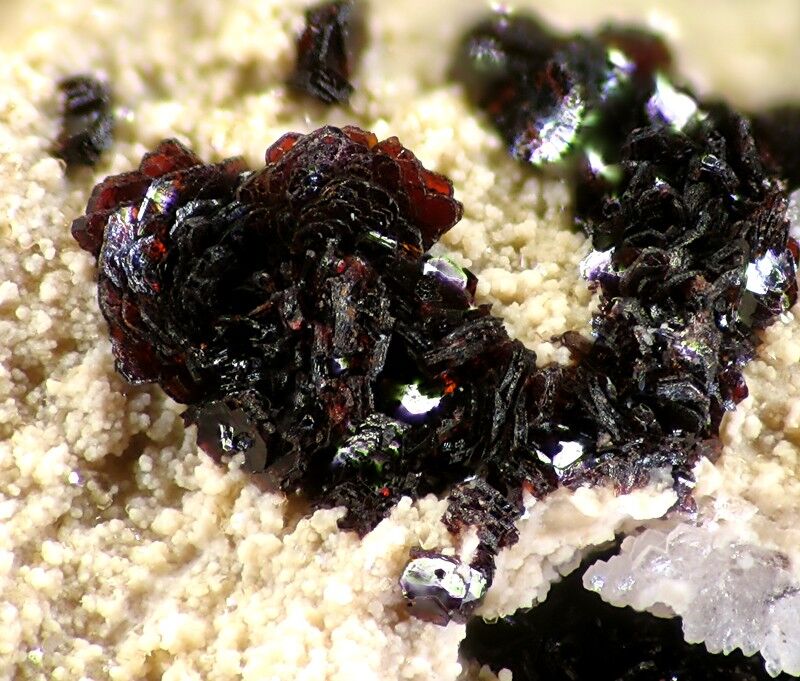
- Colorless · white · pastel green · apple-green · light blue · azure-blue · yellow · burgundy-red · brown · mahogany-brown · gray · black · pink
- Streak
- White
- Tenacity
- brittle
- Cleavage
- Distinct/Good
Good to poor (110), poor (0001)
- Fracture
- Irregular/Uneven · Sub-Conchoidal
- Density
- 3.89 g/cm³
Optical
- Optical type
- Uniaxial (+)
- Refractive index
- 1.691 – 1.725
- Surface relief
- High
- Principal indices
- nω 1.691 – 1.694 · nε 1.719 – 1.725
- UV response
- Bright green (SW UV & X-ray), often with very strong green phosphorescence; green (LW SW); creamy-white to pastel yellow (SW & LW UV)(common). Non-fluorescent willemite exists, but is very rare.
Crystallography
- Space group
- #80
- Cell parameters
- a = 13.93 Å · c = 9.31 Å
- Z
- 18
- Morphology
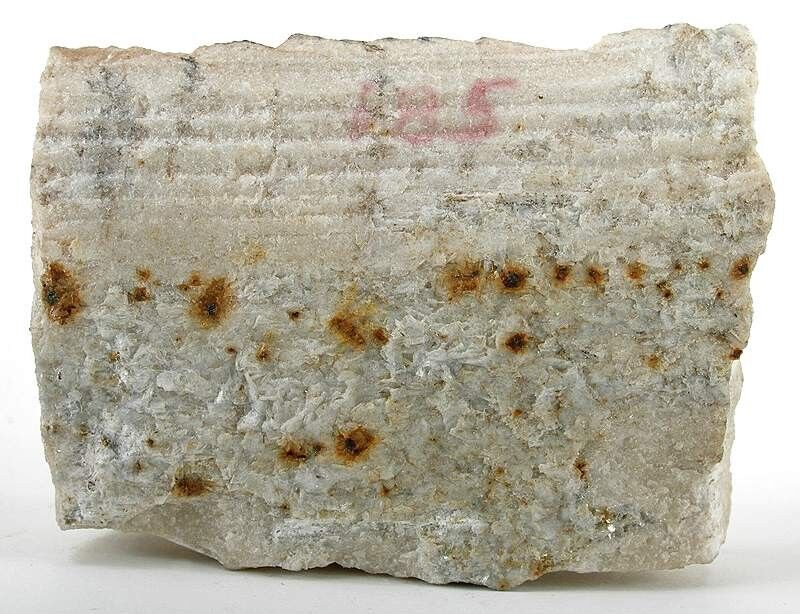
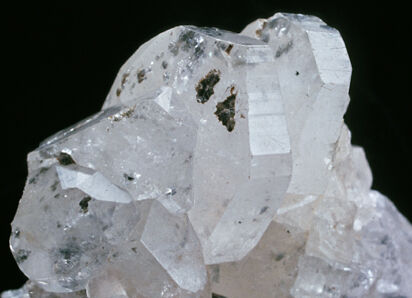
Blocky, hexagonal, barrel-shaped crystals, often with rounded terminations (Franklin area); commonly acicular in clusters to radial-fibrous aggregates; long-prismatic, hexagonal, doubly-terminated crystals; layered, botryoidal masses (Putta). Forms include (0001), (10), {30_34), (110), (101), (012), (211).
- Twinning
Twinning in willemite is rare. Metcalf-Johansen (1977) reported willemite trillings (100) from Illimausaq, Greenland. At least one definite trilling twin of willemite crystals is known from Franklin, New Jersey.
Chemical composition
- Impurities
- Al
- Fe
- Mn
- Pb
- Mg
- Ca
Synonyms
- Belgit
- Belgita
- Belgite
- Hebertine
- Villemita
- Villemite
- Wilhelmite
- Willemine
In other languages
- French
- Willemite
- German
- Belgit · Willemit · Xingshaoit
- Spanish
- Willemita
- Italian
- Willemite
- Japanese
- トルースタイト · 珪亜鉛鉱
- Chinese
- 原矽酸鋅 · 矽鋅礦
- Russian
- Виллемит
- Arabic
- فيليميت
Classification
9.AA.05
- 9SilicatesClass
- 9.ANesosilicatesDivision
- 9.AANesosilicates without additional anions; cations in tetrahedral [4] coordinationGroup
- 9.AA.05WillemiteSpecies
51.01.01.02
- 51Nesosilicates Insular Sio4 Groups OnlyClass
- 51.01Insular SiO4 Groups Only with cations in [4] coordinationType
- 51.01.01Phenakite groupGroup
- 51.01.01.02WillemiteSpecies
14.7.11
- 14Silicates not Containing AluminumClass
- 14.7Silicates of Ba, Sr and ZnGroup
- 14.7.11WillemiteSpecies
Group, growth & confusion
 AdeliteCaMg(AsO4)(OH)Mineral—
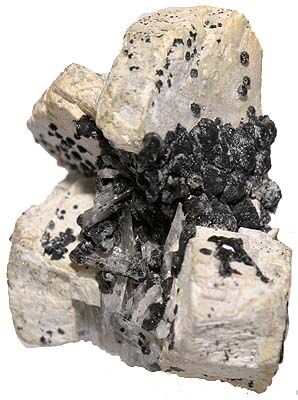 AlamositePbSiO3Mineral—
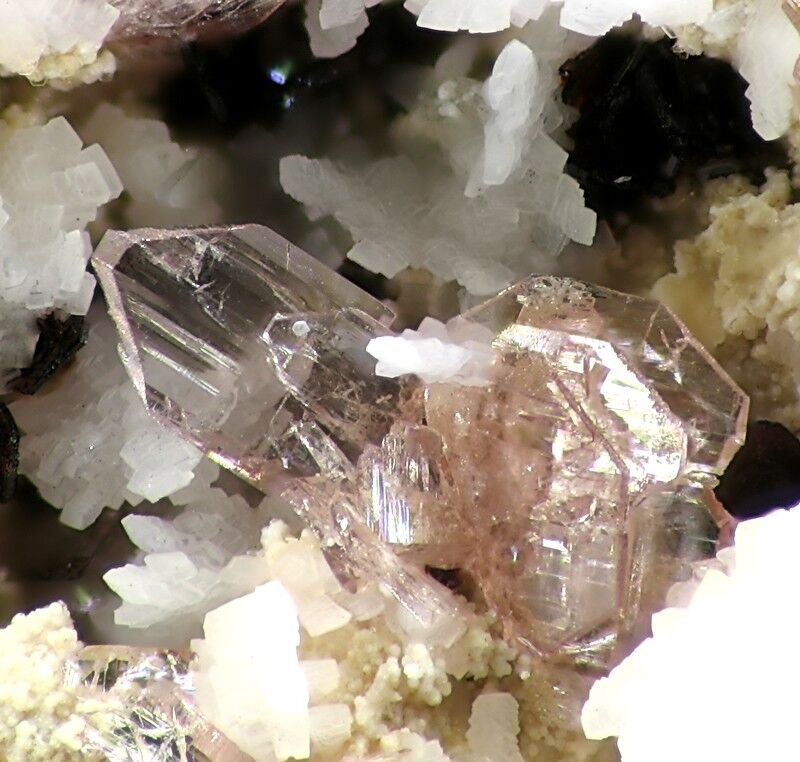 AllactiteMn2+7(AsO4)2(OH)8Mineral—
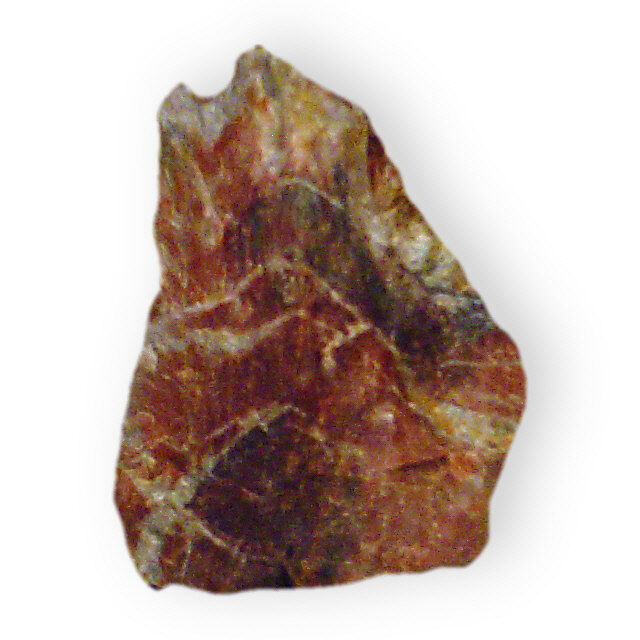 AlleghanyiteMn2+5(SiO4)2(OH)2Mineral—
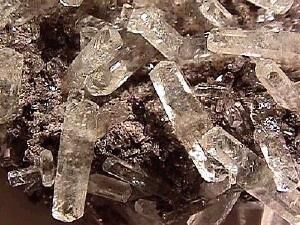 CalciteCa(CO3)Mineral—
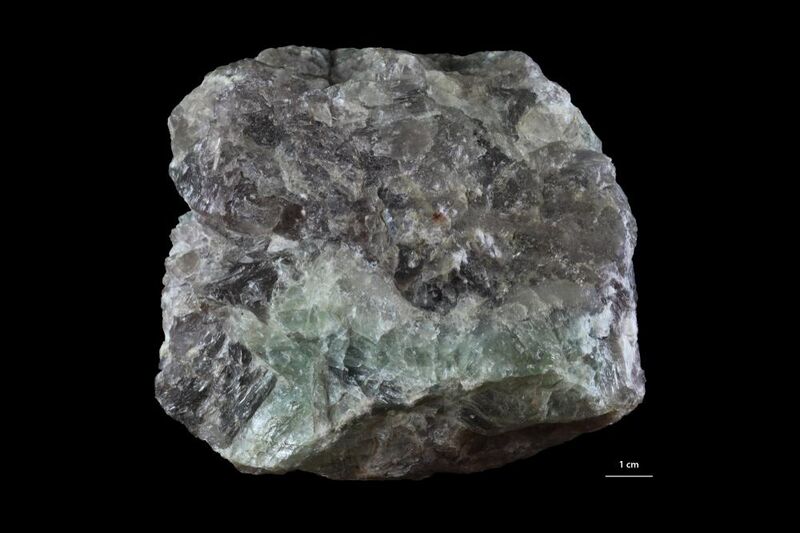 FluoriteCaF2Mineral—
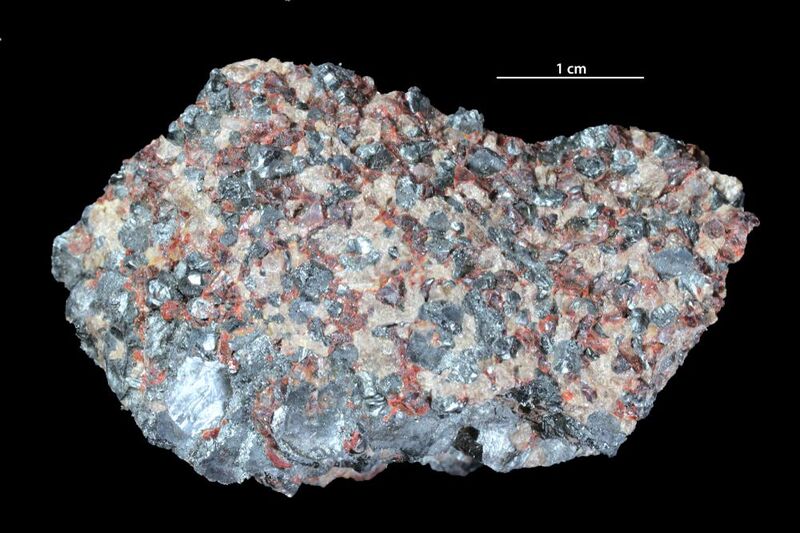 FrankliniteZnFe3+2O4Mineral—
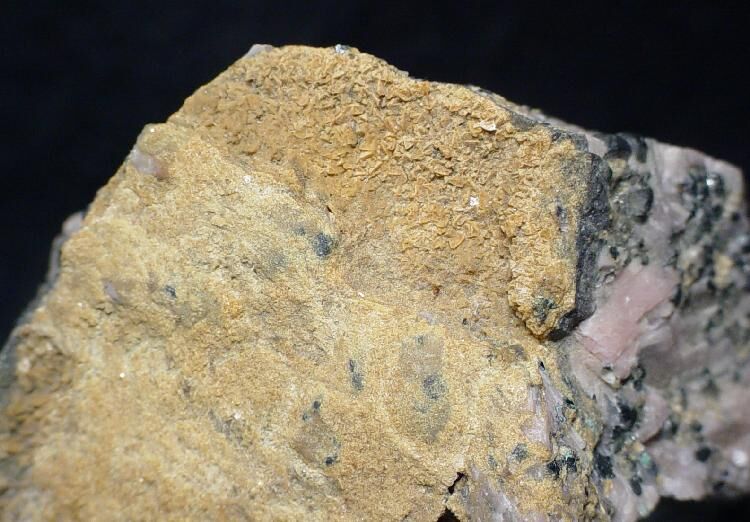 FriedeliteMn2+8Si6O15(OH)10Mineral—
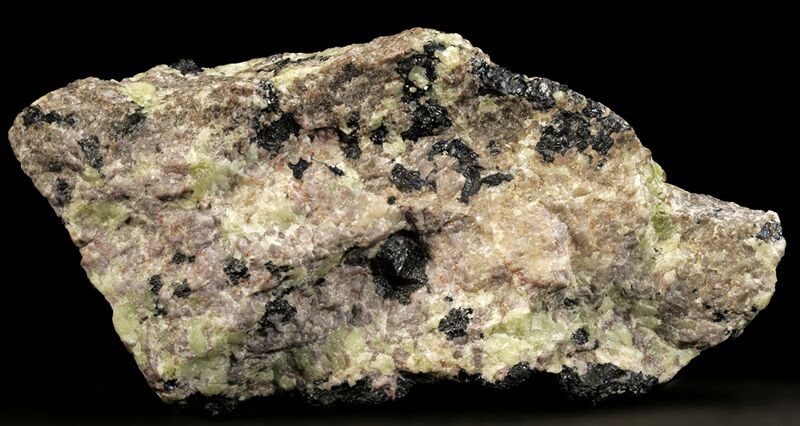 GlaucochroiteCaMn2+(SiO4)Mineral—
 Hematolite(Mn,Mg,Al)15(AsO4)2(AsO3)(OH)23Mineral—
Literature, links & citation
- 1824Vanuxem, Lardner; Keating, William H. (1824) Observations upon some of the minerals discovered at Franklin, Sussex County, N.J.. Journal of the Academy of Natural Science of Philadelphia, 4, 3-11 (8). (as "siliceous oxide or silicate of zinc")
- 1824Vanuxem, Lardner; Keating, William H. (1824) Analysis of the Pyroxene, found at the Franklin Iron Works, near Sparta, Sussex Co. New-Jersey. American Journal of Science and Arts, 4, 8.
- 1825Troost, Gerard (1825) Observations on the Zinc Ores of Franklin and Sterling, Sussex County, New Jersey. Academy of Natural Sciences Philadelphia, 4, 220-231.
- 1830Lévy, A. (1830) Der Willemit. Jahrbuch für Mineralogie, Geognosie, Geologie und Petrefaktenkunde, 1, 71-71.
- 1843Lévy, A. (1843) Description de plusieurs espèces minérales appartenant à la famille du zinc. Annales des Mines, Paris, 4e série, 4, 517.
Entry last updated
@misc{mineral2026,
  author    = {Mineral Index editorial board},
  title     = {Willemite — Mineral Index},
  year      = {2026},
  url       = {https://mineralindex.org/minerals/willemite-4292}
}