History
The name albite comes from the Latin albus — white — a nod to the pale, milky colour the crystals usually wear.
The mineral was first described in 1815 by the Swedish chemists Johan Gottlieb Gahn and Jöns Jacob Berzelius. The first reported occurrence was at Finnbo, in Falun, Dalarna, Sweden. Berzelius and Gahn named it after the colour of the specimens in front of them.
The naming arrived at a useful moment. Mineralogists across Europe were sorting out the feldspar family — a group of light-coloured rock-forming silicates. Albite turned out to sit at the sodium end of a continuous chemical bridge known as the plagioclase series. The other end of the bridge is anorthite, the calcium-rich counterpart.
Two varieties of albite carry distinct names. Cleavelandite is the form that grows in granite and pegmatite. An iridescent variety, found in 1925 near the White Sea coast in northern Russia, has circulated in the trade as belomorite.
Industrial & practical applications
Most of the albite mined today ends up dissolved into glass or fired into ceramic.
Industry rarely separates albite from the other feldspars at the quarry. The family is reported together as a single commodity called feldspar, alongside the closely related rock nepheline syenite. The uses described below therefore apply to commercial feldspar as a whole. They apply to albite to the extent that it is part of any given shipment.
In glass manufacturing, feldspar contributes the sodium and aluminium the melt needs. The sodium acts as a flux — a material that lowers the temperature at which the other ingredients melt. The aluminium then stiffens the finished glass and helps it resist scratches and chemical attack. In the United States, glass manufacturing took an estimated 60 % of feldspar and nepheline use in 2023.
The remaining 40 % went into ceramics — ceramic tile, pottery, and other uses. Inside a ceramic body, feldspar acts as a flux in the same way. It melts during firing and binds the harder particles into a hard, glass-like matrix.
Cleavelandite, the variety of albite that grows in granite and pegmatite, is occasionally collected for display. No industrial role is recorded specifically for it.
United States feldspar production in 2023 had an estimated value of 60 million United States dollars and came from six companies operating in California, Idaho, North Carolina, and Virginia. Identified and undiscovered resources are described as more than adequate to meet anticipated world demand.
Where it forms, where it's found
- Geological setting
A major constituent of granites and granite pegmatites, alkalic diorites, basalts, and in hydrothermal and alpine veins. A product of potassium metasomatism and in low-temperature and low-pressure metamorphic facies and in some schists. Detrital and authigenic in sedimentary rocks.
- Type locality
- Catharina Neufang Mine
- St Andreasberg
- Braunlage
- Goslar District
- Lower Saxony
- Germany
51.7139°, 10.5131°
Varieties
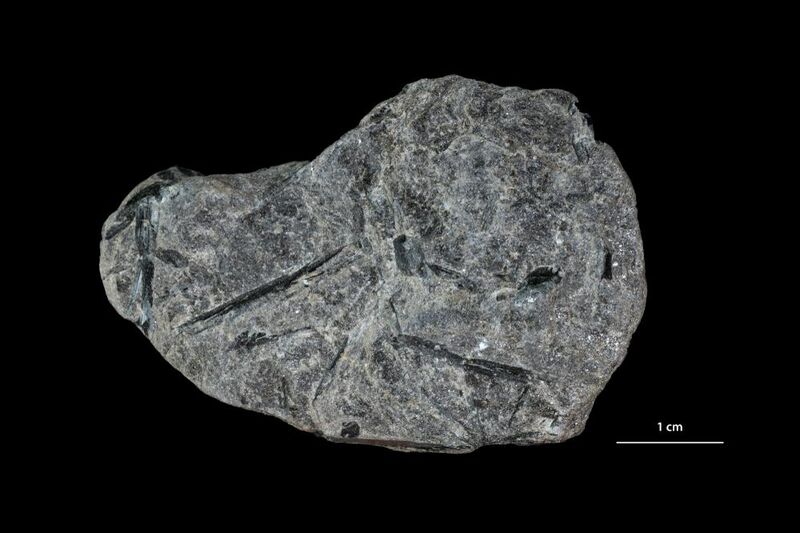 Andesine(Na,Ca)[Al(Si,Al)Si2O8]Variety—
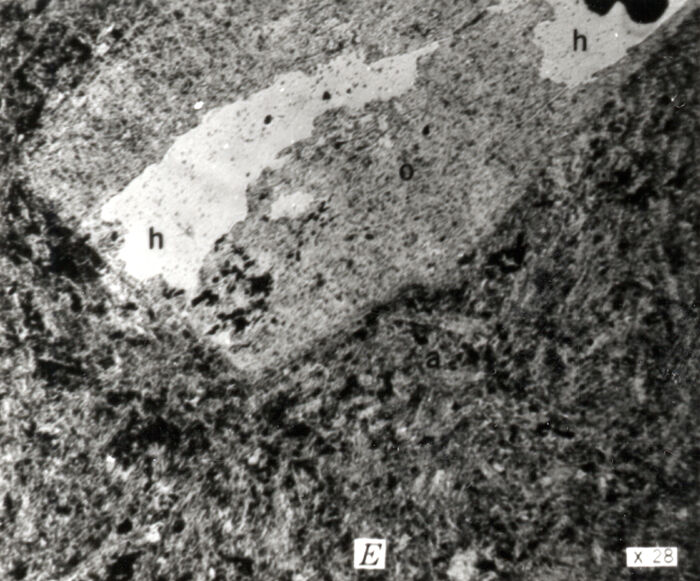 Anorthoclase(Na,K)AlSi3O8Variety—
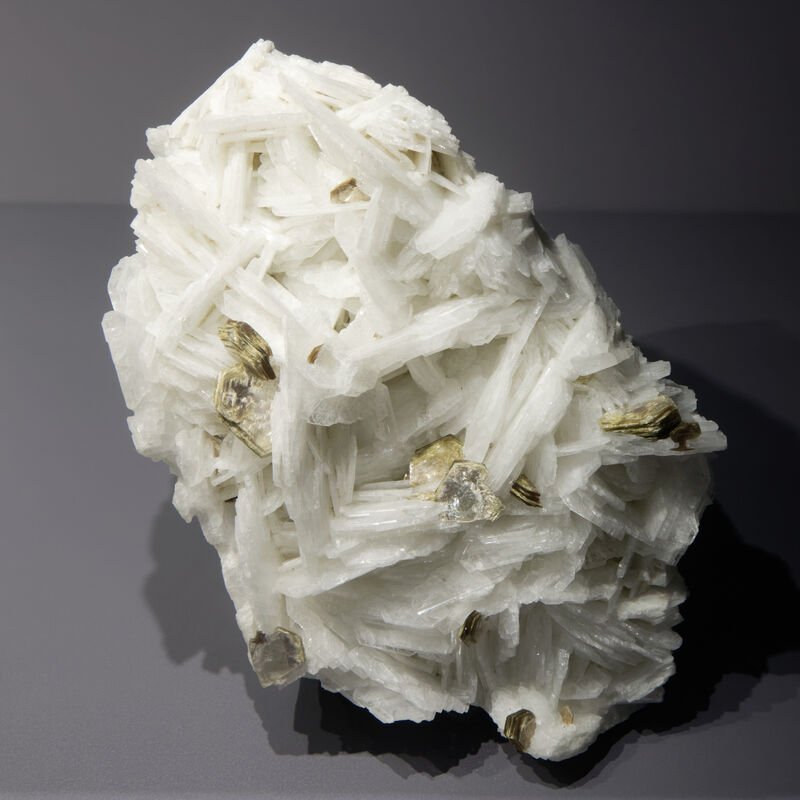 CleavelanditeNa(AlSi3O8)Variety—
- High AlbiteNaAlSi3O8Variety—
- Low AlbiteNa(AlSi3O8)Variety—
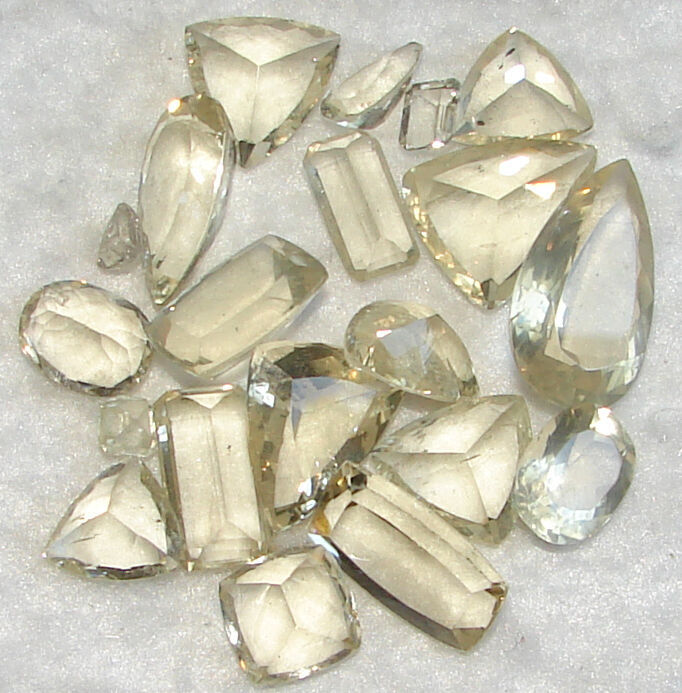 Oligoclase(Na,Ca)[Al(Si,Al)Si2O8]Variety—
 PericlineNa(AlSi3O8)Variety—
 PeristeriteNa(AlSi3O8)Variety—
- Sodic AlbiteNaAlSi3O8Variety—
- ZygaditeNa(AlSi3O8)Variety—
Physical
- Hardness
- 1Talc
- 2Gypsum
- 3Calcite
- 4Fluorite
- 5Apatite
- 6Orthoclase
- 7Quartz
- 8Topaz
- 9Corundum
- 10Diamond
- Lustre
- Vitreous · pearly
- Transparency
- Transparent · Translucent · Opaque
- Colour
- White to gray or colorless · uncommonly blue tinted or rarely green or red tinted · while much included albite may be strongly colored
May be chatoyant. Originally, Henry J. Brooke (1822) believed that most albite was either pale blue or pale red, but the most common colors of albite from today's perspective are white to colorless.
- Streak
- White
- Tenacity
- brittle
- Cleavage
- Perfect
on [001], good on [010], imperfect on (110)
- Fracture
- Irregular/Uneven · Conchoidal
- Density
- 2.6 g/cm³
Optical
- Optical type
- Biaxial (+) · 2V measured = 45° · 2V calc = 76 – 82°
- Refractive index
- 1.528 – 1.542
- Surface relief
- Moderate
- Principal indices
- nα 1.528 – 1.533 · nβ 1.5317 – 1.53685 · nγ 1.538 – 1.542
- Dispersion
- r < v weak
- Notes
Biaxial - for high variety.
Crystallography
- Cell parameters
- a = 8.16 Å · b = 12.87 Å · c = 7.11 Å
- Cell angles
- α = 93.45 ° · β = 116.4 ° · γ = 90.28 °
- Ratio a:b:c
- 1 : 1.577 : 0.871
- Z
- 4
- Morphology
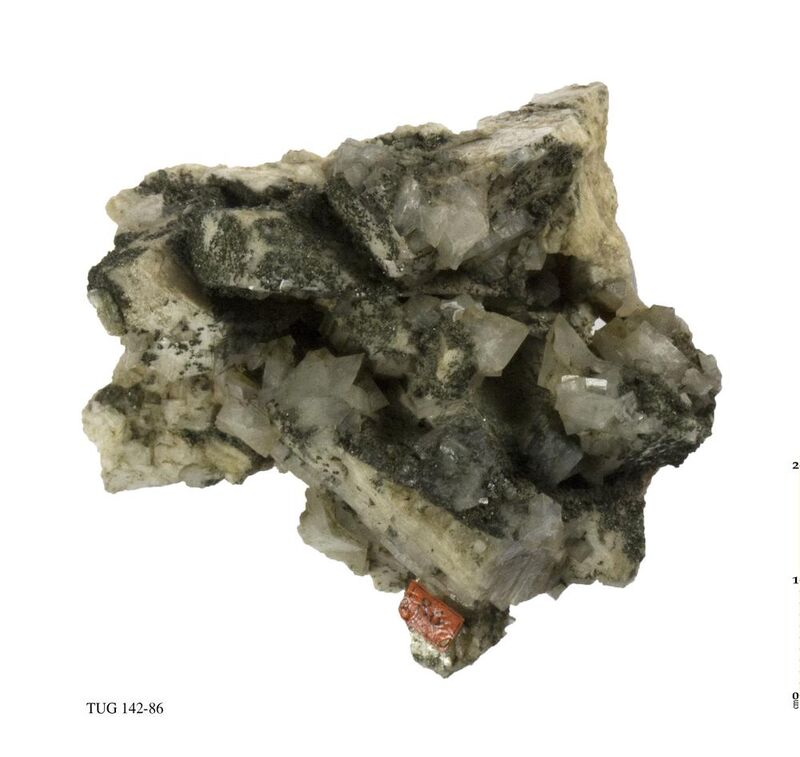
Crystals commonly tabular parallel (010) (thin plates to blocky crystals), may be curved, to 3 cm; divergent aggregates, granular, cleavable massive.
- Twinning
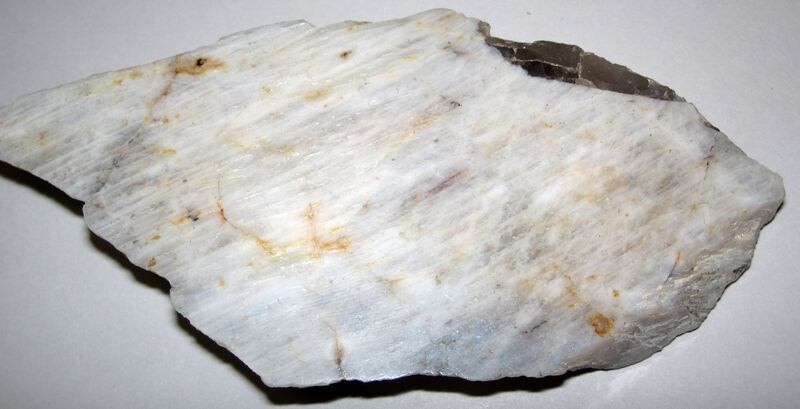
Common around [010] or perpendicular (010), giving polysynthetic striae on 001 or (010); many other laws, contact, simple and multiple.
- Comment
High and low forms; both are described in the non-standard space-group C-1 (chosen by convention to facilitate comparison with C-centred monoclinic orthoclase and sanidine). The reduced cell is: a = 7.158, b = 7.438, c = 7.713 Å, α = 115.068, β = 107.321, γ = 100.431° (cell from Armbruster et al., 1990).
Chemical composition
- Impurities
- Ca
- K
- Mg
Synonyms
- Acid plagioclase
- Albitic plagioclase
- Analbite (of Alling)
- Cryptoclase
- Cryptose
- Hyposclerit
- Hyposclerita
- Hyposclerite
- Kieselspath
- Natro-Feldspat
- Olafit
- Olafita
- Olafite
- Soda Feldspar
- Sodaclase
- Tetartine
- White Feldspar
- White Schorl
- Zygadit
- Zygadita
In other languages
- French
- Acid plagioclase · albite · Hyposclérite · Kieselspath · Natro-Feldspat · Sodaclase · Tetartine · Zygadite
- German
- Albit · Kieselspat · Natronfeldspat
- Spanish
- albita
- Italian
- albite
- Portuguese
- Albita · albite
- Japanese
- 曹長石
- Chinese
- 钠长石
- Simplified Chinese
- 钠长石
- Traditional Chinese
- 鈉長石
- Russian
- альбит · беломорит
- Arabic
- آلبايت · ألبايت · ألبيت · الألبيت
Classification
9.FA.35
- 9SilicatesClass
- 9.FTektosilicates without zeolitic H2ODivision
- 9.FATektosilicates without additional non-tetrahedral anionsGroup
- 9.FA.35AlbiteSpecies
76.01.03.01
- 76Tectosilicates Al-si FrameworkClass
- 76.01Al-Si Framework with Al-Si frameworksType
- 76.01.03Plagioclase seriesGroup
- 76.01.03.01AlbiteSpecies
16.2.1
- 16Silicates Containing Aluminum and other MetalsClass
- 16.2Aluminosilicates of NaGroup
- 16.2.1AlbiteSpecies
Group, growth & confusion
 AbelsoniteNiC31H32N4Mineral—
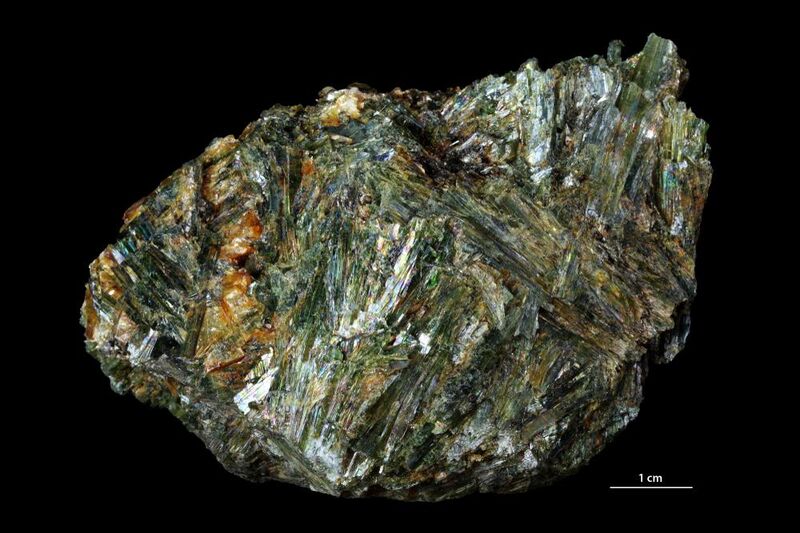 Actinolite◻Ca2(Mg4.5-2.5Fe2+0.5-2.5)Si8O22(OH)2Mineral—
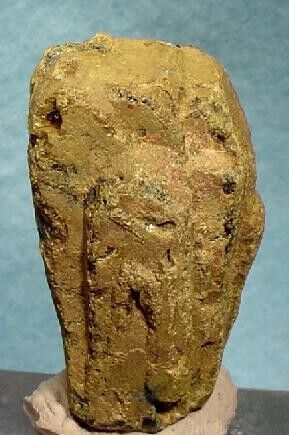 Aeschynite-(Nd)Nd(TiNb)O6Mineral—
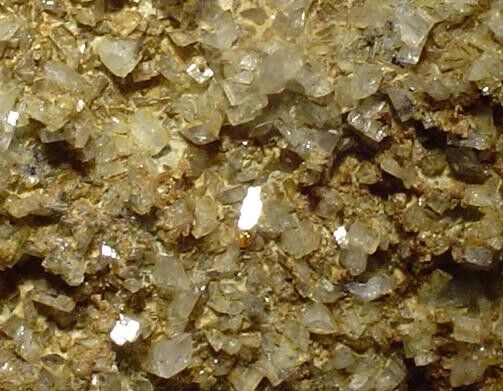 Ardennite-(As)Mn2+4Al4(AlMg)(AsO4)(SiO4)2(Si3O10)(OH)6Mineral—
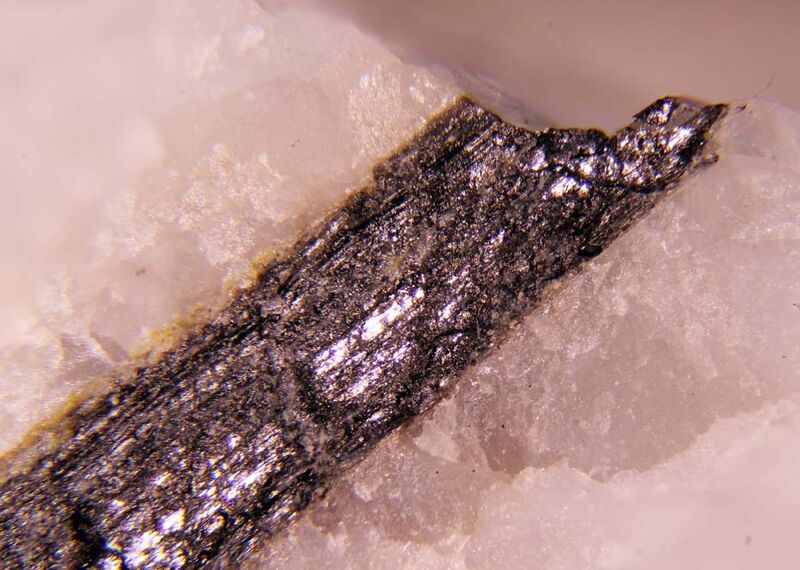 AschamalmitePb6-3xBi2+xS9Mineral—
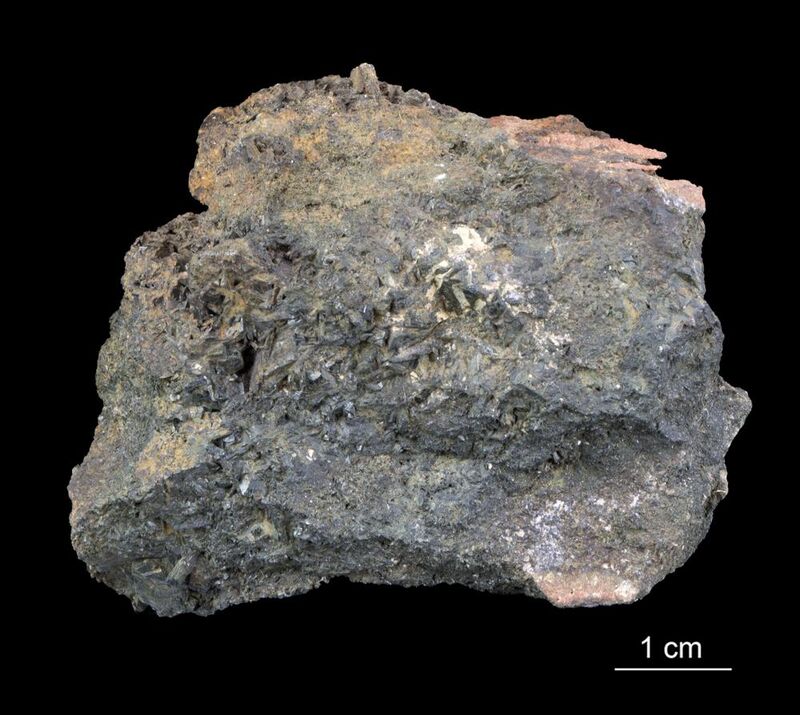 BabingtoniteCa2Fe2+Fe3+Si5O14(OH)Mineral—
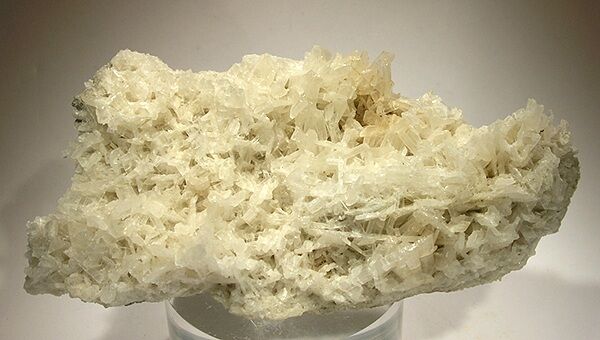 BikitaiteLiAlSi2O6 · H2OMineral—
- BraithwaiteiteNaCu2+5(Sb5+Ti4+)O2(AsO4)4[AsO3(OH)]2 · 8H2OMineral—
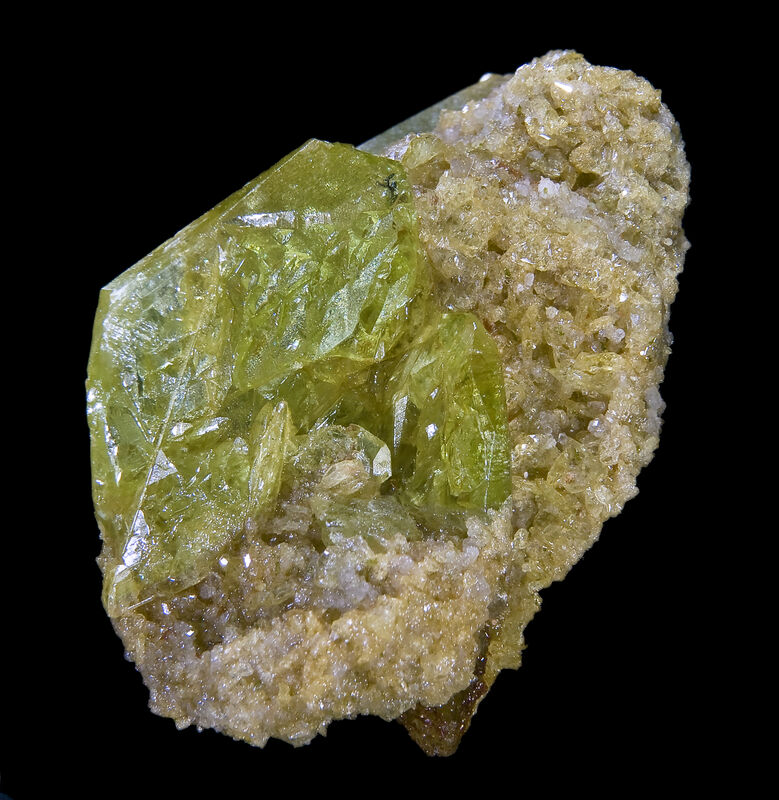 BrazilianiteNaAl3(PO4)2(OH)4Mineral—
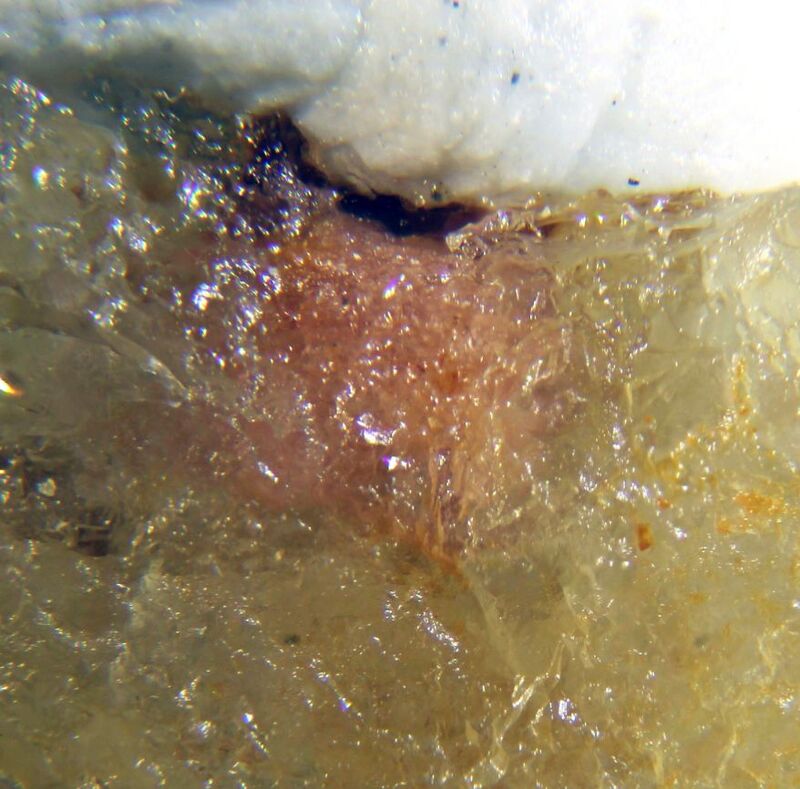 CascanditeCaScSi3O8(OH)Mineral—
Literature, links & citation
- 1823Rose. G. (1823) Über den Feldspat, Albit, Labradorit und Anorthit. Annalen der Physik und Chemie: 73/NF-43: 175-208.
- 1911Schaller, W.T. (1911) Krystallographische Notizen ueber Albit, Phenakit, und Neptunit: Zeitschr. für Kristallographie, Band 48: 550-558; USGS Bull. 490: 53-56.
- 1957MacKenzie, W.S. (1957) The crystalline modifications of NaAlSi3O8. American Journal of Science: 255: 481-516.
- 1958Smith, J. V., MacKenzie, W. S. (1958) Alkali feldspars: IV. The cooling history of high-temperature sodium-rich feldspars. American Mineralogist, 43 (9-10) 872-889
- 1958Ferguson, R. B., Traill, R. J., Taylor, W. H. (1958) The crystal structures of low-temperature and high-temperature albites. Acta Crystallographica, 11 (5) 331-348 doi:10.1107/s0365110x5800092xDOI: 10.1107/s0365110x5800092x
Entry last updated
@misc{mineral2026,
  author    = {Mineral Index editorial board},
  title     = {Albite — Mineral Index},
  year      = {2026},
  url       = {https://mineralindex.org/minerals/albite-96}
}