History
Titanite is the modern, internationally agreed name for a mineral the world knew for nearly two centuries as sphene.
The first sighting belongs to the Swiss naturalist Marc-Auguste Pictet, who in 1787 noted a "nouveau substance minérale" without giving it a full description or a name. The story then waits eight years for the Berlin chemist Martin Heinrich Klaproth. In 1795 Klaproth confirmed a new element in the ore rutile and named it titanium, after the Titans of Greek mythology. Recognising that Pictet's mystery mineral was rich in the same element, he named it titanite for its titanium content.
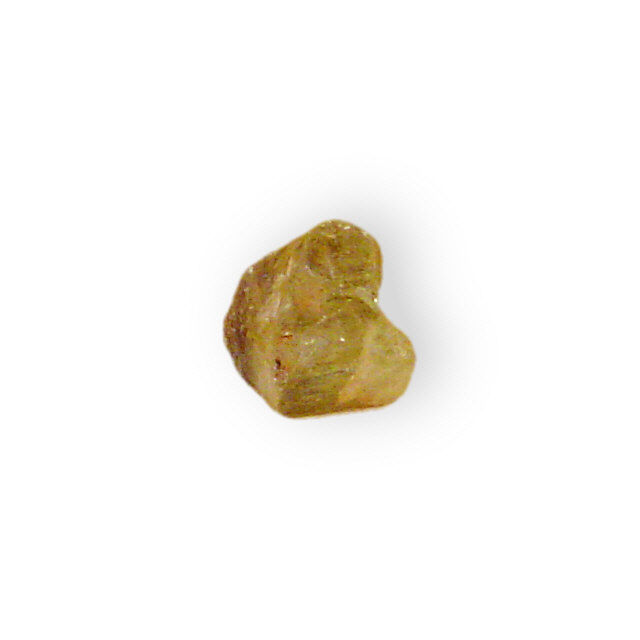
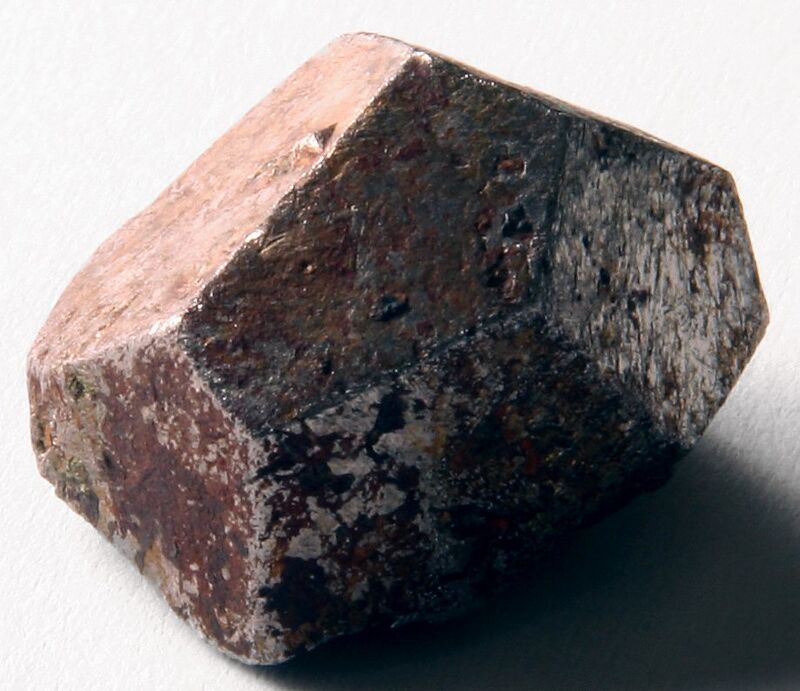
A second name arrived in 1801. The French crystallographer René Just Haüy proposed sphene, from the Greek sphenos — wedge — for the mineral's characteristic wedge-shaped crystals. Both names then coexisted in the literature for almost two centuries, with sphene dominating in gemmology and titanite in formal mineralogy.
The International Mineralogical Association settled the matter in 1982: it adopted titanite as the official species name and discredited sphene. Sphene survives in the gem trade as an informal name for transparent, fire-bright cut stones, but every modern technical publication now uses titanite.
Industrial & practical applications
Titanite has almost no bulk-industrial life. It contains roughly 40 % titanium dioxide by weight, but the world's titanium supply is drawn overwhelmingly from ilmenite and rutile. Ilmenite alone covers about 91 % of demand, so titanite is rarely mined as a titanium ore in its own right.
The mineral's real value is scientific. Titanite is one of the workhorse minerals of U–Pb geochronology, the technique that dates rocks by measuring how much radioactive uranium has decayed into lead inside a crystal. Titanite traps uranium when it grows and holds the resulting lead up to about 700 °C. It is also widespread as an accessory mineral, a minor but reliable component of many igneous and metamorphic rocks.
That high closure temperature is the point. Most mineral clocks only register cooling; titanite can record the formation event itself, letting geologists date deep-crustal metamorphism, magmatism, and ore-forming fluids.
In gemmology the older name survives. Cut sphene — transparent titanite, usually a vivid yellow-green to brown — is prized for a dispersion of 0.051. That figure exceeds the dispersion of diamond, the optical property that splits white light into spectral colours. The trade is small. Gem-quality crystals are uncommon, and at a hardness of 5.5 the stone is too soft for daily wear. Faceted sphene mostly ends up in collector pieces and pendants.
Where it forms, where it's found
- Geological setting
Common accessory mineral in intermediate and felsic plutonic rocks, pegmatites, alpine veins. Also in some gneisses, schists, and skarns.
- Type locality
- Titanite occurrence
- Hauzenberg
- Passau District
- Lower Bavaria
- Bavaria
- Germany
Varieties
Physical
- Hardness
- 1Talc
- 2Gypsum
- 3Calcite
- 4Fluorite
- 5Apatite
- 6Orthoclase
- 7Quartz
- 8Topaz
- 9Corundum
- 10Diamond
- Lustre
- Adamantine to resinous
- Transparency
- Transparent · Translucent
- Colour
- Brown · green · yellow · orange · rose-red · black · beige · grey · colourless · grey-blue · bluish
- Streak
- White
- Tenacity
- brittle
- Cleavage
- Distinct/Good
Good on (110)
- Density
- 3.48 g/cm³
Optical
- Optical type
- Biaxial (+) · 2V measured = 17 – 40° · 2V calc = 68 – 82°
- Refractive index
- 1.843 – 2.11
- Surface relief
- Very high
- Principal indices
- nα 1.843 – 1.95 · nβ 1.87 – 2.034 · nγ 1.943 – 2.11
- Pleochroism
- Visible
X= nearly colorless Y= yellow to green Z= red to yellow orange
- Dispersion
- r > v extreme
- Extinction
- Z ∧ c = 51°.
- Tropism
- Anisotropic
- Reflectance R%
- (10.7,12.6,1.5,2.47) 400, (10.4,12.4,1.46,2.33) 420, (10.1,12.1,1.43,2.27) 440, (9.98,11.9,1.39,2.18) 460, (9.90,11.8,1.37,2.15) 470, (9.84,11.7,1.36,2.11) 480, (9.71,11.5,1.34,2.06) 500, (9.61,11.3,1.32,2.01) 520, (9.50,11.2,1.30,1.97) 540, (9.48,11.1,1.29,1.96) 546, (9.46,11.1,1.29,1.94) 560, (9.45,11.0,1.28,1.92) 580, (9.43,11.0,1.28,1.91) 589, (9.44,11.0,1.28,1.91) 600, (9.44,11.0,1.28,1.91) 620, (9.44,11.0,1.29,1.91) 640, (9.43,10.9,1.29,1.89) 650, (9.44,11.0,1.29,1.89) 660, (9.44,10.9,1.29,1.88) 680, (9.44,10.9,1.29,1.87) 700
Crystallography
- Space group
- P21/a
- Cell parameters
- a = 7.057 Å · b = 8.707 Å · c = 6.555 Å
- Cell angles
- β = 113.81 °
- Ratio a:b:c
- 1 : 1.234 : 0.929
- Z
- 4
- Morphology
Common forms are (111), (110), (102), (100), (001) and (112). Crystals equant to wedge-shaped, or flattened with large (001) or (102), or prismatic by extension along [001], to 65 x 17 x 17 cm, compact, massive. NOTE: The morphological data is based on a choice of unit-cell parameters that differs from the one that is given in Mindat. This 'old' unit cell has a = 6.56, b = 8.72, c = 7.44 Å and β = 119.54° (see the introduction in http://rruff.info/rruff_1.0/uploads/AM61_238.pdf). The 3D drawings of titanite are also based on this old cell.
- Twinning
On (100), contact and penetration, less commonly lamellar on (221).
- Parting
- Due to twinning on (221)
- Comment
May be metamict. Titanite close to end-member composition has space-group symmetry <i>P</i>21/<i>a</i>, whereas titanite with significant additional constituents has <i>A</i>2/<i>a</i> symmetry. Smaller unit cells indicate an Al- and F-rich composition.
Chemical composition
- Impurities
- Fe
- Y
- Mn
- Al
- Ce
- Sr
- Na
- Nb
- Ta
- Al
- Mg
- V
- F
- Zr
- Sn
Synonyms
- Aspidelit
- Aspidelita
- Aspidelite
- Braunmenakerz
- Castellit
- Castellite
- Gelbmenakerz
- Ligurit
- Ligurita
- Ligurite
- Menakerz
- Semelin
- Sphen
- Sphene
- Spinellin
- Titanite (of Klaproth)
In other languages
- French
- sphène · Titanite
- German
- Sphen · Titanit
- Spanish
- esfena · titanita
- Italian
- ligurite · titanite
- Portuguese
- Esfena · Esfeno · titanita · Titanite
- Japanese
- くさび石 · スフェーン · チタナイト · チタン石
- Chinese
- 榍石
- Russian
- Сфен · Титанит
- Arabic
- التيتانيت · تيتانيت
Classification
9.AG.15
- 9SilicatesClass
- 9.ANesosilicatesDivision
- 9.AGNesosilicates with additional anions; cations in > [6] +- [6] coordinationGroup
- 9.AG.15TitaniteSpecies
52.04.03.01
- 52Nesosilicates Insular Sio4 Groups and O, Oh, F, H2oClass
- 52.04Insular SiO4 Groups and O, OH, F, and H2O with cations in [6] and/or >[6] coordinationType
- 52.04.03Titanite groupGroup
- 52.04.03.01TitaniteSpecies
14.9.6
- 14Silicates not Containing AluminumClass
- 14.9Silicates of TiGroup
- 14.9.6TitaniteSpecies
Group, growth & confusion
Literature, links & citation
- —Szełęg, E. (2003): The crystal chemistry of tin in titanite. Mineralogical Society of Poland - Special Papers, 22, 218-220.
- 1795Klaproth, M. H. (1795) XV. Untersuchung eines neuen Fossils as dem Passauischen. In Beiträge zur chemischen Kenntniss der Mineralkörper Vol. 1. Rottmann. p.245-252.
- 1937Strunz, Hugo (1937) Titanit und Tilasit. Über die Verwandtschaft der Silikate mit den Phosphaten und Arsenaten. Zeitschrift für Kristallographie, Mineralogie und Petrographie, 96 (1). 7-14 doi:10.1524/zkri.1937.96.1.7DOI: 10.1524/zkri.1937.96.1.7
- 1947Jaffe, Howard W. (1947) Reexamination of sphene (titanite) American Mineralogist, 32 (11-12) 637-642
- 1972Černý, P.; Povondra, P. (1972) An Al,F-rich metamict titanite from Czechoslovakia. Neues Jahrbuch für Mineralogie - Monatshefte, 1972 (9). 400-406 doi:10.1127/njmm/1972/1972/400DOI: 10.1127/njmm/1972/1972/400
Entry last updated
@misc{mineral2026,
  author    = {Mineral Index editorial board},
  title     = {Titanite — Mineral Index},
  year      = {2026},
  url       = {https://mineralindex.org/minerals/titanite-3977}
}