History
The name carries an old joke that misfired. A French mineralogist coined it from two Greek words — kenós, vain, and timē, honour — to mock a colleague who had claimed too much, too soon.
The colleague was the Swedish chemist Jöns Jacob Berzelius. In 1824 he examined a phosphate crystal from the island of Hidra at Flekkefjord, in southern Norway. It had come out of a granite pegmatite — a coarse-grained vein where the largest crystals grow. The specimen itself had been found by the Norwegian mineralogist Nils Otto Tank. Berzelius believed it held a new chemical element. It did not: the substance was yttrium, an element already known since 1794.
Berzelius first called the mineral Phosphorsyrad Ytterjord, a descriptive Swedish phrase for its phosphate-of-yttrium chemistry. A few years later, in 1831, the German mineralogist Ernst Friedrich Glocker offered the name Ytterspath.
The name that stuck came from François Sulpice Beudant in 1832. His coinage kenotime — roughly "vain honour" — was a rebuke aimed at Berzelius for the premature element claim. The barb lost its sting over time. Copyists misread and misprinted kenotime as xenotime, which nudged the apparent root toward the unrelated Greek xénos, foreign.
A later convention gave the mineral its modern tag. The Levinson modifier — a suffix naming the dominant rare-earth element in a species — turned the name into xenotime-(Y) for its yttrium-rich form.
Industrial & practical applications
Xenotime-(Y) earns its keep as an ore — a rock mined for the metals locked inside it. Its draw is yttrium, plus the heavy lanthanides, the denser half of the rare-earth family. The crystal routinely carries dysprosium, ytterbium, erbium and gadolinium, and refiners pull these elements out of it.
The mineral rarely justifies a mine of its own. It turns up instead as a by-product, picked from the sands that other operations are already washing. Small tonnages of xenotime sand are recovered alongside Malaysian tin mining and processed commercially.
A handful of the clearest crystals find a second use. Now and then, gemstones are cut from the finest xenotime.
One caution travels with the mineral. Uranium and thorium slip into the crystal in place of yttrium. As a result, some xenotime is weakly to strongly radioactive, and it is handled with that in mind.
Where it forms, where it's found
- Geological setting
Granite pegmatite
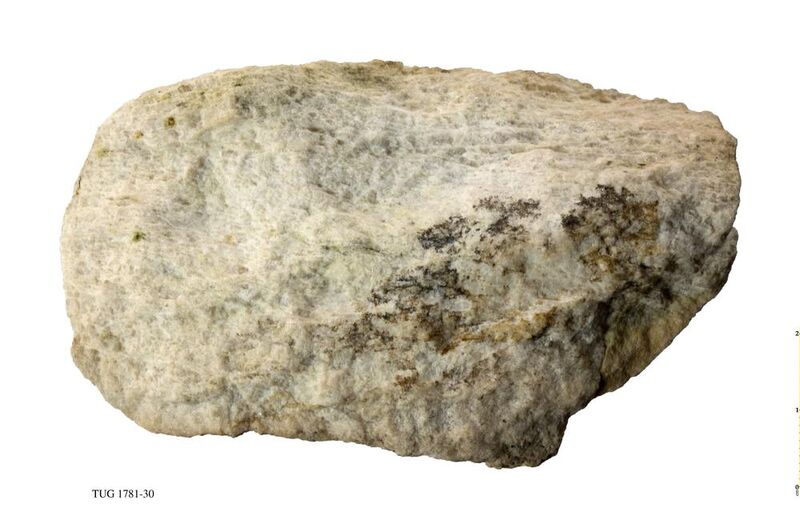
Minor accessory mineral in acidic and alkalic igneous rocks and pegmatites; in mica and quartz rich gneisses. Also as a detrital mineral.
- Type locality
- Hidra
- Flekkefjord
- Agder
- Norway
58.2116°, 6.5823°
Physical
- Hardness
- 1Talc
- 2Gypsum
- 3Calcite
- 4Fluorite
- 5Apatite
- 6Orthoclase
- 7Quartz
- 8Topaz
- 9Corundum
- 10Diamond
- Lustre
- Vitreous · resinous
- Transparency
- Translucent · Opaque
- Colour
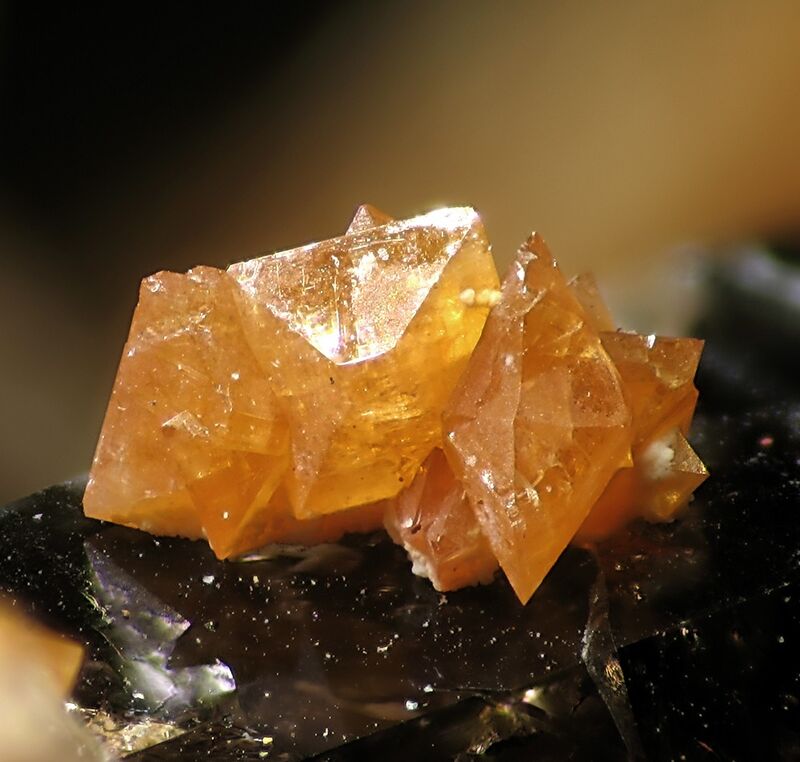
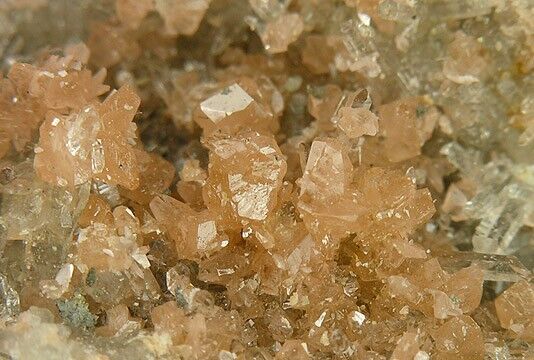
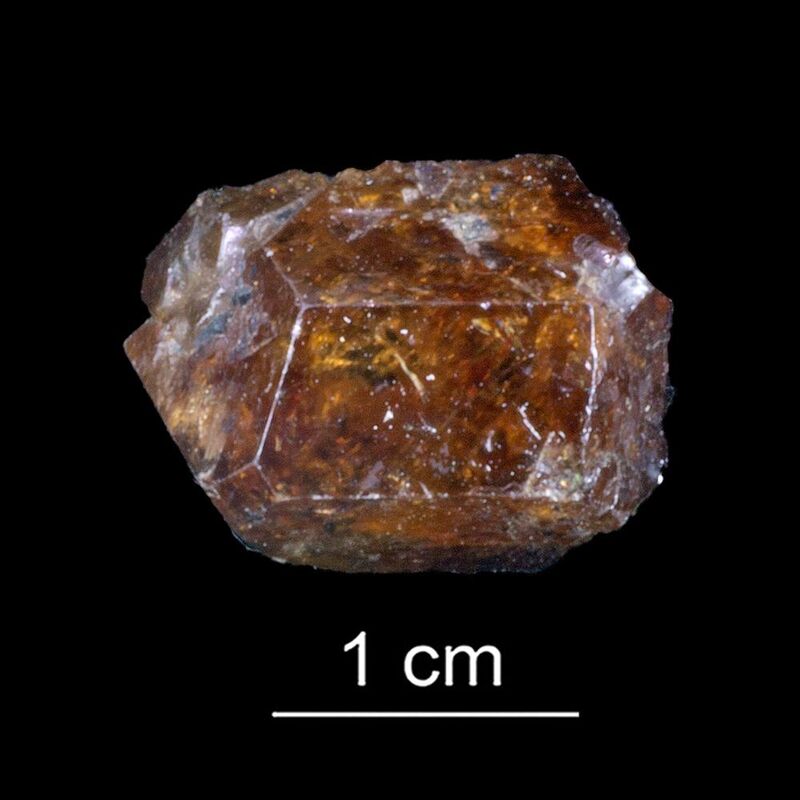
- Yellowish brown · reddish · brown · light red · flesh-red · light green · gray · grayish-white · wine-yellow
Colourless to very light yellowish green, yellow or yellowish brown in transmitted light
- Streak
- Pale brown, yellowish or reddish, white
- Tenacity
- brittle
- Cleavage
- Imperfect/Fair
On (100), complete (good - according to the Handbook of Mineralogy)
- Fracture
- Irregular/Uneven · Splintery
- Density
- 4.4 g/cm³
Optical
- Optical type
- Uniaxial (+)
- Refractive index
- 1.72 – 1.827
- Surface relief
- High
- Principal indices
- nω 1.72 · nε 1.816 – 1.827
- Pleochroism
- Weak
Dichroic: O = Pink, yellow, or yellowish brown E = Brownish yellow, grayish brown, or greenish
Crystallography
- Space group
- I41/amd
- Cell parameters
- a = 6.884-6.902(4) Å · c = 6.021-6.038(8) Å
- Z
- 4
- Morphology
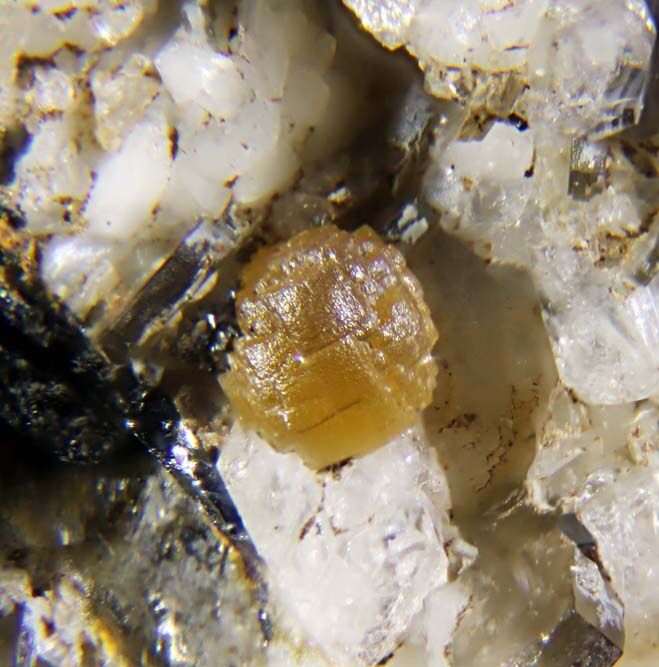
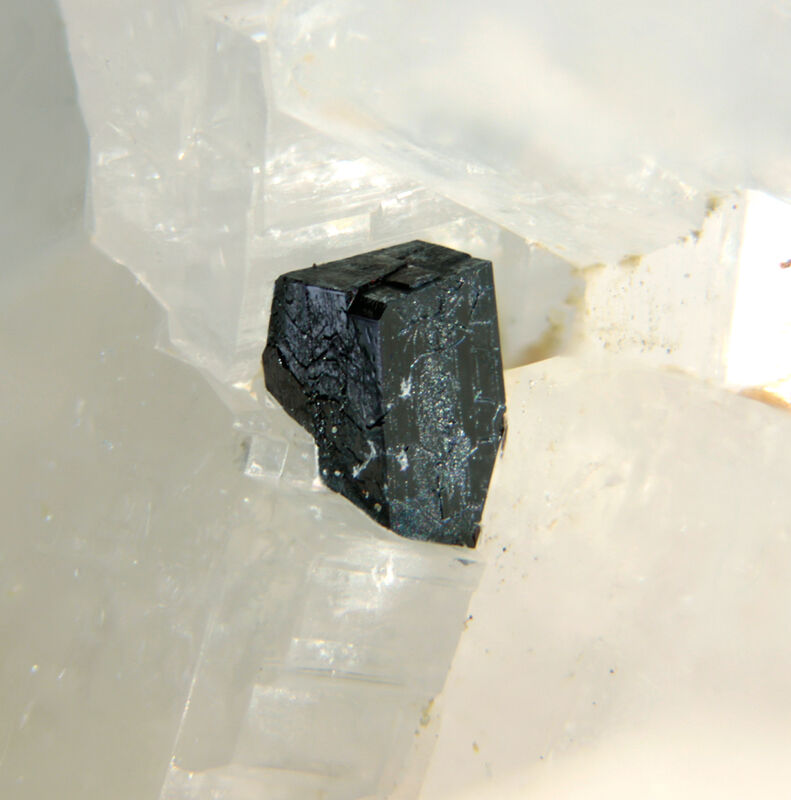
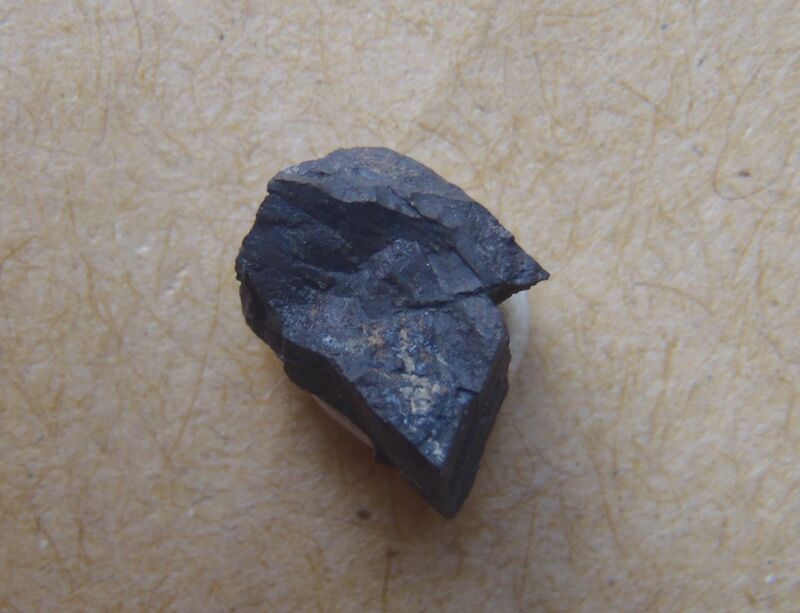
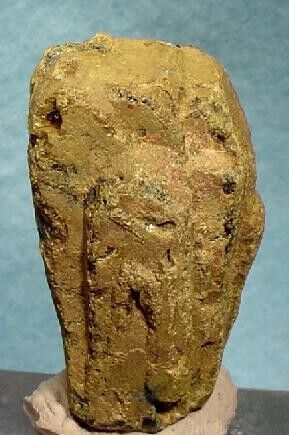
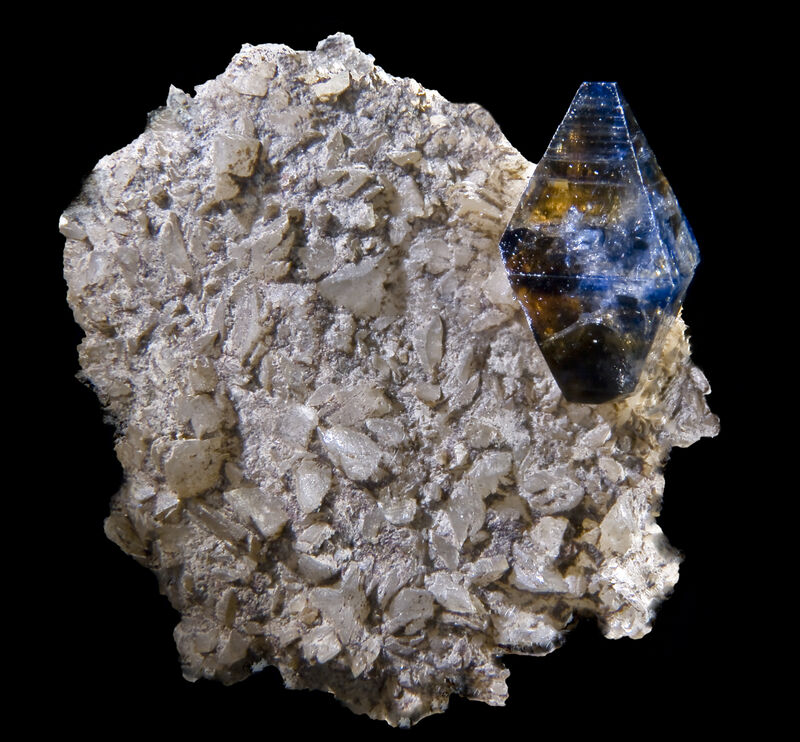
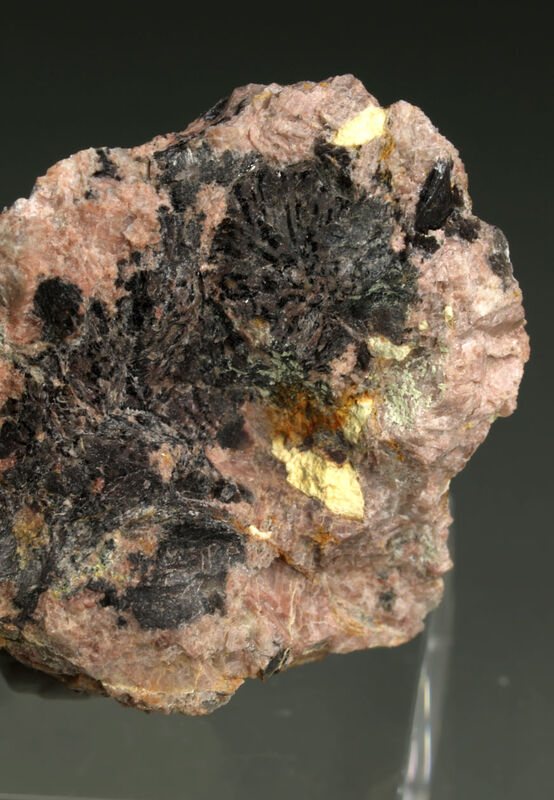
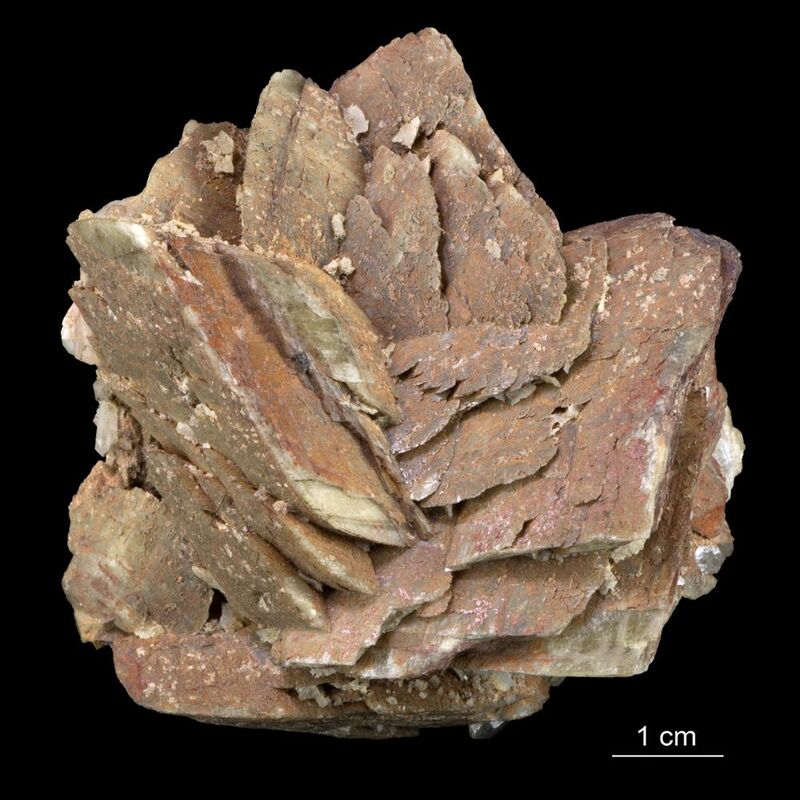
Crystals short to long prismatic [001], wiht (010) and (110) faces; also equant, pyramidal (011); as crude radial aggregates comprised of coarse crystals; in rosettes; crystals up to 5 cm are reported
- Twinning
On (111), rare.
- Epitaxy
Parallel growth with zircon common.
Chemical composition
Synonyms
- Castelnaudit
- Castelnaudita
- Castelnaudite
- Hussakit
- Hussakita
- Hussakite
- Phosphate of Yttria
- Phosphorsaure Yttererde
- Phosphorsyrad Ytterjord
- Phosphyttrie
- Tankelit
- Tankelita
- Tankelite
- Tankite (of Haidinger)
- Xenotim
- Xenotimit
- Xenotimita
- Xenotimite
- Ytterspath
In other languages
- German
- Xenotim-(Y)
- Italian
- Xenotime-
Classification
8.AD.35
- 8Phosphates, Arsenates, VanadatesClass
- 8.APhosphates, etc. without additional anions, without H2ODivision
- 8.ADWith only large cationsGroup
- 8.AD.35Xenotime-(Y)Species
19.9.1
- 19PhosphatesClass
- 19.9Phosphates of rare earths and ScGroup
- 19.9.1Xenotime-(Y)Species
Group, growth & confusion
Literature, links & citation
- 1824Berzelius, J. (1824) Undersökning af några Mineralier. 1. Phosphorsyrad Ytterjord. Kungliga Svenska vetenskapsakademiens handlingar, S. 3 Vol. 12. Kungl. Svenska vetenskapsakademien. 334-228
- 1831Glocker, E.F. (1831) Handbuch der Mineralogie, Nürnberg: 959 (as Ytterspath).
- 1832Beudant, François-Sulpice (1832) Traité élémentaire de minéralogie. Deuxiéme Edition [Elementary Treatise on Mineralogy. Second Edition] (2nd ed.) Vol. 2 - Tome II [Volume II]. Chez Verdière.
- 1843Scheerer, T. (1843) Ueber den Fundort und die Krystallform der phosphorsauren Yttererde. Annalen der Physik und Chemie: 60: 591-594.
- 1853Damour (1853) L'Institut: 78 (as Castelnaudite).
Entry last updated
@misc{mineral2026,
  author    = {Mineral Index editorial board},
  title     = {Xenotime-(Y) — Mineral Index},
  year      = {2026},
  url       = {https://mineralindex.org/minerals/xenotime-y-4333}
}