History
The name points straight to a place rather than a person. Atacamite takes it from the Atacama Desert of northern Chile, the hyperarid landscape where the first specimens were gathered.
Those specimens were collected in 1801. The following year the mineral was formally described and named by Dmitri Alekseyevich Golitsyn, a Russian diplomat and naturalist. He chose the desert that had yielded it — the type locality — as its namesake.
The bright green of atacamite found a use in art long before chemists pinned down its formula. It has been identified as a pigment on sculpture, manuscripts, maps, and frescoes across Asia, Russia, Persia, and Europe.
The mineral also turns up where no human put it. In 2002, researchers reported it as the first copper biomineral known in a living animal — the crystalline mineral that hardens the jaw tips of the marine bloodworm Glycera dibranchiata. The worm builds those jaws from roughly ten parts protein to one part mineral, yet they resist wear about as well as the toughest materials made by hand.
Industrial & practical applications
Atacamite is a copper mineral, so where it gathers in quantity it can be mined for the metal it holds. It is only ever a minor, secondary ore, though. It forms in the weathered upper layers of copper deposits rather than in the rich primary rock below, and it is far too scarce to rival the sulfide and oxide ores that supply most of the world's copper.
Beyond that limited role, the mineral has little modern industrial use. Its sharp green crystals are prized mainly by collectors and museums as well-formed examples of a copper chloride.
The mineral also draws scientific interest of its own. The copper biomineral that hardens the jaw tips of bloodworms — atacamite — is studied as a design prototype for tough, lightweight, durable materials.
Where it forms, where it's found
- Geological setting
An oxidation product of other copper minerals under arid conditions
An oxidation product of other copper minerals, especially under arid, saline conditions; in fumarolic deposits; a weathering product of sulphides in submarine black smoker deposits; an alteration product of bronze and copper objects of antiquity.
- Type locality
- Atacama
- Chile
Physical
- Hardness
- 1Talc
- 2Gypsum
- 3Calcite
- 4Fluorite
- 5Apatite
- 6Orthoclase
- 7Quartz
- 8Topaz
- 9Corundum
- 10Diamond
- Lustre
- Adamantine to Vitreous
- Transparency
- Transparent · Translucent
- Colour
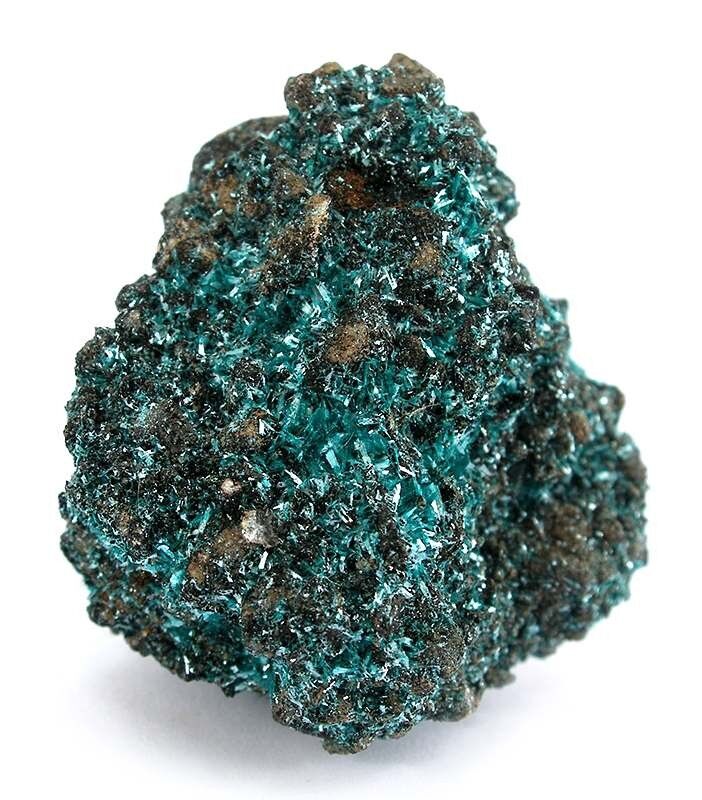
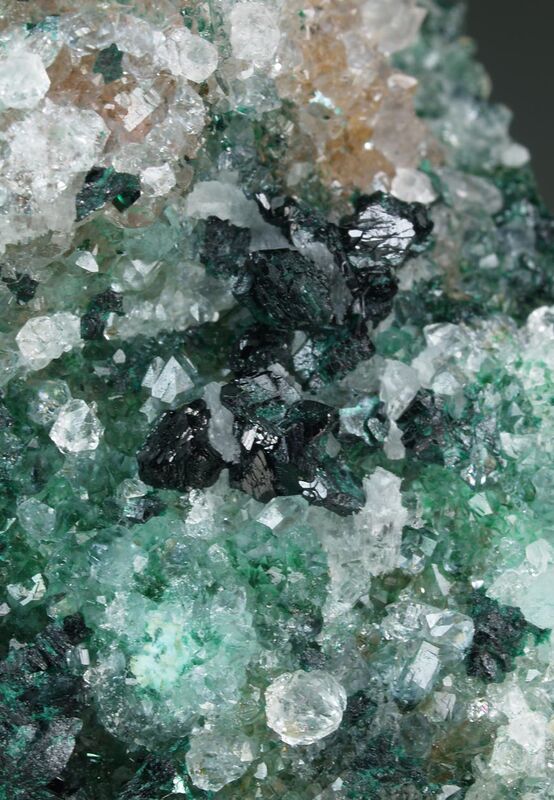
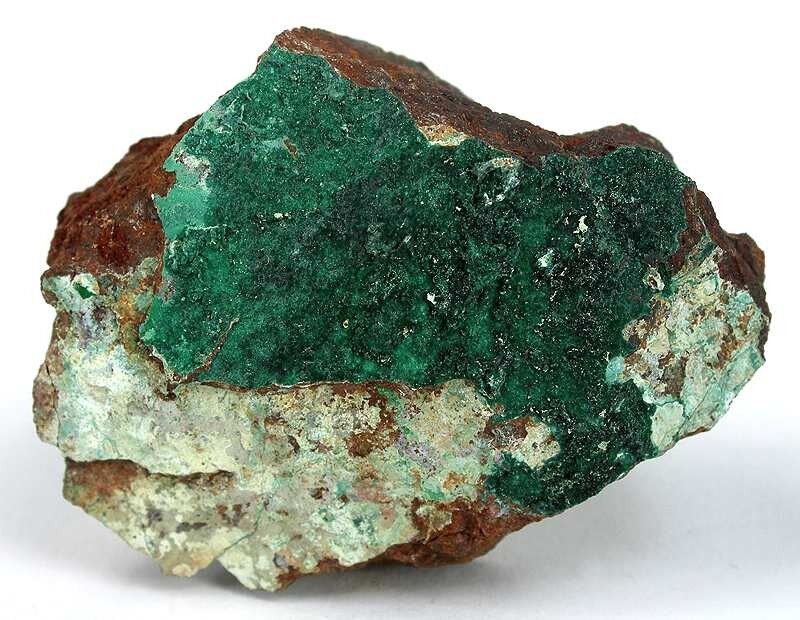
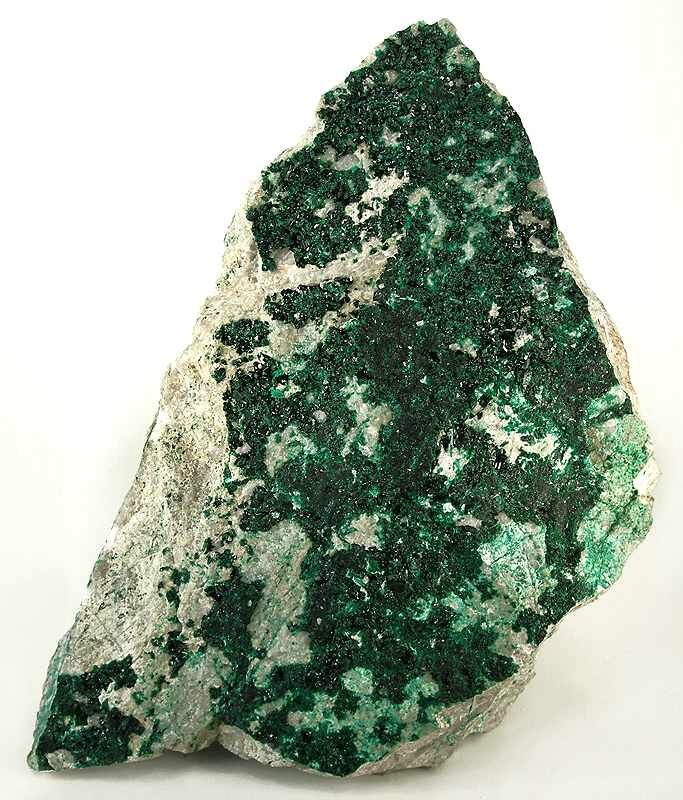
- Bright green · dark emerald-green to blackish green · shades of green in transmitted light.
- Streak
- Apple-green.
- Tenacity
- brittle
- Cleavage
- Perfect
On (010), fair on (101).
- Fracture
- Conchoidal
- Density
- 3.745 g/cm³
Optical
- Optical type
- Biaxial (-) · 2V calc = 74°
- Refractive index
- 1.831 – 1.88
- Surface relief
- Very high
- Principal indices
- nα 1.831 · nβ 1.861 · nγ 1.88
- Pleochroism
- Weak
X = pale green, Y = yellow-green, Z = grass-green; Orientation: X = b, Y = a, Z = c.
- Dispersion
- r < v, strong
- Luminescence
- None
Crystallography
- Space group
- #71
- Cell parameters
- a = 6.03 Å · b = 9.12 Å · c = 6.865 Å
- Ratio a:b:c
- 1 : 1.512 : 1.138
- Z
- 4
- Morphology
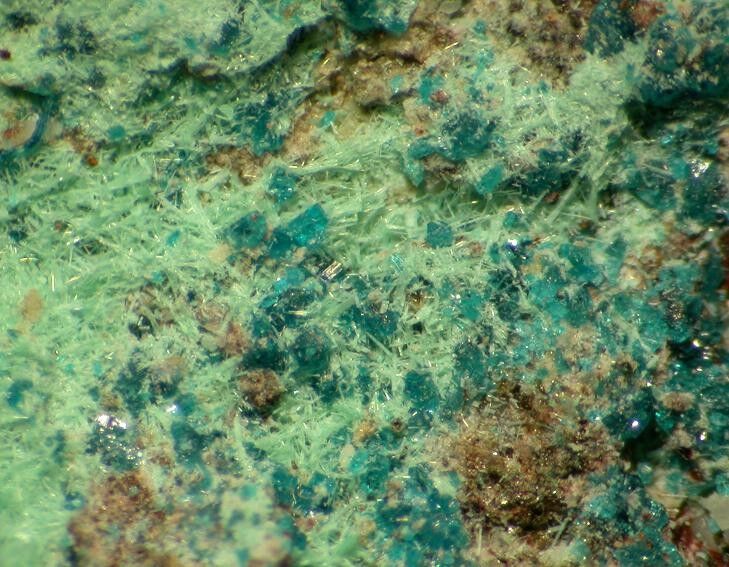
Slender crystals, to 10 cm, prismatic along [001]; striated parallel to [001], on (010) parallel to [1_10]; commonly tabular perpendicular to (010) or pseudo-octahedral with (110) and (011). Also fibrous, sandy granular to compact, massive.
- Twinning
Rare, with twin and composition plane (110); more common about [544]. Doublets, triplets, both contact and penetration, and complex groups result from twinning.
Chemical composition
- Impurities
- Ca
- Co
Synonyms
- Alacamita
- Alacamite
- Arsenillo
- Atakamite
- Chlorochalcit
- Cuivre Muriaté
- Hal-Chalzit
- Halochalcit
- Halochalcita
- Halochalcite
- Halochalzit
- Kupferhornerz
- Kupfersand
- Marcylite
- Muriate of copper
- Remolinite
- Salzkupfererz
- Salzsaures Kupfer
- Smaragdochalcit (of Hausmann)
In other languages
- French
- alacamite · atacamite · Cu2Cl(OH)3 · cuivre muriaté · halochalcite · marcylite · rémolinite
- German
- Atacamit · Atakamit
- Spanish
- atacamita · remolinita
- Italian
- Atacamite
- Portuguese
- atacamita · Atacamite
- Japanese
- アタカマ石
- Chinese
- 氯銅礦
- Russian
- атакамит
- Arabic
- أتاكاميت
Classification
3.DA.10a
- 3HalidesClass
- 3.DOxyhalides, hydroxyhalides and related double halidesDivision
- 3.DAWith Cu, etc., without PbGroup
- 3.DA.10aAtacamiteSpecies
10.01.01.01
- 10Oxyhalides and HydroxyhalidesClass
- 10.01A2(O,OH)3XqType
- 10.01.01Atacamite groupGroup
- 10.01.01.01AtacamiteSpecies
8.2.4
- 8Halides - Fluorides, Chlorides, Bromides and Iodides; also Fluoborates and FluosilicatesClass
- 8.2Halides of CuGroup
- 8.2.4AtacamiteSpecies
Group, growth & confusion
 BotallackiteCu2Cl(OH)3Mineral—
 ClinoatacamiteCu2Cl(OH)3Mineral—
 GillarditeCu3NiCl2(OH)6Mineral—
 HaydeeiteCu3Mg(OH)6Cl2Mineral—
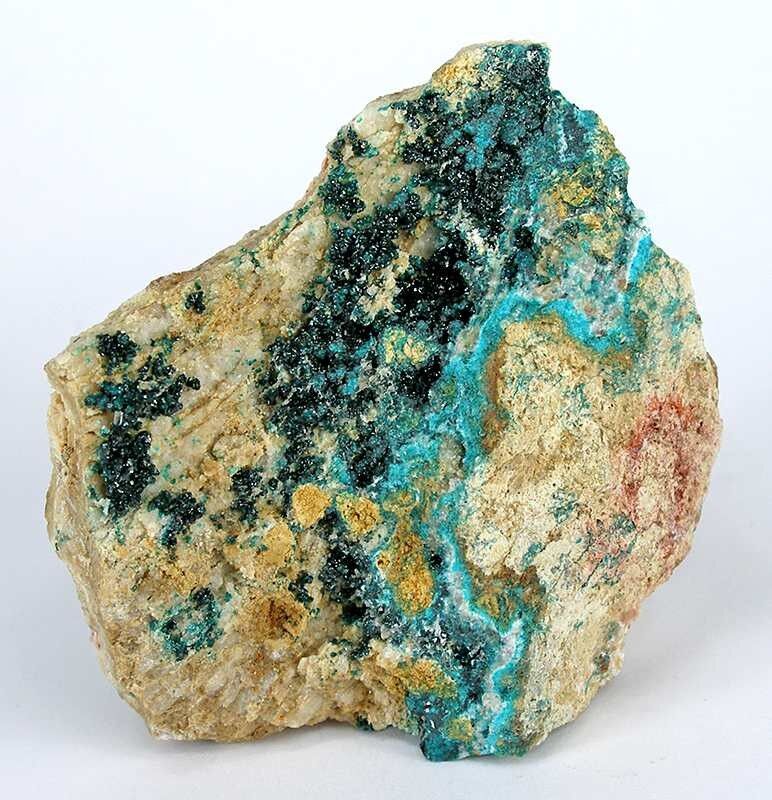 HerbertsmithiteCu3Zn(OH)6Cl2Mineral—
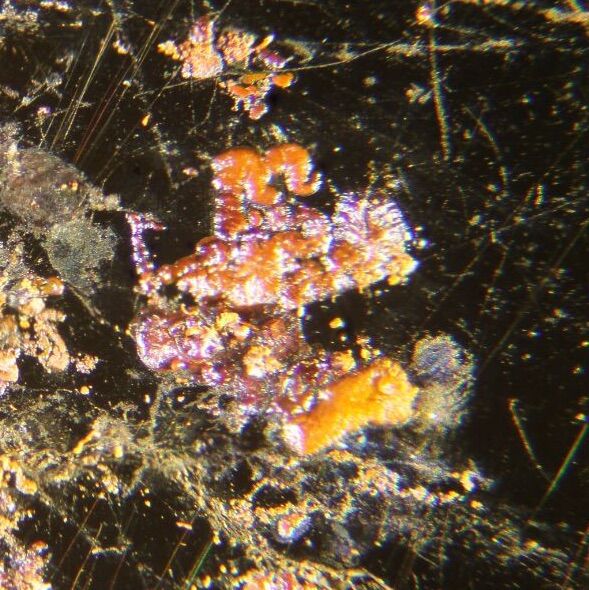 HibbingiteFe2+2(OH)3ClMineral—
- IyoiteMnCuCl(OH)3Mineral—
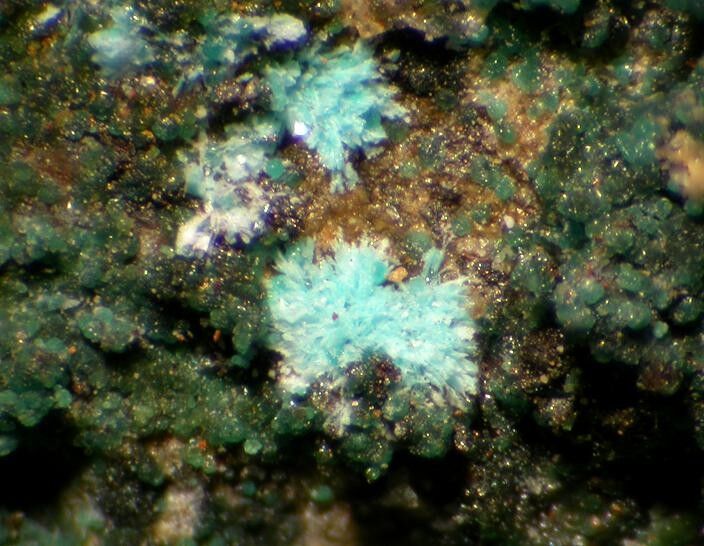 KapellasiteCu3Zn(OH)6Cl2Mineral—
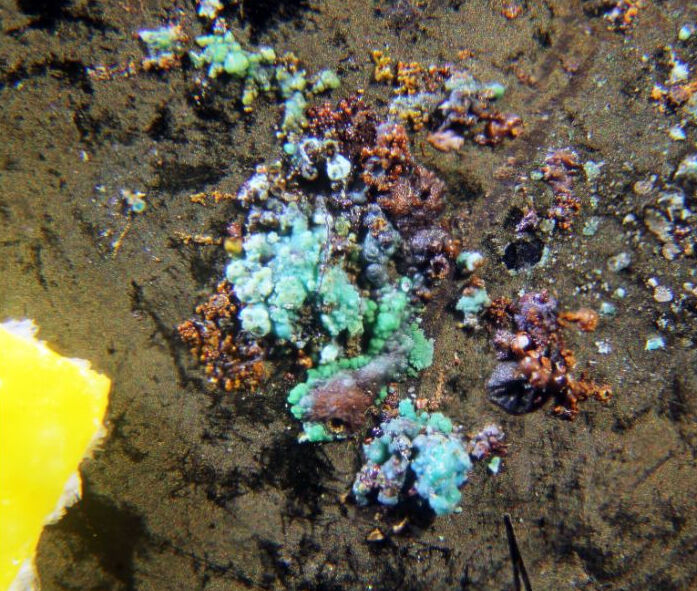 KempiteMn2+2Cl(OH)3Mineral—
- KuliginiteFe3Mg(OH)6Cl2Mineral—
 AntleriteCu2+3(SO4)(OH)4Mineral—
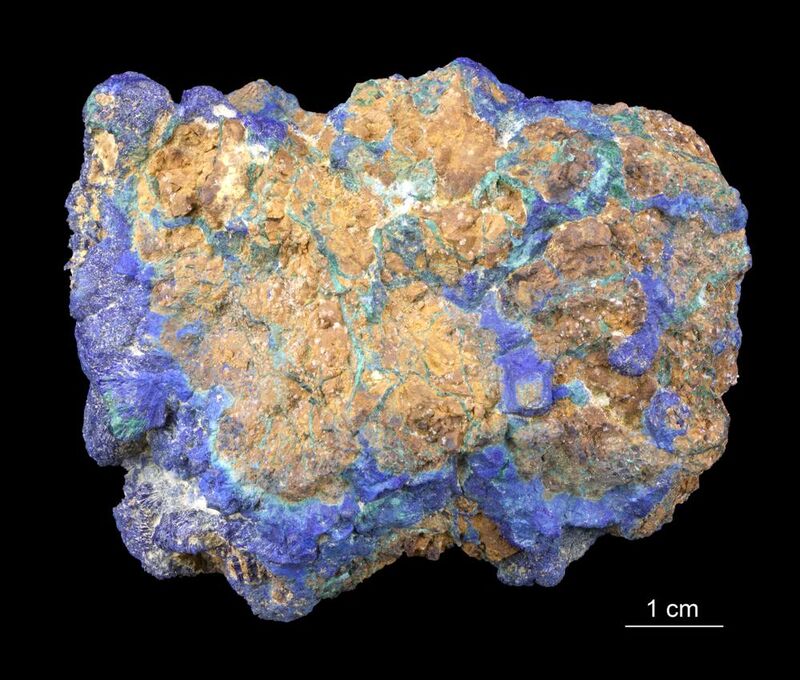 AzuriteCu3(CO3)2(OH)2Mineral—
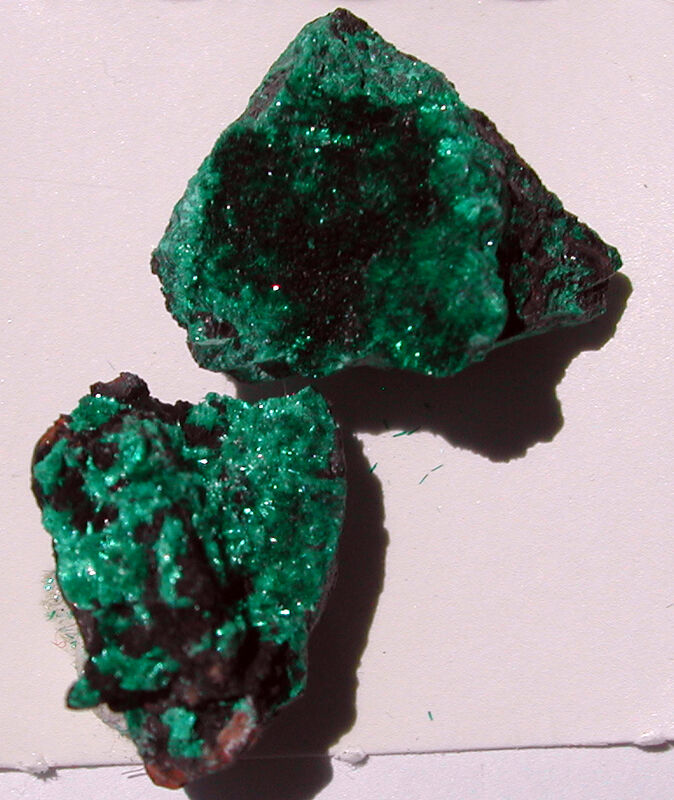 BrochantiteCu4(SO4)(OH)6Mineral—
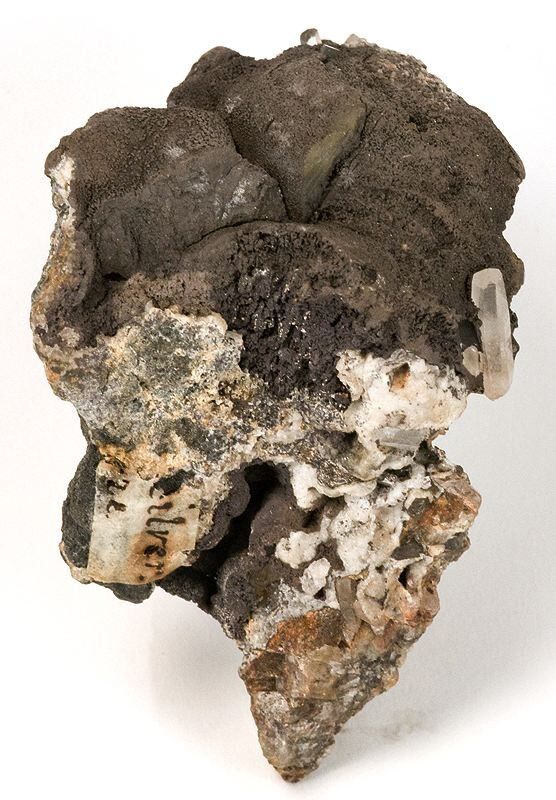 BromargyriteAgBrMineral—
 ChlorargyriteAgClMineral—
 Chrysocolla(Cu2-xAlx)H2-xSi2O5(OH)4 · nH2OMineral—
 CupriteCu2OMineral—
- FermiiteNa4(UO2)(SO4)3 · 3H2OMineral—
 FuettereritePb3Cu2+6Te6+O6(OH)7Cl5Mineral—
 GypsumCa(SO4) · 2H2OMineral—
Literature, links & citation
- —Hannington, Mark D. (1993): The formation of atacamite during weathering of sulfides on the modern seafloor. Canadian Mineralogist 31 (4), 945-956.
- 1786Rochefoucauld, Baumé, and Fourcroy (1786)[published 1788] Mémoires de l'Académie des Sciences de l'Institut de France, Paris.
- 1788Berthollet (1788) Mémoires de l'Académie des Sciences de l'Institut de France, Paris.
- 1800Karsten, D.L.G. (1800) Mineralogische Tabellen, Berlin. First edition: 46, 76. [as Kupfersand and salzsaures Kupfer].
- 1801Haüy, René Just (1801) Traité de Minéralogie (1st ed.) Vol. 3. Chez Louis, Paris.
Entry last updated
@misc{mineral2026,
  author    = {Mineral Index editorial board},
  title     = {Atacamite — Mineral Index},
  year      = {2026},
  url       = {https://mineralindex.org/minerals/atacamite-406}
}