History
Adamite carries the name of a man who never described a mineral himself. Gilbert-Joseph Adam was a wealthy French collector and Inspector of Finance for the French government. He supplied the first specimens of a new zinc arsenate to the chemist Charles Friedel. Friedel did the analysis and, in 1866, named the mineral after him.
The specimens came from Chañarcillo, in the Copiapó Province of Chile's Atacama region. Chañarcillo remains the type locality of the species.
Adam was not a one-mineral patron. Specimens from his cabinet led to the formal description of aerugite, chenevixite, corkite, cuprotungstite, scacchite, and xanthiosite. His collection was catalogued in Annales des Mines in 1869. At his death in 1881 it was acquired by the École des Mines in Paris. He was made Commandeur de la Légion d'Honneur and was a member of the Société géologique de France.
Industrial & practical applications
Adamite has no industrial use. The world's zinc comes from sphalerite and a handful of other sulfides. Adamite forms only in the oxidised, weathered top layer of those deposits, never in enough quantity to mine. Its arsenic content would disqualify it as ore in any case. Its demand is entirely from collectors and museums.
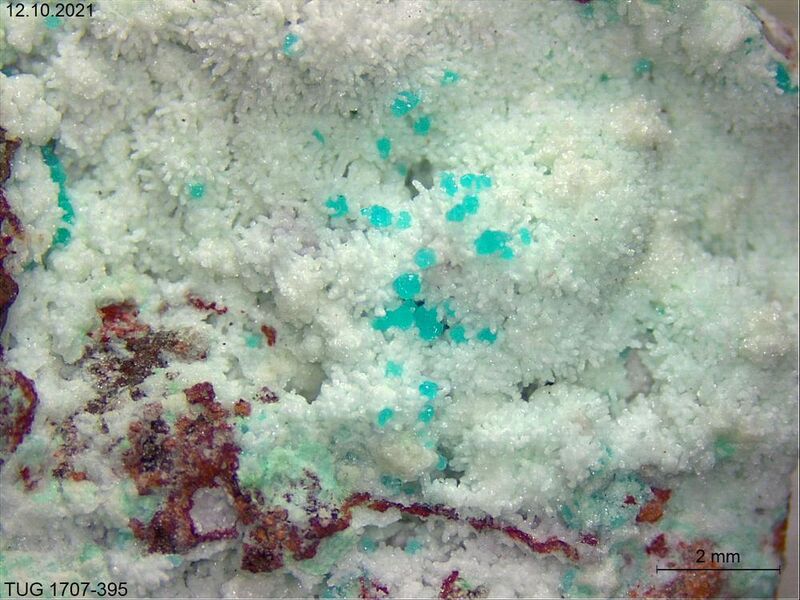
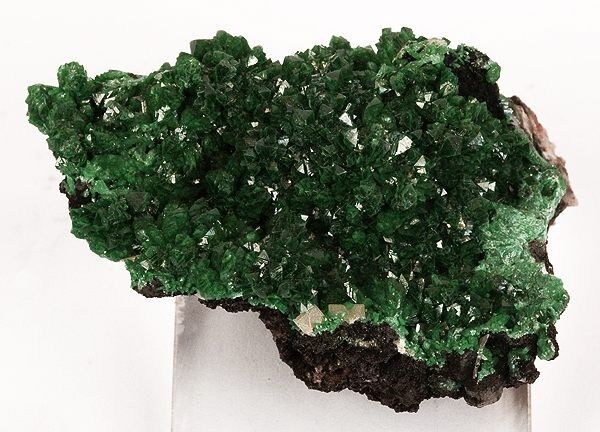
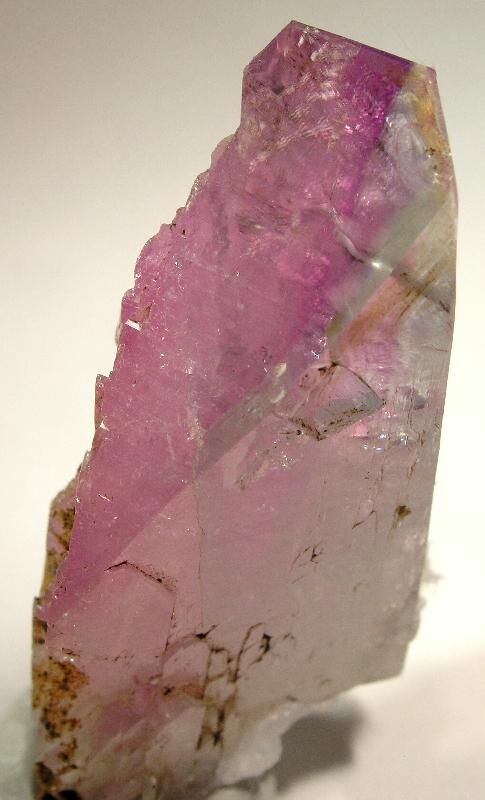
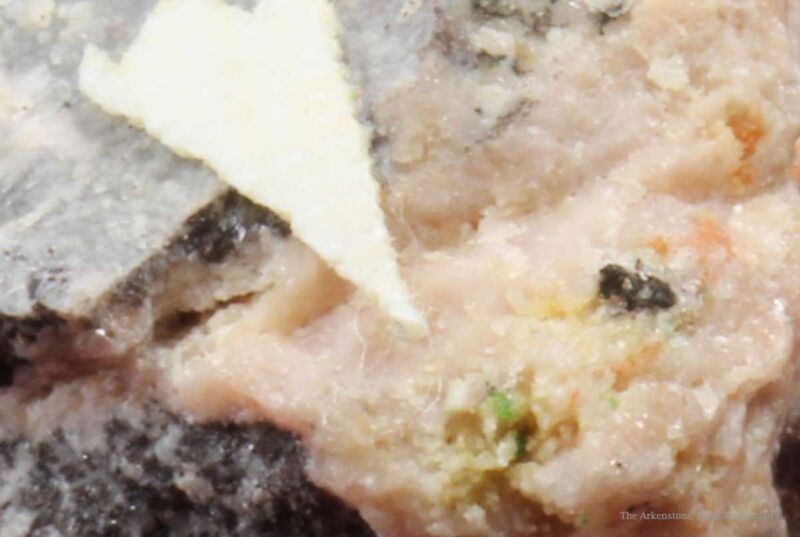
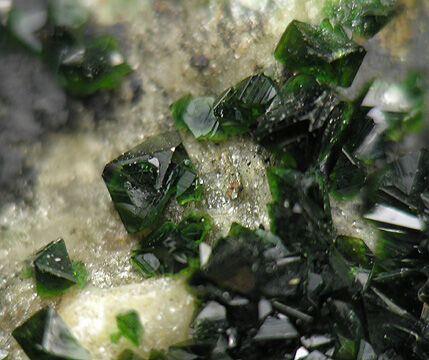
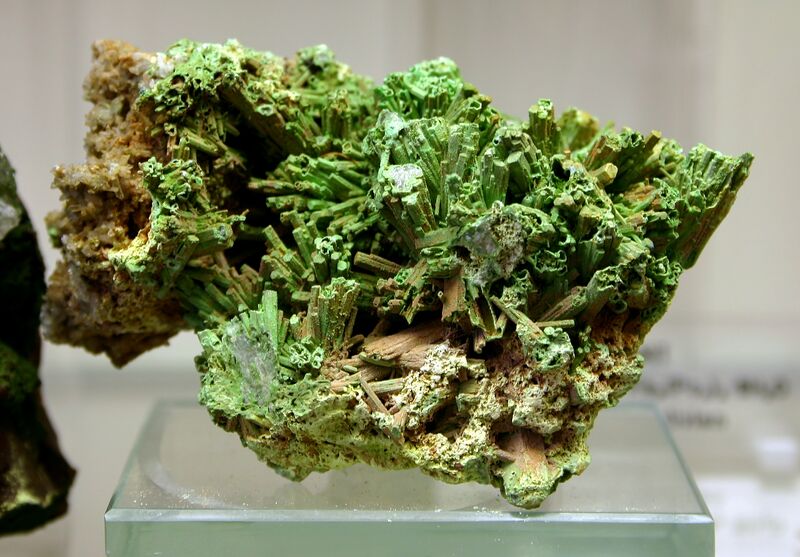
What collectors pay for is colour and fluorescence. Most adamite is pale yellow to honey-yellow. Copper substitution produces vivid green to turquoise crystals — the cuprian variety. The manganese-bearing variety from the Ojuela mine at Mapimí, Durango, glows lemon-yellow under short-wave and long-wave ultraviolet light. The Ojuela material is the reference for the species: "Ojuela adamite and legrandite have set the standard for these species".
Mineralogically, adamite remains useful as a study mineral. It forms a continuous series with olivenite — the copper analogue, Cu₂(AsO₄)(OH) — through an intermediate called cuproadamite. The series is a textbook example of one metal swapping in for another inside the same crystal framework: zinc and copper exchange freely in the structure. The manganese end-member of the same group is the rare mineral eveite, Mn₂(AsO₄)(OH).
Where it forms, where it's found
- Geological setting
A secondary mineral in the oxidised zone of zinc- and arsenic-bearing hydrothermal mineral deposits.
- Type locality
- Chañarcillo Mining District
- Copiapó
- Copiapó Province
- Atacama
- Chile
Varieties
Safety & handling
Physical
- Hardness
- 1Talc
- 2Gypsum
- 3Calcite
- 4Fluorite
- 5Apatite
- 6Orthoclase
- 7Quartz
- 8Topaz
- 9Corundum
- 10Diamond
- Lustre
- Vitreous
- Transparency
- Transparent · Translucent
- Colour
- Ideally white · colourless · frequently pale yellow · honey-yellow · brownish yellow · rose red · blue · pale green to green · may be zoned · bright green (Cu-bearing) · bright pink · purple (Co-bearing)
Colourless or faintly tinted in transmitted light.
- Streak
- white
- Tenacity
- very brittle
- Cleavage
- Distinct/Good
on (101), good; on (010), poor.
- Fracture
- Irregular/Uneven · Conchoidal
- Density
- 4.32 g/cm³
Optical
- Optical type
- Biaxial (+/-) · 2V measured = 78 – 90° · 2V calc = 74 – 84°
- Refractive index
- 1.708 – 1.773
- Surface relief
- High
- Principal indices
- nα 1.708 – 1.722 · nβ 1.742 – 1.744 · nγ 1.763 – 1.773
- Birefringence
- 0.05
- Pleochroism
- Weak
In pale colours if cuprian or cobaltian.
- Dispersion
- strong r > v or r < v
- Extinction
- X = a; Y = c; Z = b.
- Luminescence
- None?
- UV response
- May fluoresce or phosphoresce lemon-yellow under SW and LW UV.
Crystallography
- Space group
- Pnnm
- Cell parameters
- a = 8.304 Å · b = 8.524 Å · c = 6.036 Å
- Ratio a:b:c
- 1 : 1.026 : 0.727
- Z
- 4
- Morphology
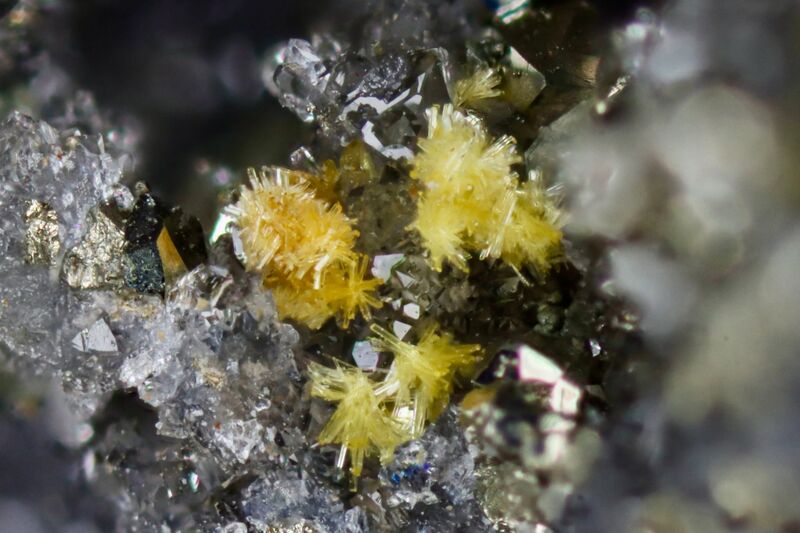
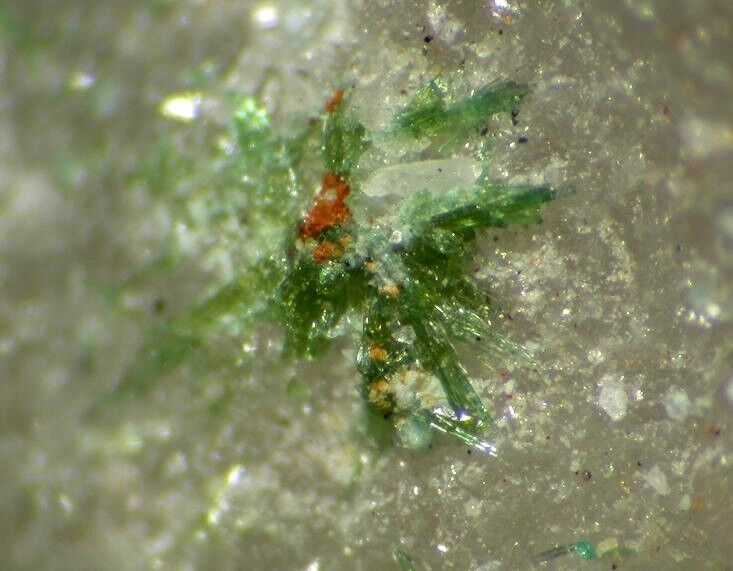
Crystals of variable morphology. Often elongated [010], also elongated [001], rarely elongated [100]. Tabular at times (101) or equant. Commonly forms radial aggregates, fanlike rosettes or crystalline crusts.
Chemical composition
- Impurities
- Cu
- Fe
- Co
Synonyms
- Adamine
- Adamite (of Friedel)
- Adamitt
In other languages
- French
- adamite · Cobaltoadamite · Cuproadamite · Manganoadamite
- German
- Adamin · Adamit · Cuproadamin
- Spanish
- adamina · adamita
- Italian
- Adamina · adamite
- Portuguese
- adamite
- Japanese
- アダマイト · アダム石 · アダム鉱 · 水砒亜鉛鉱
- Chinese
- 水砷锌矿 · 羟砷锌石 · 羥砷鋅石
- Simplified Chinese
- 水砷锌矿
- Traditional Chinese
- 水砷鋅礦
- Russian
- Адамин
- Arabic
- أداميت
Classification
8.BB.30
- 8Phosphates, Arsenates, VanadatesClass
- 8.BPhosphates, etc., with additional anions, without H2ODivision
- 8.BBWith only medium-sized cations, (OH, etc.):RO4 about 1:1Group
- 8.BB.30AdamiteSpecies
41.06.06.03
- 41Anhydrous Phosphates, Etc.containing Hydroxyl or HalogenClass
- 41.06A2(XO4)ZqType
- 41.06.06Olivenite GroupGroup
- 41.06.06.03AdamiteSpecies
20.3.1
- 20Arsenates (also arsenates with phosphate, but without other anions)Class
- 20.3Arsenates of Zn, Cd or HgGroup
- 20.3.1AdamiteSpecies
Group, growth & confusion
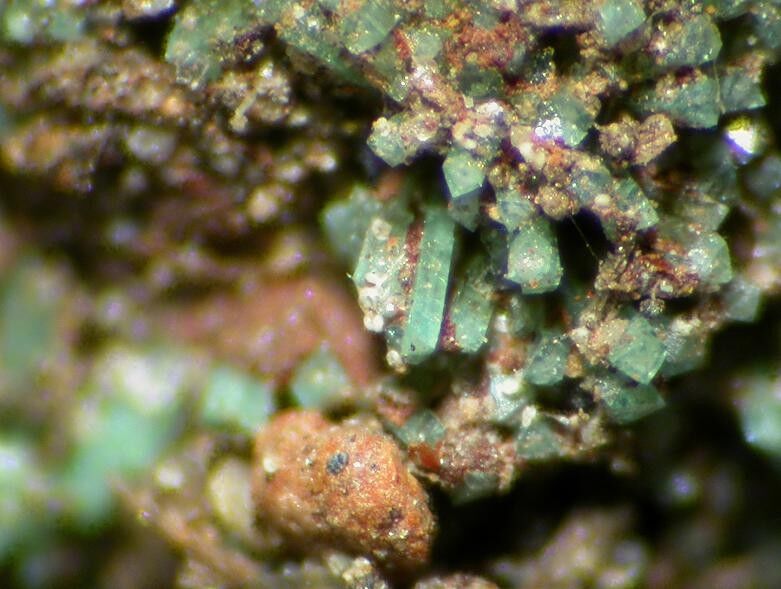
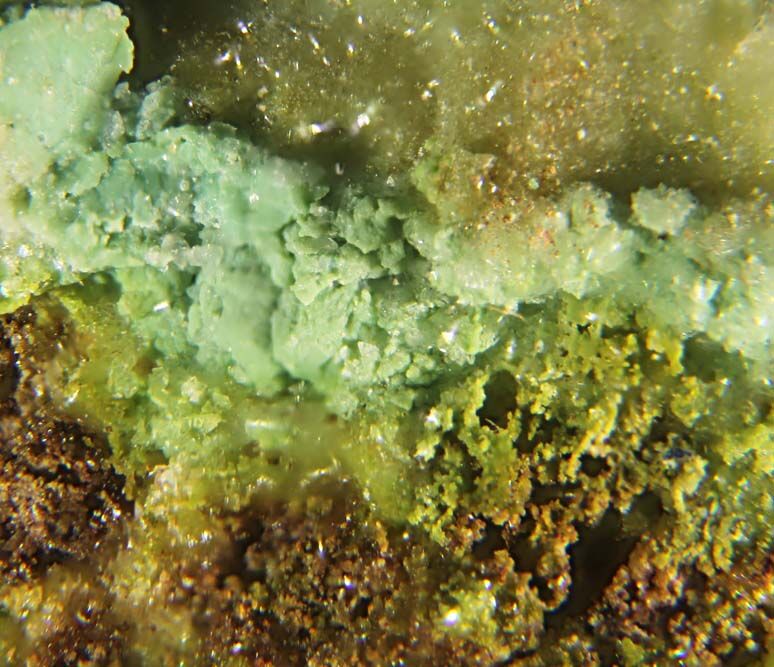 ArsenogorceixiteBaAl3(AsO4)(AsO3OH)(OH)6Mineral—
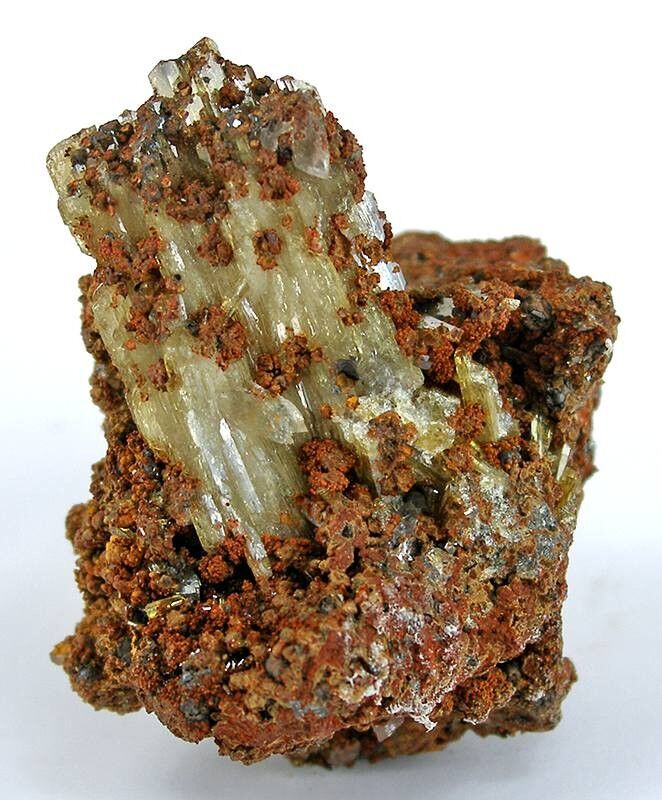
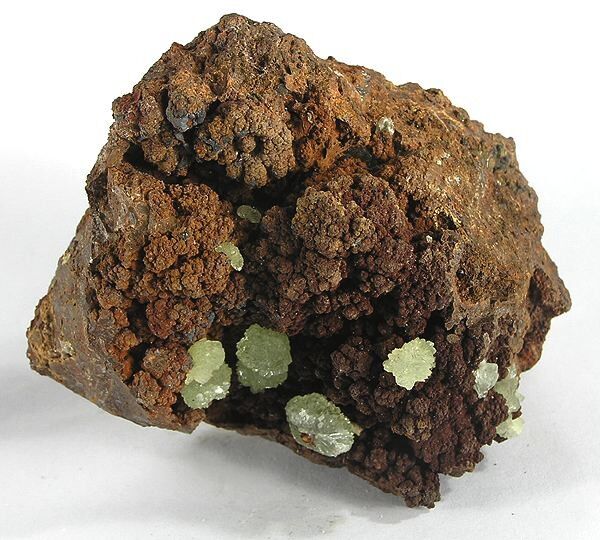 AustiniteCaZn(AsO4)(OH)Mineral—
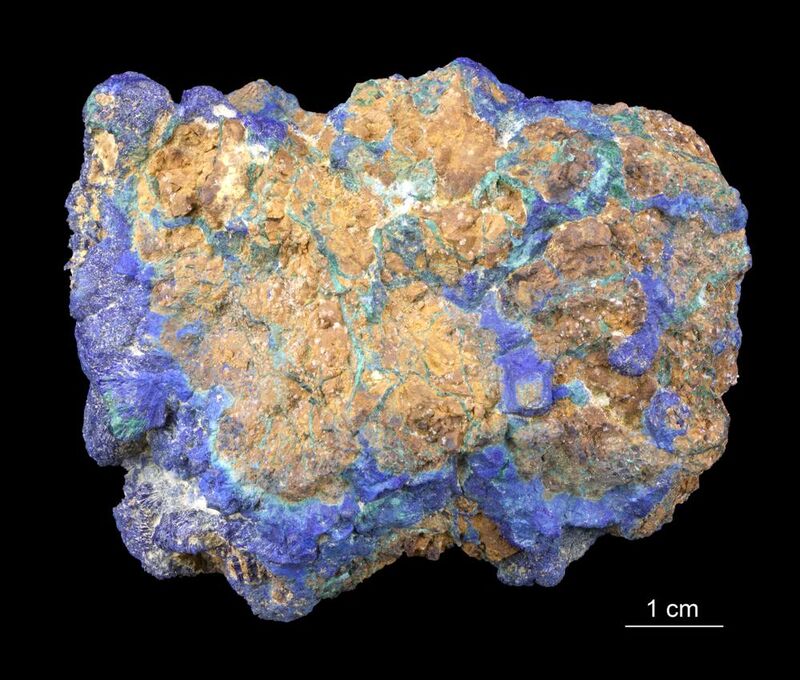 AzuriteCu3(CO3)2(OH)2Mineral—
 BayldoniteCu3PbO(AsO3OH)2(OH)2Mineral—
 CalciteCa(CO3)Mineral—
 DuftitePbCu(AsO4)(OH)Mineral—
 ErythriteCo3(AsO4)2 · 8H2OMineral—
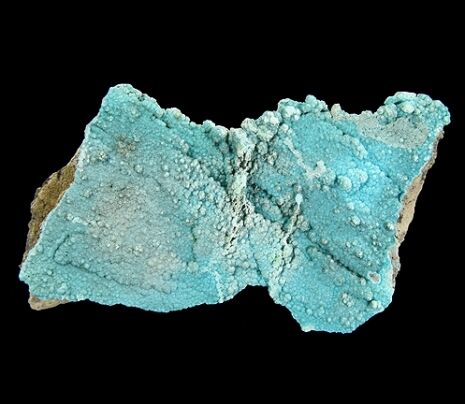 Glaucocerinite(Zn1-xAlx)(SO4)x/2(OH)2 · nH2O (x < 0.5, n > 3x/2)Mineral—
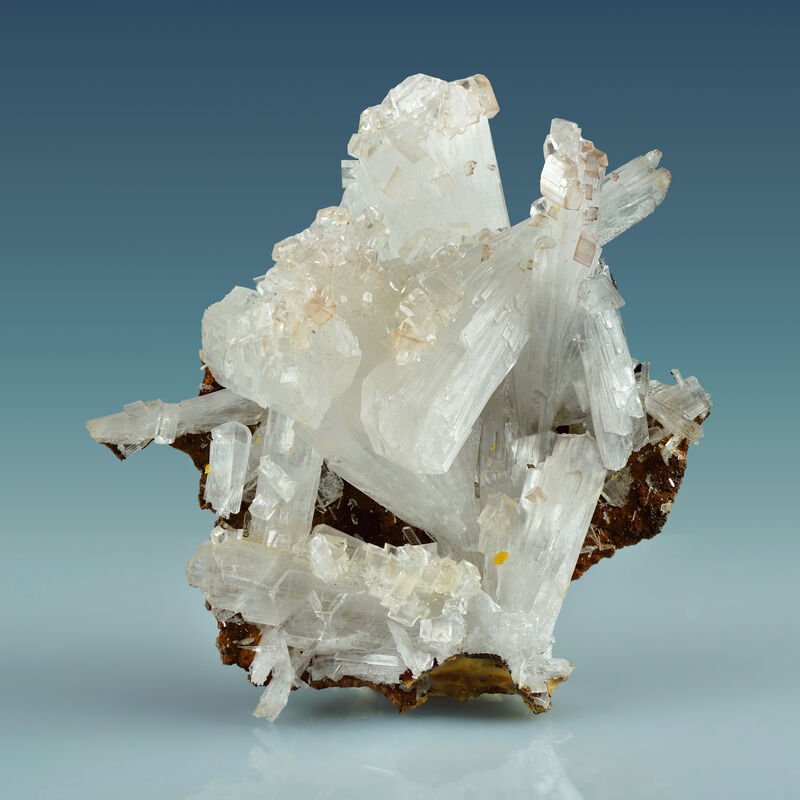 HemimorphiteZn4(Si2O7)(OH)2 · H2OMineral—
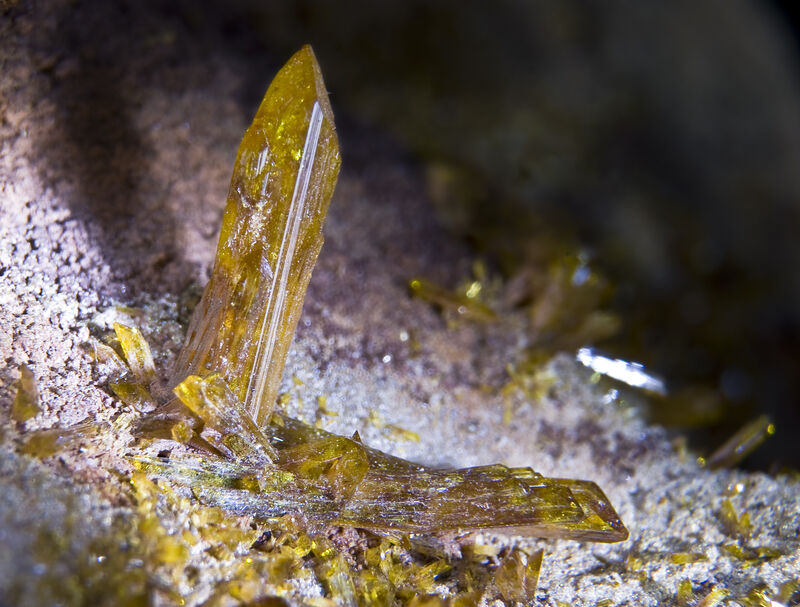 LegranditeZn2(AsO4)(OH) · H2OMineral—
Literature, links & citation
- 1866Friedel, C., Daubrée, G.A. (1866) Sur l‘adamine, nouvelle espèce minérale. Comptes Rendus Hebdomadaires des Séances de l’Académie des Sciences 62, 692-695. [as Adamine]
- 1868Dana, James D., Brush, George Jarvis (1868) A System of Mineralogy (5th ed.). p.882
- 1868Damour (1868) Comptes rendus de l’Académie des sciences de Paris: 67: 1124.
- 1870Pisani, F. (1870) Sur les minéraux trouvés dans la mine de cuivre du Cap Garonne (Var). Comptes rendus hebdomadaires des séances de l'Académie des sciences, 70, 1001-1005.
- 1878Des Cloizeaux, A. (1878) Présentation de minéraux : Nouémite [nouméite], Adamine, Vietinghofite [samarskite]. Bulletin de la Société française de Minéralogie: 1: 28-32.
Entry last updated
@misc{mineral2026,
  author    = {Mineral Index editorial board},
  title     = {Adamite — Mineral Index},
  year      = {2026},
  url       = {https://mineralindex.org/minerals/adamite-21}
}