History
Beudantite carries the name of a man who spent his career renaming other minerals. In 1826 the French crystallographer Armand Lévy described the species from the Louise Mine, in the Wied Iron Spar District of the Westerwald, in the Rhineland-Palatinate region of Germany. He named it for his fellow Frenchman François Sulpice Beudant, a systematic mineralogist at the University of Paris who lived from 1787 to 1850.
The honour fit the man. Beudant was a great coiner and corrector of mineral names. He renamed the deep-blue copper carbonate azurite and introduced the name caledonite. He devised many others too — anglesite and cerussite among them — that pushed aside the older terms. So many of his coinages stuck that the literature still leans on them today.
Beyond its naming, little is recorded of the mineral's early story. It drew no ancient use and carries no folklore. Beudantite is a secondary mineral, one formed when other minerals break down — here in the oxidized upper zones of polymetallic ore deposits rich in lead, copper, and arsenic. Such weathered crusts were of interest to nineteenth-century miners chasing the metals beneath, but the lead-iron arsenate itself was a mineralogist's curiosity, named and catalogued rather than dug for profit.
Industrial & practical applications
Beudantite has no industrial use. It is too scarce and too lean in any single metal to be worth mining, and no process depends on it. The mineral is sought instead by collectors and by mineralogists, who study it as a representative of its species.
It does carry one practical signal. As a secondary mineral of the oxidized upper zone of lead-copper-arsenic ore bodies, its presence in a weathered outcrop — a gossan, the rusty cap above a buried deposit — flags that metal-bearing rock once sat below. It is read as a clue, not extracted as an ore.
One caution outweighs its modest appeal. Beudantite locks up both lead and arsenic in its structure, two of the most toxic elements a mineral can hold. Specimens are safe to keep behind glass, but should never be handled with bare hands, ground, licked, or stored near food. Wash your hands after touching one, and keep the dust away from your lungs.
Where it forms, where it's found
- Geological setting
Oxidized zone of a polymetallic ore deposit.
Secondary mineral in oxidation zone of polymetallic deposits.
- Type locality
- Louise Mine
- Bürdenbach
- Altenkirchen-Flammersfeld
- Altenkirchen
- Rhineland-Palatinate
- Germany
50.6054°, 7.5106°
Varieties
Safety & handling
Physical
- Hardness
- 1Talc
- 2Gypsum
- 3Calcite
- 4Fluorite
- 5Apatite
- 6Orthoclase
- 7Quartz
- 8Topaz
- 9Corundum
- 10Diamond
- Lustre
- Vitreous · Resinous
- Transparency
- Transparent · Translucent
- Colour
- Black · dark green · brown · dark yellow · red · greenish yellow · brown
- Streak
- Grayish yellow to green
- Tenacity
- brittle
- Cleavage
- Distinct/Good
Good on (0001)
- Density
- 4.48 g/cm³
Optical
- Optical type
- Uniaxial (-)
- Refractive index
- 1.943 – 1.957
- Surface relief
- Very high
- Principal indices
- nω 1.957 · nε 1.943
- Birefringence
- 0.014
- Pleochroism
- Visible
O = Yellow to red-brown E = Colourless to yellow
- UV response
- Not fluorescent.
- Notes
Anomalously biaxial, exhibiting sectoring. Crystals may exhibit three biaxial sectors around an uniaxial core (Laurion).
Crystallography
- Space group
- R-3m
- Cell parameters
- a = 7.32 Å · c = 17.02 Å
- Z
- 3
- Morphology
Pseudo-cubic. Crystals tabular, pseudo-cubes, pseudo-cuboctahedra or pseudo-octahedra; very rarely also acicular. Microcrystalline massive.
- Type-locality form
Aggregates of small crystals. Truncated equant rhombohedrons.
Chemical composition
- Impurities
- Cu
- Al
- P
Synonyms
- Beudanit
- Beudantite (of Lévy)
- Bieirosit
- Bieirosita
- Bieirosite
In other languages
- French
- Beudantite
- German
- Beudantit
- Spanish
- Beudantita
- Italian
- Beudantite
- Japanese
- ビューダン石
- Chinese
- 砷酸明礬石
- Russian
- Бёдантит
Classification
8.BL.05
- 8Phosphates, Arsenates, VanadatesClass
- 8.BPhosphates, etc., with additional anions, without H2ODivision
- 8.BLWith medium-sized and large cations, (OH, etc.):RO4 = 3:1Group
- 8.BL.05BeudantiteSpecies
43.04.01.01
- 43Compound Phosphates, Etc.Class
- 43.04Anhydrous Compound Phosphates, etc·, Containing Hydroxyl or HalogenType
- 43.04.01Beudantite GroupGroup
- 43.04.01.01BeudantiteSpecies
22.3.24
- 22Phosphates, Arsenates or Vanadates with other AnionsClass
- 22.3Phosphates, arsenates or vanadates with sulphatesGroup
- 22.3.24BeudantiteSpecies
Group, growth & confusion
- ClouditeBaFe3+3(PO4)(SO4)(OH)6Mineral—
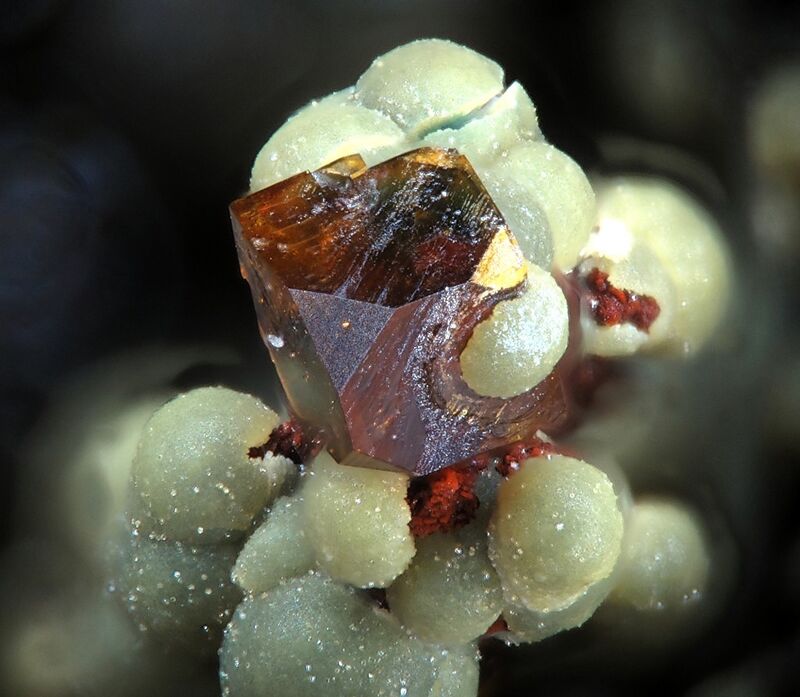 CorkitePbFe3+3(SO4)(PO4)(OH)6Mineral—
- GallobeudantitePbGa3(AsO4)(SO4)(OH)6Mineral—
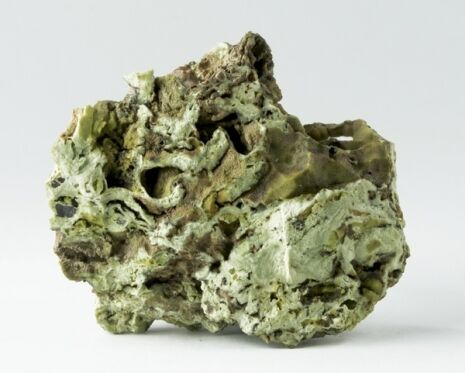 HidalgoitePbAl3(SO4)(AsO4)(OH)6Mineral—
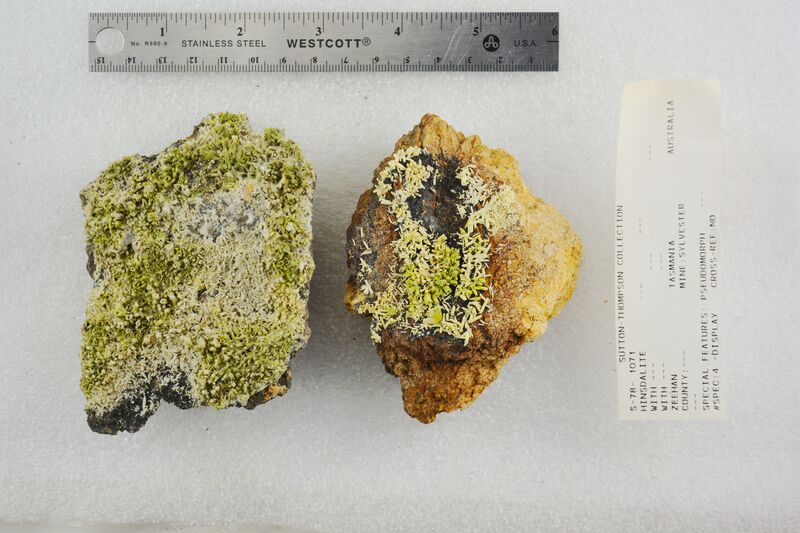 HinsdalitePbAl3(SO4)(PO4)(OH)6Mineral—
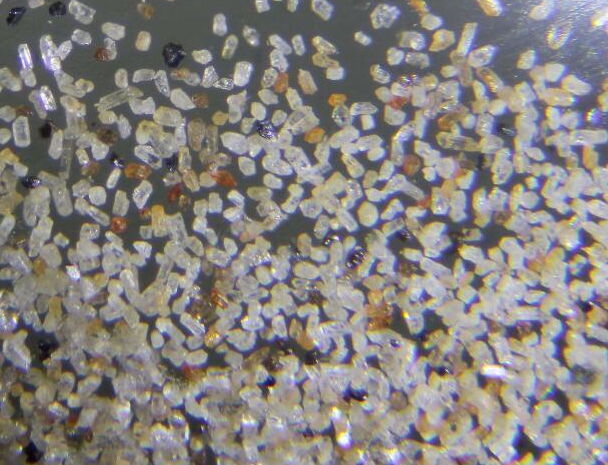 KemmlitziteSrAl3(AsO4)(SO4)(OH)6Mineral—
- OberwolfachiteSrFe3+3(AsO4)(SO4)(OH)6Mineral—
- SlottaiteSrFe3+3(PO4)(SO4)(OH)6Mineral—
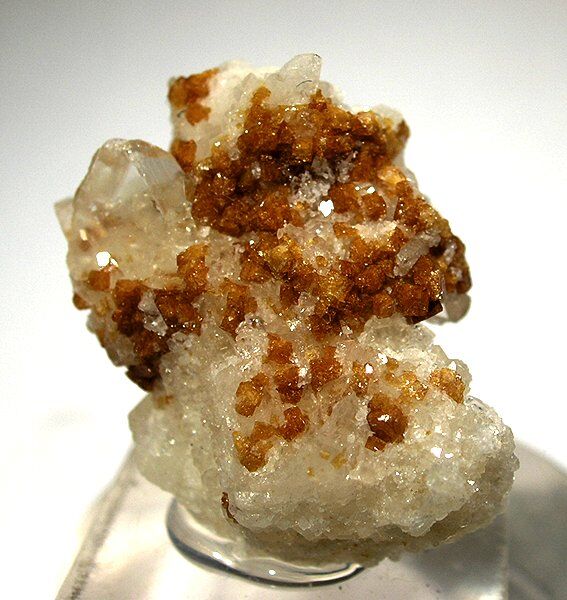 SvanbergiteSrAl3(SO4)(PO4)(OH)6Mineral—
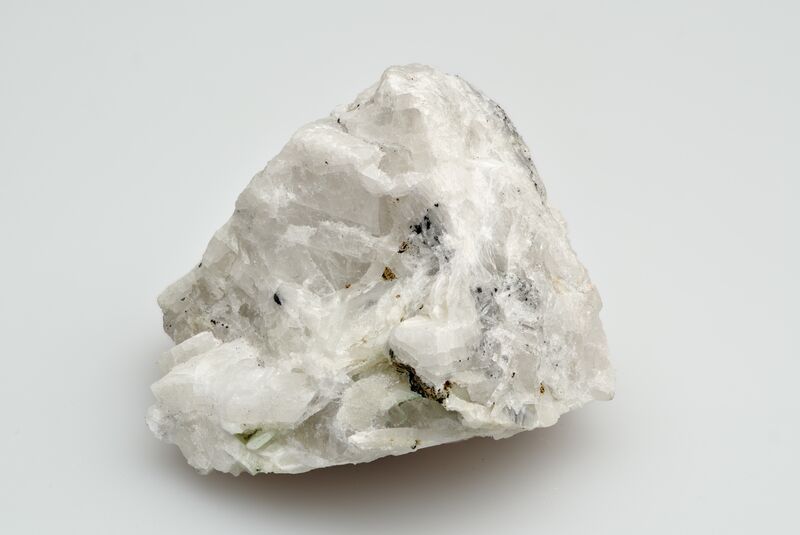 WeileriteBaAl3(SO4)(AsO4)(OH)6Mineral—
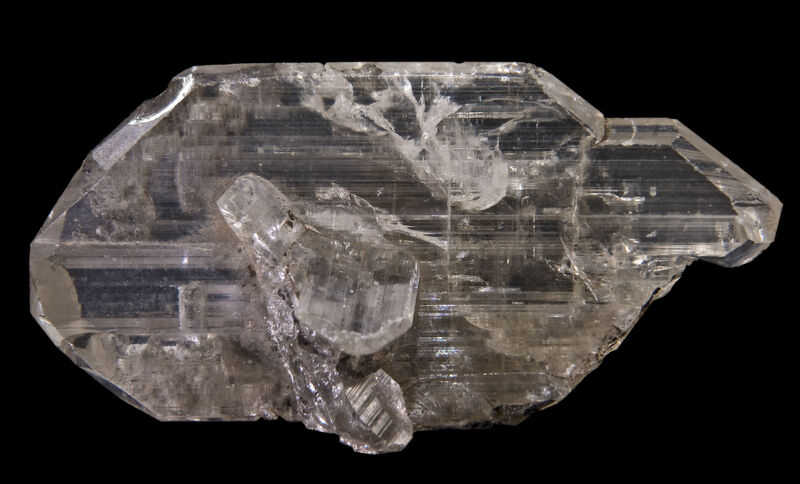 AnglesitePb(SO4)Mineral—
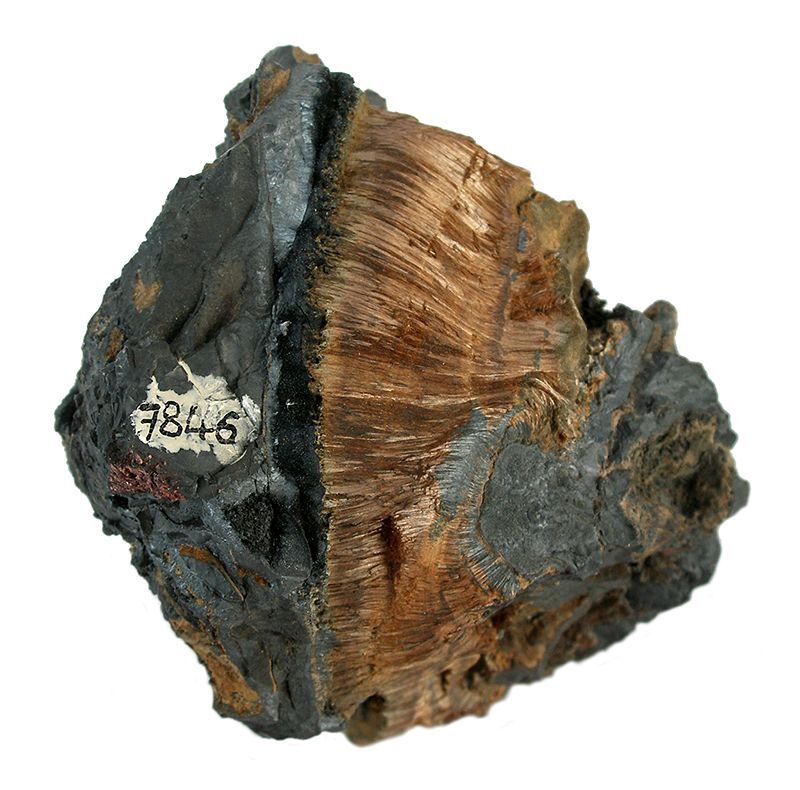 ArseniosideriteCa2Fe3+3O2(AsO4)3 · 3H2OMineral—
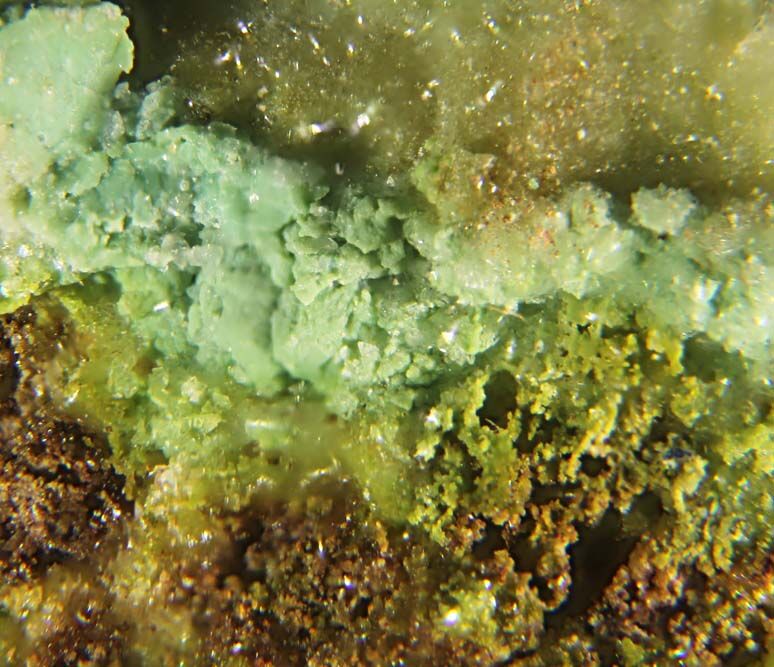 ArsenogorceixiteBaAl3(AsO4)(AsO3OH)(OH)6Mineral—
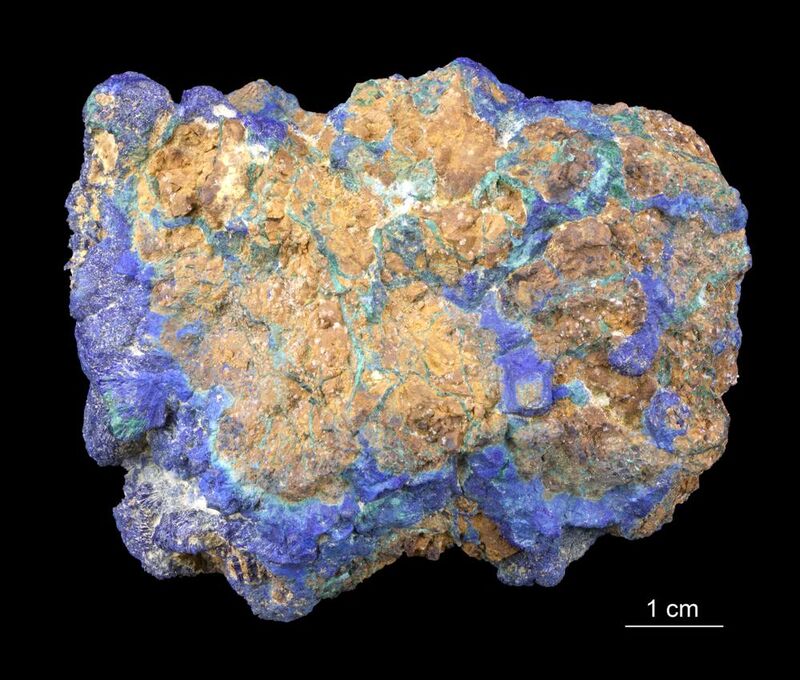 AzuriteCu3(CO3)2(OH)2Mineral—
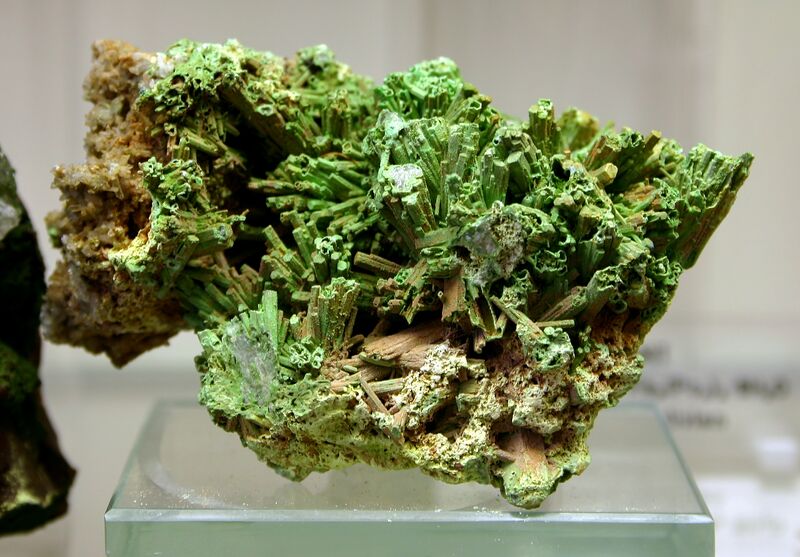 BayldoniteCu3PbO(AsO3OH)2(OH)2Mineral—
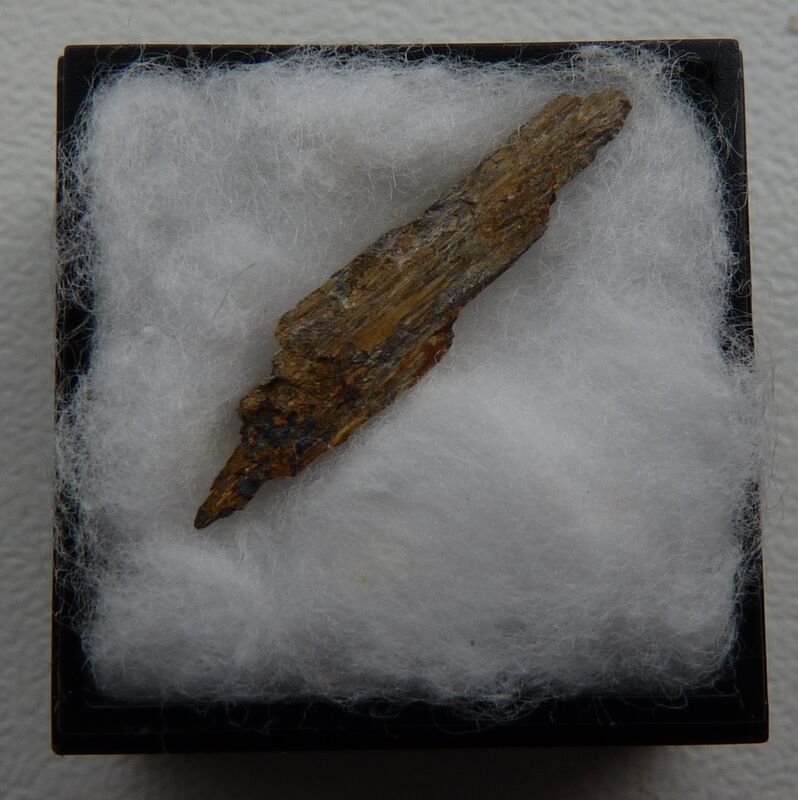 BismocliteBiOClMineral—
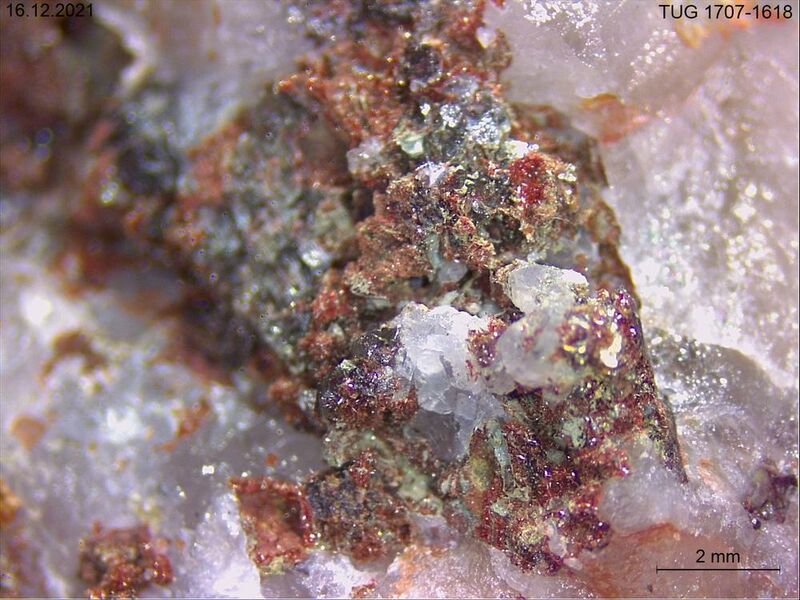 CarminitePbFe3+2(AsO4)2(OH)2Mineral—
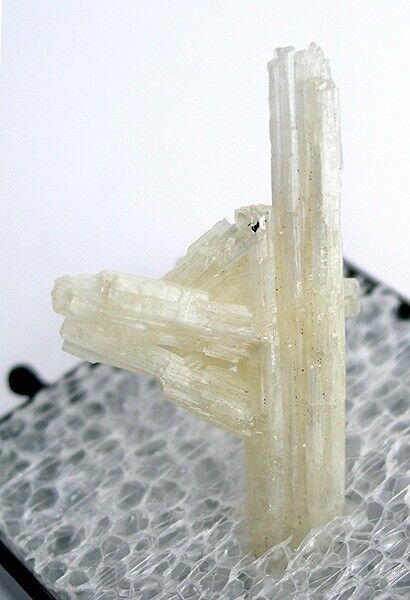 CerussitePb(CO3)Mineral—
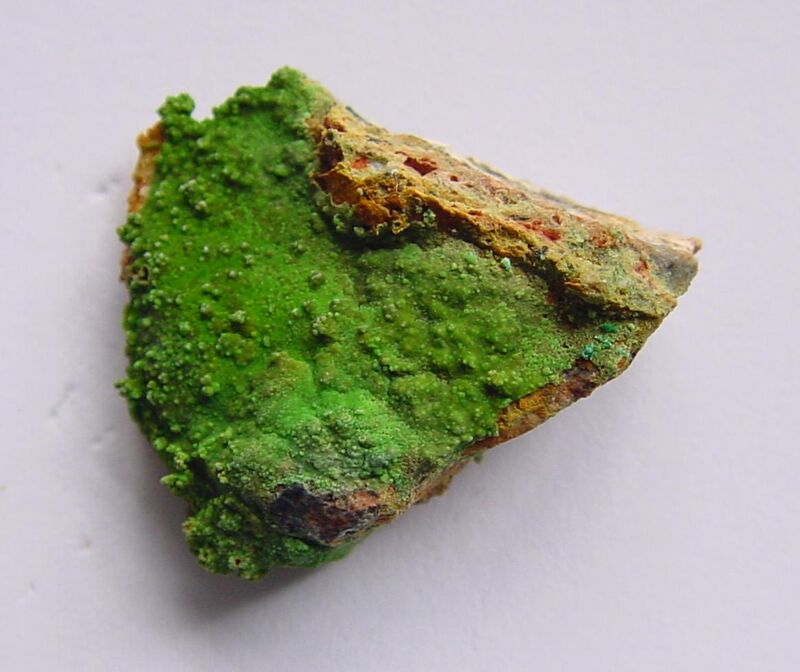 DuftitePbCu(AsO4)(OH)Mineral—
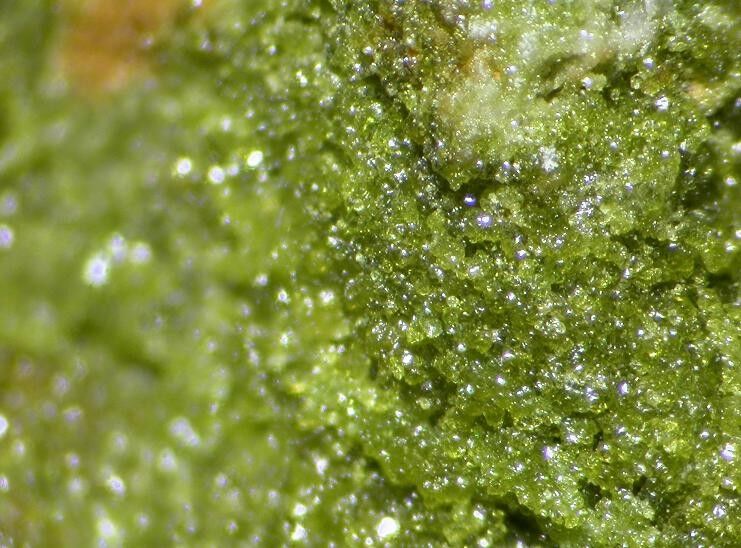 DussertiteBaFe3+3(AsO4)(AsO3OH)(OH)6Mineral—
Literature, links & citation
- 1826Lévy, A. (1826) Descriptions of two new minerals. Annals of Philosophy, London: 11: 194-196.
- 1850Percy, J. (1850) On the composition of beudantite. Philosophical Magazine and Journal of Science: 37: 161-169. [not beudantite - see Brooke]
- 1850Brooke, H.J. (1850). XLIV. On the crystalline form of Beudantite. The London, Edinburgh, and Dublin Philosophical Magazine and Journal of Science, 37(251), 349-349.
- 1851Brooke, H. J. (1851). II. On the Beudantite of Levy. The London, Edinburgh, and Dublin Philosophical Magazine and Journal of Science, 2(8), 21-21.
- 1857Dauber, H. (1857) Ueber Svanbergit und Beudantit. Annalen der Physik und Chemie, 176. 579-580 doi:10.1002/andp.18571760408DOI: 10.1002/andp.18571760408
Entry last updated
@misc{mineral2026,
  author    = {Mineral Index editorial board},
  title     = {Beudantite — Mineral Index},
  year      = {2026},
  url       = {https://mineralindex.org/minerals/beudantite-652}
}