History
The name honours a man who studied the mineral before it carried his name. In 1835, the French mining engineer Charles Louis Boulanger analysed a lead-antimony sulfide and called it plomb antimonié sulfuré — French for "sulfurated antimonial lead". Two years later, in 1837, the mineralogist Moritz Christian Julius Thaulow gave the species a formal name in Boulanger's honour: boulangerite. The first specimens came from Molières, in the Gard region of southern France.
Boulanger left another mark on the science of his day. He translated Leopold von Buch's Description physique des Îles Canaries, a study of the world's volcanoes. The book helped overturn the older Neptunian theory — the idea, taught by Abraham Werner, that all rocks had crystallised out of a primordial ocean. By the time Boulanger died in 1849, that ocean-origin model was giving way to one built on heat and volcanism.
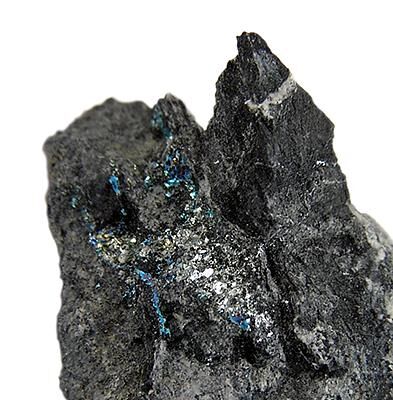
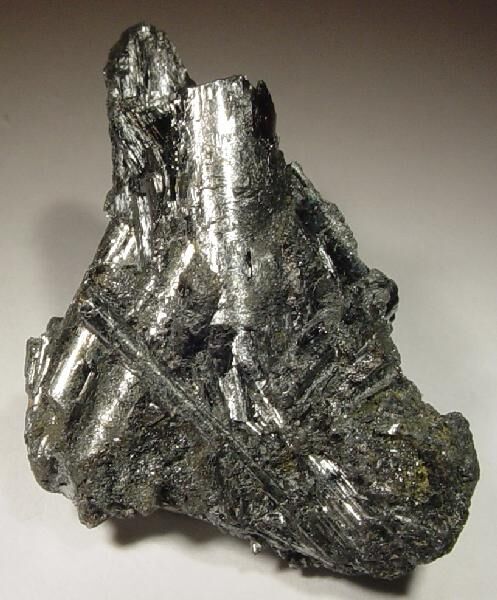
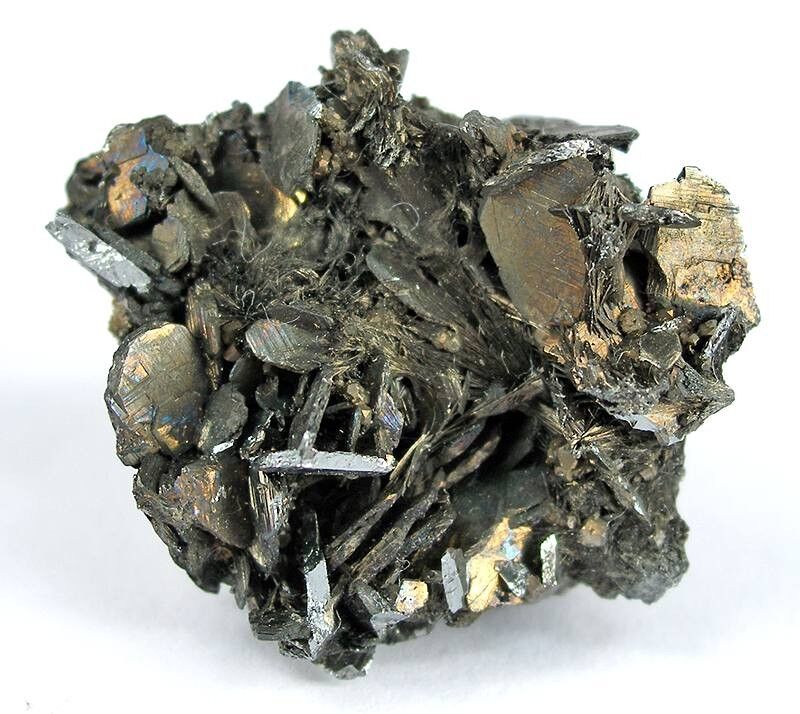
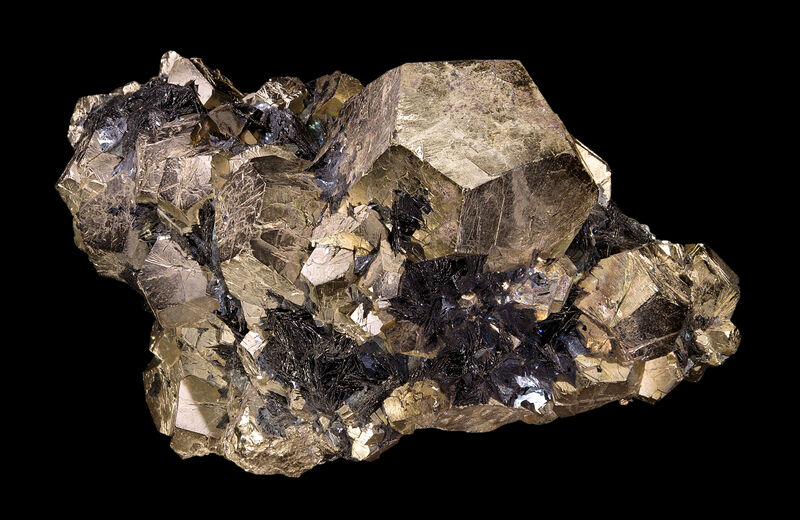
The mineral itself caused naming trouble long before and after Boulanger. It often grows as bundles of fibres so fine they look like hair, and these matted, plume-like masses were given a separate name of their own: plumosite. The label has since been discarded — the feathery "feather ore" turned out to be boulangerite all along.
Industrial & practical applications
Boulangerite carries lead, and where it gathers in quantity it can be mined for it. But that happens rarely. Mining the mineral for its lead only makes sense where it forms deposits large enough to quarry, and such concentrations are uncommon — so it remains a minor, local ore rather than a mainstream source of the metal.
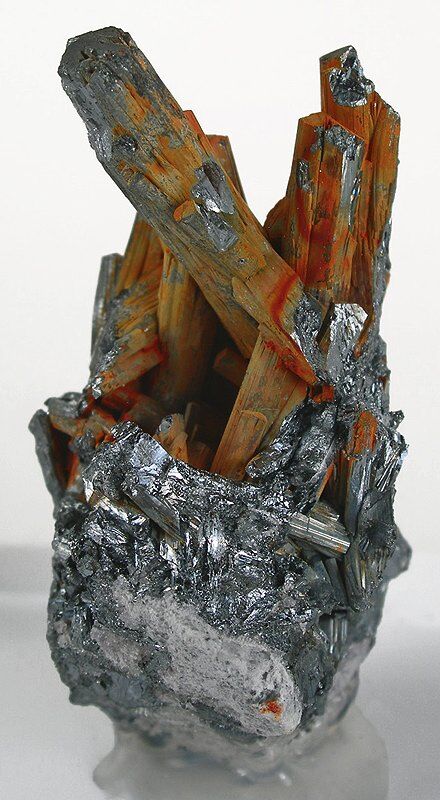
Its real pull today is on collectors. The fine, needle-like crystals — some almost as thin as hair — make boulangerite a prized specimen. That display value, more than its metal, is what keeps the mineral in demand.
Where it forms, where it's found
- Geological setting
Low to moderate temperature hydrothermal veins.
- Type locality
- Molières-Cavaillac
- Le Vigan
- Gard
- Occitanie
- France
Safety & handling
Physical
Optical
- Pleochroism
- Weak
- Anisotropism
- Distinct
- Tropism
- Anisotropic
- Reflectance R%
- (40.5,44.0) 400, (40.0,43.7) 420, (39.5,43.5) 440, (39.0,43.2) 460, (38.6,43.0) 480, (38.2,42.7) 500, (37.9,42.4) 520, (37.6,42.0) 540, (37.2,41.6) 560, (36.8,41.1) 580, (36.3,40.3) 600, (35.8,39.6) 620, (35.4,38.8) 640, (35.0,38.0) 660, (34.6,37.3) 680, (34.1,36.6) 700
Crystallography
- Space group
- P21/a
- Cell parameters
- a = 21.56 Å · b = 23.51 Å · c = 8.09 Å
- Cell angles
- β = 100.8 °
- Ratio a:b:c
- 1 : 1.090 : 0.375
- Z
- 8
- Morphology
Needle-like crystals, rarely rings, fibrous, compact masses.
- Comment
Strong subcell is orthorhombic, with halved c.
Chemical composition
- Impurities
- Cu
- Zn
- Sn
- Fe
Synonyms
- Acicular boulangerite
- Antimonbleiblende
- Bolidenit
- Bolidenita
- Bolidenite
- Embrithit
- Embrithita
- Embrithite
- Epiboulangerit
- Epiboulangerita
- Epiboulangerite
- Mullanit
- Mullanita
- Mullanite
- Orlandinit
- Orlandinita
- Orlandinite
- Plomb antimonié sulfuré
- Plumbostib
- Plumbostibiite
- Plumbostibit
- Plumbostibite
- Plumites
- Schwefelantimonblei
- Yenerit
- Yenerita
- Yenerite
In other languages
- French
- Boulangérite
- German
- Boulangerit
- Spanish
- Boulangerita
- Italian
- Boulangerite
- Japanese
- ブーランジェ鉱
- Chinese
- 硫锑铅矿
- Russian
- Буланжерит
- Arabic
- بولانغيريت
Classification
2.HC.15
- 2Sulfides and SulfosaltsClass
- 2.HSulfosalts of SnS archetypeDivision
- 2.HCWith only PbGroup
- 2.HC.15BoulangeriteSpecies
03.05.02.01
- 03SulfosaltsClass
- 03.052.5 < ø < 3Type
- 03.05.02— unnamed intermediate level —Group
- 03.05.02.01BoulangeriteSpecies
5.6.15
- 5Sulphosalts - Sulpharsenites and Sulphobismuthites (those containing Sn, Ge,or V are in Section 6)Class
- 5.6Sulpharsenites etc. of Pb aloneGroup
- 5.6.15BoulangeriteSpecies
Group, growth & confusion
Literature, links & citation
- 1835Boulanger, C. (1835) Sur un sulfure double d'antimoine et de plombe de Molières, Départment du Gard. Ann. Mines, 7: 575-582.
- 1837Breithaupt, A. (1837) Embrithite, Plumbostib. J. pr. Chem., 10: 442.
- 1921Shannon, E.V. (1921) Additional notes on the crystallography and composition of boulangerite. American Journal of Science, 5th. series: 1: 423-426.
- 1940Berry, L. G. (1940) Studies of mineral sulpho-salts III. - Boulangerite and "Epiboulangerite". Univ. Toronto Studies, Geol. Ser., 44: 5-19.
- 1944Palache, Charles, Berman, Harry, Frondel, Clifford (1944) The System of Mineralogy (7th ed.) Vol. 1 - Elements, Sulfides, Sulfosalts, Oxides. John Wiley and Sons, New York.
Entry last updated
@misc{mineral2026,
  author    = {Mineral Index editorial board},
  title     = {Boulangerite — Mineral Index},
  year      = {2026},
  url       = {https://mineralindex.org/minerals/boulangerite-738}
}