History
The mineral takes its name from a Spanish village, not the Spanish region many later writers assumed. In 1797, the German mineralogist Abraham Gottlob Werner formally named aragonite for its type locality — the village of Molina de Aragón, in what is now the province of Guadalajara. The Aragón in the village's name was repeatedly conflated by later writers with the much larger northeastern province of Aragón, hundreds of kilometres away. The misattribution is old enough that it still appears in print.
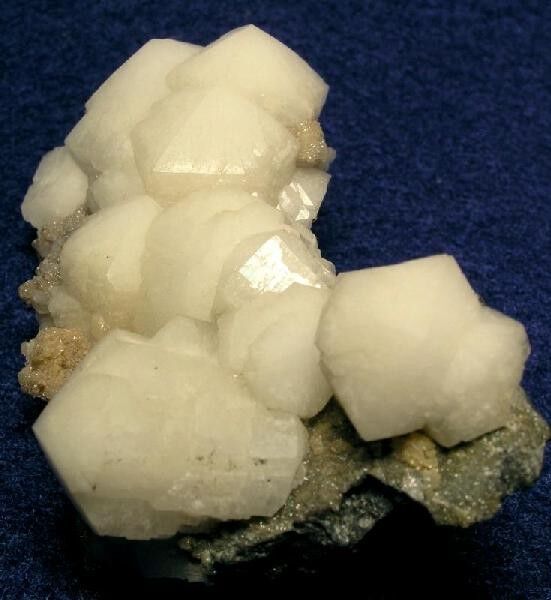
The Molina crystals are cyclic twins — clusters in which several prisms interpenetrate around a common axis — locked inside gypsum and marl of Triassic age. The form looks like a single six-sided crystal. The chemistry, CaCO₃, was already known and was supposed to crystallise as the rhombs of calcite. Werner's specimens, with the same composition, clearly did not.
The resolution — that aragonite and calcite are polymorphs, two distinct crystal forms of the same compound — was a 19th-century achievement. Aragonite is the form that is stable at high pressures. At surface conditions it is metastable: it persists for a long time but eventually converts to calcite. Older calcium-carbonate fossils, whatever their original mineralogy, are commonly found as calcite for this reason.
Industrial & practical applications
Aragonite is not a major industrial commodity. The world's bulk supply of calcium carbonate — CaCO₃ — comes from limestone and chalk. Both are made of the other common form, calcite. Aragonite has no separate market at that scale. Its modern significance is biological and scientific.
The mineral is the carbonate that life prefers. Pearls are normally aragonite. The same mineral forms the shells of nearly all molluscs and the calcareous endoskeletons of warm- and cold-water corals. It is also an important component of the shells and tests — the hard outer skeletons — of many other marine invertebrates.
In reef aquaria, hobbyist tanks that recreate coral-reef conditions, aragonite is considered essential. It provides the materials that reef life needs to build its shells and skeletons. It also keeps the water's pH close to its natural level. That stability prevents the dissolution of the animals' own biogenic — biologically produced — calcium carbonate.
Beyond aquaria, aragonite has been tested for the removal of dissolved heavy metals — zinc, cobalt, and lead — from contaminated wastewater. The use sits at the research stage rather than routine industrial deployment.
Where it forms, where it's found
- Geological setting
As speleothems in limestone caves; as pisolites, sinters and massive lamellar deposits at geysers and hot springs; as seafloor oolites; with siderite in iron deposits; with calcite and dolomite and other magnesium minerals in altered serpentinites, dunites and peridotites; and as a replacement mineral in various rock types and ore deposits, formed from low-temperature and pressure aqueous solutions.
- Type locality
- Gallo river
- Molina de Aragón
- Guadalajara
- Castile-La Mancha
- Spain
40.8503°, -1.9056°
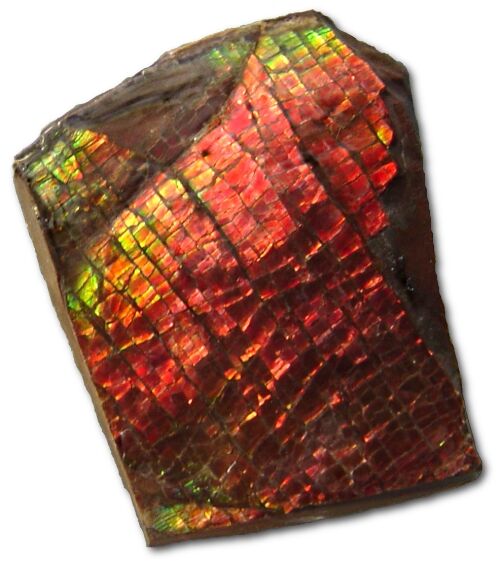
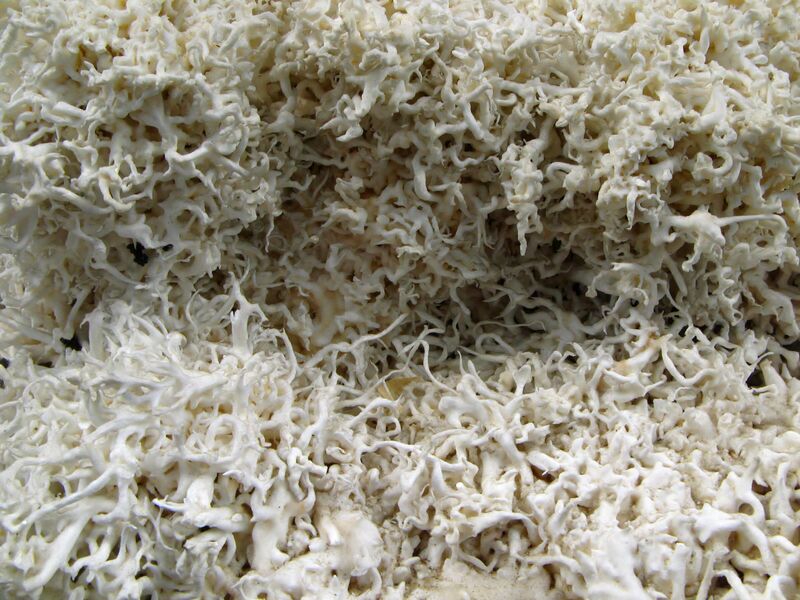
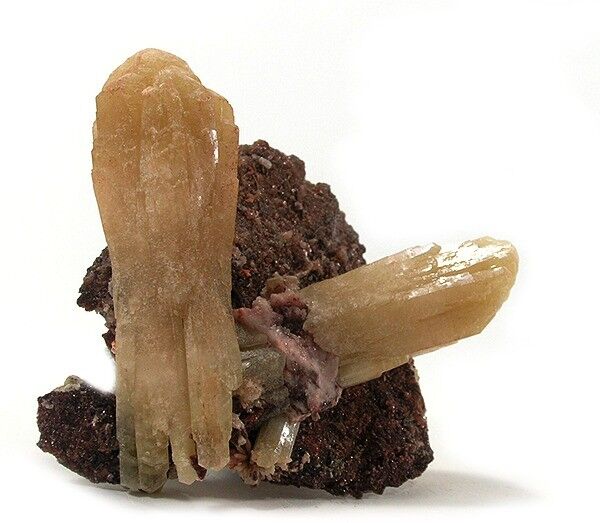
Varieties
Physical
- Hardness
- 1Talc
- 2Gypsum
- 3Calcite
- 4Fluorite
- 5Apatite
- 6Orthoclase
- 7Quartz
- 8Topaz
- 9Corundum
- 10Diamond
- Lustre
- Vitreous to resinous.
- Transparency
- Transparent · Translucent
- Colour
- Colorless to white or grey · often stained various hues by impurities · such as blue · green · red or violet · colourless in transmitted light.
- Streak
- Uncolored/white.
- Tenacity
- brittle
- Cleavage
- Distinct/Good
On (010) distinct; On (110) and (011) very indistinct.
- Fracture
- Sub-Conchoidal
- Density
- 2.947 g/cm³
Optical
- Optical type
- Biaxial (-) · 2V measured = 18 – 19° · 2V calc = 16 – 18°
- Refractive index
- 1.529 – 1.686
- Surface relief
- Moderate
- Principal indices
- nα 1.529 – 1.53 · nβ 1.68 – 1.682 · nγ 1.685 – 1.686
- Dispersion
- weak
- Extinction
- X = c; Y = a; Z = b.
- Luminescence
- Fluoresces pale rose, yellow, bluish, often with greenish phosphorescence, under LW, yellowish in SW.
- UV response
- Pale rose, yellow, white or bluish, with greenish or white phosphorescence (LW UV); yellowish (SW UV).
Crystallography
- Cell parameters
- a = 4.9611(4) Å · b = 7.9672(6) Å · c = 5.7407(4) Å
- Ratio a:b:c
- 1 : 1.606 : 1.157
- Z
- 4
- Morphology
Short to long prismatic [100], sometimes flattened (010); acicular, often with steep pyramidal or domed terminations; or tabular (001); also stalactic, columnar, in stellate or radiating aggregates, and fibrous crusts of tiny acicular crystals.
- Twinning
Single crystals are typically twinned cyclically on (110) producing pseudo-hexagonal aggregates of contact and penetration twins. Polysynthetic twinning produces lamellae or fine striations parallel to [100].
- Epitaxy
Mutual orientation in certain calcite pseudomorphs after aragonite. Also in aragonite pseudomorphs after gypsum, with aragonite (010)[001] parallel to the gypsum (010)[001].
- Comment
Non-standard space-group setting Pmcn. Pseudohexagonal.
Chemical composition
- Impurities
- Sr
- Pb
- Zn
Synonyms
- Arragon Spar
- Arragonischer Apatit
- Arragonischer Kalkspath
- Arragonit
- Arragonita
- Arragonite
- Brudelstein
- Carls-Erbsen
- Carlsbader Erbsen
- Carlsbader Pisolith
- Chimborazit
- Chimborazita
- Chimborazite
- Conchit
- Conchita
- Conchite
- Excentrischer Kalkstein
- Globuli tophacei
- Hrachovec
- Iglit
- Iglita
- Iglite
- Igloit
- Igloita
- Igloite
- Ktypéit
- Ktypéita
- Ktypéite
- Marmoreus ramulosus
- Nadelstein
- Oserskit
- Oserskita
- Oserskite
- Pisa Carolina
- Prismatisches Kalkhaloid
- Schallenkalk
- Spathum prismaticum in igne lucem spargens
- Sprudelstein
- Stillatitius lapis
- Vřídlovec
- Walstein
- Winnieit
- Winnieita
- Winnieite
In other languages
- French
- aragonite
- German
- Aragonit · Aragonitgruppe · Nicholsonit
- Spanish
- aragonita · aragonito
- Italian
- aragonite
- Portuguese
- aragonita
- Japanese
- アラレ石
- Chinese
- 文石 · 霰石
- Simplified Chinese
- 霰石
- Russian
- арагонит
- Arabic
- أراجونيت
Classification
5.AB.15
- 5CarbonatesClass
- 5.ACarbonates without additional anions, without H2ODivision
- 5.ABAlkali-earth (and other M2+) carbonatesGroup
- 5.AB.15AragoniteSpecies
11.4.2
- 11CarbonatesClass
- 11.4Carbonates of CaGroup
- 11.4.2AragoniteSpecies
Group, growth & confusion
 AbhuriteSn2+21O6(OH)14Cl16Mineral—
 AlumohydrocalciteCaAl2(CO3)2(OH)4 · 4H2OMineral—
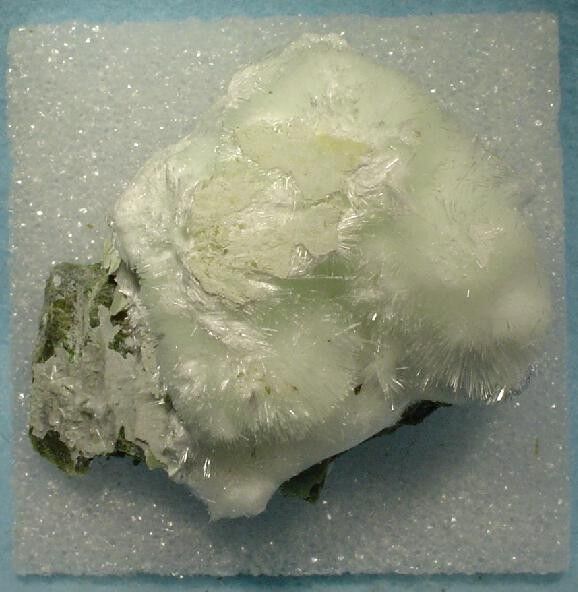 ArtiniteMg2(CO3)(OH)2 · 3H2OMineral—
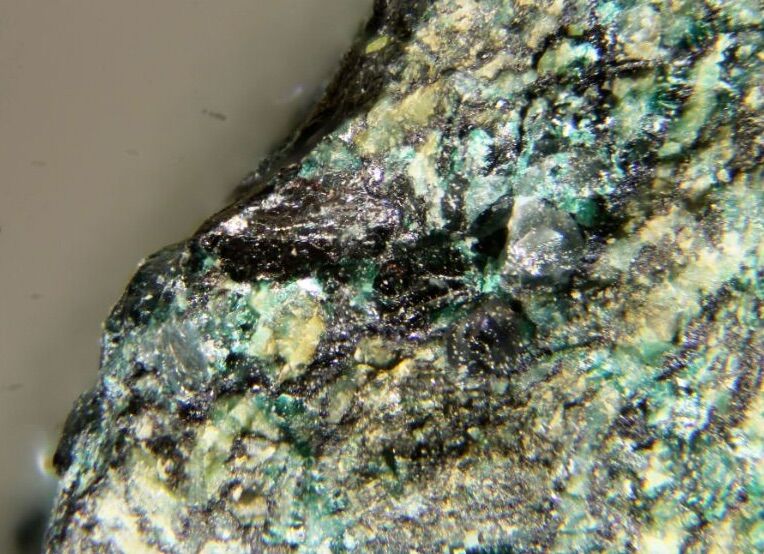 BalkaniteAg5Cu9HgS8Mineral—
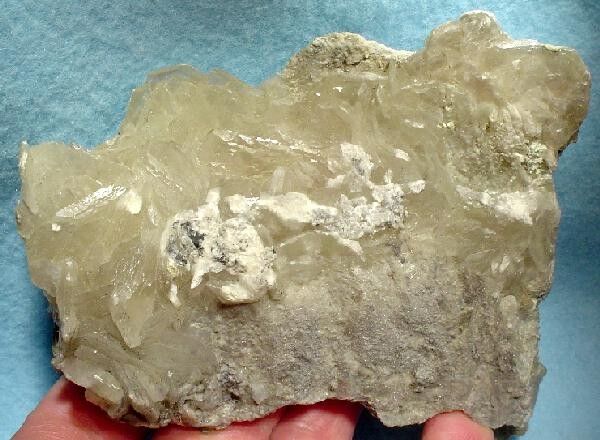 BruciteMg(OH)2Mineral—
 CalciteCa(CO3)Mineral—
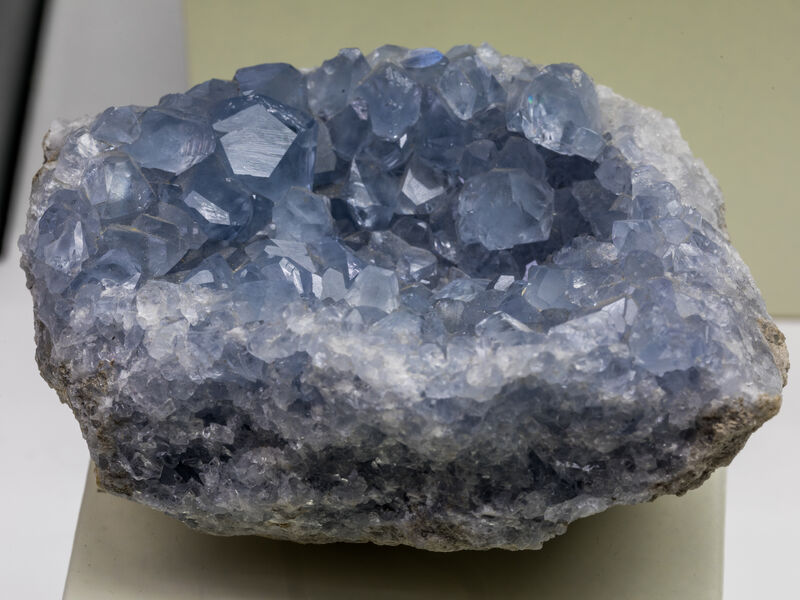 CelestineSr(SO4)Mineral—
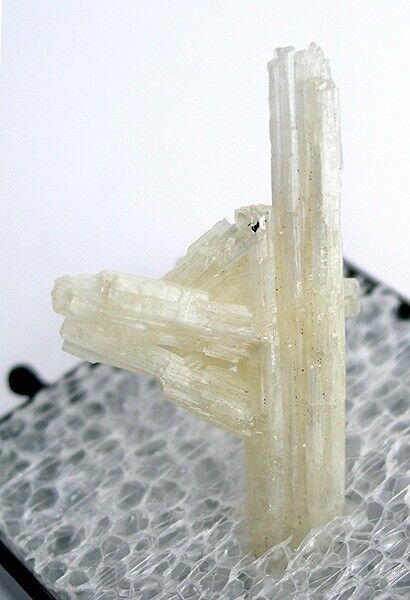 CerussitePb(CO3)Mineral—
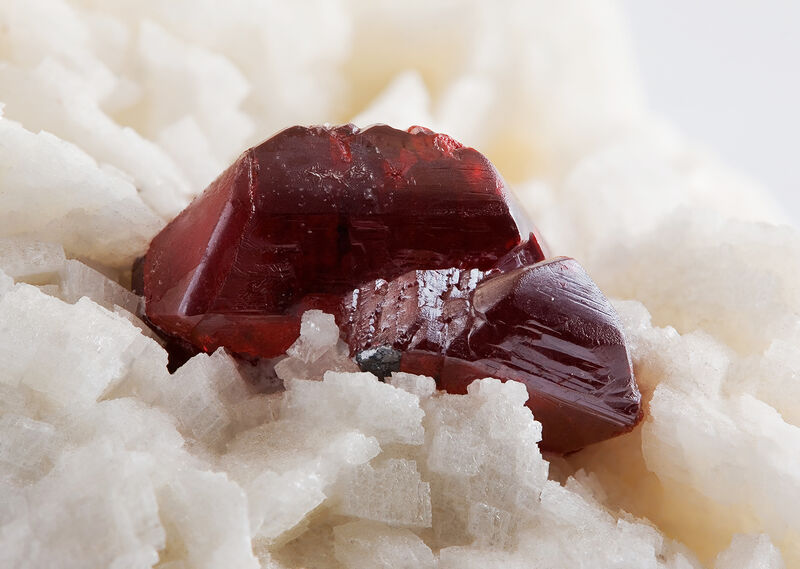 DolomiteCaMg(CO3)2Mineral—
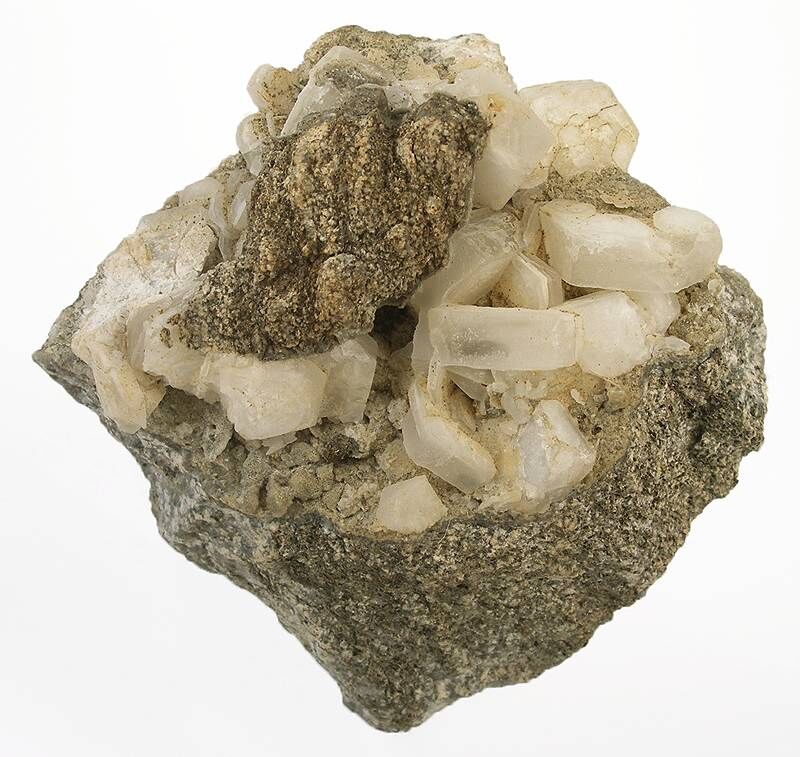
- FerrocarpholiteFe2+Al2Si2O6(OH)4Mineral—
Literature, links & citation
- 1754Torrubia, José (1754) El Aparato para la Historia Natural Española..
- 1767Davila, M. (1767) Catalogue syst. et raisonné des curiosités de la nature et de l’art qui composent de cabinet de M. Davila. 3 volumes, Paris: 2: 50, 52.
- 1768Linnaeus (1768) Systema Naturae of Linnaeus: 183 (as Stalactites Flos ferri; Marmoreus ramulosus).
- 1788Klaproth (1788) Bergmaaennusches Journal, Freiberg (Neues Bergmannische Journal): 1: 299.
- 1788Klaproth (1788) Crell's Chemical Journal, London: 1: 387 (as carbonate of lime).
Entry last updated
@misc{mineral2026,
  author    = {Mineral Index editorial board},
  title     = {Aragonite — Mineral Index},
  year      = {2026},
  url       = {https://mineralindex.org/minerals/aragonite-307}
}