History
The name clinozoisite tells a small story about a crystal's shape. The first half, clino-, comes from the Greek for inclined or oblique. It marks a monoclinic mineral — one whose internal lattice leans, with one axis tilted off the right angle. The second half points to an older relative, zoisite, which it closely resembles.
That older mineral came first, and it carries a person's name. Abraham Gottlob Werner described zoisite in 1805. He named it after Sigmund Zois, Baron von Edelstein, a naturalist from Carniola. Zois had sent him the first specimens, found at Saualpe in Carinthia. Zoisite is orthorhombic — its three lattice axes all meet at right angles. Clinozoisite shares its chemistry almost exactly but builds it on a leaning, monoclinic frame. The two are polymorphs: same recipe, different architecture.
The leaning form was nearly named for someone else. The French mineralogist Alfred Lacroix described it in 1889 and called it fouquéite, after the geologist Ferdinand Fouqué. That name did not stick. In 1896, Ernst Weinschenk renamed the mineral clinozoisite, drawing on its monoclinic crystal form and its kinship with zoisite. He worked from material found that year in East Tyrol, in the Austrian Alps.
Clinozoisite belongs to the epidote group of minerals. As iron replaces some of its aluminium, it grades into epidote itself, and an iron-bearing form is sometimes called aluminium epidote.
Industrial & practical applications
No industrial use is recorded for clinozoisite. It is a mineral of scientific and collector interest rather than a commodity.
Its main value is to geologists reading the history of rocks. Clinozoisite forms when rocks are reworked by heat and pressure, a process called metamorphism. It appears in rocks that have undergone low to medium grade regional metamorphism, and in the contact metamorphism of calcium-rich sediments. It also grows when the mineral plagioclase breaks down into a dull green mixture known as saussurite. Because it forms only under particular conditions, its presence helps geologists gauge the temperature and pressure a rock once endured.
Beyond the laboratory, clinozoisite is sought by mineral collectors as a representative of the epidote group. Clear crystals are occasionally cut as gemstones, but the material is scarce and the cut stones remain a minor curiosity rather than an article of trade.
Where it forms, where it's found
- Type locality
- Gösleswand (Goslerwand)
- Prägraten am Großvenediger
- Lienz District
- Tyrol
- Austria
46.9792°, 12.2953°
Varieties
Physical
- Hardness
- 1Talc
- 2Gypsum
- 3Calcite
- 4Fluorite
- 5Apatite
- 6Orthoclase
- 7Quartz
- 8Topaz
- 9Corundum
- 10Diamond
- Transparency
- Transparent · Translucent
- Colour
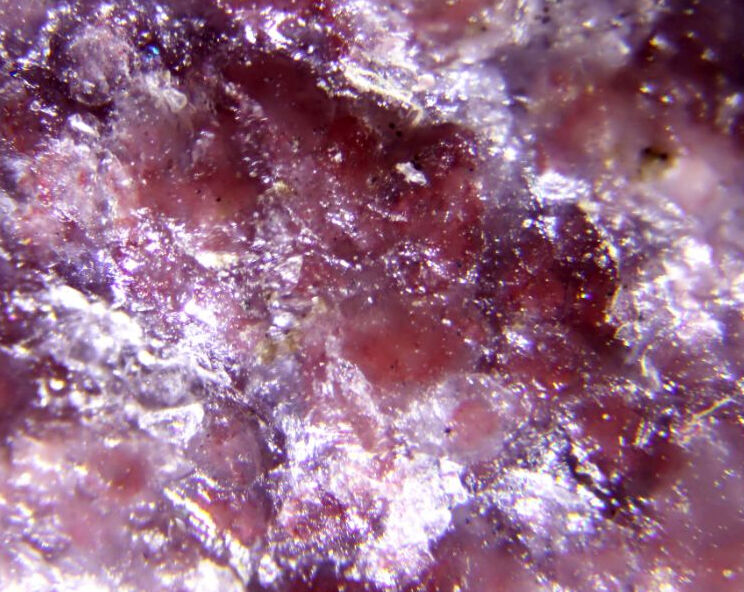
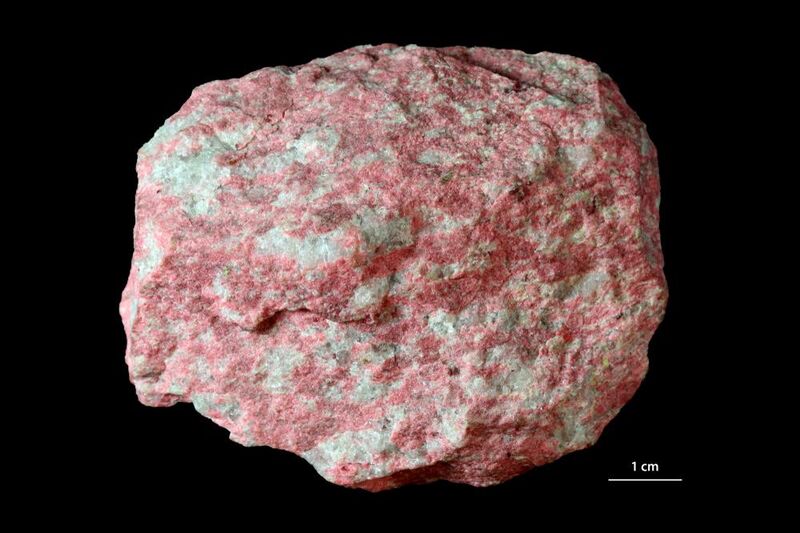
- colourless · green · grey · light green · yellow-green · pale brownish · green-brown · pink
- Streak
- Greyish White
- Cleavage
- Perfect
on (001)
- Fracture
- Irregular/Uneven
- Density
- 3.3 g/cm³
Optical
- Optical type
- Biaxial (+) · 2V measured = 14 – 90° · 2V calc = 72 – 86°
- Refractive index
- 1.706 – 1.735
- Surface relief
- High
- Principal indices
- nα 1.706 – 1.724 · nβ 1.708 – 1.729 · nγ 1.712 – 1.735
- Dispersion
- r > v or r < v
Crystallography
- Space group
- #15
- Cell parameters
- a = 8.879(5) Å · b = 5.583(5) Å · c = 10.155(6) Å
- Cell angles
- β = 115.50(5) °
- Ratio a:b:c
- 1 : 0.629 : 1.144
- Z
- 2
- Morphology
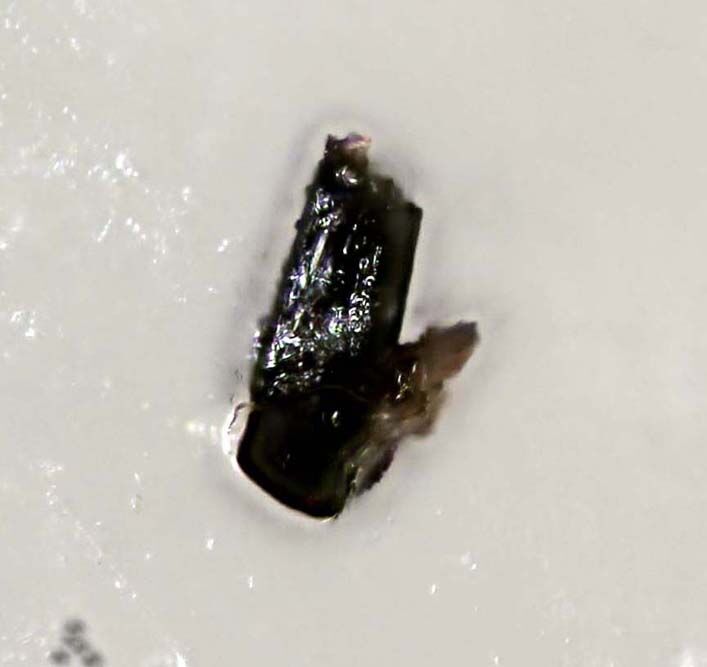
Crystals prismatic, typically elongated and striated parallel to [010]; commonly coarse- to ̄fine-granular; also ̄fibrous. Prismatic crystals may show a pseudo-hexagonal cross-section.
- Twinning
Lamellar on (100).
Chemical composition
- Impurities
- Ti
- Fe
- Mn
- Mg
Synonyms
- Aluminium-Epidote
- Clinoepidote
- Fouquéite
In other languages
- French
- aluminium-épidote · chrome-clinozoïsite · clinoépidote · clinothulite · clinozoïsite · épidote gris · fouquéite
- German
- Klinozoisit
- Spanish
- Clinozoisita
- Italian
- Clinozoisite
- Japanese
- 単斜灰簾石 · 斜灰簾石
- Chinese
- 斜黝帘石 · 斜黝簾石
- Simplified Chinese
- 斜黝帘石
- Traditional Chinese
- 斜黝簾石
Classification
9.BG.05a
- 9SilicatesClass
- 9.BSorosilicatesDivision
- 9.BGSorosilicates with mixed SiO4 and Si2O7 groups; cations in octahedral [6] and greater coordinationGroup
- 9.BG.05aClinozoisiteSpecies
58.02.1a.04
- 58Sorosilicates Insular, Mixed, Single, and Larger Tetrahedral GroupsClass
- 58.02Insular, Mixed, Single, and Larger Tetrahedral Groups with cations in [6] and higher coordination; single and double groups (n = 1, 2)Type
- 58.02.1a— unnamed intermediate level —Group
- 58.02.1a.04ClinozoisiteSpecies
16.9.9
- 16Silicates Containing Aluminum and other MetalsClass
- 16.9Aluminosilicates of CaGroup
- 16.9.9ClinozoisiteSpecies
Group, growth & confusion
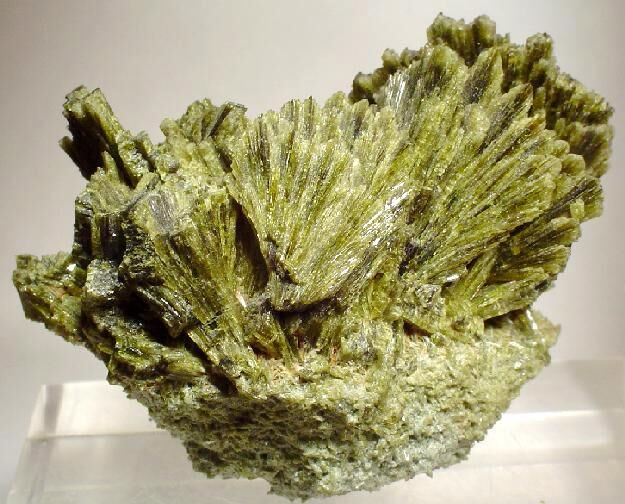 EpidoteCa2(Al2Fe3+)[Si2O7][SiO4]O(OH)Mineral—
- Epidote-(Sr)CaSr(Al2Fe3+)[Si2O7][SiO4]O(OH)Mineral—
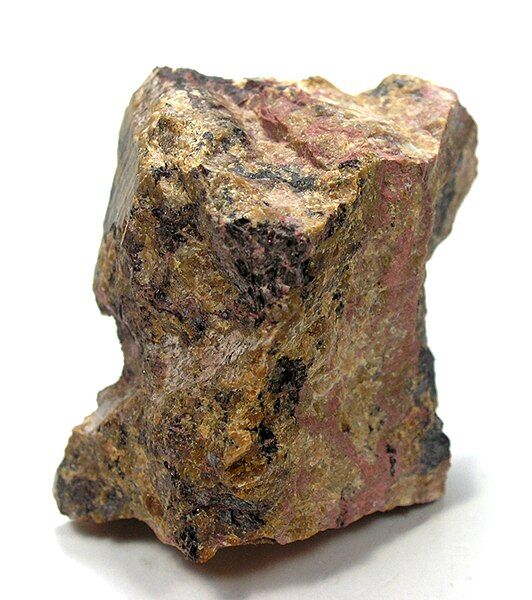 HancockiteCaPb(Al2Fe3+)[Si2O7][SiO4]O(OH)Mineral—
- HeflikiteCa2(Al2Sc)(Si2O7)(SiO4)O(OH)Mineral—
- MukhiniteCa2(Al2V3+)[Si2O7][SiO4]O(OH)Mineral—
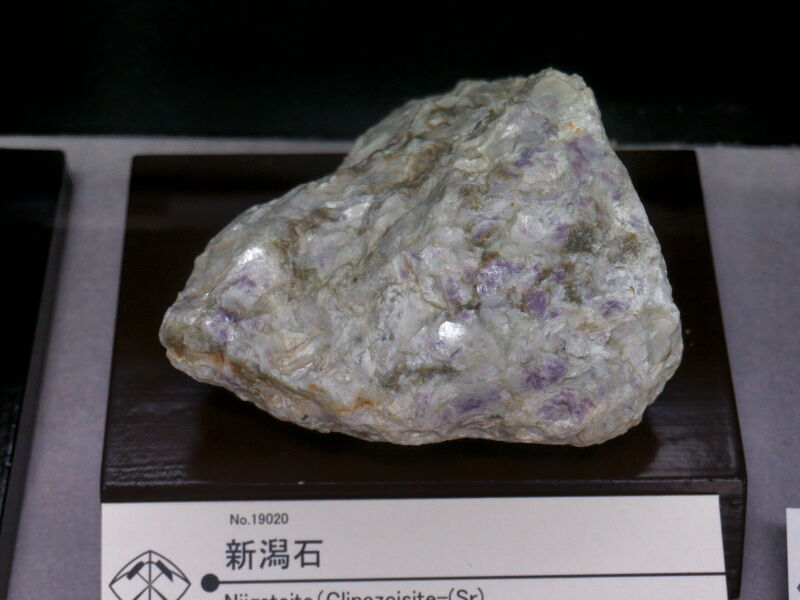 NiigataiteCaSrAl3[Si2O7][SiO4]O(OH)Mineral—
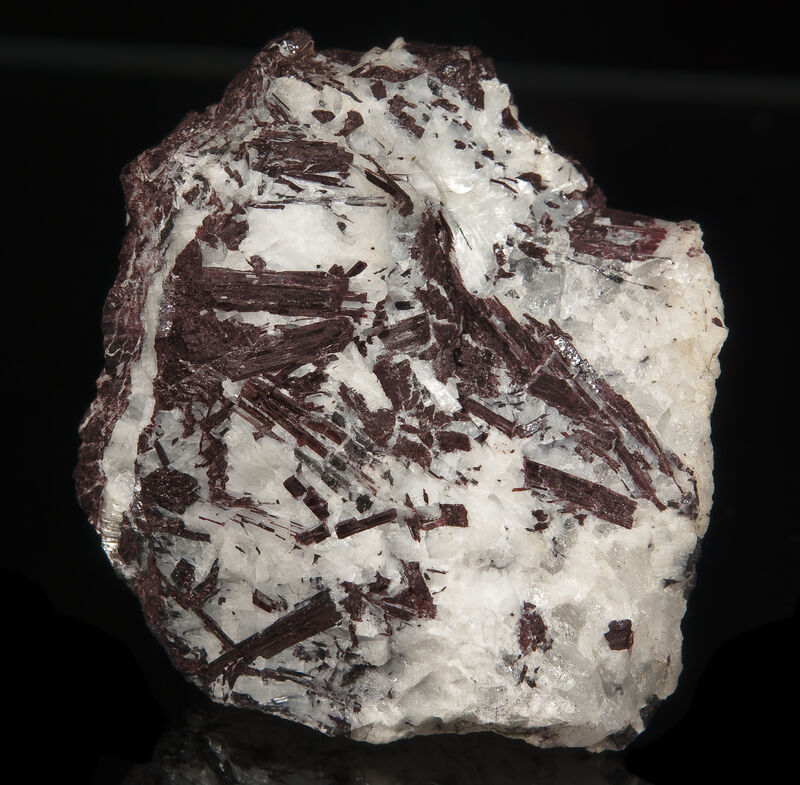 PiemontiteCa2(Al2Mn3+)[Si2O7][SiO4]O(OH)Mineral—
- Piemontite-(Pb)CaPb(Al2Mn3+)[Si2O7][SiO4]O(OH)Mineral—
 Piemontite-(Sr)CaSr(Al2Mn3+)[Si2O7][SiO4]O(OH)Mineral—
 TweddilliteCaSr(Mn3+2Al)[Si2O7][SiO4]O(OH)Mineral—
Literature, links & citation
- 1896Weinschenk, E. (1896): Ueber Epidot und Zoisit. Zeitschrift für Kristallographie, 26, 154-177.
- 1961Pistorius, Carl W. F. T. (1961) Synthesis and Lattice Constants of Pure Zoisite and Clinozoisite. The Journal of Geology, 69 (5) 604-609 doi:10.1086/626774DOI: 10.1086/626774
- 1968Dollase, W. A. (1968) Refinement and comparison of the structures of zoisite and clinozoisite. American Mineralogist, 53 (11-12) 1882-1898
- 1974De Angelis G., Sgarlata F. (1974) Contributo alla conoscenza della clinozoisite. Periodico di Mineralogia: 103-111.
- 1985Jenkins, David M., Newton, Robert C., Goldsmith, Julian R. (1985) Relative Stability of Fe-Free Zoisite and Clinozoisite. The Journal of Geology, 93 (6) 663-672 doi:10.1086/628994DOI: 10.1086/628994
Entry last updated
@misc{mineral2026,
  author    = {Mineral Index editorial board},
  title     = {Clinozoisite — Mineral Index},
  year      = {2026},
  url       = {https://mineralindex.org/minerals/clinozoisite-1087}
}