Where it forms, where it's found
- Geological setting
Thermally metamorphosed argillaceous sedimentary rocks; high-grade regionally metamorphosed schists, gneisses, and granulites; also in mafic igneous rocks and granites.
- Type locality
- Großer Arber
- Bayerisch Eisenstein
- Regen District
- Lower Bavaria
- Bavaria
- Germany
49.1125°, 13.1353°
Varieties
Physical
- Hardness
- 1Talc
- 2Gypsum
- 3Calcite
- 4Fluorite
- 5Apatite
- 6Orthoclase
- 7Quartz
- 8Topaz
- 9Corundum
- 10Diamond
- Lustre
- Vitreous to glassy
- Transparency
- Transparent · Translucent
- Colour
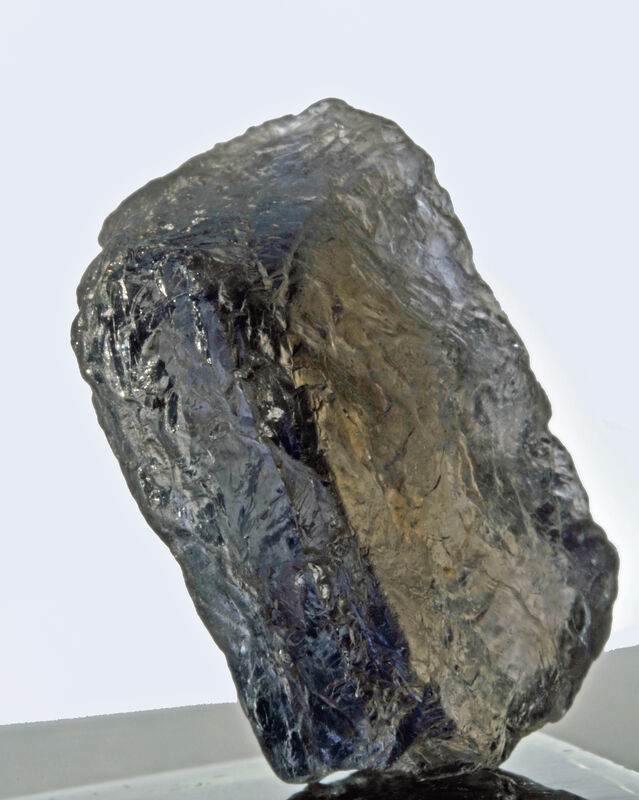
- Grey · blue · blue-violet · greenish · yellowish brown · colourless to very light blue in transmitted light.
Charles and others have explained the coloration mechanism of cordierite, stating that its blue color originates from the charge transfer between Fe2+ in the octahedral sites and Fe3+ in the T11 tetrahedral sites. Dudka et al. conducted precise X-ray diffraction analysis on cordierite, identifying the locations of metal cations Na+, H2O, and CO2 within the channels of cordierite. Pollak explained the sites of charge transfer in cordierite by examining the differences between infrared absorption bands along different crystallographic axes, providing a deeper explanation for its polychroism. However, specific studies on the spectral differences between different crystal axes are lacking. Duncan et al. measured the Mössbauer spectra of cordierite single crystals in different directions, determining the positions and occupancy rates of Fe2+ and Fe3+ ions, suggesting that the exchange interaction between Fe3+ ions on the T1 sites and the six-fold sites is the source of cordierite’s polychroism. Raphaël et al. evaluated the spectroscopic properties of cordierite through TD-DFT, assessing the simulation of polychroism and the variation of color with different light sources. However, studies on the spectral differences along different crystallographic axes of cordierite and the content ratio of Fe2+ to Fe3+ are still lacking. The sample’s refractive index and relative density are lower compared to iron cordierite, with an XMg range between 0.79 and 0.96. The Raman spectral characteristics are closer to those of pure Mg-cordierite, indicating that the samples are Mg-cordierite. The cordierite samples contain both Fe2+ and Fe3+ valence states, with an average ratio of 25.55% to 74.45%. The ultraviolet spectral characteristics of cordierite indicate that the difference in the broad absorption band at 584 nm is the key to cordierite’s strong pleochroism (deep purple/light purple/light yellow), caused by charge transfer between Fe2+ in the octahedron and Fe3+ in the tetrahedron. Infrared and Raman spectroscopy results reveal that differences in the Si-O group density in different directions cause variations in the spectral characteristics among the three optical principal axis directions of cordierite, with the greatest difference along the parallel b-axis, while the spectral characteristics of the other two directions are similar. Both infrared and Raman spectroscopy also prove the presence of a certain amount of Type I H2O and a small amount of Type II H2O in Mg-cordierite, with the band intensity of Type II H2O being directly proportional to the sample’s Na content.[[1]]
- Tenacity
- brittle
- Cleavage
- Imperfect/Fair
On (100), fair; On (001) and (010), poor.
- Fracture
- Sub-Conchoidal
- Density
- 2.6 g/cm³
Optical
- Optical type
- Biaxial (-) · 2V measured = 75 – 89° · 2V calc = 54 – 86°
- Refractive index
- 1.527 – 1.578
- Surface relief
- Moderate
- Principal indices
- nα 1.527 – 1.56 · nβ 1.532 – 1.574 · nγ 1.538 – 1.578
- Pleochroism
- Strong
X = Pale yellow, green; Y = Violet, blue-violet; Z = Light blue.
- Dispersion
- r < v, weak to marked
- Extinction
- X = c; Y = a; Z = b.
- Notes
Absorption: Z > Y > X.
Crystallography
- Space group
- Cccm
- Cell parameters
- a = 17.079(3) Å · b = 9.730(2) Å · c = 9.356(2) Å
- Ratio a:b:c
- 1 : 0.570 : 0.548
- Z
- 4
- Morphology
Crystals short prismatic, striated parallel to [001]. Commonly granular to compact, massive.
- Twinning
Common on (110) and (130), simple, lamellar, and cyclical.
Chemical composition
- Impurities
- Mn
- Fe
- Ti
- Ca
- Na
- K
Synonyms
- Dichroit
- Dichroita
- Dichroite
- Esmarkite (of Berzelius)
- Hard Fahlunite
- Iolit
- Iolita
- Iolith
- Jolit
- Jolita
- Jolite
- Lazulith (of van Schlotheim)
- Lazulith (of von Schlotheim)
- Luchsapphir
- Luchssaphir
- Peliom
- Spanish Lazulite
- Steinheilit
- Steinheilita
- Steinheilite
- Tanolite
- Wassersaphir
- Water Sapphire
In other languages
- French
- Cordiérite · Dichroïte · Indialite · Iolite · Quartz bleu de la Nouvelle-Finlande · Saphir d'eau · Steinheilite · Yolithe
- German
- Cordierit · Dichroit · Iolith
- Spanish
- cordierita
- Italian
- cordierite · diocrite · iolite · zaffiro d'acqua · zaffiro di lince
- Portuguese
- cordierita · cordierite
- Japanese
- きん青石 · コーディエライト · 菫青石
- Chinese
- 堇青石
- Simplified Chinese
- 堇青石
- Traditional Chinese
- 堇青石
- Russian
- Дихроит · Иолит · Кордиерит · Штейнгейлит
- Arabic
- كورديريت
Classification
9.CJ.10
- 9SilicatesClass
- 9.CCyclosilicatesDivision
- 9.CJ[Si6O18]12- 6-membered single rings (sechser-Einfachringe), without insular complex anionsGroup
- 9.CJ.10CordieriteSpecies
61.02.01.01
- 61Cyclosilicates Six-membered RingsClass
- 61.02Six-Membered Rings with Al substituted ringsType
- 61.02.01Cordierite groupGroup
- 61.02.01.01CordieriteSpecies
16.19.2
- 16Silicates Containing Aluminum and other MetalsClass
- 16.19Aluminosilicates of Fe and MgGroup
- 16.19.2CordieriteSpecies
Group, growth & confusion
 AlmandineFe2+3Al2(SiO4)3Mineral—
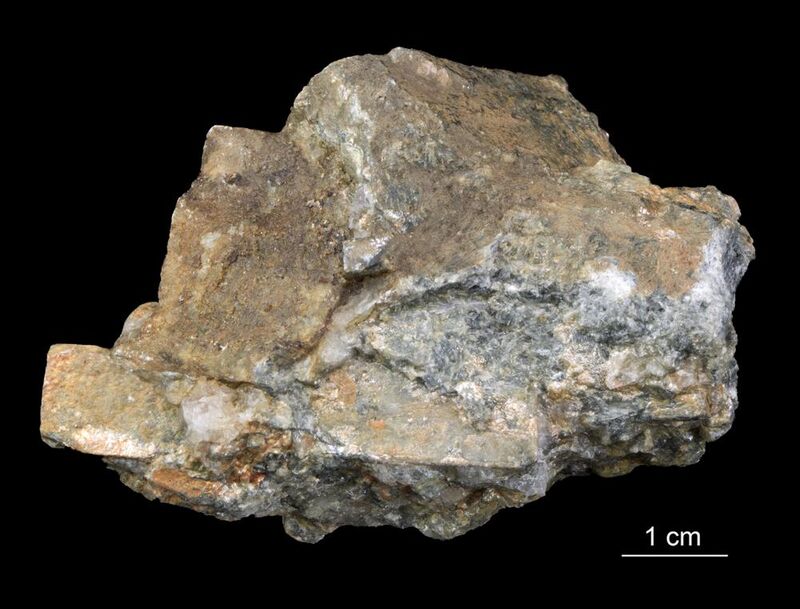 AndalusiteAl2SiO5Mineral—
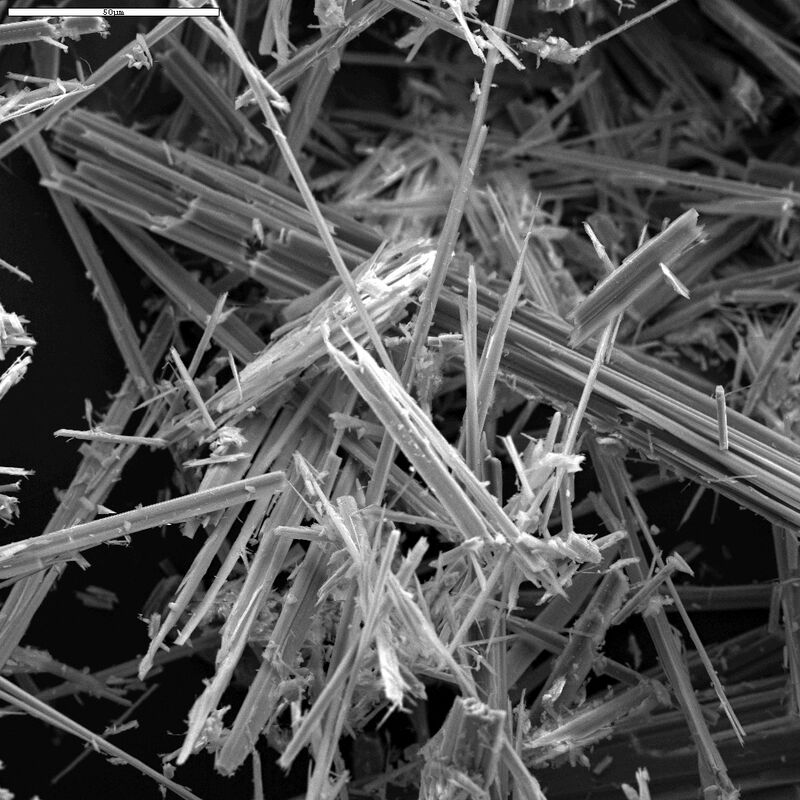 Anthophyllite◻Mg2Mg5Si8O22(OH)2Mineral—
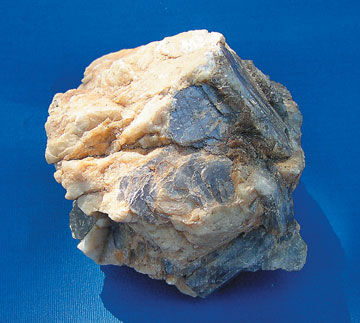 CorundumAl2O3Mineral—
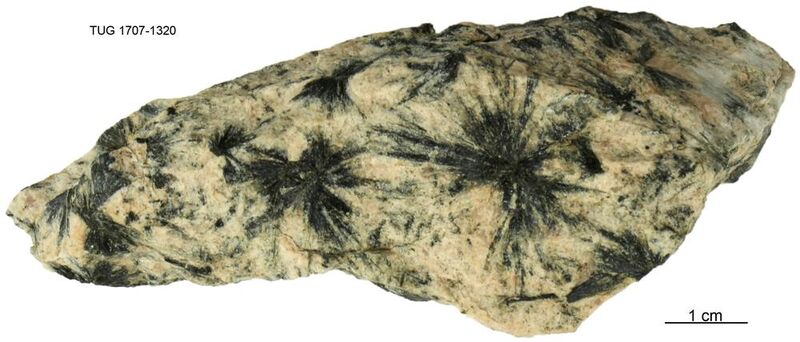 Gedrite◻Mg2(Mg3Al2)(Si6Al2)O22(OH)2Mineral—
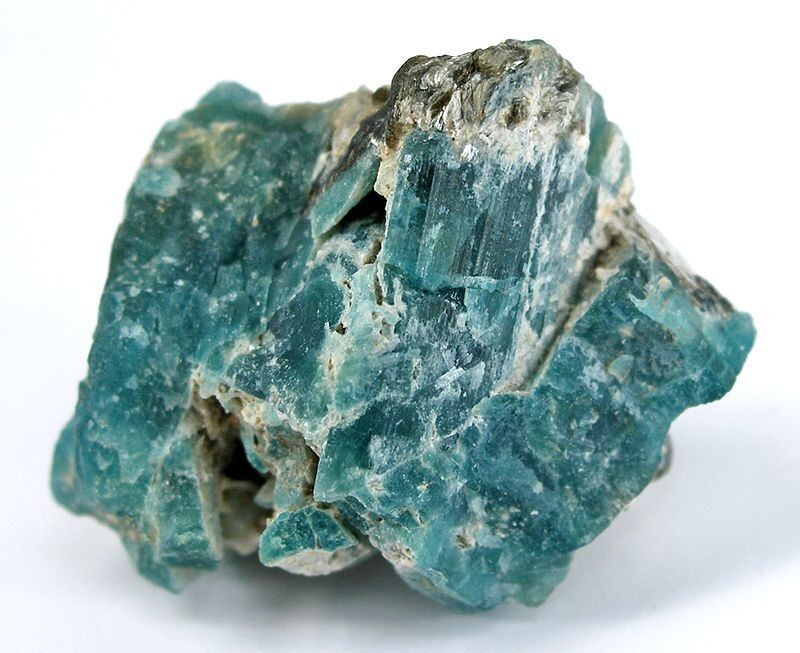 GrandidieriteMgAl3O2(BO3)(SiO4)Mineral—
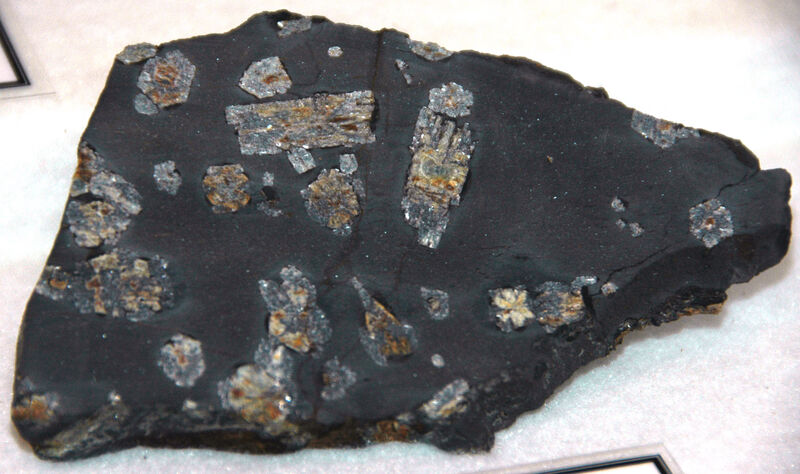 IndialiteMg2Al3(AlSi5)O18Mineral—
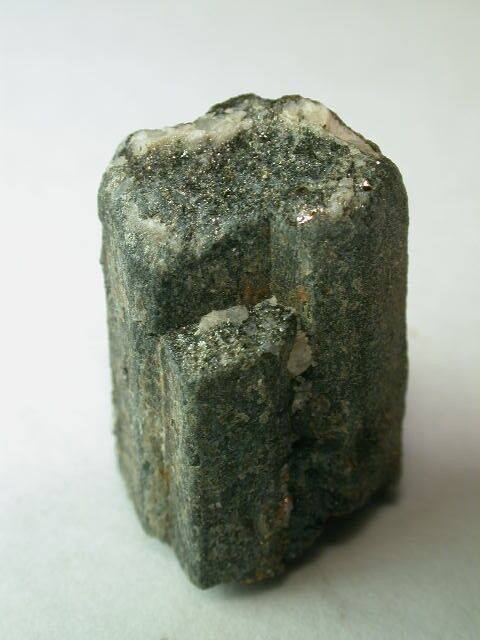 Kornerupine(Mg,Fe2+,Al,◻)10(Si,Al,B)5O21(OH,F)2Mineral—
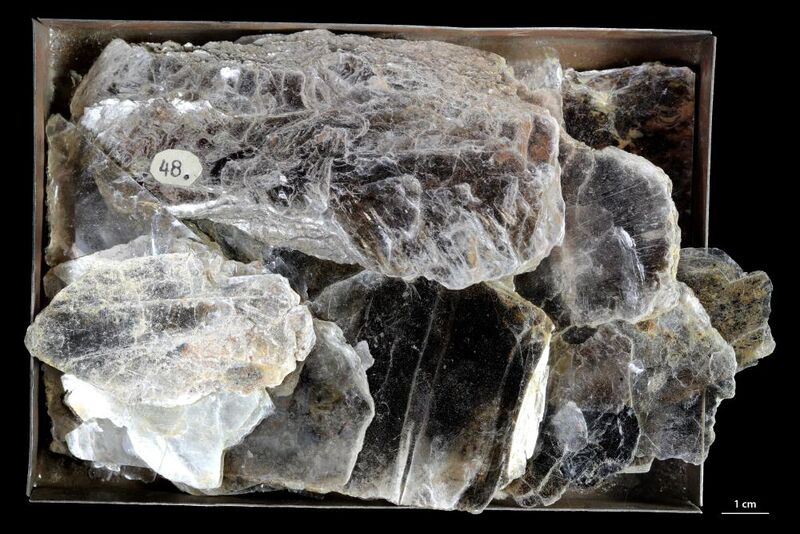 MuscoviteKAl2(Si3Al)O10(OH)2Mineral—
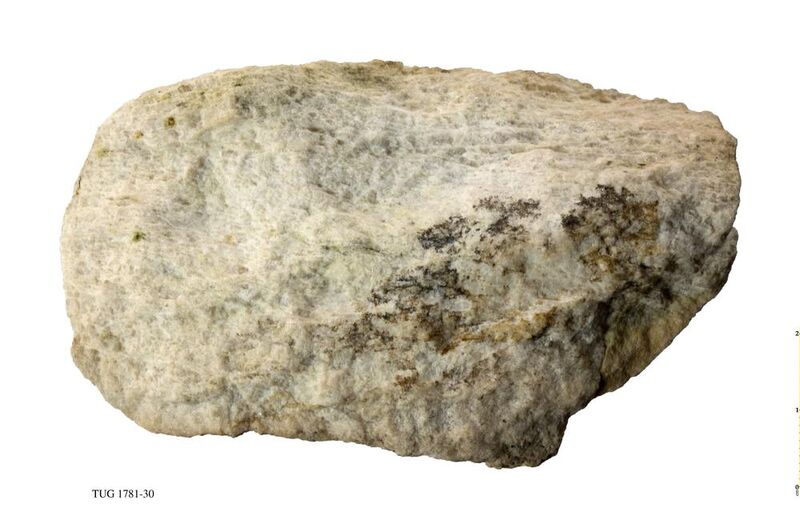 SillimaniteAl2SiO5Mineral—
Literature, links & citation
- 1933Rutherford, Ralph L. (1933) Optically positive cordierite from the Northwest Territories, Canada. American Mineralogist, 18 (5) 216
- 1935Conant, L. C. (1935) Optically positive cordierite from New Hampshire. American Mineralogist, 20 (4) 310
- 1936Rutherford, Ralph L. (1936) Optically positive cordierite in the Kisseyenew gneiss at Sherridon, Manitoba. American Mineralogist, 21 (6) 386-387
- 1941Folinsbee, Robert E. (1941) Optic properties of cordierite in relation to alkalies in the cordierite-beryl structure. American Mineralogist, 26 (8) 485-500
- 1943Shand, S. J. (1943) Notes on cordierite: (A) Cordierite crystals from a glass furnace; (B) Cordierite from Horns Nek, Transvaal. American Mineralogist, 28 (6) 391-395
Entry last updated
@misc{mineral2025,
  author    = {Mineral Index editorial board},
  title     = {Cordierite — Mineral Index},
  year      = {2025},
  url       = {https://mineralindex.org/minerals/cordierite-1128}
}