History
Long before anyone had a single word for it, corundum hid behind a scattering of old gem names. Writers called the red and blue stones adamant, sapphire, ruby, hyacinthos and asteria — all, we now know, the same mineral wearing different colours. In China, four polished corundum axes from the Liangzhu and Sanxingcun cultures, dated to about 2500 BC, show the stone was being worked into tools that early.
The modern name arrived in the early 18th century. In 1725 the English naturalist John Woodward wrote it as corinvindum, borrowing from the Sanskrit kuruvinda — a word for ruby. The root runs deeper still, into the Tamil-Dravidian kurundam, meaning ruby-sapphire. The spelling settled into its present form in 1794, when the Irish chemist Richard Kirwan first used corundum.
Making it in the laboratory
The 19th century turned corundum from a found stone into a made one. In 1837 the French chemist Marc Antoine Gaudin produced the first synthetic rubies, heating alumina — aluminium oxide — with a trace of chromium for colour. A decade later, in 1847, J. J. Ebelmen grew white synthetic sapphires by reacting alumina in boric acid.
The breakthrough came from Auguste Verneuil. The French chemist had worked on melting rubies since the 1880s. He sealed his notes with the Paris Academy of Science, then announced the method in 1902. His flame-fusion process drips powdered alumina through an oxyhydrogen flame, letting the molten droplets build up into a single crystal called a boule. By 1903 he could make rubies on a commercial scale. It was the first practical way to grow large flawless gems, and it remains the cheapest.
Industrial & practical applications
At a hardness of 9 on the ten-point Mohs scale — the scratch test that ranks minerals by which can scratch which — corundum is beaten only by diamond. That hardness is the source of nearly everything people do with it. Its main job is to grind, polish and cut other materials.
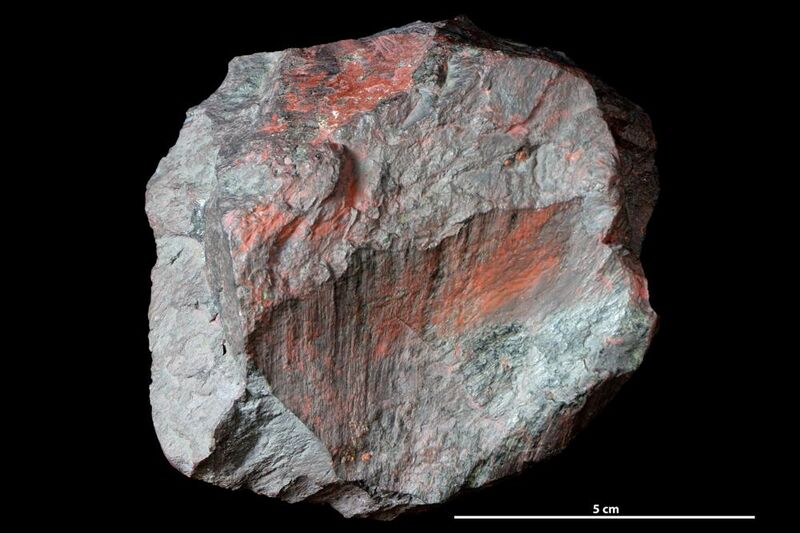
The grinding grade is emery, a black granular corundum naturally mixed with iron oxides such as magnetite and hematite. Emery coats sandpaper and the large tools that machine metals, plastics and wood. Most abrasive corundum today is not dug from the ground at all but manufactured from bauxite, the aluminium ore. Natural corundum for abrasives is still mined in Zimbabwe, Pakistan, Afghanistan, Russia, Sri Lanka and India, with emery-grade stone coming from the Greek island of Naxos.
The flame-fusion process makes corundum to order, and that synthetic stock does more than grinding. It is machined into mechanical parts — tubes, rods and bearings. The same hardness gives scratch-resistant optics and the clear covers on watch faces. Because synthetic sapphire stays transparent from ultraviolet through to infrared light, it serves as instrument windows on satellites and spacecraft. Its toughness has also drawn it into ceramic armour.
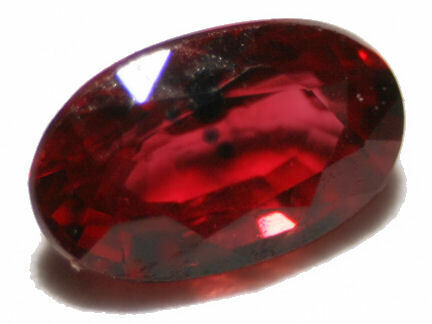
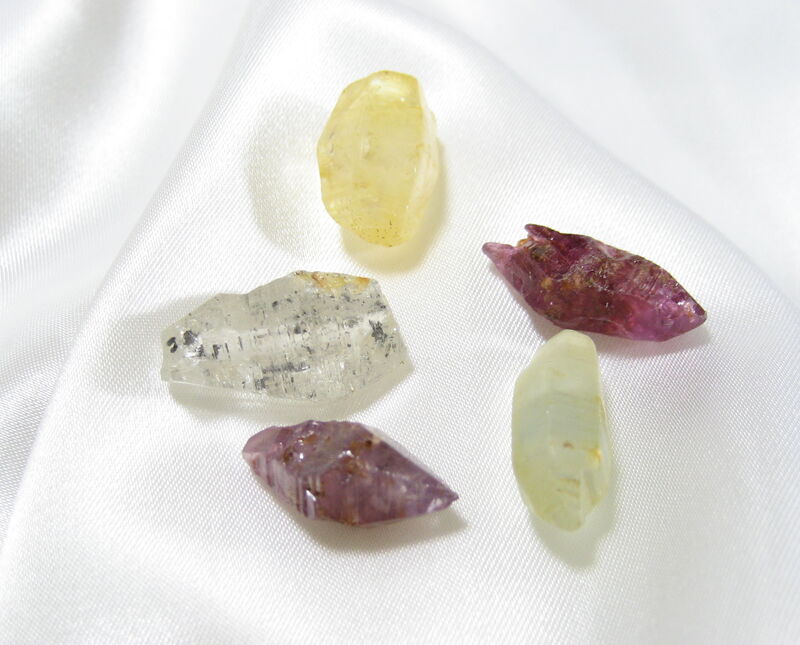
Corundum is also a laser crystal. A rod of synthetic ruby — corundum coloured red by chromium — is the gain medium in the ruby laser, the part that actually amplifies the light. Ruby lasers have given ground to better materials, but they still serve where short pulses of red light are needed. Its red and blue gem varieties, ruby and sapphire, remain the best-known faces of the species, prized as cut stones.
Where it forms, where it's found
- Geological setting
Silica-poor rocks, such as Nepheline-Syenites, alkali igneous undersaturated rocks, contact aureoles in altered aluminous shales, aluminous xenoliths in high temperature plutonic and hypabyssal rocks, metamorphosed bauxite deposits, and as a detrital material in sediments.
Varieties
Physical
- Hardness
- 1Talc
- 2Gypsum
- 3Calcite
- 4Fluorite
- 5Apatite
- 6Orthoclase
- 7Quartz
- 8Topaz
- 9Corundum
- 10Diamond
- Transparency
- Transparent · Translucent · Opaque
- Colour
- Colourless · blue · red · pink · yellow · grey · golden-brown
- Streak
- White
- Tenacity
- brittle
- Cleavage
- None Observed
- Fracture
- Irregular/Uneven · Conchoidal
- Density
- 3.98 g/cm³
Optical
- Optical type
- Uniaxial (-) · 2V measured = 58°
- Refractive index
- 1.759 – 1.772
- Surface relief
- High
- Principal indices
- nω 1.767 – 1.772 · nε 1.759 – 1.763
- Birefringence
- Low, first-order greys and whites.
- Pleochroism
- Not Visible
Weak in sapphire (e = blue-green to yellow-green, o = pale to deep blue), otherwise none visible.
- Optical colour
- Colourless
- Notes
Asterism often present due to oriented needle-like inclusions or to colloidal or other material deposited in oriented tubules.
Crystallography
- Space group
- #98
- Cell parameters
- a = 4.75 Å · c = 12.982 Å
- Unit cell volume
- 253.54 ų
- Z
- 6
- Morphology
Often steep pyramidal on w, z, E, or ω. Barrel-shaped crystals that are often rough and rounded, of considerable size at times, varying from short prismatic [0001] with a large base to steep pyramidal. Less commonly, flat tabular (0001) or rhombohedral. Striae on (0001) parallel [01_10]. Lines in the direction [11_20] divide the base into six sectors at times. Forms include (0001), (1000), (110), (710), (105), (103), (102), (101), (702), (701), (011), (021), (072), (225), (223), {7·7·_14·9}, (111), {7·7·_14·6}, (448), {11·11·_22·6}, (221), {7·7·_14·3}, {8·8·_16·3}, (441), {14·14·_28·3}, (425), (324), {2·8·_10·9}
- Twinning
1. Common (101); usually lamellar, producing a lamellar structure and striae on c and r. Less commonly penetration twins or arrowhead twins with crystals tabular (112). 2. On (0001), less common. Pressure twinning produced on (101), and on (0001).
- Parting
- Rhombohedral and basal parting (0001), sometimes perfect but interrupted; also on (101) due to exsolution (Boehmite), observed on large blocks (Georgia, USA).
Chemical composition
- Impurities
- Cr
- Fe
- V
- Ti
Synonyms
- a-Corundum
- Adamas siderites
- Ajatit
- Alumina
- Ayatit
- Ayatita
- Ayatite
- Corindon adamantin
- Corindon harmophane
- Corinendum
- Corinindum
- Corivendum
- Corivindum
- Corrindon
- Corundit
- Corundita
- Corundum-alpha
- Corundum-α
- Corundumit
- Corundumita
- Corundumite
- Demantspath
- Harmophane
- Karund
- Korunduvit
- Korunduvita
- Korunduvite
- Soimontit
- Soimontita
- Soimontite
- Spath Adamantin
- White Sapphire
- Zircolita
- Zircolite
- Zircolith
- α-Alumina
- α-Corundum
In other languages
- French
- 1302-74-5 · Alumine alpha · Ayatite · corindon · Corindon adamantin · Corindon harmophane · Corundite · Corundumite · Spath adamantin · Télésie · Zircolite
- German
- Adamantin · Edelkorund · Korund
- Spanish
- corindón · corundo · óxido de aluminio
- Italian
- corindone
- Portuguese
- Corindo · coríndon
- Japanese
- コランダム · 鋼玉
- Chinese
- 刚玉 · 剛玉 · 金剛砂 · 鋼玉
- Simplified Chinese
- 刚玉
- Traditional Chinese
- 剛玉
- Russian
- корунд
- Arabic
- قرند · كورندم · كوروند
- Hindi
- कुरुविन्द
Classification
4.CB.05
- 4OxidesClass
- 4.CMetal: Oxygen = 2: 3,3: 5, and similarDivision
- 4.CBWith medium-sized cationsGroup
- 4.CB.05CorundumSpecies
04.03.01.01
- 04Simple OxidesClass
- 04.03A2X3Type
- 04.03.01Corundum-Hematite group (Rhombohedral: R-3c)Group
- 04.03.01.01CorundumSpecies
7.6.1
- 7Oxides and HydroxidesClass
- 7.6Oxides of AlGroup
- 7.6.1CorundumSpecies
Group, growth & confusion
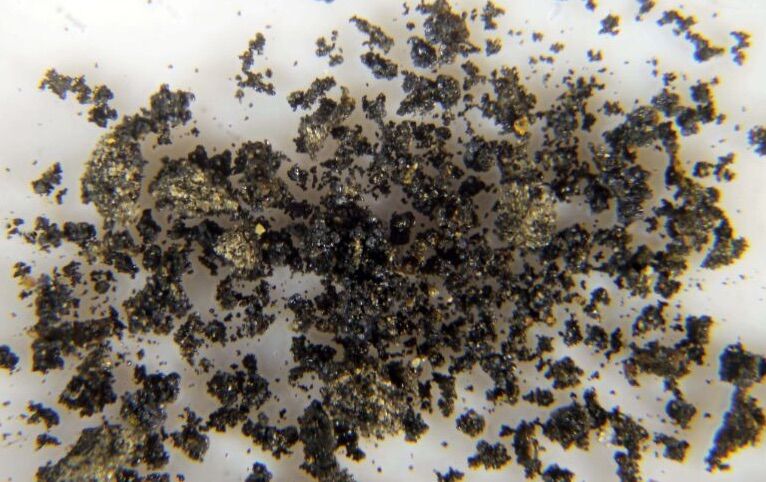
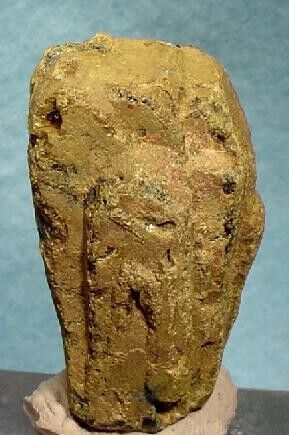 Aeschynite-(Y)Y(TiNb)O6Mineral—
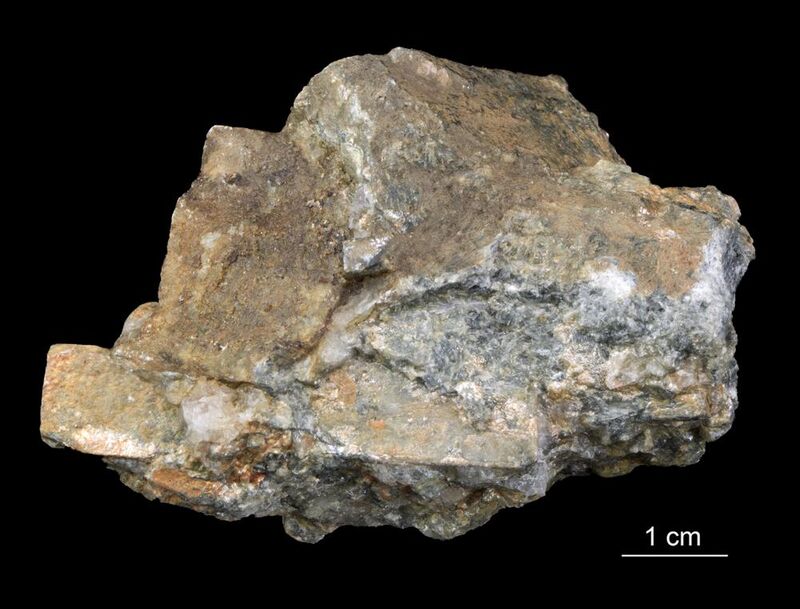 AndalusiteAl2SiO5Mineral—
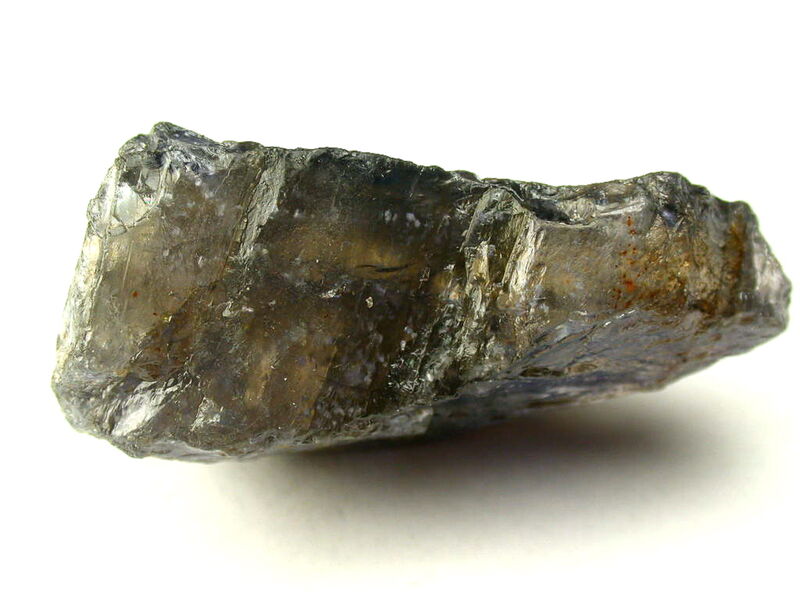 CordieriteMg2Al4Si5O18Mineral—
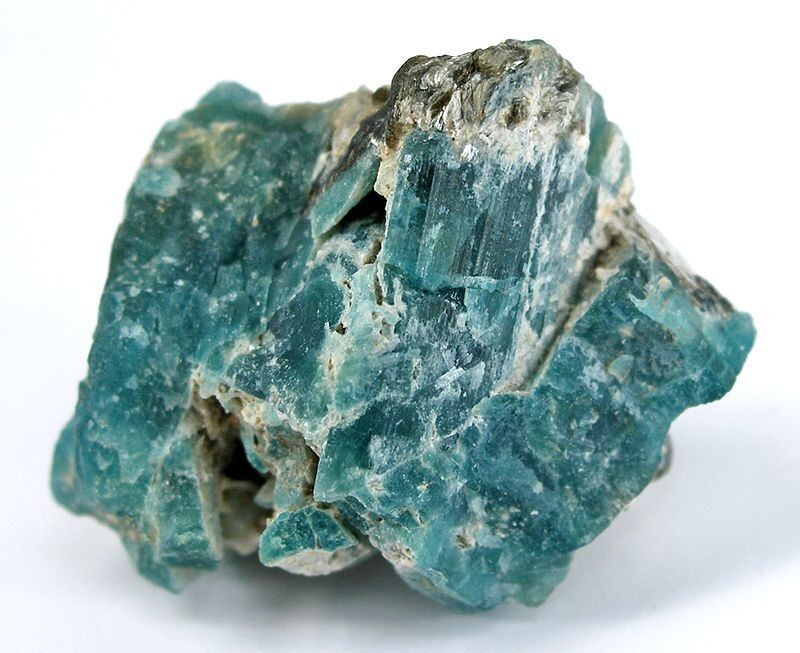 GrandidieriteMgAl3O2(BO3)(SiO4)Mineral—
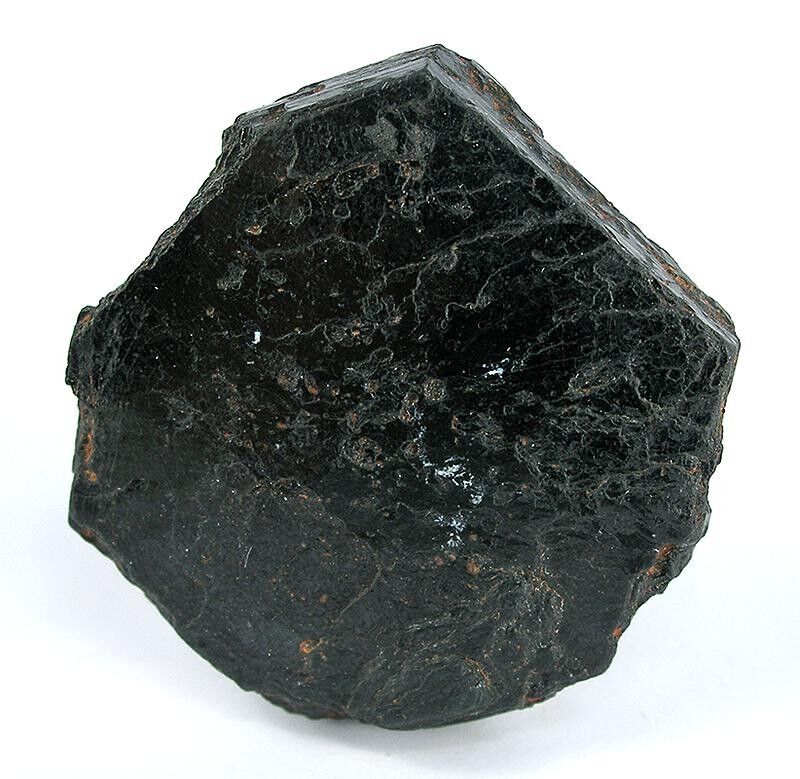 HiboniteCaAl12O19Mineral—
- IcosahedriteAl63Cu24Fe13Mineral—
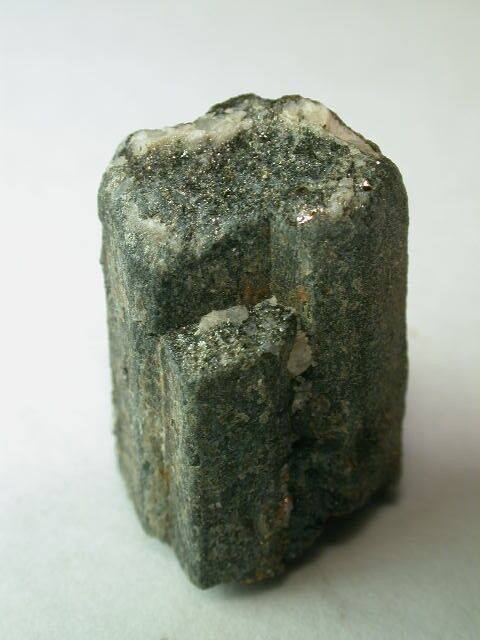 Kornerupine(Mg,Fe2+,Al,◻)10(Si,Al,B)5O21(OH,F)2Mineral—
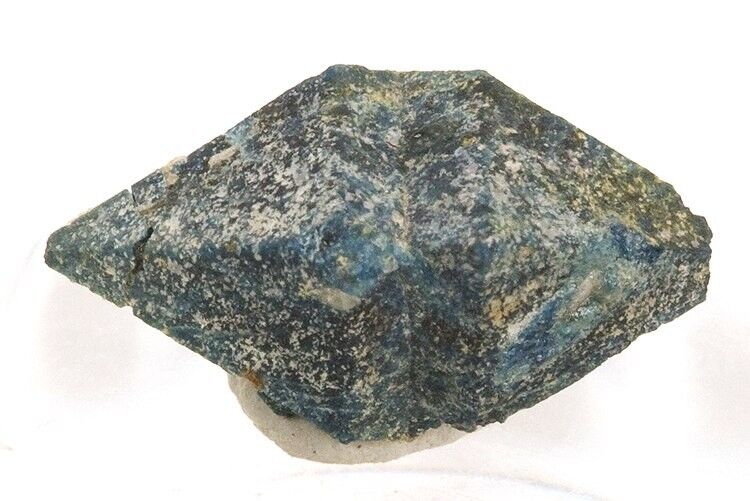 LazuliteMgAl2(PO4)2(OH)2Mineral—
 MargariteCaAl2Si2Al2O10(OH)2Mineral—
- OsborniteTiNMineral—
Literature, links & citation
- —Pignatelli, I., Nespolo, M., Pardieu, V., Giuliani, G., Morlot, C. (2024): Basal twinning of Greenland. Mineralogy and Petrology, 118, (in press).
- 1565Gesner, C. (1565) Gemmis, quae erant in veste Aaronis, Liber Graecus, & e regione Latinus, Iola Hierotarantino interprete: cum Corollario Conradi Gesneri. in Sancti Patris Epiphanii Episcopi Cypri ad Diodorum Tyri episcopum, De XII, 1-29.
- 1805Haüy (1805): Ann. Phys.: 20: 187.
- 1806Lucas (1806): 1: 257.
- 1891Edmond Frémy (1891): Synthèse du rubis. Vve. Ch. Dunod, France. [https://archive.org/details/SyntheseDuRubis]
Entry last updated
@misc{mineral2026,
  author    = {Mineral Index editorial board},
  title     = {Corundum — Mineral Index},
  year      = {2026},
  url       = {https://mineralindex.org/minerals/corundum-1136}
}