History
No one discovered native copper. It was already on the ground when humans began to work metal. They picked it up as a curious red pebble and slowly understood it as a stone that did not behave like stone.
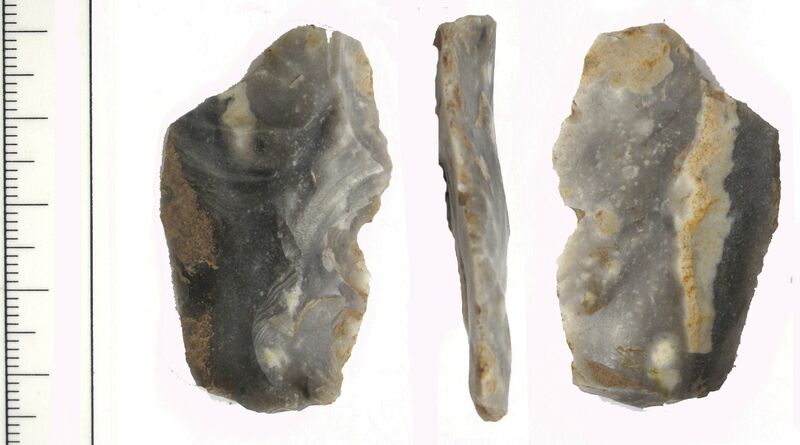
The earliest known use of the metal dates to about 9000 BCE in the Middle East. A native copper pendant found in northern Iraq has been dated to 8700 BCE. By about 8000 BCE, Neolithic peoples — those of the late Stone Age — were using the metal in place of stone. It served them for both tools and ornaments. Cold hammering was the entry point. Native copper is malleable enough that a stone can flatten it into a sheet or a point, without any need for fire.
A parallel story unfolded on the other side of the world. Around the Great Lakes of North America, a culture archaeologists call the Old Copper Complex mined and worked native copper from local quarries. The major workings sat on Isle Royale, the Keweenaw Peninsula of Michigan, and the Brule River. The earliest dated artifacts run from about 6500 BCE to 1580 BCE. A copper spearpoint found in Wisconsin has been dated to 6500 BCE. By heating, annealing and hammering, these communities produced spearpoints, knives, awls, and decorative objects. Annealing — re-softening the metal between blows — is what lets cold-worked copper be shaped without cracking. The native copper of Lake Superior is unusually pure, occurring as the metal itself rather than as an ore. That is why a culture without smelting could still build a metallurgy around it.
The leap to true metallurgy — extracting copper from ore with heat — came later in the Middle East. In Mesopotamia, copper was cast to shape in moulds around 4000 BCE and deliberately alloyed with tin into bronze around 3500 BCE. From that moment, native copper stopped being the only source of the metal.
The name that survived all of this came from Cyprus, the location of ancient copper mines, called kyprios — "of Cyprus" — in Greek. The Romans drew their copper almost entirely from the island, and called the metal aes Cyprium. Aes was the generic Latin word for copper and its alloys; Cyprium meant "of Cyprus". The phrase was shortened to cyprium and later worn down to cuprum. Old English took it up as coper in the twelfth century, and modern English copper descends directly from that.
The native copper of the Great Lakes returned to industry in the nineteenth century. Commercial mining of the Keweenaw deposits began in 1844 at the Phoenix mine. The first successful operation, the Cliff mine, opened the following year. The deposits sometimes produced single masses of native copper weighing hundreds of tons. Removing a single mass could take miners months of chiselling, breaking it down to pieces small enough to hoist out of the shaft.
Industrial & practical applications
Most of the copper you handle in a day — the wire behind a power socket, a saucepan on the stove, the brass keys on a doorknob — never started life as native copper. The metal is extracted overwhelmingly from sulphide ores: chalcopyrite, bornite, covellite and chalcocite, in which copper is locked into chemistry with sulphur and iron. Native copper, the rare masses and sheets of nearly pure metal occasionally pulled from places like Michigan's Keweenaw Peninsula, supplies only a marginal share of modern output. The mineral is, today, mostly a museum specimen; the element it is made of is one of the busiest industrial substances on Earth.
Roughly three quarters of all copper used today goes into electrical work — building wiring, power transmission, generation, telecommunication, and electrical and electronic products. Copper is among the best electrical conductors known, and it is cheaper than the few metals that beat it. That balance of conductivity and price is the reason copper sits behind every wall socket and inside every motor.
Building construction is the single largest market, followed by electronics and electronic products, transportation, industrial machinery, and consumer and general products. In a house, copper appears twice over — as the wiring threaded through the walls and as the plumbing carrying water through them. Copper pipe resists corrosion well enough to outlast most of the building around it.
The element also travels under different names. Brass — copper alloyed with zinc — turns into instruments, fittings and decorative hardware, including the cooking utensils and household goods that have long made the mineral familiar in daily life. Bronze — copper alloyed with tin, often with small additions of other metals — has been cast into bells for centuries and still is. Cupronickel stiffens marine hardware and most modern coinage; constantan, a copper-nickel alloy, is the active wire in strain gauges and thermocouples. Each alloy borrows copper's conductivity, corrosion resistance, or workability and trades a little of one for more of another.
Demand for the metal is climbing because the world is shifting away from fuels burned for energy toward electricity moved by wire. Electric vehicles, wind turbines, solar arrays, grid-scale batteries and the transmission lines that connect them are all copper-intensive. China alone now accounts for more than half of world demand, and global mine production reached an estimated 22.8 million metric tons in 2024, with Chile supplying the largest share. Most of that flow comes from sulphide-ore concentrates fed into smelters; native copper itself, in its mineral form, no longer drives any of it.
Where it forms, where it's found
- Geological setting
In the oxidation zone above sulfide copper deposits, basalts, and sedimentary rocks (Red Bed deposits), rarely in meteorites.
Varieties
Physical
Optical
- Tropism
- Isotropic
- Reflectance R%
- (45.0,35.3) 400, (47.9,39.1) 420, (51.3,42.4) 440, (54.4,45.5) 460, (55.7,46.8) 470, (56.9,48.0) 480, (58.9,50.0) 500, (60.5,51.9) 520, (63.0,55.0) 540, (64.6,56.0) 546, (70.5,64.0) 560, (86.1,82.5) 580, (92.2,89.9) 589, (95.9,94.6) 600, (98.5,97.9) 620, (98.7,98.2) 640, (98.8,98.3) 650, (98.7,98.2) 660, (98.7,98.2) 680, (98.7,98.3) 700
- Luminescence
- None
- Notes
Reflectivity data from Criddle & Stanley (1993).
Crystallography
- Space group
- #224
- Cell parameters
- a = 3.615 Å
- Unit cell volume
- 47.24 ų
- Z
- 4
- Morphology
Cubes, dodecahedra, and as tetrahexahedra; rarely as octahedra and complex combinations. Filiform, herringbone, arborescent, wires and massive.
- Twinning
Spinel twins (111)
Chemical composition
Synonyms
- Aes Cyprium
- Anta
- Anti
- Bakar
- Baker
- Bakır
- Bakri
- Chīltic tepoztli
- Cobbyr
- Cobre
- Coire
- Copar
- Copper
- Copr
- Coure
- Cu
- Cuivre
- Cupper
- Cupru
- Cuprum
- Đồng
- Gediegen Kupfer
- Gedigent Kobber
- Kober
- Kobre
- Koffer
- Konukura
- Kopar
- Koper
- Koppar
- Kopper
- Kuiv
- Kupari
- Kupfer
- Kupro
- Miedź
- Mis
- Mutako
- Native Cu
- Ram
- Rame
- Rami
- Ramu
- Réz
- Shaba
- Tanso
- Tembaga
- Tunka
- Umthofu
- Varis
- Varš
- Vask
- Venus
- Yarvi
- Χαλκός
- તાંબુ
- செப்பு
- రాగి
- ചെമ്പ്
In other languages
- French
- cuivre natif
- German
- Kupfer, gediegen
- Spanish
- cobre nativo
- Italian
- rame nativo
- Japanese
- 自然銅
- Chinese
- 天然銅 · 自然铜
- Traditional Chinese
- 自然銅
- Russian
- медь самородная · самородная медь
- Arabic
- نحاس طبيعي
Classification
1.AA.05
- 1ElementsClass
- 1.AMetals and Intermetallic AlloysDivision
- 1.AACopper-cupalite familyGroup
- 1.AA.05Native CopperSpecies
01.01.01.03
- 01Native Elements and AlloysClass
- 01.01Metals, other than the Platinum GroupType
- 01.01.01Gold groupGroup
- 01.01.01.03Native CopperSpecies
1.1
- 1Elements and Alloys (including the arsenides, antimonides and bismuthides of Cu, Ag and Au)Class
- 1.1— unnamed intermediate level —Group
- 1.1Native CopperSpecies
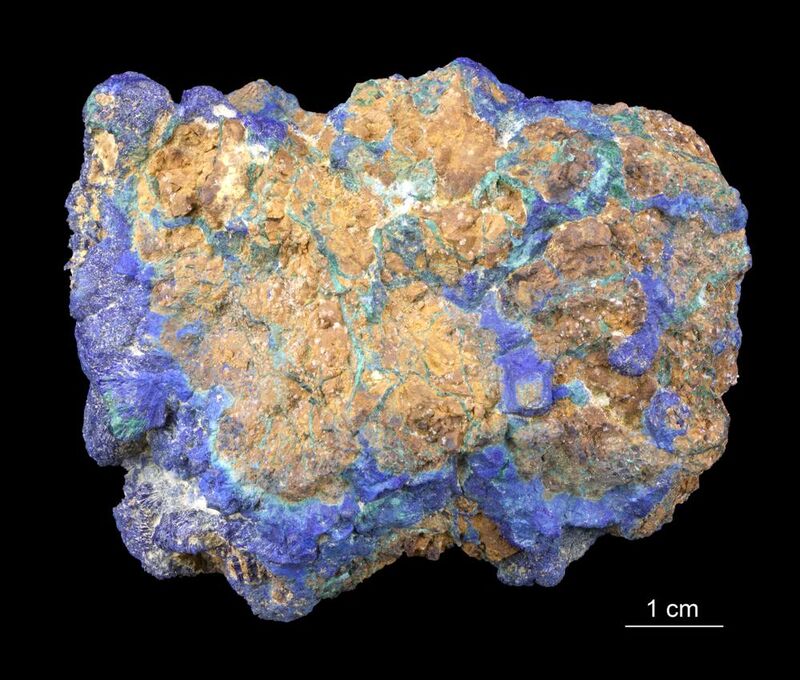
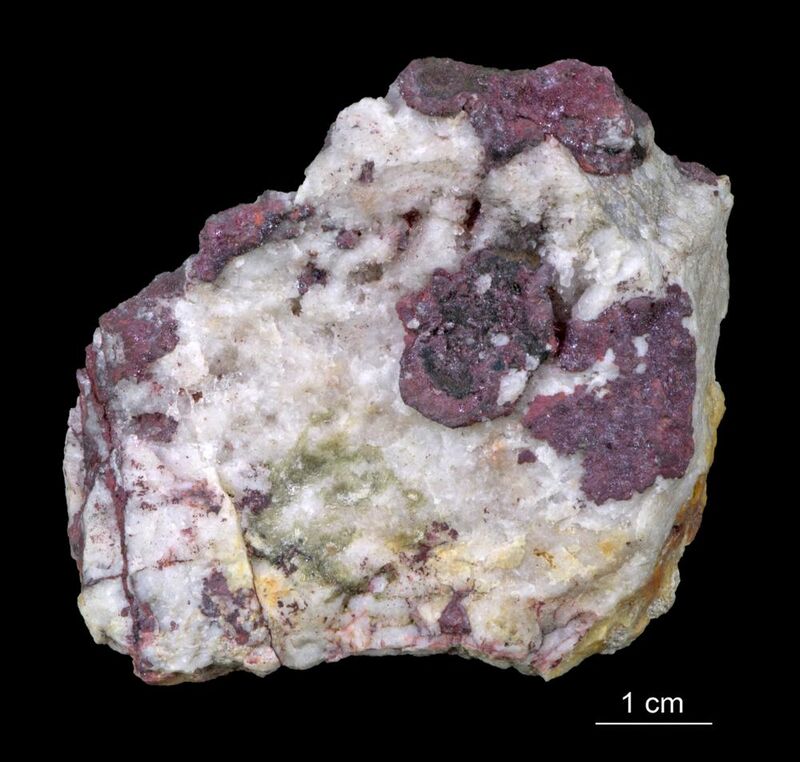
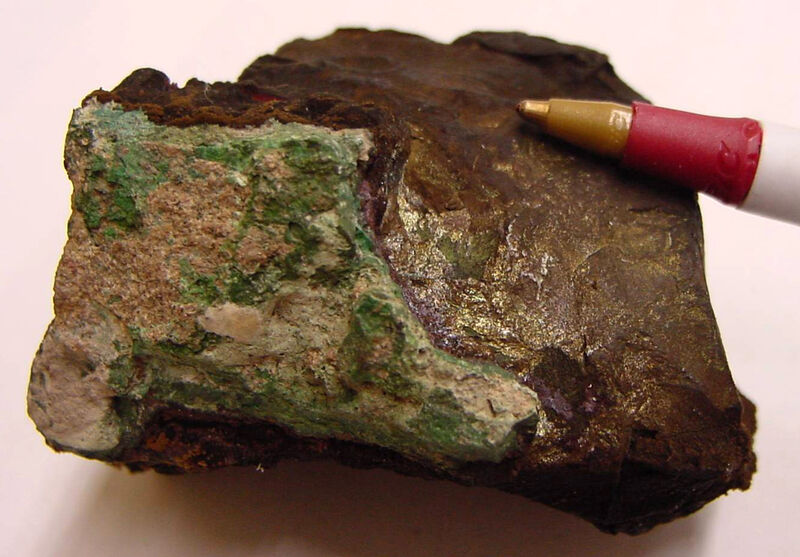
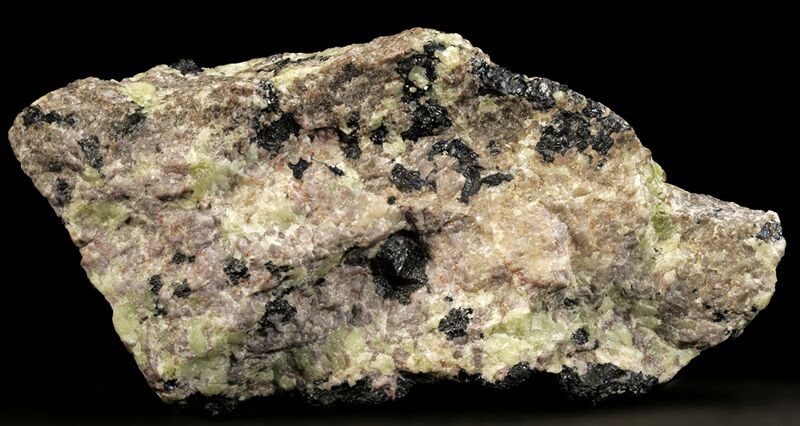
Group, growth & confusion
Literature, links & citation
- 1886Dana (1886) American Journal of Science: 32: 413.
- 1914Bragg (1914) Philadelphia Magazine: 28: 255.
- 1918(1918) Atlas Der Krystallformen Vol. 5 - Text - Band V - Kainit-Margarosanit. Carl Winters Universitätsbuchhandlung, Heidelberg.
- 1929Ramsdell, L. S. (1929) An X-ray study of the domeykite group. American Mineralogist, 14 (5) 188-196
- 1933Owen, Yates (1933) Philadelphia Magazine: 15: 472.
Entry last updated
@misc{mineral2026,
  author    = {Mineral Index editorial board},
  title     = {Native Copper — Mineral Index},
  year      = {2026},
  url       = {https://mineralindex.org/minerals/native-copper-1209}
}