Where it forms, where it's found
- Type locality
- Kokuriki mine
- Kitami City
- Okhotsk Subprefecture
- Hokkaidō Prefecture
- Japan
43.9667°, 143.9333°
7recorded occurrences
Physical
Optical
- Optical type
- Biaxial (-) · 2V measured = 46° · 2V calc = 46°
- Refractive index
- 1.782 – 1.827
- Surface relief
- Very high
- Principal indices
- nα 1.782 · nβ 1.820 · nγ 1.827
- Pleochroism
- Strong
X = yellow, Y and Z = deep orange, X < Y < Z.
- Dispersion
- indiscernible
- UV response
- Not fluorescent
Δ = 0Δmax
PPLpleochroism per grain
XPLindependent extinctions · rotate the stage
PPLpleochroism only · colour blends on rotation
XPLinterference colour · extinct every 90°
Retardation450 nm
Order1st order
XPL colour
Crystallography
- Cell parameters
- a = 8.887(5) Å · b = 6.000(4) Å · c = 19.53(2) Å
- Cell angles
- β = 97.08(6) °
- Ratio a:b:c
- 1 : 0.675 : 2.198
- Z
- 4
- Type-locality form
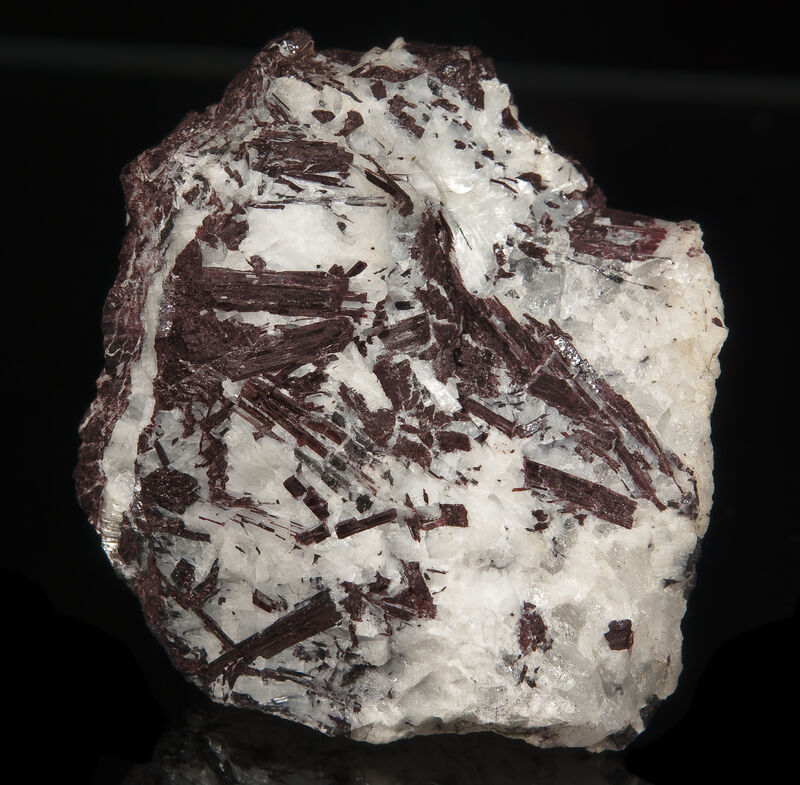
long prismatic crystals
- Comment
Space Group: A2/m; by analogy to the pumpellyite group
Chemical composition
- Impurities
- Ti
- Na
- K
Synonyms
- IMA1985-010a
- Okhotskiet
- Okhotskite-(Mn2+)
In other languages
- German
- IMA 1985-010a · Okhotskit
- Italian
- Okhotskite · Okhotskite-(Mn++)
- Japanese
- オホーツク石
- Russian
- охотскит
Classification
Strunz
10th ed.9.BG.20
- 9SilicatesClass
- 9.BSorosilicatesDivision
- 9.BGSorosilicates with mixed SiO4 and Si2O7 groups; cations in octahedral [6] and greater coordinationGroup
- 9.BG.20OkhotskiteSpecies
CIM
—16.16.23
- 16Silicates Containing Aluminum and other MetalsClass
- 16.16Aluminosilicates of MnGroup
- 16.16.23OkhotskiteSpecies
Group, growth & confusion
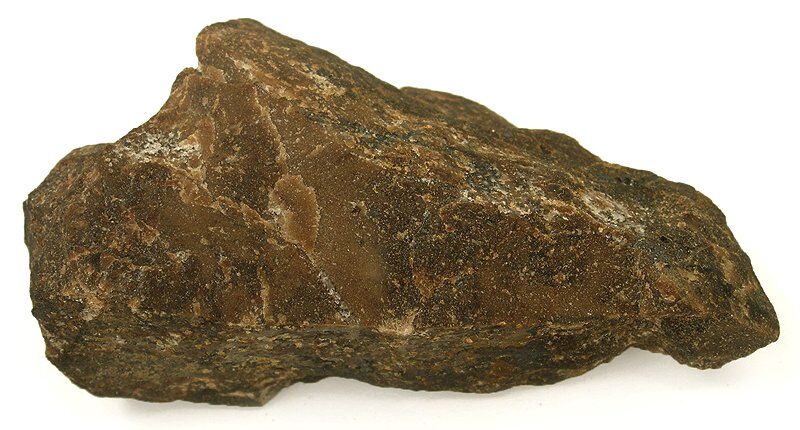
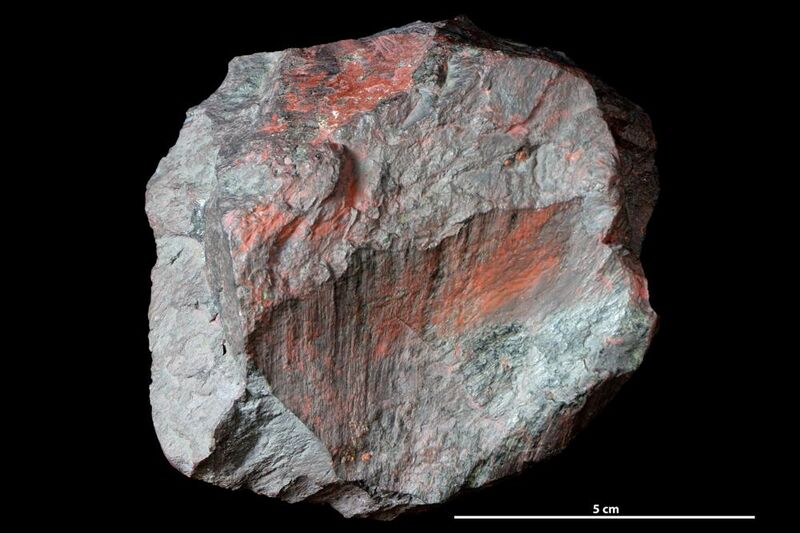
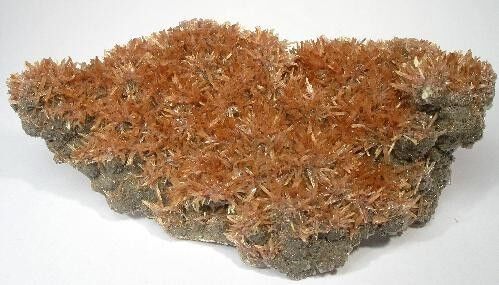
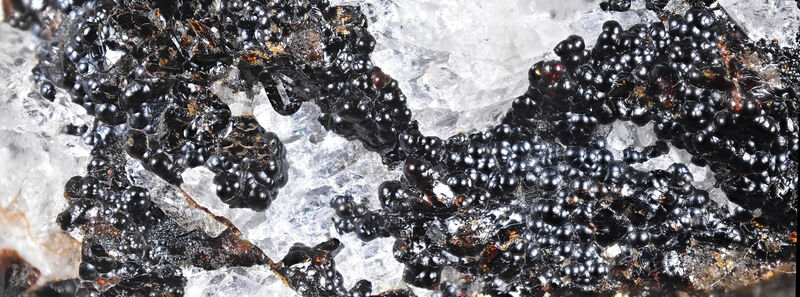
Literature, links & citation
Citations
- 1987Togari, K., Akasaka, M. (1987) Okhotskite, a new mineral, an Mn3+-dominant member of the pumpellyite group, from the Kokuriki mine, Hokkaido, Japan. Mineralogical Magazine, 51 (362) 611-614 doi:10.1180/minmag.1987.051.362.17 DOI: 10.1180/minmag.1987.051.362.17
- 1988Jambor, John L., Ercit, Ernst A. J. Burke T. Scott, Grice, Joel D. (1988) New Mineral Names. American Mineralogist, 73 (11-12) 1492-1499
- 1991Dasgupta, Somnath, Chakraborti, Sanjib, Sengupta, Pulak, Bhattacharya, P. K., Banerjee, H., Roy, Supriya, Fukuoka, M. (1991) Manganese-rich minerals of the pumpellyite group from the Precambrian Sausar Group, India. American Mineralogist, 76 (1-2) 241-245
- 1995Kimura, Yoshio; Akasaka, Masahide; Sakakibara, Masayuki; Shinno, Isamu; Togari, Kenji (1995) Distribution of Fe3+ and Mn3+ in okhotskite. Shimane Daigaku Chishitsugaku Kenkyu Hokoku: 14: 43-54. (in Japanese)
- 2001(2001) Okhotskite. Handbook of Mineralogy. Mineralogical Society of America
Cite this entry
Entry last updated
@misc{mineral2025,
  author    = {Mineral Index editorial board},
  title     = {Okhotskite — Mineral Index},
  year      = {2025},
  url       = {https://mineralindex.org/minerals/okhotskite-2968}
}