History
The name orpiment is a contraction of the Latin auripigmentum — aurum, gold, and pigmentum, pigment — given to the mineral for its rich golden colour. The Latin term was used by Pliny the Elder in the first century CE. An older Greek name, arsenikon, came from a root meaning "male", drawing on ancient ideas about the sexes of metals; Theophrastus used it in the fourth century BC. The Persian zarnikh and the Chinese Ci-Huang — "female yellow", set against realgar's "male yellow" — likewise pointed at the colour gold.
Long before either name reached Europe, the substance itself was already a paint. Egyptian artisans used orpiment in tomb decoration as early as the fourteenth century BC; it appears among the wall decorations of Tutankhamun's tomb and on ancient Egyptian scrolls. Central Asian painters used it on wall paintings between the sixth and thirteenth centuries. Chinese lacquerware took it up early too, and ground orpiment served in ancient China as a correction fluid for ink errors on bamboo and paper.
In the eastern Mediterranean the mineral travelled as both pigment and poison. Orthodox icon painters in Bulgaria, Russia, and the territories of former Yugoslavia worked with it between the twelfth and sixteenth centuries. Alchemists in China and in Europe, captivated by its gold-like sheen, pursued it in their long search for a way to make gold. They also drew on it as a source of elemental arsenic — the bright yellow ore was, for centuries, the most accessible window onto that element.
European medieval and Renaissance painters used orpiment as the truest yellow available before modern chrome and cadmium pigments. Combined with indigo dye it produced a deep rich green visible in works such as the Wilton Diptych of about 1395 to 1399. Raphael deployed it in the Sistine Madonna of 1513 to 1514, where the pigment colours the clothing of the figures and the background; Tintoretto used it in his Portrait of Vincenzo Morosini of about 1575 to 1580 to replicate the gold embroidery and other details. In the seventeenth century Robert Hooke mentioned the mineral in his Micrographia for the manufacture of small shot.
A refined eighteenth-century version called king's yellow kept the pigment in artists' studios until safer alternatives arrived. Production of artificial arsenic trisulfide began in the same century to feed western demand, which had been comparatively muted until then. Two problems then closed the trade: the mineral's extreme toxicity, and its incompatibility with other common pigments — particularly lead and copper compounds such as verdigris and azurite, which it darkens on contact. Cadmium yellows, chromium yellows, and aniline dyes replaced it in the nineteenth century.
Industrial & practical applications
The brightest modern life of orpiment is hidden inside infrared optics. Arsenic trisulfide — synthetic As₂S₃, the same compound as the natural mineral — is one of the workhorse chalcogenide glasses, a family of glasses made from sulfur, selenium, or tellurium that transmit infrared light where ordinary silica glass does not. The material is drawn into infrared-transmitting glass for lenses and windows, and is used as a semiconductor and photoconductor.
Industrial uses outside optics are scattered and thin. The same compound appears in oil cloth, linoleum, and pyrotechnic mixtures, and lingers in a few restoration pigments. In rural India a paste of orpiment mixed with slaked lime is used as a depilatory, and the tanning industry employs the same chemistry to remove hair from hides. None of these uses sustains a significant arsenic-mining trade in their own right.
Beyond these niches the modern role is largely geological. Well-formed yellow crystals are sought by collectors and museums as representatives of the species, and the mineral remains a minor historical source of arsenic. Its toxicity continues to surface in unexpected places — a 2023 British recall of orpiment bookends sold by a high-street retailer prompted public-health warnings about ornamental arsenic minerals in the home.
Where it forms, where it's found
- Geological setting
In low-temperature hydrothermal veins, hot springs and fumaroles; also commonly as an alteration product of arsenic minerals, especially realgar.
Safety & handling
Physical
Optical
- Optical type
- Biaxial (-) · 2V measured = 30 – 76° · 2V calc = 62°
- Refractive index
- 2.4 – 3.02
- Surface relief
- Very high
- Principal indices
- nα 2.4 · nβ 2.81 · nγ 3.02
- Pleochroism
- Strong
white to grey-white with a reddish tint (reflected light) Y=yellow, Z=greenish yellow (transmitted light)
- Dispersion
- relatively strong r > v
- Optical colour
- White to pale grey
- Anisotropism
- Barely observable because of strong internal reflections
- Internal reflections
- Strong
- Tropism
- Anisotropic
- Reflectance R%
- (33.0, 36.5) 400, (31.0, 35.2) 420, (28.9, 33.9) 440, (27.4, 31.5) 460, (26.0, 30.3) 480, (24.9, 29.3) 500, (24.0, 28.4) 520, (23.3, 27.8) 540, (22.8, 27.3) 560, (22.3, 26.9) 580, (22.0, 26.5) 600, (21.7, 26.3) 620, (21.5, 26.0) 640, (21.2, 25.7) 660, (21.0, 25.5) 680, (20.8, 25.3) 700
- Luminescence
- None
Crystallography
- Cell parameters
- a = 11.475(5) Å · b = 9.577(4) Å · c = 4.256(2) Å
- Cell angles
- β = 90.45(5) °
- Ratio a:b:c
- 1 : 0.835 : 0.371
- Z
- 4
- Morphology
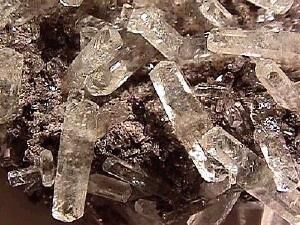
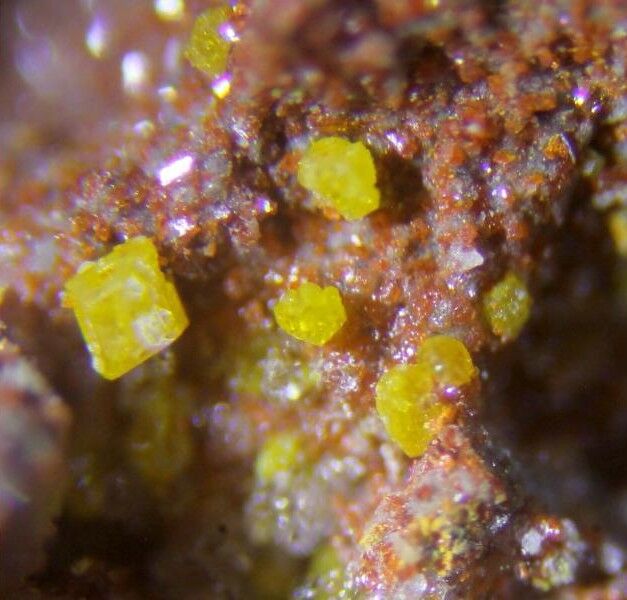
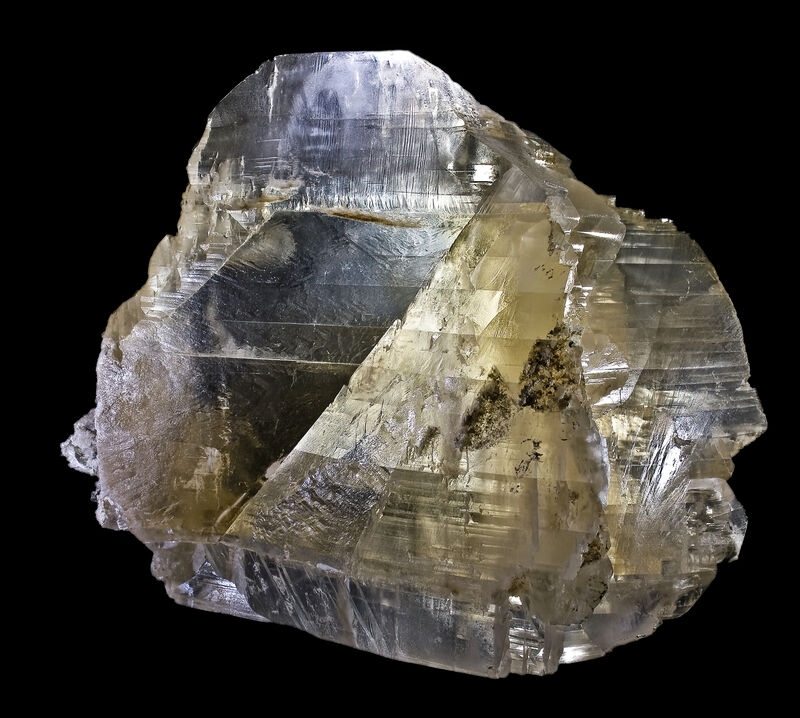
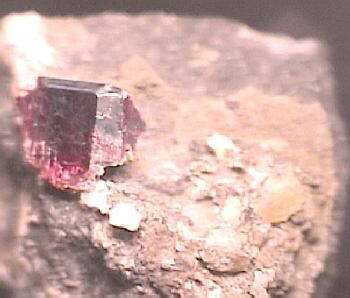
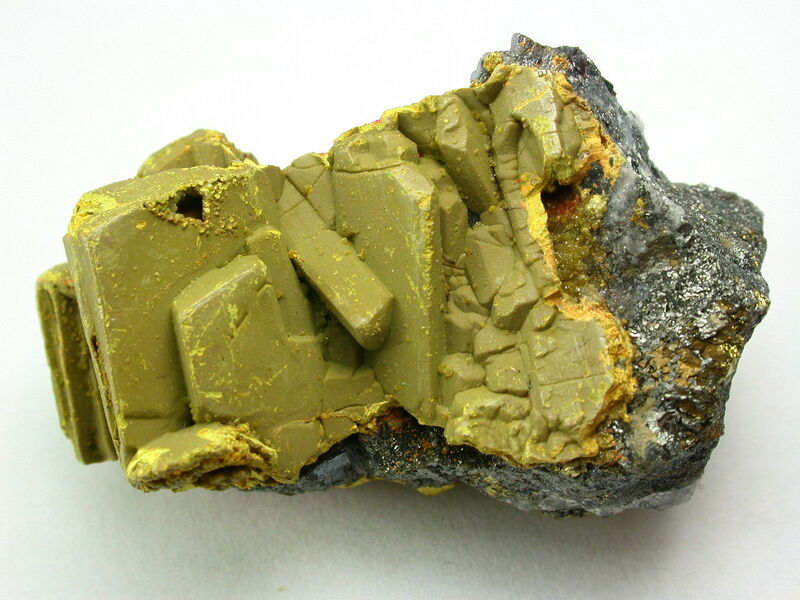
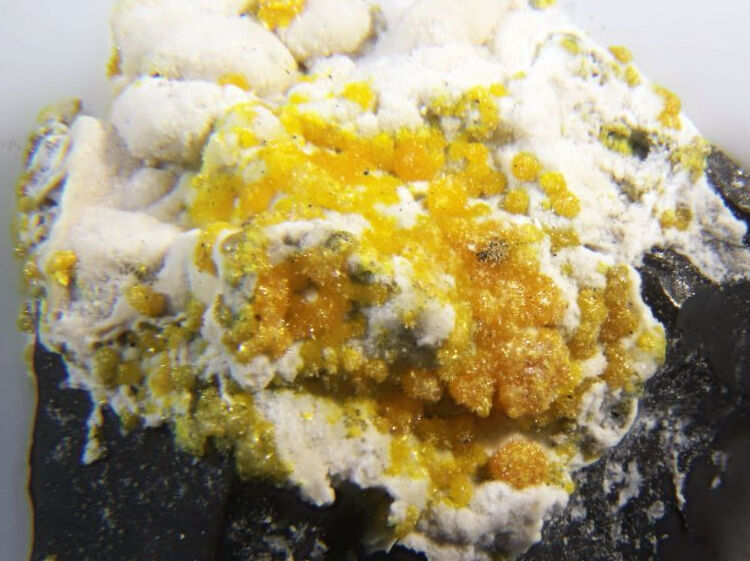
Commonly in foliated columnar or fibrous aggregates, with cleavages as much as 60 cm across; may be reniform or botryoidal; also granular or powdery; rarely as prismatic crystals.
- Twinning
On (100)
- Comment
sp. gr. P21/n
Chemical composition
- Impurities
- Hg
- Ge
- Sb
Synonyms
- Arrhenicum
- Arsenblende
- Arsenic Jaune
- Arsenicum flavum
- Arsenikon
- Auripigmentum
- Königsgelb
- Óirpimint
- Operment
- Oropiment
- Rauschgelb
- Yellow Arsenic
- Yellow Ratsbane
- Αρδενικόν
- Αρρενικόν
In other languages
- French
- 12255-89-9 · 12612-21-4 · As2S3 · orpiment
- German
- Arrhenicon · Arsenblende · Arsenicon · Arsikon · Arzikon · Auripigment · Gelber Hüttenrauch · Operment · Opermentum · Orpiment · Rauschgelb · Risigallum · Ruschgäl
- Spanish
- oropimente
- Italian
- arzicon · auri pigmentum · giallo del re · giallo di arsenico · giallo di china · giallo di Parigi · giallo di Spagna · giallo di zolfo · giallo reale · oropimento · orpimento
- Portuguese
- auripigmento · Ouro-pigmento · Ouro-pimenta
- Japanese
- 石黄 · 雄黄 · 雌黄
- Chinese
- 三硫化二砷 · 雌黃
- Simplified Chinese
- 雌黄
- Traditional Chinese
- 雌黃
- Russian
- Аврепигмент · Аврипигмент · Аурипигмент · Урипигмент
- Arabic
- رهج أصفر
Classification
2.FA.30
- 2Sulfides and SulfosaltsClass
- 2.FSulfides of arsenic, alkalies; sulfides with halide, oxide, hydroxide, H2ODivision
- 2.FAWith As, (Sb), SGroup
- 2.FA.30OrpimentSpecies
02.11.01.01
- 02SulfidesClass
- 02.11AmBnXp, with (m+n):p = 2:3Type
- 02.11.01Orpiment GroupGroup
- 02.11.01.01OrpimentSpecies
3.7.8
- 3Sulphides, Selenides, Tellurides, Arsenides and Bismuthides (except the arsenides, antimonides and bismuthides of Cu, Ag and Au, which are included in Section 1)Class
- 3.7Sulphides etc. of V, As, Sb and BiGroup
- 3.7.8OrpimentSpecies
Group, growth & confusion
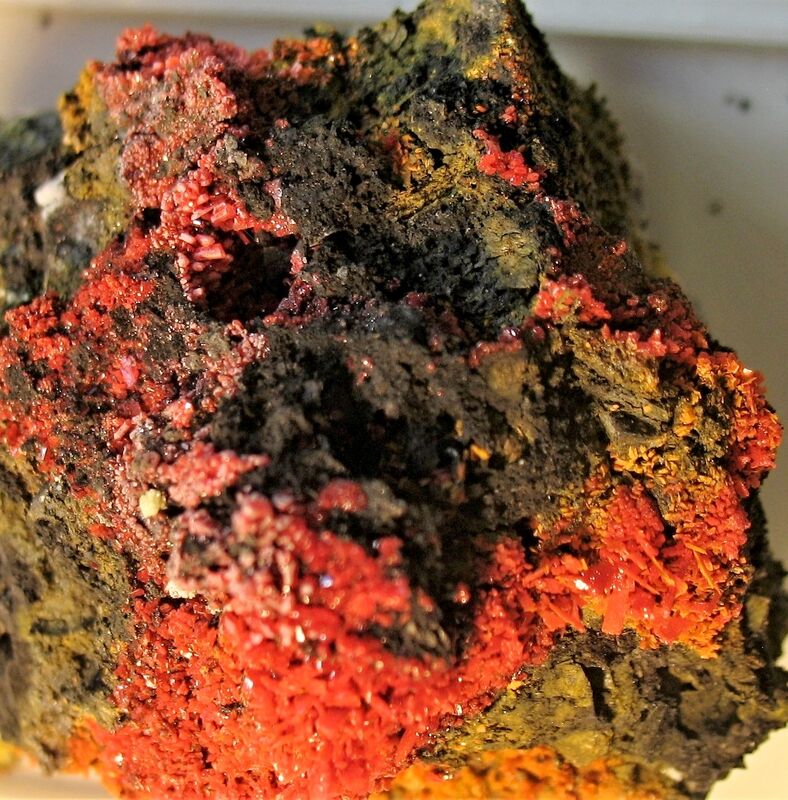
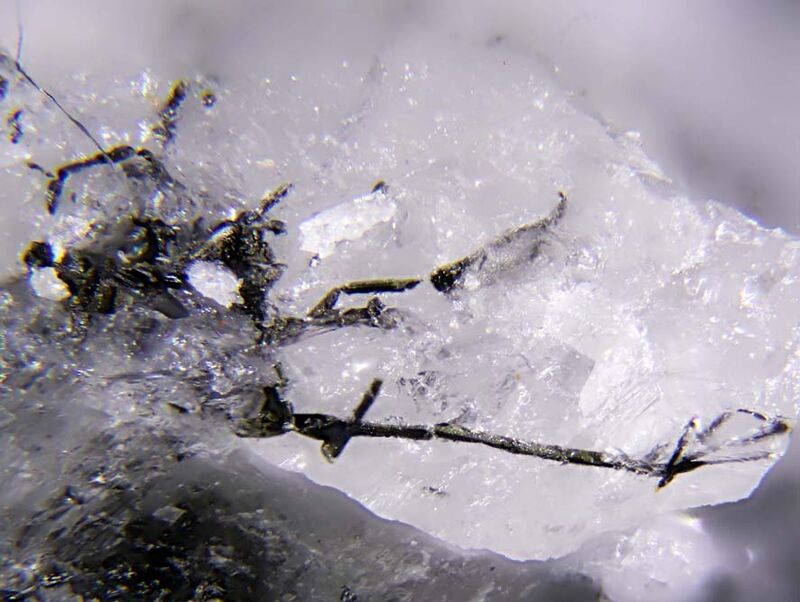
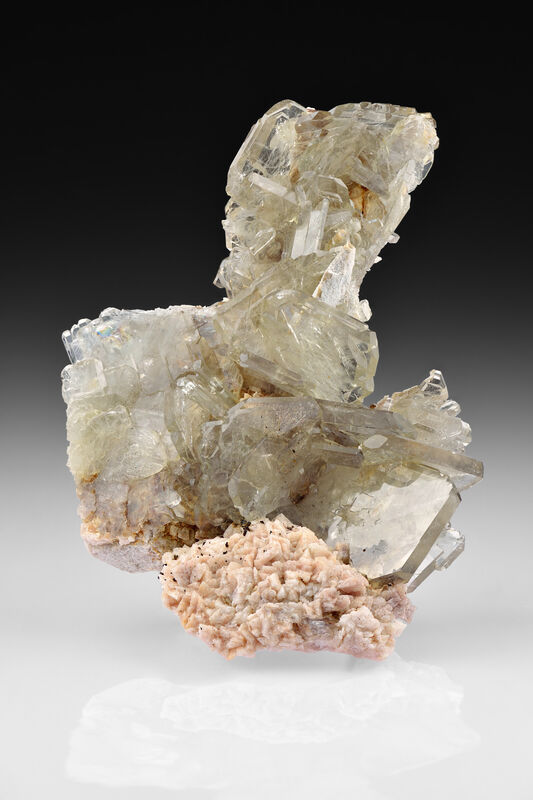
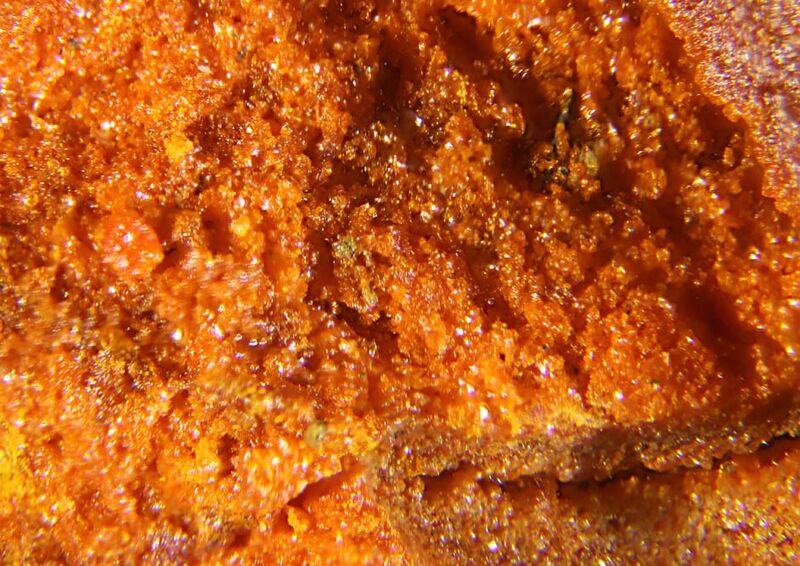
Literature, links & citation
- 1747Wallerius, J.G. (1747) in Mineralogia, eller Mineralriket, (Stockholm).
- 1824Mohs, F. (1824) Grundriss der Mineralogie, 2, 613.
- 1892Miers, H.A. (1892) Orpiment. Mineralogical Magazine, 10(45), 24-25.
- 1942Buerger, M. J. (1942) The unit cell and space group of orpiment. American Mineralogist, 27 (4) 301-304
- 1944Palache, Charles, Berman, Harry, Frondel, Clifford (1944) The System of Mineralogy (7th ed.) Vol. 1 - Elements, Sulfides, Sulfosalts, Oxides. John Wiley and Sons, New York.
Entry last updated
@misc{mineral2026,
  author    = {Mineral Index editorial board},
  title     = {Orpiment — Mineral Index},
  year      = {2026},
  url       = {https://mineralindex.org/minerals/orpiment-3021}
}