History
Long before anyone called it a mineral, miners had a name for the waxy, translucent crust that lined the upper reaches of silver veins: horn silver. Weathered by dry desert air, the mineral dulls to the look and feel of an animal's horn. It is soft enough to cut with a knife.
The formal name is younger and more literal. It joins the Greek chloros, meaning pale green, to the Latin argentum, silver — a plain description of a pale, silver-bearing chloride.
Earlier centuries reached for stranger words. Alchemists knew silver chloride as luna cornea, which translates as horn silver: luna, the moon, was their codename for the metal. A separate older mineral name, cerargyrite, was used for the same substance before the modern one took hold.
The compound itself was pinned down in 1565. In that year the German scholar Georg Fabricius identified silver chloride as a distinct compound of silver. That recognition long predated its naming as a mineral. The species name came much later: chlorargyrite was first described in 1875, from occurrences in the Broken Hill district of New South Wales, Australia.
Industrial & practical applications
Chlorargyrite has a single use that matters: it is an ore of silver. Where it gathers in quantity, it is a rich one. Soft horn silver gives up its metal far more easily than a stubborn sulfide does.
That richness comes with a catch. Chlorargyrite is a secondary mineral, formed when existing silver deposits weather near the surface. It concentrates in the oxidized zone — the upper, weathered part of a vein, above the water table. There, air and groundwater have altered the original ore. In arid regions, where that zone runs deep and stays dry, the mineral can dominate the workable silver.
So it is a near-surface ore, valuable where it is abundant but seldom the whole of a deposit. The richest example on record is the Bridal Chamber occurrence at Lake Valley, in Sierra County, New Mexico, which is almost pure chlorargyrite. At Chañarcillo in Chile, weathering has replaced the upper ore's native silver and silver sulfide with chlorargyrite and a family of related silver halides.
Below that weathered cap the chloride thins out, and the unaltered sulfide ores take over. Modern silver supply leans on those primary minerals and on silver won as a by-product of other metals. Chlorargyrite is a local, supplementary ore rather than a main source.
Where it forms, where it's found
- Geological setting
Oxidized zone of silver deposits, especially in arid regions.
- Type locality
- Marienberg mining district
- Erzgebirgskreis
- Saxony
- Germany
Varieties
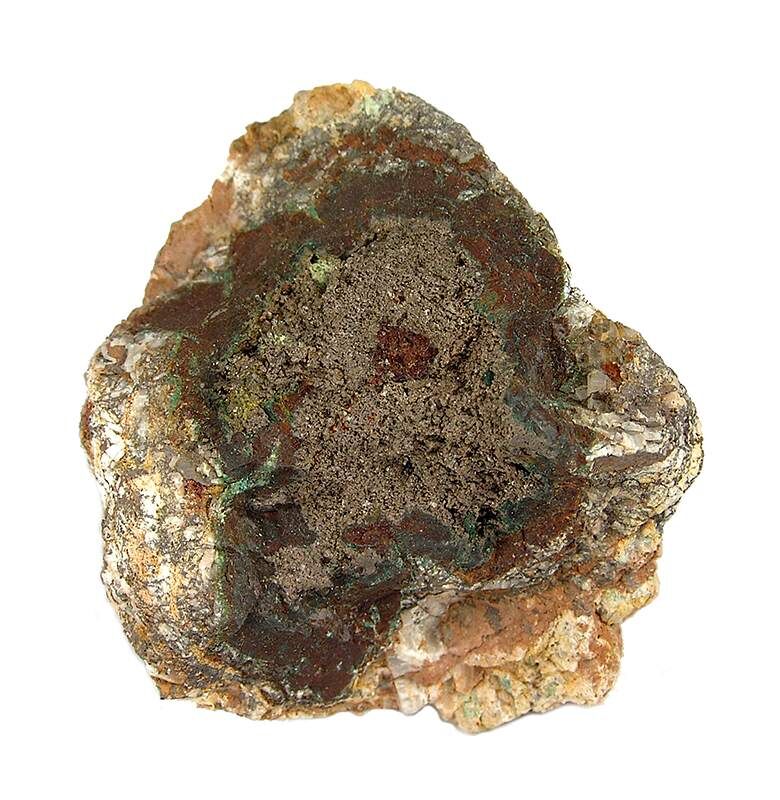
Physical
- Hardness
- 1Talc
- 2Gypsum
- 3Calcite
- 4Fluorite
- 5Apatite
- 6Orthoclase
- 7Quartz
- 8Topaz
- 9Corundum
- 10Diamond
- Lustre
- Resinous
- Transparency
- Transparent · Translucent
- Colour
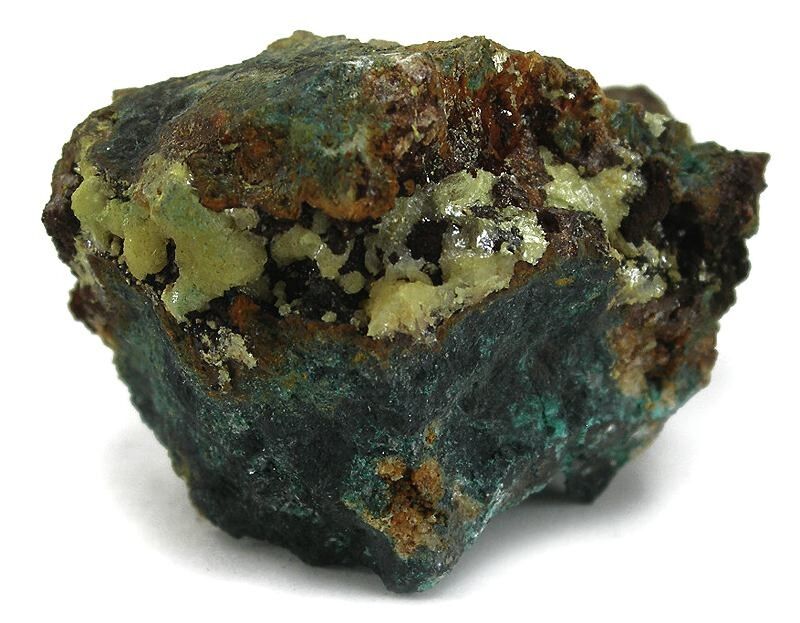
- Colourless (fresh) · bright chartreuse-green · light yellow · light green · grey · becoming violet-brown on exposure to light.
- Streak
- White
- Tenacity
- sectile
- Cleavage
- None Observed
- Fracture
- Irregular/Uneven · Sub-Conchoidal
- Density
- 5.556 g/cm³
Optical
- Optical type
- Isotropic
- Surface relief
- Very high
- Principal indices
- n 2.071
- Tropism
- Isotropic
- UV response
- None.
- Single index
- n = 2.071
Crystallography
- Space group
- #224
- Cell parameters
- a = 5.554 Å
- Z
- 4
- Morphology
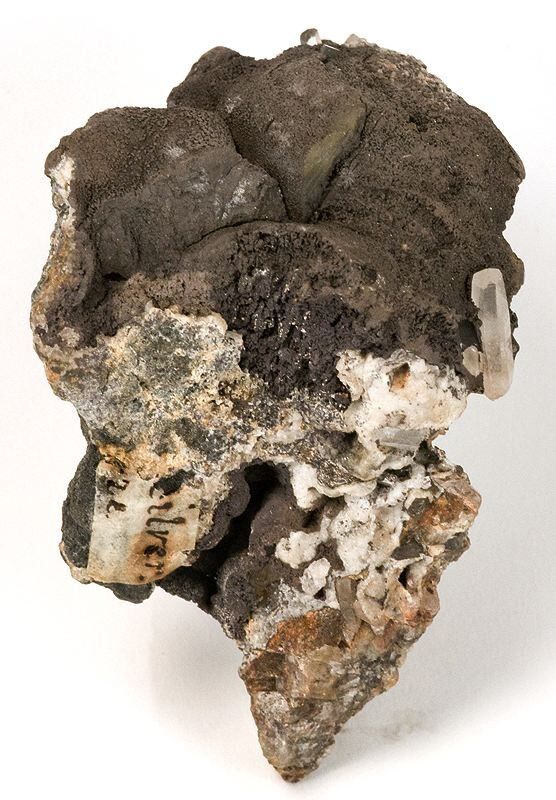
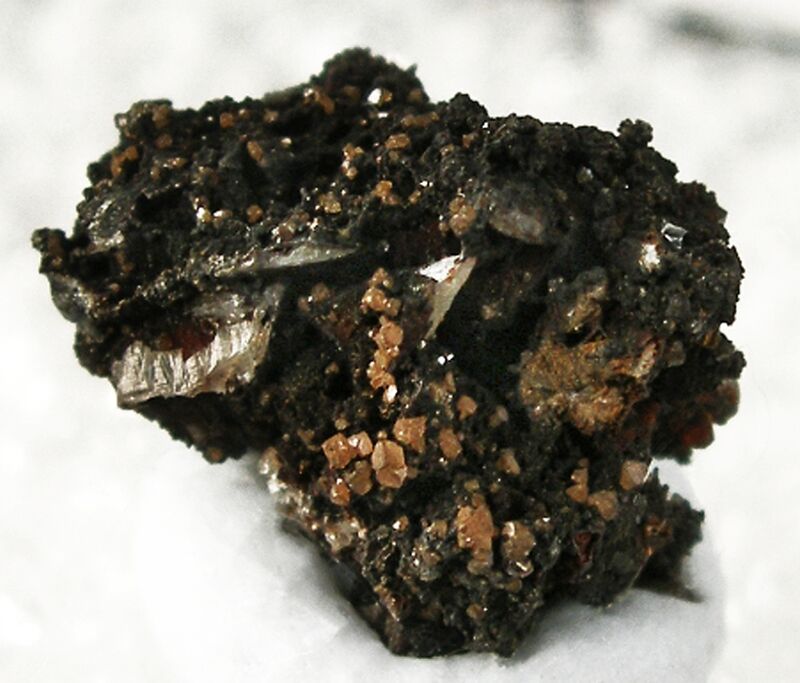
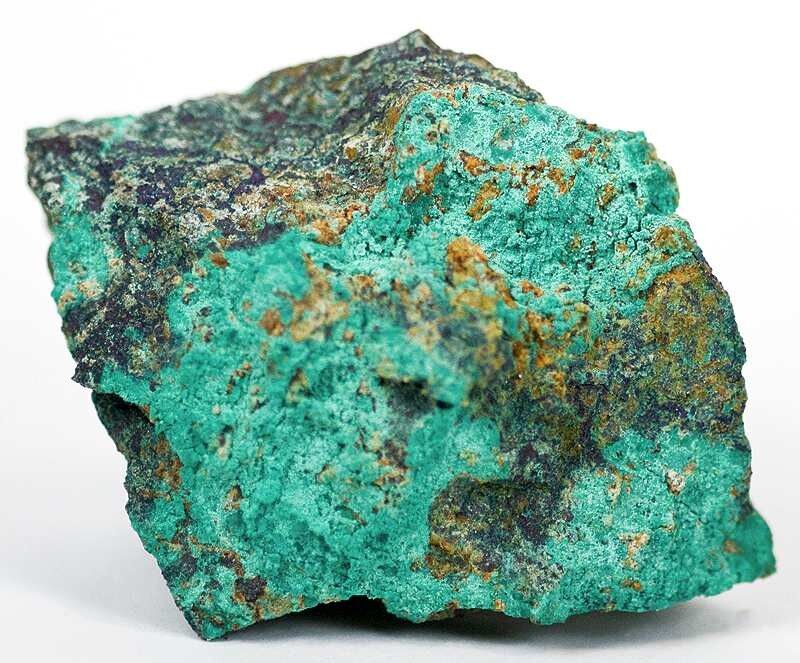
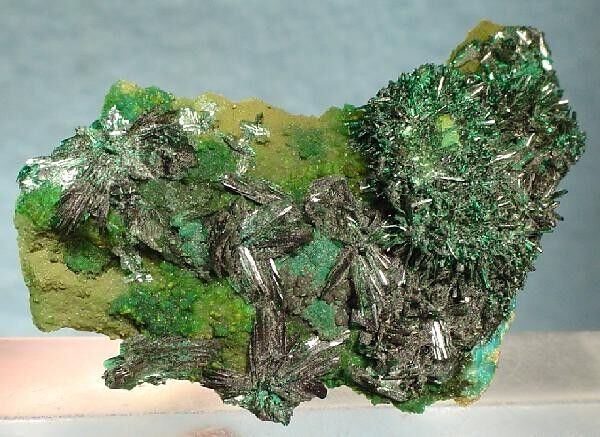
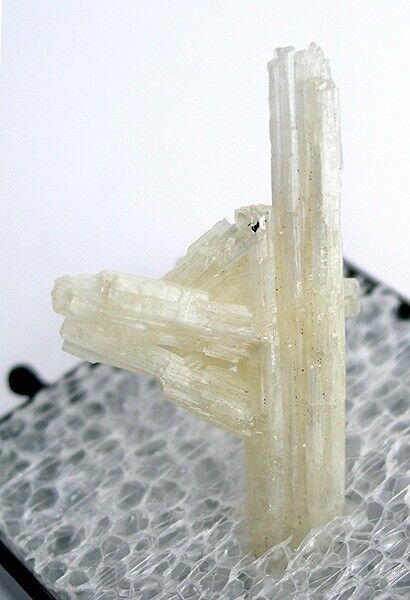
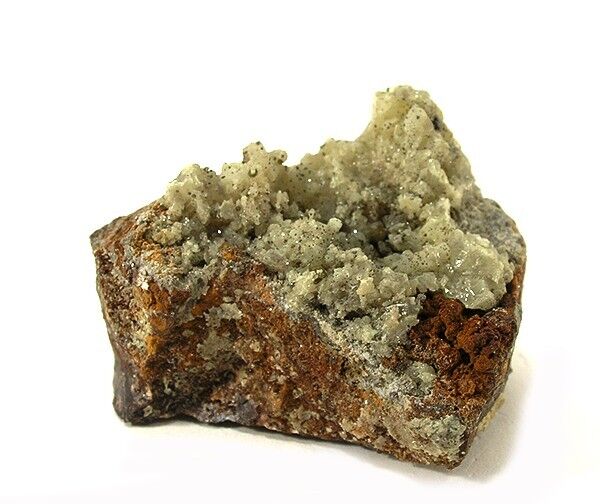
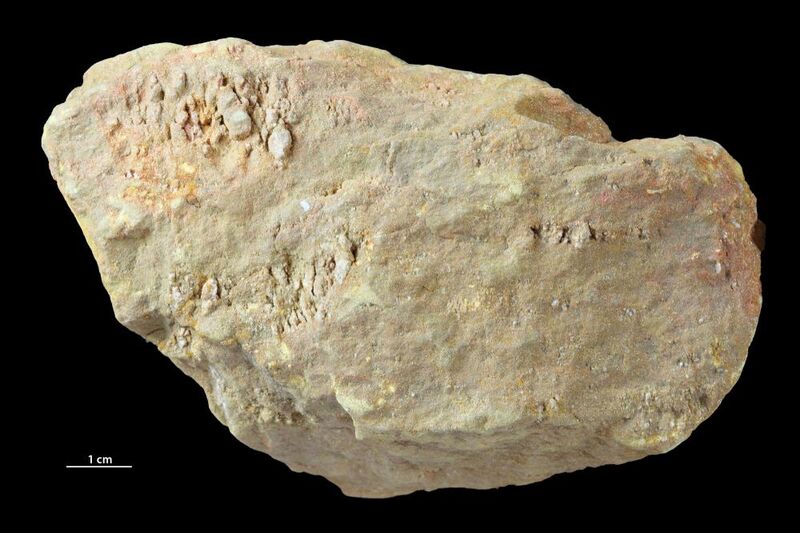
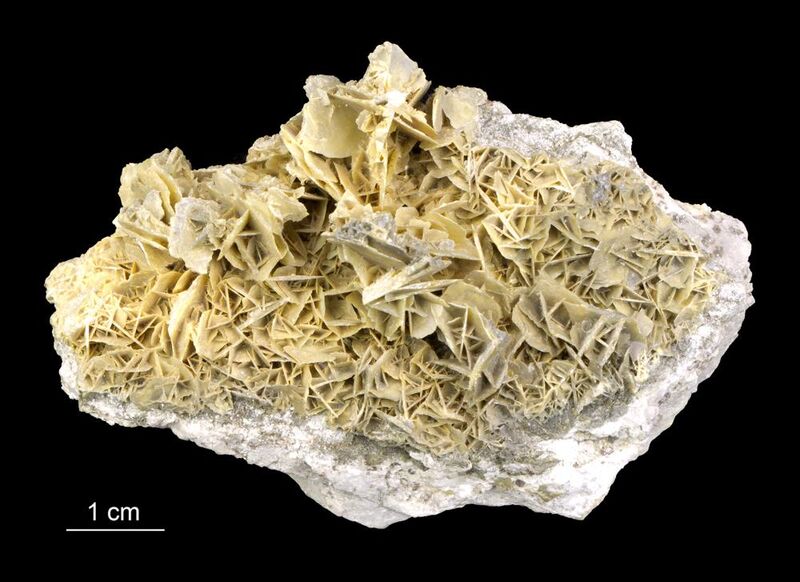
Crystals cubic, with (111) and (011), sometimes large, and the other reported forms as small and rare modifying faces. Often parallel or subparallel groups. Massive; crusts and waxy coatings with drusy surfaces. Wax- or horn-like masses; columnar or stalactitic; rarely fibrous.
- Twinning
On (111).
Chemical composition
Synonyms
- Argent corné
- Argent cornea
- Argent muriaté
- Argento sulphure et arsenico mineralisatum
- Argentum cornu pellucido simile
- Argyroceratit
- Argyroceratita
- Argyroceratite
- Cerargerit
- Cerargerita
- Cerargerite
- Cerargyrit
- Cerargyrita
- Cerargyrite
- Cerargyrites
- Cherargirio
- Chlorargyriet
- Chlorsilber
- Chlorsilberspath
- Chlorsilfver
- Chlorure d'argent
- Corneous Silver
- Horn Silver
- Horn-Silfver
- Hornerz
- Hornfarbs-Silber
- Hornsilber
- Hornsølv
- Horny Silver Ore
- Kerargyre
- Kerargyrite
- Kerat
- Kerate
- Minera argenti cornea
- Muriate of Silver
- Ostwaldit
- Ostwaldita
- Ostwaldite
- Plata cornea
- Silber-Kerat
- Silberhornerz
- Silberhornspath
- Silberspath
- Silfverhornmalm
In other languages
- French
- chlorargyrite
- German
- Cerargyrit · Chlorargyrit · Hornerz · Hornsilber · Kerargyrit · Silberhornerz
- Spanish
- argiroceratita · cerargirita · clorargirita · ostwaldita · plata córnea · querargirita
- Italian
- Chlorargyrite · Clorargirite
- Japanese
- 塩化銀鉱 · 角銀鉱
- Chinese
- 角銀礦
- Simplified Chinese
- 角银矿
- Traditional Chinese
- 角銀礦
- Russian
- кераргирит · роговое серебро · хлораргирит
- Arabic
- كلورارجيريت
Classification
3.AA.15
- 3HalidesClass
- 3.ASimple halides, without H2ODivision
- 3.AAM:X = 1:1, 2:3, 3:5, etc.Group
- 3.AA.15ChlorargyriteSpecies
09.01.04.01
- 09Normal HalidesClass
- 09.01AXType
- 09.01.04Embolite SeriesGroup
- 09.01.04.01ChlorargyriteSpecies
8.3.1
- 8Halides - Fluorides, Chlorides, Bromides and Iodides; also Fluoborates and FluosilicatesClass
- 8.3Halides of AgGroup
- 8.3.1ChlorargyriteSpecies
Group, growth & confusion
Literature, links & citation
- 1565Gesner, K. (1565) Argentum cornupellucido simile. in De omni rerum fossilium genere, gemmis, lapidibus, metallis, et huiusmodi, libri aliquot, plerique nunc. Primum Editi, Excudebat Jacobus Gesnerus (Tiguri): 62-62.
- 1795Klaproth, M. H. (1795) IX. Untersuchung der Silbererze, Hornerz. In Beiträge zur chemischen Kenntniss der Mineralkörper Vol. 1. Rottmann. p.125-130.
- 1830Beudant, François-Sulpice (1830) Traité élémentaire de minéralogie. Deuxiéme Edition [Elementary Treatise on Mineralogy. Second Edition] (2nd ed.) Vol. 1 - Tome Premier [Volume One]. Chez Verdière.
- 1841Breithaupt, J.F.A. (1841) Cerargyrites chlorus oder Hornsilber. in Vollständiges Handbuch der Mineralogie, Volume 2, Arnoldische Buchhandlung (Dresden and Leipzig): 315-317.
- 1875Weisbach, A. (1875) Chlorargyrit. in Synopsis Mineralogica. Systematische Uebersicht des Mineralreiches, J. G. Englehardt’sche (Freiberg): 37-38.
Entry last updated
@misc{mineral2026,
  author    = {Mineral Index editorial board},
  title     = {Chlorargyrite — Mineral Index},
  year      = {2026},
  url       = {https://mineralindex.org/minerals/chlorargyrite-1014}
}