History
A small yellow flower gave this mineral its name. Jara is the Spanish word for a yellow-flowered shrub of the genus Cistus that grows across the dry hills of southern Spain. One ravine thick with it, the Barranco del Jaroso in the Sierra Almagrera, became the place where the mineral was first found.
In 1852 the German mineralogist Johann Friedrich August Breithaupt described jarosite from that ravine and named it for the locality. The site sits near Cuevas del Almanzora in Almería, in Spain's far south. The mineral is a sulfate — a compound built around sulfate groups — of potassium and iron, and it forms in acidic, iron-rich settings where sulfide ores have weathered.
People had brushed against the mineral long before they named it. Clay spheres coated in jarosite were found buried beneath the Temple of the Feathered Serpent at Teotihuacan in central Mexico.
For most of the next century after Breithaupt, jarosite stayed a minor curiosity of mine dumps and weathered outcrops. Then a robot found it on another planet.
In 2004 the rover Opportunity detected jarosite at Meridiani Planum, the broad Martian plain where it had landed. The find came from the rover's Mössbauer spectrometer, an instrument that identifies iron-bearing minerals. The detection mattered because jarosite forms only in dilute sulfuric acid in groundwater. Its presence was strong evidence that acidic liquid water had once stood on the Martian surface. The geologist Roger Burns had predicted the find years earlier. Spirit and Curiosity later detected the same mineral elsewhere on Mars.
Industrial & practical applications
Almost nobody mines jarosite. It has no role as a gemstone, a pigment of any scale, or an ore, and it is not a sought commodity. Where it matters to industry, it appears as a waste product rather than a goal.
That role is in zinc refining. Extracting zinc from its ore by chemistry rather than smelting — a route called hydrometallurgy — leaves dissolved iron in the liquid, and the iron must come out before the zinc can be recovered. The standard way to remove it is the jarosite precipitation process, the most extensively used iron-removal method in the industry. Iron is forced to crystallise out of the weakly acidic solution as jarosite. The resulting solid cake is pulled from the circuit and stockpiled as a tailing — mine waste held on site.
The volumes are large, which makes disposal the real story. Roughly half a tonne of jarosite residue is generated for every tonne of zinc produced, and the residue counts as hazardous waste because it carries heavy metals. Handling and storing it is a recognised burden on the industry rather than a source of value.
Beyond that, jarosite is of interest mainly to scientists and collectors — as a marker of acidic weathering on Earth, and as the Martian mineral that signalled past liquid water.
Where it forms, where it's found
- Geological setting
A secondary mineral found in the oxidized zones of sulfide deposits, forming by the reaction of dilute sulfuric acid in groundwater, derived from the oxidation of pyrite, with gangue minerals and wall rock in the deposits.
- Type locality
- Jaroso Ravine
- Sierra Almagrera
- Cuevas del Almanzora
- Almería
- Andalusia
- Spain
37.2975°, -1.7508°
Physical
- Hardness
- 1Talc
- 2Gypsum
- 3Calcite
- 4Fluorite
- 5Apatite
- 6Orthoclase
- 7Quartz
- 8Topaz
- 9Corundum
- 10Diamond
- Lustre
- Vitreous (Glassy)
- Transparency
- Translucent
- Colour
- Amber-yellow · yellow-brown · to brown or light yellow.
- Streak
- Pale-yellow
- Tenacity
- brittle
- Cleavage
- Distinct/Good
Distinct on (0001).
- Fracture
- Irregular/Uneven · Conchoidal
- Density
- 2.9 g/cm³
Optical
- Optical type
- Uniaxial (-)
- Refractive index
- 1.713 – 1.82
- Surface relief
- High
- Principal indices
- nω 1.815 – 1.82 · nε 1.713 – 1.715
- Pleochroism
- Visible
Ε (X) = Colourless (Y) = Reddish brown Ο (Z) = Reddish brown
- Luminescence
- None
- Notes
Commonly anomalously biaxial with a very small 2V and sectional development.
Crystallography
- Space group
- #99
- Cell parameters
- a = 7.304 Å · c = 17.268 Å
- Z
- 3
- Morphology
Crystals usually tiny, pseudocubic {01-13} or tabular (0001). Typically found as granular crusts, it may also be in nodules or fibrous masses, powdery to earthy, or concretionary.
Chemical composition
- Impurities
- Na
- Ag
- Pb
Synonyms
- Antunesit
- Antunesita
- Antunesite
- Antunezit
- Antunezita
- Antunezite
- Antunit
- Jarosite (of Breithaupt)
- Leucanterit
- Leucanterita
- Leucanterite
- Moronolite
- Pastréit
- Vitriolgelb
In other languages
- French
- Antunezite · Jarosite · Leucantérite · Misy · Moronolite · Utahite · Vitriolgelb
- German
- Jarosit · Maibolt · Raimondit
- Spanish
- Jarosita
- Italian
- jarosite
- Portuguese
- jarosita · Jarosite
- Japanese
- 鉄明ばん石 · 鉄明礬石
- Chinese
- 黃鉀鐵礬 · 黄钾铁矾
- Traditional Chinese
- 黃鉀鐵礬
- Russian
- Ярозит
Classification
7.BC.10
- 7SulfatesClass
- 7.BSulfates (selenates, etc.) with additional anions, without H2ODivision
- 7.BCWith medium-sized and large cationsGroup
- 7.BC.10JarositeSpecies
30.02.05.01
- 30Anhydrous Sulfates Containing Hydroxyl or HalogenClass
- 30.02(AB)2(XO4)ZqType
- 30.02.05Alunite Group (Jarosite Subgroup)Group
- 30.02.05.01JarositeSpecies
25.11.9
- 25SulphatesClass
- 25.11Sulphates of Fe and other metalsGroup
- 25.11.9JarositeSpecies
Group, growth & confusion
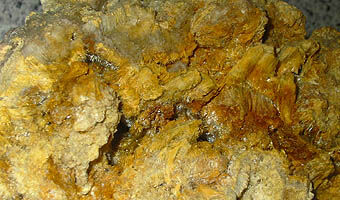 AluniteKAl3(SO4)2(OH)6Mineral—
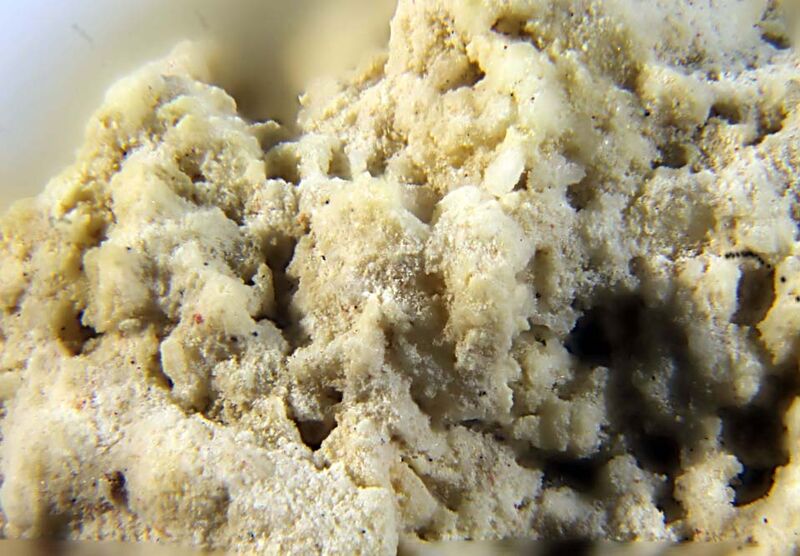 Ammonioalunite(NH4)Al3(SO4)2(OH)6Mineral—
- Ammoniojarosite(NH4)Fe3+3(SO4)2(OH)6Mineral—
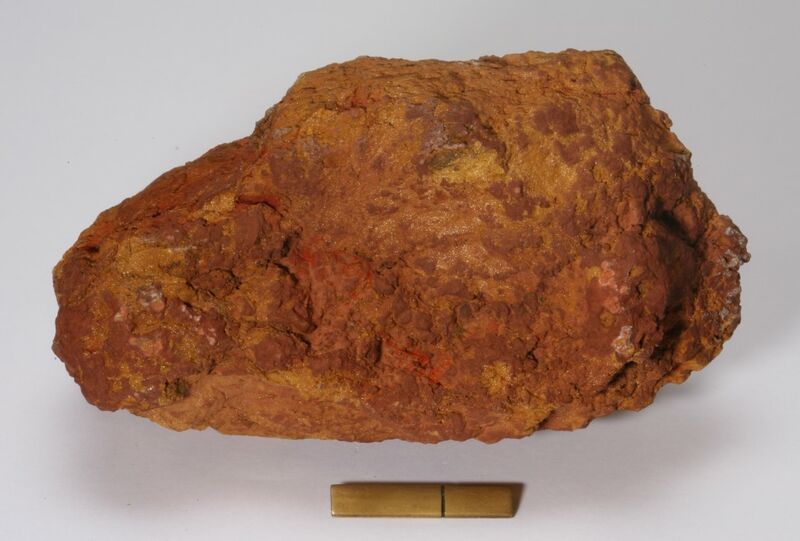 ArgentojarositeAgFe3+3(SO4)2(OH)6Mineral—
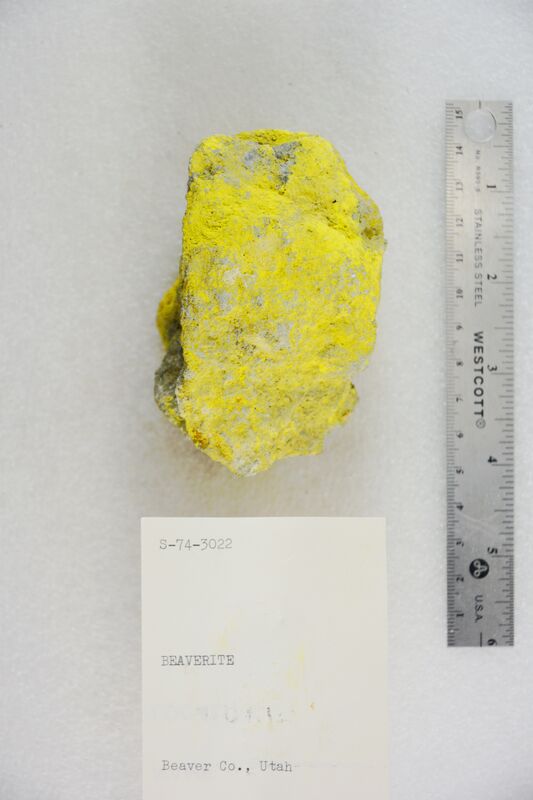 Beaverite-(Cu)Pb(Fe3+2Cu)(SO4)2(OH)6Mineral—
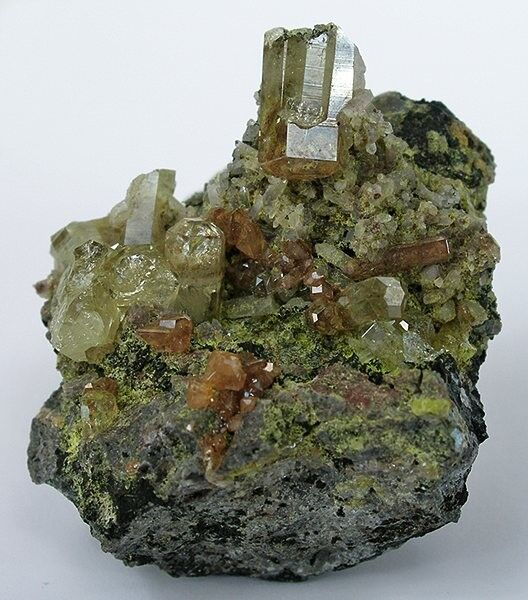 Beaverite-(Zn)Pb(Fe3+2Zn)(SO4)2(OH)6Mineral—
- DorallchariteTlFe3+3(SO4)2(OH)6Mineral—
- HuangiteCa0.5Al3(SO4)2(OH)6Mineral—
- Hydroniumjarosite(H3O)Fe3+3(SO4)2(OH)6Mineral—
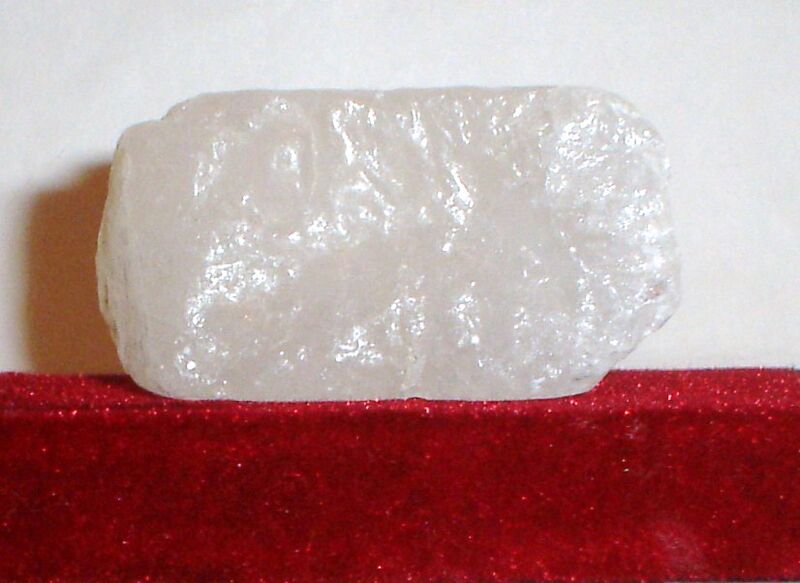 NatroaluniteNaAl3(SO4)2(OH)6Mineral—
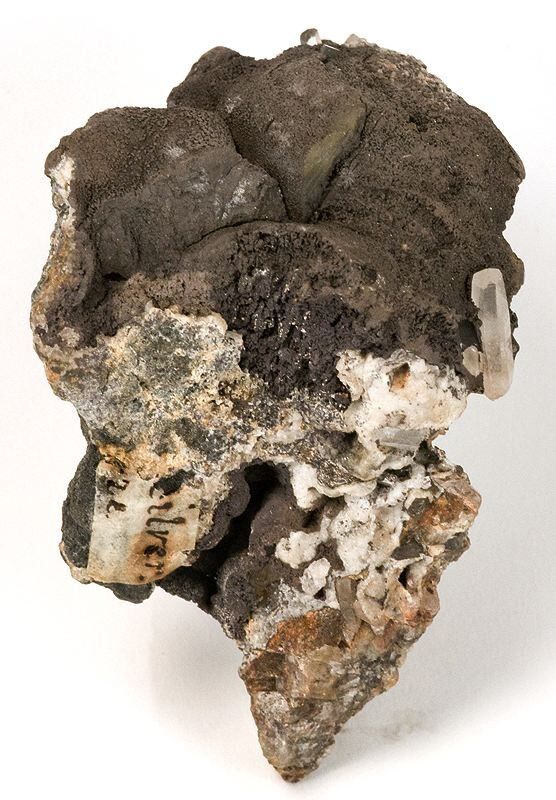 BromargyriteAgBrMineral—
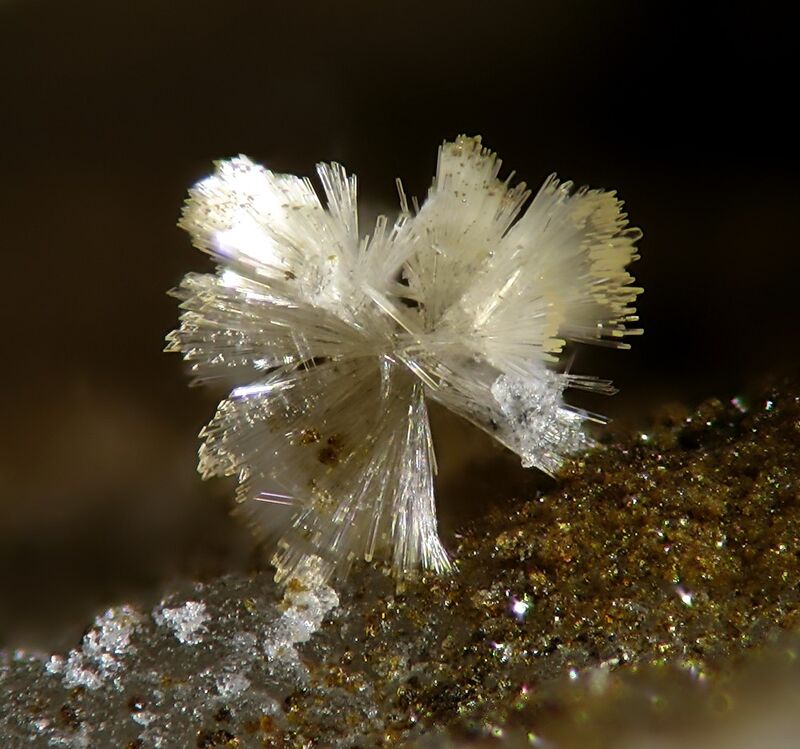 CalcioferriteCa4MgFe3+4(PO4)6(OH)4 · 12H2OMineral—
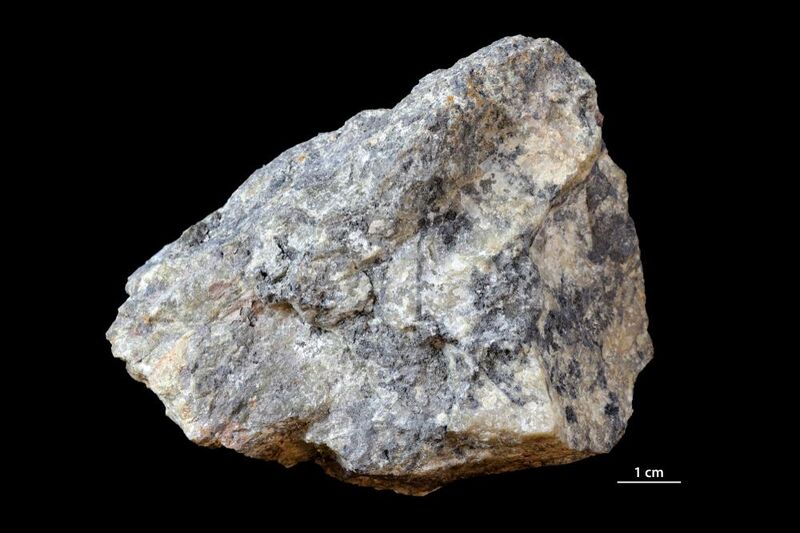 ChlorargyriteAgClMineral—
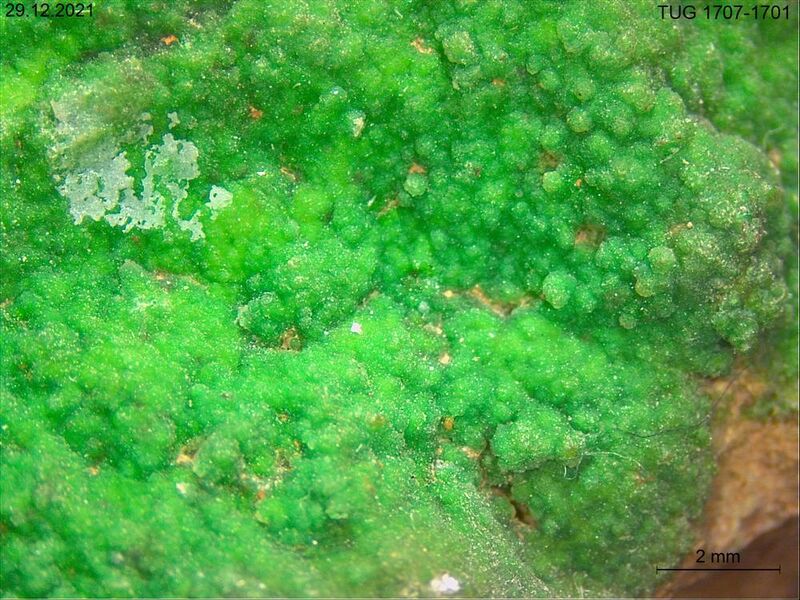 ConichalciteCaCu(AsO4)(OH)Mineral—
- MagnesiovoltaiteK2Mg5Fe3+3Al(SO4)12 · 18H2OMineral—
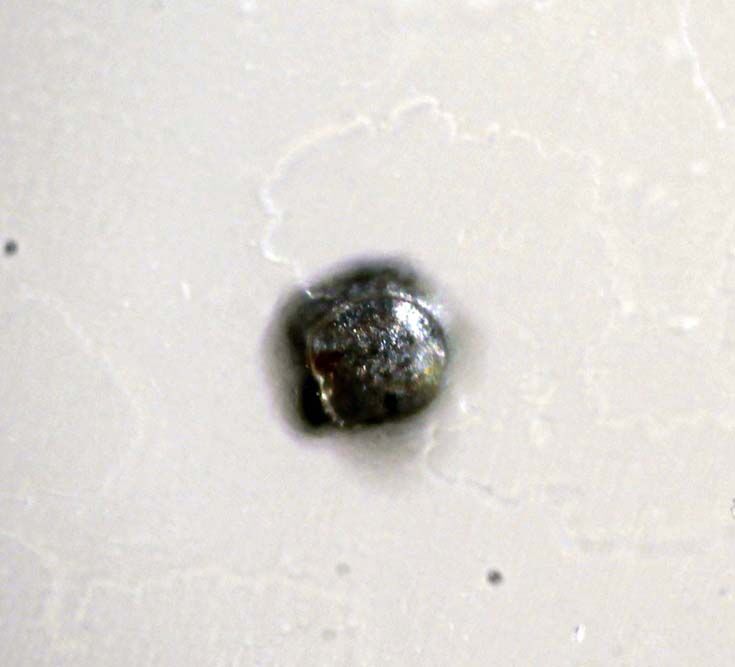 Native AluminiumAlMineral—
- PalmieriteK2Pb(SO4)2Mineral—
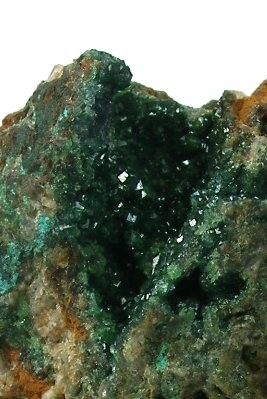 PharmacosideriteKFe3+4(AsO4)3(OH)4 · 6-7H2OMineral—
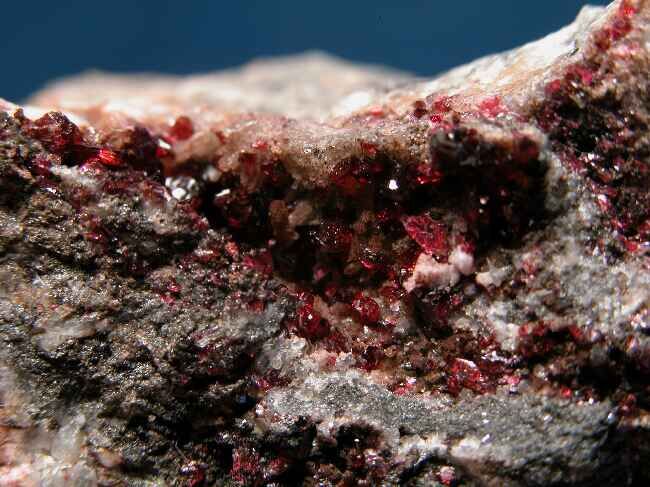 RozeniteFe2+(SO4) · 4H2OMineral—
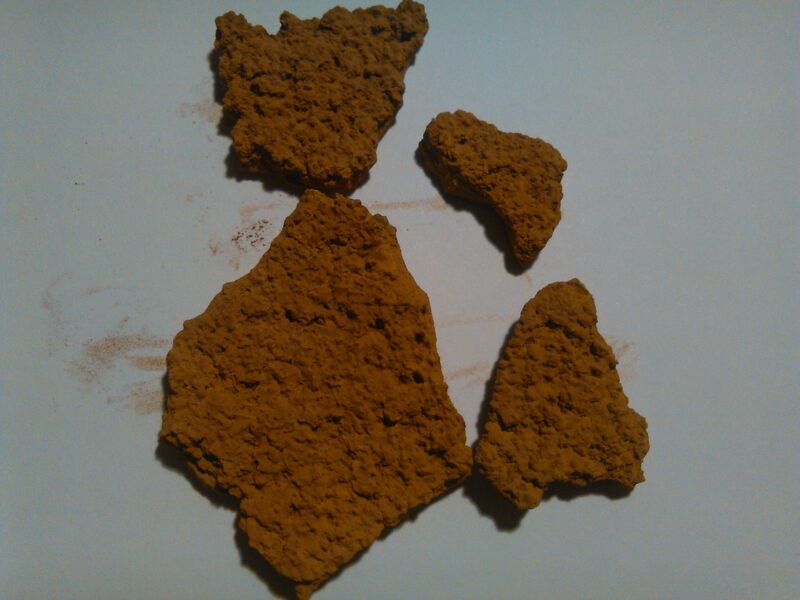 SchwertmanniteFe3+16O16(OH)9.6(SO4)3.2 · 10H2OMineral—
Literature, links & citation
- 1838Rammelsberg (1838) Annalen der Physik, Halle, Leipzig: 43: 132 (as Gelbeisenerz).
- 1845Haidinger, Wm. (1845) 512 (as Misy).
- 1847Hausmann, J.F.L. (1847) Handbuch der Mineralogie 3 volumes, Göttingen. Second edition: vol. 2, in two parts: 1205 (as Vitriolgelb).
- 1852Breithaupt (1852) Berg.- und hüttenmännisches Zeitung, Freiberg, Leipzig (merged into Glückauf): 6: 68 (as Jarosit).
- 1857Shepard C.U. (1857) Treatise on Mineralogy, third edition: vol. 2: 4 (suppl. app.) (as Moronolite).
Entry last updated
@misc{mineral2026,
  author    = {Mineral Index editorial board},
  title     = {Jarosite — Mineral Index},
  year      = {2026},
  url       = {https://mineralindex.org/minerals/jarosite-2078}
}