History
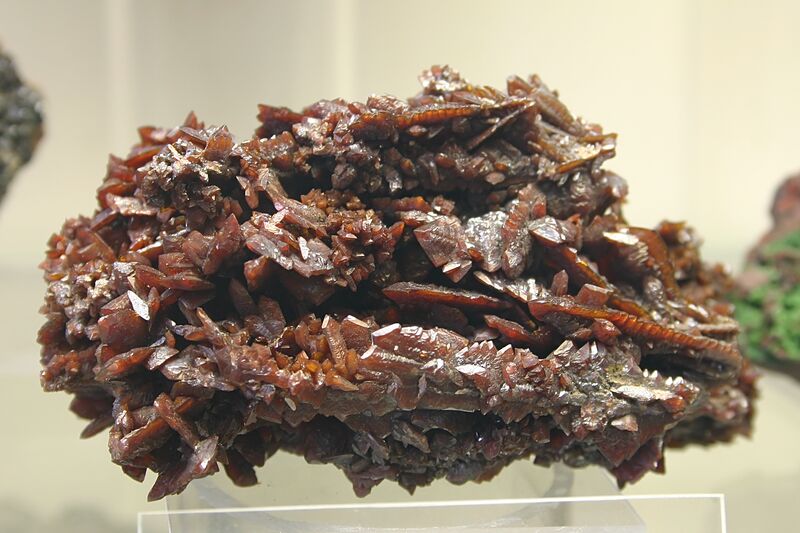
Drop a grain of pyromorphite into a flame and a strange thing happens. It melts into a small bead, and as the bead cools it grows angular again, sprouting fresh crystal faces. That trick gave the mineral its name in 1813.
Long before anyone had a name for it, the green and brown crystals turning up in central European lead workings were simply called what they looked like. The mineralogist Johan Gottschalk Wallerius described them as Grön Blyspat — green lead spar — and as Minera plumbi viridis in 1748. He returned to them in 1753 as Mine de plumb verte. By 1761, a writer recorded only as Schultze — probably the Dresden mineralogist Christian Friedrich Schultze — had begun calling them grünbleierz and braunbleierz, green lead ore and brown lead ore.
A turning point came in 1784. The Berlin chemist Martin Heinrich Klaproth examined the green lead ore from the Holy Trinity mine at Zschopau in Saxony. His analysis showed that the green crystals were chemically distinct — a separate species in their own right. The descriptive German names persisted nonetheless, and were attributed in 1791 to the founding mineralogist Abraham Gottlob Werner.
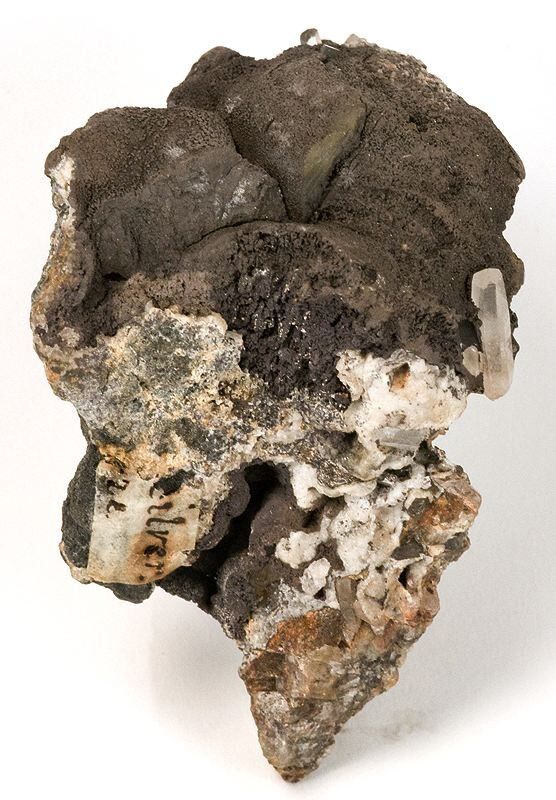
The name we use today arrived two decades later. In 1813, the German mineralogist Johann Friedrich Ludwig Hausmann formalised the species as pyromorphite, from the Greek pyr — fire — and morphē — form. He chose the word for the same property a blowpipe assayer would have recognised at the bench. Heat a fragment until it melts into a globule, let it cool, and a crystalline shape returns. Hausmann also coined traubenblei — grape lead — for the rounded, bunch-of-grapes habit the mineral often takes in oxidised lead deposits.
Later authors kept proposing new names for what turned out to be local variations of the same species. August Breithaupt named polysphaerite in 1832 — many spheres, for the globular form. G. Barruel introduced nussierite in 1836, after the Nuissière mine in France. Breithaupt followed with miesite in 1841, from Stříbro in Bohemia. The American mineralogist Charles U. Shepard added cherokine in 1857, from Cherokee County in Georgia. Breithaupt returned with plumbeine and sexagulit in 1863, and the line closed with Robert Brown's collieite in 1927. The proliferation reflected something simple. The green and brown crystals turned up wherever galena oxidised, and nineteenth-century mineralogy was slow to converge on the single name Hausmann had already given them.
Pyromorphite was mined as a lead ore wherever it gathered in workable quantity, and the old Leadhills workings in the Scottish southern uplands yielded many of the textbook specimens still kept in museum collections.
Industrial & practical applications
Pyromorphite has no significant industrial role today. Where it occurs in sufficient abundance, it can be mined as a minor ore of lead. That happens rarely; galena is the workhorse of the lead trade elsewhere.
Its modern interest is mostly scientific. The mineral is one of the least soluble lead compounds known. That makes it useful as a sink for lead in contaminated soils — once dissolved lead turns into pyromorphite, water cannot easily move it again. One demonstration comes from the soil fungus Paecilomyces javanicus, collected from lead-polluted ground. The fungus builds biominerals of pyromorphite — meaning it grows the crystal as part of its own metabolism — from the lead in its surroundings.
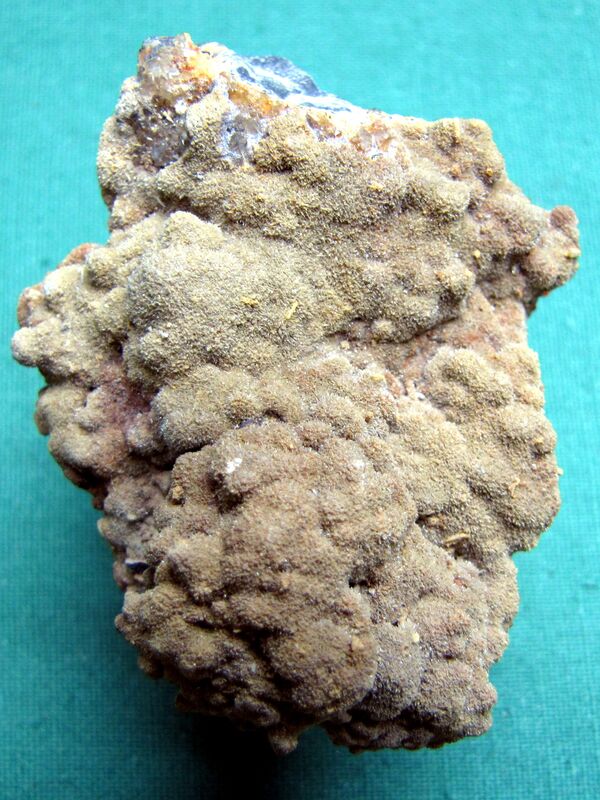
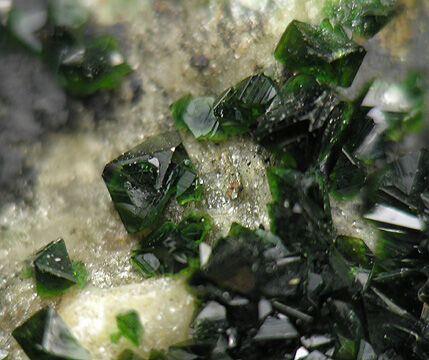
Beyond the laboratory, demand is collector demand. The hexagonal green prisms and bunch-of-grapes crusts have long been prized by museums and private collectors. Fine modern specimens come from the Daoping Mine in the Guangxi Zhuang Autonomous Region of China.
Where it forms, where it's found
- Geological setting
A secondary mineral found in the oxidised zones of lead ore deposits.
- Type locality
- Zschopau
- Erzgebirgskreis
- Saxony
- Germany
50.7475°, 13.0700°
Varieties
Safety & handling
Physical
- Hardness
- 1Talc
- 2Gypsum
- 3Calcite
- 4Fluorite
- 5Apatite
- 6Orthoclase
- 7Quartz
- 8Topaz
- 9Corundum
- 10Diamond
- Lustre
- Resinous to sub-adamantine
- Transparency
- Transparent · Translucent
- Colour
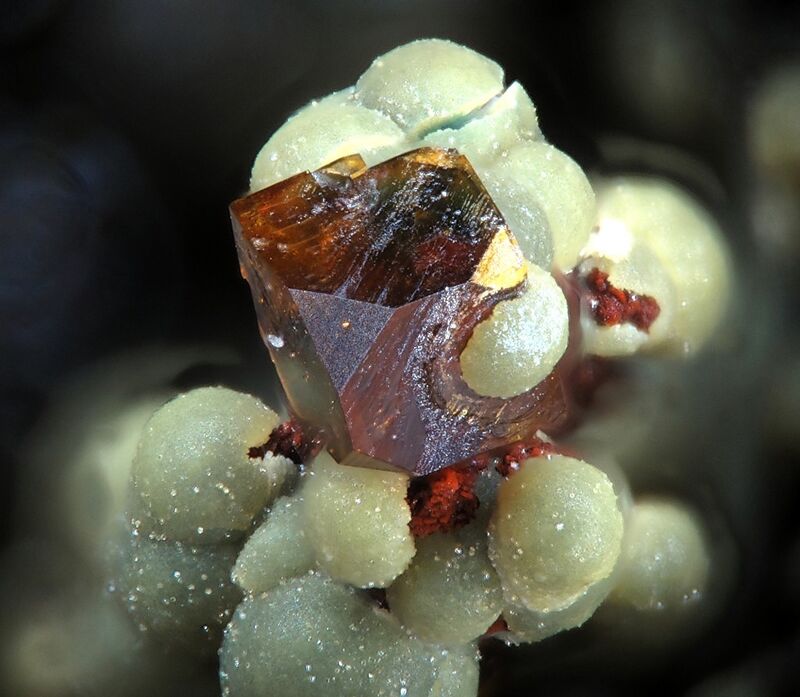
- Green to dark green · yellow · greenish-yellow or yellowish-green · orangish-yellow · shades of brown · white and colourless · colourless or faintly tinted in transmitted light.
Colorless when pure
- Streak
- White
- Tenacity
- brittle
- Cleavage
- Poor/Indistinct
In traces on (101).
- Fracture
- Irregular/Uneven · Sub-Conchoidal
- Density
- 7.04 g/cm³
Optical
- Optical type
- Uniaxial (-)
- Refractive index
- 2.048 – 2.058
- Surface relief
- Very high
- Principal indices
- nω 2.058 · nε 2.048
- Birefringence
- 0.010
- Pleochroism
- Weak
Visible in tinted material in transmitted light.
- Extinction
- Parallel
- UV response
- May be yellow to orange in SW and LW
- Notes
May be anomalously biaxial -, sectored.
Crystallography
- Space group
- P63/m
- Cell parameters
- a = 9.987 Å · c = 7.33 Å
- Z
- 2
- Morphology
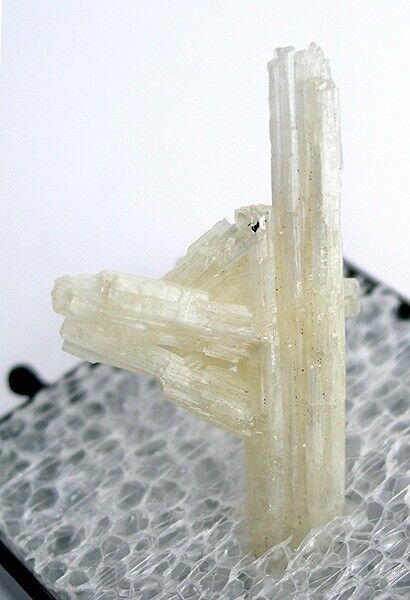
Crystals prismatic [0001] and usually simple, showing (100), (0001), (101); barrel-shaped, spindle-shaped, and sometimes equant; terminations may be cavernous ("hopper" or "skeletal"); more rarely tabular (0001) or pyramidal; sometimes in branching groups of prismatic crystals in parallel positions, tapering to points; may also be globular, reniform, wart-like with sub-columnar structure, and granular. Crystals may show concentric growth patterns, probably due to P/As content variation.
- Twinning
Very rare on (112); a twin is described by Goldschmidt & Schröder (1913). (100) at Puech de Compolibat (Mills et al., 2012)
- Epitaxy
Galena forms thin films on the surface of Pyromorphite crystals (Blaubleierz; Plumbeine) with Galena (001) [001] parallel with Pyromorphite (0001) (11_20) (10_10) [0001].
Chemical composition
- Impurities
- F
- Ra
- Ca
- Cr
- V
- As
Synonyms
- Bleiapatit
- Braunbleierz
- Brown Lead Ore
- Bryoîde
- Buntbleierz
- Chloropyromorphite
- Grön Blyspat
- Grün Bleyerz
- Grünbleierz
- Lead phosphate
- Mine de Plomb verte
- Minera plumbi viridis
- Muscoîde
- Phireamoirfiít
- Phosphate of Lead
- Phosphorblei
- Phosphorbleyspat
- Phosphorsäurehaltiges Blei
- Phosphorsaures Blei
- Plomb phosphaté
- Polychrome
- Pseudocampylita
- Pseudocampylite
- Pseudokampylith
- Pyromorphita
- Sexangulit
- Sexangulita
- Sexangulite
In other languages
- French
- mine de plomb verte · phosphomimétite · plomb phosphaté · pyromorphite
- German
- Bleiapatit · Braunbleierz · Buntbleierz · Collieit · Emser Tönnchen · Grün Bleyerz · Grünbleierz · Nussierit · Phosphorblei · Phosphorbleyspat · Phosphorsaures Blei · Pseudokampylith · Pyromorphit · Sexangulit
- Spanish
- piromorfita · poliesferita
- Italian
- Piromorfite · Pyromorphite
- Portuguese
- piromorfita · Piromorfite
- Japanese
- 緑鉛鉱
- Chinese
- 磷氯鉛礦 · 磷氯铅矿
- Simplified Chinese
- 磷氯铅矿
- Traditional Chinese
- 磷氯鉛礦
- Russian
- Пироморфит
Classification
8.BN.05
- 8Phosphates, Arsenates, VanadatesClass
- 8.BPhosphates, etc., with additional anions, without H2ODivision
- 8.BNWith only large cations, (OH, etc.):RO4 = 0.33:1Group
- 8.BN.05PyromorphiteSpecies
41.08.04.01
- 41Anhydrous Phosphates, Etc.containing Hydroxyl or HalogenClass
- 41.08A5(XO4)3ZqType
- 41.08.04Pyromorphite GroupGroup
- 41.08.04.01PyromorphiteSpecies
22.2.9
- 22Phosphates, Arsenates or Vanadates with other AnionsClass
- 22.2Phosphates, arsenates or vanadates with chlorideGroup
- 22.2.9PyromorphiteSpecies
Group, growth & confusion
 AlforsiteBa5(PO4)3ClMineral—
 ChlorapatiteCa5(PO4)3ClMineral—
- FluoralforsiteBa5(PO4)3FMineral—
 FluorapatiteCa5(PO4)3FMineral—
- FluorpyromorphitePb5(PO4)3FMineral—
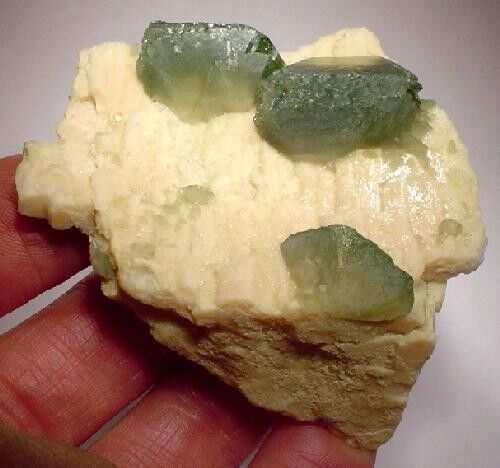 HydroxylapatiteCa5(PO4)3OHMineral—
- HydroxylpyromorphitePb5(PO4)3(OH)Mineral—
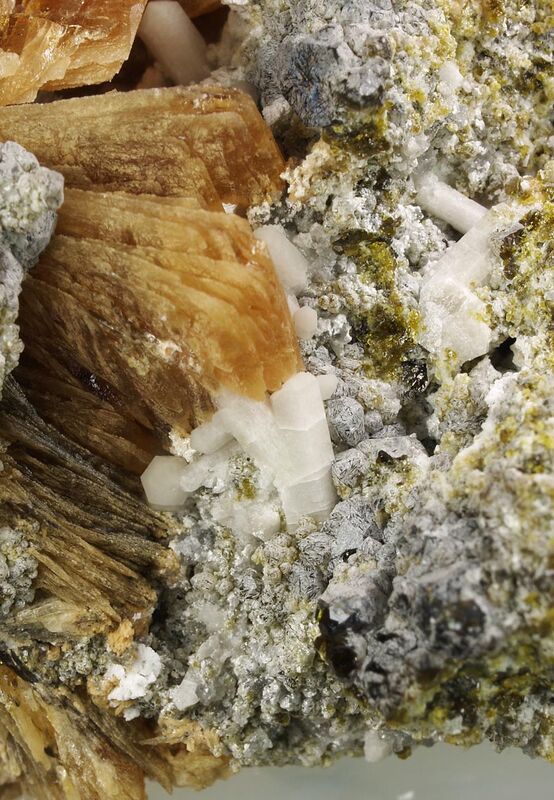 JohnbaumiteCa5(AsO4)3(OH)Mineral—
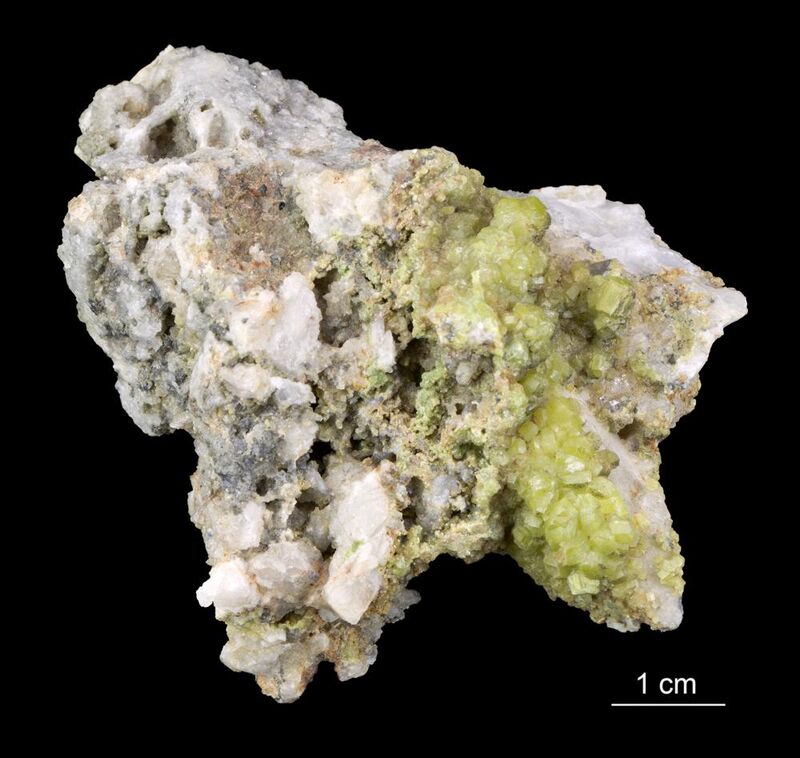 MimetitePb5(AsO4)3ClMineral—
- PieczkaiteMn5(PO4)3ClMineral—
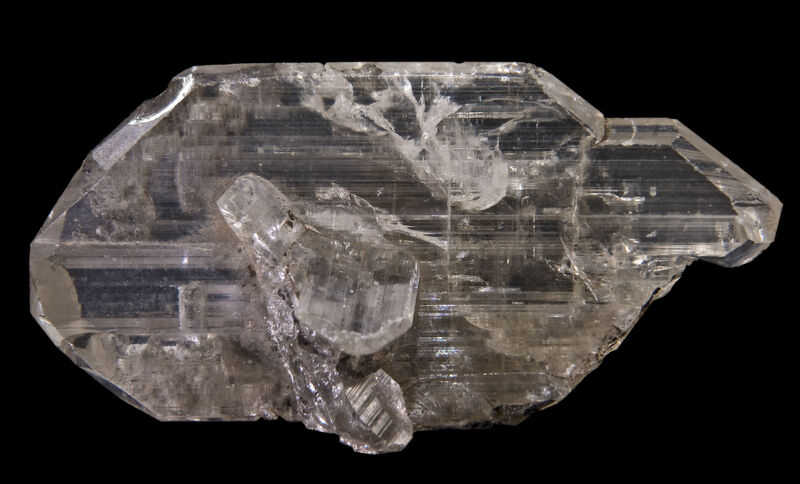
Literature, links & citation
- 1693Michaelis, J.M. (1693) Museum Spenerianum sive Catalogus Rerum … Das Spenerische Kabinet Oder Kurtze Beschreibung Aller Sowol künstlich als natürlicher / alter / als neuer / fremder als einheimischer curiösen Sachen / Welche Herr Johann Jacob Spener Seel. Phys. & Math. P.P. auf der Academie zu Halle mit unermüdetem Fleiß colligiret. Leipzig, 222 p. (p. 96, 144-146, as Grün-Bley-Ertz, minera saturni viridis, and minera plumbi virides, from Zschopau/Saxony).
- 1719Richter, G.G. (1719) Gazophylacium sive Catalogus Rerum Mineralium et Metallicarum ut et tam domesticorum quam exoticorum, varia rudera urbium fructicum, quo praesentantium una cum quibusdam petrifactis, et lapidibus, ad regnum minerale spectantibus, quas summa industria et labore collegit / Mineralien-Cabinet Oder Beschreibung der fürnehmsten Ertze / darunter / viele in Sachsen befindlich / wie auch andere Ausländische / ingleichen unterschiedene in Stein verwandelte Sachen, Welche Mit großer Mühe / Fleiß / und Unkosten / zusammen getragen. Freiberg, 58 p. (p. 26-27, as Grün Bley-Ertz).
- 1725Woodward, J. (1725/1727) An Addition to the Catalogue of the Foreign Native Fossils in the Collection of J. Woodward M.D., London, 21 p. (p. 17, as minera plumbi viridis, from Zschopau).
- 1743Minerophilo Freibergensi [this is probably J.C. Zeisig] (1743) Neues und wohleingerichtetes Mineral- und Bergwercks-Lexicon. Chemnitz, 2nd ed., 621 p. (p. 278, as Grün Bley-Ertz).
- 1744Cramer, J.A. (1744) Elementa Artis Docimasticae, Dubous Tomis comprehensa, Quorum Prior Theoriam, pesterior Praxin, Ex vera Fossilium indole deductas, atque indubitatæ Experimentorum, summa cum accuratione institutorum, fide firmatas, ordine naturali & doctrina apertissima exhibet. Lugduni Batavorum [= Leiden], 366 p. (p. 273, as minera plumbi viridis, first quantitative analysis of the lead content).
Entry last updated
@misc{mineral2026,
  author    = {Mineral Index editorial board},
  title     = {Pyromorphite — Mineral Index},
  year      = {2026},
  url       = {https://mineralindex.org/minerals/pyromorphite-3320}
}