History
For most of mineralogy's history, hemimorphite did not have its own name. It hid inside an older word: calamine.
Calamine came from the Latin lapis calaminaris, itself a corruption of the Greek kadmia — the ancient catch-all term for zinc ores. Miners and metalworkers had used the word for centuries to describe the pale, often botryoidal masses they smelted for zinc and brass. The trouble was that two different minerals answered to the name. Both formed in the weathered upper levels of zinc deposits. Both looked, in hand specimen, much the same. One worked beautifully as a zinc ore. The other did not.
The puzzle was settled in 1803, when the British chemist and mineralogist James Smithson took the question into the laboratory. He showed that calamine was in fact a mixture of two distinct compounds — a zinc carbonate, which yielded zinc readily, and a zinc silicate, which did not. The carbonate would later be named smithsonite in his honour, after his death in 1829.
The silicate — what we now call hemimorphite — kept the old calamine name for another fifty years.
It received its modern name in 1853, from the mineralogist Adolph Kenngott. He coined hemimorphite from the Greek hēmi (half) and morphē (form), in reference to a quirk of the mineral's crystal symmetry. The crystals are hemimorphic — meaning the two ends of a crystal develop differently, one terminated by a blunt face, the other by a sharp pyramid. Only a handful of mineral species do this, and the asymmetry is the species' defining structural feature.
For more than a century after Kenngott's paper, English and European literature kept using calamine and hemimorphite interchangeably. The International Mineralogical Association finally settled the matter in 1962, formally choosing hemimorphite over calamine as the species name. Calamine survives today only in pharmacy — the pink calamine lotion sold for skin irritations is a mixture of zinc oxide and iron oxide.
Industrial & practical applications
Hemimorphite is, first and foremost, a secondary ore of zinc — a supplemental source, not a primary one. Roughly half its weight is zinc; published figures put the metal content at up to 54%. The mineral forms where primary zinc sulfide ore — chiefly sphalerite (ZnS) — has been weathered or chemically altered near the surface. That alteration leaves a band of oxidised zinc minerals capping the unweathered sulfide body below. Most modern zinc comes from sphalerite at depth; hemimorphite is mined where the oxidised upper layer is rich enough to recover.
The other practical use is lapidary. The blue-to-blue-green botryoidal variety — bunched, grape-cluster aggregates with a milky pastel colour reminiscent of turquoise — is cut into cabochons, beads, pendants, and earrings. The best of this material has come from the Wenshan Mine in Yunnan, China, and from the Ojuela Mine in Durango, Mexico. Working it is delicate. The mineral has perfect cleavage and a Mohs hardness of only 4½ to 5. Jewellers therefore reserve it for pieces that will not see hard knocks — pendants and earrings, rarely rings.
Beyond zinc recovery and ornament, the mineral has no significant industrial role. It is sought by collectors for well-formed transparent crystals and for the blue botryoidal pieces, and otherwise lives in the secondary literature on oxidised zinc deposits.
Where it forms, where it's found
- Geological setting
Secondary mineral in the weathered portions of zinc deposits.
- Type locality
- Băiţa mining district
- Nucet
- Bihor County
- Romania
46.4818°, 22.5806°
Physical
- Hardness
- 1Talc
- 2Gypsum
- 3Calcite
- 4Fluorite
- 5Apatite
- 6Orthoclase
- 7Quartz
- 8Topaz
- 9Corundum
- 10Diamond
- Transparency
- Transparent · Translucent
- Colour
- Colorless · white · pale blue · pale green · gray · brown
- Streak
- White
- Tenacity
- brittle
- Cleavage
- Perfect
Perfect on (110), poor on (101), (001) rare
- Fracture
- Irregular/Uneven · Sub-Conchoidal
- Density
- 3.475 g/cm³
Optical
- Optical type
- Biaxial (+) · 2V measured = 46° · 2V calc = 44°
- Refractive index
- 1.614 – 1.636
- Surface relief
- Moderate
- Principal indices
- nα 1.614 · nβ 1.617 · nγ 1.636
- Birefringence
- 0.022
- Dispersion
- strong r > v
- Extinction
- X = b; Y = a; Z = c.
- UV response
- May be bluish under SW UV.
Crystallography
- Space group
- Imm2
- Cell parameters
- a = 8.367(5) Å · b = 10.730 Å · c = 5.155(3) Å
- Ratio a:b:c
- 1 : 1.282 : 0.616
- Z
- 2
- Morphology
Thin tabular crystals, sheaf-like or fan-like aggregates, stalactitic, mammillary, botryoidal.
- Twinning
On (101) rare
Chemical composition
- Impurities
- Cu
- Fe
Synonyms
- Calamina
- Daviesit
- Daviesita
- Electric Calamine
- Gemeiner Galmei
- Hemimorphita
- Kieselgalmei
- Kieselgalmey
- Kieselzinkerz
- Kieselzinkspat
- Smithsonite (of Brooke and Miller)
- Wagit
- Wagita
- Wagite
- Zinkglas
- Zinkkieselerz
In other languages
- French
- E557 · hémimorphite · Oxyde de zinc silicifère · Silicate de zinc · Wagite · Zinc oxydé silicifère
- German
- Hemimorphit · Kieselzinkerz
- Spanish
- hemimorfita
- Italian
- emimorfite
- Portuguese
- hemimorfita · Hemimorfite
- Japanese
- ヘミモルファイト · 異極鉱
- Chinese
- 异极矿 · 異極礦
- Traditional Chinese
- 異極礦
- Russian
- Гемиморфит · Каламин
- Arabic
- هيميمورفيت
Classification
9.BD.10
- 9SilicatesClass
- 9.BSorosilicatesDivision
- 9.BDSi2O7 groups, with additional anions; cations in tetrahedral [4] and greater coordinationGroup
- 9.BD.10HemimorphiteSpecies
56.01.02.01
- 56Sorosilicates Si2o7 Groups, with Additional O, Oh, F and H2oClass
- 56.01Si2O7 Groups and O, OH, F, and H2O with cations in [4] coordinationType
- 56.01.02— unnamed intermediate level —Group
- 56.01.02.01HemimorphiteSpecies
14.7.12
- 14Silicates not Containing AluminumClass
- 14.7Silicates of Ba, Sr and ZnGroup
- 14.7.12HemimorphiteSpecies
Group, growth & confusion
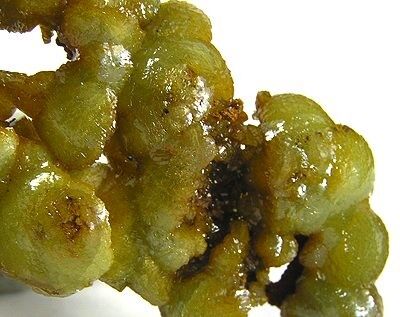 AdamiteZn2(AsO4)(OH)Mineral—
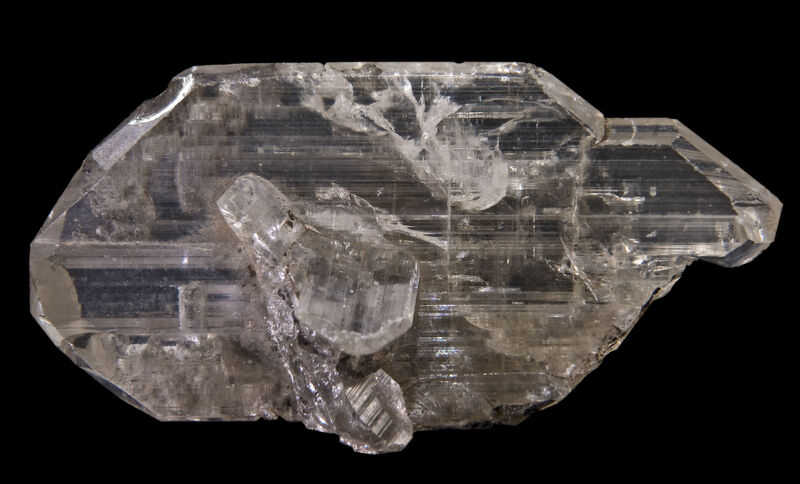 AnglesitePb(SO4)Mineral—
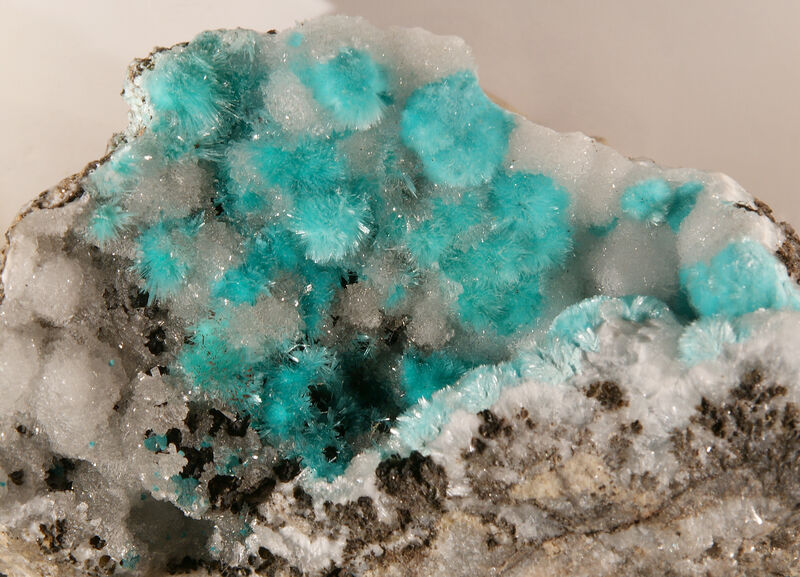 Aurichalcite(Zn,Cu)5(CO3)2(OH)6Mineral—
 CalciteCa(CO3)Mineral—
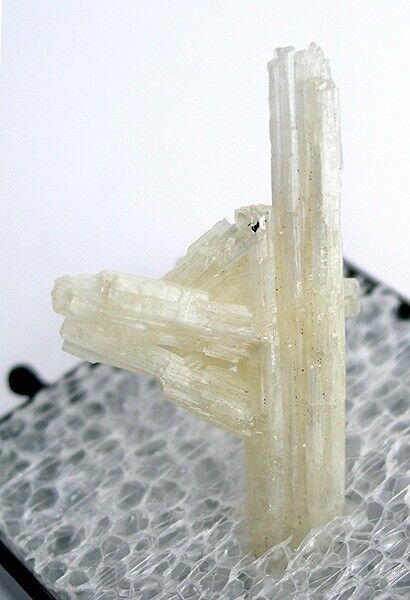 CerussitePb(CO3)Mineral—
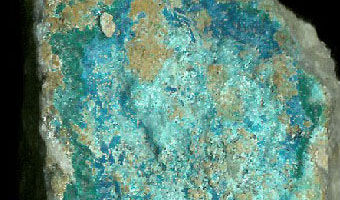 Chrysocolla(Cu2-xAlx)H2-xSi2O5(OH)4 · nH2OMineral—
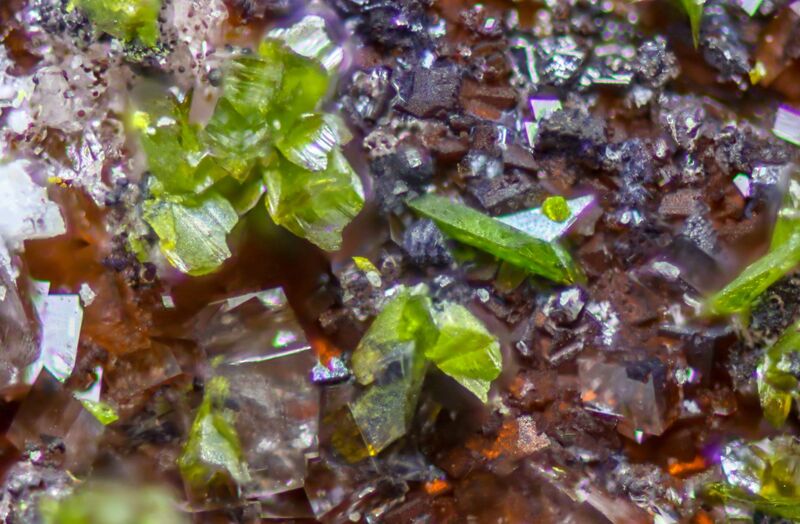 FornaciteCuPb2(CrO4)(AsO4)(OH)Mineral—
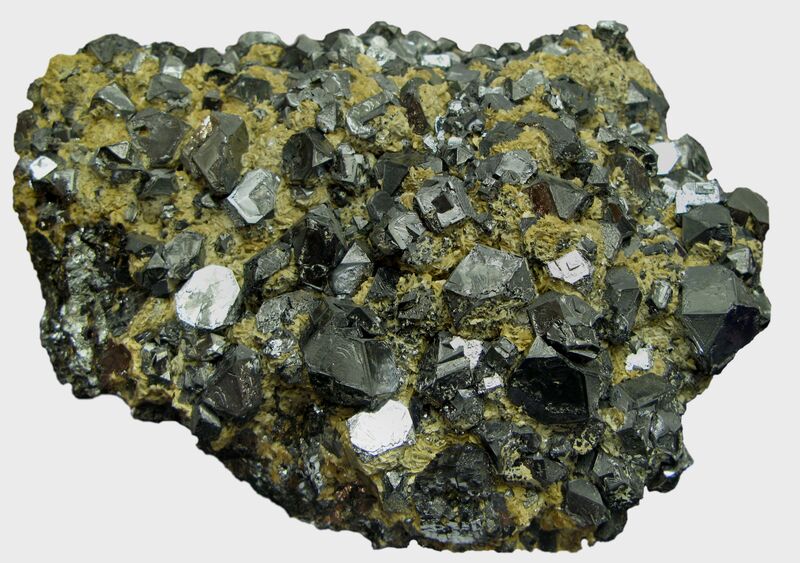 GalenaPbSMineral—
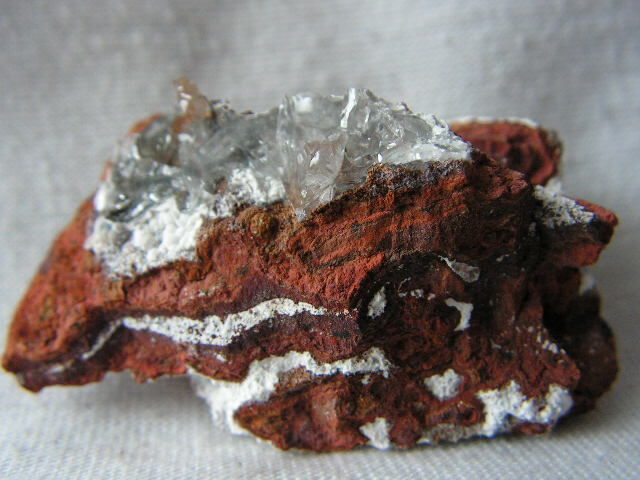 HydrozinciteZn5(CO3)2(OH)6Mineral—
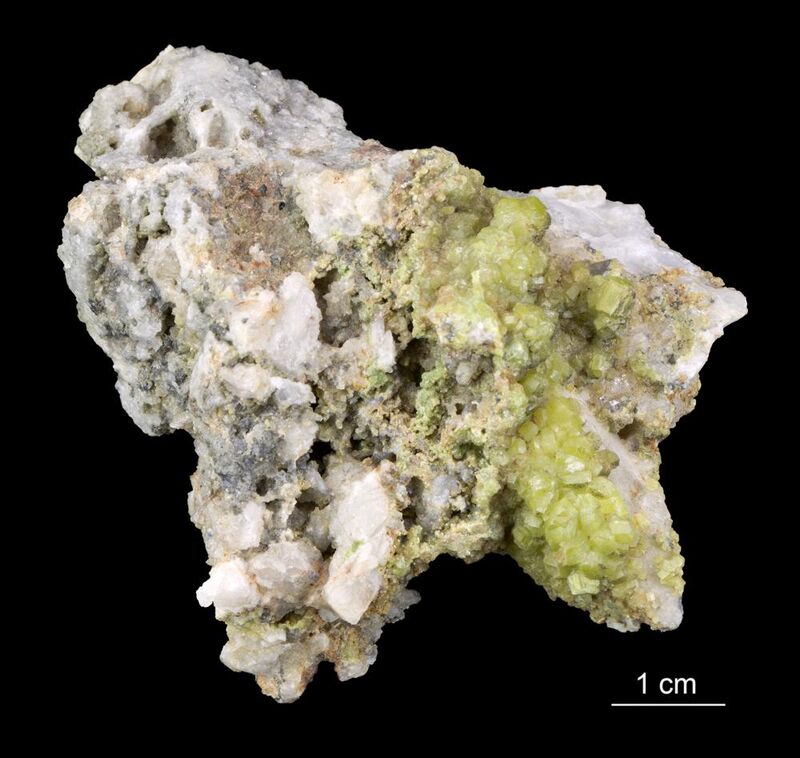 MimetitePb5(AsO4)3ClMineral—
Literature, links & citation
- 1853Kenngott, A. (1853) Hemimorphit. in Das Mohs’sche Mineralsystem, Verlag und Druck (Wien): 67-68.
- 1884Thomson, J. Stuart (1884) Note on Crystals of Calamine from Wanlockhead, Dumfries-shire. Mineralogical Magazine and Journal of the Mineralogical Society, 5 (26) 332 doi:10.1180/minmag.1884.005.26.04 DOI: 10.1180/minmag.1884.005.26.04
- 1894Pratt, J.H. (1894) Mineralogical Notes on Cerussite, Calamine and Zircon. American Journal of Science: 48(285): 212.
- 1899Clarke, F.W., Steiger, G. (1899) Experiments relative to the Constitution of Pectolite, Pyrophyllite, Calamine, and Analcite. American Journal of Science: 8(46): 245.
- 1911Pogue, J.E. (1911) On calamine crystals from Mexico, rutile-mica intergrowths from Canada, and pseudomorphs of marcasite arfter pyrrhotite from Russia. Proceedings U.S. National Museum: 39(1801): 571-579.
Entry last updated
@misc{mineral2026,
  author    = {Mineral Index editorial board},
  title     = {Hemimorphite — Mineral Index},
  year      = {2026},
  url       = {https://mineralindex.org/minerals/hemimorphite-1860}
}