Where it forms, where it's found
- Geological setting
Leucophoenicite is a mineral of hydrothermally altered metamorphosed Mn-ores
- Type locality
- Buckwheat pit
- Franklin Mine
- Franklin
- Sussex County
- New Jersey
- USA
41.1147°, -74.5872°
11recorded occurrences
Physical
Optical
- Optical type
- Biaxial (-) · 2V measured = 74°
- Refractive index
- 1.751 – 1.782
- Surface relief
- High
- Principal indices
- nα 1.751 · nβ 1.771 · nγ 1.782
- Birefringence
- 0.031
- Pleochroism
- Weak
pale red // {001}, colorless perpendicular to {001}
- Dispersion
- r>v, weak
- Extinction
- X perpendicular to {001}
- UV response
- Not fluorescent in UV
Δ = 0Δmax
PPLpleochroism per grain
XPLindependent extinctions · rotate the stage
PPLpleochroism only · colour blends on rotation
XPLinterference colour · extinct every 90°
Retardation310 nm
Order1st order
XPL colour
Crystallography
- Space group
- P21/c
- Cell parameters
- a = 10.842 Å · b = 4.826 Å · c = 11.324 Å
- Cell angles
- β = 103.93 °
- Ratio a:b:c
- 1 : 0.445 : 1.044
- Z
- 2
- Morphology
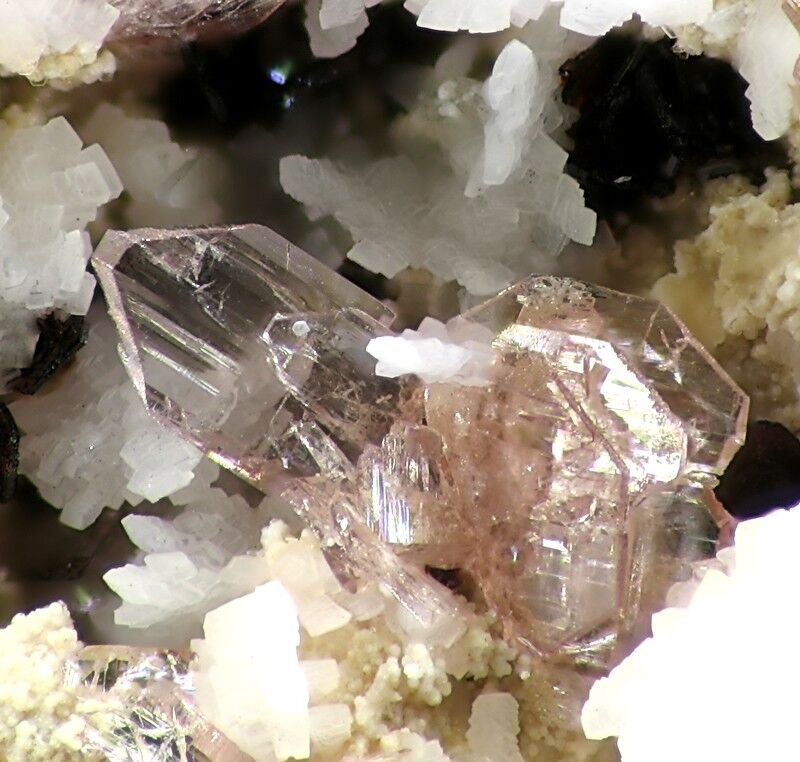
Usually granular, rod-like to platy deeply striated crystals are rare
- Type-locality form
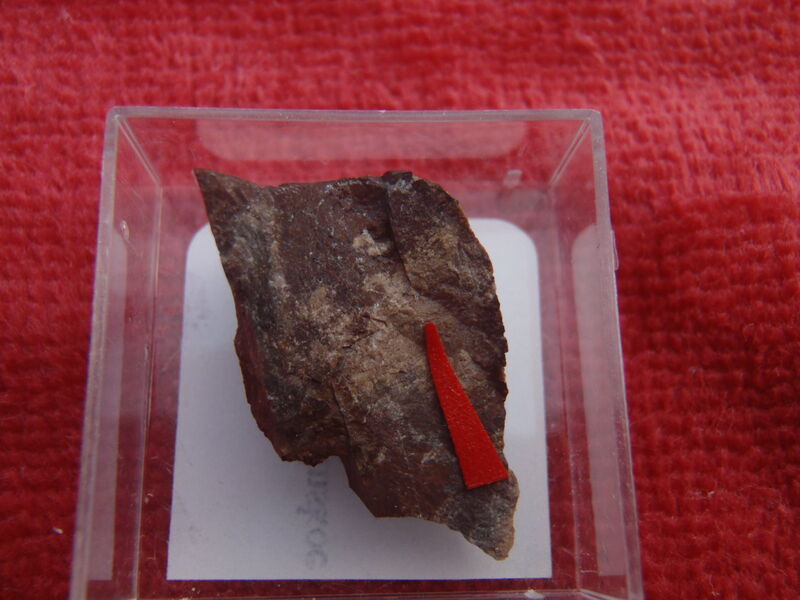
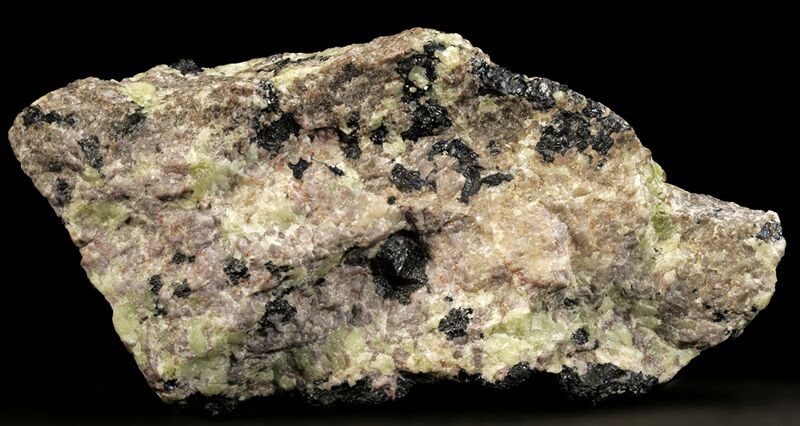
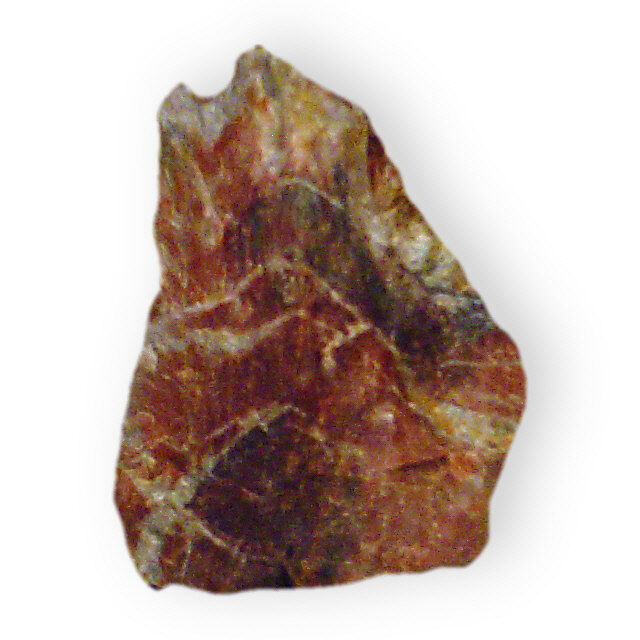
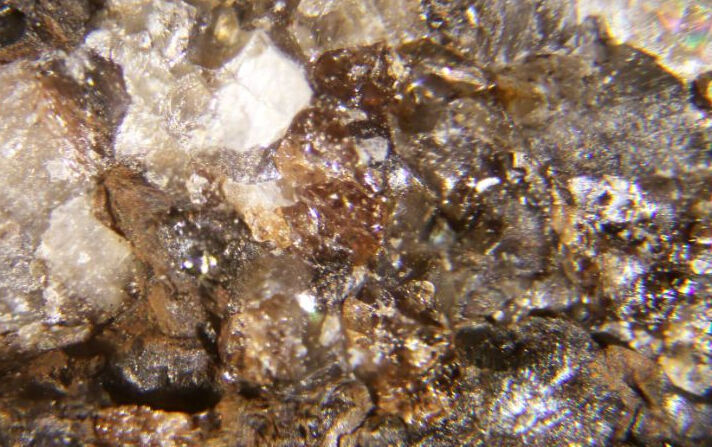
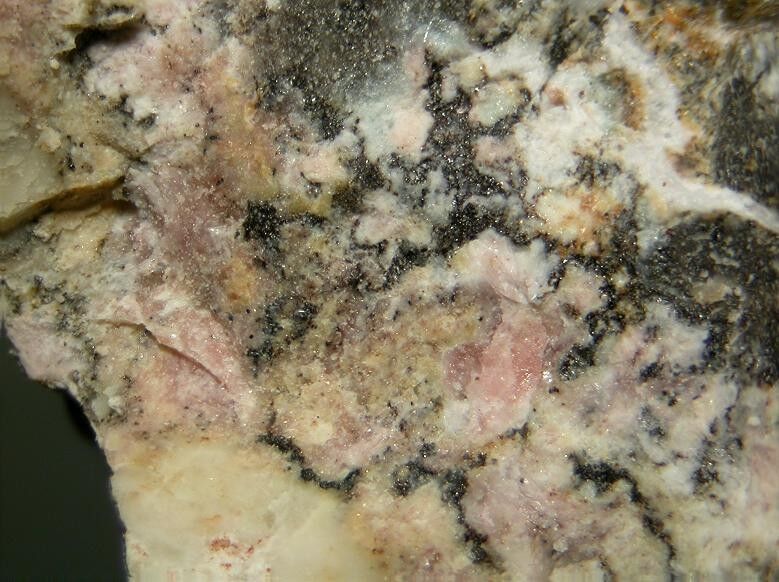
Leucophoenicite made up the larger part of the type specimen. The mineral has a crystalline structure, vitreous luster, hardness about 5,5-6, and a light purplish-red or raspberry color
Crystal structure
Chemical composition
- Impurities
- Fe
- Mg
- Zn
- Ca
- Na
- K
- H2O
Synonyms
- Leucophoeniciet
- Leucophoenicit
- Leucophoenicita
- Leucophönicit
- Leukophoenicit
- Leukophönizit
In other languages
- French
- leucophoenicite
- German
- Leukophönicit
- Spanish
- Leucophoenicite
- Italian
- leucophoenicite
- Chinese
- 淡硅锰石
Classification
Strunz
10th ed.9.AF.60
- 9SilicatesClass
- 9.ANesosilicatesDivision
- 9.AFNesosilicates with additional anions; cations in [4], [5] and/or only [6] coordinationGroup
- 9.AF.60LeucophoeniciteSpecies
Dana
8th ed.52.03.2c.02
- 52Nesosilicates Insular Sio4 Groups and O, Oh, F, H2oClass
- 52.03Insular SiO4 Groups and O, OH, F, and H2O with cations in [6] coordination onlyType
- 52.03.2c— unnamed intermediate level —Group
- 52.03.2c.02LeucophoeniciteSpecies
CIM
—14.17.6
- 14Silicates not Containing AluminumClass
- 14.17Silicates of MnGroup
- 14.17.6LeucophoeniciteSpecies
Group, growth & confusion
 AlleghanyiteMn2+5(SiO4)2(OH)2Mineral—
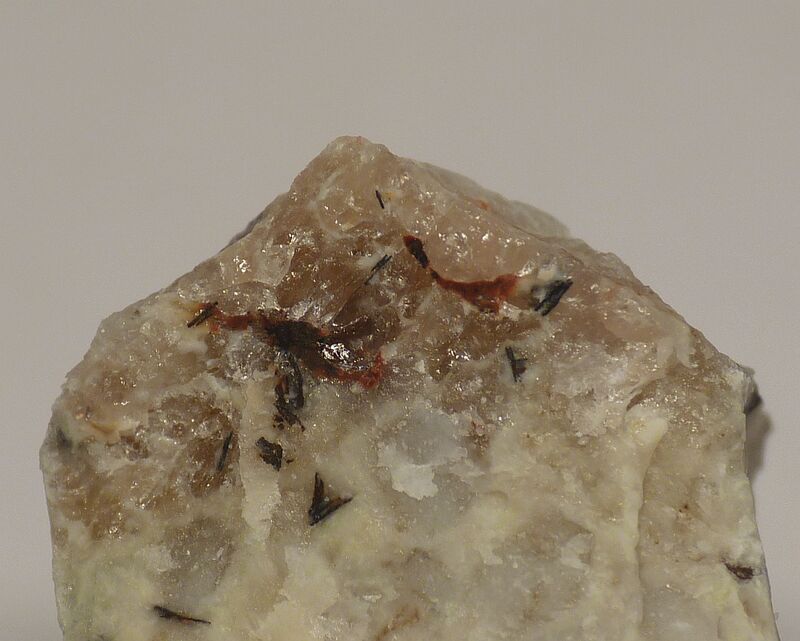 ChegemiteCa7(SiO4)3(OH)2Mineral—
- EdgrewiteCa9(SiO4)4F2Mineral—
- HydroxylchondroditeMg5(SiO4)2(OH)2Mineral—
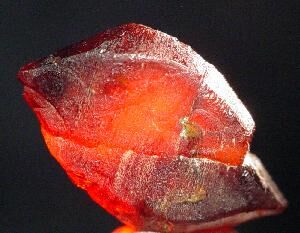 HydroxylclinohumiteMg9(SiO4)4(OH)2Mineral—
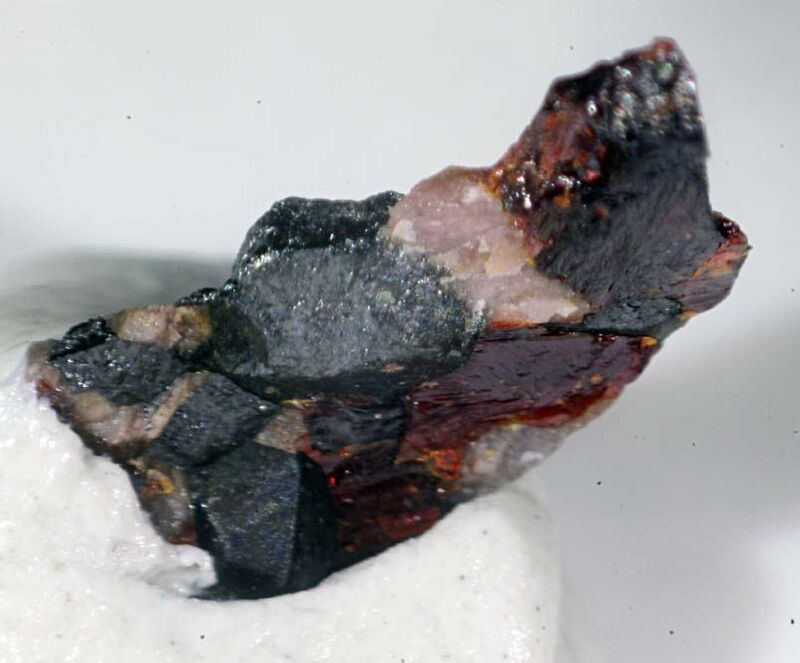 JerrygibbsiteMn2+9(SiO4)4(OH)2Mineral—
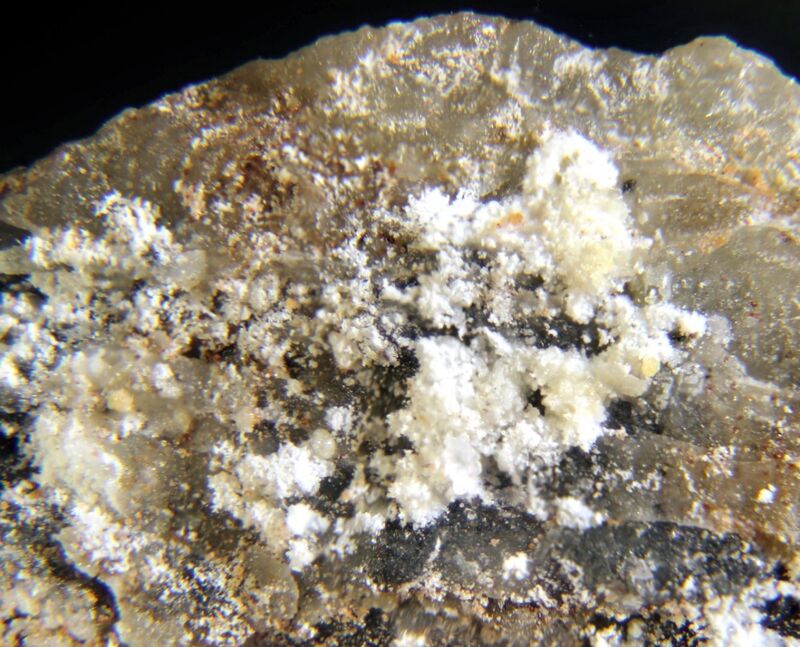 KumtyubeiteCa5(SiO4)2F2Mineral—
 ManganhumiteMn2+7(SiO4)3(OH)2Mineral—
 NorbergiteMg3(SiO4)F2Mineral—
 ReinhardbraunsiteCa5(SiO4)2(OH)2Mineral—
Literature, links & citation
Citations
- —Igelström, L. J. (1871). Öfver Filipstads bergslag i geognostiskt och mineralogiskt hänseende samt någre allmänna reflektioner öfver de Svenska jernmalmernas tillkomst och förhållanden. Nyt magazin for naturvidenskaberne, 18, pp 301-321.
- 1899Penfield, Samuel Lewis; Hyde, Warren Charles (1899) Some New Minerals from the Zinc Mines at Franklin, N. J., and Note Concerning the Chemical Composition of Ganomalite. American Journal Of Science, S. 3 Vol. 8. 339-353
- 1909Dana, Edward S., Ford, William E. (1909) A System of Mineralogy - Second Appendix to the Sixth Edition of Dana's System of Mineralogy. John Wiley & Sons.
- 1935Palache, Charles (1935) The minerals of Franklin and Sterling Hill, Sussex County, New Jersey. Professional Paper 180. US Geological Survey 135 pp. doi:10.3133/pp180 DOI: 10.3133/pp180
- 1967Moore, Paul B. (1967) On leucophoenicites: I. A note on form developments. American Mineralogist, 52 (7-8) 1226-1232
Cite this entry
Entry last updated
@misc{mineral2025,
  author    = {Mineral Index editorial board},
  title     = {Leucophoenicite — Mineral Index},
  year      = {2025},
  url       = {https://mineralindex.org/minerals/leucophoenicite-2384}
}