History
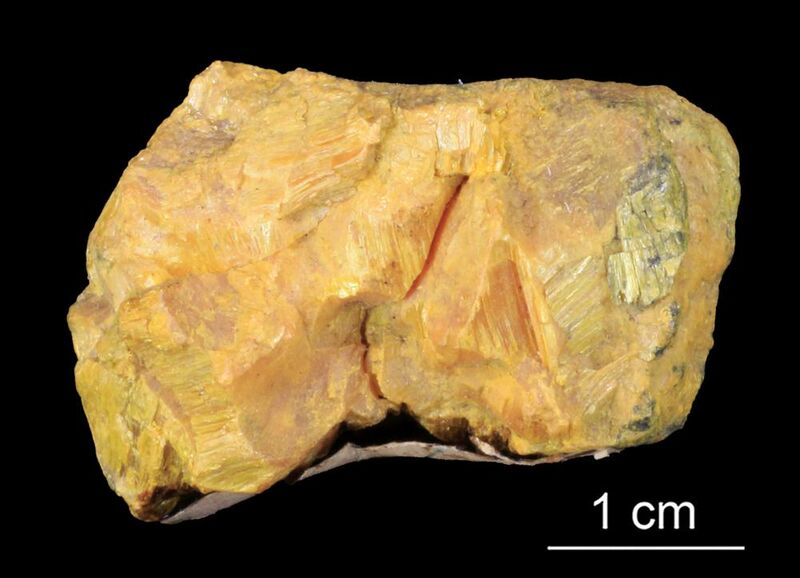
The name carries an old insult. It comes through Greek as arsenikon, a word that meant masculine or virile, chosen to flag the mineral's potent nature. The Greek term itself traces back through Arabic al-zarnīḵ, "the orpiment", and ultimately to a Persian root for gold — orpiment being a golden-yellow arsenic mineral. The earliest written record of the English word sits in a 1310 account of orpiment sold by the pound, its author unknown.
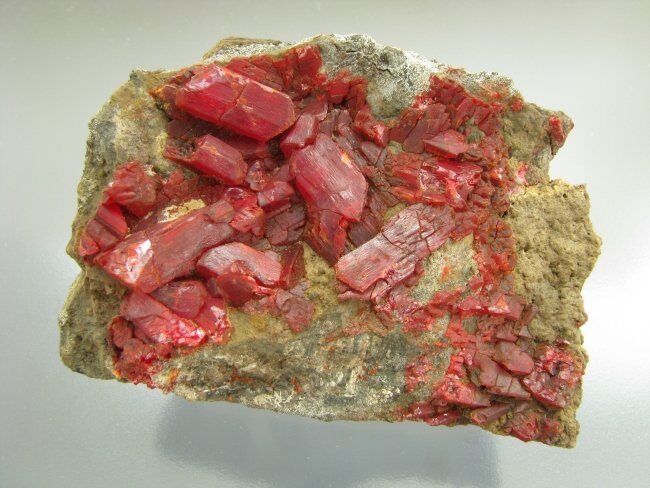
Long before chemists could isolate the element, people knew its golden and red sulfides — orpiment and realgar — as pigments and as poisons. Around 300 CE the alchemist Zosimos roasted realgar to drive off a "cloud of arsenic", arsenic trioxide, then reduced that to a grey metal. The Persian alchemist Jabir ibn Hayyan described separating arsenic before 815 CE, and Albertus Magnus isolated the element in 1250 by heating arsenic trisulfide with soap.
A poison and a pigment
Few minerals carry a darker human record. Arsenic earned the names poison of kings and king of poisons, and the inheritance powder — a tasteless white powder, arsenic trioxide, used to hurry along wealthy relatives in Renaissance Europe.
The same element gave painters two brilliant greens. Scheele's Green arrived in 1775 and Paris Green in 1814, and both spread through Victorian wallpapers, fabrics, and paints. Victorian women even ate white arsenic mixed with vinegar and chalk to pale their complexions.
Medicine reached for it too. Through the 17th, 18th, and 19th centuries arsenic compounds treated diseases such as cancer and psoriasis — among them Fowler's solution and the drug arsphenamine developed by Paul Ehrlich.
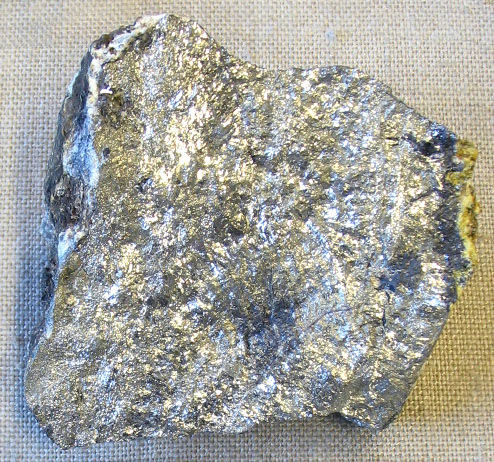
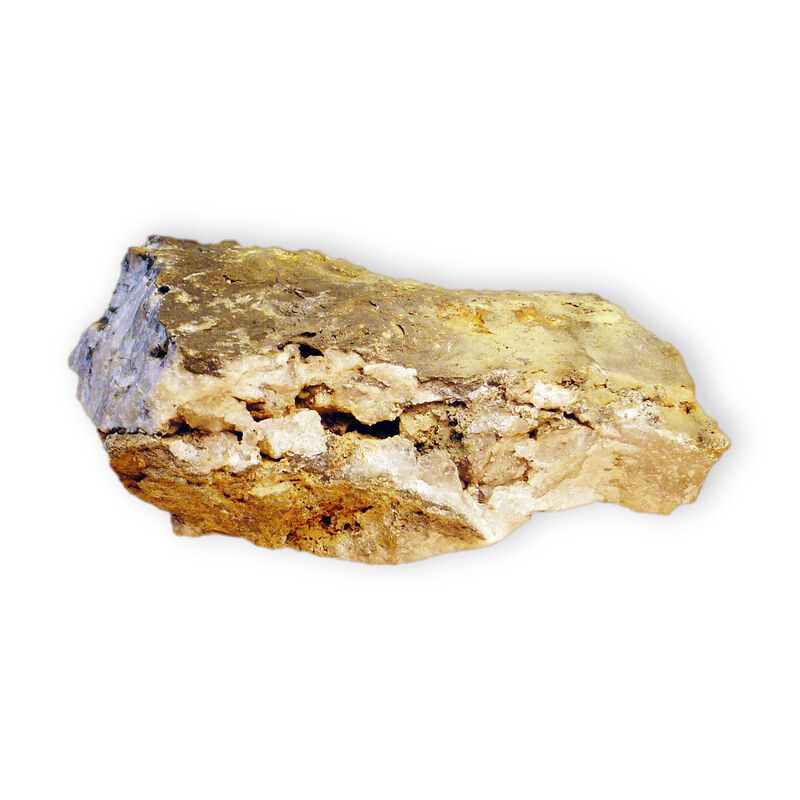
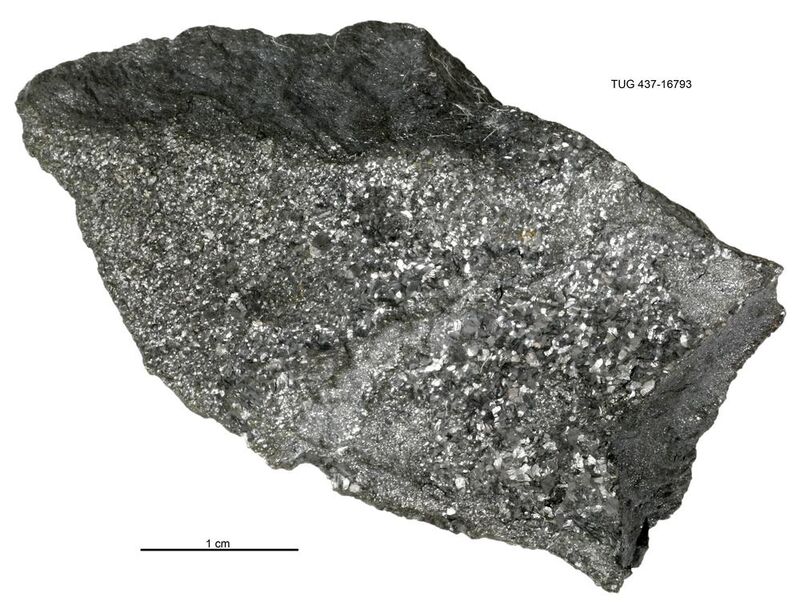
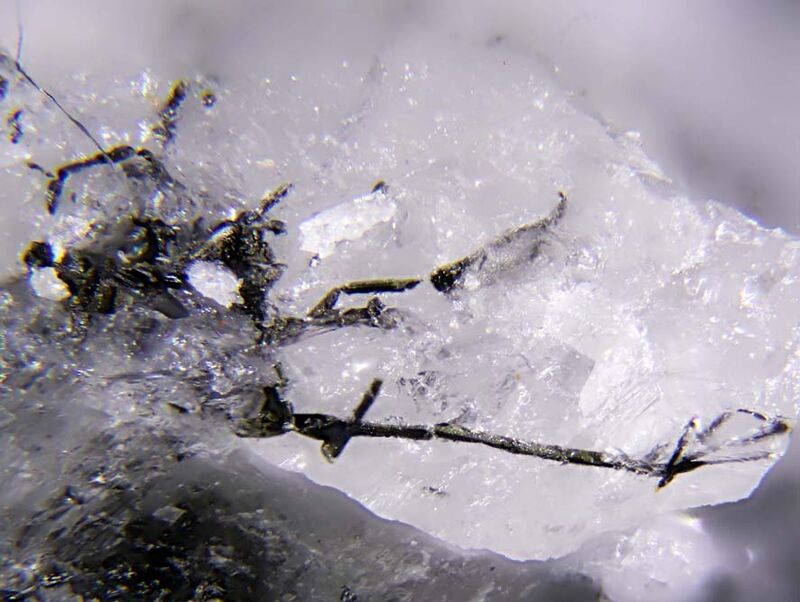
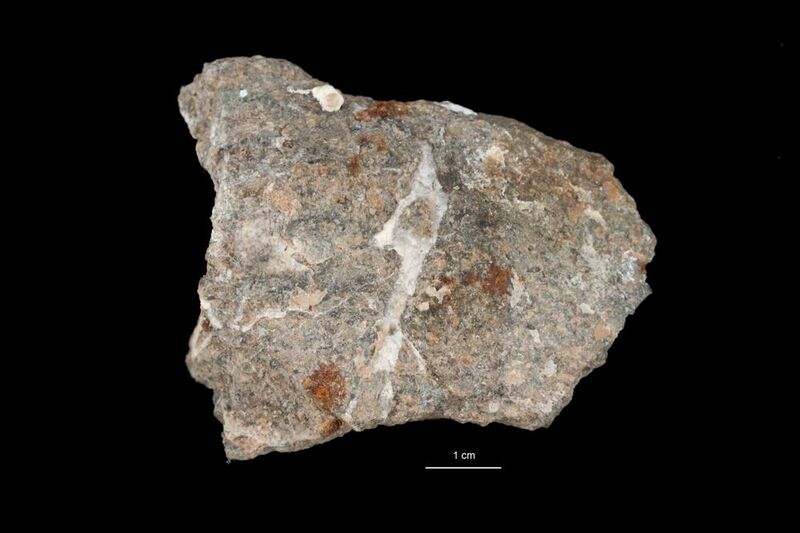
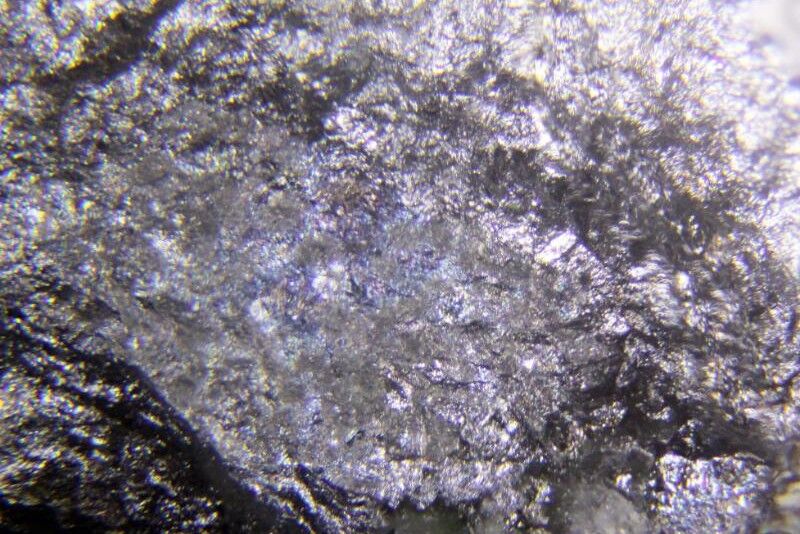
The native element itself stayed scarce. Crystals of native arsenic do form in nature, but only rarely. One documented source is Sainte-Marie-aux-Mines in eastern France.
Industrial & practical applications
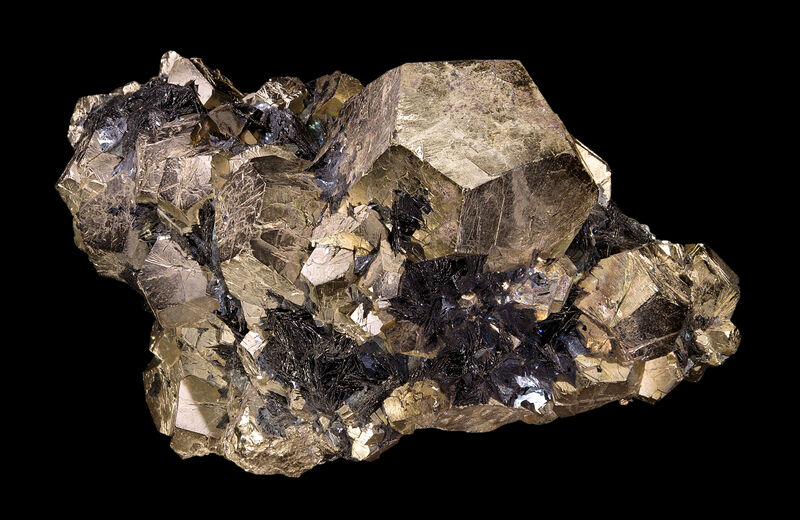
Almost none of the arsenic that industry consumes comes from the native mineral. The metal is rare in its native form. Producers recover it instead as a by-product of smelting other ores — chiefly the iron-arsenic-sulfur mineral arsenopyrite, and the dust left by copper, gold, and lead smelting. Arsenic is in fact the main impurity in the copper concentrates fed to smelters, and most of it is recovered from copper-refinement dust. Everything below draws on that smelter-derived supply, not on crystals of native arsenic.
The largest single use is alloying with lead. A trace of arsenic stiffens the lead grids inside car batteries, helping them hold their shape. As much as 2% of all arsenic produced goes into the lead alloys used for shot and bullets. Arsenic is also added to brass — a copper-zinc alloy — where it sharply slows dezincification, the corrosion that leaches zinc out and weakens the metal.
In electronics, arsenic combines with gallium to make gallium arsenide, a semiconductor used in integrated circuits. Circuits built from it run much faster than silicon ones, though they cost far more. Because the material has a direct bandgap — it can turn electrical energy straight into light — it also drives laser diodes and light-emitting diodes.
A warning runs through all of it. Every form of arsenic is a serious risk to human health, and the element is classed as a group 1 carcinogen, the category for substances known to cause cancer in humans. Native arsenic specimens warrant the same caution: handle them as you would any toxic material, and wash your hands afterward.
Where it forms, where it's found
- Geological setting
Hydrothermal veins.
Safety & handling
Physical
Optical
- Pleochroism
- Weak
- Anisotropism
- Distinct - yellowish brown and light grey to yellowish grey
- Tropism
- Anisotropic
- Reflectance R%
- (56.0, 57.5) 400, (55.1, 56.8) 420, (54.2, 56.2) 440, (53.3, 55.8) 460, (52.7, 55.7) 480, (52.4, 55.7) 500, (52.0, 55.7) 520, (51.7, 55.7) 540, (51.5, 55.6) 560, (51.2, 55.4) 580, (51.0, 55.2) 600, (50.8, 55.0) 620, (50.6, 54.9) 640, (50.5, 54.8) 660, (50.4, 54.7) 680, (50.4, 54.6) 700
- Luminescence
- None
- UV response
- Not fluorescent in UV
Crystallography
- Space group
- R-3m
- Cell parameters
- a = 3.768 Å · c = 10.574 Å
- Z
- 6
- Morphology
Granular, massive, concentric layered. Reticulated, reniform, stalagtitic, columnar, acicular. small rhombohedra.
- Twinning
Rare on (104), Pressure twinning on (012)
Chemical composition
- Impurities
- Bi
- Sb
- Fe
- Ni
- Ag
- S
- Se
Synonyms
- Arsanaic
- Arseen
- Arseeni
- Arsen
- Arsenas
- Arsenico
- Arsénico
- Arsenicu
- Arsènicu
- Arsenicum
- Arsenig
- Arsenik
- Arseniko
- Arsênio
- Arseno
- Arsēns
- Arsiniku
- Arsnick
- Artseniko
- Arzen
- Arzén
- Asen
- Asenia
- Asenik
- Löffelkobalt
- Margimush
- Scherbenkobalt
- Αρσενικό
- ஆர்சனிக்
- ആര്സെനിക്
In other languages
- French
- Arsenic natif
- German
- Arsen, gediegen
- Spanish
- Arsénico nativo
- Italian
- arsenico nativo
- Japanese
- 自然ヒ素 · 自然砒 · 自然砒素
- Russian
- мышьяк самородный · Самородный мышьяк
Classification
1.CA.05
- 1ElementsClass
- 1.CMetalloids and NonmetalsDivision
- 1.CAArsenic group elementsGroup
- 1.CA.05Native ArsenicSpecies
01.03.01.01
- 01Native Elements and AlloysClass
- 01.03Semi-metals and non-metalsType
- 01.03.01Arsenic groupGroup
- 01.03.01.01Native ArsenicSpecies
1.33
- 1Elements and Alloys (including the arsenides, antimonides and bismuthides of Cu, Ag and Au)Class
- 1.33— unnamed intermediate level —Group
- 1.33Native ArsenicSpecies
Group, growth & confusion
Literature, links & citation
- —https://en.wikipedia.org/wiki/Allotropes_of_arsenic
- 1789Hoffmann, C.A.S. (1789) Mineralsystem des Herrn Inspektor Werners mit dessen Erlaubnis herausgegeben von C.A.S. Hoffmann. Bergmännisches Journal, 2 (1) 369-398
- 1931Broderick, S. J., Ehret, W. F. (1931) An X-Ray Study of the Alloys of Silver with Bismuth, Antimony and Arsenic. II. The Journal of Physical Chemistry, 35 (11). 3322-3329 doi:10.1021/j150329a017DOI: 10.1021/j150329a017
- 1944Palache, Charles, Berman, Harry, Frondel, Clifford (1944) The System of Mineralogy (7th ed.) Vol. 1 - Elements, Sulfides, Sulfosalts, Oxides. John Wiley and Sons, New York.
- 1969Ramdohr, Paul (1969) The Ore Minerals and their Intergrowths. Pergamon Press, Oxford. 1174pp. doi:10.1016/c2013-0-10027-xDOI: 10.1016/c2013-0-10027-x
Entry last updated
@misc{mineral2026,
  author    = {Mineral Index editorial board},
  title     = {Native Arsenic — Mineral Index},
  year      = {2026},
  url       = {https://mineralindex.org/minerals/native-arsenic-357}
}