Where it forms, where it's found
- Type locality
- Le Manderau (Le Mandereau
- Le Mandaraud)
- Saint-Pardoux-la-Rivière
- Nontron
- Dordogne
- Nouvelle-Aquitaine
- France
45.5013°, 0.7550°
488recorded occurrences
Varieties
Physical
Optical
- Optical type
- Biaxial (-) · 2V measured = 25 – 68° · 2V calc = 32 – 46°
- Refractive index
- 1.567 – 1.643
- Surface relief
- Moderate
- Principal indices
- nα 1.567 – 1.600 · nβ 1.604 – 1.632 · nγ 1.605 – 1.643
- Dispersion
- r > v strong
Δ = 0Δmax
PPLpleochroism per grain
XPLindependent extinctions · rotate the stage
PPLpleochroism only · colour blends on rotation
XPLinterference colour · extinct every 90°
Retardation405 nm
Order1st order
XPL colour
Crystallography
- Space group
- C2/m
- Cell parameters
- a = 5.24(1) Å · b = 9.11(1) Å · c = 15.3(5) Å
- Cell angles
- β = 90 °
- Ratio a:b:c
- 1 : 1.739 : 2.920
- Morphology
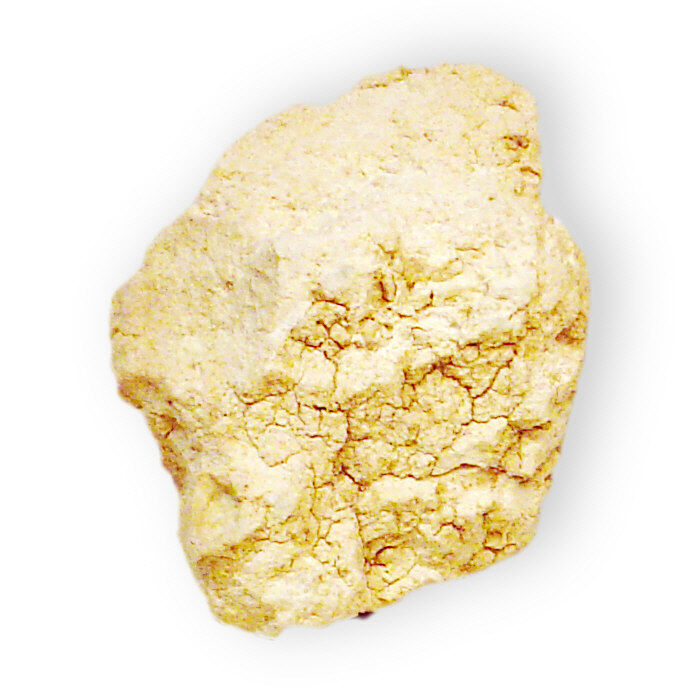
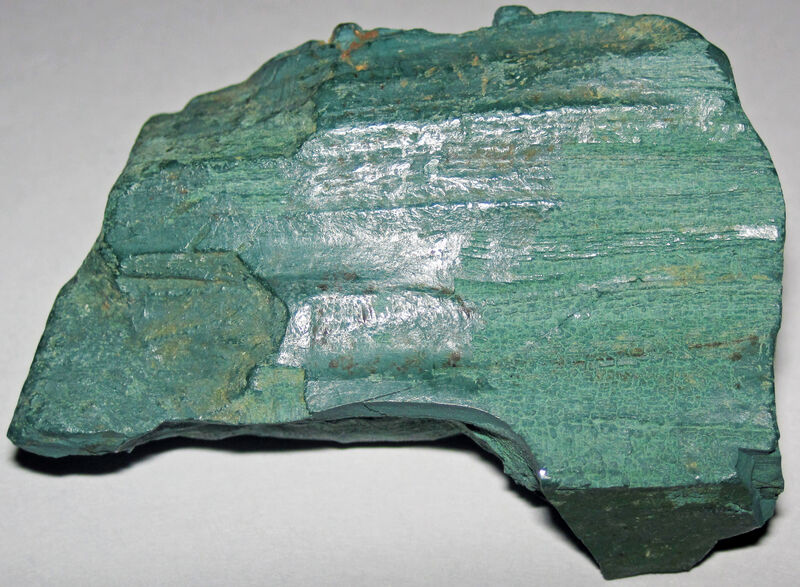
Rarely as small bladed crystals, radial or reticulated, spherulitic; commonly cryptocrystalline, claylike, massive.
- Comment
Z = n.d.
Crystal structure
Chemical composition
- Impurities
- Ti
- Mg
- Ca
Synonyms
- Chloropal (Berhardi and Brandes)
- Hydroferripyrophyllite
- Pinguite
- Unnamed (MSH UK-29)
In other languages
- French
- nontronite
- German
- Nontronit
- Spanish
- Nontronita
- Italian
- nontronite
- Russian
- нонтронит
Classification
Strunz
10th ed.9.EC.40
- 9SilicatesClass
- 9.EPhyllosilicatesDivision
- 9.ECPhyllosilicates with mica sheets, composed of tetrahedral and octahedral netsGroup
- 9.EC.40NontroniteSpecies
Dana
8th ed.71.03.1a.03
- 71Phyllosilicates Sheets of Six-membered RingsClass
- 71.03Sheets of 6-membered rings with 2:1 claysType
- 71.03.1a— unnamed intermediate level —Group
- 71.03.1a.03NontroniteSpecies
CIM
—16.18.1
- 16Silicates Containing Aluminum and other MetalsClass
- 16.18Aluminosilicates of Fe and alkalisGroup
- 16.18.1NontroniteSpecies
Group, growth & confusion
 Beidellite(Na,Ca)0.3Al2(Si,Al)4O10(OH)2 · nH2OMineral—
 FerrosaponiteCa0.3(Fe2+,Mg,Fe3+)3(Si,Al)4O10(OH)2 · 4H2OMineral—
 HectoriteNa0.3(Mg,Li)3Si4O10(F,OH)2 · nH2OMineral—
 Montmorillonite(Na,Ca)0.3(Al,Mg)2Si4O10(OH)2 · nH2OMineral—
- Saliotite(Li,Na)Al3(Si3Al)O10(OH)5Mineral—
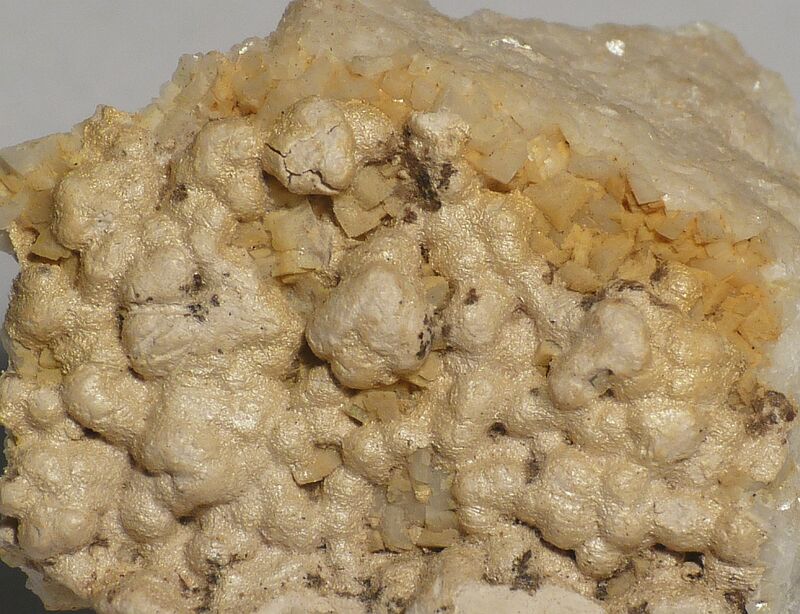 Saponite(Ca,Na)0.3(Mg,Fe)3(Si,Al)4O10(OH)2 · 4H2OMineral—
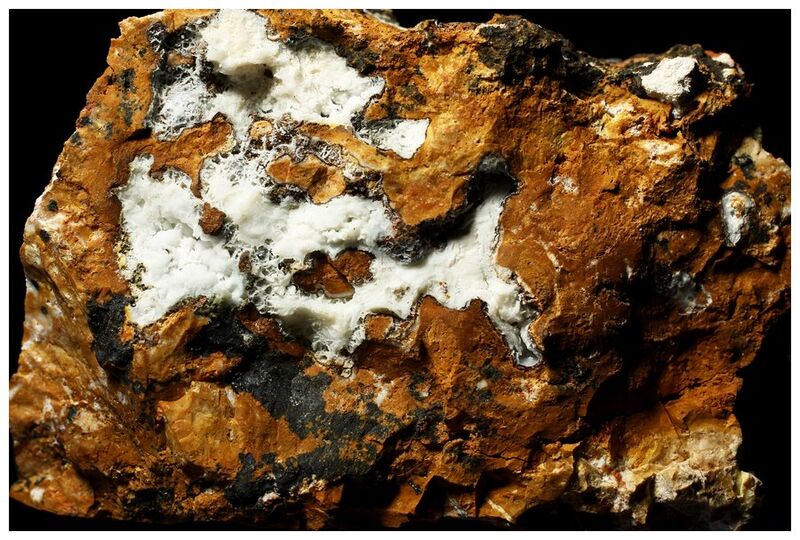 SauconiteNa0.3Zn3(Si,Al)4O10(OH)2 · 4H2OMineral—
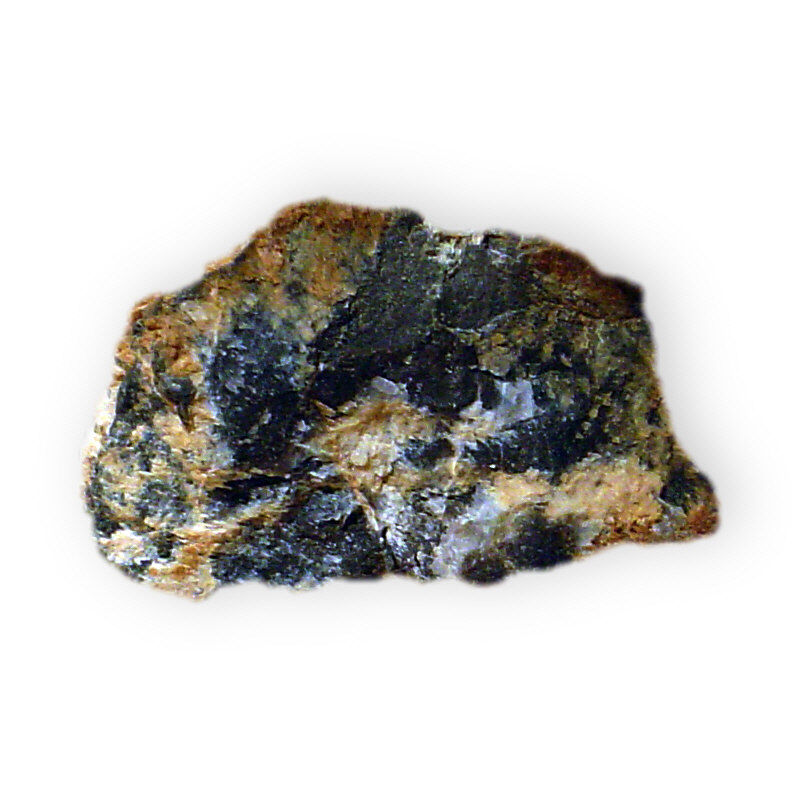 Stevensite(Ca,Na)xMg3-ySi4O10(OH)2Mineral—
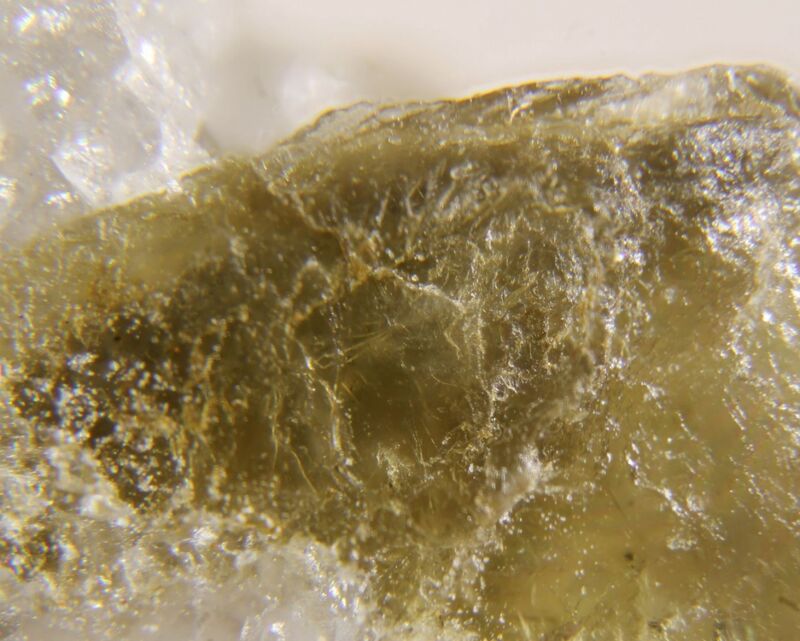 SwineforditeCa0.2(Li,Al,Mg,Fe)3(Si,Al)4O10(OH,F)2 · nH2OMineral—
 VolkonskoiteCa0.3(Cr,Mg)2(Si,Al)4O10(OH)2 · 4H2OMineral—
Literature, links & citation
Citations
- 1827Berthier, P. (1827) Nontronite, nouveau minéral découvert dans le département de la Dordogne. Annales de Chimie et de Physique: 36: 22-27.
- 1928Larsen, E.S., Steiger, G. (1928) Dehydration and optical studies of alunogen, nontronite, and griffithite: American Journal of Science, 5th. series: 15: 1-19.
- 1928Foshag, W.F. (1928) New mineral names. American Mineralogist: 13: 491-494.
- 1965Schneiderhöhn, Paula (1965) Nontronit vom Hohen Hagen und Chloropal vom Meenser Steinberg bei Göttingen. Tschermaks Mineralogische und Petrographische Mitteilungen, 10 (1-4). p.385-399. doi:10.1007/bf01128642DOI: 10.1007/bf01128642
- 1976Goodman, B. A. (1976) A Mössbauer and I.R. Spectroscopic Study of the Structure of Nontronite. Clays and Clay Minerals, 24 (2). 53-59 doi:10.1346/ccmn.1976.0240201DOI: 10.1346/ccmn.1976.0240201
Cite this entry
Entry last updated
@misc{mineral2026,
  author    = {Mineral Index editorial board},
  title     = {Nontronite — Mineral Index},
  year      = {2026},
  url       = {https://mineralindex.org/minerals/nontronite-2924}
}