History
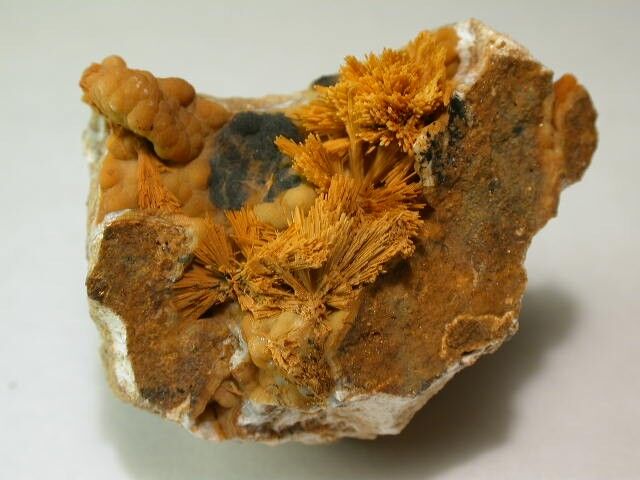
The name reads like a recipe: lead, plus gum. It comes from the Latin plumbum, meaning lead, and gummi, meaning gum. The pairing fits what the mineral looks like. It often spreads across rock as rounded, gum-like crusts — drops and coatings that resemble dried sap.
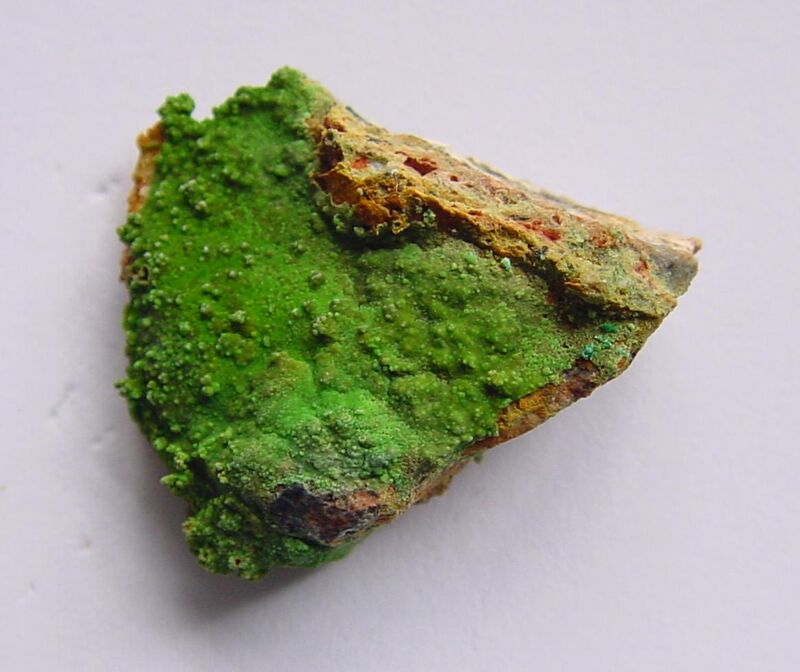
Both halves of the name describe something real. Plumbogummite is a lead aluminium phosphate, so the lead sits in the chemistry, not just the look. The gum is in the habit: it builds up as botryoidal masses — rounded, grape-cluster crusts — rather than sharp crystals.
The mineral was first recorded in 1819. The French mineralogist François Pierre Nicolas Gillet de Laumont gave it the name that year, drawing on those two Latin roots. Sources differ on the timing: one account dates the published name to 1832 instead. The first specimens came from Huelgoat, in Finistère, Brittany. That site remains its type locality — the place a species is officially tied to. That original material now sits in the Natural History Museum in Paris.
Industrial & practical applications
Plumbogummite has no commercial use. It is a rare secondary mineral, forming where lead deposits weather near the surface, in the oxidized zone of lead-bearing ores. It turns up only in small crusts and coatings, never in the quantities a mine would chase. Though it carries lead, it is far too scarce and scattered to be worth extracting. What demand exists comes from collectors and mineralogists, who value it as a representative of its species rather than for any industrial purpose.
Where it forms, where it's found
- Geological setting
Found in a polymetallic Pb vein.
Oxidized zones of lead-bearing deposits.
- Type locality
- Huelgoat
- Châteaulin
- Finistère
- Brittany
- France
Varieties
Safety & handling
Physical
- Hardness
- 1Talc
- 2Gypsum
- 3Calcite
- 4Fluorite
- 5Apatite
- 6Orthoclase
- 7Quartz
- 8Topaz
- 9Corundum
- 10Diamond
- Transparency
- Translucent
- Colour
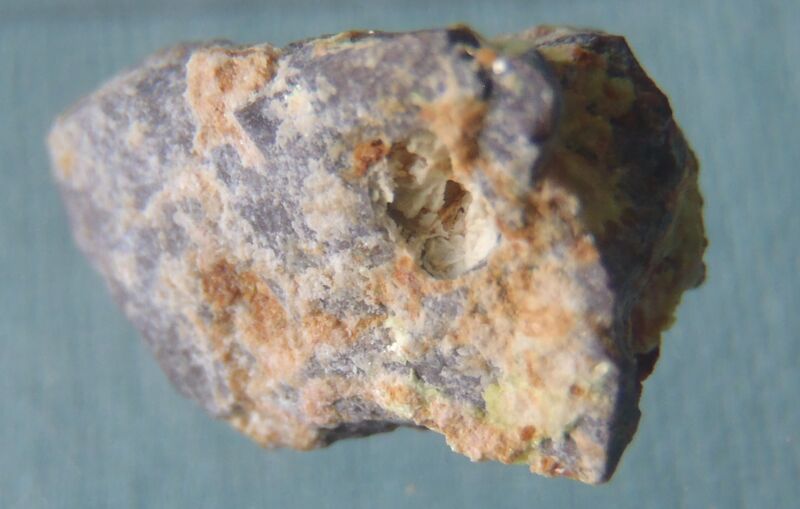
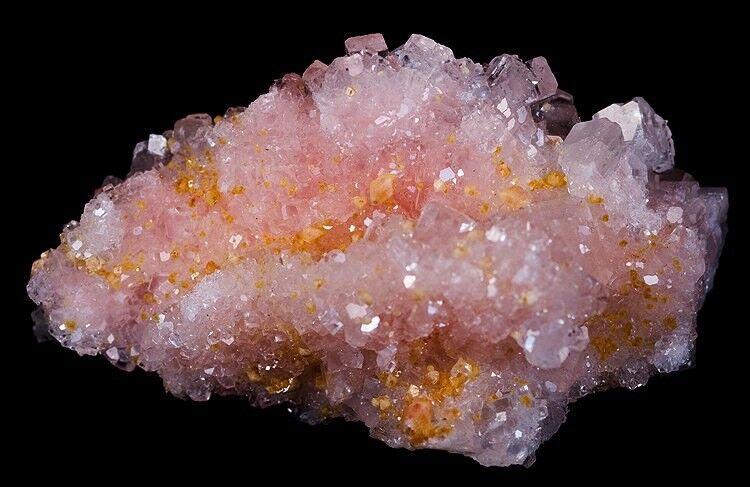
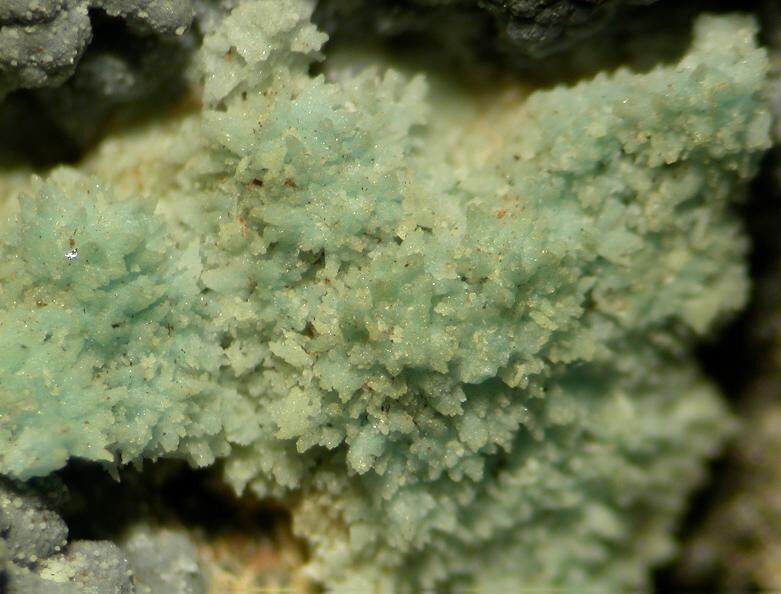
- Light blue · gray-white · yellow-gray · yellow · yellow-brown · red-brown · greenish · bluish · dark blue-gray
- Streak
- Colourless to white
- Tenacity
- brittle
- Cleavage
- None Observed
- Fracture
- Irregular/Uneven · Sub-Conchoidal
- Density
- 4.014 g/cm³
Optical
- Optical type
- Uniaxial (+)
- Refractive index
- 1.653 – 1.704
- Surface relief
- High
- Principal indices
- nω 1.653 – 1.688 · nε 1.675 – 1.704
- Birefringence
- 0.024
- Extinction
- Parallel
- Tropism
- Isotropic
- UV response
- May fluoresce in medium-wave UV light. Usually not fluorescent in short- and long-wave UV light, although a weak bluish fluorescence was observed for some samles in long-wave UV light.
- Notes
May be biaxial
Crystallography
- Space group
- R-3m
- Cell parameters
- a = 7.017 Å · c = 16.75 Å
- Z
- 3
- Morphology
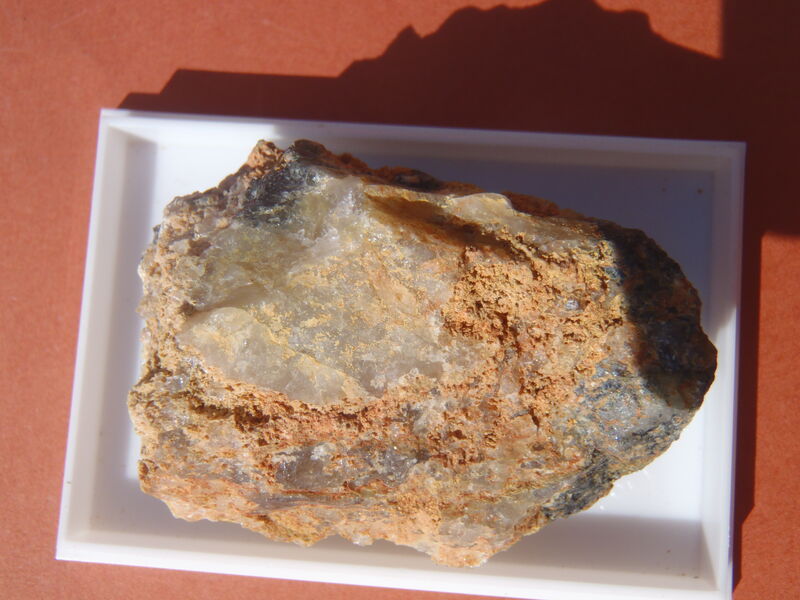
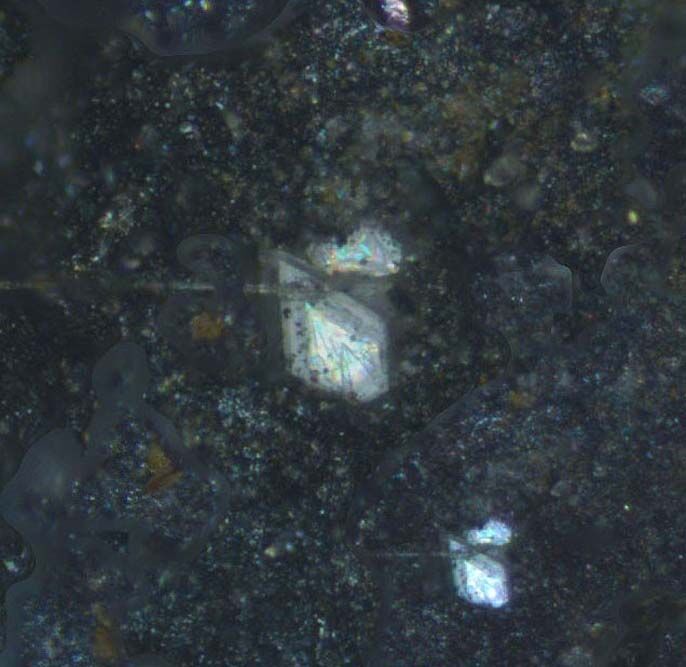
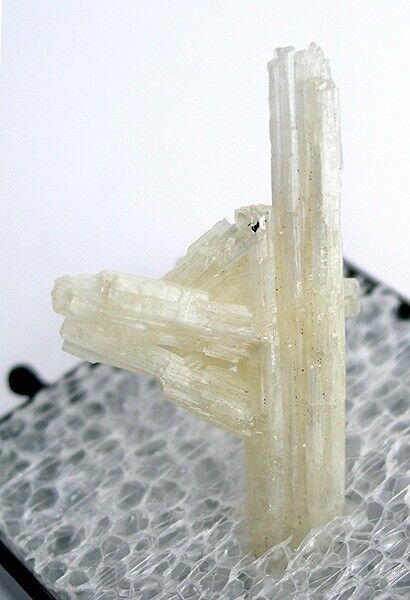
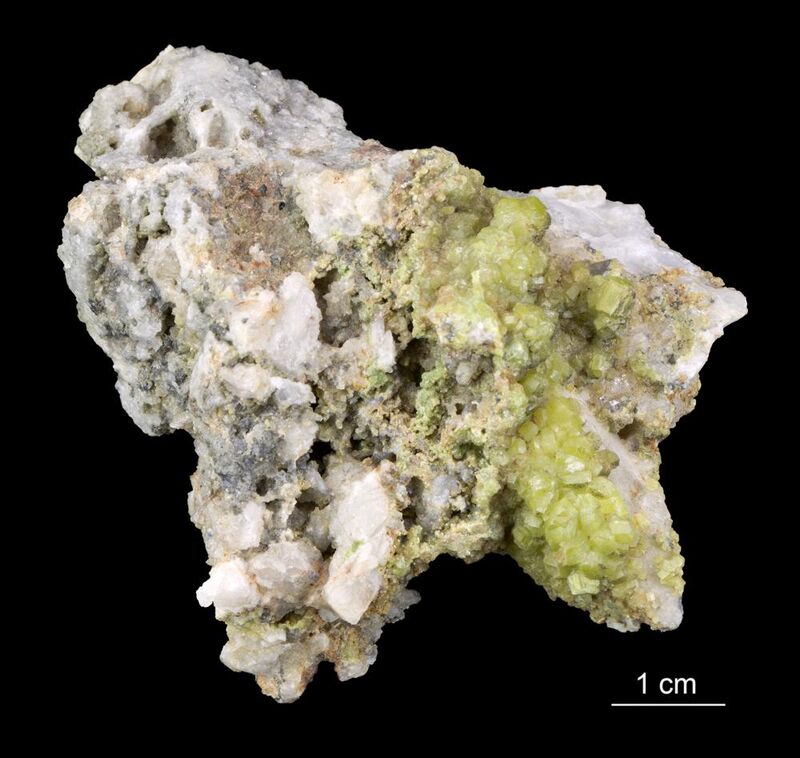
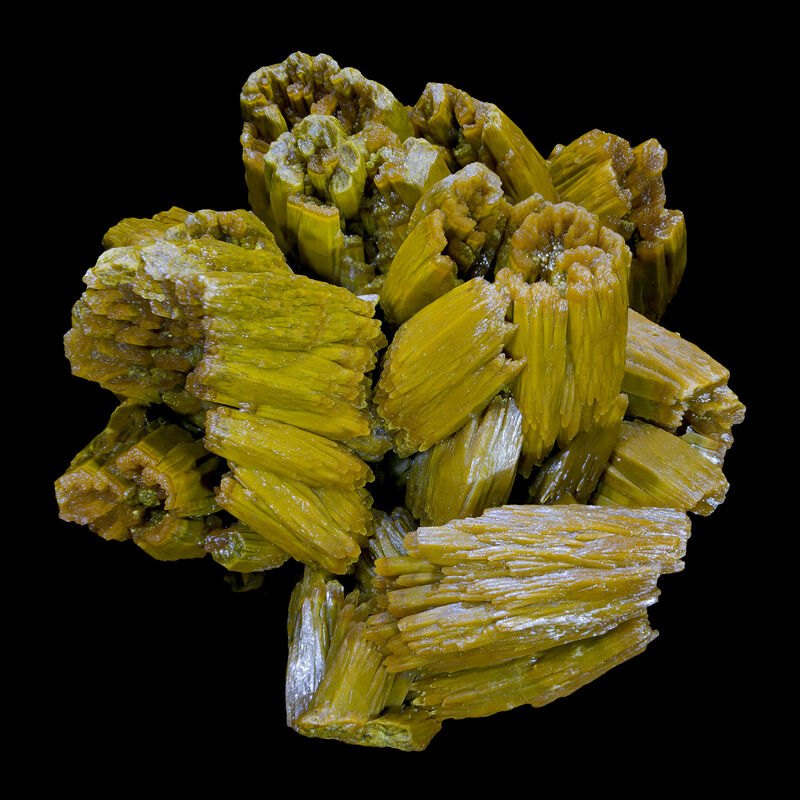
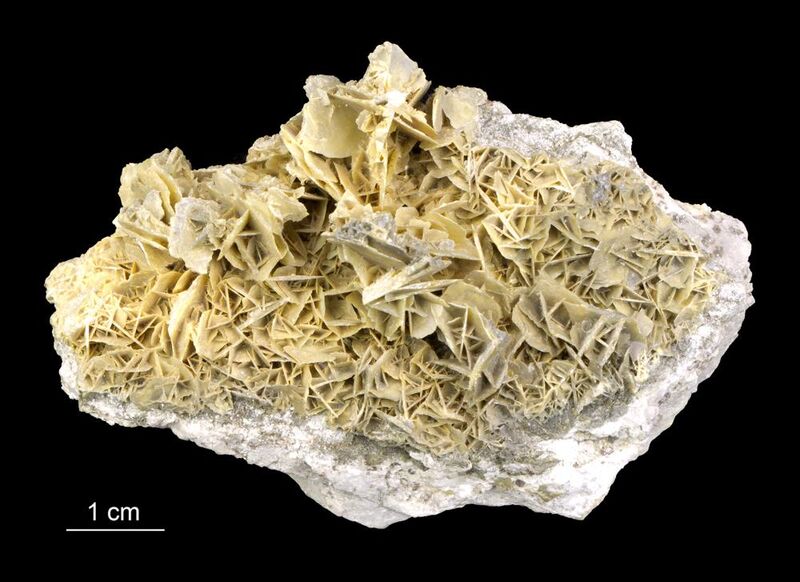
Commonly occurs as botryoidal, reniform, stalactitic, or globular crusts or masses, frequently with a concentric structure; also occurs compact massive. Radial fibrous or spherulitic under magnification. May resemble drops or coatings of gum. Minute crystals with a hexagonal outline are rare.
Chemical composition
- Impurities
- Fe
- Ga
Synonyms
- Aluminiate de Plomb avec eau de combinaison
- Bischofite (of Fischer)
- Blei-aluminat
- Bleigummi
- Bleihydroaluminat
- Cherokeen
- Cherokine
- Gum Lead
- Gummibleispath
- Gummispath
- Hitchcockit
- Hitchcockita
- Hitchcockite
- Native Aluminiate of Lead
- Plomb hydro-alumineux
- Plomb rouge en stalactites-tantot en globules
- Plombgomme
- Plumbo-gummite
- Plumbo-resinite
- Plumbogummiet
- Plumboresinit
- Plumboresinita
- Schadeit
- Schadeita
- Schadeite
- Sel acide-phosphorique-martial
In other languages
- French
- plomb-gomme
- German
- Plumbogummit
- Spanish
- Plumbogummita
- Italian
- Plumbogummite
Classification
8.BL.10
- 8Phosphates, Arsenates, VanadatesClass
- 8.BPhosphates, etc., with additional anions, without H2ODivision
- 8.BLWith medium-sized and large cations, (OH, etc.):RO4 = 3:1Group
- 8.BL.10PlumbogummiteSpecies
42.07.03.05
- 42Hydrated Phosphates, Etc.containing Hydroxyl or HalogenClass
- 42.07(AB)2(XO4)Zq·xH2OType
- 42.07.03Crandallite GroupGroup
- 42.07.03.05PlumbogummiteSpecies
19.10.2
- 19PhosphatesClass
- 19.10Phosphates of Pb, Th, V and BiGroup
- 19.10.2PlumbogummiteSpecies
Group, growth & confusion
- ArsenobenauiteSrFe3+3(AsO4)(AsO3OH)(OH)6Mineral—
- BenauiteSrFe3+3(PO4)(PO3OH)(OH)6Mineral—
 CrandalliteCaAl3(PO4)(PO3OH)(OH)6Mineral—
 EylettersiteTh0.75Al3(PO4)2(OH)6Mineral—
 Florencite-(Ce)CeAl3(PO4)2(OH)6Mineral—
 Florencite-(La)LaAl3(PO4)2(OH)6Mineral—
 Florencite-(Nd)NdAl3(PO4)2(OH)6Mineral—
- Florencite-(Sm)SmAl3(PO4)2(OH)6Mineral—
 GalloplumbogummitePb(Ga,Al,Ge)3(PO4)2(OH)6Mineral—
 GorceixiteBaAl3(PO4)(PO3OH)(OH)6Mineral—
Literature, links & citation
- 1779de Lisle (1779) Demeste Lettres Min.: 2: 399 (as Plomb rouge en stalactites et tantôt en globules).
- 1783de Lisle (1783) Crist.: 3: 399 (as Plomb rouge en stalactites et tantôt en globules).
- 1786de Laumont (1786) Le Journal de physique et le radium, Paris: 28: 385 (as Sel acide-phosphorique-martial).
- 1819Berzelius (1819) Journal für Chemie und Physik, Nuremberg: 27: 65 (as Bleigummi & Blei-aluminat).
- 1819Smithson (1819) Annals of Philosophy, London: 14: 31 (cites S. Tennant)(as native Aluminiate of Lead).
Entry last updated
@misc{mineral2026,
  author    = {Mineral Index editorial board},
  title     = {Plumbogummite — Mineral Index},
  year      = {2026},
  url       = {https://mineralindex.org/minerals/plumbogummite-3247}
}