History
Most minerals are named for a place, a colour, or the chemist who first cracked their formula. Duftite is named for a mine manager. In 1920, the German mineralogist Otto Pufahl described a new lead-copper arsenate from the Tsumeb mine in what is now Namibia and named it for Gustav Bernhard Duft. Duft was a director of the company that ran the mine and had done much to encourage scientific research in the region.
Duft was no passing figure. Born in 1859 in Clausthal, Germany, he was active in Namibia from 1892 and became the second general manager of the Tsumeb mine around 1906. The mineral that carries his name came out of the same ground he oversaw — Tsumeb remains its type locality, the place where the species was first defined.
The story did not end with the naming. In 1956 the mineralogist Guillemin found that duftite was not quite one thing. He split it into two forms with slightly different internal symmetry: a calcium-free duftite-alpha, and a calcium-bearing duftite-beta. Later work folded both back under the single name duftite, but the distinction marks an early sign that the mineral's chemistry shifts from crystal to crystal.
Industrial & practical applications
Duftite has no industrial use. It forms only in the supergene zone — the weathered, oxidised cap that sits above a sulfide ore body — and never in quantities anyone could mine. Its mix of lead, copper, and arsenic would also rule it out as an ore in its own right. The only demand for it comes from mineral collectors and museums.
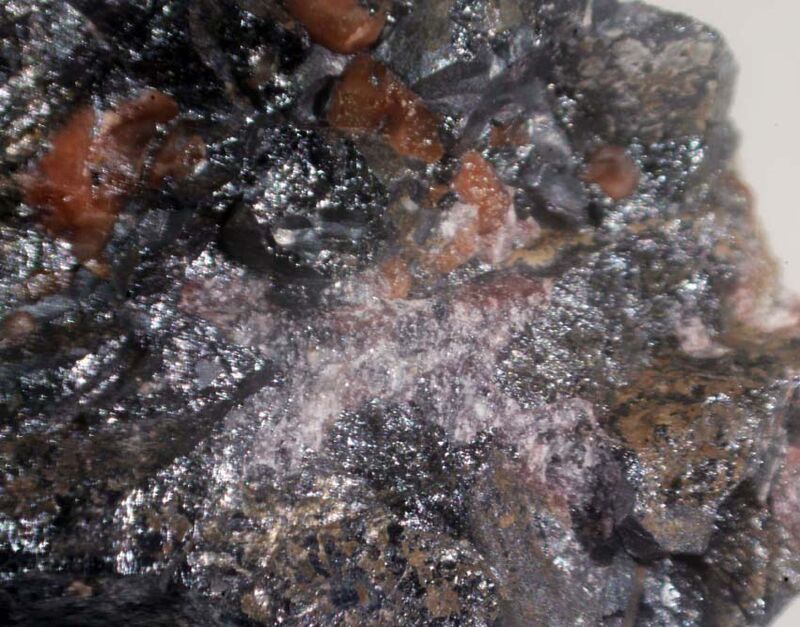
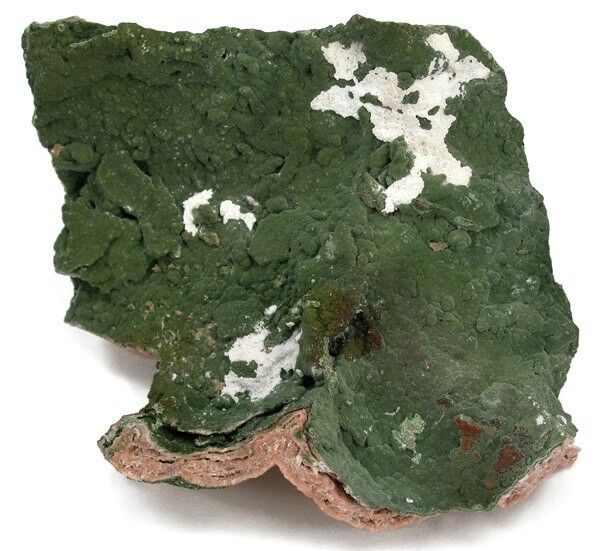
Even there, it is more often a supporting player than a star. It seldom forms aesthetic specimens on its own. More often it turns up as an accessory mineral, its olive to grey-green crusts giving attractive colour contrasts against brighter species. Collectors prize the Tsumeb mine in Namibia, where the same oxidation zones that defined the species also produced its best material.
One practical note follows from the chemistry rather than any use: duftite contains both lead and arsenic, so specimens are handled and stored with the care any toxic mineral deserves.
Where it forms, where it's found
- Geological setting
Oxidized zone of a polymetallic deposit.
Uncommon mineral in the oxidized zone of some polymetallic sulfide deposits.
- Type locality
- Tsumeb Mine (Ongopolo Mine)
- Tsumeb
- Oshikoto Region
- Namibia
-19.2270°, 17.7276°
Varieties
Safety & handling
Physical
- Hardness
- 1Talc
- 2Gypsum
- 3Calcite
- 4Fluorite
- 5Apatite
- 6Orthoclase
- 7Quartz
- 8Topaz
- 9Corundum
- 10Diamond
- Lustre
- Vitreous
- Transparency
- Transparent · Translucent
- Colour
- Olive-green · grey-green
Light apple-green in transmitted light.
- Streak
- Pale green, white
- Tenacity
- brittle
- Cleavage
- Poor/Indistinct
Usually unobservable in botryoidal aggregates.
- Fracture
- Conchoidal · Sub-Conchoidal
- Density
- 6.12 g/cm³
Optical
- Optical type
- Biaxial (-)
- Refractive index
- 2.03 – 2.1
- Surface relief
- Very high
- Principal indices
- nα 2.03 – 2.04 · nβ 2.06 – 2.08 · nγ 2.08 – 2.10
- Birefringence
- 0.055
- Pleochroism
- Non-pleochroic
- Dispersion
- r > v perceptible
- Extinction
- Parallel
- UV response
- Not Fluorescent in UV
Crystallography
- Space group
- #44
- Cell parameters
- a = 7.749(1) Å · b = 9.36(1) Å · c = 5.91(1) Å
- Ratio a:b:c
- 1 : 1.208 : 0.763
- Z
- 4
- Morphology
Usually botryoidal, rare tiny crystals elongated [001] with curved and rough faces aggregated into crusts. Pseudo-octahedral.
- Comment
For P2<f>1</f>2<f>1</f>2<f>1</f>; UCD for Pnam a 7.788, b 9.223, c 6.001
Chemical composition
Synonyms
- Duftiet
- β-Duftit
- β-Duftita
In other languages
- French
- Duftite
- German
- Duftit · Duftit-alpha · Duftit-Beta
- Spanish
- Duftita
- Italian
- duftite · Duftite-alfa · Duftite-beta
- Japanese
- ダフト石
- Chinese
- 砷銅鉛礦 · 砷铜铅石
Classification
8.BH.35
- 8Phosphates, Arsenates, VanadatesClass
- 8.BPhosphates, etc., with additional anions, without H2ODivision
- 8.BHWith medium-sized and large cations, (OH,etc.):RO4 = 1:1Group
- 8.BH.35DuftiteSpecies
41.05.01.04
- 41Anhydrous Phosphates, Etc.containing Hydroxyl or HalogenClass
- 41.05(AB)2(XO4)ZqType
- 41.05.01Adelite GroupGroup
- 41.05.01.04DuftiteSpecies
20.5.3
- 20Arsenates (also arsenates with phosphate, but without other anions)Class
- 20.5Arsenates of Ti and PbGroup
- 20.5.3DuftiteSpecies
Group, growth & confusion
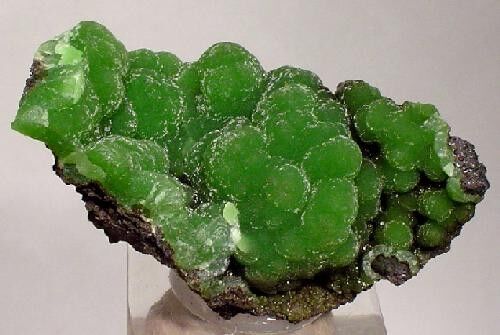
 AdeliteCaMg(AsO4)(OH)Mineral—
 ArsendescloizitePbZn(AsO4)(OH)Mineral—
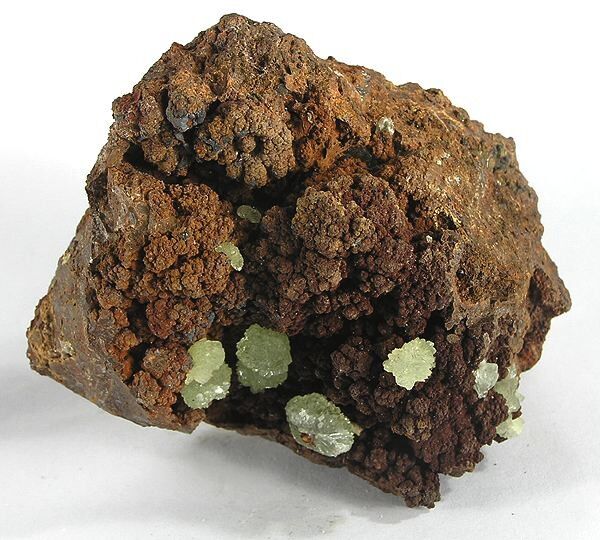 AustiniteCaZn(AsO4)(OH)Mineral—
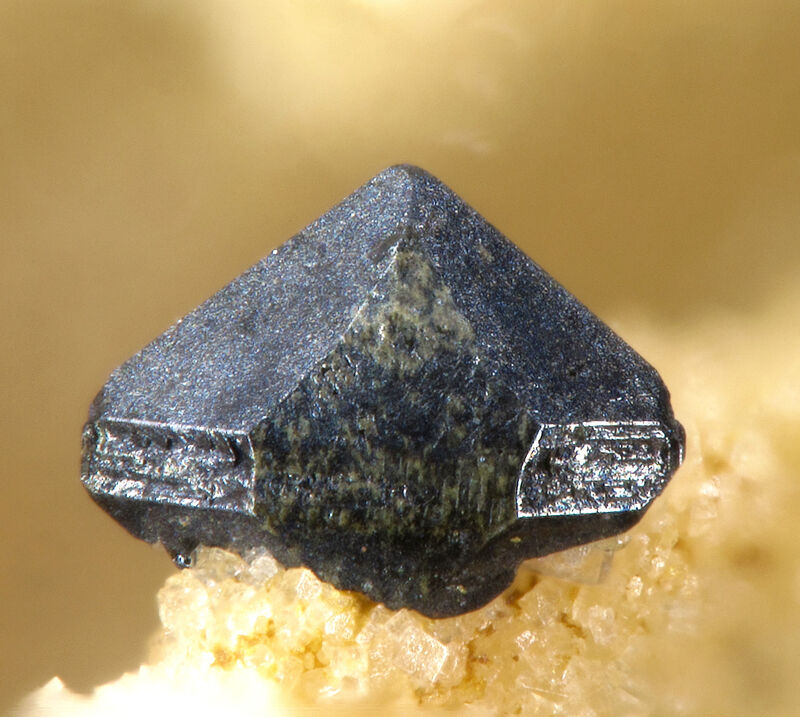 ČechitePbFe2+(VO4)(OH)Mineral—
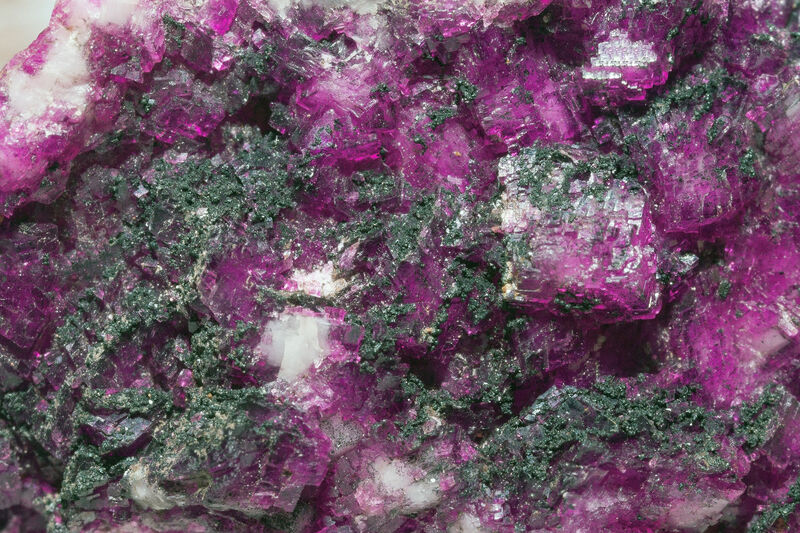 CobaltaustiniteCaCo(AsO4)(OH)Mineral—
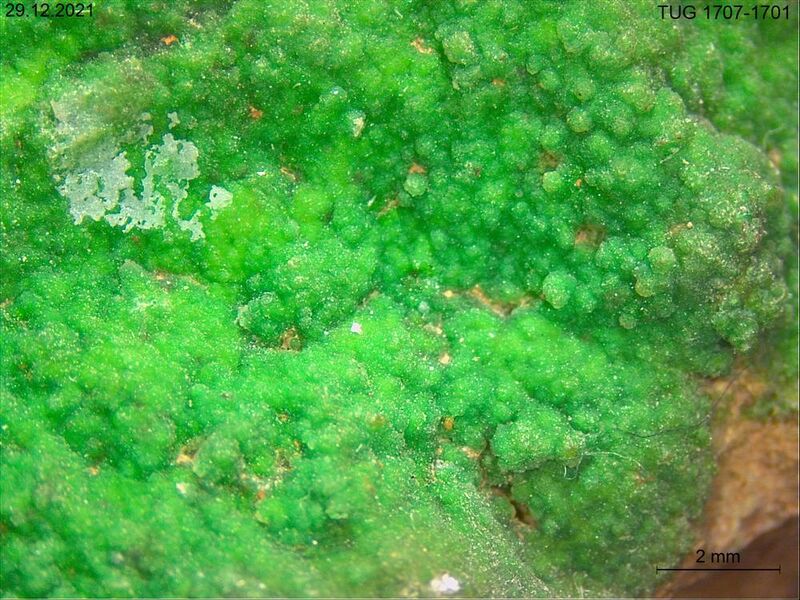 ConichalciteCaCu(AsO4)(OH)Mineral—
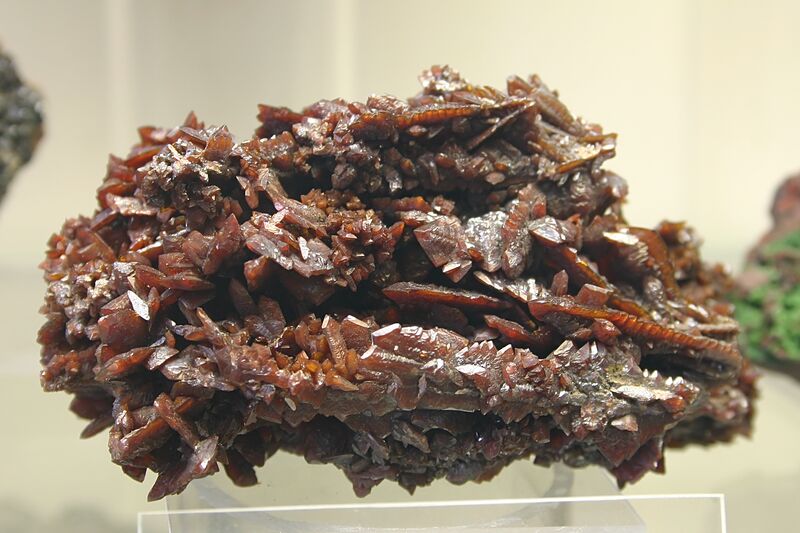 DescloizitePbZn(VO4)(OH)Mineral—
- Duftite-alphaPbCu(AsO4)(OH)Mineral—
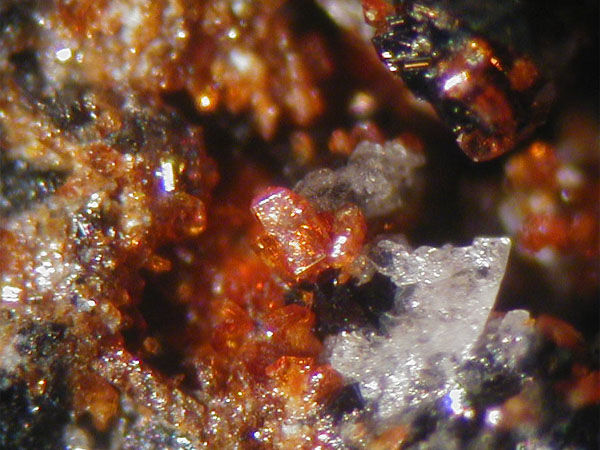 GottlobiteCaMg(VO4)(OH)Mineral—
- HermannroseiteCaCu(PO4)(OH)Mineral—
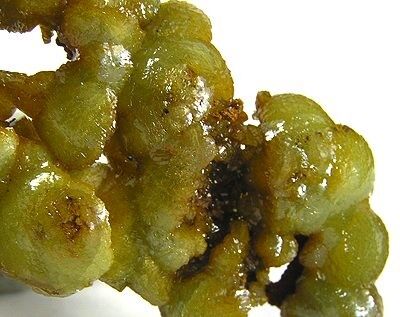 AdamiteZn2(AsO4)(OH)Mineral—
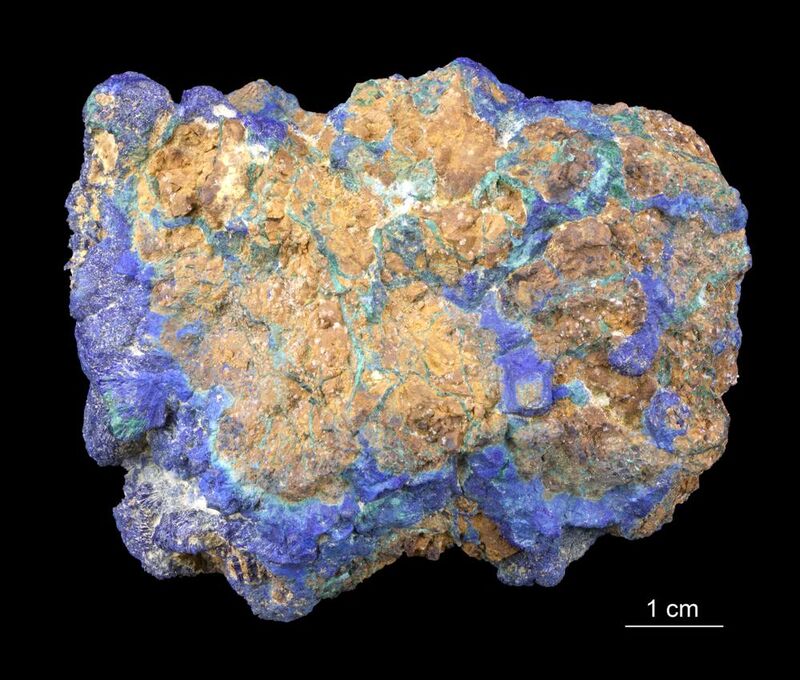 AzuriteCu3(CO3)2(OH)2Mineral—
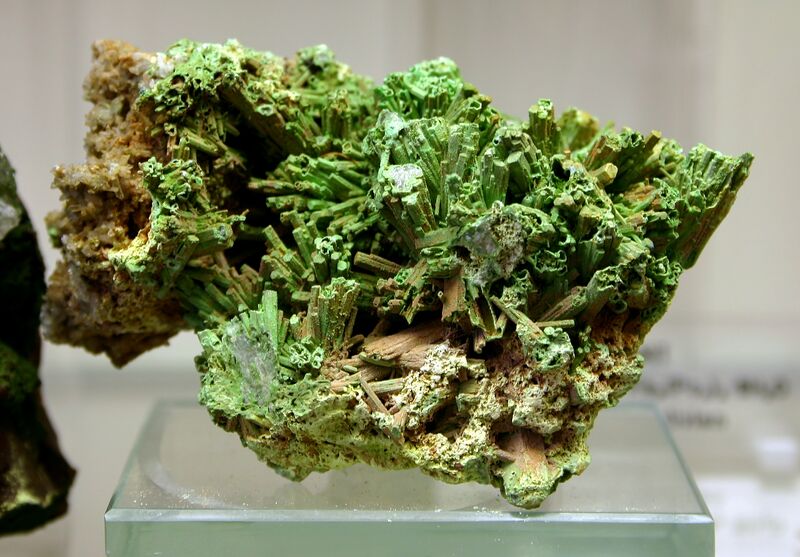 BayldoniteCu3PbO(AsO3OH)2(OH)2Mineral—
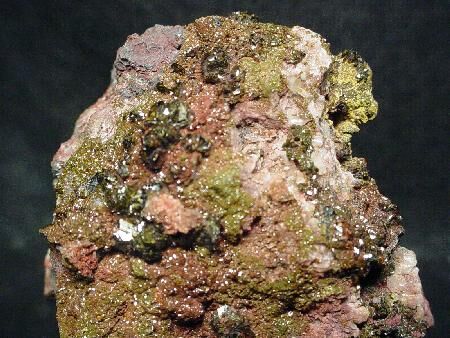 BeudantitePbFe3+3(AsO4)(SO4)(OH)6Mineral—
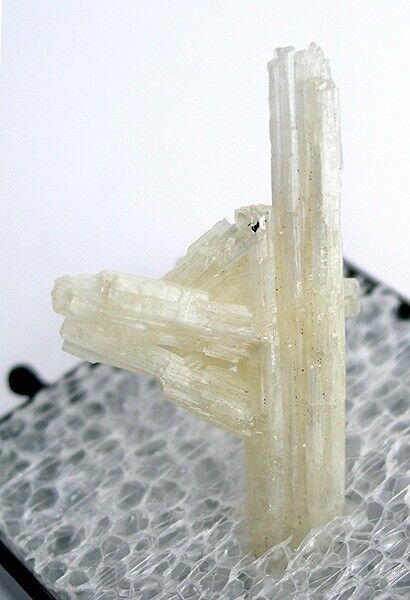 CerussitePb(CO3)Mineral—
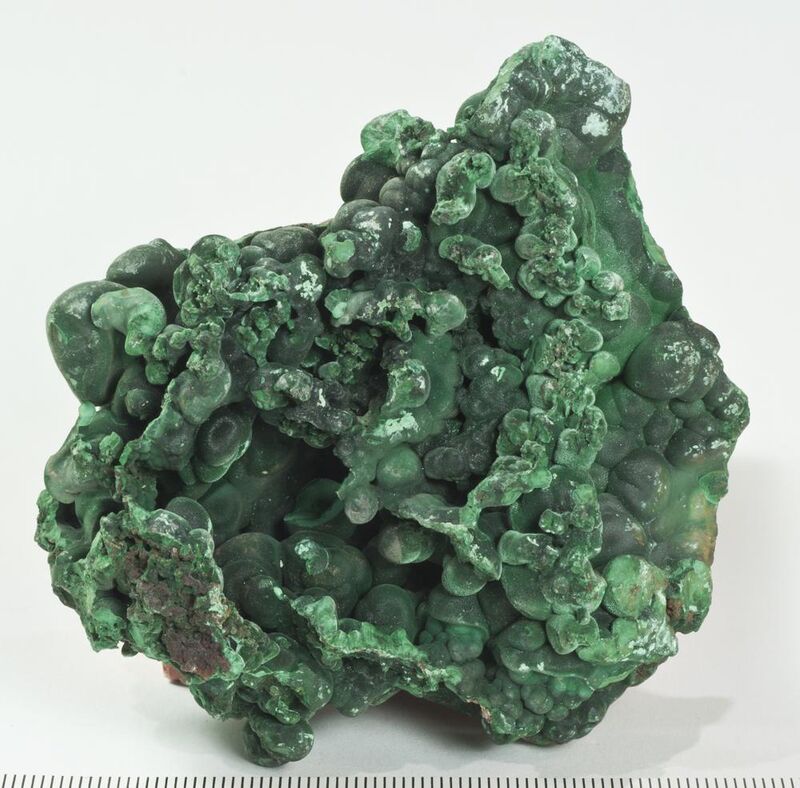 MalachiteCu2(CO3)(OH)2Mineral—
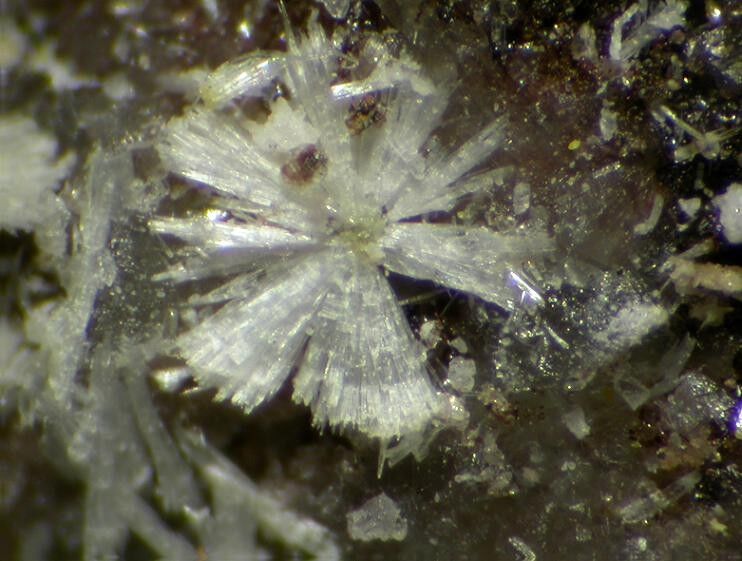 MaricopaiteCa2Pb7(Si36Al12)O99 · n(H2O,OH)Mineral—
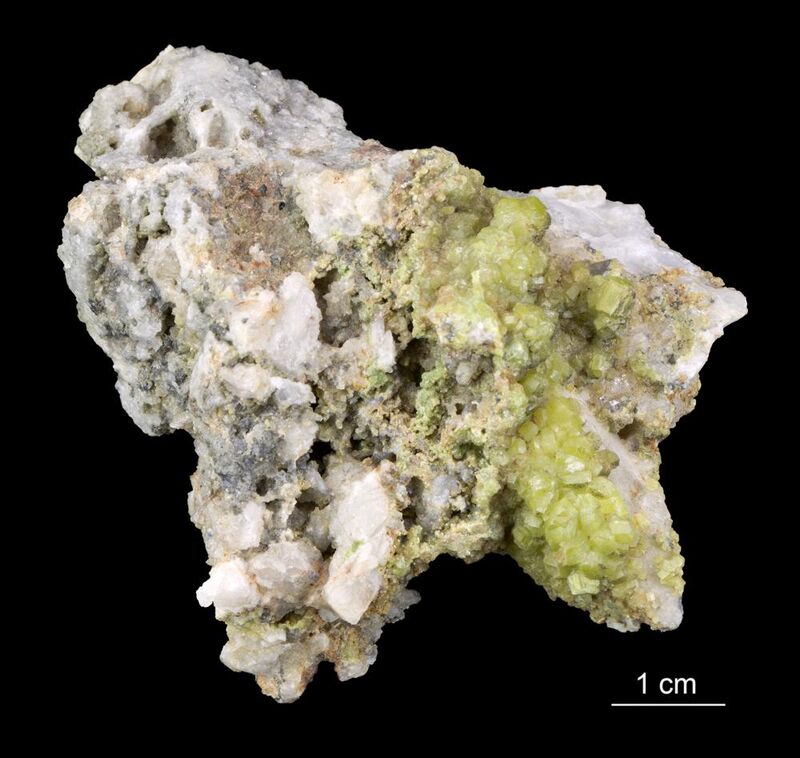 MimetitePb5(AsO4)3ClMineral—
 MottramitePbCu(VO4)(OH)Mineral—
 OliveniteCu2(AsO4)(OH)Mineral—
Literature, links & citation
- 1920Pufahl, O. (1920) Mitteilungen über mineralien und erze von Südwestafrika, besonders solche von Tsumeb. Centralblatt für Mineralogie, Geologie und Paläontologie: 1920: 289-296.
- 1921Wherry, E.T., Foshag, W.F. (1921) New mineral names. American Mineralogist: 6: 140-141.
- 1930Barth and Berman (1930) Chemie der Erde, Jena: 5: 30.
- 1939Strunz, H. (1939) Mineralien der Descloizitgruppe. Konichalcit, Staszizit, Austinit, Duftit, Aräoxen, Volborthit, Pyrobelonit. Zeitschrift für Kristallographie, Mineralogie und Petrographie, 101 (1). 496-506 doi:10.1524/zkri.1939.101.1.496DOI: 10.1524/zkri.1939.101.1.496
- 1940Richmond, Wallace E. (1940) Crystal chemistry of the phosphates, arsenates and vanadates of the type A2XO4(Z). American Mineralogist, 25 (7). 441-479
Entry last updated
@misc{mineral2026,
  author    = {Mineral Index editorial board},
  title     = {Duftite — Mineral Index},
  year      = {2026},
  url       = {https://mineralindex.org/minerals/duftite-1325}
}