History
The name vesuvianite is geographic. The species was first recognised in blocks of altered limestone thrown up by Mount Vesuvius, the volcano on the Bay of Naples, and the name carries that locality forward.
The first stones reached the literature long before they had a settled name. In 1723, the Swiss naturalist Moritz Anton Kappeler described them under the unwieldy label hyacinthus dictus octodecahedricus — the eighteen-faced hyacinth, hyacinth being a yellow-to-brown gem variety of zircon the crystals resembled in colour. Half a century later, in 1772, the French crystallographer Jean-Baptiste Louis Romé de L'Isle rebaptised them hyacinte du Vésuve — Vesuvius hyacinth — naming the locality for the first time. That phrase appears to have inspired the German mineralogist Abraham Gottlob Werner. In 1795, he dropped the hyacinth comparison and named the species vesuvian after its discovery locality. Werner's name became the modern one.
A second name appeared almost immediately. In 1799, the French mineralogist René Just Haüy introduced idocrase, built from Greek roots meaning mixed form, in reference to the varied crystal habits the species showed. Idocrase was for a long time the more popular name and is still common in the gem trade, but vesuvianite is the form the International Mineralogical Association recognises.
The species has produced several named varieties that carry their own short stories. Cyprine is a sky-blue form first reported from Franklin, New Jersey, its colour traced to traces of copper. Xanthite is a manganese-rich form. The most commercially conspicuous is californite, a compact green vesuvianite from several California localities that resembles jade closely enough to be marketed as California jade or American jade — names that are gemmological convention rather than mineralogical truth, since the stone is neither jadeite nor nephrite.
Industrial & practical applications
Vesuvianite has no industrial role of any scale. It is not mined as an ore, not used as an abrasive, not consumed in any chemical process. Its working life today divides cleanly between the gem trade and the petrologist's hand lens.
As a gem and ornamental stone
Transparent crystals of clean green or brown colour are sometimes cut as faceted gemstones, sold under either vesuvianite or the older trade name idocrase. Volume is modest — the species is not in the major gemstone tier — and most of the demand sits with collectors of unusual cut stones rather than the broad jewellery market.
The more commercial form is californite, a compact, opaque green vesuvianite found at several California localities. Its even colour and high polish let it stand in for jade, and it is cut into cabochons — domed, unfaceted stones — and carved into beads and small ornaments, sold as California jade or American jade. The trade names are gemmological convention; californite is neither jadeite nor nephrite. Cyprine, the sky-blue copper-bearing variety from Franklin, New Jersey, and xanthite, the yellow manganese-rich variety, occasionally appear in collector-grade cut stones but carry no commercial gem market.
As a research mineral
Outside the gem trade, vesuvianite's most consistent use is as an index mineral for the petrologist — the geologist who reads rock origins from mineral assemblages. The species forms when calcium-rich rocks are cooked and chemically altered by an intruding hot body, and finding it in an outcrop is itself a clue to that history. It is a characteristic mineral of skarns — the calcium-silicate rocks produced when a granite intrusion bakes a neighbouring limestone. It also appears in limestones that have undergone contact metamorphism more broadly. Museums and university collections maintain a steady, modest demand for well-crystallised specimens from classic localities — Mount Vesuvius, the Ala Valley in Piedmont, and the Wiluy River in Siberia chief among them.
Where it forms, where it's found
- Geological setting
Skarns or regional metamorphism of limestones.
- Type locality
- Mount Somma
- Metropolitan City of Naples
- Campania
- Italy
Varieties
- Beryllium-bearing Vesuvianite(Ca,Na,◻)19(Al,Mg,Fe3+)13(◻,B,Al,Fe3+,Be)5(Si2O7)4(SiO4)10(OH,F,O)10Variety—
- Cerium-bearing Vesuvianite(Ca,Na,◻)19(Al,Mg,Fe3+)13(◻,B,Al,Fe3+)5(Si2O7)4(SiO4)10(OH,F,O)10Variety—
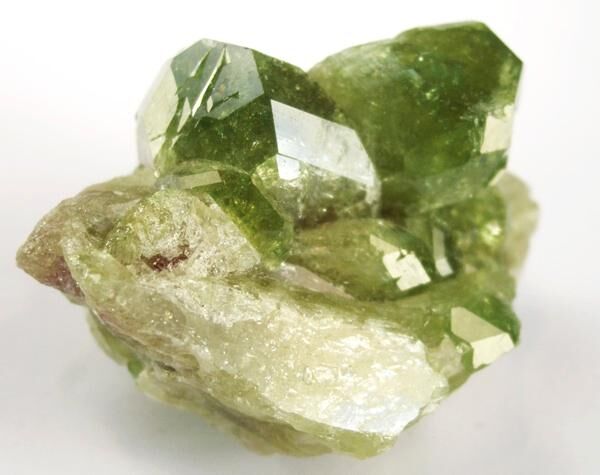 Chrome-Vesuvianite(Ca,Na,◻)19(Al,Mg,Fe3+,Cr)13(◻,B,Al,Fe3+)5(Si2O7)4(SiO4)10(OH,F,O)10Variety—
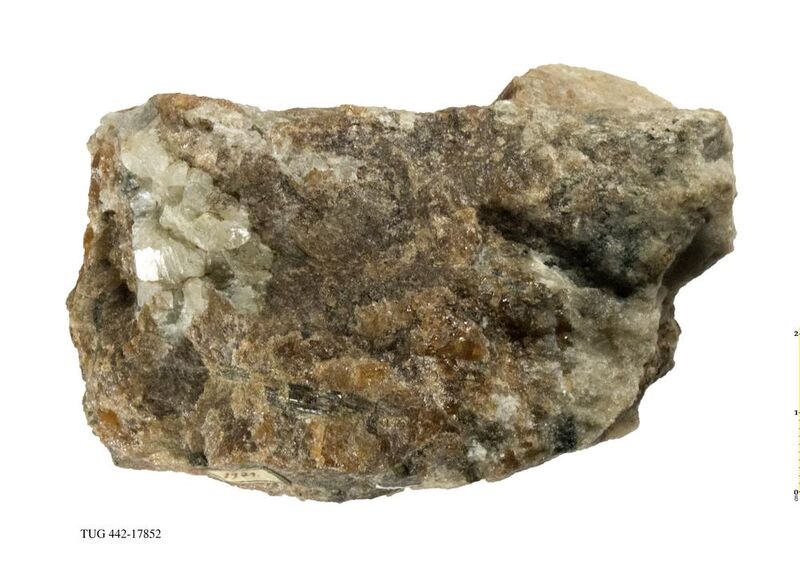 Frugardite(Ca,Na,◻)19(Al,Mg,Fe3+)13(◻,B,Al,Fe3+)5(Si2O7)4(SiO4)10(OH,F,O)10Variety—
- High-Hydrated Si-Deficient VesuvianiteCa19(Al9Mg3Fe0.8-1Mn0-0.2)13B<2.44(Si2O7)4(SiO4)10-x(OH)4x( O,OH,F,Cl)10 (x=0.67 - 2.89)Variety—
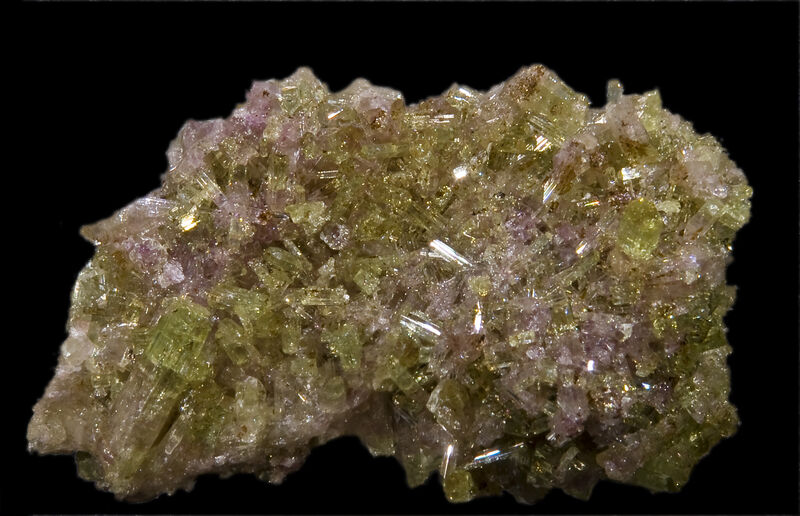 Manganese-bearing VesuvianiteCa19(Fe3+,Mn2+,Mn3+)Al4(Al6Mg2)(◻4)◻[Si2O7]4[(SiO4)10](O,OH)(OH)9Variety—
- Xanthite(Ca,Na,◻)19(Al,Mg,Fe3+)13(◻,B,Al,Fe3+)5(Si2O7)4(SiO4)10(OH,F,O)10Variety—
Physical
- Hardness
- 1Talc
- 2Gypsum
- 3Calcite
- 4Fluorite
- 5Apatite
- 6Orthoclase
- 7Quartz
- 8Topaz
- 9Corundum
- 10Diamond
- Transparency
- Transparent · Translucent
- Colour
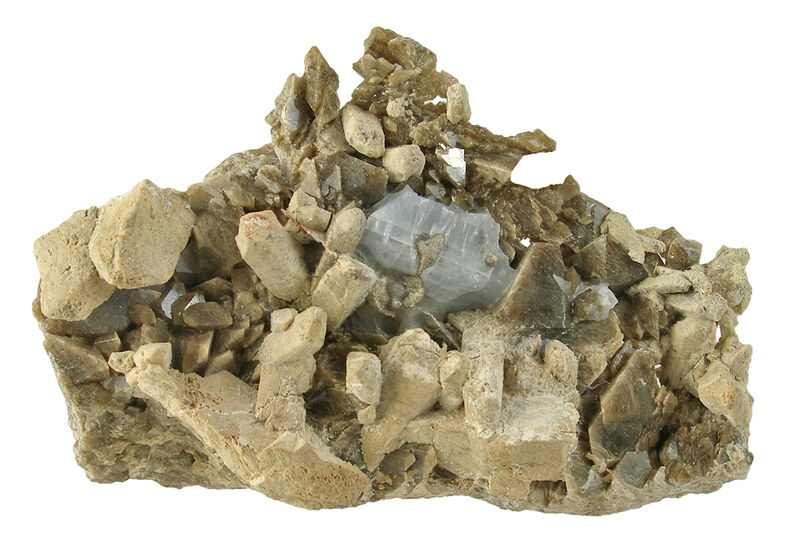
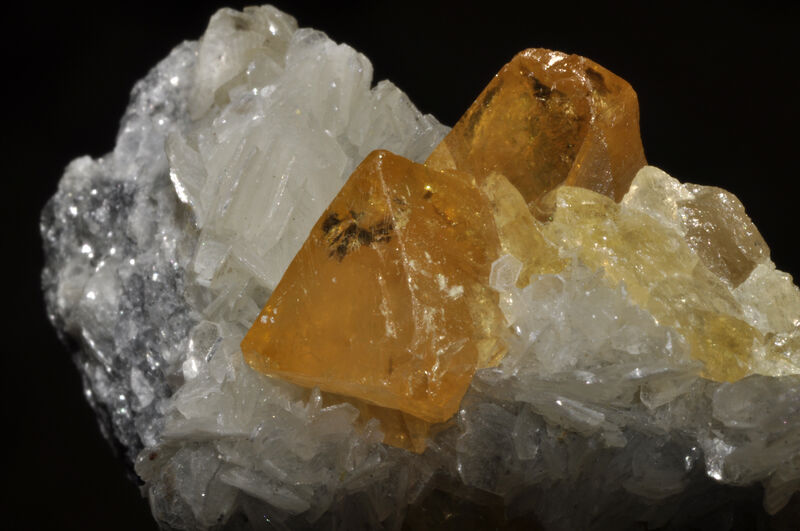
- Brown · yellow · brown-black · light green · emerald green · white · red · purple · violet · blue-green to blue
- Streak
- White
- Tenacity
- brittle
- Cleavage
- Poor/Indistinct
Poor on (110) Very poor on (100) (001)
- Fracture
- Irregular/Uneven · Sub-Conchoidal
- Density
- 3.32 g/cm³
Optical
- Optical type
- Uniaxial (+/-)
- Refractive index
- 1.7 – 1.752
- Surface relief
- High
- Principal indices
- nω 1.703 – 1.752 · nε 1.7 – 1.746
- Pleochroism
- Weak
O= colourless to yellowish E= yellowish, greenish, brownish
- Dispersion
- Strong
- Notes
May also be biaxial. Sectored.
Crystallography
- Space group
- #186
- Cell parameters
- a = 15.52 Å · c = 11.82 Å
- Z
- 2
- Morphology
Short pyramidal to long prismatic, columnar, granular, massive.
- Twinning
Twinned domains observed at very fine scale.
- Comment
Vesuvianite can have space group P4/nnc, P4/n or P2/n. Observed range of unit-cell parameters: a = 15.4-15.7, c = 11.6-11.9 Å.
Chemical composition
- Impurities
- Fe
- Be
- B
- F
- Cu
- Li
- Na
- K
- Mn
- Ti
- Cr
- Zn
- H2O
Synonyms
- Duparcite
- Egeran
- Gahnite (of Lobo da Silveira)
- Genevit
- Genevite
- Idocrasa
- Idocrase
- Idocrasio
- Idokras
- Jefreinoffit
- Jefreinoffite
- Jevreinovit
- Jevreinovite
- Jewreinowit
- Loboit
- Pyramidal Garnet
- Vesubiana
- Vesubianita
- Vesuviana
- Vésuvienne
- Volcanic Chrysotile
In other languages
- French
- Beryllian vesuvianite · Californite · Cerian vesuvianite · Cyprine · Genévite · Hétéromérite · Hyacinte du Vésuve · Hyacinte volcanique · Hyacinthine · Idocrase · Vésuvianite
- German
- Idokras · Vesuvian · Vesuvianit
- Spanish
- idocrasa · vesuvianita
- Italian
- Vesuviana · Vesuvianite
- Portuguese
- Idócrase · Vesuvianita · vesuvianite
- Japanese
- ベスブ石
- Chinese
- 符山石 · 维苏威石
- Simplified Chinese
- 维苏威石
- Traditional Chinese
- 維蘇威石
- Russian
- Везувиан
Classification
9.BG.35
- 9SilicatesClass
- 9.BSorosilicatesDivision
- 9.BGSorosilicates with mixed SiO4 and Si2O7 groups; cations in octahedral [6] and greater coordinationGroup
- 9.BG.35VesuvianiteSpecies
58.02.04.01
- 58Sorosilicates Insular, Mixed, Single, and Larger Tetrahedral GroupsClass
- 58.02Insular, Mixed, Single, and Larger Tetrahedral Groups with cations in [6] and higher coordination; single and double groups (n = 1, 2)Type
- 58.02.04Vesuvianite GroupGroup
- 58.02.04.01VesuvianiteSpecies
16.23.3
- 16Silicates Containing Aluminum and other MetalsClass
- 16.23Aluminosilicates of Fe, Ca, and MgGroup
- 16.23.3VesuvianiteSpecies
Group, growth & confusion
- AlumovesuvianiteCa19Al(Al10Mg2)Si18O69(OH)9Mineral—
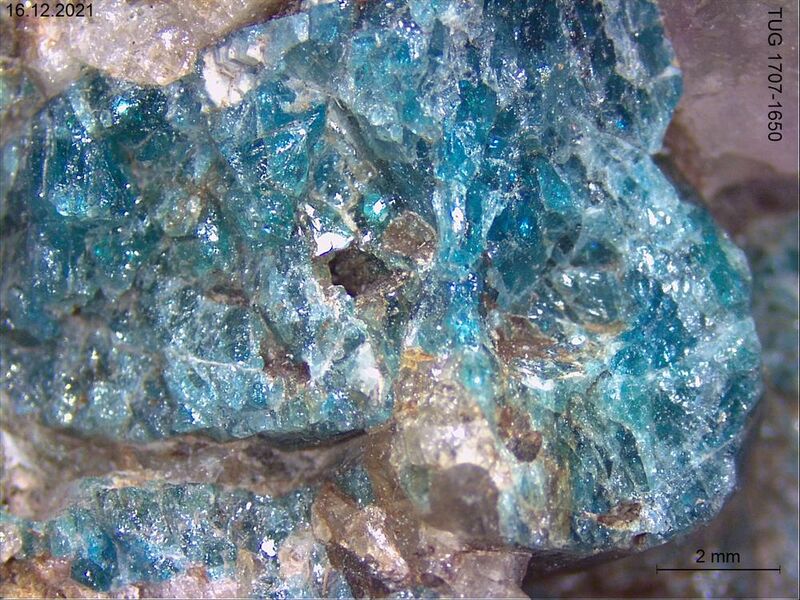 CyprineCa19Cu2+(Al,Mg)12Si18O69(OH)9Mineral—
- FluorvesuvianiteCa19(Al,Mg)13(SiO4)10(Si2O7)4O(F,OH)9Mineral—
- HongheiteCa19Fe2+Al4(Fe3+,Mg,Al)8(◻,B)4BSi18O69(O,OH)9Mineral—
- MagnesiovesuvianiteCa19Mg(Al11Mg)Si18O69(OH)9Mineral—
- Manaevite-(Ce)Ca11(Ce,H2O,Ca)8Mg(Al,Fe)4(Mg,Ti,Fe3+)8[Si2O7]4[(SiO4)8(H4O4)2](OH)9Mineral—
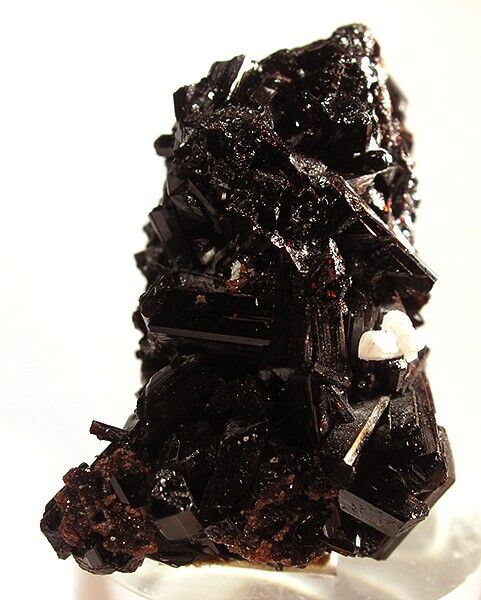 ManganvesuvianiteCa19Mn3+Al10Mg2(SiO4)10(Si2O7)4O(OH)9Mineral—
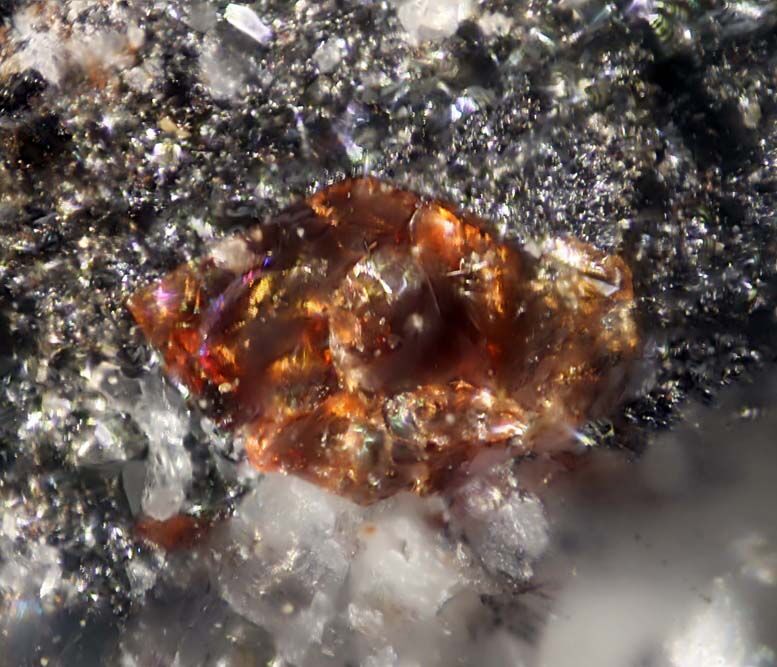 Milanriederite(Ca,REE)19Fe3+Al4(Mg,Al,Fe3+)8Si18O68(OH,O)10Mineral—
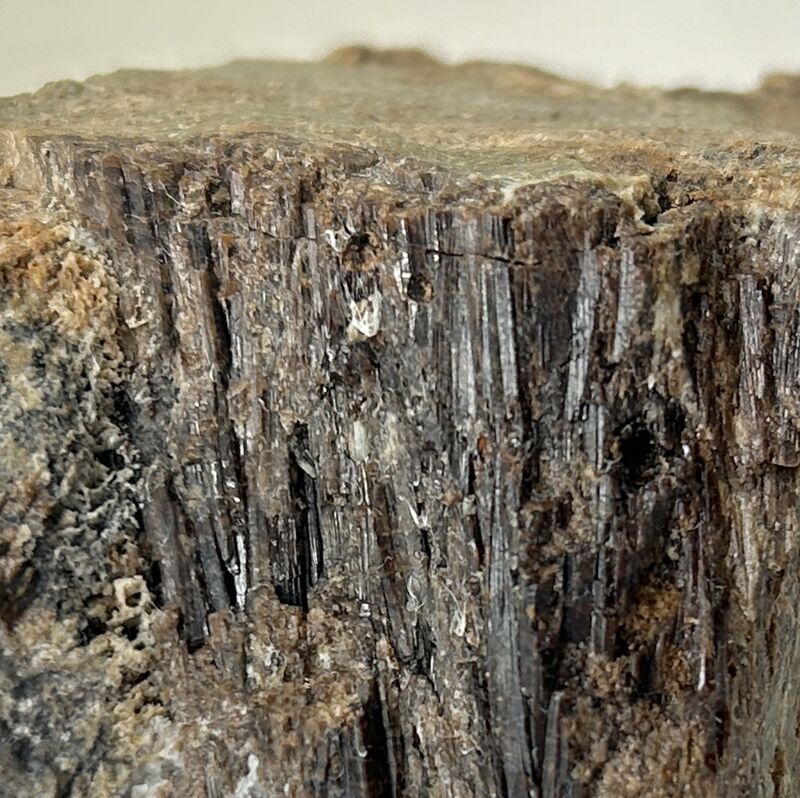 ModraiteCa19Fe2+Al4(Al6Fe2+2)(◻4)◻[Si2O7]4[(SiO4)10](OH)(OH)9Mineral—
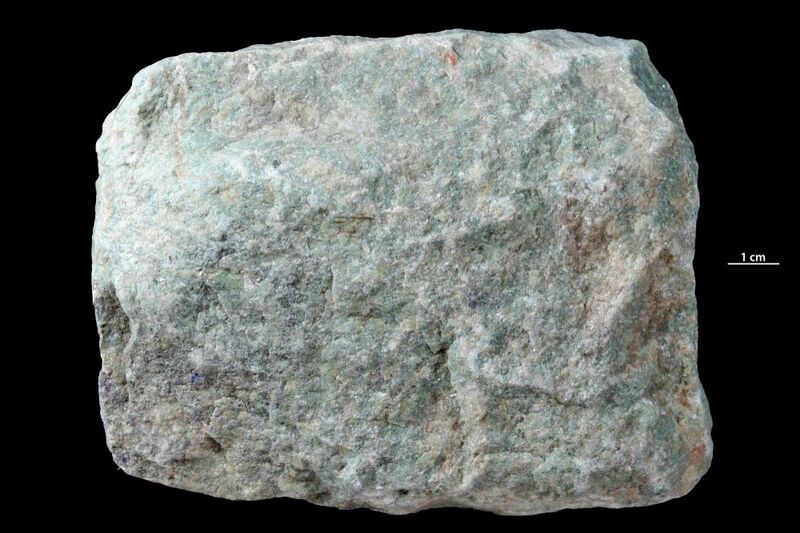 WiluiteCa19(Al,Mg)13(B,◻,Al)5(SiO4)10(Si2O7)4(O,OH)10Mineral—
Literature, links & citation
- —Bogoch, R., Kumarapeli, S., Matthews, A. (1997) High-pressure K-feldspar-vesuvianite bearing assemblage in the central metasedimentary belt of the Grenville Province, Saint Jovite area, Quebec. The Canadian Mineralogist: 35: 1269-1275.
- 1723Kappeler, M.A. (1723): Prodromus Crystallographiae de Crystallis Improprie sic Dictis Commentarium; Heinrich, R.W., Ed.; HR Wyssing: Lucerna, Switzerland, 1723; pp. 1–43.
- 1795Werner, A.G. (1795) Über Vesuvian.
- 1797Klaproth, M. H. (1797) XXXI. 1. Untersuchung des Vesuvians, Vesuvian vom Vesuv. In Beiträge zur chemischen Kenntniss der Mineralkörper Vol. 2. Rottmann. p.27-32.
- 1888Vogel, J.H. (1888) Über die chemische Zusammensetzung des Vesuvians. Zeitschrift für Kristallographie: 17: 215 (in German).
Entry last updated
@misc{mineral2026,
  author    = {Mineral Index editorial board},
  title     = {Vesuvianite — Mineral Index},
  year      = {2026},
  url       = {https://mineralindex.org/minerals/vesuvianite-4223}
}